
The surprise is not that retirement feels strange. It is that the open calendar itself can be the strain. Work was making hundreds of small decisions for you, and nobody warned you that losing it would feel less like freedom than like a mild constant noise.
Six months in, the commute is gone, the 9 a.m. meeting is gone, and Tuesday is wide open, yet you are edgy, unmoored, or busy from morning to night without much to show for it. Nothing is wrong on paper. That is what makes it hard to name.
Freedom is not the problem. Work supplied wake times, lunch, meetings, a title, hallway talk, deadlines, and a reason to be needed, and retirement pulled the scaffolding down faster than anything replaced it. The restlessness is not a failed vacation and not a character flaw. It is a set of specific missing supports wearing one vague feeling.
By the end you should be able to say which of the eight fits your week, and run a single seven-day experiment that adds back structure, purpose, or contact. One more thing worth holding: restlessness that persists alongside low mood, poor sleep, or mounting anxiety is a conversation for a doctor or therapist, not a verdict on how you retired.
Freedom is not failing you. Something work used to hand over for free has gone missing, and it can be named and rebuilt on purpose.
Quick Tips Before You Start
Anchor two times
Pick a consistent wake time and one fixed daily walk to give your day edges.
Test for a week
Treat each experiment as a seven-day trial, not a permanent overhaul.
Schedule people
Put recurring contact on the calendar—a weekly call or a standing coffee.
Name the feeling
Write down when restlessness hits and what was missing just before.
Don't fill every hour
Leave white space; over-scheduling can make freedom feel like a job.
The Scaffolding Work Provided
Before retirement, work supplied a ready-made framework: fixed wake times, commutes, lunch breaks, and meetings. These external anchors kept the day moving without much thought. When they vanish, the mind keeps looking for the next cue and finds none—so open time can feel formless rather than free. The first three reasons all live in this gap between work’s scaffolding and retirement’s open space.
1. Work Gave You a Structure You Lost
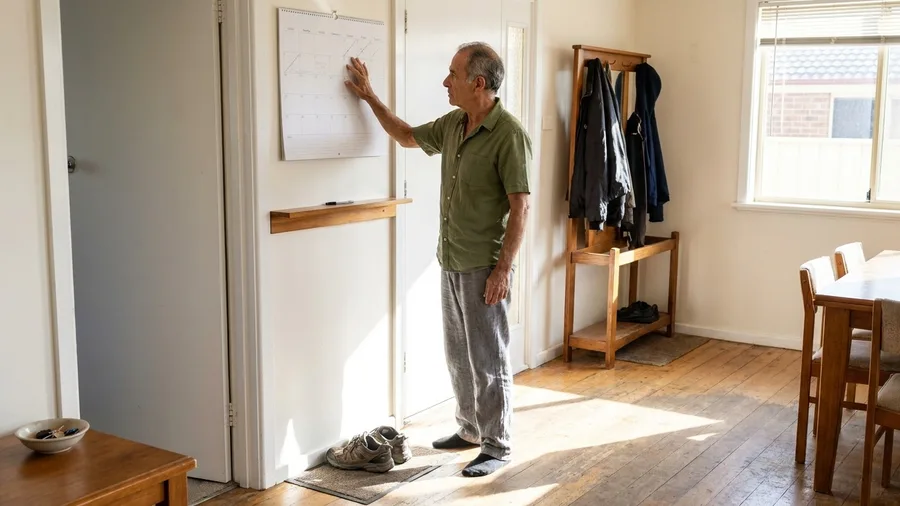
“I have nowhere to be, and somehow that’s worse.” That sentence comes up often in the first year, and it is not ingratitude. It is a description of missing cues.
Work handed you a wake time, a commute, a lunch hour, and a meeting at two. Each one told you what happened next without your deciding. Strip them away and the mind keeps reaching for the next marker and finding a blank space, which the day reads as shapeless rather than free.
So rebuild a little of the scaffold: two daily anchors, like the same wake time and the same afternoon walk, plus one weekly standing commitment such as a class, a volunteer shift, or a coffee that lands on the calendar. This tends to matter less if a gym habit, a faith community, or caregiving already fixes your week.
💡 Tip: Start with just one anchor for the first week. Add the second once the first feels automatic.
2. Your Job’s Identity Hasn’t Been Replaced

You are at a neighbor’s cookout, holding a paper plate, and the man across from you asks what you do. For most of your life that was a one-second answer, a title you could hand over like a business card. Now you say you are retired, and the conversation stalls on his end for a beat too long.
That pause is what tends to get misread. It looks like proof you have become less interesting or less needed, when what changed is only the social shorthand. A title did two jobs: it answered the question and it signaled competence to a stranger before you had said anything else. Remove it and the introduction has nothing to stand on.
The fix does not require a paycheck. Tutor a neighbor’s kid in math, take the volunteer shift that puts you in charge of the sign-up sheet, organize the club’s spring outing, or start selling the things you build in the garage. A visible role gives you an answer and a competence signal at once.
This lands hardest for people whose sense of self already lived elsewhere, in a family role, a faith community, art, or a sport. The question worth sitting with is not who you were, but which visible role now carries the answer.
3. Work Was Your Main Social Feed

Count the conversations you have had in the last seven days that you did not plan, schedule, or text ahead about. Be honest with the number. If it comes out at one or zero, the rest of this will make sense of something that has probably puzzled you.
Work used to run a low-effort social feed in the background. Hallway talk, the coffee pot, the five minutes before a meeting started, lunch with whoever was around, none of it required arranging. When you left, the feed went quiet in the space of a weekend. And the awkward part is that it can disappear quietly even while the substitute role you found is still giving you a title, because a title is not the same as the small talk that came bundled with it.
This is why you can feel lonely with family in the next room. Being near people is not the same as recurring, casual contact, and the feed you lost was made of the second kind. A dense circle of friends and activities already in place will cushion this. If yours is thin, the gap shows up fast.
The fix is not a bigger one-off event. It is contact with a reason to repeat. Join a group with a repeated task, the same shift at the food pantry, the same foursome for cards, the same committee, and the task gives people a reason to be there again next week.
Here is a script worth borrowing. Call a friend and say, “I’m trying to build a regular Thursday coffee. Same time, same place, no agenda. Want in?” Most people are relieved to be asked and to have the planning done for them.
The test is simple. If your calendar already holds recurring contact you did not have to invent, you likely will not feel this one sharply. If it does not, schedule the repeat and see what a week of it changes.
🌱 GROWING TIP
Build the Feed Before You Feel Lonely
Recurring contact works best when it is set up before loneliness sets in. Pick one weekly group now and protect it like a work meeting.
The Purpose and Choice Gap
Work made usefulness obvious: deadlines, requests, people waiting on you. It also limited your choices, which paradoxically made decisions easier. Retirement removes both the external demand and the constraints, leaving a gap where purpose and decision-making used to be automatic. The next three reasons live in that gap.
4. You Miss Being Needed More Than Busy

The cost arrives slowly: a day that looks full and feels weightless. Errands get run, the house gets tidied, the appointments get made, and by four in the afternoon the motion has added up to nothing anyone was waiting on. Work used to make usefulness obvious – a deadline, a request, a name attached to a task that would not happen without you. Plans and repeated contact can give you company without ever answering the harder question of whether anyone relies on you.
A calendar full of chores is the most convincing disguise for an empty slot. Tidying the garage fills a Tuesday without a single person noticing whether you did it. The test is simpler than it sounds: look at the day and ask whether it contains someone who would notice if you didn’t show up.
That is why the fix needs a person on the other end of it, not a longer list. Pick a small obligation with a regular slot and a name attached: a standing call to a grandchild every Wednesday at five, a two-hour shift at the food pantry, driving a neighbor to treatment on Fridays. The words matter less than the structure, but the structure is easier to set when you say it out loud. ‘I’m taking Thursdays at the library desk, so call me after six.’ Now the slot exists for both of you, and the person counting on it has something to count on.
This one is less likely to fit if caregiving or a community role already has you on call. Where it does fit, it usually takes a couple of weeks to feel the shift – the first Wednesday comes around and someone is expecting you, and that expectation does what a finished to-do list never did.
💡 Tip: Choose an obligation that would notice your absence. If no one would, it is not the right one.
5. The Endless Weekend Makes Time Feel Slippery
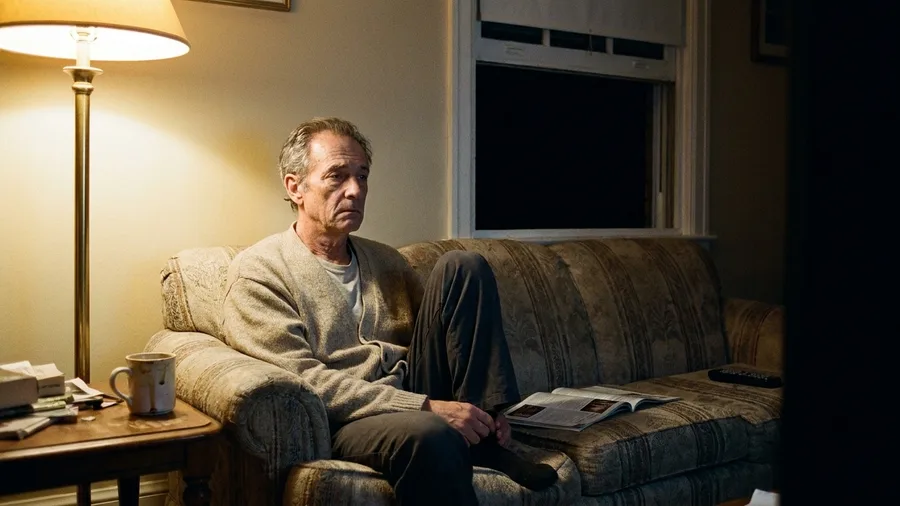
Researchers who study how people remember time keep landing on the same observation: we date our lives by events, not by hours. Deadlines and appointments gave the week contrast, and contrast is what makes a stretch of time retrievable. Strip it out and the days blur together and still feel strangely fast – a whole month can pass with no marker you can point to and say, that was the week of.
A single regular obligation marks one day. Six others still carry the same low-contrast texture, all reading as Saturday, which is why an endless weekend can leave you more restless rather than less. Understanding the psychology of boredom explains why low-contrast time feels so uncomfortable rather than restful.
What tends to work is deliberately manufacturing contrast: one class on a fixed evening, a walk at the same time each morning, a Friday review of whatever project you have going. The calendar will not supply the edges on its own – you put them there. If part-time work or a steady creative practice already gives the week its shape, this is probably not your missing piece.
6. Too Much Choice Can Make Freedom Exhausting

The advice I would have handed anyone a year into retirement was to say yes to everything, fill the calendar, stay busy. That advice made things worse. Once the edges are back and the weekend has some shape, the shape itself starts to feel like a decision you have to keep making – the more doors retirement opens, the more each one you walk through feels like the wrong one.
Years of a constrained schedule did the choosing for you. You woke at the time the job demanded, ate when the lunch hour arrived, and the day assembled itself. Now a Wednesday presents an art class starting at ten, a project in the garage, a day trip two hours out, a nap, or simply nothing, and each option arrives with a quiet question attached to it: is this the best use of a day you will not get back?
The pressure to use time well turns freedom into a second job, a planning job with no boss to sign off. Every choice starts to feel risky because none of them can be checked against a standard. You can spend an hour comparing two ways to spend an afternoon and end up doing neither.
The counterintuitive move is to shrink the menu. Pick three or four fixed commitments for the season ahead – a standing class, a regular volunteer shift, one day a week reserved for a project – and let the rest of the week be genuinely open. This fits less well if you already know what you want and have stopped auditing whether you are spending time correctly. Freedom is easiest to test by reducing the options, not by adding more.
Restlessness by the Numbers
Home and Body After the Clock Stops
Retirement changes more than your schedule. It changes how much time you spend at home, how much time you spend with a partner, and how your body regulates sleep and alertness. These last two reasons are often overlooked because they show up as physical sensations or household friction rather than obvious schedule gaps.
7. More Shared Hours Can Strain Your Relationship

People tell you the fix is togetherness. More time with your partner is the reward for all those years of separate mornings. Then Tuesday arrives, you’re both in the kitchen at 9:40, and the argument is about whether the dishwasher has been stacked correctly – which it has not, in one person’s view, for thirty years.
It’s rarely the dishwasher. Two people who once left the house at different hours and met again at dinner now share every unstructured hour, and the differences that schedule used to absorb begin to collide before lunch. One wants the radio off; the other has it on at seven. One thinks the mail gets opened at the table; the other has said nothing about it and is now annoyed about it. Those aren’t character flaws – they’re routines that never had to be negotiated because work kept them apart.
The strain builds when expectations go unspoken. Each of you quietly assumes the other knows who plans the week, who handles the repairs, who arranges the seeing of people, and because neither has said any of it out loud, every small gap reads as the other person’s failure. A single irritation is ordinary; the same one five mornings running becomes a mood the whole house is in.
The experiment worth running for a week: negotiate separate space and separate schedules, then protect them. One room that is one person’s, one standing outing that doesn’t need permission, one blocked hour on the shared calendar. This is less pressing if you live alone or already keep separate routines; if you don’t, write the expectations down and let the calendar carry the separateness before the irritation has to.
8. Sleep and Worry Keep Your Body on Alert

Retirement changes your daily movement and your sleep timing, and worries about money or health can keep the body switched on.
Some of this is normal and settles. The distinction is whether the edginess is tied to a stretch of days – you slept badly, you moved less, a bill is sitting on the desk – or whether it has become the background hum of every evening for weeks, especially alongside low mood, panic, or trouble getting to sleep. The first is a body reacting to a change and usually responds to a regular wake time, daylight, movement, and writing the worry down instead of carrying it to bed. The second is worth naming plainly as body arousal rather than a flaw in your character, and worth raising with a doctor or therapist.
The alert system often has to settle before any schedule experiment can hold.
What Work Supplied vs. What Retirement Opens
Work Supplied Externally
- Fixed wake time and commute
- Ready-made social contact
- Clear role and identity
- Deadlines that mark time
- Limited, pre-set choices
Retirement Opens
- Unstructured hours
- Planned contact required
- Identity gap in introductions
- Blurred days without markers
- Endless options and decisions
Frequently Asked Questions
Why do I feel restless in retirement even though I have plenty to do?
Busyness is not the same as being needed. Chores and errands fill time but do not answer the question “Who needs me now?” If your days are full but you still feel unsettled, look for a small, reliable obligation where someone counts on you.
Is it normal to miss work even if I didn’t love my job?
Yes. Work supplied structure, social contact, and a visible role—things that are hard to replace. Missing those supports is not the same as missing the job itself. You can rebuild them deliberately without going back to work.
How long does retirement restlessness usually last?
It varies. Some people adjust within a few months; others find it lingers if the underlying gaps are not addressed. The experiments in this article are designed to speed that adjustment by rebuilding support in small pieces.
What if my partner and I are getting on each other’s nerves now that we’re both home?
More shared hours expose differences that work used to separate. Negotiate separate space and separate schedules, then protect them. Put one blocked hour and one standing outing on the calendar for each of you.
When should I talk to a doctor about restlessness?
If restlessness comes with low mood, panic, sleep problems, or a constant edgy feeling that does not ease, raise it with a doctor or therapist. It may be more than an adjustment issue.
Start With the Restless Afternoon
Read back through the eight and notice which one you recognised before you finished the heading. A shapeless day points to structure, a missing role to identity, seven unplanned conversations a week to contact, a full day that feels weightless to being needed. Then pick one reason, one action, and give it seven days. This is not a life overhaul; it is a single test of a single guess.
If structure is what went missing, set two daily anchors and one weekly standing commitment. If purpose is missing, book a weekly call or a volunteer shift. If contact is missing, join one recurring group task. If your body is the one on alert, hold a regular wake time, get daylight and movement, and put the money worries on paper once a day instead of all day.
The open Tuesday with no 9 a.m. meeting is the same Tuesday it was six months ago. What changes is that it becomes a test rather than a verdict, and one week of deliberately rebuilt scaffolding will tell you whether what you are missing is structure, purpose, or contact. If the restlessness stays anyway, sitting alongside low mood, broken sleep, or a worry that will not settle, take it to a doctor or a therapist. That is not a failure of retirement character, and it is not something to wait out.
Pick Your One Experiment
Choose the reason that sounded most like your week, then try its seven-day experiment starting tomorrow. Small anchors beat big plans.