Every unnecessary apology you make costs you a small piece of authority, and that price compounds. For years you have treated sorry as the price of keeping the peace, especially if you have been the one who accommodates first and asks later. But apology is for harm and repair, not for capacity, preference, aging, money, opinion, or distance. When sorry becomes the reflex attached to every limit, people stop hearing the limit and start hearing a negotiation.
The alternative is not silence or bluntness. It is naming the need without the apology in front of it. Over the next ten sections you will find specific apologies you can retire one at a time, each with replacement words that keep kindness intact and drop the self-erasure.
Dropping an apology is not permission to become rude. It is permission to stop treating your ordinary limits as offenses. By the end, one phrase practiced for a week will show you that peace is kept by plain words, not by shrinking.
Quick Tips Before You Start
Pause before sorry
When you feel an apology coming, take one breath and ask: did I actually harm someone, or am I just about to state a limit?
Use a replacement phrase
Keep a short script ready for the situations you face most, like declining an invitation or asking someone to repeat themselves.
Separate mistake from capacity
A real mistake or a last-minute cancellation still deserves a brief, plain acknowledgment. Ordinary limits do not.
Expect a flicker
Someone may look disappointed when you hold a boundary. That flicker is not an emergency and does not mean you were wrong.
Practice one phrase a week
Pick a single apology to drop and rehearse its replacement out loud until it feels normal, then move to the next.
Boundaries and time
Boundaries around time and energy are the first place the apology reflex shows up, because they are the most visible to other people. You are not rejecting anyone by protecting your calendar or your quiet; you are managing a finite resource. The sections ahead cover saying no, needing quiet, and leaving early, and they give you words that keep the relationship intact while the boundary holds.
1. Saying no is a boundary, not a rejection

The cost lands later, in the calendar. A friend asks for Saturday, you say yes before you have checked anything, and the whole week bends around a plan you did not want. That reflex yes is usually bought with a sorry, offered before anyone has complained.
The misread is that no sounds like rejection. It does not. It is information about capacity, and the person across from you is asking a practical question, not proposing a verdict on their worth. Declining a dinner or a favour protects the hours you actually have, and the hours need no defence.
Then the sorry starts doing damage. ‘I’m so sorry, I really can’t’ turns a closed door into a door left ajar, and ajar invites knocking; a repeat of it can quietly become a request to stop by for twenty minutes instead. ‘I can’t make that, thank you for asking’ closes it politely and keeps the warmth. A genuine mistake still earns a short, plain acknowledgment, offered once.
💡 Tip: When you decline, state the no and then stop. The silence that follows is not yours to fill.
⚠️ COMMON MISTAKE
The apology that invites negotiation
When you say 'I'm so sorry, I really can't' instead of a simple 'I can't make that,' you turn a clear no into an opening bid. The other person hears that your limit is flexible and may keep pushing. Say the no once, plainly, and then stop talking.
2. Needing quiet time is not withdrawing from people

“I’m sorry, I’m just so tired lately, I think I’ll stay in.” That sentence has a confession built into it, as if the sofa were somewhere you had to be forgiven for ending up.
Wanting an evening alone is usually energy management, not a slow retreat from people. If you have spent a lifetime being the one who shows up, the quiet evening is what keeps you patient and present on the nights you do show up. It protects the friendship rather than rejecting it. The words that carry that are short: ‘I’m taking a quiet evening, but I’d like to see you next week.’ The second half matters more than the first, because it keeps the connection visible while the door is shut.
The distinction worth holding on to is between solitude you chose and isolation that feels stuck. A quiet evening you looked forward to is one thing. Days that blur together, a flat sense of hopelessness, declining contact you no longer enjoy but cannot get yourself out of wanting, that is worth raising with a professional rather than a friend.
The apology belongs to a real broken plan, to a commitment you let someone down on. It does not belong to the need for quiet itself.
💡 PRO TIP
Keep the door open with a next step
When you decline a gathering for quiet, add a concrete alternative like 'I'd like to see you next week' or 'Let's have coffee soon.' It tells the other person the relationship is still active and removes the need for an apology.
3. Leaving early protects your energy and your mood

I have stayed far too long at dinners I was ready to leave at nine, not because anyone needed me there but because leaving felt like an announcement and I did not want to make one. The hours between nine and midnight were never good company. They were endurance disguised as politeness.
Here is the ten-second test. Picture the last gathering that ran past your energy. Did you stay because leaving early would have let someone down, or because you wanted to be there? If your honest answer is that you were managing someone else’s feelings about your departure, the departure was never the problem.
A dinner that starts at 7 p.m. does not require you at midnight. Leaving at 9:30 means you drive home alert and the goodbye you give the host is warm rather than frayed. ‘I’m heading out while I’m still good company, thank you for having me’ is a full exit line. What the long stay costs is real: fatigue on the road, and a shorter fuse with the very people you came to see.
The host who planned a late night may register a flicker of disappointment as you go. That flicker is not an emergency, and it passes long before the morning does.
Apology vs. Acknowledgment
Still deserves a brief sorry
- You cancel last minute because of an emergency.
- You forgot a promise you actually made.
- You said something that landed as harsh.
- You broke a plan the other person counted on.
Does not need an apology
- You decline an invitation you cannot fit.
- You need a quiet evening at home.
- You leave a party early because you are tired.
- You ask someone to repeat themselves.
Body and aging
The body changes after 50, and so do the small practical tools we use to keep up with it. Apologizing for those changes treats an ordinary fact of a long life as a personal failing. These next sections cover gray hair, hearing, and glasses, and they show you how to respond without making yourself the problem.
4. A changing body is not a personal failure

Count the apologies in a single afternoon and the pattern shows up fast: one for the gray at the temples, one for the way you stood up slower than you used to, one for the hot flash that had you reaching for the water glass mid-sentence. None of those were harms. They were just a body doing what a long life does, and each apology treated it as something the room had to be protected from.
It is worth being precise about what is actually happening. Hair goes gray, skin creases, weight shifts, hot flashes arrive and leave, and recovery after a walk or a workout takes an extra day. These are not evidence that you let yourself go. They are the ordinary markers of having been here a while, the same way a well-used table shows the grain. The apology usually comes from somewhere older than the moment, a habit of treating age itself as an offense that needs smoothing over.
So the reflex fires to keep everyone comfortable. Someone squints at your forehead and says you look tired. Someone asks whether you have thought about coloring it. You feel the sorry rise, and the room feels briefly easier if you spend it. What you have spent is the right to simply be a person of a certain age in your own kitchen, and that trade gets worse every time you make it.
There is a calmer answer, and it does not require a speech. ‘This is what 50-plus looks like on me’ said evenly, with a shrug and a return to your coffee, ends most of these exchanges on the spot. It is not hostile and it does not invite debate. It just declines the premise that the body needs forgiving.
Keep one line clear, though. Health decisions are yours and your clinician’s, not a topic for acquaintances over a plate of sandwiches. If someone asks why you are not taking something or seeing someone about a symptom, you owe them nothing but a change of subject. The question is whether you did harm. Gray hair and a slower recovery did not harm anyone in the room.
🌱 GROWING TIP
Neutral responses to body comments
When someone remarks on your gray hair or weight, try 'This is what 50-plus looks like on me' or 'I'm not discussing my body today.' Both are calm and final, and neither apologizes for existing.
5. Asking people to repeat themselves is reasonable

The restaurant is loud, your grandchild is talking into their chest, the phone line crackles on the call with your sister, and you catch half of it. So you lean in and say, ‘I’m having trouble hearing you. Could you say that again a little slower?’ The question is whether that sentence needs a sorry bolted to the front of it.
It does not, and pretending to hear costs more than asking. Nodding along at the wrong moment, agreeing to plans you misheard, finding out two weeks later what was actually agreed: that is the expensive version. A repeat is a practical request, the same as asking someone to turn down the music.
Tools that do their job
6. Using glasses or notes is practical, not decline

Reading glasses on the counter, a grocery list in your coat, a cane by the door, the stool in the kitchen you use when the recipe takes a while. If the tool is doing its job, the apology is what’s out of place, because it turns a workaround into a confession.
The quiet counterfactual is that apologizing treats the workaround as a moral lapse, something you should be embarrassed to need. You are not confessing to a weakness when you slide the glasses on to read the menu. The list is not evidence that you cannot hold things in your head; it is how you hold them there without carrying the effort around all evening. ‘I keep notes so I don’t have to hold everything in my head’ says exactly that, and it lands as practical, not sheepish.
There is a line worth keeping clear. If the memory or mobility shifts are sudden, or getting worse in a way that worries you, that is a reason to see a clinician, not a reason to apologize to the room. The glasses and the list can be stated without a sorry attached to either one.
The real cost of reflexive apologizing
Money and self-worth
Money is where the apology reflex meets deep beliefs about worth. You may feel guilty for spending on yourself or for not endlessly subsidizing adult children, but these are ordinary financial boundaries. The next two sections cover spending on your own interests and the limits of financial support, and they show you how to state a boundary without apologizing for it.
7. Spending on your own hobbies is not selfish

The standard line is that every spare dollar belongs to the kids, and anything you spend on yourself is money taken out of their future. That line survives because nobody does the arithmetic out loud. A body and a set of tools are judged by whether they work. A hobby and a better mattress get judged by whether you have earned them.
So the pottery class gets called frivolous, the mattress gets called an indulgence, the trip with friends gets a quiet mention and no details, and the new garden tools stay in the garage rather than in the conversation. Months of this add up to something the receipts do not show: interests that quietly close, a back that aches every morning, plans that never get made because announcing them would require a defense.
The distinction worth keeping is not selfish against generous. It is honest against hidden. Spending on yourself inside an agreed budget is a different act from moving money without telling anyone or quietly breaking a shared arrangement, and that second thing is where the real trouble lives.
The check is unglamorous and it is enough. Bills covered, obligations met, the plan you and your household agreed on still standing. If the answer is yes, a class or a mattress is a budget line, not a betrayal. ‘This is in our budget and it matters to me’ says that in one sentence and does not ask permission.
🌱 GROWING TIP
Check the boundary, not the guilt
Before you apologize for spending on yourself, run the numbers: are bills and obligations covered? If yes, the guilt is a habit, not a warning. If no, the conversation is about budget, not about whether you deserve nice things.
8. You do not owe adult children a permanent subsidy

The money question inside a household is difficult enough. It gets harder when the line it draws reaches a grown child who has come to count on the same account.
Usually it arrives as a set of small, separate costs. The phone bill in your name. A car payment that started as help for three months. Rent paid while a job search stretches on. Childcare for a grandchild you adore, groceries on a Sunday, a transfer every month that no one calls a subsidy because it is simply what you do.
Researchers who study family money transfers keep finding the same shape on both ends. The parent’s retirement moves later and gets smaller, and the adult child gets less practice at the ordinary arithmetic of running a life. Neither party plans this. It accumulates one reasonable month at a time, which is exactly why it goes unnoticed.
The boundary gets easier if you say it as a timetable rather than a verdict. ‘I can help with this month’s groceries, but I can’t cover rent after June’ tells the person what will happen and when, and it gives them something to plan against. A vague ‘we’ll see’ does neither, and it invites another conversation next month.
Some situations genuinely call for a different arrangement, not a deadline. A temporary crisis has an end you can name. A disabled adult child may need support that is planned, written down, and worked through with a financial professional, so it can hold for as long as it is needed without quietly hollowing out your later years.
Helping a grown child is a choice you get to make and keep making, not a debt that renews itself automatically. Saying so out loud protects your retirement and gives the relationship a cleaner footing, where what you offer is a gift and not an expectation you have stopped questioning.
Voice and relationships
The final theme covers how you speak and whom you keep close. Apologizing for having an opinion or for pulling away from a draining relationship can keep you small and exhausted. The next two sections show you how to state a view directly and how to end draining contact without cruelty.
9. Disagreeing directly is clearer than softening every opinion

The most common cost is not the argument. It is being asked what you actually think, and genuinely not being able to say, because so many years of softening have sanded the view down to a shape nobody can grip.
Listen to the difference. ‘I’m sorry, I just maybe think, if that makes sense…’ arrives as a request for permission to have an opinion. ‘I see it differently, and here’s why’ arrives as the opinion itself. The second one is not ruder. It is simply legible.
Softening has a second cost nobody warns you about. Heard often enough, the hedge stops sounding humble and starts sounding like uncertainty, or like a complaint you will not state plainly, and the other person has to work harder to find out what you meant.
Directness is not a licence to be harsh. Tone and timing still carry their weight, and the same sentence delivered in a crowded kitchen lands differently than over coffee. ‘I see it differently, here’s why, and I want to hear your side’ states the view and leaves the door open. That is the whole move, and it needs no apology in front of it.
10. Ending draining relationships is self-respect, not cruelty
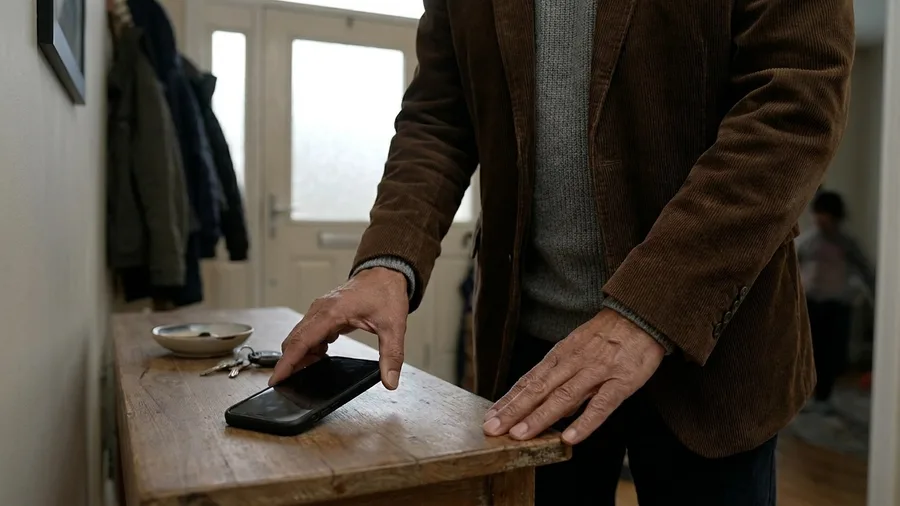
The telephone rings, you see the name, and something in your shoulders drops before you’ve even answered. That dread, arriving before every contact, is information. So is a friendship where the support only runs one way, where criticism comes wrapped as help, where skipping one call costs you a week of guilt. Pulling back from that is not a verdict on the other person’s worth. It is a reading of what each contact costs you.
The apology is what keeps the door propped open. Say “I’m sorry I’ve been so distant” and the other person hears permission to resume exactly as before, because nothing has changed except your willingness to absorb it again. What the sorry protects is their comfort. What it costs is your evenings, your patience, and the version of you that shows up for people who don’t leave you depleted. The plain version does the same job without the door: “I’m not able to keep up this level of contact, and I wish you well.”
That sentence is for ordinary exhaustion. If contact involves threats, intimidation, or fear for your safety, the answer is a safety plan or a therapist, not a script. Short of that, choosing less contact with someone who consistently belittles or drains you is not cruelty dressed up as self-care. It is arithmetic. You are deciding where your remaining time and patience go, and deciding that plainly is the same quiet boundary as saying what you think, just at a larger scale.
Frequently Asked Questions
How do I stop apologizing when I say no?
Replace ‘I’m sorry, I can’t’ with a plain ‘I can’t make that, but thank you for asking.’ State the no once and stop talking. The silence that follows is not yours to fill.
Is it rude to leave a party early?
No. Leaving before you are exhausted lets you stay good company and get home safely. Use a simple goodbye like ‘I’m heading out while I’m still good company—thank you for having me.’
Should I apologize for needing quiet time?
No. Needing quiet is energy management, not rejection. Pair your decline with a future plan, like ‘I’d like to see you next week,’ to keep the connection visible.
How do I set a money boundary with my adult children?
Be specific and kind: ‘I can help with this month’s groceries, but I can’t cover rent after June.’ Avoid apologizing or giving a long explanation. If there is a crisis or disability, seek professional financial advice.
When is it okay to stop apologizing for pulling away from someone?
When the relationship consistently drains you, involves repeated criticism or guilt trips, and you feel dread before contact. A phrase like ‘I’m not able to keep up this level of contact, and I wish you well’ sets a clear boundary without cruelty.
Does dropping apologies mean I can be rude?
No. Dropping unnecessary apologies is about removing the reflex sorry for ordinary limits, not about becoming harsh. Tone and timing still matter, and real mistakes still deserve a brief acknowledgment.
Practice One Replacement Phrase This Week
Pick the single apology from this list that drains you most, the one that leaves you smallest after you say it. Choose one replacement phrase and practice it for a week: say it out loud, use it in a low-stakes moment, and notice what changes. Dropping an apology is not permission to become rude. Kindness stays. The reflex sorry goes.
You started here believing sorry was the price of keeping the peace. The ten replacements show the opposite: peace can be kept with plain words, not self-erasure. Apology belongs to harm and repair. Capacity, quiet, early exits, aging, hearing, tools, hobbies, adult-child limits, opinions, and distance can all be stated without it. So the next time you feel the sorry rising, pause and use your replacement phrase instead.
Start with one phrase today
Pick the apology that costs you the most and say its replacement out loud right now. Then use it once this week.