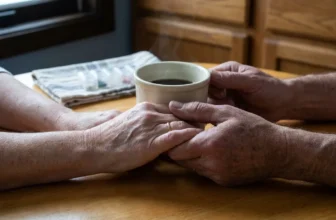
I’m 79, and I still leave my wife Joan notes. We’ve been married 52 years, same 1950s ranch house in Grand Rapids, Michigan, where I taught shop at the high school and where I still can’t find the tape measure. Since 1998 I’ve left her a note nearly every day. Sticky notes, index cards, the backs of photographs. Four or five a week, under two minutes each, a few cents of paper.
The winter it started was the winter Joan’s mother was buried. November, and after the funeral the house went quiet in a way it hadn’t been. She did the dishes without a word. Whole evenings passed with nothing in the house making noise but the refrigerator. That’s a sound I still know.
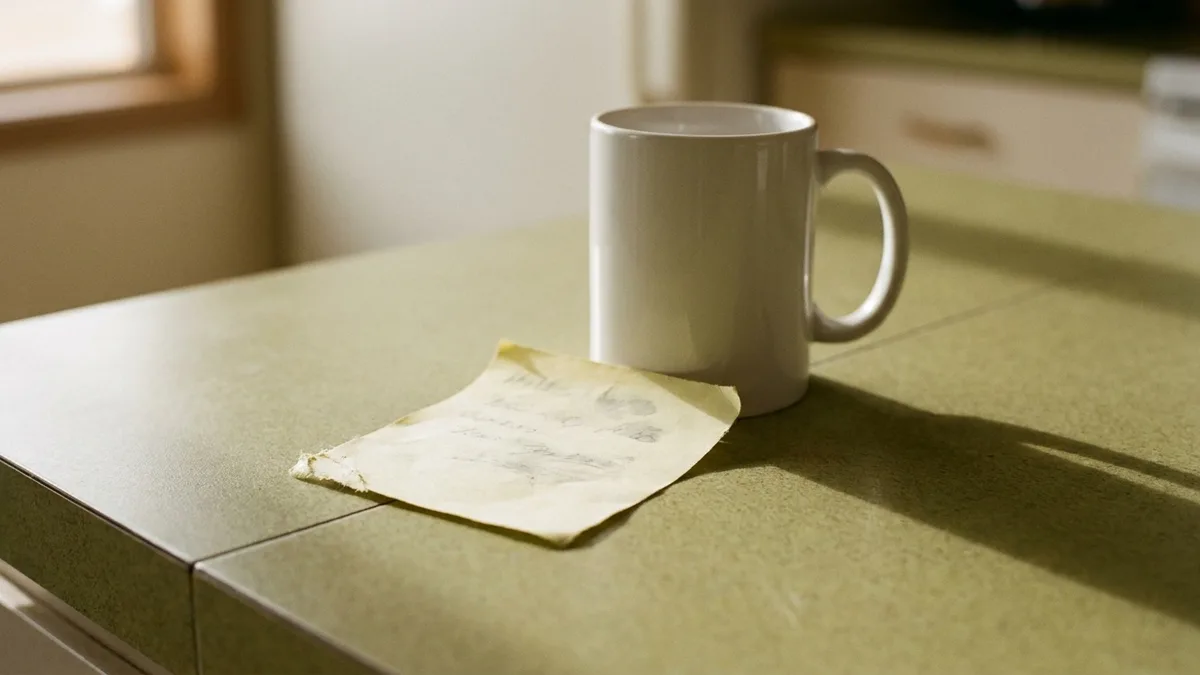
What ended that stretch was not a talk. I put a 3×3 sticky note on the counter, pressed flat under the mug handle, one line on it. Under two minutes, start to finish.
Here’s the case I’d make after all these years. Silence between two people who still like each other is a placement problem, not a feeling problem. The note has to be where her hand already goes, and it has to ask her for nothing. The twelve rituals below are a menu. Pick one that fits your own morning, write the first line tonight, and keep the rule that keeps a note from becoming a chore list.
Quick Tips Before You Start
Stash pens everywhere
Keep one in the kitchen drawer, one in the car's glovebox, one on the workbench. The note never stalls because you're hunting for a pen.
Buy paper in bulk
A pack of 12 3×3-inch sticky notes or 4×6-inch index cards costs about $6 at the grocery store and lasts weeks.
Set a two-minute cap
If a note takes longer than two minutes, it's not a note anymore. It's a project. Keep it short.
Never assign a chore
If it's a to-do, it goes on the list. A note that asks her to do something isn't a note; it's a reminder with a smiley face.
Place it where her hand goes
Don't hand it to her. Leave it where she already reaches — the mug, the visor, the refrigerator door.
1. The Sticky Note on the Coffee Mug
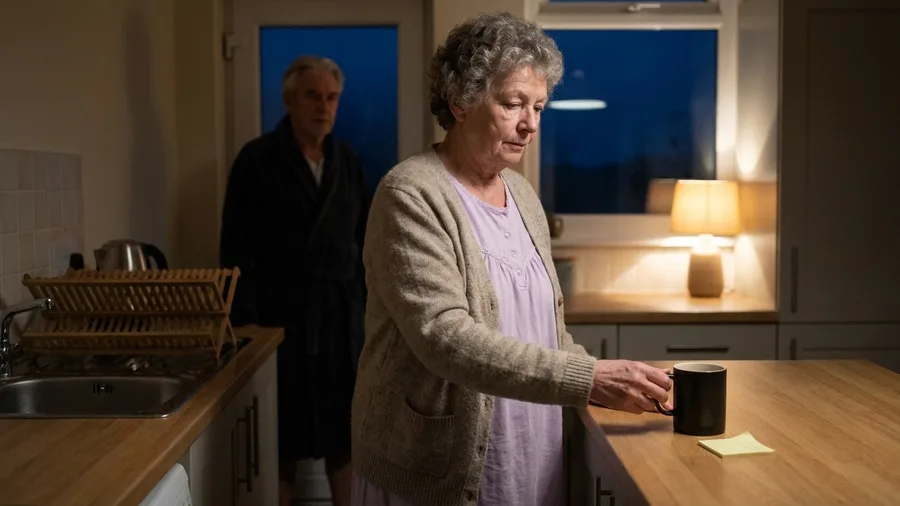
The advice is to be spontaneous, and spontaneity is what keeps most men from ever starting. Joan’s mug sits on the counter to the left of the sink, and her hand closes on the handle before she thinks to turn on the light. That is the whole secret: not a better note, a better address.
I write mine the night before, while she is in the other room with the television, and press a 3×3 sticky flat on the counter directly under the handle, so it is waiting there rather than being handed across the table like a card. One sentence, and no question mark. A question at 6:40 in the morning is a bill she has to pay before her coffee. The one I left in 1998 read: Coffee’s made. I’m glad you’re here.
Nothing about bills, the dentist, or the dog. The first note of the day is not a chute for the day’s business. Two minutes and a few cents of paper, end to end, which is the only reason it can happen every day.
💡 Tip: Write it the night before. A note that's already there when she wakes up feels like a gift; one you hand her feels like an errand.
| Ritual | Where it lands | How often | Cost |
|---|---|---|---|
| Sticky note on the coffee mug | Counter under the mug handle | Daily | Pocket change |
| Margin of the grocery list | Bottom of her list | Weekly | Nothing |
| Sunday night calendar note | Kitchen table, calendar open | Weekly | 15 minutes |
| Note inside refrigerator door | Door shelf, eye level | As needed | One index card |
| Back of a photograph | Hall closet shoebox | Monthly | About 30 cents |
| Note clipped to the visor | Driver’s visor, binder clip | Before appointments | Paper and clip |
| Back by note at the door | Inside front door, eye level | Each time you leave | Seconds |
| Two-line weather note | By the keys | On empty days | Two lines |
| Notebook that travels both ways | Kitchen counter, left open | Ongoing | $9 spiral |
| Apology card after an argument | Her side of the bed or her plate | After a bad night | One index card |
| Anniversary card in the recipe box | Behind her favorite recipe | Once a year | Under a dollar |
| Note delivered by a grandchild | Hand-delivered or mailed | When you’re away | Postage |
2. The Margin of the Grocery List

The cost of adding a line to a list your wife is in charge of is that you can turn it into a second list, and then you have taken something of hers. I did that in 1999 and Joan looked up and said, That’s not a note, that’s a list. The mug on the counter waits for her to come back to the kitchen; the shopping list rides out the door in her hand and is read again at the cart, so a line there travels with her. That is the whole reason to use it.
Put it in the white space after the last item, before she starts writing on the back. One line, nothing added to the shopping, nothing crossed out – the list stays hers and still works in the aisle.
Some lines that have worked: Drive safe. I like Saturdays with you. That first one asks for nothing, which is the point. It is dated in her head to the next morning, on the counter, so she reads it twice.
💡 PRO TIP
The two-minute rule
If a note takes longer than two minutes, it's not a note anymore. It's a project. Keep it short, keep it frequent, and let the habit do the work.
3. The Sunday Night Calendar Note
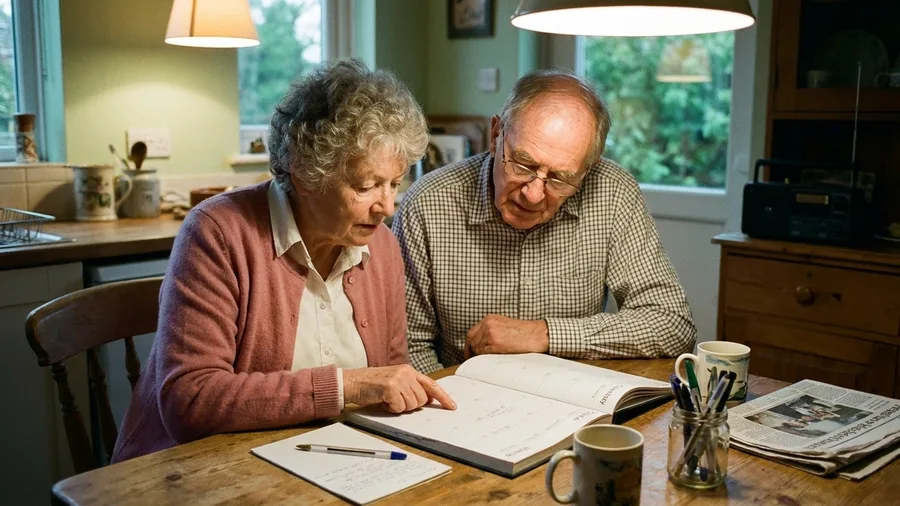
Fifteen minutes on a Sunday evening, kitchen table, the week’s calendar open, radio off. That is the size of the whole ritual, and it is the one I still do at 79.
The self-test before you start: can I name one thing this week I am looking forward to, and one thing I will take off her plate? If yes to both, you are ready. If you can only manage the second, you are making a chore list.
The line for the first reads: Thursday, the library thing, with you. The line for the second reads: I’ve got the truck to the shop Tuesday – you don’t have to think about it. The pen stays in the kitchen drawer so it never stalls. A margin holds one sentence; a week’s worry needs the calendar, because the week ahead in her hands before Monday is a plan shared instead of a mood I happen to be in.
💡 Tip: Keep the calendar open on the table while you write. It turns a note into a shared moment without a single extra word.
The Note Habit — At a Glance
📅 Frequency
4–5 per week
⏱️ Time per note
Under 2 minutes
💰 Cost per note
A few cents
🗓️ Longest ritual
15 minutes (Sunday)
📦 Paper supply
12-pack for $6
The only rule
A note never assigns a chore.
4. The Note Inside the Refrigerator Door
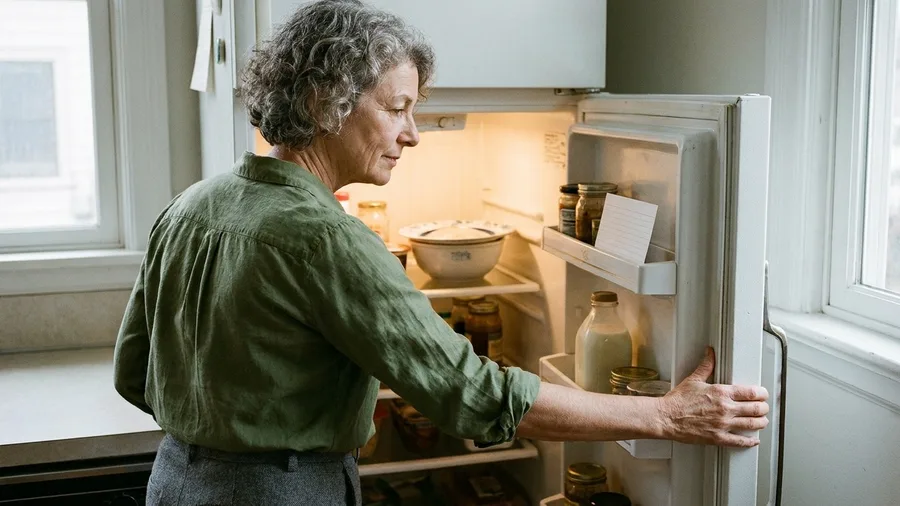
I started out writing the refrigerator card as a second morning note, a longer one, and it was still sitting under the mug where she’d already read the first. The whole point of getting inside the door is the hour she meets it, and that is not dawn.
A 4×6 card pushed in against the shelf, set high enough that the light hits it when the door swings wide, waits for her at noon instead of at the counter before breakfast. Four lines, no more, and I write it in the morning on my way out the door, when I already know what the day looks like.
Mine reads like the weather and the schedule both: rain starting around three, your cousin due at the same hour, that meeting you’ve had a knot in your stomach about since Friday. What never goes on the card is anything about what she hasn’t gotten to yet.
No did you call, no did you pick up. Those turn a note into a list of failures, and she can find her own list.
The hours after I leave and before I’m back are the ones no note on the counter can touch. A card on the shelf meets her in the middle of them, when the house is quiet and I’m not in it.
5. The Back of a Photograph
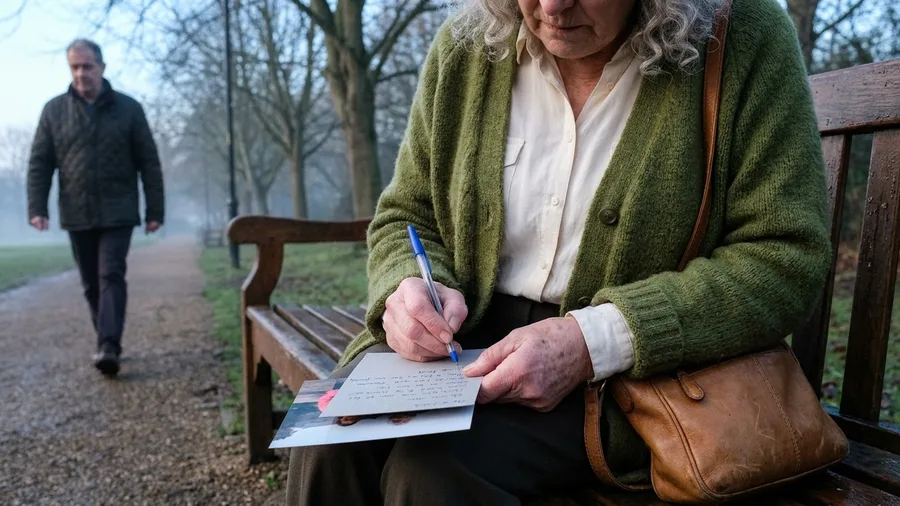
You’re standing at the drugstore counter with a print in your hand, and the obvious move is to sign the bottom and hand it to her at supper. Don’t. A photograph with your name on the front is a gift she thanks you for and sets down; the back is where a note lives long enough to be found again.
A 4×6 print runs about 30 cents. Turn it over and write in the corner first, the date, then two or three lines beneath it. Where it was taken, who is standing in it, and the one thing you remember that the picture can’t show: the state park pier that April, the wind coming off the water hard enough to lean into, whose jacket she ended up wearing.
Now the hard part, harder than writing it. It does not get handed over. It goes in the shoebox on the shelf in the hall closet, dropped in with the others when she isn’t watching, and you say nothing about it that evening.
One a month is plenty. Joan found a batch of them last winter while she was hunting for a warranty, and sat on the hall floor with the box in her lap for the better part of an hour, reading the backs of prints from 2003.
Here’s why the back matters and the envelope doesn’t. A card that came with something gets tossed with the wrapping. A photo gets kept because it’s a photo, and then one day somebody turns it over.
A print from last month outlives every card that’s already gone out with the recycling. That’s the whole trick, and it costs a little more than a quarter.
6. The Note Clipped to the Visor
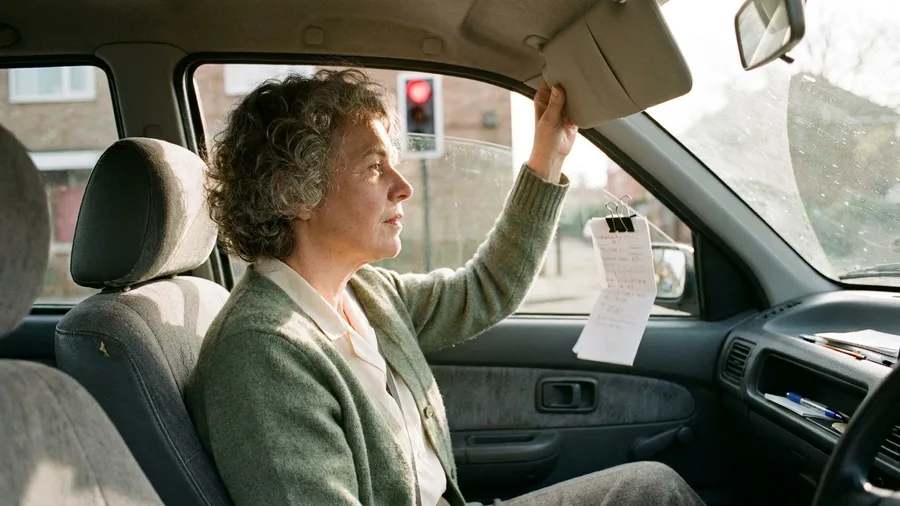
A small note goes under a binder clip on the driver’s visor of her car, set at an angle so it falls into her lap the moment she flips the visor down against the sun.
I write it the night before a morning I know she’s dreading: the dentist over on Leonard, the long drive to her sister’s. No advice, no directions, not one line about where to turn. She has enough to hold on that drive without me adding to it. The glovebox keeps a spare card and the second pen, so I’m never caught without paper.
She reads it at a red light with nobody beside her and nothing to answer to. That quiet is the whole reason the visor works.
💡 Tip: Angle the note so it falls out when the visor comes down. It feels discovered, not handed over.
7. The Back By Note at the Door
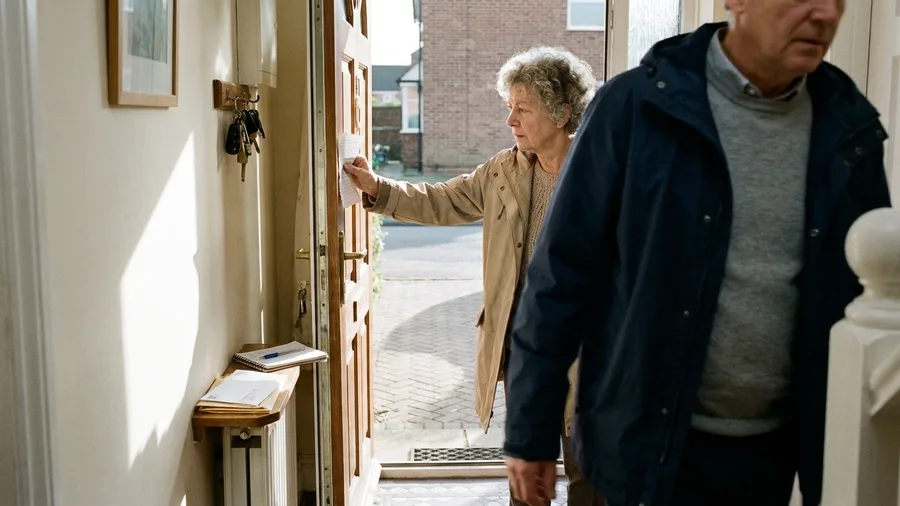
“I said I’d be back around three.” Around three. That’s the sentence that starts the argument at six, and it has nothing to do with where I went. The absence was never the problem. The blank space where a time should have been is what Joan carried around all afternoon, and by the time I walked in the door she’d been holding it for hours.
So the pad and pen sit on the little shelf by the door, next to the outgoing mail, and I write the note before I put my coat on. Three facts, nothing else: when I’ll be home, where I’m headed, and what I’m carrying back. Back at 3:40. Hardware store on Fulton. New washers for the kitchen tap.
The number matters more than the words. Back at 3:40, not “later,” not “this afternoon.” A minute she can picture on the clock is a minute she isn’t guessing at. Vagueness is what wears a person down over years, not the going.
I tape it inside the front door, up at her eye level, on the frame – so it’s the last thing she sees on her way past, before the driveway tells her the truck is gone and offers no explanation.
It’s a scrap of paper and about forty seconds of my morning. It’s also the cheapest repair in the whole house, and the only one that changes how the evening opens before the evening gets here.
The first time I did it, years back, I half expected a ribbing for the fuss. She read it, folded it once, and put it in her apron pocket. I’ve kept the pad stocked ever since.
8. The Two-Line Weather Note
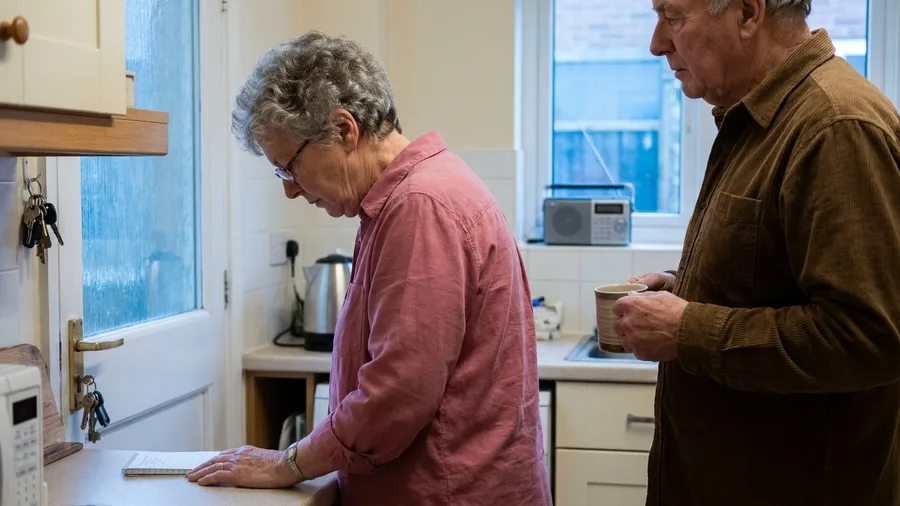
Two lines, and both of them are already there in the kitchen if you listen. The top line is the forecast, caught off the radio while the coffee’s perking – rain by two, wind picking up after noon. The bottom line is one small true thing from your own day: the gutters cleared, the first crocus showing by the mailbox, the truck passed inspection.
Researchers who study how couples stay close keep landing on the same ordinary finding – it isn’t the grand gestures that hold a marriage together but the small, repeated turns toward each other, day after day. A two-line note is exactly that kind of turn, and the people who study habit add the useful half: what gets repeated is what’s easy, and what’s easy is what has a fixed spot.
So it goes by the door where the keys hang, same spot every time, read on the way out instead of discovered at noon. The whole point on a blank day is that the habit holds even when the words are thin – nothing memorable required, no empty page to sit and stare at.
Note vs. Chore List
A note
- Asks nothing in return
- Written in under two minutes
- Placed where her hand already goes
- Says something true and ordinary
- Can be kept for years
A chore list
- Assigns a task
- Takes as long as the task list
- Handed over or left in plain sight
- Says what hasn't been done
- Gets thrown away or resented
9. The Notebook That Travels Both Ways
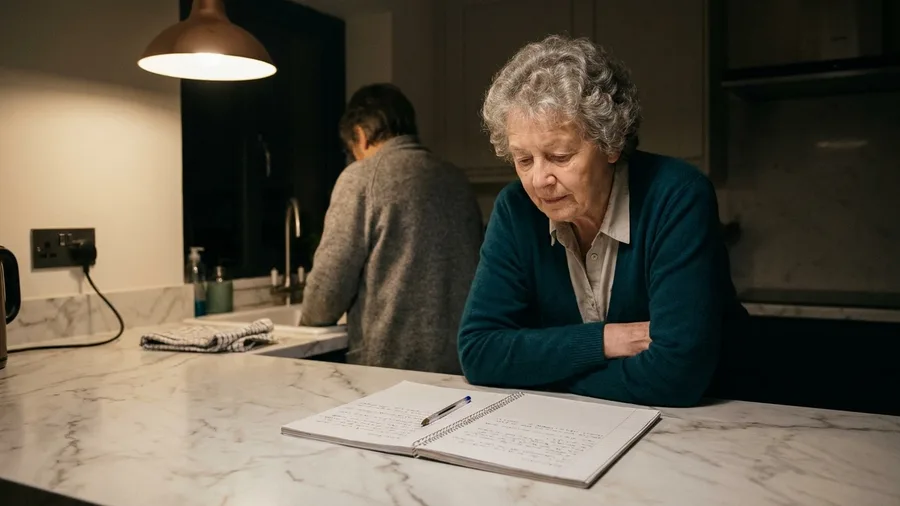
The cost of a one-way ritual is that it slowly turns into a performance – you writing, her receiving, and after a few years the whole thing starts to feel like something you do to be seen doing it. A habit that only ever runs in one direction wears a groove.
So the spiral notebook lives on the kitchen counter, a nine-dollar lined pad, and it stays lying open with the pen across the seam – not shut and shelved – so the page is still there whenever she comes to it. She might answer that evening. She might answer Thursday. The open cover is the invitation.
One rule I hold to: I don’t count pages and I don’t tally who wrote last. The moment it becomes a ledger, the conversation turns into a debt, and neither of us wants to owe the other a paragraph.
Where it earns its keep is the hard subjects that go badly across the table at night – my hearing, her brother, the money question neither of us likes saying out loud. Written a page at a time, she gets to be a writer in this instead of just the one being written to.
10. The Apology Card After an Argument
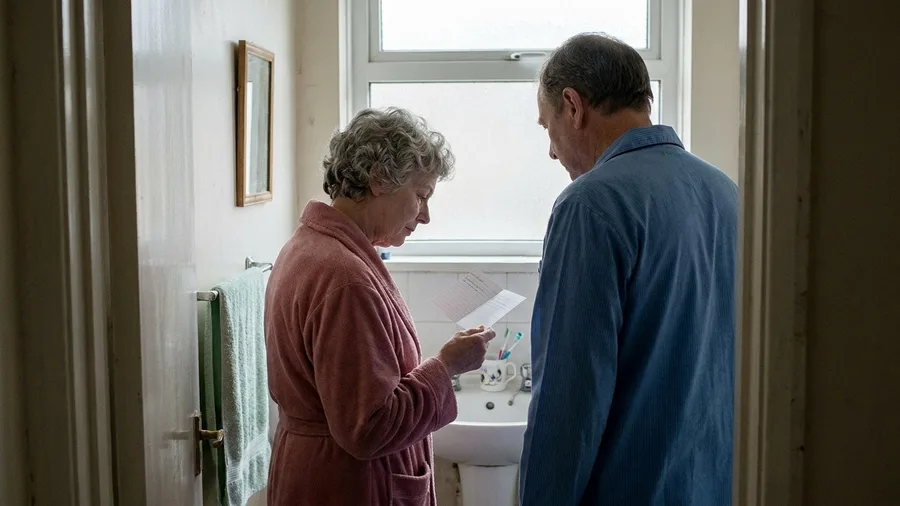
One bad night can undo a whole notebook. The spiral you leave on the counter handles the hard subjects over days, but some evenings still go wrong out loud, at the table, with both of you tired, and a page in a book won’t reach it by morning.
An index card slid under her side of the bed while she’s in the bathroom, or stood at her place before she comes down to breakfast. Name the one thing you got wrong, and keep the word but off the card entirely. The but is what restarts the argument, so it doesn’t get a line.
Write it inside a day. After two it stops reading as repair and starts reading as sulking. No re-arguing the fight, no question at the bottom, because she doesn’t owe a card an answer, and what wouldn’t land out loud the night before lands on paper with no audience in the room.
11. The Anniversary Card in the Recipe Box
For years I did the anniversary the way you are supposed to. I bought the card off the spinner at the drugstore, made the reservation, told Joan to be ready at six, and stood in the doorway in a clean shirt like a man who had done something. Then the meal ended, the card sat on the table and the pen had to be dragged across the paper while she watched me try to find a sentence that matched the day.
The people who study memory keep saying the same thing plainly: a remembered wedding is not what you think it is. The single big day, well done and scheduled, fades faster than one ordinary hour you did not plan to remember. The moment that sticks is not spent on the calendar with a time on it – the one that sticks is the one you stumbled back into.
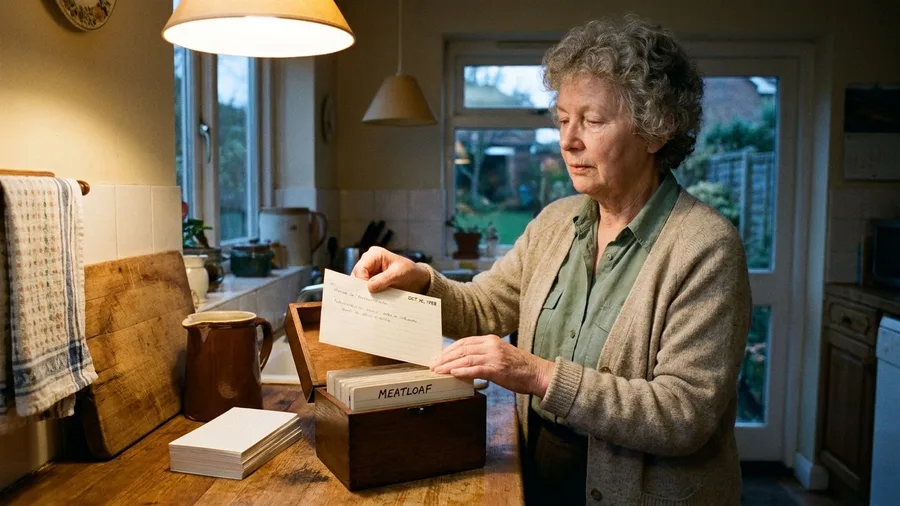
So the card that works is not the anniversary card. It is a plain index card slipped into the back of the recipe box, filed behind the one she pulls out most – meatloaf, in our house – and dated in the corner. On it, one memory from the year and nothing more than that. The trip up to the U.P., the ferry crossing back, the sour smell of that motel in Newberry and the way you laughed at it before you opened the window. Specific. One thing. On the other side of the box, not the summary of the whole marriage.
It turns up on a Tuesday while she is cooking and not expecting a thing. She reads it and turns, and there is nobody standing in the kitchen with his hands in his pockets, and that is why it lands. Whole cost, under a dollar – the index cards come in a 12-pack for six dollars, counted and remembered – with no gift tied to it, because the moment a present is attached you have written a different document.
The Real Cost of the Habit
12. The Note Delivered by a Grandchild
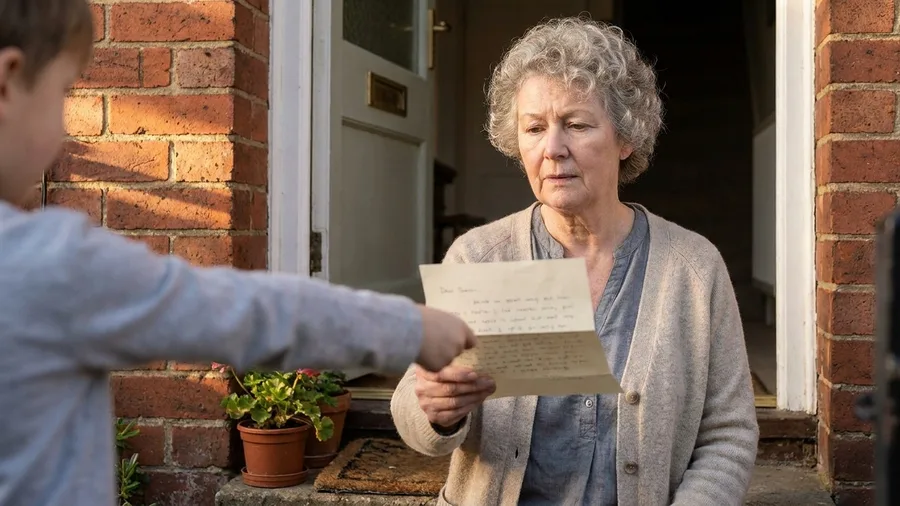
It is 4:10 on a Thursday, you are in a hospital bed on a ward two hours from the house, you wrote four notes the week before the surgery, and you are still not home. The morning goes by, the counter where her mug sits has nothing under the handle, and neither of you planned for the day the pen simply cannot reach her.
That gap is where the habit gets tested. Weeks away come on their own: five days at your brother’s place in Kalamazoo, the longer stay after the surgery in Grand Rapids, the whole of a hospital recovery. Days like that, you are not at the counter at night. The ritual you built is only as strong as its stretch across those weeks. If it drops whenever you are not physically in the house, it was never a habit – it was a mood you happened to be in.
So the note travels. You write it in advance and hand it to a grandchild to deliver with instructions to set it on the counter. Or you write it, put it in an envelope with her name on the front, and mail it to your own address. Same pen. Same paper. Same length, four lines and one thought. Do not round the news up, do not turn it into a report from the hospital, do not pad the news.
That part matters more than it sounds. The notes she already has on the counter are written by hand, and this one has to be written by hand too. Not a text. Not a quick message on her phone. The whole weight of the ritual is that it arrives on the paper she already knows, in the handwriting she already knows. One thought, a line to tell her the day is going and you are thinking of her.
The first time I tried it, Joan told me afterwards that she had not realised how much the counter was part of it until it went a few days bare. That is the reframe the field gives you for free, and it applies to far more than the notes. A behaviour that only fires when you are standing in your own kitchen is not a habit. A habit fires when it is inconvenient – when there is no pen, when you are away, when a grandchild has to be your hand.
So keep one index card in the front of your wallet and one in the glovebox for exactly this. Write it the night before the trip or the morning of the surgery, and give it to whoever is visiting her that day. The envelope works the same, and you already know her address, because it is the one you write down more often than any other.
🗓️ How to Build the Habit in a Week
Buy the paper
Start with sticky notes. They need no envelope and no explanation, so a note can appear the same night you decide to start.
Stash pens
Three pens, three rooms. If a pen is missing, the note waits until tomorrow – and that is how the habit ends.
Write the first note
Four lines, one thought. Not a paragraph, not a card. Short enough that you never talk yourself out of it.
Pick your spot
The counter by her mug. Put it there every time for a week so she learns where to look.
Repeat for a week
Four or five is enough. Miss a day and write the next one – do not make up the gap.
Add the notebook
Wait until the notes feel routine. Then set out the spiral and write the first page yourself.
Frequently Asked Questions
What if my wife thinks the notes are silly or suspicious?
She might at first. Joan asked me in 1999 if I’d done something wrong. Keep them short, keep them ordinary, and don’t explain them. After a couple of weeks they stop being a gesture and start being part of the morning.
How do I keep the habit going when I travel or end up in the hospital?
Write the note before you go and hand it to a grandchild to deliver, or mail it to the house in an envelope with her name on it. Keep the same length and the same handwriting. The ritual has to survive your absence, not just your presence.
Can I text the note instead?
You can, but paper does something a text doesn’t. It sits where her hand goes, it can be kept in a shoebox, and it doesn’t get buried under notifications. If you’re going to do this, do it on paper.
What if I’m not good with words?
Start with two-line weather notes. Top line: the forecast. Bottom line: one true, ordinary sentence. No one is asking you to write poetry. The habit holding is the point, not the content being memorable.
How do I handle an argument without making it worse?
Write an apology card within a day. Name the one thing you got wrong, and keep the word but off the card entirely. No re-litigating, no request for a reply. She doesn’t owe an answer to a card.
The Note You Can Leave Tonight
Twelve rituals is a menu, not a to-do list. One of them, started tonight, does more than all twelve read about. So pick the one that fits your own morning. If her mug sits on the counter while she reads the paper, use the mug. If she’s at the refrigerator door first thing, use the door. If she’s in the car before daylight, use the visor.
Tonight, before bed, write it on a sticky note and press it flat under the handle of her mug: Coffee’s made. I’m glad you’re here. A few cents of paper and two minutes. The one rule that keeps it from turning into a chore list is simple. A note never assigns a chore. If it’s a to-do, it goes on the list, not in the note.
Same house tonight, same refrigerator humming, and a shoebox and a recipe box in this place full of paper that never took more than two minutes. Write the first one before you turn in.
Start with one note tonight
Pick the spot where her hand already goes, write one sentence that asks nothing, and leave it there. That's the whole habit.