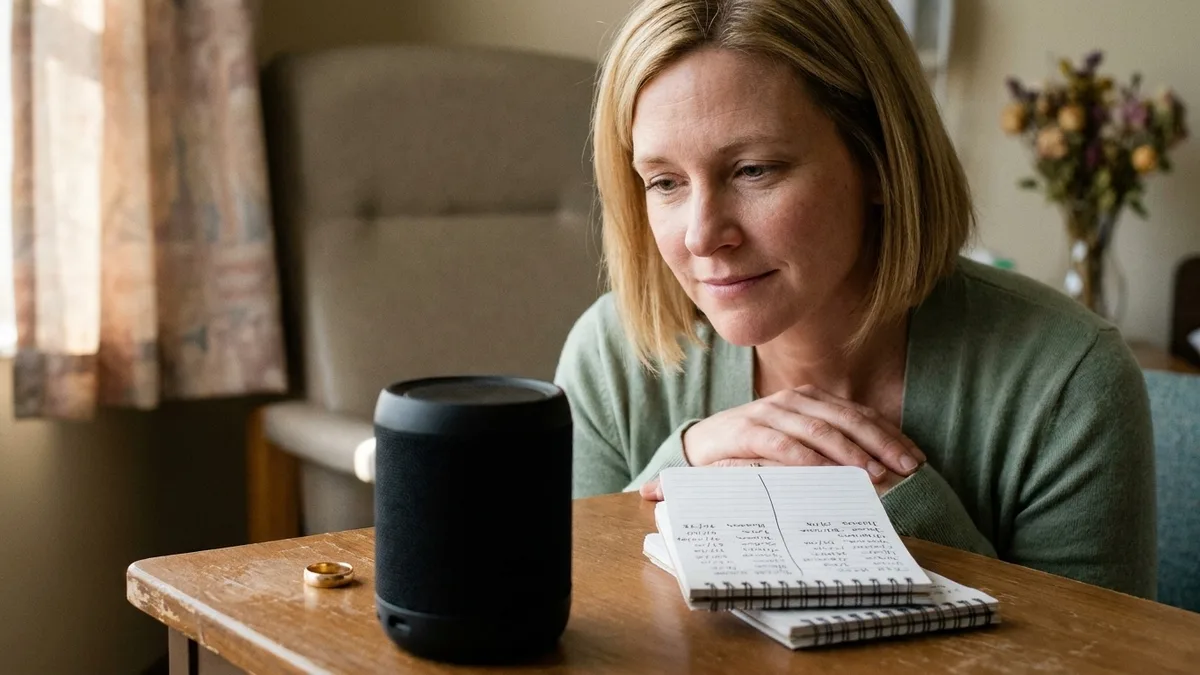
Everyone told me music was the last thing to go. What nobody told me is that it does not come back the way you pictured it.
At 4 p.m. I set a $30 Bluetooth speaker on the bedside table in the memory-care home here in Dayton and press play on ‘Unchained Melody,’ and Ellen hums the first verse. That same morning she could not tell me whether she had eaten lunch. She could not say my name.
I married her forty-nine years ago and we danced to that song in 1976. I walked in believing the song was a door back into her memory. It isn’t. Most days it is about ninety seconds, sometimes less, and in the crowded dining room on Sunday afternoons with our granddaughter there, it is nothing at all.
What I actually have is a routine I schedule and measure in a pocket notebook, two columns, ‘sang’ or ‘no response.’ Not a cure. Not a rescue. Not a test she has to pass. If you finish this, you will have one song tied to your person, one verse to play at the same time tomorrow, and a way to write down what happened without asking them to remember anything.
Quick Tips Before You Start
One song only
Pick the one tied to the two of you, not a playlist. Variety dilutes the cue.
Same hour daily
Pick a time you can keep. For me it is 4 p.m., which the aides now know by name.
Second volume notch
Loud enough to fill the room, quiet enough that it does not carry down the hall.
Two columns
Write 'sang' or 'no response.' One line per visit, nothing else in the book.
Let a no be a no
If she pushes the speaker away, that is the end of it. The song is an offer, not a treatment.
She Forgets My Name Before Our Song
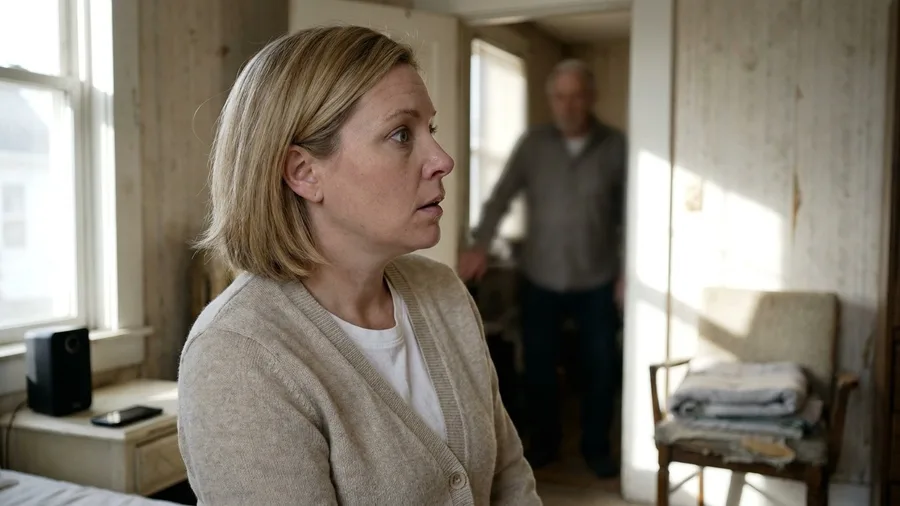
The name is gone. The husband slot is not.
Ellen is 75 now, four years into the Alzheimer’s diagnosis and six months into this building on the east side of Dayton. At 4 p.m. she looks up from the chair by the window, and her whole face opens, and she says, “There he is.” She knows the man in the doorway belongs to her. She cannot produce Tom, and she cannot tell me whether she ate lunch, and both of those facts sit in the same sentence without touching each other.
I sit down, I set the speaker on the nightstand, and I press play on my phone. Thirty dollars, one button, paired the week she moved in. Two bars of the Righteous Brothers and her chin lifts, and by the second line of the first verse she is humming — in key, the words half-formed, the melody coming out of her the way it did in 1976 when we danced to it at our reception in a hall with bad carpet and a worse band.
This is one husband at one bedside in one room. It is not a claim about what dementia takes from every person, or leaves in every person.
What I would tell you is narrower than that. The missing name and the hum are two facts about the same ninety seconds, and neither one cancels the other. Ask the name and you get the missing column. Play the verse and you get the other.
What I Believed About the Song
One husband's notebook, Dayton, Ohio — not a study.
The Song Is a Routine, Not a Cure
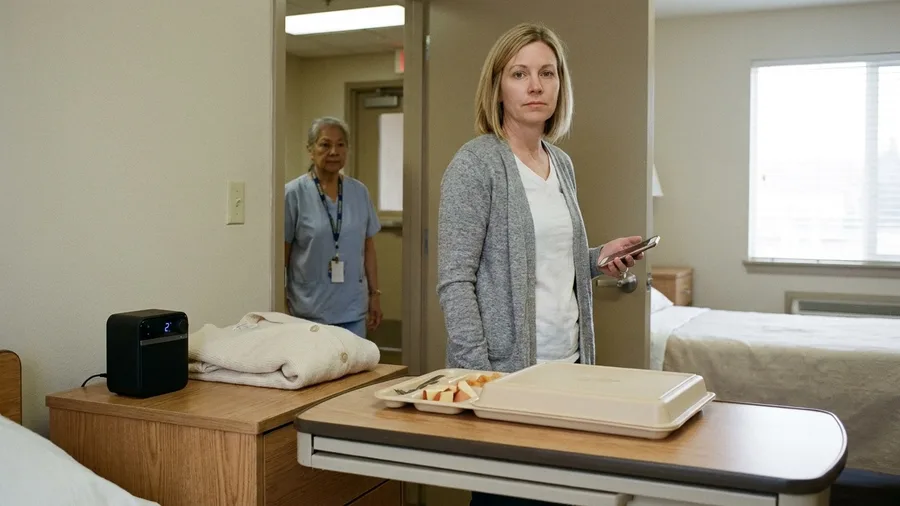
The song has cured nothing — the disease has gone on exactly as it was going to.
Four years after the diagnosis, Ellen still needs someone to work the buttons on her cardigan and the sleeves on her coat, and her food still has to be cut small before she will touch the plate. Whatever the song reaches on a good afternoon, it does not touch that. I look at the sleeves and the cut-up food and I know precisely what the music is not.
So the routine holds. Same hour every day, 4 p.m., one verse rather than the whole track, speaker on the nightstand and the volume at the second notch so it stays in the room. The aides on this hall stopped asking me what I was doing months ago; they see me come down the corridor with the phone in my hand and they know it is four o’clock and the song is going on.
Last month there was a bad visit. She turned her face to the wall and said, “Turn that off,” and I turned it off. The notebook got its no-response line for the day. Nothing in that room changed because I had played a record, and I sat there until 4:40 anyway, because leaving early would have been its own kind of lie.
I keep the song the way you keep a maintenance contract on a furnace. The furnace still fails. But you know the day it gets looked at, and that is not nothing. Measure the visit by whether the two of you got through it, not by whether she came out better than she went in, or the notebook turns into a scoreboard and you both lose on it.
⚠️ COMMON MISTAKE
Do not grade the song
If you measure the music by whether she improved, the notebook turns into a scoreboard you both lose on. Measure it by whether the two of you got through the visit.
I Stopped Testing Her Memory
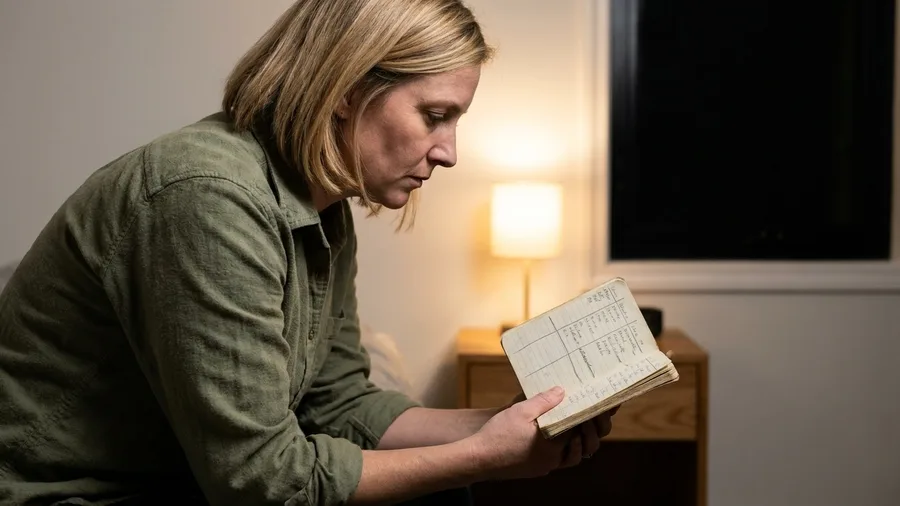
Do not ask her. The question tests the wrong person, and the wrong person sits in the chair afterward in the truck working out the score.
For the first two years of visits I came in the door with a quiz. “Do you know who I am?” — and when that failed often enough, I brought the wedding photograph from 1976 and put my finger on my own face in it and asked her who that was. The answers got worse. She went quiet, or she told me I was her cousin from Toledo, and I argued the point like a man disputing a bill. Then I sat in the parking lot with the engine off, replaying what she got wrong.
What I changed was the order. The song goes on before the greeting. Then I sit down and we talk about nothing — the weather, the pothole the city still has not fixed on the street out front, the new shoes on the aide who works Tuesdays. No question with a right answer in it.
The notebook stays in my shirt pocket, two columns, one line per visit. What goes in it is what happened in the room, not what she could produce under questioning. She hummed — that is a line. She told me to turn it off — that is a line. Those are the facts I can actually use.
💡 PRO TIP
Leave the exam at the door
The quiz tests the wrong person. Say the greeting, say the news, say the weather — and let the only question in the room be whether she wants the window open.
The Chorus Brings Her Back for a Minute
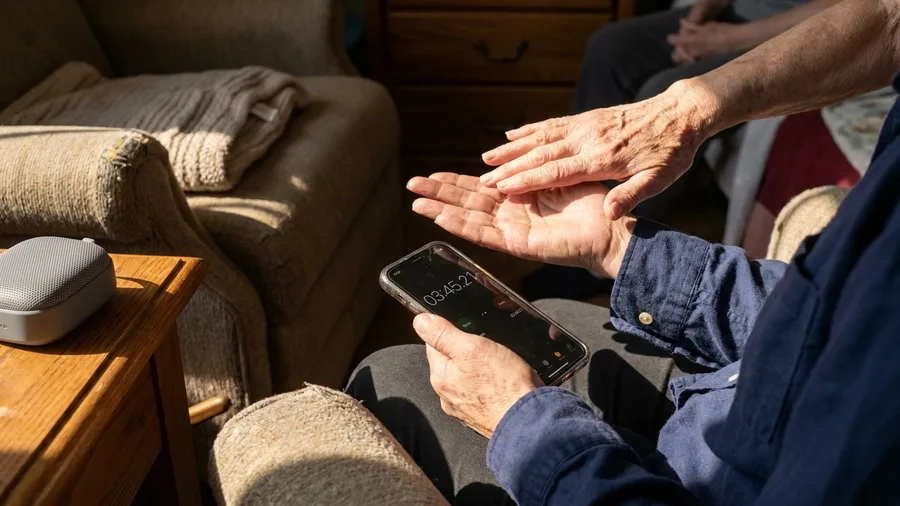
Most days the same ninety seconds runs in the same order. She hums the first verse, the words go wordless by the second line, and on the chorus she taps my hand twice, flat, the way she used to tap the wheel when I drove.
Once, right on the chorus, she said my name. Two syllables, ‘Tom,’ and then gone. I had my phone out in my lap that afternoon and I clocked it, because I wanted to know what I was actually getting: about ninety seconds from the first bar until she looked past my shoulder and asked where her mother was. Her mother died in 1981.
That’s the whole event. Not a medical breakthrough, not a door opening – a moment I can count on sometimes, and most visits give me one column of the notebook or the other, not both. The quiet visits aren’t failures; they’re the song doing what it does on an ordinary Tuesday.
The unit here is seconds, so count them and keep the count honest. Ninety of them is worth building an afternoon around. What isn’t worth it is telling yourself the song brought her back – the notebook says otherwise, and the notebook is the only witness in that room besides me.
What the Song Buys, Against What It Costs Me
My honest scorecard, six months in
Recognition Fades as Soon as the Song Ends
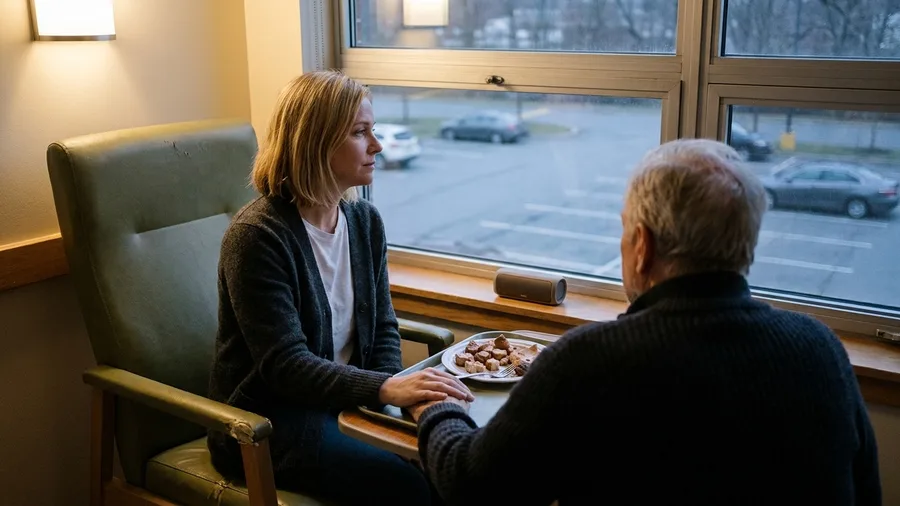
Three minutes after the chorus she asks if I am the man who fixes the thermostat, and I say that’s me and let it stand, no correction, no I’m your husband, Ellen.
It is easier than it sounds. The correction costs her something and buys me nothing, and the man who fixes the thermostat is welcome in the room.
What I will not do is replay the track to hold the recognition where it was. Four plays in a row once bought me four shorter versions of the same ninety seconds, the fourth barely a flicker, and a headache for both of us by the end.
The evening play at 8 p.m. on bad nights is its own small test of the same limit. Maybe half the time she is asleep before the first verse ends, and the other half she tells me to shut it off, so the notebook gets its row and I put the speaker back on the table.
So the visit gets built after the song, not around it. I stay for the meal and cut her meat, sit with her hand in mine, and watch the window with her while the light goes off the parking lot; the ninety seconds opened the time and the rest of the hour is what fills it.
For the reader: the memory does not carry over, so plan for the minutes after the last bar, not the ones during it. What you do with those minutes is the actual visit.
Music Reaches Her When Conversation Cannot
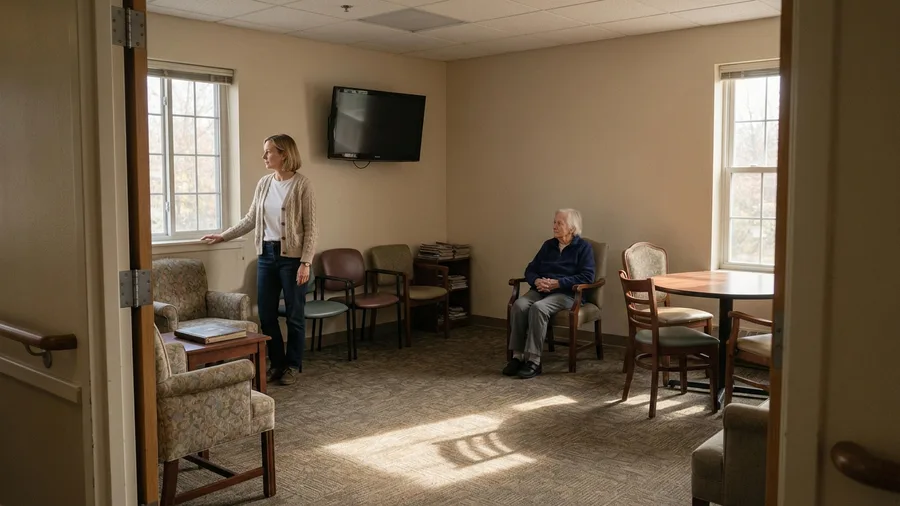
A song gets through where conversation cannot, and I have stopped pretending I can say why. The dining-room television runs all afternoon and she looks past it at the wall behind. The wedding album she opens and shuts inside a page, and how was your day comes back as I don’t know, or as nothing at all.
Then I press play and something arrives: humming, or her eyes on mine for a few seconds, or a squeeze of my hand on the chorus. Sometimes it is one of those, sometimes two, and never on demand, no matter how good a day she is having.
I fixed furnaces and air conditioners in Dayton for 41 years and I could tell you what was wrong with any of them from the sound. I cannot tell you what a song does inside a brain, and I am not going to guess at it.
My notebook is one room and one woman and one speaker at the second volume notch, and that is all it is. For the reader: ask a neurologist or a music therapist what the evidence actually says, and take my rows as a reason to try rather than a reason to believe. What I know is that the words fail and the tune does not, and I would rather bring the thing that works into the room than the thing that doesn’t.
The Song Costs Almost Nothing to Try
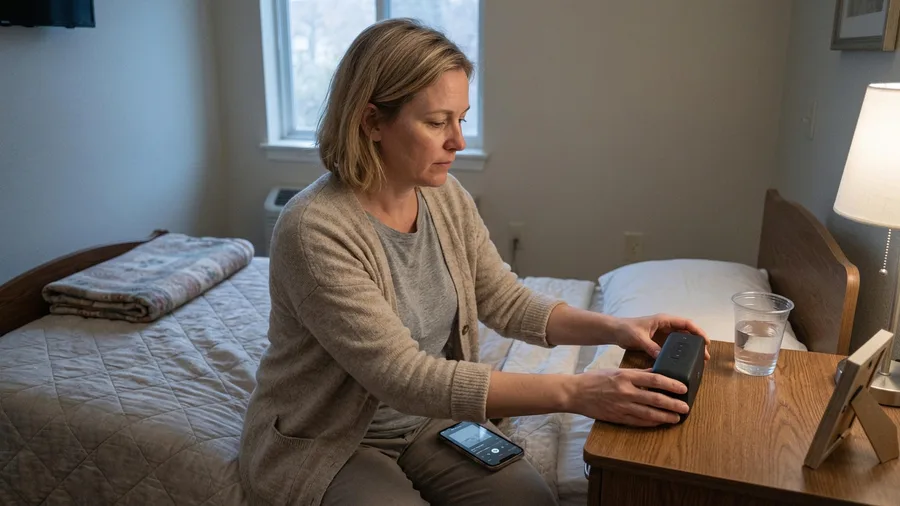
Whatever the song is doing in her head, trying it costs less than anything else about this arrangement.
My whole rig is a single track saved to the top of my phone playlist and a $30 Bluetooth speaker that sits on the bedside table six inches from her water cup. I keep the volume on the second notch, low enough that it stays between the two of us and doesn’t carry out into the hall where the aides are charting. The schedule never moves: 4 p.m. every day, and 8 p.m. on the nights that have gone rough. Same track, same hour, one verse instead of the whole song.
Some days she is too wound up for any of it. I play the verse, she pushes the speaker toward the edge of the table, and that is the end of the attempt. I don’t chase it.
The room runs $6,400 a month out of our savings and her pension, and the speaker was thirty dollars, once, back in March. There is no program to sign up for, no monthly subscription, nothing else to order online and wait for. You don’t qualify for any of this. The only thing it asks is the same song at the same time.
🕓 The 4 p.m. Visit, Start to Finish
Park and pocket the notebook
Pencil in the shirt pocket before you walk in, so the line gets written before you leave.
Play before you greet
One verse at the second notch, before any question leaves your mouth.
Sit and talk about nothing
Weather, the pothole, the aide's shoes. No questions with a right answer.
Stay past the song
Meal, window, hand. The recognition fades; the afternoon doesn't have to.
One line in the book
'Sang' or 'no response.' Nothing else, no commentary, no grade.
Visiting Is a Schedule, Not a Love Test
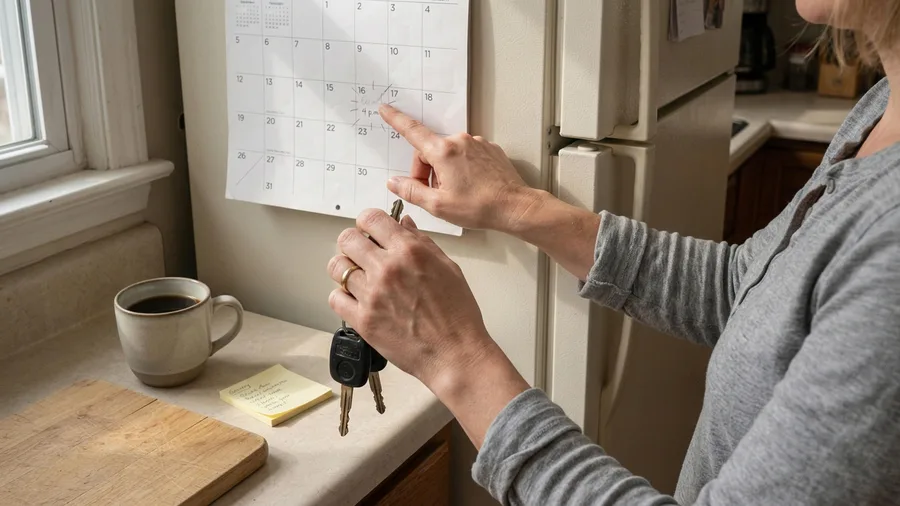
The song is the cheap end of it; the building, the staff, and the calendar are the expensive end, and the calendar is what keeps the visits happening at all.
Memory care runs $6,400 a month, drawn from what we saved and from her pension, and I can recite that figure the way I could recite a torque spec back when I was still working on furnaces. Against that, my week is written down: 4 p.m. every day with the speaker, dinner together on Tuesday, and Sunday afternoons with our granddaughter, when the dining room fills up and the song usually doesn’t get through at all.
The aides handle the parts I can’t – the showers, the laundry, the 2 a.m. wakings – and there is somebody on this hall at that hour while I am asleep at home in Dayton.
What I won’t do is skip my own doctor’s appointments or let my blood pressure drift just to prove how devoted I am. Caregivers who let everything else wait can find small trips worth booking once there is room to breathe again. A husband laid up in a hospital bed is no good to anybody at 4 p.m.
Show up on the ordinary days and the ordinary days carry you when love alone doesn’t feel like enough.
What Actually Works, What Wastes an Afternoon
Gets through
- One song, same hour, one verse
- Talking about the pothole and the weather
- Sitting through the silence after the chorus
- Telling the aide at the desk on a hard day
Gets you nowhere
- 'Do you know who I am?'
- Correcting her when she names you wrong
- Four plays in a row to bring her back
- Turning the volume up to compete with the room
Bad Days Are When I Need the Song
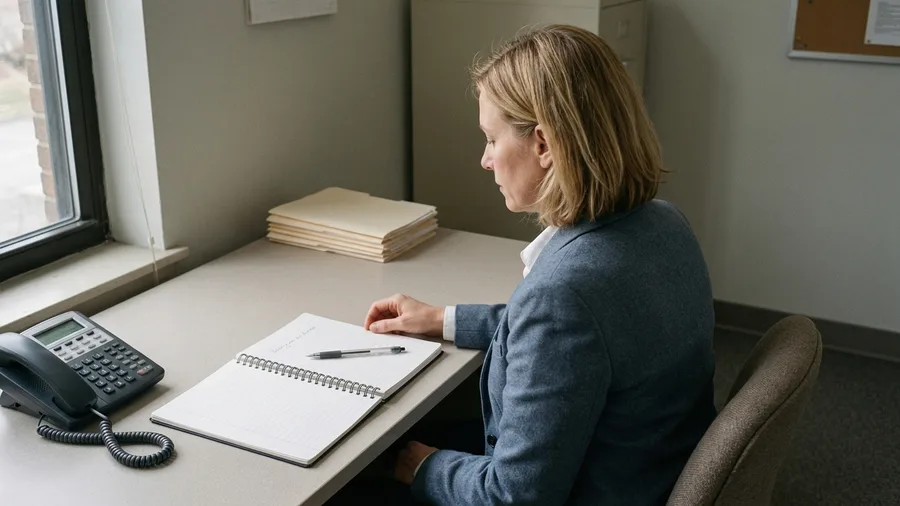
The days the song fails outright are the days it matters most that you have a plan other than playing it harder.
One afternoon in April she wouldn’t let me near the speaker, told me to get out of her room, and said I had stolen her purse. It was in the drawer the whole time, folded under her sweater. I didn’t open the drawer to prove it.
I walked out, told Renee at the front desk what had happened, sat in the truck for twenty minutes with the engine off, and then came back in with my hands empty. I never brought up the purse. Pushing the volume up, making her listen, replaying the track four times to drag her back – none of that is a tool; it just makes two upset people in one small room.
Leave, tell the staff, come back in twenty minutes. A ‘no response’ row is one line in a notebook, not a ruling on forty-nine years.
I Would Start the Song at Diagnosis

If I could take back one decision, it is the day I first put the speaker on the kitchen counter. That was two years after the diagnosis, in the week Ellen could not find her way home from the pharmacy and came in through the back door crying. I had nothing else in the house, so I cued up the Righteous Brothers and pressed play, and she stopped crying. At the time I read that as luck running my way. What it actually was: my first dose of a remedy I could have started two years earlier, for free.
The rule I should have followed is flat enough to write on an index card: one song, same hour, no questions attached, begun in the first week after the diagnosis. Boringly regular. On the calendar next to the pharmacy run and the oil change, before anyone calls it therapy, while it is still the song we danced to in 1976 and not a tool. I waited until the house was on fire and the song was the extinguisher.
So what does a spouse get for starting early? Not a cure, and not a rescue. A familiar ritual to come back to, already worn in. The song never has to carry her memory of me. It only has to be the same song, at the same time, playing whether the day was good or bad.
Starting early asks nothing of the person across from you and costs nothing but the habit. The routine itself is the return.
Frequently Asked Questions
Does a person with dementia really remember a song when they forget names?
In my wife’s case, yes — she hums our wedding song in key while not knowing my name. That is one room, one person, and I am not a researcher. What you can do is check it at home with one song and a two-column notebook, and see what your own record says after two weeks.
How long does the recognition last after the music stops?
About ninety seconds here, from the first bar to the point where she looks past me and asks where her mother is. It does not carry into the next conversation. Build the rest of the visit — a meal, a window, a hand — rather than trying to hold the moment in place.
Should I ask my wife if she remembers me?
No. It tests the wrong person, and the answer does not tell you anything useful about how she feels. Play the song first, then talk about the weather or the pothole on the street. Save the questions for people who can answer them.
What if the song makes her agitated or she tells me to turn it off?
Turn it off. One verse is enough on a good day, and a no is a no on a bad one. Leave the room, tell the aide at the desk, come back in twenty minutes with nothing in your hands. Write ‘no response’ and come back at 4 p.m. tomorrow.
How much does this cost compared to memory care?
Thirty dollars once for a Bluetooth speaker, against $6,400 a month for my wife’s room. There is no program to enroll in and nothing to order. The only real requirement is the same song at the same time.
Does playing the song on Sunday with the grandchildren still work?
In our case, usually not. The crowded dining room gives it no response at all, so I treat Sunday as a family visit and let the song be a weekday ritual in the quiet room. Try both and let your notebook tell you which one holds.
Put One Song on at Four Tomorrow
If you take the smallest thing out of my notebook, take this. Name one song tied to the two of you, the wedding dance or the first apartment or the radio in an old car, and play one verse tomorrow at the same time you will play it the day after. Low volume. Sit down. Do not ask whether she remembers it.
Write one line after, sang or no response. If nothing comes, leave it there. Do not replay it, do not ask her what it was, and try again another day.
It comes back to a speaker on a bedside table at 4 p.m. Ellen hums the first verse and she does not know my name, and both of those are true in the same ninety seconds. What I am keeping is not her memory of me. It is a place we meet at four, for as long as it lasts.
Start with the notebook, not the diagnosis
Open your phone, name the one song, and set a daily alarm for tomorrow. Two columns, one line a visit — that is the whole system, and you can have it running by 4 p.m.