Six seconds is roughly how long a hug has to last before the other person’s shoulders come down, and it happens to be the length of the first habit here.
Most mornings in a long marriage run like a shift handover. Two people in the same kitchen at 7:10, one at the coffee maker, one at the pillbox, and the first real conversation not landing until four in the afternoon, when someone says the grandchild pickup was forgotten. Nobody walks in believing anything is wrong. The belief is always: we’re fine, we’re just busy.
It isn’t decay. It’s about forty minutes of sharing rooms with nothing spoken except habit, and habit is the cheapest thing in a house to move.
What follows is eleven moves, none of them a new slot in the day and none of them equipment. The coffee was getting drunk anyway. The pills were getting taken. The walk to the door was happening. What changes is how the pieces sit next to each other.
By the end you’ll have one habit picked for tomorrow, know which to start with if you start with only one, and know how to add a second next week without the morning hardening into a checklist. Small rearrangements, repeated, are what turn the hours before breakfast into proof you chose each other.
Quick Tips Before You Start
Pick one, not eleven
Choose the single habit that fits a moment you already have, and run it for a week before adding another.
Attach it to an anchor
Hang the new habit on something that already happens — the kettle, the front door, the pillbox — so you do not have to remember it.
Say the plan out loud
Tell your spouse which habit you are trying and when, so it is a shared experiment rather than a private test they fail.
Skip a day without quitting
Missing one morning is normal; missing three in a row is the signal to shrink the habit, not abandon it.
1. The six-second good-morning hug
The advice is usually to talk first thing, to check in before the day starts. That is exactly backwards. The first thing out of a mouth is almost always a task – the 9:40 podiatrist appointment, where the keys went – and once the logistics start, the morning is already a staff meeting and both of you are on the clock.
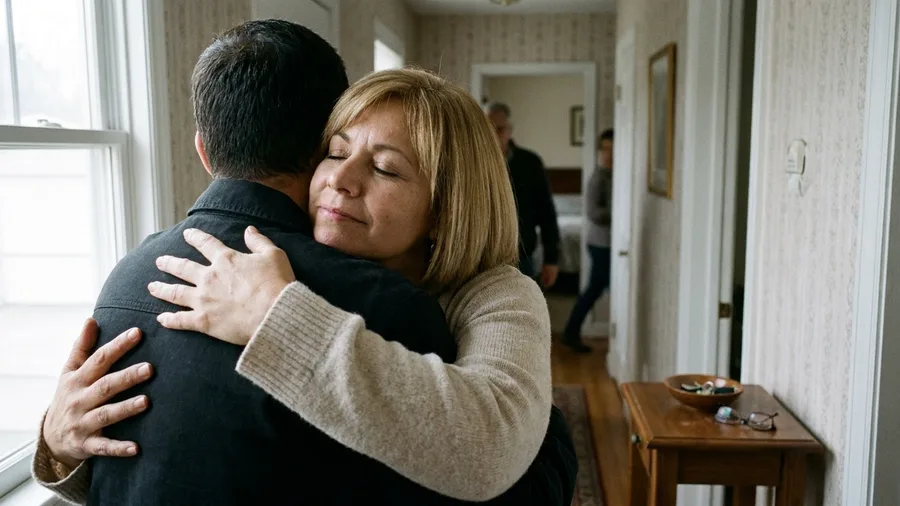
Before a word about schedules, bills, or medication, stand up and put your arms around each other. Hold it for a slow count of six. Two seconds reads as a pat on the back, the kind you give someone at a door; six is where the other person’s shoulders actually come down.
Then say what you feel in their back and let it sit there. ‘You feel rushed this morning’ is enough. Do not follow it with a fix, a question, or a plan – naming the stiffness without solving it is what keeps it from turning into one more item on the list.
If you wake at different hours, the hug waits until you are both up and dressed. It is not happening at the bedside at 5:50 with one of you half asleep and the other already dressed. Six seconds of contact buys more than the twenty minutes of separate coffee that come after it. The mood you woke in is not what sets the day’s tone; the first contact is.
💡 Tip: If six seconds feels long, count out loud together. It sounds silly and it works.
2. Coffee for two at the table

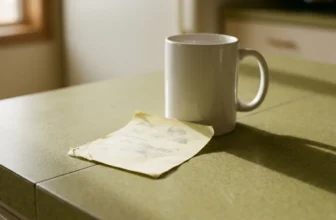
The kettle clicks off, you fill a mug, and you drink it standing up with your hip against the counter, looking at the same backyard you look at every day. Ten minutes later the coffee is gone and nothing has been said. The coffee was never the problem. Where you drink it is.
Set both cups on the same table at the same time each morning, poured before either of you sits down so nobody stands there waiting on the other to finish. That table becomes the place the two of you talk, instead of the flat surface where the mail and the bills pile up.
Then ask something with no job attached to it, the kind of question nobody can answer with a date. What did you dream about. What are you dreading today. Ask a question that carries a task and you get a schedule, a yes, a grunt. Ask one that carries nothing and people tend to answer honestly, because there is nothing to get right.
3. The two-minute calendar check
“I thought you knew about the blood draw.” That line, delivered at four in the afternoon with the car already gone, is the most common argument in a long marriage. It almost never comes from disagreement. It comes from two people each assuming the other already knew.
The obvious solution is to talk about the week. Sit down some evening, go through everything. That is the version couples abandon by the third day, because it turns into a summit with a beginning and no end, and nobody wants to hold a summit before breakfast.
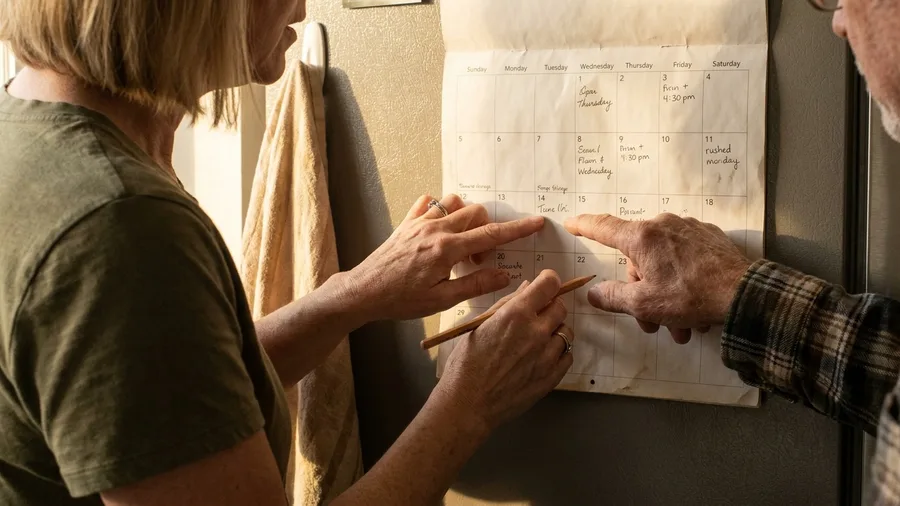
What works is shorter and duller. Say three things out loud: one appointment, one errand, and who is driving where. The driving is the part that goes unsaid and causes the most trouble – two people each assuming the other is picking up the grandchild at three.
Write it where you both pass it. A paper calendar on the fridge, a whiteboard in the hall. Not a phone, because a phone is a calendar only one of you opens, and the whole point is the second pair of eyes.
Hold it to two minutes, and set a timer. A check-in that stretches to twenty becomes a meeting, and meetings get skipped. A household with medical appointments stacked up, grandchild pickups, volunteer mornings – the fuller the week, the more those two minutes return.
It is the same two minutes you would have spent half-arguing at four o’clock, moved to the morning, where they can still change what the afternoon looks like.
💡 Tip: Put the calendar at eye level on the fridge, not on a side wall. If you have to turn your head to read it, you will stop reading it.
4. A ten-minute walk out the door

Once the day’s shape is settled, the next question is what to do with the body, and the easiest answer is a walk nobody has to name as exercise. Say the word gym to a couple who never took to it and the shoulders come up; say walk and you are talking about the same distance down the same pavement with none of the negotiating about fitness.
Here is the ten-second test. Could you leave by the front door tomorrow, go around the block and be back before the second cup goes cold? If yes, that is the whole habit. If no, shave the route until it fits, because a loop that eats forty minutes gets dropped somewhere in week two, while the short one is still happening in March.
Keep the same path every morning so the first decision of the day is not a decision at all. Shoulder to shoulder and facing forward makes talk come looser than it does across a table, so keep it light or say nothing; the disagreement about the sister’s visit can wait for a seated afternoon.
Link arms on the flat stretches if balance is steady, and reach for the railing where the pavement tilts. Nothing gets added here except shoes by the door and a jacket, because those ten minutes were already being spent standing around waiting for the day to begin.
5. One small chore done as a team
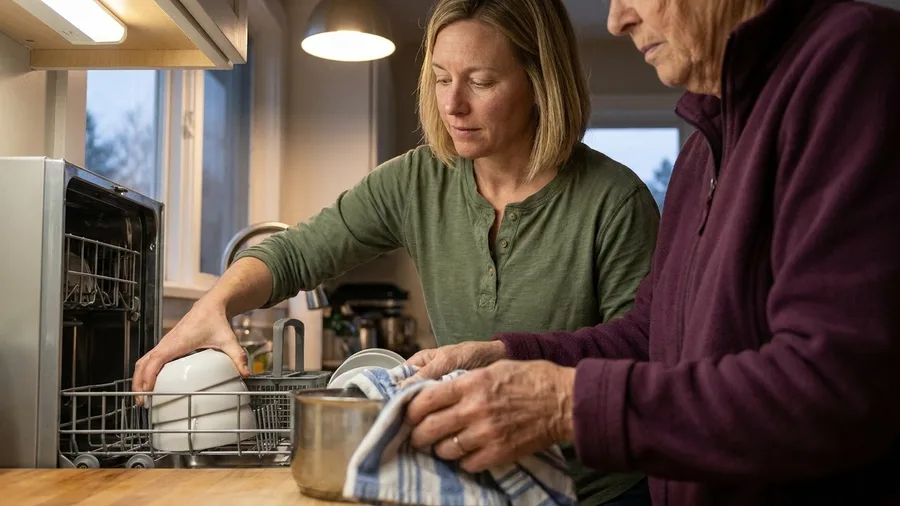
The version of this I got wrong was announcing a new division of labor, a full chart of who does what, and watching it survive about nine days before it became one more thing to argue over.
What actually wears a couple down is not the number of tasks but the standing around, the one who has to be spotted and told, and the quiet sense of being managed. So choose one job, and only one: the dishwasher, the bed, the recycling. Say the roles aloud before you start, the way you would hand a recipe back and forth across the counter, so nobody hovers waiting for instruction.
Five minutes, and resist correcting how the other one folds the sheet or stacks the bowls, because a single correction turns the whole thing back into a grievance.
Over months what this buys is the erosion of a low argument that used to surface every few weeks; what it spends is your preference for your own method. The task was getting done by one set of hands anyway. Now it is two, at the same time, and nobody is the supervisor.
⚠️ COMMON MISTAKE
One task, not a new division of labor
The moment you turn this into a chore chart, you are back to managing each other. Pick a single five-minute task and do it together, same time tomorrow, with no scorekeeping.
6. The specific thank-you before breakfast
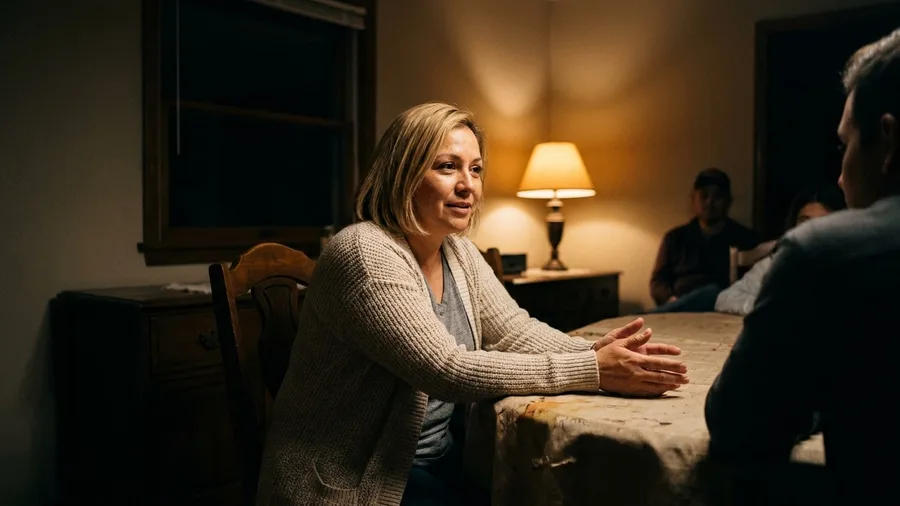
The cost lands in the silence first. Shared work smooths out who lifts what, but it does nothing about being unseen, and the other person can pass months without hearing that one particular thing they did registered with anyone. A broad compliment will not fix that, and neither will a note left on the counter.
Here is what usually comes out instead. “You’re so good to me,” said on the way past, sounds like something printed inside a card, and the person who hears it smiles and forgets the sentence before the toast is up. It is not that they don’t mean to receive it. It is that nothing specific was seen, so there was nothing to hold.
Try the other version. Face them, not the hallway, and name one thing from the last day: “Thanks for filling my pillbox last night, I didn’t have to think about it this morning.” Or “Thanks for taking the recycling out before it got dark, I kept forgetting.” One concrete act, one sentence, and enough room after it for the person to answer if they want to.
Then stop. The moment it becomes three sentences, the listener stops hearing and starts working out where to look and how to reply; the thanks turns into a small performance and the point gets buried in the delivery.
Place it before breakfast is over, while both of you are still in the same room. The bedtime version gets crowded out by the day’s complaints, or arrives after one of you is already half asleep.
The trade is costless on paper: one sentence on your side, against the long default silence where both of you go on assuming the other already knows. Often they don’t, and a single named thing is what tells them otherwise.
7. Breakfast at the table, screens off

Change what is on the table and what is in your hand, not what is on the plate. A bowl of cereal eaten at the kitchen table with nobody scrolling does more for the morning than an elaborate breakfast carried to the couch.
The screen is what eats the pause. A morning show or a phone scroll will stretch to occupy every minute the meal already takes, and nobody decides to let it – it just happens. Leave the phones in the bedroom, or turn them face down and silenced; a face-down phone that still buzzes will pull attention away from the room regardless. Then give the table one subject that has nothing to do with schedules: a memory, a person you both enjoy, the neighbor’s new puppy.
If the two of you usually eat standing at the counter, ten minutes seated tomorrow is the whole habit, and there is nothing to apologize for in stopping there. Fifteen to twenty is the fuller version, but no extra time appears from anywhere. The meal was going to be eaten either way – only the surface under it and the screen beside it are different.
The table breakfast at a glance
⏱️ Habit order
Seat first, then subject
📍 Skip if
Today is a hard appointment
📵 Failure mode
Phone on the table, face up
💬 What breaks it
Checking the clock mid-meal
Starting point
Pick the seats before anything else; the topic only works once you are both sitting down.
8. One short thing read aloud

Two minutes. That is the whole window for a thing read aloud at breakfast, and keeping it that short is what makes it work. A joke, a poem, a verse, a paragraph from the paper – anything longer turns into a lecture, and the listener starts watching for the end instead of hearing the words.
Long marriages go quiet at the table not because something is wrong but because two people who share a house and a news cycle run out of fresh material. Take turns reading, so one of you is not always the performer and the other always the audience. When the reading stops, each of you says one line about it and lets it drop; the point is a bridge between two people, not a discussion to be worked through.
This works especially well for couples who already read separately over breakfast – one with the paper, one with a tablet – because it does not add a new activity. It takes the same reading and gives two minutes of it a voice, which is the difference between two silences and one conversation.
9. Plan one small thing to look forward to

The real cost of a week with nothing pleasant on the calendar is not boredom. It is that Monday, Tuesday and Wednesday start to look identical, and by Friday neither of you can say what the week was for. The calendar fills itself with obligations – the blood draw, the grandchild pickup, the dentist – and pleasure never gets a slot because nobody puts it there.
So put it there. At the table, before the plates are cleared, pick one thing to do within the next seven days: a drive to a town you have not seen, a visit to someone you keep meaning to call, a recipe neither of you has tried, a free day at a museum. Keep it cheap, under twenty dollars or nothing, because a costly outing becomes a production that needs packing, planning and a day to recover from.
Make it a choice you both make. “What sounds good, the drive or the recipe?” tends to get a real answer; “I thought we’d go for a drive” tends to get a shrug and the feeling of being scheduled. Then write it on the calendar next to the medical appointments, so the week holds one thing that is not a duty.
The whole exchange takes about four minutes at the table, and it gives the two of you something to talk about for the rest of the week – a small forward pull that keeps the days from flattening into each other.
💡 Tip: Twenty dollars is the cap, not the goal. A free museum day beats a sixty-dollar lunch you spend the rest of the week recovering from.
How flat a week gets without a plan
From a week with something in it to a week that feels like one long Tuesday
- One outing on the calendar: Something within seven days, under twenty dollars.
- One new recipe planned: A joint choice, written down before you leave the table.
- Errands only, no pleasure: The calendar is full and every item is an obligation.
- Nothing planned, no plan to plan: Each day looks like the one before and neither of you says so.
10. Medications taken together with water

Ninety seconds. That is the whole task, and it is also where the trouble lives: one of you tracks both bottles, the other feels watched, and by the time the water is running both of you are quietly annoyed about something that took under two minutes.
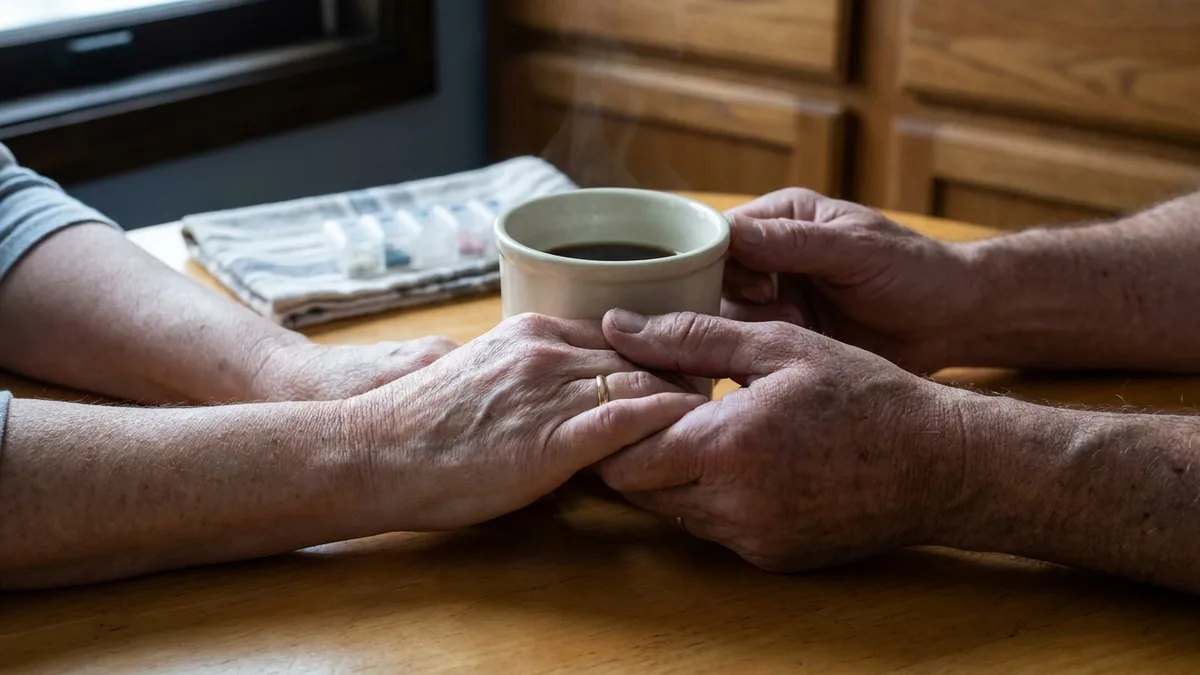
There is a version where the same ninety seconds belongs to nobody in particular. Sunday, after breakfast, both of you fill your own weekly pillboxes at the same table – counting into the little compartments is a ritual now instead of a Monday scramble. Then each morning, same table, full glass of water, each person checks their own pills and says out loud that they have taken them. The spoken part is the whole change: it makes the routine shared rather than supervised.
If a prescription changes, say so that morning rather than waiting to see whether anyone notices the new bottle on the counter. And if one of you has slowly become the household pharmacist, this hands the job back to its owner – which is usually a relief to both.
Same pills, same water, same time. Only the out loud is new, and it is what turns a watched man or woman back into a partner.
💡 PRO TIP
Announce it, do not audit it
"I've taken mine" is a share. "Did you take yours?" is a check. Swap the second for the first and the resentment about pills usually goes with it.
11. Five quiet minutes by the window

The usual advice is to fill every minute – a walk, a stretch, a page of the crossword, something to make the morning productive. That advice is backwards for the couple whose day already starts at full tilt, because more doing is exactly what the morning is already made of.
Some mornings open with the doctor’s call, the bill, or a grandchild’s problem, and the mind is at three in the afternoon before the coffee is even poured. What fills the morning is not empty; it is crowded, and the useful move is a stop rather than another item.
People who study rest and attention keep landing on the same plain finding: brief, deliberate pauses lower tension and sharpen the rest of the day far more than a longer break squeezed in later. So pick one spot – a porch chair, the kitchen window, the front step – the same one each day, so the body learns what the five minutes are for.
Set a timer. Untimed, five minutes drifts into half an hour and one person starts feeling trapped in the chair, which ends the habit by the weekend. No talking needed; sit, watch the weather, the street, the neighbor leaving for work. You are taking the five minutes out of the day’s worry, not out of its tasks.
Mornings that run themselves vs. mornings that run you
A morning with one habit
- The first words are a greeting, not a schedule.
- One question gets asked at the table.
- The calendar check takes two minutes and has a timer.
- One chore is done with two sets of hands.
- One small pleasure is on the calendar before breakfast ends.
A morning without one
- The first words are the podiatrist at 9:40.
- Coffee is drunk standing at the counter.
- The plan is discovered at 4 p.m. by collision.
- One person waits to be told what to do.
- Every day looks like the one before.
Frequently Asked Questions
How long before one of these habits actually feels natural?
Most couples report that the awkwardness fades after about a week of doing it at the same time each day. The first three mornings are the hardest, because you are doing something new in a room where you have a long routine. Attach the habit to something that already happens — the kettle, the front door, the pillbox — and you skip most of the remembering.
What if my spouse refuses to try any of these?
Start with the ones that do not require their participation. The two-minute calendar check, the specific thank-you, and the five quiet minutes are all things you can do alone. Often the other person joins once they see the change in you rather than hearing a proposal. Do not turn the habit into a test they are failing.
We already do some of these. Does that mean we are fine?
It means you have a base to build on. Most long marriages have two or three of these running already without a name. The useful question is which one is missing, not whether you are doing enough. Pick the missing one and run it for a week.
Is it worth doing these if we are both retired and together all day anyway?
Being in the same house all day is not the same as having contact. Retirement can actually flatten a marriage, because the day loses the structure that used to force small points of connection. A morning habit gives the day a shape it would not otherwise have.
What if one of us is not a morning person?
Most of these can move to whenever both of you are actually awake. The hug happens once both are up and dressed, not at the bedside at 5:50. The coffee at the table can be the second cup instead of the first. The point is the contact, not the hour on the clock.
Start with the hug, add the walk next week
Start with the hug. It needs no equipment, takes no time, and works tomorrow morning before the first sentence about schedules or bills or who took which pill, and the other ten borrow their tone from it.
Add the second one next week by hanging it on something the morning already does: the water going on for coffee, the shoes by the door, the pillbox on the table. Attach it to an existing moment instead of adding it to a list, and stop at two. Two habits survive a bad night’s sleep; eleven collapse by Thursday.
Then come back to the kitchen at 7:10. Same mugs, same counter, same two people passing each other. Only the first six seconds are different, and that is the entire distance this asks you to travel.
Not a perfect morning. A morning that leaves evidence the other person was chosen, one habit repeated until it stops being a habit and becomes simply the way the day starts. Pick the hug. Tomorrow, before you say anything else.
Try the six-second hug tomorrow
Before either of you says a word about the schedule, stand up and hug for a slow count of six. Then notice whether the morning that follows feels different.