
By the end of this, you will be able to name the assumption sitting behind a complaint you have raised a dozen times, and check it with one question instead of another round of the same talk. That is the whole promise, and it is enough. You have said the sentence already. We have talked about this. You meant it as a beginning, and it landed like a verdict.
So you talked again, and it went reasonably, and two weeks later the same subject was back on the table like a bill nobody paid. The volume of talk was never the missing piece. The premise underneath the complaint usually goes untested, and talking more just adds words to it.
Couples who stay close over many years tend not to communicate more than the rest of us. They assume less. When something nags, they check the guess rather than defend it, and the picture in their heads gets updated instead of reinforced.
This week you can decide which your next conversation is for. If the need has never actually been spoken, speak it. If it has been spoken and the picture behind it is simply old, ask instead of repeating.
More talk can repeat the same guess

Because the words keep changing while the assumption underneath stays fixed. A retired couple can spend four months on dishes and trash and leave every conversation further apart than they started, since each one hears the other’s list not as a request but as evidence of not caring.
The complaint is about the sink. The premise is ‘you think the house is my job,’ and until that premise gets said out loud, the same argument returns in new outfits. She lists what she scrubbed; he hears accusation. He lists what he hauled; she hears a man keeping score.
The shift is from volume to premise, and it takes one sentence. ‘I assume you think the house is my job’ is the guess named in the open. What follows is not another round of the list but a real question: what do you actually believe about who this belongs to?
This is not the move when something has never been said at all. If a need has gone unspoken, speaking it plainly is the right next step, not a repeat. The test is whether you have already said it and nothing moved.
One guess per conversation. Another pass at the same complaint adds words without adding information.
Silence can be trust, not distance

Not if the quiet is doing work that words would only interrupt. Some silence is the ordinary sound of two people reading after breakfast, one getting up for tea while the other turns a page, neither narrating the moment because neither needs to.
Trust lives in the small routines nobody announces: the medication set by the kettle, the car keys on the hook by the door, the Tuesday call to her sister remembered without a reminder being left anywhere.
Stonewalling looks different in the body. One person stands when a subject comes up and leaves the room, the door clicks shut, and the thing stays exactly where it was. You can feel the difference between a quiet room and a closed one.
The warning sign is silence wrapped around a topic one partner avoids and the other has quietly stopped raising. That is not peace; that is a no-go zone with furniture arranged around it.
So the measure is not how much you talk. It is whether the quiet is resting on a picture you have checked lately, or hiding a guess you stopped testing years ago.
Shared history hardens into a script
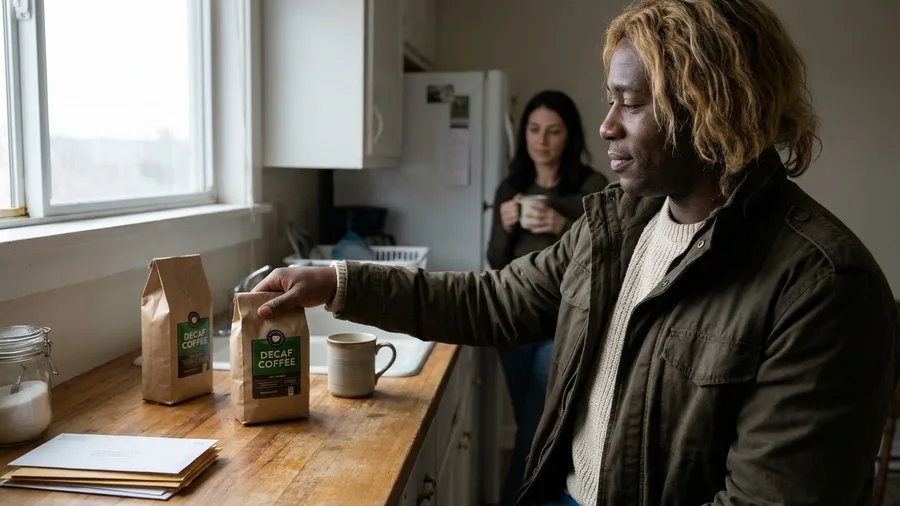
Knowing each other well turns into shorthand, and shorthand eventually stops asking. A glance at the wall clock across a crowded room says leave now, and both of you are already reaching for coats before anyone speaks. That is real efficiency, earned over years, and it is worth naming before the trouble starts.
The trouble starts when prediction quietly replaces observation. One of you hears the other mention a headache and is already reaching for the ibuprofen, already saying the name of the tablet, already certain which bottle in the cabinet is the right one – and gets it wrong, because that changed eight months ago and nobody mentioned it.
A man still buys decaf every week. His wife gave it up years back after the heartburn got bad, and he adjusted, and he never adjusted back – so the bag keeps appearing on the counter while she pours regular in the morning and says nothing about the swap, because correcting him feels like making a fuss over coffee.
Two signals tell you the script has gone stale. The first is surprise – the small pause and the “I didn’t know you still wanted that” – which means a preference moved and the household record didn’t. The second is a correction you have made more than once and watched fail to stick, which is less about forgetting than about a picture nobody has bothered to redraw.
So the question worth asking about any habit of yours is narrow: does this describe the person in front of you now, or the person from ten years ago who happened to like the same things?
Good communication can hide a bad premise

A calm, well-formed sentence can carry a wrong guess straight through the years.
Picture the complaint everyone agrees is delivered well. One partner says, evenly, that they feel unheard when the dishes sit in the sink overnight, and the sentence has everything: first person, no accusation, a specific behavior instead of a character summary. It also has a premise underneath it, which is that the other person leaves the pans there to signal that the request does not matter. Nobody ever checks that premise, because the delivery was so good it looks like the work is done.
This is how two people can both feel heard and both be wrong. Each leaves the kitchen satisfied with how the exchange went and mistaken about what it meant, and the same complaint returns in three weeks, then six, always politely.
The missing move is a question asked before the polished sentence lands. What goes through your head when you walk past them? Not as a challenge, just as information. A respectful statement resting on a false assumption keeps the complaint alive with better manners. The tone was never the problem. The premise was.
Sort Your Quiet Moments
- 📖 Reading together, no words — Easy quiet with a current picture.
- ☕ One makes tea without asking — A routine that still fits both people.
- 📞 The Tuesday call to a sister, remembered — Silent trust in a small routine.
- 🗓️ A topic neither of you has raised in months — Comfort may have become a no-go zone.
- 🚪 Leaving the room when a topic starts — Stonewalling—the issue stays unspoken.
Silence is not the problem; an outdated guess carried silently is.
No objection is not agreement

It is the quiet yes that turns into a fight nobody can trace to anything.
A couple settles into Sunday dinner at home without ever deciding it. The question never gets asked; one partner simply stops making other plans, week after week, and the afternoon goes to the same table, the same roast, the same four hours. Nothing is objected to, so nothing is discussed, and the arrangement is treated as agreed.
What is actually accumulating is consent given by default. The partner who wants the afternoon back says nothing for a season, then two, and the irritation sits low and unnamed until it comes out over something small – a comment about the gravy, a sharp word about whose turn it is to drive – with no visible trigger. The surprise is real on both sides, because the no was never spoken and the yes was never given.
There is a way to check without turning it into a debate, and it takes one sentence: say you are treating this as a yes, then ask whether it is one or whether they are simply going along. Genuine agreement does exist, and you can tell it apart. Both reach for the same restaurant on a Friday, neither has an edge, no complaint surfaces two days later. That one needs no examination.
The work is telling three things apart – consent, avoidance, comfort – and only the guess, named out loud, will do it.
⚠️ COMMON MISTAKE
Don't wait for the objection
Treating silence as agreement is the quiet engine behind most surprise fights. If you're about to decide something for both of you, ask first—the check takes ten seconds and saves a week.
Old preferences expire without notice

Some of those quiet agreements were real once and have simply run out of date since.
A morning walk at seven has been the routine for so long that neither treats it as a choice anymore. One partner is up and lacing shoes at ten to; the other wanted a slow start months ago, with coffee and the paper and no schedule, but goes along each time because saying so feels like scrapping something that works. So the walk continues, and a small resentment walks with it.
Holidays run the same way. The family dinner happens at the same house every year because it always has, while one partner has been quietly hoping to hand it off or cut the meal down to something smaller. Both are waiting for the other to raise it.
The fix runs in both directions, and neither side gets to sit still. The one who wants the walk asks whether mornings still fit, plainly, without treating the question as a complaint. The one who has been enduring says what has changed rather than continuing to endure. A light check costs almost nothing: is the Sunday call to your sister still good for you, or has it started to feel like a chore?
When there is no irritation, no repeated dodging, and both still choose it, the old preference is current. Leave it be.
Assumed intent turns problems into flaws

A preference that changed is a practical fact; invent a motive for it and it becomes a charge against the person. The plates in the sink are the evidence, and the motive is the guess layered on top: that leaving them there was meant as a message.
They might be forgetfulness. They might be a bid for help at the end of a long day. The impact is the same either way – you come into the kitchen at nine and the counter is full and something in your chest tightens. That part is real and worth saying. What is not yet known is why.
The sentence that starts the trouble goes the other way. “The sink is full” describes an event in a room. “You are inconsiderate” describes a person, and once it is out, the conversation is no longer about dishes. It is about who the other one is, and both of you now have to defend a character.
Before you react, hold one alternative in mind: it may be that the sink simply does not register the way it registers for you. The same counter, two different sets of eyes, and a lifetime of different training about what counts as finished.
When you do ask, ask the narrow thing. “What was going through your head when you left them there?” gets an answer about a moment. Then “how did it land when I brought it up?” gets a second answer, and that one is usually the missing piece. What ruins it is the diagnosis – “you always do this because you need control” – which is not a question and does not want an answer.
The whole test is one word: asked, or assumed. What the other person intended is available, but only if you ask rather than decide it first.
Assumed Intent vs. Tested Intent
Assumed
- You left the dishes because you don't care.
- You always do this—it's who you are.
- You're avoiding the topic on purpose.
- You knew this would bother me.
- The complaint becomes a verdict.
Tested
- What were you thinking when you left them?
- How did it land when I brought it up?
- You might not see the sink the way I do.
- I'm guessing here—tell me where I'm off.
- The complaint stays a request.
The default routine can hide a decision

An arrangement can keep running for years after the reason for it has quietly expired, and nobody says so because raising it sounds like a complaint about the person doing the work. The bills are the usual example. One of you has paid them for decades. The other has never once opened the account.
Ask the second one where the passwords are and watch the face. The question is not hostile – it is obvious – and the answer is often a small, embarrassed pause, because the arrangement was never decided. It simply became true.
It holds because challenging it feels like criticism of the person who has carried it, and because the larger question underneath – does this still fit either of us – is bigger than a Tuesday evening can hold. So it runs on. The cost is quiet at first: a low irritation that attaches to the envelopes, the laptop, the sigh at the end of the month. Then one of you gets the flu badly, or the bill-payer is in a hospital bed, and the cost stops being quiet.
If a routine needs looking at, give it a shape. Half an hour, one topic, both calendars cleared, no side issues dragged in from the last ten years. That last part matters more than the half hour.
And not every routine needs repair. Walk past the ones you both still want – where either of you could stop and plainly has not. The question is only whether it is still chosen by both of you, or merely unexamined by both of you.
💡 PRO TIP
Name the guessing game
The most useful sentence in this article is four words: 'I'm guessing here.' Say it before a complaint lands and you've turned an accusation into an invitation. Say it after and you've turned a fight into a check.
Ask before filling in the blank

Replace the confident guess with a short, neutral question, and then get out of the way of the answer. Neutral is the hard part. “What would you like Sunday to look like now?” asks for information. “You don’t want to see them again, do you?” already contains the verdict and only invites a defense.
Timing does a lot of the work. After breakfast, when nobody is rushing out and nobody is already angry, gives you ten calm minutes. The same sentence at the door with a coat half on lands as an ambush.
Then ask one thing and let it land. The follow-up is where good questions die – “and also why didn’t you tell me, and what about the holiday” – and what began as an opening becomes an interrogation with two people in it.
The answer may surprise you, and the surprise is the point. “That’s different from what I thought” is the whole response it needs. One follow-up is fair. Correcting the answer with the old story – reminding them what they used to prefer, filling in the history they were there for – undoes the thing you just did. It tells them the question was not really open.
You will notice the difference immediately. A question that wins the point ends with you satisfied and them quiet. A question that gets information ends with the picture in your head a little different from the one you walked in with.
🕰️ A Five-Minute Check That Doesn't Feel Like an Audit
Pick one topic
Choose a single current thing—this week's Sunday plan—not the last decade of holidays.
Choose a low-stakes moment
A walk or after lunch, not a scheduled summit unless the topic is bigger.
Name your guess
Say the assumption out loud: 'I've been assuming you'd rather not host this year.'
Ask one question
'Is that right, or has it changed?' then stop talking and let the answer come.
Set a time if it grows
If the answer opens something larger, agree on when to talk again rather than chasing it now.
Name your assumption and invite correction

Owning the guess out loud is what turns a neutral question into something your partner can actually correct. It sounds like this: “I’ve been assuming you’d rather not travel anymore. Am I reading that right?”
Notice what the sentence does. It puts the assumption on the table as yours, not as a fact about them, which leaves room for a reply other than defensiveness. Then you wait.
The follow-up matters as much as the opener. “What am I missing?” or “Tell me where that’s off” hands your partner the pen. A partner given that opening might say, “I don’t want another big trip, but I’d like short ones. I never said stop.” That answer changes the picture in one sentence, and it would never have surfaced under a complaint about how you never go anywhere.
There is a place for an apology here, but only when the guess has been carried as fact long enough to shape decisions. If you skipped a trip, declined an invitation, or planned a season around a story you never checked, “I planned around something I never asked about” fits. The apology is not for guessing. It is for acting on the guess without testing it.
Check the Change at the Edge
One question, one answer—if it opens something bigger, set a time for it.
Check small changes before they become surprises

A five-minute check on a walk or at the kitchen table after lunch catches more than a scheduled sit-down, because small changes announce themselves before they harden. The point is timing, not ceremony.
Keep it to one topic. This week’s Sunday plan, not the last decade of holidays. The minute a check-in turns into an audit of every routine you have ever run, the other person stops answering and starts defending.
What is worth leaning into? A new bedtime that quietly appeared. An exercise class someone dropped three weeks ago and never mentioned. A holiday meal your partner keeps finding reasons to avoid. A sigh that shows up every time the same routine comes around. None of these is a crisis. All of them are edges, and an edge is the cheapest place to check.
The reason brevity matters is that a check kept short cannot become a summit. One question, one answer, and if the answer opens something larger, put a time on it for later instead of chasing it now. “That sounds bigger than five minutes. Can we come back to it Thursday?” is a complete move.
The test is whether the change gets looked at while it is still small, before it turns into the kind of jolt that arrives as a fight with no clear trigger. A dropped class costs a sentence at the edge. The same dropped class, unchecked for a year, arrives as “you never notice anything.”
Keep revising the story you tell about each other

The story gets truer the same way the Sunday check did: one assumption at a time, tested out loud. Pick the one you have been carrying longest without saying so. She still wants to host the holiday dinner, with the leaf in the table and both sets of in-laws in the room. He still wants the chores split the way they were when the kids were home. You have planned around that picture for years, so it feels less like a guess than like the weather.
Then ask one open question and let it sit. “What would you change about our Sundays now?” The hard part is the four or five seconds after the answer starts, when your first instinct is to correct the version you had in your head. Let the answer land whole. No rebuttal, no “but you always said” while she is still talking.
The answer does one of two things, and both are worth the ten minutes. If it changes the story, you have a correction to make: the holiday moves to the sister’s house this year, the chores get redrawn, the Sundays loosen. If it confirms the story, you have lost nothing, and the assumption stops being a guess and becomes a fact two people now share.
This is also the rule for deciding whether more talk is the fix. If the need has never been spoken, speak it. If it has been spoken and the picture behind it is simply out of date, ask instead of repeating, because another round of the same words will land on the same stale version. The work is not fewer words. It is a picture that matches the person in front of you now.
Frequently Asked Questions
How do I know if our silence is trust or distance?
Ask whether the quiet carries a current picture or hides an outdated guess. Reading together without a word is trust; leaving the room when a topic starts is a wall with something behind it. The warning sign is silence around a topic one partner avoids and the other has stopped raising.
What if my partner says I’m interrogating them when I ask questions?
You probably stacked questions or asked at a tense moment. One question, then let the answer land. Say ‘I’m guessing here’ before you ask—it turns a check into an invitation and takes the pressure off the answer.
Isn’t it better to just say what I feel with an I-statement?
An I-statement is good delivery, but it can still carry a wrong premise. Before the careful sentence lands, ask what your partner was thinking. A respectful statement built on a false assumption keeps the same complaint alive with better manners.
How do we handle a preference that has clearly changed?
Name the change on both sides. The one who still wants the old routine asks whether it still fits; the one who has changed says so instead of only enduring. A low-stakes check-in—’Is the Sunday call still good for you?’—does the work without making it a thing.
When is more talking actually the right move?
When a need has never been spoken. If you’ve never actually said what you want, more talk is exactly right. If the need has been said but the picture is outdated, ask instead of repeating. The rule is that simple.
What if the answer confirms my assumption was right?
Then the assumption is current and can be left alone. You’ve spent one question and gained certainty. That’s a win—the point is not to assume less for its own sake, but to know which guesses are still true.
The Assumption You Will Test This Week
The verdict is plain: more conversation is not the fix when the premise underneath it has gone stale. Couples who stay close assume less because they keep checking the guess and letting the picture change. We have talked about this now has a next move, and the move is to test the premise rather than raise the volume.
Pick one assumption to test this week. The Sunday routine is a good place to start, and the question is exact: what would you change about our Sundays now? Then stay quiet while the answer arrives, and let it land without rebuttal.
After that, apply the rule. If the need has never been spoken, speak it. If it has been spoken but the picture is outdated, ask instead of repeating. The goal was never more words. It is a truer picture of the person across from you, so that the next time you say we have talked about this, it means something has actually been checked.
Pick One Assumption Before Bed Tonight
Choose the story you've been telling about your partner that they haven't confirmed lately. Tomorrow, ask one open question and let the answer land. That's the whole start.