
The phone is already ringing again before the coffee is poured, and the number on the screen belongs to a friend’s son.
A 73-year-old in a midsize US city knows the arithmetic without checking: a close circle that held seven now holds four, and it happened in about 18 months. Two of the memorial services were 45 minutes away by car, and both of those drives were made alone. The deaths cannot be undone. The first 48 hours can, and so can the standing call, the roster, and the point at which a counselor joins the picture.
You do not have to choose between honoring the dead and holding on to the living. Nine small moves do both, one of them at a time.
By the end you will know which pain is loudest right now – loneliness, regret that loops, or grief that blocks eating and sleeping – and which move answers it first this week.
Quick Tips Before You Start
Mark it privately first
Ten minutes alone before you tell anyone, so the first public grief does not have to carry the whole loss.
Plan the ride, not the feelings
Ask one remaining friend to ride with you to the memorial; the drive is where the real talk happens.
Put one call on the calendar
Same day, same time, 20 minutes a week. Regularity matters more than length.
Cap the social budget
About $60 a month covers one ride, one coffee, and a batch of cards. Spend it on purpose.
Say the sentence, then stop
'I am sad. I am glad you are here.' Two lines are enough to open a conversation about someone who died.
1. A Two-Part Goodbye Ritual

Ten minutes, the first day. That is the whole ritual, and it comes before the phone calls, before the casserole, before anyone at the memorial asks how you are holding up.
Light one candle and sit with it, or pull up the last text your friend sent and read it twice, or play the song that was always theirs. Then, within the next two days, do one public thing: write a single condolence card or call one mutual friend. Five cards and postage run about $12, so a batch costs roughly $2.40 apiece. The point of splitting it is that your first public grief does not have to carry the entire loss, and you do not arrive at the service with nothing left to spend.
Keep the private half repeatable. On the birthday or the anniversary, the candle comes out again. It was never a performance.
💡 Tip: Buy the cards in a batch of five and keep two in the drawer. The next note is easier to write when the card is already there.
| Coping move | Time to try | Typical cost | Best when |
|---|---|---|---|
| Two-part goodbye ritual | First 48 hours | About $2.40 for one card and postage in a five-card batch | You have just heard the news |
| Funeral-walk-through plan | Before the service | $18–$25 for a rideshare, or the 45-minute drive | The memorial is this week |
| Shared memory archive | First month | $0 | You want the circle to talk about him |
| Weekly check-in call | This week | Nothing, or a phone plan | Loneliness is the loudest thing |
| Three-tier friendship roster | Within two weeks | About $60 a month | You are getting more invitations than you can carry |
| Repeated-group trial | Next month | $40 a year at a senior center; $18–$25 rideshare | The house is too quiet |
| Regret letter and repair | First month | $0 | Something you never said is looping |
| Direct death-talk script | Every time it comes up | $0 | People go quiet when you mention a death |
| Professional grief check-in | When grief blocks daily life | $90 a session, or $40 a year at a senior center | Eating, sleeping or leaving home has stalled |
What Two Days of Grieving Costs
Costs from the example of a 73-year-old in a midsize US city; substitute your own local prices.
2. A Funeral-Walk-Through Plan
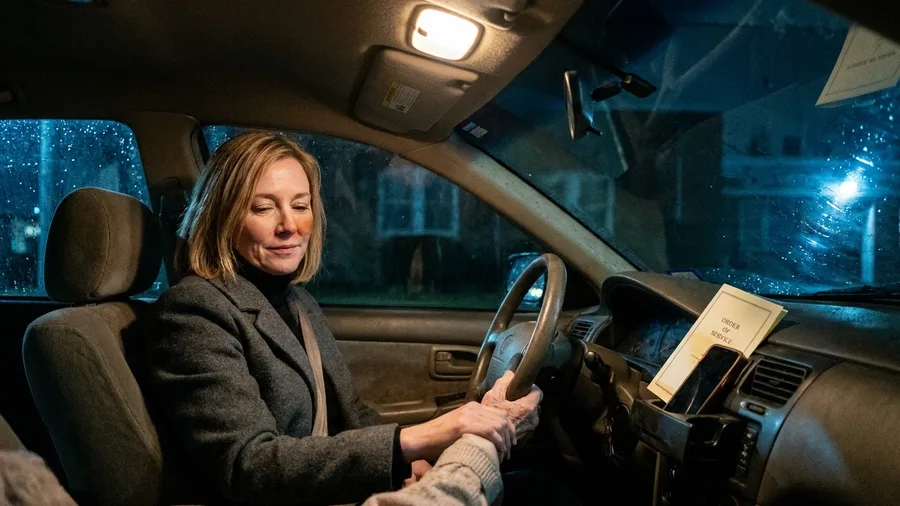
You walk into the memorial with a departure time already decided, and you sit near the aisle.
A thirty-minute window, arrival to exit, is the whole plan. Before you go in, pick one sentence and rehearse it once in the car: “I am so sorry. I will miss him too.” That is the sentence you will say to the widow, the daughter, the friend you have not seen since the last one, and it is enough. What it quietly buys is stamina. Two services forty-five minutes away in eighteen months is a lot of driving and a lot of standing in a reception hall, and the window keeps you from spending the week afterward recovering from a funeral.
What it spends is smaller than it looks. Arrange the drive in advance, or budget the $18 to $25 for a rideshare, and ask one remaining friend to ride along. The car is where the real conversation usually happens. Leaving early is allowed; it is not a measure of how much you loved him.
Grief at a service has a way of turning into a public test of endurance. The plan ends that test before it starts, and it keeps the loss and the friend beside you in the same frame, which is the only frame that holds.
Getting Through the Memorial Without Falling Apart
Do
- Decide a 30-minute arrival-to-exit window before you leave home
- Sit on an aisle so you can step out and back in
- Ask one remaining friend to ride with you
- Say the script: 'I am so sorry. I will miss him too.'
- Leave when your window ends, without announcing why
Don't
- Promise yourself you will feel nothing and then pace the parking lot
- Book the ride at the last minute and arrive shaking
- Measure closeness by how long you stayed
- Deliver a eulogy in the receiving line to prove you loved him
- Skip the coffee afterward because the service used you up
3. A Shared Memory Archive

You give it a place to live that does not close when the church doors do. Open a note on your phone, or a document two people can type into, and set down three things: the way you met, the phrase he said so often you could hear it in his voice, and one ordinary Tuesday you spent together. The errands, the bad coffee, the drive home.
Then ask two mutual friends to add one story each. No deadline attached, no obligation if they stall. The whole thing costs nothing. If the family might not want his words passed around, keep it private and say so up front. Read a single entry aloud when a few of you are together, or send one on his birthday and let it arrive like a letter.
That is the cost of keeping a name spoken: a few lines on a screen and someone willing to read them. The dead stay named, and the living keep a reason to call each other back.
💡 Tip: Use the Notes app, not a scrapbook. It searches, it syncs, and nobody has to buy supplies in a week when they can barely sleep.
💡 PRO TIP
Open With The Name, Not The Weather
Start the call with 'I miss him' instead of 'How are you?' Most people are waiting for permission to talk about the friend, not protection from it. Once he is named, the rest of the conversation gets easier.
4. A Weekly Check-In Call
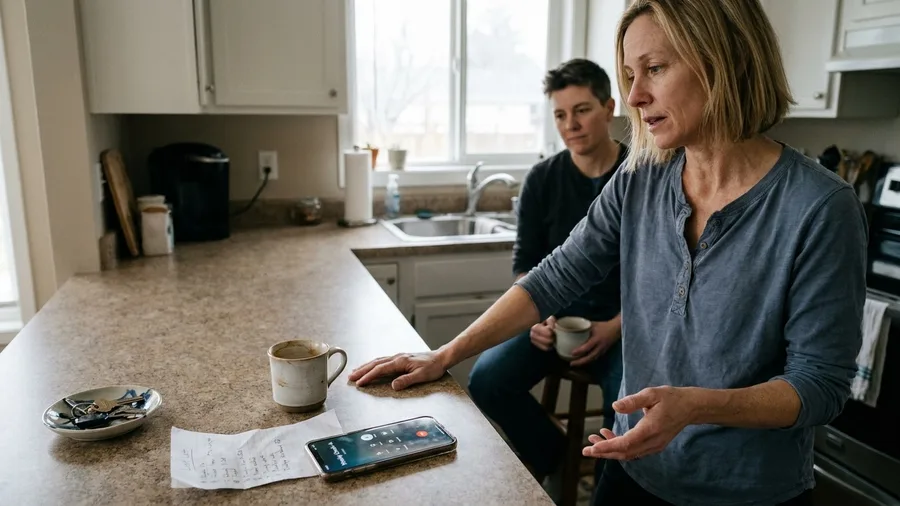
“Call me sometime.” It is the sentence people say at the end of a funeral, and it is the one that almost never turns into a call. Sometime means never, most weeks, not because anyone is lying but because both people are tired and neither wants to be the one who keeps reaching.
What a standing call signals is not neediness. It signals that the friendship is still an appointment, not a hope. Pick one friend and set 20 minutes, same day and time each week. Put it in the phone with an alarm, the way you would a doctor’s visit, because grief makes the week blur and a vague intention loses to a quiet evening.
Then open it differently than you would open any other call. “I miss him” rather than “How are you?” The first gives the other person permission to say the same thing back; the second invites a polite report on the weather and the knee. Twenty minutes is enough. Regularity carries more weight than length, and speakerphone or a free calling app closes any distance between you.
Rotate who dials, so one person is not always the one keeping the friendship alive. If the same friend calls every week, the arrangement starts to feel like a duty owed to a social director. Take turns and it stays a meeting between two people who each chose to show up.
The Circle Before and After One Weekly Call
The change is not instant; give it six weeks before you judge whether it is working.
5. A Three-Tier Friendship Roster
The invitation comes, and you say yes before you check the calendar, because saying no to a friend feels like closing a door you might not get to open again. That reflex is the cost. A shrinking circle makes every remaining friend feel scarce, so you spend your social energy on whoever asks first instead of whoever you actually miss.
The fix is a written roster, three tiers, decided once and kept somewhere you can see it. Tier one is two people you call every month. Tier two is four people you see once a quarter. Tier three is a holiday card and nothing more. Two names, four names, a handful of cards – not because the others matter less, but because a list you can hold tells you where the limited energy goes when the week is already thin.
Money is the second half of that question. About $60 a month is the realistic ceiling for one person in the example, and it buys three things: one ride to a friend across town, one coffee sat down with someone, one batch of cards and stamps. Five cards and postage came to roughly $12 of that. The other $48 does not stretch across every invitation, and knowing that in advance spares you the small humiliation of doing the arithmetic at the table.
Then the hard line. Pick one standing obligation that takes more than it returns – the group you drive 40 minutes to and sit silent through, the monthly dinner that is three hours of old complaints – and drop it. Grief narrows the bandwidth for company that asks more than it gives, and there is no prize for attendance. Saying the script out loud helps: ‘I am going to step back from this for now. It is not about you.’
The list is not permanent. Put a reminder on the calendar for six months out and read it again then. People move between tiers as health, distance, and grief reshuffle things – someone you called monthly may drift to a card, someone you barely saw may become the person who shows up. The roster is meant to be revised, not defended.
What the tiers actually do is quieter than a plan. They keep the loss from turning every remaining friend into an obligation you owe, and they keep the ones you would miss from going quiet by default. Two names on a page, called in the same week every month, is how a smaller circle holds.
💡 Tip: Ask each tier-one friend which week of the month is worst. Scheduling around the hard weeks is easier than rescheduling a call that keeps getting moved.
🌱 Six Weeks From One Loss to a Wider Circle
First 48 hours
Skip the archive and the group search entirely. Do one thing for the friend and one thing for a person still here, then stop.
Before the memorial
If the drive is 45 minutes, do not go alone and do not go empty. One card handed to a mutual friend beats a speech.
Week one
The archive comes last, not first. Grief counselors charge about $90 a session; the senior center charges $40 a year. Call the center before you call a therapist.
Week two
Write the roster on paper, not in your head. Paper is the only version you can see without opening an app.
Week three
Twenty minutes, same day, same time. Put it on their calendar and yours, because a call that has to be arranged each time will not survive a hard month.
Weeks four to six
One $18–$25 rideshare each way, no more. If you have done the same group three times and still sit silent, that is the obligation to drop, not the one to keep.
6. A Repeated-Group Trial

The common advice is to put yourself out there, join something, make new friends. It sounds reasonable until you are the one walking into a room where everyone already knows each other, and the advice turns out to be missing the part that matters. New friendships do not arrive in a single visit. They build slowly, through repetition, which means the first meeting is not a verdict.
Researchers who study friendship keep finding the same thing: closeness grows out of repeated, unforced contact, not from one good conversation. The people who run senior centers and walking clubs know this too. The first three visits feel awkward; the fourth is where someone remembers your name and saves you a seat.
So pick one recurring group and commit to three visits before you judge it. The senior center at $40 a year, a library lecture series, a walking club that meets Saturday mornings. Take one low-stakes role, like greeter or setup helper or the person who asks the question, so you have a reason to be there that is not about making friends.
If transport is the blocker, choose a daytime meeting, or budget $18 to $25 for an evening rideshare. And aim for recognition, not instant closeness. A face that lights up when you walk in is the whole goal for the first month. New faces sit alongside grief without replacing anyone; the lost friend stays lost, and the circle widens anyway.
The New-Circle Trial at a Glance
🔁 Best time of day
Daytime, if transport is tight
🎭 Cost of five cards
$12 with postage
💵 First-month goal
One face that lights up
🚕 Your reason to be there
A task, not a friendship
🎯 Skip the trial if
You can't reach it twice monthly
When the fourth visit feels worse
That's a sign to change groups, not quit meeting people. Two trials, two groups.
7. A Regret Letter and Repair

The version I got wrong was this: I wrote the letter to a friend who had died, sealed it, and sat by the phone afterward as if an answer would arrive. It did not. What I had done was write a letter to the wrong person and wait for the wrong reply.
Here is the frame that makes it plain. Unspoken regret is a debt you have decided you owe only to the person who cannot collect. The moment you hand it to someone else to settle, it stops being repair and becomes a request for absolution, which no one who loved them is obligated to give.
So write for fifteen minutes on one page and one regret only, in plain words: the Tuesday you said you would call and did not, the thing you meant to say at the last dinner. Name what you would do differently, then stop. If the person is still alive, send an edited version or make one concrete call this week; if they are gone, keep the page in a drawer or shred it, because both work and neither requires an audience.
The one place it goes wrong is the family. A condolence call is not a place to explain what you should have done, and a note to a surviving spouse is not a place to ask whether you were forgiven. Not because they would not care, but because your repair is yours to carry and theirs is not the same loss.
Repeat it only if the guilt is looping, if you are rewriting the same paragraph every few nights with no end. Otherwise one draft is enough. The move is small and bounded on purpose, so it leaves your attention where the living still are.
💡 Tip: Set a timer for the 15 minutes and stop when it rings. The letter works because it ends; a longer one becomes a document you keep reopening.
8. A Direct Death-Talk Script

You are standing in the church hall holding a paper cup, and someone you have known for thirty years asks how you are holding up. The honest answer is three sentences long and you can feel it will land like a dropped plate. So you reach for the weather. Regret loosens when it is said plainly, and so does this: the same plainness, aimed at the right moment, keeps the other person in the room instead of emptying it. Start with two lines said slowly: “I am sad. I am glad you are here.” That is the whole opener. It names the death without asking anyone to fix it, and it hands the other person something to stand on.
Then give them the choice, because most people freeze not from coldness but from not knowing which you need – the memory or the company. Ask, “Do you want to talk about him, or would you rather just sit with me for a while?” Either answer is a good one. And when the conversation turns into a two-hour replay you do not have the energy for, you are allowed to say so: “I can do twenty minutes on the phone, not the whole night.” That is not a rejection; it is what makes the twentieth call possible.
Skip the advice unless it is asked for. Someone telling you about a friend’s last week is not handing you a problem to solve, and the urge to say the right thing – the doctor to see, the book to read – comes from your own discomfort, not theirs. Two plain sentences, one honest question, one boundary, and you have done the thing most people avoid for years: you have said the friend’s name out loud without turning the room into a crisis.
9. A Professional Grief Check-In

The mistake I made was treating a counselor as a verdict on me. I had built the calls, kept the cards going, done the plain talk, and still went four days eating almost nothing, sleeping in a chair, not answering the door. I told myself the moves had failed. What had actually happened was that I had reached the edge of the moves.
That edge has a shape you can recognize. Grief that stops you eating, sleeping, or leaving the house for more than about two weeks is no longer a hard week. So are thoughts of not wanting to be here; that one is worth saying to a doctor or a counselor now.
The step is small. Book one session, which runs about $90 in the example, or call the senior center, $40 a year, and ask whether they run a sliding-scale grief group. Ask specifically for grief support, not generic therapy. Give it two sessions before you decide, since the first is mostly a stranger across a room.
And keep everything else. The 20-minute weekly call stays, the plan for getting through a service stays. The counselor sits alongside the remaining friendships rather than standing in for them, and the circle ends up wider, not closed.
💡 Tip: When you book, ask whether the counselor has a sliding scale and whether they work with older adults. Two questions at the front save you a copay at the back.
Frequently Asked Questions
How long should grief after losing a friend last?
Longer than the week of the funeral, and there is no correct clock. The sharper edge usually lifts as the routine returns, while the missing stays. If it has been months and you still cannot eat, sleep or leave home, that is the point to add a counselor rather than wait it out.
Is it strange to feel this much about a friend’s death?
No. Friendships in later life often carry the daily contact that family now does from a distance, so a friend’s death can land harder than a relative’s. The size of the grief is a rough measure of how much of your week that person filled.
What do I say to a friend’s spouse at the service?
One true sentence and the friend’s name. ‘I am so sorry. I will miss the way he answered the phone’ does more than a speech. Say it, ask what the next week looks like, and follow up with one card a month later when the house has emptied out.
How do I keep the remaining friendships from falling apart?
Regularity beats intensity. One 20-minute call a week at the same time, rotating who dials, keeps a friendship alive better than an occasional long dinner. Add the three-tier roster so the people you care about are on the calendar rather than in your good intentions.
At what point does grief need a counselor?
When it blocks eating, sleeping, or leaving the house, when it has not loosened at all after several months, or when there are thoughts of not wanting to be here. Book one grief-specific session, try two, and keep your weekly call going alongside it.
How do I talk about all these deaths without making people uncomfortable?
Say the short version first: ‘I am sad. I am glad you are here.’ Then ask whether they want to talk about the person or would rather have company. Give them a real choice and the conversation stops being a test of their comfort.
What Can Wait, and What Cannot
Match the move to the loudest pain, plainly. If loneliness is what wakes you, the weekly call comes first. If regret is looping, write the regret letter first. If grief is blocking eating, sleeping or leaving home, book the counselor first and let the rest wait.
Otherwise the first step is one thing: choose one friend who is still here and put a 20-minute call on the calendar this week.
The 73-year-old with a circle down from seven to four still has a calendar, and that calendar still has room for 20 minutes. The circle is smaller, not finished. One card, one call, one ride, one session at a time.
Put One Name On The Calendar Tonight
Pick one friend who is still here and schedule a 20-minute call for this week. That single call is the first of the nine, and the one the other eight rest on.