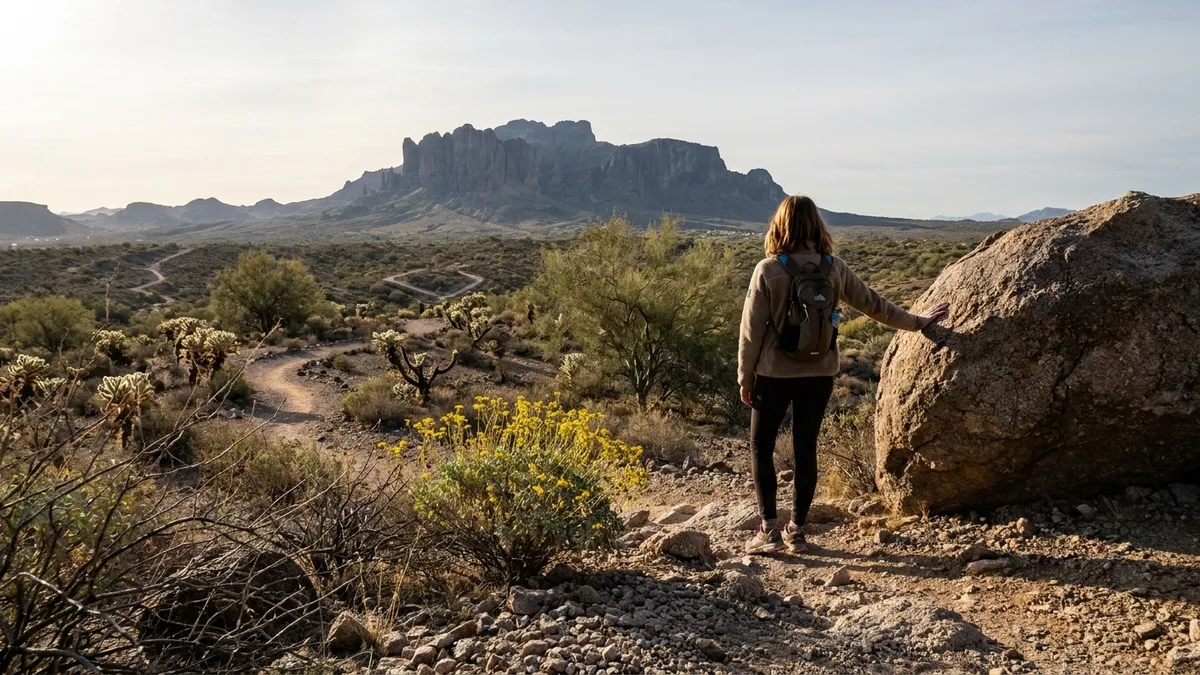
Cold air pours off the Superstition ridgeline at eight in the morning, sharp enough that your first breath on the Treasure Loop tastes like metal. That is the Arizona winter window. Lower-desert afternoons run 60-70°F, Sedona and foothill trails sit at 50-60°F, and higher trailheads start near freezing, so the climbs that punish you in June are comfortable now. Lost Dutchman, Camelback and Sabino trailheads fill by mid-morning all winter, which is the whole argument for an early start.
You could stay on the patio and drive to a viewpoint at noon. You would trade the best three hours of the day for a parking lot.
Winter does not flatten the desert into one easy choice. Exposure, shade, creek water, crowds, drive time and elevation gain split these 11 trails into very different kinds of free day, and the wrong pick costs you the morning.
What follows is a shortlist of 11 winter-worthy desert trails, each with its location, round trip, elevation gain, payoff and the timing that makes it work. Choose by the day you actually have, whether that is a quick stop, a half-day workout, a family walk, Sedona scenery, or Tucson flexibility, then confirm closures, entry fees and tram schedules before you drive.
Arizona Winter Trails at a Glance
1. Lost Dutchman’s Treasure Loop
The first thing that hits you at the Treasure Loop trailhead is the cold, dry air coming off the Superstition ridgeline, sharp enough at dawn that you’ll want a layer until the climbing warms you up.
The loop runs 2.4 miles with 1,100 feet of gain inside Lost Dutchman State Park, east of Phoenix, and there may be a day-use entry fee at the park gate. Winter is what makes it work: the climb stays cool and the Flatiron and volcanic ridgeline sit sharp against the sky. It’s rocky and fully exposed, so start early and expect the lot to fill by mid-morning. Give it one to two hours of steady uphill and you get big rock views and enough gain to feel earned. This is not a shaded stroll. Carry 2 liters of water if you stretch it into a half-day.
💡 Tip: Add the Siphon Draw switchbacks above the loop only if you have the legs and the daylight; the Flatiron itself is a much bigger day.
| Trail | Region | Round trip | Elevation gain | Best for |
|---|---|---|---|---|
| Lost Dutchman Treasure Loop | Superstition Mountains, east of Phoenix | 2.4 mi loop | 1,100 ft | Classic desert scenery, short workout |
| Hieroglyphic Trail | Superstition foothills, Gold Canyon | 3.0 mi out-and-back | 600 ft | Rock art on an easy walk |
| Wind Cave Trail | Usery Mountains, Mesa | 3.2 mi out-and-back | 800 ft | Fast payoff climb |
| Gateway Loop | McDowell Sonoran Preserve, Scottsdale | 4.4 mi loop | 700 ft | Mixed-ability groups |
| Hole-in-the-Rock | Papago Park, Phoenix | 0.3 mi walk | Minimal | Quick sunset view |
| Echo Canyon | Camelback Mountain, Phoenix | 2.4 mi out-and-back | 1,200 ft | Hard winter workout |
| White Tank Waterfall Trail | White Tank Mountain Regional Park, Waddell | 1.6 mi out-and-back | 200 ft | Families, after winter rain |
| Airport Mesa Loop | Sedona | 3.2 mi loop | 350 ft | Red-rock views, short outing |
| West Fork Trail | Oak Creek Canyon, north of Sedona | 6.4 mi out-and-back | 300 ft | Shade, water, canyon walls |
| Sabino Canyon Tram Road | Tucson | 7.4 mi out-and-back | 500 ft | Flexibility, tram return |
| King Canyon–Gould Mine Loop | Saguaro National Park west, Tucson | 2.5 mi loop | 450 ft | Rugged short loop, mine ruins |
2. Hieroglyphic Trail in the Superstitions
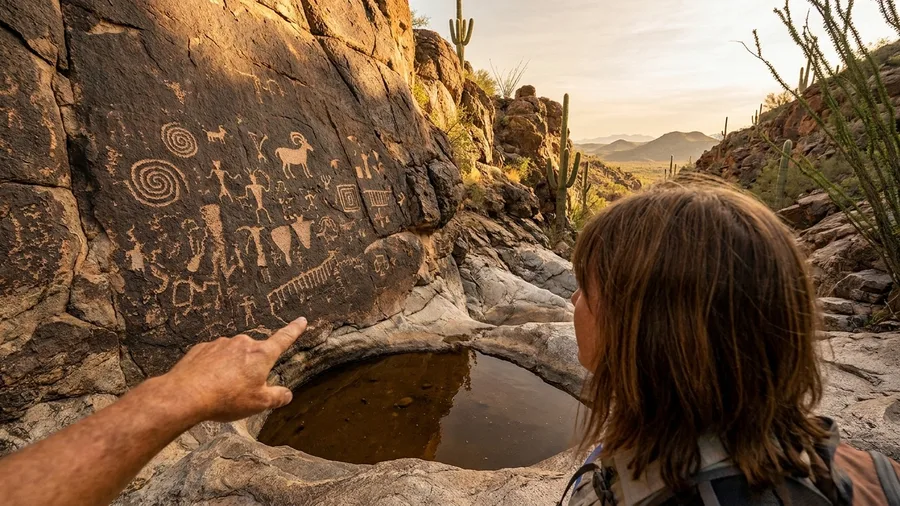
It is the low, gentle canyon walk in the Superstition foothills near Gold Canyon, east of Phoenix, where the same volcanic range that hands out a hard climb offers something quieter instead.
The round trip is 3.0 miles out and back, and the gain runs about 600 feet. That figure is the whole point of the route: while the exposed climbs of the range above spend their elevation on a ridge, this one uses its modest gain to fold back into a narrow canyon, so the walking stays smooth enough for most anyone who can handle a couple of hours on their feet. The path is graded, the tread is forgiving, and there are no hand-over-hand moves anywhere on it.
Start early, though, and treat the morning as the hour this trail belongs to. The elevation is low, which is why a winter day here stays warm enough to walk in a light layer, but the same low sun that warms the canyon also pushes the temperature up by midday. A short winter morning fits the walk; an afternoon starts to feel like a chore against the rock. The real variable is the tinaja, the natural rock basin at the canyon’s end – winter storms are what fill it, so your odds of finding water rise in the days after rain. A dry basin is still worth the walk, but the pool is what turns a pleasant stroll into a picture people keep.
The petroglyphs are the destination. Near the trail’s end the canyon walls carry rock art pecked into the dark stone, and the right way to see them is exactly the way you’d want a stranger to treat the view from your porch: stand on the trail, look, don’t touch, don’t climb toward them, and don’t let a camera strap swing close. Rock art outlives the people who made it only if the people who visit it leave it alone.
Allow around an hour and a half, and bring water even on a cool morning – two liters if you like to linger. The trailhead is a popular one, so arriving early does double duty: you beat both the heat and the lot. If the day you have is more of a stroll than a workout, this is the shape it wants.
💡 Tip: After a soaking storm the tinaja can be full, but the rocks get slick. Give it a day to drain.
💡 PRO TIP
Winter starts are non-negotiable
On every exposed Phoenix and Tucson trail here, the difference between a 7 a.m. start and a 10 a.m. start is a cool climb versus a warm one with a full parking lot. Set the alarm and be walking before 9 a.m.
3. Wind Cave Trail
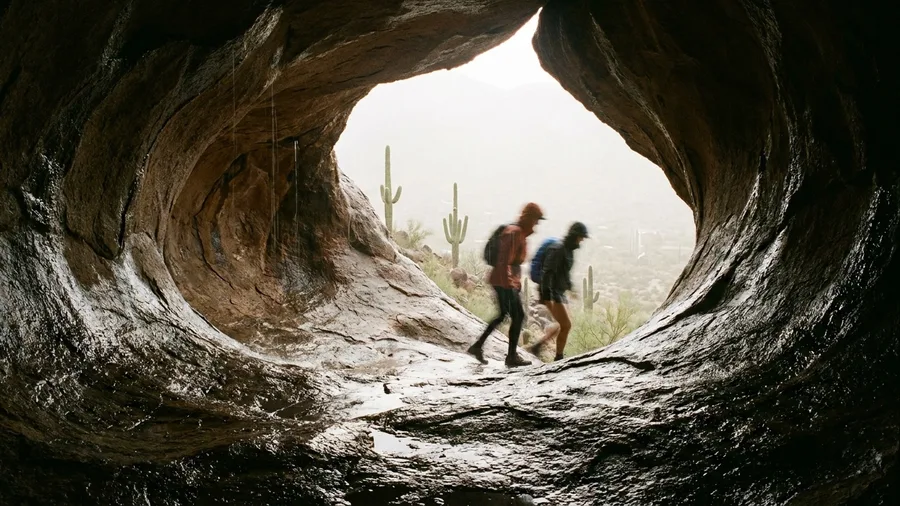
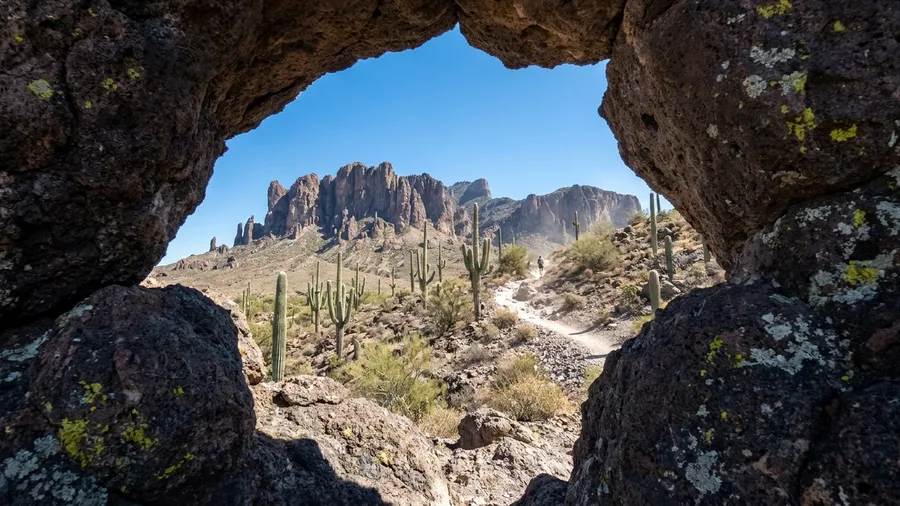
Wind Cave is the best short climb in the east valley, and the payoff is a wind-carved alcove above Mesa that you’ll hear before you reach it. If one short climb leaves you hungry for more, these must-hike trails push endurance and reward it with raw scenery.
It’s 3.2 miles out-and-back with 800 feet of gain on steady switchbacks in Usery Mountain Regional Park. Winter keeps the exposed climb cool, and the cave itself is breezy, so bring a layer for the top. The grade is steep and short, which means it feels like a real workout without eating your day. Start before 9 a.m.; the trail is fully exposed to the Phoenix sun.
Once you’re inside the alcove, sit down and let it blow. The valley spreads out below and there’s no reason to hurry back.
Wind Cave Trail — At a Glance
🎟️ Entry
Park day-use fee possible; confirm at gate
💧 Water
2 liters for this half-day
🅿️ Parking
Lot fills by mid-morning in winter
📈 Grade
Steep and short; steady climb, no flat
🚫 Skip if
Knees dislike sustained downhill
➡️ Pair with
Hieroglyphic Trail, 20 min west
The trade
Trading a flat stroll for 800 ft of gain buys you the alcove in under an hour — but the descent is the part that hurts.
4. Gateway Loop in Scottsdale
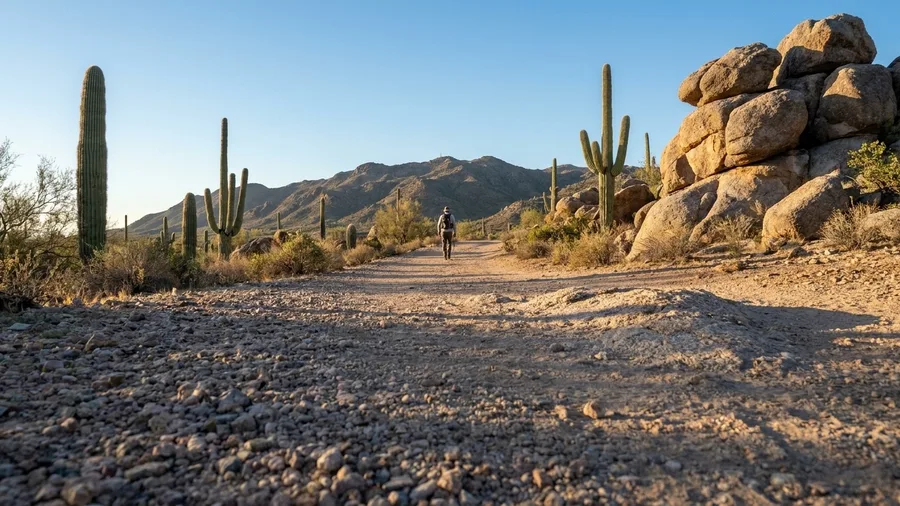
Switchbacks on the Usery climb hand you a workout with a view waiting at the top. Gateway Loop trades that for something else: a wide path, a steady grade, and a group that can spread out without losing each other.
You’re in the McDowell Sonoran Preserve, 4.4 miles of loop with about 700 feet of gain, and the trail is wide enough that saguaros flank it rather than crowd it. Every junction is signed. That sounds like a small thing until you’re the one who gets to stop staring at a map and start noticing granite boulders stacked above the path. Cool morning air makes the lap pleasant, and the layout lets you cut it short or tack on more. Most trailheads in the preserve are typically free, but confirm current rules before you park. The main lot fills early, so get there before the crowd, and if the plan runs to a half day, bring 2 liters of water.
💡 Tip: Two liters of water for a group of two on this loop; the preserve has no reliable water source.
A Winter Half-Day, Built Right
5. Papago Park’s Hole-in-the-Rock Walk
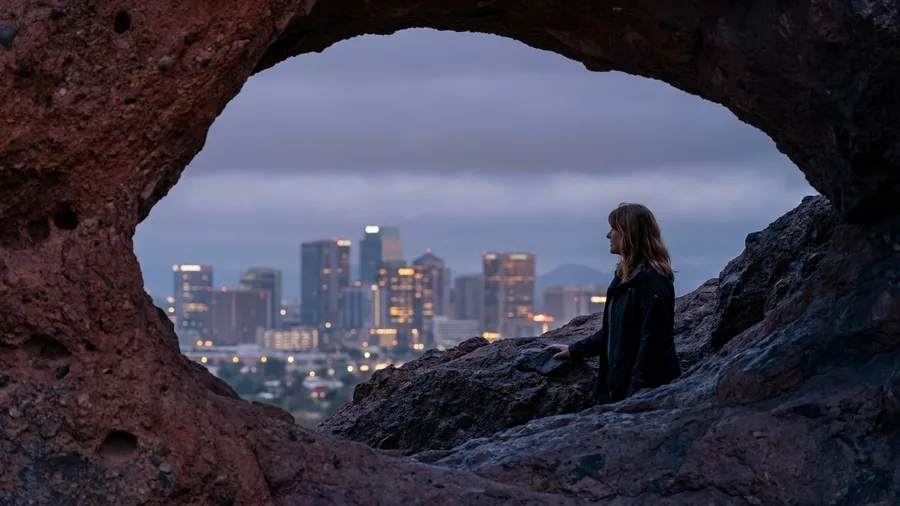
A third of a mile gets you there. Walk the short path into Papago Park, climb a few rock steps, and you’re standing behind a sandstone window framing the Phoenix skyline.
Pitch up just before sunset in winter and the low light hits the red rock on one side while the towers go soft and gold ahead of you. Stand back a few body lengths and let the arch do the work, because everyone bunches at the portal itself. Views of the city and the desert that edges it come at once here. What you’ll also see is company: picnickers, families, weddings, dogs.
Almost no climb, no half-day eaten, and a leg stretch between museum stops. That doesn’t make it a wilderness escape, so treat it as a compact desert view with a city in it. For time-pressed visitors and kids it’s one of the easiest payoffs in the valley, and the sunset is the point.
Quick Tips Before You Start
Layers, not a coat
Trailheads sit near freezing at dawn and warm 30 degrees by noon, so wear a base layer plus a fleece you can strip.
Two liters minimum
Winter air is dry and you sweat less than you think, which makes dehydration sneak up on half-day hikes.
Sunscreen in January
The sun is lower but the UV on exposed slickrock and desert pavement still burns an uncovered neck.
Check entry fees first
Lost Dutchman and White Tank are park entries; Sabino Canyon charges a tram fare. Confirm the current rate on the official site.
Arrive early, not on time
Lost Dutchman, Camelback and Sabino trailheads fill by mid-morning in winter, and overflow parking can add a mile.
Download the map
King Canyon and parts of the Superstitions are lightly signed and cell service drops in the canyons.
6. Echo Canyon on Camelback
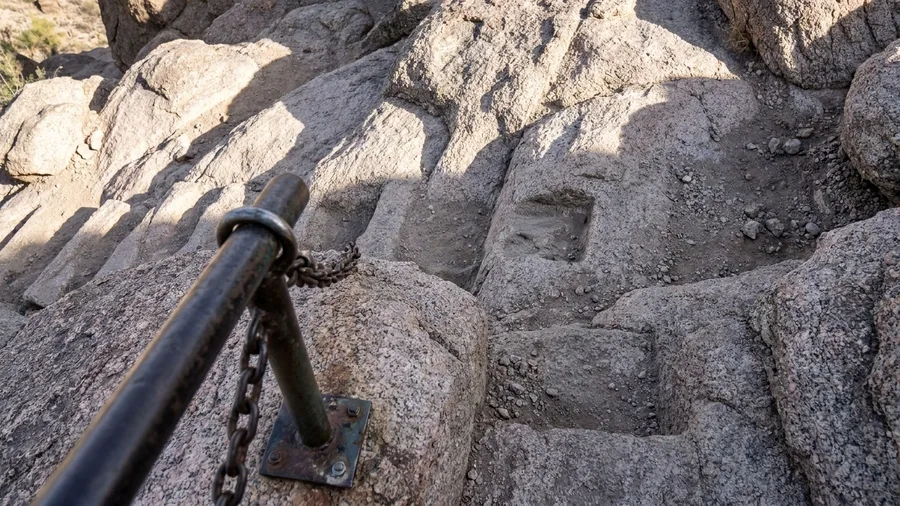
Yes, if you’re an experienced hiker who wants a short, stiff workout more than a long, gentle one. And yes, the crowd is real. Camelback’s busiest trailhead fills by mid-morning in winter, and starting at first light is how you beat it.
The route is 2.4 miles out and back with about 1,200 feet of gain, and the gain is the whole story. Rock steps take you up in bursts, sections get hand-over-hand, and descending is slower than you expect, because knees and patience both get tested. That’s the shortest legitimate line to the summit, so treat the climb as the main event rather than something to rush through.
On the plus side, winter cools the exposure enough to make the scrambling manageable. Carry 2 liters of water for the half day. The summit payoff is real, the hand-over-hand sections are real, and so are the loose bits on the way down.
Where do you eat afterward? Mexican food in Phoenix is the reward, and the cheap version is a proper carne asada burrito from one of the city’s standing taquerias, typically around $12 to $15. You’ll find a dozen within a ten-minute drive of the trailhead.
💡 Tip: Skip it after rain; the smooth granite and sandstone sections turn genuinely dangerous.
⚠️ COMMON MISTAKE
The 10 a.m. start
Winter does not mean cool all day. On exposed Phoenix and Tucson trails, a 10 a.m. start puts you on the climb during the warmest, busiest part of the day with a full parking lot behind you.
7. White Tank Waterfall Trail
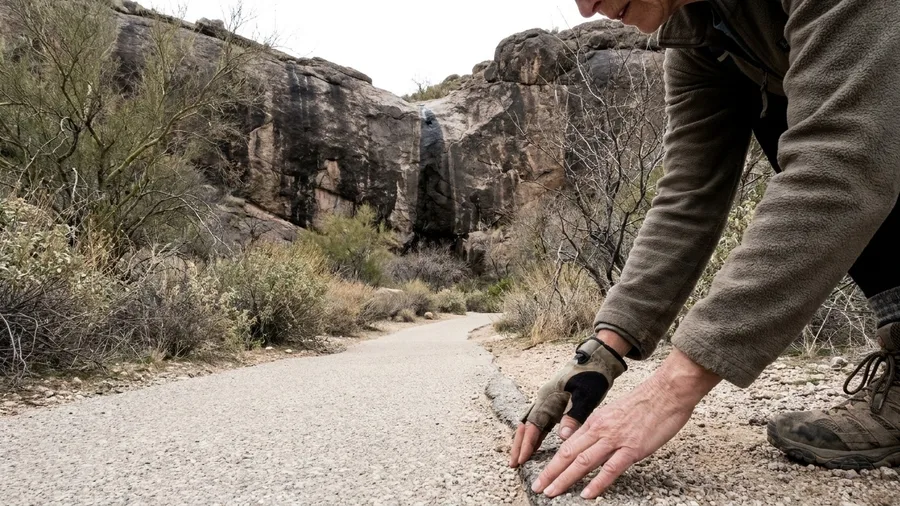
The waterfall is the catch, not the promise. White Tank Mountain Regional Park, out in Waddell on the west valley edge, runs a 1.6-mile out-and-back with 200 ft of gain to a seasonal fall that only flows when winter storms have put water in the drainage, so check the park’s recent conditions before you build a day around it. Day-use entry may apply at the gate, and confirming that and the flow is the whole pre-trip checklist.
What you get either way is the easy side of the Phoenix desert. The path is smooth and short, with petroglyphs near the turnaround, and at 200 ft of climbing it asks nothing of anyone’s lungs. That makes it the family walk and the casual-walker walk in one: kids can do it, grandparents can do it, and the payoff is rock art and a black-stained pour-off rather than a summit.
Know who this is not for. If you came west expecting a workout, you will finish in under an hour and wonder what to do with the rest of the morning. Best after real winter rain, best when the point is a slow hour outside with people who do not want a climb.
Worth the Drive or Not in Winter
Worth it now
- Echo Canyon in cool air with an early start
- West Fork on a weekday with creek flow
- White Tank falls after a winter storm
- Sabino Canyon road walk with the tram as backup
Save for another season
- Camelback at 11 a.m. in full sun
- West Fork on a holiday weekend
- White Tank in a dry spell, if you came for water
- Any exposed trail started after 10 a.m.
8. Airport Mesa Loop in Sedona
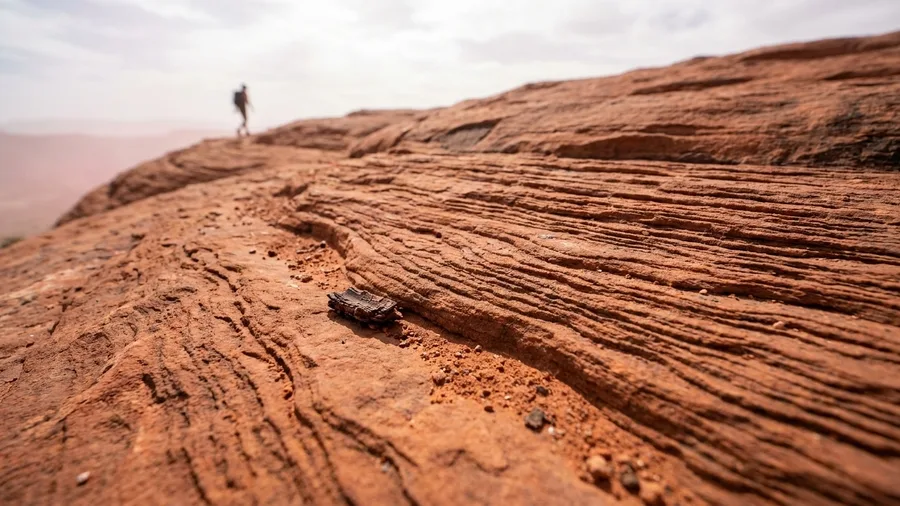
Winter air on the Airport Mesa slickrock sits around 50-60°F, cold enough in the morning that you climb in a layer and shed it, and the low sun throws long shadows across the red rock all afternoon. The loop is 3.2 miles with 350 ft of gain, exposed dirt and slickrock the whole way, and you can walk it in under two hours. It gives you Sedona’s rock without committing a day to the vortex trails.
The footing is the trade for those views, and the parking lot at the mesa is small and fills hard at sunset, so arrive early or accept a walk from the road. Honest likelihood of seeing something: ravens and the occasional mule deer are common; anything rarer is a gift, not a plan.
9. West Fork Trail in Oak Creek
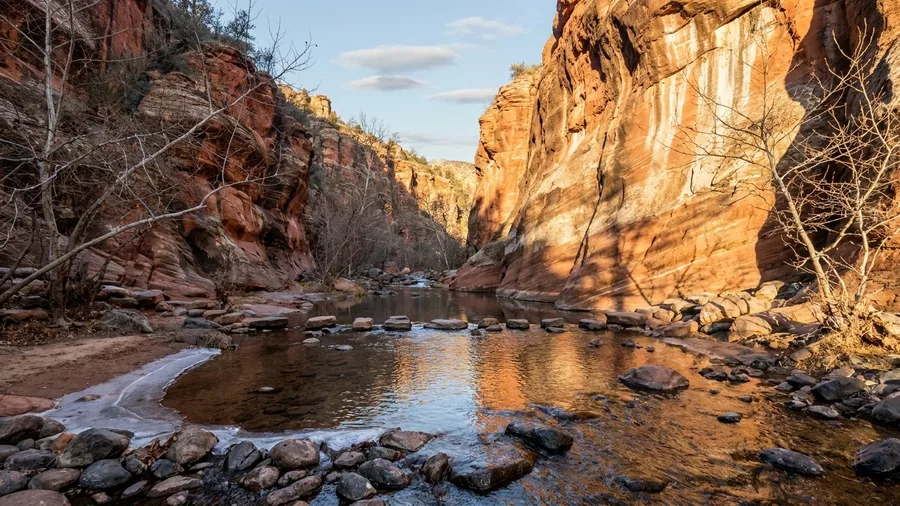
Yes, if you want shade, water, and sandstone walls instead of exposed slickrock, and no if you want a short outing. It runs 6.4 miles out-and-back with only 300 ft of gain from Oak Creek Canyon north of Sedona, and multiple creek crossings mean wet feet before you are a mile in.
Winter here is quieter than the postcard version: bare limbs, reflective water, cool canyon air, and color that comes from the creek and the canyon walls rather than foliage. Go on a weekday for the calmest version, carry 2 liters of water, and start early. Hikers ready for a half-day of creek crossings get the reward; anyone after a quick stroll should look at a shorter loop.
💡 Tip: Crossings are easiest where the trail clearly points; rock-hop at the marked lines rather than inventing your own.
10. Sabino Canyon Tram Road Walk
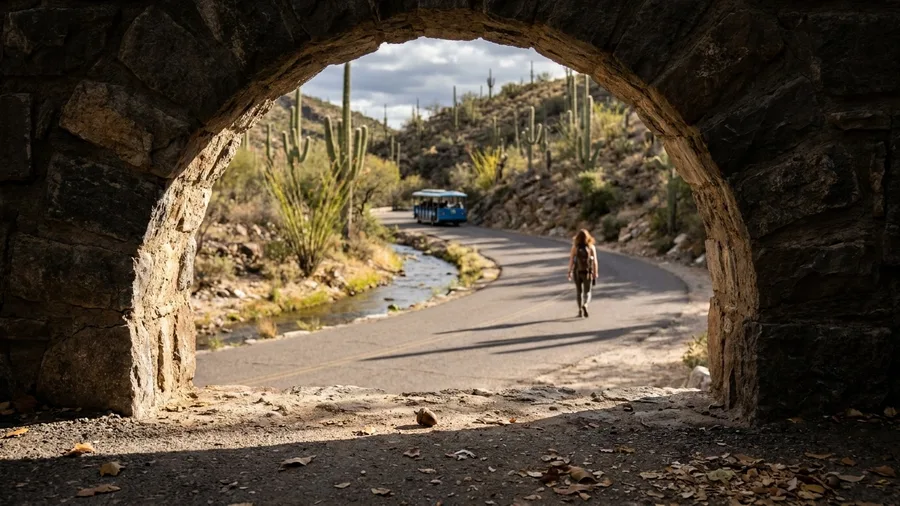
The creek comes into earshot before you see it, a cold hiss under the granite, and on a January afternoon the canyon air holds the sun long after the valley has cooled. Sabino Creek runs through Sabino Canyon north of Tucson, and after a winter rain it moves with real volume instead of the dry cobbles you cross in summer.
This is the trail Tucson residents pick over the famous Catalinas when they want distance without commitment. The route follows the paved tram road 7.4 miles out and back with about 500 feet of gain, a grade gentle enough that the mileage is the workout, not the rock. Go on a weekday, start before 9 a.m., and know the trailhead fills by mid-morning in winter. The tram is the point: ride partway or catch it back when your legs or the afternoon light run short, so the same road serves a family with small children and a hiker chasing 7 miles. Hikers planning a bigger season will find spectacular trails across the USA worth scouting before the heat returns. Confirm the tram fare and schedule before you go, since both shift with the season.
11. King Canyon–Gould Mine Loop
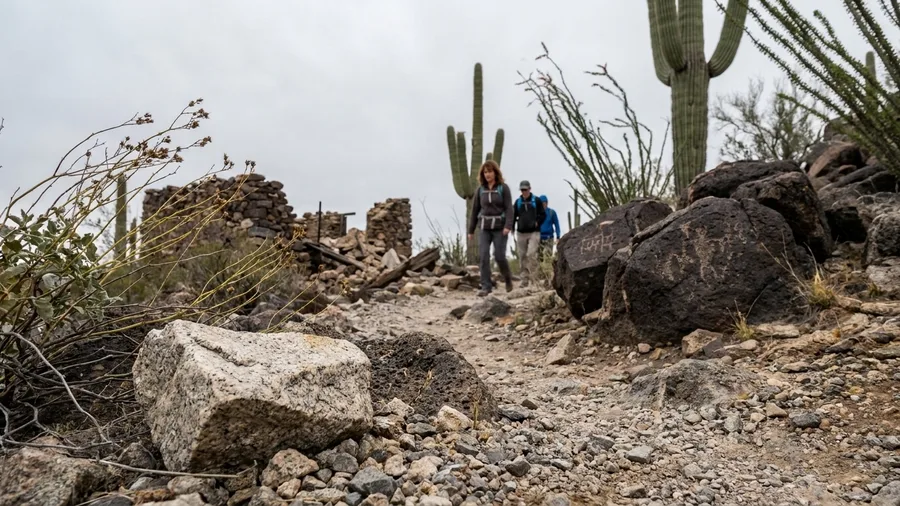
Where a wide paved road gives you a tram to lean on, this one gives you half the distance and none of the backup: 2.5 miles, 450 feet of gain, and ground that takes attention. King Canyon sits in Saguaro National Park west of Tucson, and the loop is rocky and lightly signed, so bring a map and treat the trail as the real navigation.
The story here is older than the park. Along the route you pass petroglyphs, figures scratched into dark rock by people who lived in this desert long before the mine came, and then the ruins of the Gould Mine, where ore was pulled out around the turn of the last century. Winter makes it workable: cool air on the climb, honeyed late-afternoon light on the saguaros, and heat that turns punishing after 10 a.m., so start early and go slow on the rock. Hikers who want a short, rugged loop with a vista at the top get exactly that.
Frequently Asked Questions
What is the best winter hike in Arizona for a first-timer?
Lost Dutchman’s Treasure Loop. It is 2.4 miles with 1,100 feet of gain, sits in classic Superstition scenery, and gives you a real climb without a full-day commitment. Start by 8 a.m., check the state park day-use fee, and carry two liters of water.
Do I need a reservation or permit for any of these trails?
None of the eleven require a permit in the ordinary sense, but Lost Dutchman and White Tank sit inside parks with day-use entry, and Sabino Canyon charges a tram fare if you want the ride back. Confirm current fees, hours and any closure on the official park site before you drive.
How cold does it get on these trails in winter?
Trailheads at higher elevations can be near freezing at dawn, while lower desert afternoons run 60–70°F. Sedona and foothill trails sit around 50–60°F. Wear a base layer plus a fleece you can shed within the first twenty minutes.
Can I hike Camelback’s Echo Canyon if I am not an experienced hiker?
Honestly, no. The 1,200 feet of gain comes with steep rock steps and hand-over-hand sections, and people turn around near the top every weekend. If you want a climb with a view and no scrambling, do Wind Cave Trail instead.
Is the White Tank waterfall actually flowing?
Only after rain. It is a seasonal desert waterfall, so check recent precipitation before promising anyone water. The 1.6-mile walk with petroglyphs is still worth doing dry, especially with kids.
How much water should I carry on a winter hike here?
Two liters for any half-day. The air is dry, you sweat less than you notice, and dehydration on a 1,100-foot climb in January is more common than people expect.
Match the Trail to the Day You Actually Have
Match the trail to the shape of your day. The easiest quick stop is Hole-in-the-Rock, 0.3 miles with minimal gain. The best half-day workout is Echo Canyon, 2.4 miles and 1,200 feet. The best family walk is White Tank’s Waterfall Trail, 1.6 miles and 200 feet, though park entry needs confirming. For Sedona scenery without a full day, take the Airport Mesa Loop, 3.2 miles and 350 feet. For Tucson flexibility, walk the Sabino Canyon road and ride the tram back: 7.4 miles, 500 feet, with the fare to confirm.
Before you drive, check the official park sites for closures, entry fees and tram schedules. Lost Dutchman and White Tank may charge day-use entry, Sabino Canyon has a tram fare, and most other listed trailheads are typically free.
The season gives you the window, not a guarantee. Start early, before exposed Phoenix and Tucson trails warm and before the busy trailheads fill, pick one trail by the day’s shape, carry 2 liters of water on a half-day, and confirm the details before the drive. First light on the Treasure Loop is still cold and still worth the alarm.
Start before 9 a.m. tomorrow
Pick your trail from the table above, set two liters of water by the door, and check the park site for fees and closures tonight. The cool window is short and worth the alarm.