
By the end of this piece you will be able to tell which kind of quiet you are living with, and ask the one question that fits it. It starts at the kitchen table: you ask how his day was, he says ‘fine,’ and the word lands like a door easing shut. No slammed door, no hostility – just the flat syllable, and you have begun to hear it as a verdict on thirty-two years.
The flatness is not a single signal. Under the same closed face run at least ten different engines, and several have nothing to do with how he feels about you: ears that have been failing for years, a depression that looks like nothing, a vocabulary he was never given.
So the question is not whether he still loves you. It is which silence you are actually living with – and that one has an answer you can find.
Quick Tips Before You Start
Sit beside, not across
Side by side in a car or at a kitchen counter loosens more than a face-to-face talk ever will.
Offer two words, not an open question
Ask whether it is more like embarrassed or more like tired and you will get an answer.
Say one sentence, then stop
The silence after your question is him working, not refusing. Count to fifteen before you fill it.
Rule out the ears early
Nodding at the wrong moment and quiet in noisy rooms is a hearing question, not a heart one.
Watch the pattern, not the day
Note whether the quiet lifts when the subject changes. That one detail sorts half the list.
Where the habit came from
Three of these silences formed decades before you were in the room. They belong to the boy, the worker and the son, not to the husband, which is why asking him what is wrong with the marriage gets you nowhere.
Sort these first. If his quiet is one of the three below, it predates you and it is not a verdict on anything you have done.
1. He never learned the words for it

‘ is that he stalls, and the stall gets read as a door closing. The question lands on a man who was raised with a list that held two entries, anger and its absence, and who learned early that tears were stopped and an unnamed feeling was not worth reporting.
Set him a work problem and watch the difference. A rostering clash at the depot, three shifts short at Christmas, and he can walk you through it for twenty minutes, names, dates, who said what to whom. Ask him how that left him feeling and the sentence stops dead. Nothing is being withheld; the word he needs was never installed, and ‘how did that feel’ asks him to reach for something that is not there.
Men who do talk fluently were given practice at it somewhere. A therapist, a group that met on Tuesdays, a sister who rang every week and would not let a shrug end the call. So give him a fork instead of an open field. ‘Is it more like embarrassed, or more like tired?’ is answerable. ‘What is wrong?’ is not.
💡 Tip: Skip "what's wrong." Ask: "Is it more like embarrassed, or more like tired?" A closed fork gets an answer an open question never will.
| What she is seeing | What it more often is | What tends to help |
|---|---|---|
| Stalls on “how did that feel” | No vocabulary for it, only anger or nothing | Two words to choose between |
| Went quiet after the last day of work | The audience that needed his answer is gone | A place where someone needs his answer |
| Calls it normal, says nothing is wrong | His father’s marriage is the only template | Name the template out loud, once |
| Fine about most things, shut about one | An old argument still outstanding | Name the subject, do not re-argue it |
| Nods at the wrong moment | Hearing loss | A hearing test through the GP |
| Flat for months, nothing interests him | Depression in an older man | A GP appointment framed as a check-up |
| Never says it, fixes things instead | Believes thirty years counts as having said it | Ask for one sentence, not a talk |
2. Retirement took away the room where he was heard

He had a job that needed his answer before lunch, and now the phone does not ring.
For thirty years the working day handed him a title, a desk, and a run of colleagues who asked his opinion on freight, on staff, on which supplier to use, and then acted on what he said. That is an audience, and it asked nothing of him once he came through his own front door. The quiet usually deepens a year or two past the last day. The first months have the shape of a holiday; then the diary empties and nothing asks him anything again.
Men who retire into a place that wants their judgment keep their voice. A shed committee, a volunteer rota, a workshop where someone waits on his answer about the shelf bracket. The move is not to start needing him yourself, it is to help him find somewhere that already does.
3. His father’s marriage is the only template he has

“That’s just how he is. His dad was the same.”
The template sits in the house he grew up in: his father behind the evening paper, his mother carrying the worry alone, and the arrangement praised as a good marriage. From that he took a rule he has never said aloud. Quiet and steady are one thing, and a house where people talk through everything is a house on alarm, because noise is what happens in the weeks before a person leaves. The job gave him an audience that ended. The template tells him what a marriage is supposed to sound like, and it outlasts the pension.
It buys him a settled home that never shakes, and it spends something slowly: the wife who is told, by his manner, that her talking is the danger. Men whose parents talked across the table do not settle into this, and neither do men whose first marriage ended in exactly the silence they then reproduced.
So point at it once, without contempt. ‘This is how your parents did it, and I’m asking whether we want it.’
How much the silence is costing, month by month
Same quiet, very different bills
- Untrained vocabulary: Frustrating, and the easiest of the ten to work around.
- Lost audience after retirement: Grows quietly for a year or two, then levels off once he has somewhere to be.
- Inherited template: Stable for decades, and the hardest to shift without a fight about his parents.
- Untreated hearing loss: Worsens on its own and pulls him out of group conversations entirely.
- Depression left alone: The one on this scale that does not improve by itself.
What the quiet protects
The next three silences are aimed at you, or at the marriage, and they are the ones most often misread as coldness. Each is doing a job for him.
Your task here is to work out which job, because the response differs completely: one wants a direct question about facts, one wants reassurance that a fight will not end the marriage, and one wants an old subject named.
4. Silence is how he tries to shield her

Four things older men most often decide not to say: a health scare that turned out benign after three weeks of waiting, a bad number in the accounts, the death of a friend he has known since school, and the fear about which of them goes first. None of these are concealed because he thinks she cannot handle the news. The reasoning runs the other way – he believes that saying it aloud makes her carry it too, and that keeping it in his own head is a kindness.
This is the quiet of a man carrying cargo. It is not the template he grew up with, and it is not evasion; it is a good intention that never gets checked against what it actually does to the room. So a hospital appointment becomes a dental check, a funeral becomes “work was busy,” and a bad week in the accounts becomes a slightly shorter answer about how the business is going.
The cost lands on both sides and neither person sees it the same way. She notices the flatness on Tuesday and again on Thursday and starts reading it as distance, a door closing. He notices her worry and files it under proof: this is exactly why he said nothing. The manoeuvre keeps the news from her, but it also quietly supplies his reason for continuing.
A question that will tell you which silence you are living with: is there something you have decided not to tell me? Not what is he feeling – that is the question he has spent fifty years not answering. Ask for the fact. It goes down far easier, because it asks him to hand over a piece of information rather than describe his interior.
The counterweight matters. If he is equally closed about his own preferences, how the day went, and what he would like for dinner, then protection does not explain it – a man shielding her from a diagnosis does not also withhold his opinion about takeaway on a Friday. The quiet that is selective is the one doing this work.
She is not being kept out of his life. She is being handed a load he thinks is too heavy for two, and the only way to find out is to ask, plainly, for the thing rather than the feeling.
5. He’d rather go quiet than risk the marriage
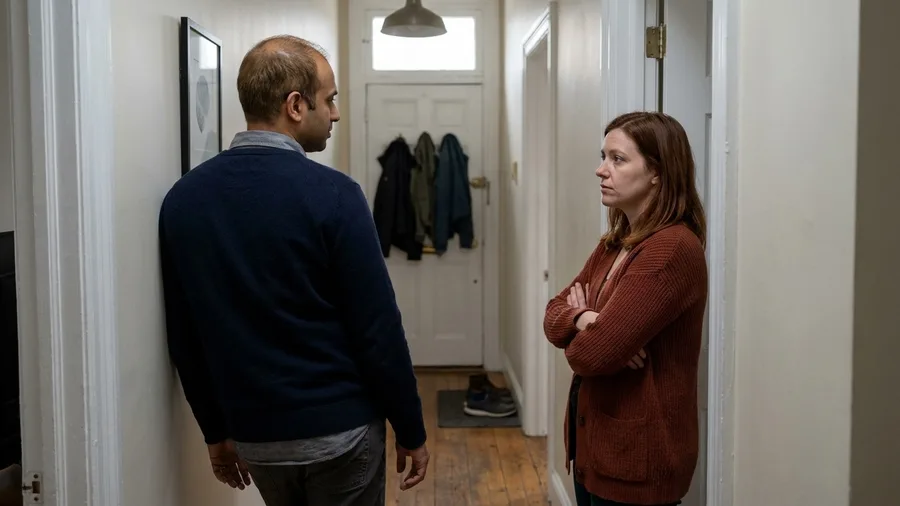
Because he has already run the fight forward to the end, and in his version it finishes somewhere she has never pictured.
Put the two costings side by side. To her, a sharp exchange over the dishwasher is a Tuesday: raised voices, a door, an hour of cold, and dinner by seven. To him the same exchange carries a flicker of the worst thing he can imagine, and the quiet is the price of not finding out whether it would.
That arithmetic usually has a receipt somewhere behind it. She may remember the year the house went quiet after one bad row, or an argument in the first years of the marriage that shook him more than he could say at the time – the plate he dropped, the two days of no conversation, the way the room felt when they came back to it.
In couples where a row ends in repair – someone says sorry, someone comes back – this is not what is happening, and the reason does not fit. Where it does fit, one sentence said plainly does more than months of coaxing: tell him the argument will not cost him the marriage, and that the silence already is.
💡 Tip: Name the repair, not the argument: "We can have this out and still be fine on Sunday." Men who fear a fight are usually afraid of the ending, not the noise.
6. He’s still holding an argument from years ago

The usual advice is to let sleeping dogs lie – don’t rake up old business, don’t pick at a wound that has healed over. Then she asks about the house deposit, or the year they nearly moved, and watches the shutter come down and stay down until the subject changes.
That is not a general quiet. A man who has gone silent all the way across the marriage, equally flat about the shopping, the neighbours and the grandchildren, is not doing this. The tell is selectivity, and it has a shape: warmth in the room, and then the word ‘money’ or ‘Bristol’ or his brother’s funeral comes up and the temperature drops in a single breath.
It comes back the same way. The talk shifts to the garden, the dog, whether to book the ferry, and he is himself again – talking, easy – until the old subject circles round and the door shuts a second time. A mood does not track a topic that precisely.
What is being held is not the argument she remembers. It is that the matter was never finished, and he has kept his position the way you keep a receipt: folded small, filed, unspent. So the move is to name it once, without re-running it – no evidence, no defence, no deciding who was right – and ask a single plain question about whether it is still outstanding.
Naming it once is not the same as opening it up. It is asking him to say, out loud, whether that thing still stands between you – which is the only way either of you finds out.
⚠️ COMMON MISTAKE
Do not file everything under "he's changed"
Three of the ten silences here have nothing to do with how he feels about you. Treating a hearing problem or an inherited template as a verdict on the marriage starts a conversation about the wrong thing, and the wrong conversation teaches him that speaking up makes it worse.
What’s misread, and what he’s waiting for
Two of the silences on this list are not emotional at all, which is why a heart-to-heart with a cup of tea will not touch them. Two more are not silences at all but messages sent in a format you are not reading.
Work through these before you decide anything about the marriage. The sorting here changes the answer completely.
7. Sometimes he isn’t hearing the conversation at all

You say something from the sink and he answers a question you did not ask. He nods along at the table, then repeats a name you mentioned two minutes ago, or laughs a beat after the joke lands. Alone in the kitchen he is fluent and funny; in a restaurant with other voices in it, he goes quiet and looks like a man with nothing to say.
The pattern is easy to misfile because it arrives over years, not a weekend. He adjusts around it instead of reporting it – turning his good ear toward you, sitting with his back to the wall, guessing at half of what is said and getting away with it often enough that neither of you calls it anything. Audiologists see this constantly: the workaround hides the loss for a long time.
So one physical thing is worth ruling out before any emotional one is on the table. A hearing test runs through his GP or an audiologist, and it is a session with headphones and a button, not an examination of his character. If you want numbers on how far untreated loss pushes people toward isolation, take them from the audiology source rather than from a friend who heard something.
This one will not move under a heart-to-heart. If the quiet lifts entirely when the background noise drops, you have found your engine, and it needs an appointment.
I want to be careful here, because the temptation to point at his ears can become a way of not hearing him.
8. Depression in older men looks like nothing
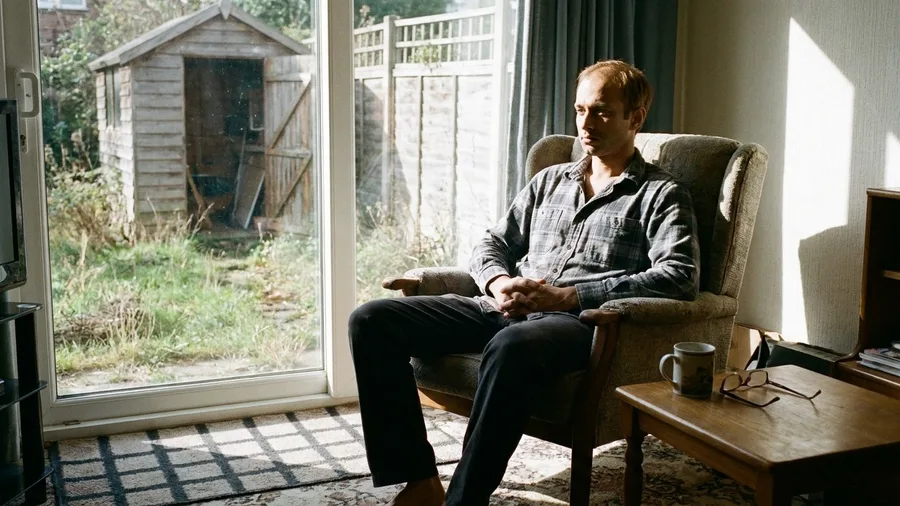
For a long time I filed my uncle’s flatness under character. He had always been the still one at the table, and the stillness just deepened, so it read as the same man getting quieter rather than a man changing. That misread cost the family about two years.
Depression in men of his generation rarely announces itself. It shows up as a lost taste for the shed, the garden, the Saturday drive; sleep that tilts (up at four, asleep by eight); a belt that loosens or tightens for no reason; a second whisky most evenings where there used to be none; a short fuse over small things. He will call it tiredness, or his knees, and never the other word, so the flatness gets filed as who he has become.
The tell is in the shape of the week, not the day. Quiet that rises and falls with what the week actually held, and lifts when a grandchild visits, is not this. Flatness that sits on him in an empty room with nothing wrong and nothing to do, week after week, with no good patch to point to, is the one worth acting on.
Keep the first step plain. A GP appointment framed as a general check-up, blood pressure and bloods and a word about how he has been sleeping, gets him through the door in a way that a suggestion about his mood never will.
💡 Tip: Write down what you have noticed — sleep, appetite, what he has stopped doing — and hand it to the GP. He will under-report. You will not.
Is this the depression, or the man?
9. He thinks she already knows

The cost of the assumption arrives quietly. She waits for one spoken line and gets none, and after enough years the absence curdles into a verdict she was never handed. But before you read it that way, check what he has actually been saying.
He is not withholding. In his arithmetic the words were said long ago, once, and thirty-two years of Sundays since then are the receipt. He has stopped telling you things you already know. Instead he has the car serviced before you mention the noise, collects your prescription, sets your coffee down first, and treats the doing as the sentence.
Some men do narrate, and it is worth knowing why. Almost always someone once told them plainly, out loud, that the words land differently from the deeds, and they took it in. Ask for one sentence, not a conversation – the mismatch relaxes the moment both of you see what each was counting.
10. He is waiting to be asked the right way

For years I assumed the fix was a straight question asked straight across the table, and I said so to people who took the advice and came back with nothing. ‘We need to talk’ lands like a summons. ‘How are you feeling’ gets a shrug. Three questions fired at once and he answers the easiest one and waits for the room to clear.
What works is duller and harder to arrange: a shared view of the road, so nobody has to hold eye contact while thinking. Washing up side by side, a drive to the tip, the walk to the allotment gate. One easy closed question first to get him talking at all, one open one after. And the first move is not about the marriage. ‘What do you reckon to the quote for the back fence’ is a real question with a right answer, and it proves the invitation is safe before any bigger one arrives.
Frequently Asked Questions
How do I tell the difference between a man who is quiet and a man who has given up?
Watch the range, not the volume. A quiet man still engages with something — the shed, the car, a grandchild, the football — and the silence lifts when the subject changes. A man who has given up declines every invitation, on every subject, for months. That second pattern needs a direct conversation about the marriage itself, and possibly a third party.
Should I ask him outright if he is depressed?
Ask about the signs rather than the label. Men of that generation will often accept a question about sleep, appetite and the things they have stopped doing, and refuse the word depression. Then book a GP appointment framed as a general check-up and hand over what you have noticed in writing.
Is it worth asking him to see a counsellor at this point?
Yes, if the flatness is total and unbroken, or if the two of you keep landing in the same argument without moving. Many men will accept couples counselling more readily than individual therapy, because it frames the work as fixing a practical problem rather than admitting a fault.
What if he says nothing is wrong and means it?
Then believe him the first time and watch the pattern instead. If the quiet stays selective — fine about most things, cold about one — the nothing is not quite true and the subject will show itself. If it is total, go back to the depression checklist.
How do I bring up the hearing without it sounding like an insult?
Tie it to a specific situation he already finds annoying: the noisy restaurant, the family lunch where he goes quiet. Then say you will book yours at the same time. A hearing test framed as a pair of errands lands very differently from a suggestion that he is the problem.
Will any of this work if he has already decided to leave?
No, and that is why the pattern matters more than the question. Skills around vocabulary, timing and side-by-side conversation help a man who is still in the marriage. They do nothing for a man who has quietly left it in his head, which is a different situation and needs a different conversation. Nothing in this article can diagnose him from the outside.
Which silence are you actually living with
Sort before you decide. The quiet is one of ten engines, and your job is to name the one in your house, not to keep scoring it as a referendum on the marriage. If the flatness is total and has been for months, with nothing giving him pleasure, the GP check and the hearing test come before another evening of working out what it means.
Back at the kitchen table, the ‘fine’ now arrives with a filing question attached rather than a verdict. The first move is small and specific and side by side – one question about the fence, the service, the quote, asked in the car or over the washing up, not across a table. A man who turns down every invitation for months, across every subject, is a different case with a different answer, and no one can diagnose him from the outside. The silence is information, not a verdict.
Start with one question, side by side
Next time you are both in the car or at the counter, ask the small specific question about the fence. One question, then stop talking and let the silence sit.