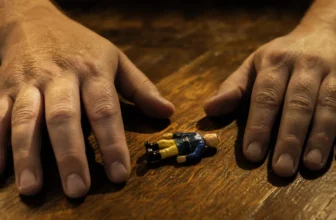
Read this and you will be able to name what built the no-tears rule, see what it is costing the man living it, and identify the single step that begins to move it.
The man who kept it together at his father’s funeral, at his daughter’s wedding, at the moment the diagnosis came back — he was not unaffected. He was following a rule. The difference matters, because a rule has a source, and a source can be examined.
That composure is not neutral. It was installed early, reinforced from several directions at once, and adopted willingly enough that it now runs as an internal voice rather than an external instruction. Which means it also carries a daily operating cost, and a long-term ledger most men never see because no one has laid it out plainly.
The prohibition on crying in front of family is not character. It is conditioning. And what it takes from a man is not abstract — it is specific: his health, the accuracy of his partner’s understanding of him, his children’s permission to feel their own feelings, and the kind of closeness that only comes from being known as you actually are. That is what is ahead — not a case for performing emotion, but a clear account of where the rule came from and what, precisely, it has been spending all this time.
Boys Are Trained Out of Tears Early
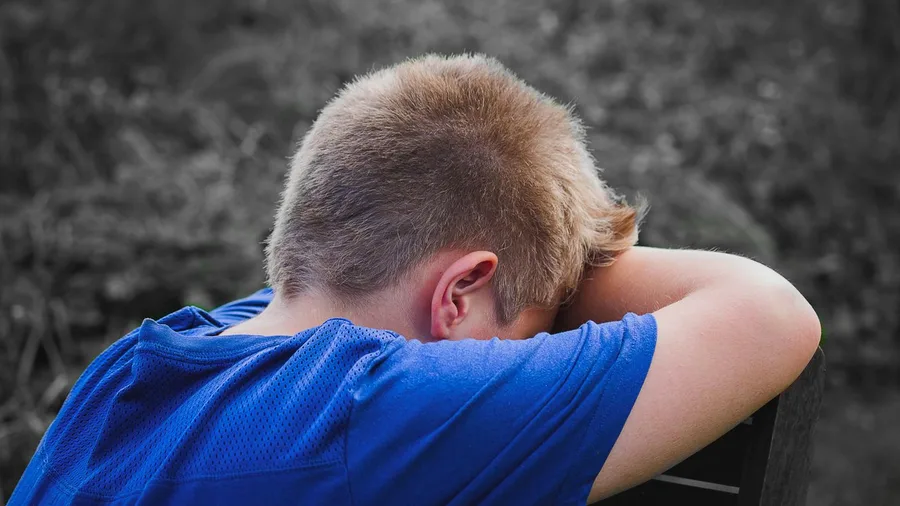
What feels like a personality trait – the composure, the dry eyes, the steadiness under pressure – is actually a set of instructions absorbed so early they stopped sounding like instructions at all.
Those instructions arrived in specific words: ‘toughen up’ on the walk home from school, ‘big boys don’t cry’ after a fall in the driveway, a hush from a parent in a public place before the tears even arrived. Each instance added one more coat of lacquer over an internal rule until the rule and the self became indistinguishable. The boy did not resist this. He could not – he had no prior model of who he was before the rule existed.
The source was never just one person.
Fathers matter, yes – but a mother’s reflexive shush in the supermarket, a coach who benched a boy for showing distress at a bad play, classmates who made crying the fastest way to become a target for a month – all of them were teaching the same course. That cross-sourced enforcement is exactly why the rule feels like biological fact rather than a set of learned choices. When every room in childhood is saying the same thing, ‘every room’ starts to feel like ‘reality.’
There is something worth understanding about how willingly most boys accept it. The rule actually worked. Holding it together meant fewer attacks, more approval, a smoother path through the social minefield of being young and male. The boy chose it as much as it was imposed on him – and that willing adoption is what carries it, largely undisturbed, into adulthood.
Some men inherit a version that is especially rigid – families where the grandfather came back from something and never named it, where the father went quiet at every hard moment, where stoicism skipped debate and arrived as a given. In those households, the rule comes pre-hardened, without even the ghost of a memory that it was ever negotiable.
The point is not that any of this makes the man a product of damage. It means the voice saying ‘hold it together’ in his chest is not his original voice – it belongs to a curriculum that finished before he was old enough to grade it.
Family Audiences Feel Higher Stakes Than Strangers
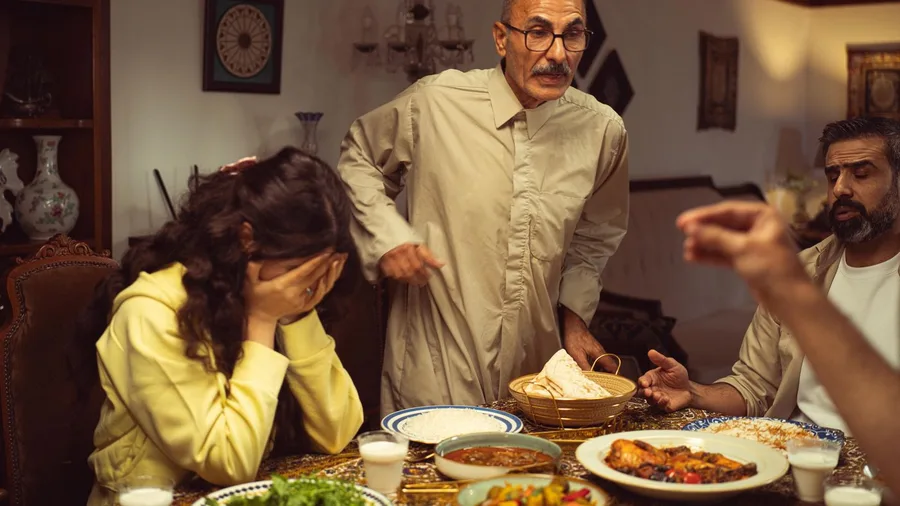
The rule holds most tightly precisely where it would cost the most to keep – inside the house, with the people who know him best.
A man can tear up alone in a car after difficult news, or feel his eyes sting at a film on a Tuesday night, and neither moment leaves a trace on anything that matters. No one updates their file on him. The next morning is unchanged. But the same feeling in front of his wife or his child is a different transaction entirely – those people hold a running record of who he is, and anything he shows them becomes a permanent entry in it.
That permanence is the brake.
The fear rarely surfaces as a sentence – it runs faster than language. What it amounts to, if a man were to slow it down and read it, is something like: if they see me break, they will remember it the next time they need me to hold. The image of him in tears at the kitchen table sits in the room, in his mind, at every future moment when someone needs to believe he is steady enough to carry the weight. He is not calculating this consciously; the throat tightens and the jaw sets before the reasoning catches up.
This is what makes the family setting different from a stranger’s funeral or an empty car. A stranger’s impression is disposable. His partner’s, his child’s – those impressions accumulate and compound, and they shape the practical texture of how he is relied upon, day to day, for years.
The sharper irony is this: the people most likely to handle the real version of him with care are the ones the rule works hardest to keep it from. The setting where being fully known would matter most is the setting where the rule is most aggressive about preventing it.
⚠️ COMMON MISTAKE
The Calculation That Never Gets Tested
Most men assume their tears would cause panic or destabilize the people watching. Almost none of them ever find out, because the rule fires before the experiment can run. The assumption goes unexamined for decades.
The Protector Role Leaves No Room for Visible Pain
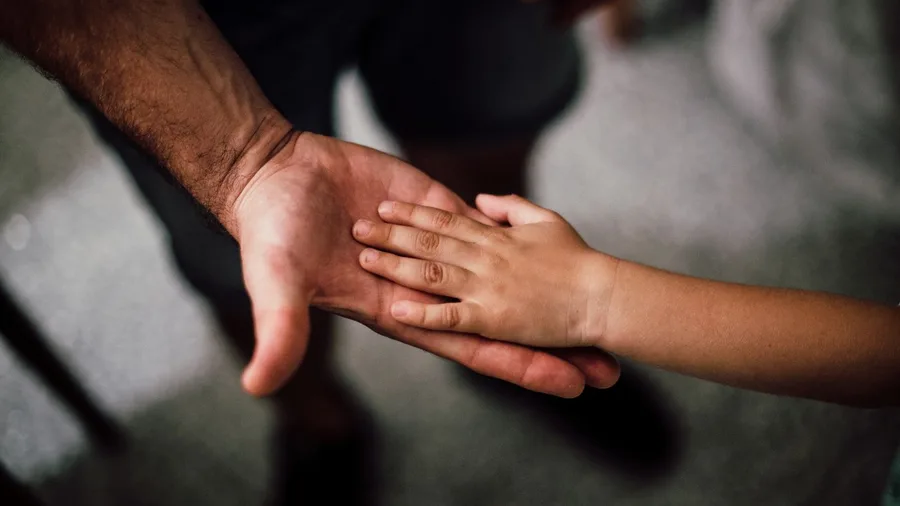
Underneath the fear of being seen differently is a specific belief about what the family needs from him – and that belief has its own internal logic, rarely examined, that actively rules out visible pain.
It goes roughly like this: the household runs because there is someone it can count on to stay upright. If he shows distress, the weight transfers – children get frightened, a partner loses their footing, the whole structure wobbles. So any grief or fear he carries gets routed inward, processed privately, kept out of the shared air. He becomes the container rather than a participant.
The problem is that this assumption almost never gets tested.
The man does not find out whether his tears would actually destabilize his partner, because the rule fires before the experiment can run. He is operating on a prediction – ‘this would be too much for them’ – that he generated alone, without evidence, and has never had reason to revisit. The prediction may be wrong. He does not know. The rule does not allow for knowing.
What this costs him is specific: he sits at the table during a loss and processes it in isolation while everyone around him processes it together. He is present in the room and absent from the experience at the same time. That is not strength – it is a kind of loneliness with excellent posture.
Not every man carries this equally. A boy who watched his father cry at his own mother’s graveside – and then watched his father show up the next morning and make breakfast – grows up with proof that visible grief and reliable steadiness are not mutually exclusive. He has evidence the logic is wrong.
For the man who never saw that, the protector role is not ego. It is a genuine attempt at love – a real effort to keep the people he cares about from suffering. It just miscalculates, badly, what protection actually requires, and what it silently takes from the person providing it.
One Tear Feels Like the Whole Dam Breaking
Part of what makes the protector role so airtight is a specific terror about what opening it would actually look like – not a tear or two, but a total unraveling that nobody could walk back from.
Emotion that has been held in does not evaporate while the door stays shut. It banks. The pressure behind that door belongs not only to the last hard thing but to every hard thing across the past several years that was processed alone, swallowed at the dinner table, or walked off in the driveway before coming inside. By the time a man has held the door for a decade, what is sitting behind it is not a single afternoon of grief – it is the accumulated weight of a whole private history.
That accumulation produces what might be called the flooding fear.
The flooding fear runs like this: one crack means everything comes at once, and once it starts there is no managing it, no explaining it, no recovering a recognizable version of himself in front of the people watching. The prospect is not a moment of visible grief – it is a collapse, indefinite and humiliating. And because the door has never been tested, that prediction never gets falsified.
There is a self-sealing quality to the logic. Every additional year the door holds, the pressure behind it grows and the threshold for opening it rises in exact proportion – which means the dam argument does not just justify staying closed today, it makes staying closed tomorrow feel even more necessary.
The honest correction: men who have allowed the release almost universally report that the feared collapse never arrived. What came instead was a contained, finite experience – grief with edges, not a flood – and afterward the man was still standing, still himself, still capable of walking back into the room.
The flooding fear is genuinely felt. It is not, for most men, an accurate description of what would actually happen. That gap between the fear and the reality is where the prohibition costs the most – and where it is least likely to be examined.
What the Man Intends vs. What the Room Receives
What He Means
- Staying composed to signal stability
- Absorbing pain privately to protect the family
- Demonstrating he can handle whatever comes
- Providing a calm anchor in a hard moment
What They Experience
- Distance — he is not fully present here
- Not being trusted with his real state
- A sense of being alone in the emotional life of the house
- A version of him that is managed, not real
Suppressed Grief Accumulates Rather Than Fades
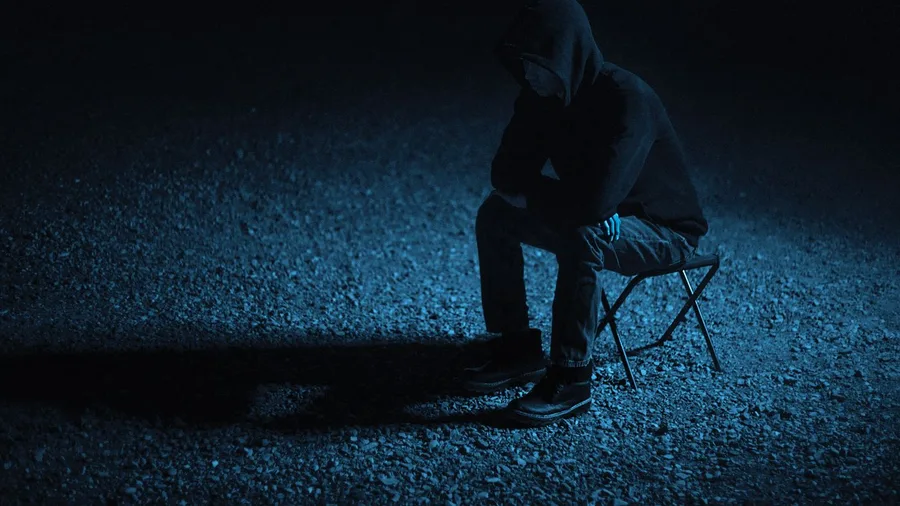
What the door-shut approach never accounts for is what happens to the feeling while it waits.
Grief and sadness that never get expressed do not gradually lose their charge. They get filed away, and they resurface – usually in forms that look nothing like their origin. A man who has spent months sitting on unprocessed loss over a parent’s death does not typically weep quietly one afternoon and move on. More often, he snaps at his child over a spilled drink with a force wildly out of proportion to spilled milk. The child gets the full weight of something they had nothing to do with. The man himself, half a minute later, often cannot explain where that came from.
This is displacement, and it is not a character failure.
It is a predictable outcome of the suppression mechanism – the stored pressure will find an exit, and whatever door happens to be unlocked in the moment takes the full force. Recognizing that does not make the overreaction to the spilled drink less real for the child who received it, but it does locate the source accurately.
The eruption version is not the only outcome. Some men find, instead, that the emotional range simply contracts over time – the lows get locked down, and the highs quietly flatten alongside them. The capacity for joy narrows in proportion to the grief that has been sealed off. It is a subtler cost than a blowup, and harder to notice, which is part of why it goes unaddressed for so long.
Any man who recognizes either pattern – the misplaced flare-ups or the narrowing range – and wants to understand what is specifically happening in his case should bring that question to a mental health professional rather than a general description. This article can name the mechanism. The individual picture takes someone who can actually see it.
💡 PRO TIP
The Displacement Signal Worth Watching
When a reaction feels disproportionate to what triggered it — a sharp snap over something small, a shutdown over a minor inconvenience — the size of the reaction is usually the stored pressure talking, not the immediate event. Noticing the gap between trigger and response is often the first legible sign that something is backed up.
Partners Read the Silence as Emotional Absence

Whatever the man believes he is communicating when his face stays composed through a hard moment, his partner is reading that face – and the reading they take away is usually not ‘he is holding this together for us.’
What a partner tends to experience in that moment is distance. An absence. The sense that the man is not really in the room with them, or that he has decided not to trust them with whatever he is actually feeling. Both things land as forms of exclusion, even when the man’s conscious intention is the opposite – stability, strength, something that keeps the household from fracturing under the weight of bad news.
Two entirely different transactions are running in the same room.
The man believes he is contributing his most important thing. His partner experiences a wall. Neither names the disconnect, often because neither can see it clearly enough to name – the man does not know his composure is being read as distance, and the partner cannot articulate why a calm face at a bad moment leaves them feeling more alone than comforted. This is one of the quieter engines of long-term relationship friction: a persistent sense, on the partner’s side, of carrying the household’s emotional life alone, while the man absorbs criticism for what he believes is his greatest act of care.
One honest qualification: a partner who grew up watching male composure as the household default may not register it as distance – it may simply be background. But that does not cancel the man’s internal cost, it only removes one of the visible signals that something is being lost.
What most partners are actually asking for is not tears on cue. It is evidence of shared stakes – some sign that he is inside the difficulty with them, not managing the scene from a step above it.
The Relational Cost — At a Glance
🤝 Trust signal
Withheld
🪞 Version of him they know
Managed surface
💬 Conflict source
Rarely named correctly
🫂 Intimacy exchange
One-sided
📉 Closeness over time
Stalled, not growing
The plain version
The partner is not asking for tears — they are asking for evidence that he is actually in the experience with them.
Sons Inherit Exactly the Same Script
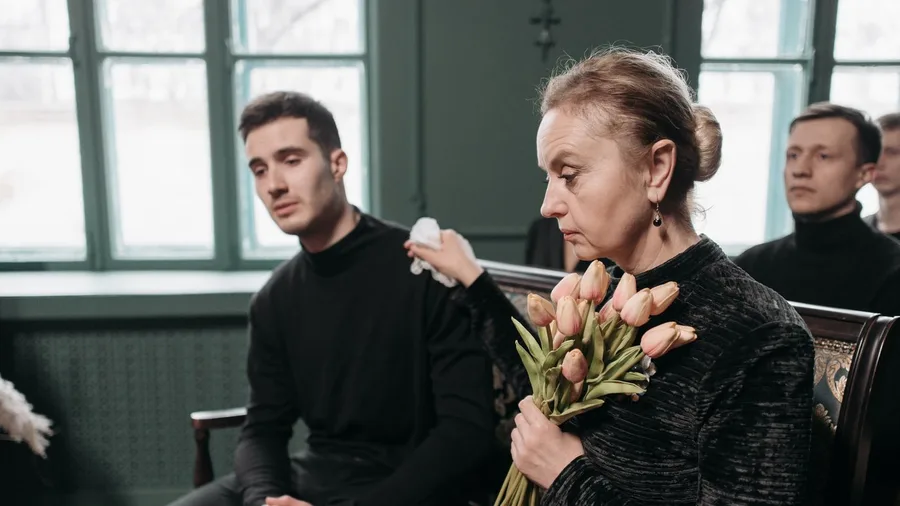
Children are running the same calculation as a partner – reading the man’s face, drawing conclusions, writing rules – and theirs has a longer runway ahead of it.
A boy sitting in the pew at his grandmother’s funeral, watching his father’s jaw stay set and his eyes stay dry, is not failing to notice. He is taking notes. No one has to say a word to him. The lesson arrives whole and wordless: this is what men do when it hurts.
Fathers who say the right thing are not off the hook here. A father can tell his son directly, ‘It’s okay to cry, it’s okay to feel sad’ – and mean it – and still be disbelieved. Children do not learn emotional behavior from what they are told is permitted. They learn it from what they observe being done, and what they observe overrides every spoken permission by a wide margin.
The chain did not start with this man. It ran through his own father, and through the father before that – a grandfather who came back from something he never named, who raised a son in that silence, who raised this man in the same silence. None of them chose it as a policy. They were each simply doing what they had watched being done, and calling it strength rather than inheritance. The silences between sons and fathers that result from this inheritance, and how to begin breaking them, are worth examining directly.
The reversal is equally straightforward and equally powerful. A father who lets his voice break at the graveside, who says out loud that the news is hard, does not lose his son’s respect – he hands his son something durable: the visible evidence that a man can carry pain in the open and still be standing afterward.
The man reading this is, at this moment, the model his children are running. Not the father he plans to be, not the values he intends to model – the man they are watching right now, today, in the ordinary moments of the house.
What a Week of Small Emotional Honesty Looks Like
Chronic Suppression Raises the Body’s Load
The costs named so far have lived in the emotional and relational register, but the suppression mechanism is not only psychological – the body is doing real work to maintain it, and that work has a physical price.
Holding back visible emotion is not a passive state. The jaw tightening, the throat sealing, the chest held still – these are muscular and physiological acts, performed repeatedly in any setting where the rule is active. The body is running labor that the man does not register as labor, because it has been running so long it feels like normal.
Sustained emotional suppression has been linked to elevated stress responses over time. The precise picture varies from person to person, and any man who wants to understand what this means for his own body should ask a doctor, not a general article. What can be said plainly: the tab exists, and it is running.
There is a downstream effect worth naming. Men seek medical help later than women for the same complaints, and typically present in worse condition when they do. The same instinct that delays a clinic visit also shapes the reflexive “I’m fine” response men give when family tries to check in. That pattern is not a mystery. The same tolerance for discomfort that holds back tears in front of family also holds back the moment of walking into a clinic and saying something is wrong. The habits are the same habit.
The physical and emotional costs are not two separate problems.
The body does not distinguish between the effort of not crying and the effort of not feeling. Both require the same suppression mechanism, and both bill to the same account. What the man experiences as keeping himself together is, from the body’s side, a continuous expenditure that nothing is currently reimbursing.
The Man Grows Lonelier Inside a Full House
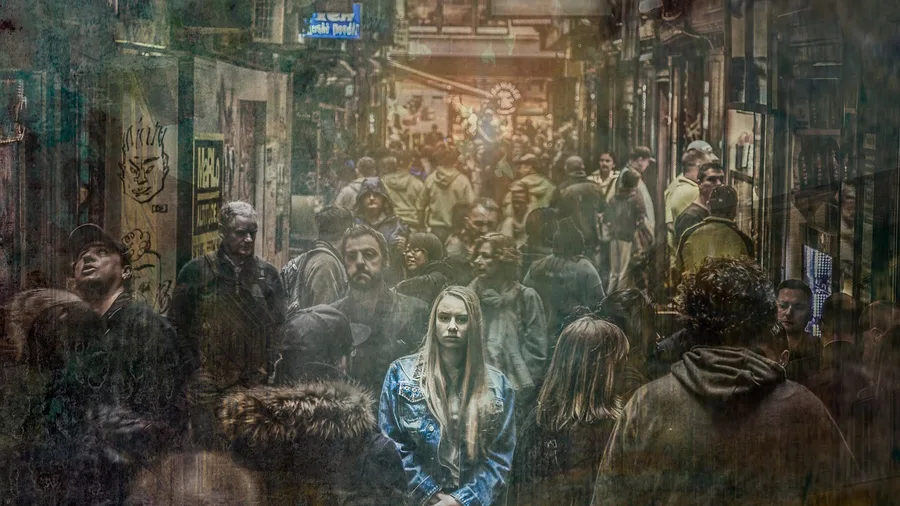
All of that cost – emotional, relational, physical – is carried privately. And carrying everything privately, over years, inside a house full of people, produces something specific: a loneliness that has nowhere obvious to point.
It is the loneliness of being in the room and not being in the room. Sitting at the dinner table, present in every visible way, while the part of experience that would make the presence real is held somewhere the people across the table cannot reach. The company is genuine. The isolation is also genuine. Both things run simultaneously.
What is missing is not simply comfort – it is accuracy. The people in that house hold a version of the man: reliable, steady, fine. They have been given access to the managed version because the managed version is the only one that has ever been made available. The true version, including the parts that hurt, has no representative in the room.
Most men do not call this loneliness. They call it privacy. They call it being self-sufficient, or low-maintenance, or fine. The mislabeling matters because a problem named incorrectly cannot be addressed – ‘I value my privacy’ does not lead anywhere useful, but ‘I have not been known accurately by the people I live with’ at least points at something real.
There is a counterweight worth acknowledging: men with close friendships where emotional honesty is actually possible tend to feel this particular isolation less sharply. Being known accurately somewhere is better than being known accurately nowhere. But those friendships, where they exist, do not dissolve what is missing at home – they reduce the pressure without filling the specific gap.
The loneliness is not a choice the man made. It is what happens when a managed surface is held consistently enough, for long enough, that the surface is genuinely all anyone in the house has ever had.
Moments of Potential Closeness Are Spent Instead on Performance
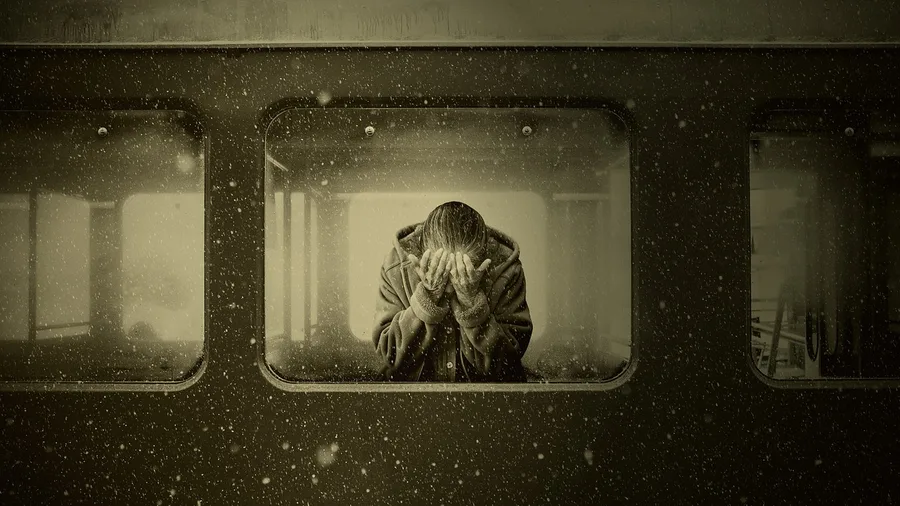
Those isolated moments of accumulated silence have a sharper face than the daily distance does. They arrive as events – a coffin being lowered, a car packed for college, a doctor’s voice going quiet before delivering a number – and inside each one is a narrow window during which something real could pass between two people.
When that window opens and a man pours his energy into keeping his face still, the window closes on both of them. His partner or his child does not receive less emotion; they receive a performance in place of a person. The moment is not neutral – it is actively spent, and what it buys is continuity of the managed image, not closeness.
These occasions do not repeat. The parent’s death happens once. The child does not leave for the first time twice. What those moments carry is non-refundable: a specific kind of shared stakes, the knowledge that he was also shaken, that they were in it together rather than him above it.
Closeness is not assembled in speeches or grand gestures. It accumulates through small exchanges where each person shows the other something real about what they are carrying – and both sides have to contribute for the account to grow. A man who holds back his side of those exchanges for years does not hold steady at some neutral baseline; he falls behind on deposits he cannot make retroactively.
The concrete arithmetic: the moment passes, the composure holds, and the relationship contains exactly the same closeness it did before. Not less – exactly the same. Which is the loss, because that moment was the one that was supposed to add to it.
🔒 How the Rule Compounds Over a Lifetime
Childhood installation
Repeated phrases and peer enforcement install the rule before the boy has words to question it.
Adolescent hardening
Social survival confirms the rule works — suppression produces safety and approval, so the habit solidifies.
Early adult adoption
The rule becomes identity: not 'I was taught not to cry' but 'I am someone who does not cry.'
Family role takes over
The protector frame adds a second layer — composure is now framed as love and responsibility.
Accumulation becomes visible
Displaced reactions, numbness, a persistent sense of isolation in a full house — the stored pressure finds exits.
Intergenerational transfer
Without interruption, the man's silence becomes his child's curriculum, and the cycle begins again.
Frequently Asked Questions
Is it unhealthy for men to never cry?
Chronic suppression is not neutral — it is active labor the body performs continuously, and researchers who study emotional regulation consistently find it connected to elevated stress responses and narrowed emotional range over time. The concern is not the absence of tears specifically but the sustained effort of containing feeling, and the way that effort forecloses being accurately known by the people closest to you.
Why do men cry more easily alone than in front of others?
Alone, there is no relational consequence — no permanent record held by someone whose opinion of your competence matters to you. The rule that suppresses tears is not about the feeling itself but about the audience. Strangers and films are low-stakes; a spouse or child is the highest-stakes audience a man has, which is precisely why the rule fires hardest there.
Does a man suppressing tears actually affect his kids?
Children learn emotional behavior through observation, not through what they are told. A father who gives verbal permission to cry while never doing so himself in any visible moment is not believed — the behavior overrides the declaration. Sons who never see their fathers express grief receive a clear wordless instruction about what men do with pain, and they carry it forward as their own baseline.
How do I support a man who never shows emotion?
The most useful thing is not pressure to perform feeling but a consistent signal that the real version of him — including the parts that are hard — is welcome in the relationship. Statements like ‘that sounds like it was difficult’ after something objectively hard, said without requiring a response, create an opening without making one tear feel like a test. The goal is lowering the stakes of the first small act of honesty, not demanding a breakthrough.
Can men learn to cry again after years of suppression?
The suppression is a learned rule, not a physiological change — which means it is a rule that can be examined and, over time, revised. For most men, the revision starts not with crying but with naming: telling one trusted person one thing that actually hurt. Therapy provides a structured setting for this, and researchers who study emotional processing consistently find that small, repeated acts of honesty are more effective than single large attempts at release.
Why do men fear crying in front of their wives specifically?
A wife or long-term partner holds the most complete record of who the man is — which is exactly why crying in front of her feels like submitting evidence to the one witness whose assessment has real consequences. The fear is that the image of him in tears will be present in every future moment when she needs to believe he can handle something difficult. The irony is that partners who do witness a man’s genuine grief almost universally report feeling closer, not less confident — the evidence the rule predicts rarely arrives.
What the Composure Has Been Holding Back
The goal is not to produce tears. It is to remove the prohibition – and that is a far smaller ask than it sounds. Not a breakdown, not a confession, not a character transplant. One sentence, said to one trusted person, about something that actually hurt. That is the whole first step.
If this article landed, the moment already exists. The funeral where the face stayed still. The thing that went somewhere quiet and has not left. That is the material. One person who already knows him is the only audience required – not a performance, just a sentence that is true.
What the man risks losing is the managed version of himself he has been maintaining. What comes back is the specific relief of being known accurately, in the house where he lives, by the people whose knowledge of him matters most. The rule was written before he could question it. The revision is available now, and it starts at the size of one sentence – not the dam breaking, just the door, slightly open.
The First Sentence Is the Hardest One
Reread the section on the flooding fear, then ask yourself honestly: has the feared collapse ever actually arrived, or has the rule simply never let you find out? That question is a start.