
Most fathers do not lose their children’s childhoods to catastrophe. They lose them to the phone that was just sitting there, the conversation that felt premature, the trip that could always happen next summer.
A father can be in the room every evening and still miss most of what happens there. He is physically present, fork in hand, but the score just updated and the phone is face-up beside the plate – and his child, who has no name for the gap between being near someone and being with them, registers it anyway. That is the specific illusion at the root of most of what follows.
What researchers who study paternal regret keep finding is not the headline failures. It is the ordinary evenings that accumulated into distance, the Tuesday conversations that went nowhere, the texture of a family life that felt, in the moment, like it was simply waiting for the right occasion.
Nine specific things. Most of them cost nothing. Most of them were available on a weeknight. Most of them are still available now – and this list exists to help you tell the difference between what has slipped past and what is still directly in front of you.
Quick Tips Before You Start
Set One Phone-Free Window
Pick one recurring moment — dinner, bedtime, or homework — and make it a rule, not a choice you make each night.
Schedule the Small Trip First
Put a one-on-one outing on the calendar before the end of this week. Distance and cost are not the point — solo time is.
Ask Before You Answer
When your child brings a problem, lead with a question — 'What do you think happened?' — before offering any solution.
Say It Out Loud
Verbal affection does not expire. Say it directly, in words, regardless of your child's age.
Teach One Real Skill
Pick something you actually know — a recipe, a repair, a drill — and block one afternoon to start passing it on.
Presence
The first three regrets share a root that is easy to misread. Fathers who carry them rarely describe themselves as absent — they were home, they were nearby, they were technically there. The absence was somewhere else: behind a screen, inside a schedule, waiting for a better moment that never quite arrived.
What children measured was not attendance. It was attention — and attention turned out to be surprisingly legible even to young children who had no word for it.
1. Phones Stole More Evenings Than Work Did
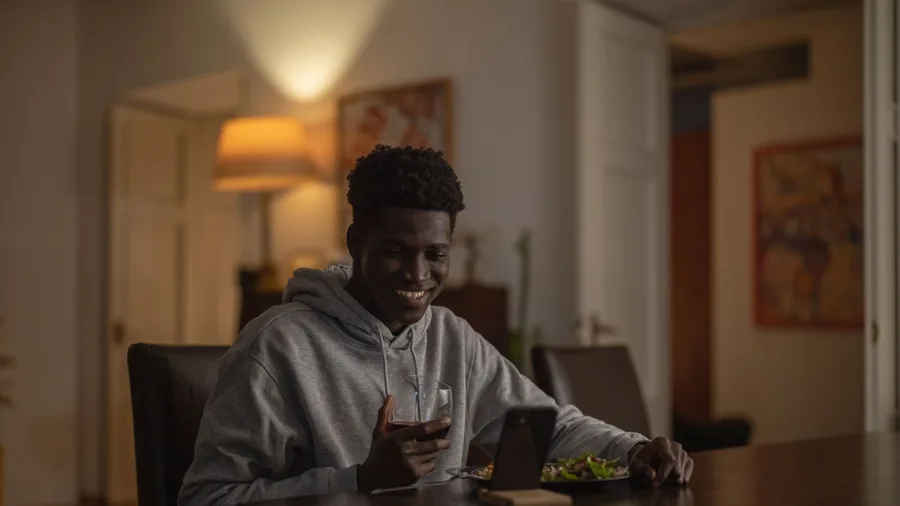
The phone is face-up beside the plate, and the score updates every ninety seconds. Dinner is happening – technically. A child is describing something that occurred at school, something that mattered enough to save for this moment, and the father’s eyes move left.
That is the gap most fathers actually regret. Not the business trip, not the late meeting – the evenings they were home and somewhere else. A father who worked long hours but sat down without the phone left a different impression than a father who was present in the room for three hours and unreachable for all of them. Children do not read divided attention as fatigue. They read it as ranking: whatever is on the screen placed higher than they did, and they were old enough to do that math at six.
Dinner, bedtime, the twenty minutes of homework at the kitchen table – these windows are short, predictable, and the ones that surface most often when adults describe feeling attended to or overlooked as children. Willpower alone does not protect them. The habit of checking is stronger than the intention to stop, which is why the fathers who carry this regret least tend to have made a rule rather than a resolution – one window, phone in another room, every day. Knowing this is the problem and leaving the phone on the table anyway is the one move that guarantees the worst result: the guilt, and none of the change.
💡 Tip: Face the phone down and leave it in another room for one meal. The rule does the work; the intention alone does not.
2. Ordinary Tuesday Games Mattered More Than Graduations

They notice it more than the big stuff.
A graduation is expected. The attendance is noted, appreciated, and then filed alongside every other expected thing. But a father who showed up to a Tuesday-night rehearsal for a school play that ran forty minutes and involved no speaking parts – that appearance had no social obligation behind it. The child had no reason to expect it, which is exactly why it became evidence. The low-stakes event is where unconditional interest gets demonstrated, because it is the only setting where showing up could not be explained by anything other than wanting to be there.
This is not about what a father intended. Missing a mediocre science fair did not mean he did not care. It meant the child did not receive that particular proof of it, and a child building a picture of how much they matter collects proof, not intentions. Fathers who missed events but followed up afterward – not with ‘how did it go’ but with genuine, unhurried listening to the full account – describe noticeably less weight around this regret. The follow-up conversation can carry the signal that attendance would have sent. And the next unremarkable event, the one with no pressure and no ceremony, is probably a few weeks away at most.
⚠️ COMMON MISTAKE
Scheduling Quality Time Misses the Point
Quarterly experiences and planned 'special days' do not replace ordinary unstructured time. Children open up when nothing is expected of them — not when the outing has a name and an itinerary.
3. Unstructured Time Together Built the Real Closeness
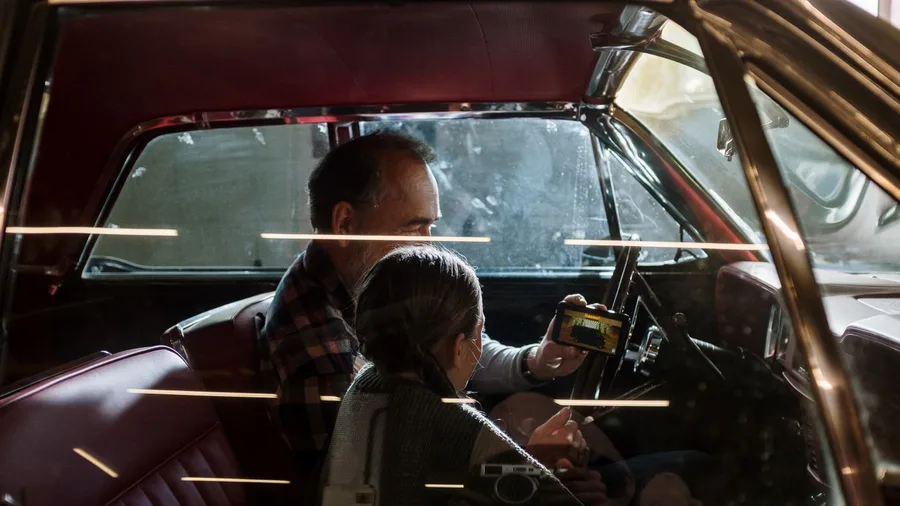
The word ‘quality’ did a lot of damage. It convinced fathers that connection required intention, a destination, and a cleared calendar – and it quietly devalued every moment that had none of those things, which turned out to be most of the available moments.
A child sitting beside a parent in a car going nowhere interesting is not performing. Nobody is being evaluated. Nothing is being reported on. That absence of stakes is exactly what opens a kid up, and it cannot be replicated by announcing that tonight is family conversation time. The father who spent three years shuttling a twelve-year-old to Saturday swim practice, saying almost nothing on the way there and almost nothing on the way back, still built something – a weekly hour of low-pressure proximity that slowly accumulated into a habit of being comfortable together.
That habit is the evidence base. Fathers who had it in the background report something specific: when a milestone occasion did go badly – a trip that flopped, a graduation overshadowed by something else – it did not define the relationship, because the relationship had already been built from dozens of unremarkable Tuesday afternoons. One bad event could not subtract what a hundred quiet car rides had deposited.
This regret requires the least from whoever decides to act on it. No planning, no budget, no cleared weekend. The only move is choosing, when the next shared interval arrives, not to fill it.
Words and Honesty
The next three regrets are about what stayed unsaid — affection that was felt but never spoken, conversations that were perpetually one week away, and admissions that felt too costly to make.
What fathers in this group most often describe is not cruelty or indifference. It is the reasonable-sounding assumption that children could infer what was never stated. They could not, or at least not reliably — and the cost of the assumption was paid slowly, over years, in distance that hardened into habit.
4. Saying It Out Loud Still Mattered at Sixteen
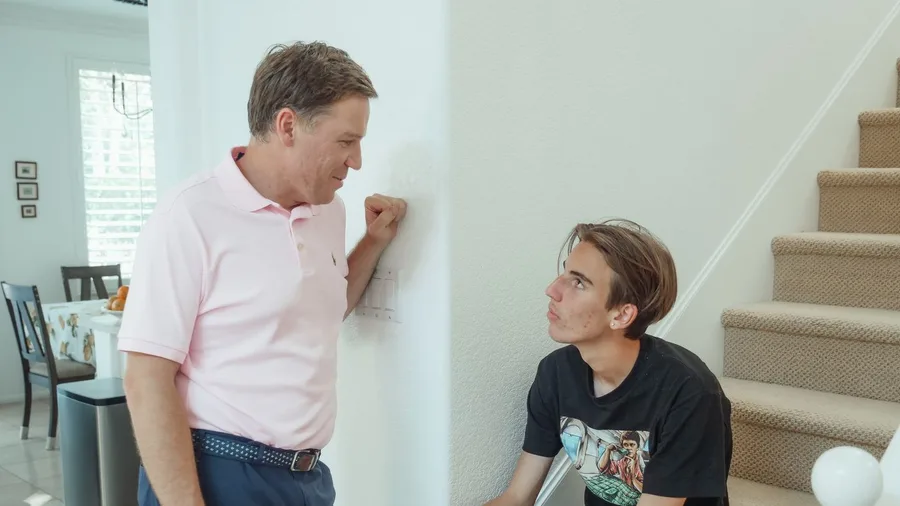
Most fathers stop saying it directly once a child hits double digits – not because the feeling changes, but because the culture around boys, especially, treats the explicit statement as something that should have aged out by now. That assumption is wrong in exactly the way that costs the most, because it withdraws the clearest possible evidence of worth at the moment an adolescent is most likely to be building a case about whether they have any.
Ask adults what they remember about hearing it from their fathers, and two things come back: the specific occasions it was said out loud, and the length of the gaps between those occasions. Both carry information. The silence was not neutral – it was its own kind of answer to a question the child was already asking.
This is where the substitution tends to fail. A father who showed up, provided reliably, and made his pride visible through action still produced adult children who wished they had heard the words – because care that has to be inferred is not the same as care that has been stated. Assumptions are not evidence. Children are not obligated to draw the conclusions a father hoped they would.
Fathers who kept saying it through adolescence – past the eye-rolls, past the monosyllabic responses – describe less distance in the adult relationship. Not because words are magic, but because saying it kept the door open during the years when the child was most primed to decide it had closed for good.
Being precise about what counts: a card on a birthday, a handshake, covering the cost of a college application – all of those land as care. None of them land as the thing itself. The thing itself is said. Something like, ‘I want you to know I’m proud of you, not for what you do – just because you’re mine’ takes twelve seconds to say and tends to be remembered for forty years. The words are not a supplement to the other expressions. They are what the other expressions are trying to be.
5. Avoiding Hard Talks Left Children Without a Map

Three topics come up again and again when fathers describe the conversations they never had: their own professional failures and how they eventually handled them, the real financial state of the household, and the fears they carried privately – particularly the fear that they were not adequate to the job of fathering at all. The conventional instinct is to protect children from those subjects. That instinct is wrong, and the cost of it showed up later.
When those conversations did not happen, children filled the gap themselves. A sixteen-year-old watching the household budget quietly tighten, whose father said nothing, did not conclude ‘Dad is managing something difficult.’ He concluded that financial failure was shameful, permanent, and something men did not survive intact – the exact opposite of what hearing the actual story would have taught him. Peers, guesswork, and unfiltered internet searches became the sources, and what children assembled from those materials cost them in real decisions years later.
The conversation does not need to be thorough or perfectly delivered. Partial works. Awkward works. An incomplete attempt still carries two things: the content itself, and the signal that the father considered the child capable of receiving it. That second part lands as hard as the first.
The closing window is what makes this regret compound. A father can have the conversation with a ten-year-old, a twenty-year-old, or a thirty-year-old – but the years when it would have most directly shaped how the child handled money, failure, and fear are already gone once adolescence is behind them. What remains is still worth doing. What was lost is genuinely lost.
💡 Tip: Start with a failure story, not a lesson. 'Here is something I got badly wrong' lands differently than 'let me tell you what I know about money.'
How Fathers Handled Mistakes — and What Each Signalled
Performed infallibility
- Errors were minimised or not mentioned
- Children learned that failure was shameful
- Standard set was one nobody could meet
- Children hid their own problems as a result
- Authority felt like distance, not trust
Named the mistake openly
- Specific error named with what changed next
- Children saw a working model for handling failure
- Relationship shifted from something endured to something chosen
- Children brought their own problems forward
- Authority was maintained and trust increased
6. Admitting Mistakes Made Children Trust Them More

The standard advice to fathers is to project confidence and steadiness – be the fixed point when everything else moves. There is something real in that. The place it breaks is when steadiness becomes a performance of having no failures, no doubts, and no moments where the next step was unclear.
What children actually needed from a father who made a mistake was not the mistake hidden or minimised. They needed to watch what came after it. A father who named specifically what he had done – ‘I handled that argument badly, I said something I shouldn’t have, and I went back and apologised for it’ – handed the child a usable model for something they would need for the rest of their lives. The skill of recovering from failure is more transferable than almost anything else a father could teach, and it can only be demonstrated, not described in the abstract.
The form of the admission matters. Specific and forward-facing earns trust – the version that names the mistake and says what changed next. General self-deprecation does something else entirely: ‘I’ve never been good at this kind of thing’ is a request for reassurance, and children recognise it as such.
Adults looking back on their relationship with their father often identify a single moment when it shifted. In account after account, that moment involves the father acknowledging a specific conflict he had handled badly and saying so directly. Before that moment, the relationship was something the child endured. After it, the relationship was something they chose to be in.
The fear driving the opposite behaviour – that owning an error would dissolve whatever authority the father had built – simply did not hold up against the actual result. Fathers who maintained the appearance of infallibility did not produce children with more respect for them. They produced children who stopped bringing their own problems home — one of the habits that quietly push family away — because the household standard was one no real person could meet, and admitting difficulty felt like a kind of exposure they could not afford.
💡 PRO TIP
The Admission That Actually Works
Name the mistake, name the cost, name what changed. All three parts in the same conversation. The apology without the 'what changed' reads as performance; the 'what changed' without naming the mistake reads as a lecture.
Shared Experience
The final three regrets are about things done together — or not done. They differ from the first two themes in one key way: these absences are mostly schedulable. They do not require a different emotional posture or a difficult conversation. They require a date on a calendar and a decision to keep it.
Which is also why they are the most directly preventable ones on this list, regardless of where you and your children currently are.
7. Teaching a Skill Passed On More Than the Skill

“I don’t even remember teaching him that” is something fathers say often – and then they hear their son describe the same afternoon in precise detail, twenty years on, down to the make of the car and the smell of the garage.
What children retained was not the technique. It was the verdict the teaching delivered: that this father looked at this child and decided they were capable. That conclusion travels further than any skill. The things fathers most commonly regret not passing on are specific in type – a household trade like basic plumbing or carpentry, a recipe tied to a particular story, a physical practice the father himself kept up. Not because those categories are special, but because they carry history and identity alongside the instruction.
Mastery was never the point. A child who lost interest after two sessions, a father who explained the same step three times and still got it slightly wrong – those incomplete attempts still registered, because the transmission was in the trying together, not in the certificate at the end. One afternoon, one thing, one direct sentence telling a child the father believes they can do it: that is the entire bar.
Teaching a Skill — At a Glance
🛠️ Biggest reason it gets skipped
Waiting until the child is 'ready' — that moment rarely announces itself
📆 How many sessions before it counts
One — even an unfinished attempt registers
✅ What kills it fastest
Correcting technique more than once in the same session
💬 The sentence that does the most work
Name what you see them doing right, out loud, before you leave the room
📏 When it is too late to start
Later than you think — adult children report the same impact
The failure mode
Most fathers who regret this did not run out of time. They waited for a longer block of it that never came.
8. One-on-One Trips Became the Stories They Retell Forever

The cost that stings most is not money. It is that the trip was always postponable – next summer, when things settle, when the kids are older – until suddenly it wasn’t postponable anymore for reasons that had nothing to do with the calendar.
The scale of the trip is almost beside the point. A father who drove two hours each way to watch a mid-table youth tournament, shared a single motel room, and was back by Sunday afternoon spent less than a restaurant dinner for the whole family. What he gave that child was four hours in a car with nowhere to be and no sibling to perform for or hide behind. Without an audience, children talk differently – directly, without managing how they land. That conversation is not replicable at the kitchen table with three other people present.
For fathers who never cleared time for a dedicated trip, the same principle held at smaller scale. A weekly grocery run, an early hardware store visit, any recurring errand that put one child in the passenger seat – those accumulated into something qualitatively close. The principle is undivided attention, and a single date in the calendar this week gets it started.
💡 Tip: Put a date in the calendar before the end of this week — even a half-day errand with one child. The trip matters less than the one-on-one time.
What Fathers Say They Wish They Had Known
9. Asking Questions Mattered More Than Giving Answers

Most fathers do not realise they stopped listening until the child stopped talking. That is the version of this that tends to go unnoticed longest – not a dramatic argument, not a visible rupture, just a gradual narrowing until the child routes their problems elsewhere — one of the core barriers between fathers and adult children — and the father wonders why he is the last to know anything.
The pattern that produces it is specific. A child brings a difficulty. The father, trying to be useful, delivers a reading of the situation and a solution. Done efficiently, the problem is resolved. Done repeatedly, the message the child receives is that how they felt about what happened was less important than getting through it – and eventually they stop bringing the raw material that requires that kind of handling.
What they were actually looking for was acknowledgment first: that the experience was real, that the feeling made sense, that the father could sit with it before moving toward any fix. Researchers who study family communication note that fathers who shifted from answering to asking – ‘What do you think happened?’ or ‘What do you want to do about it?’ – saw communication reopen within months, even when the shift happened mid-adolescence. One account that appears often: a father who spent years offering advice to a son who had stopped listening changed his approach at seventeen, started asking instead, and found his son initiating conversations within weeks.
The self-test is simple. Think of the last time your child brought you a problem. Did you ask what they thought, or did you tell them what to do? If the honest answer is the second one, the next conversation is the place to try the first – because this one shift does more to address every other absence on this list than anything else a father can do.
🔄 How the Shift from Answering to Asking Actually Works
Week 1–2: Expect resistance
The child is used to receiving answers. A sudden question in place of advice reads as strange; they may deflect or give a one-word reply. Hold the new pattern anyway.
Ask one question, then stop
The failure mode is asking three questions in a row — it becomes an interrogation. One open question, then silence, is the whole move.
Feelings before facts
Sequence matters: name what the child seems to be feeling before asking what happened. Reversed, it signals the event is more important than their experience of it.
Skip this step if time is short
Do not start the shift mid-crisis. The first attempt should come during a low-stakes moment — a car ride, a routine evening — not when emotions are already running high.
The sign it is working
The child circles back to the same topic later, unprompted. That return is the signal they felt heard the first time, not just handled.
Frequently Asked Questions
Is it too late to address these regrets if my children are already adults?
No — and the research on this is fairly consistent. Adult children remain responsive to shifts in a parent’s behaviour, sometimes more so than teenagers, because they have more capacity to interpret the change charitably. A father who starts asking instead of advising, or who says directly what he feels, at any age tends to see a response within months rather than years. The window is not closed; it is smaller, and that makes starting sooner rather than later the only real decision.
My work schedule genuinely limited my time. Does that change how I should think about this?
Circumstances matter, and this list is not an indictment of anyone who worked long hours to keep a household running. The question each entry points at is whether the absence was genuinely circumstantial or quietly elected — not to assign blame, but to identify what is still preventable. A father who was physically constrained but fully present in the time he had tends to carry far less of this regret than one who was home all evening but unreachable. The schedule is one variable; attention is another.
My teenager does not seem to want to spend time with me. What then?
That resistance is usually about the format, not the relationship. Teenagers who decline structured quality time — the planned outing, the sit-down conversation — often open up in low-pressure shared environments where nothing is expected of them. A car ride, a shared task, watching something together without an agenda: these sidestep the performance pressure that makes direct connection feel threatening at that age. The goal is proximity without obligation, not a meeting.
How do I say ‘I love you’ to a teenage son without it feeling forced?
Say it in passing, not as a moment. In context — after a game, getting out of the car, hanging up a call — it lands as ordinary rather than ceremonial, and ordinary is what you want. The goal is not a speech; it is frequency. Once it becomes routine, the awkwardness goes away for both of you, usually faster than you expect.
What if I start asking more questions and my child just gives one-word answers?
One-word answers are not a rejection — they are a calibration. A child who has been on the receiving end of advice-giving for years needs time to trust that the question is genuine. Keep asking, stay comfortable with short answers, and do not interpret silence as failure. Most fathers who report a reopening of communication describe the shift happening over weeks, not in a single conversation.
Which of these nine should I start with?
Start with number nine — asking instead of answering. It is the one habit that directly addresses all the others. It creates the space for verbal affection, enables the hard conversation, transforms any skill lesson or solo trip into a genuine exchange, and signals unconditional interest without requiring a single additional change to your schedule. One question, asked genuinely, and then silence while you wait for the full answer.
The Regret That Is Still Preventable Now
Of everything on this list, one regret remains fully preventable regardless of whether the child is eight or thirty-eight: the habit of asking instead of answering. It needs no occasion, no trip booked, no cleared schedule. It only requires responding to the next conversation differently than the last one.
The father with the phone face-up beside the plate is the same father reading this right now – and the dinner table exists again tonight.
Later is a decision. It is also the one most of the fathers on this list would take back. The only thing this section asks is whether tonight is the night that changes.
The FAQ Has the Quickest Starting Point
If you read nothing else, scroll to the last FAQ answer. It names the one habit that reaches most of these nine regrets at once — and you can try it in the next conversation you have.