
By the end of this piece you will be able to name the exact sentence you have been not saying to your father, and say it once, this week, without a preamble. Between sons and aging fathers, nine silences do most of the damage.
None of them are cruelty. Each is a small protection bought now – a fight avoided, an insult dodged, a worry spared – that quietly charges rent for years. The bill comes due in a hospital corridor, where the sentence finally gets said under duress and lands wrong.
Here is what each silence protects, what it costs, and the smallest move that ends it.
Quick Tips Before You Start
Say it once
One plain sentence, no backstory, no apology tour. Repeating it turns a confession into a case.
Stop talking
After the sentence, let the silence sit for ten seconds. The urge to fill it is what ruins it.
Name one thing
Specific beats sweeping every time: one appointment, one remodel, one memory. General audits get deflected.
No advice in return
If he answers with advice or a story about his own youth, let it land as approval. Do not correct the translation.
Pick a Tuesday
Low-stakes days beat holidays and birthdays, when every sentence gets weighted with occasion.
Fear and the body
1. Fearing you lands as an insult

“You’re going to end up just like me.” He laughs when he says it, mostly, and you are supposed to laugh too.
The feared inheritance is almost never general. It is a specific temper that rises in the car, a second drink that becomes three, a diagnosis with a name he already carries. You see the same edge in your own voice on a bad evening and you go quiet instead of saying so, because a son confessing he fears becoming his father arrives to the father as a verdict, or as an accusation that something was ruined, never as a thing about the son.
So he watches himself. He over-corrects, leaves the room when the volume climbs, sets private rules — no late calls, no second pour — and explains none of it. To the father, that reads as distance with no cause.
It becomes sayable two ways. He names his own version first, the habit he once had and worried about, and leaves the door open. Or the son keeps the sentence on himself — “I’ve noticed I get short the way I saw you get short, and it worries me about me” — with no diagnosis and no habit in it. The silence spares one man an insult and keeps the other carrying a fear alone.
💡 Tip: Try: "I've been watching my temper lately. It scares me a little." Then stop. No examples from his life.
⚠️ COMMON MISTAKE
Do not make him the evidence
The moment you say "just like you do," the conversation stops being about your fear and becomes a trial of his life. Keep every example in the first person or drop it.
2. Health checks happen behind his back

” gets “fine,” and the caller hangs up believing nothing was learned. The son who calls the neighbor, the sibling, the pharmacy and checks the patient portal has usually already tried that and been called a hoverer for it. So he routes around him.
Here is the ten-second test for a son. Name the last thing you learned about his health from someone other than him. If you could not say it to his face this morning, that is the covert route running.
It is not free. You carry the worry alone, and he is never handed the information, so he never gets to show judgment or ask for help with it. A missed blood-pressure pill surfaces through the neighbor; you say nothing; then a fall puts the whole arrangement in the open at a bad time.
The repair is one direct, specific question about one appointment or one pill — not a full audit, which is the fight you were avoiding. The silence buys calm now and sells his chance to be trusted.
💡 Tip: Ask about one appointment or one pill bottle. Specific questions get specific answers; general ones get "fine."
At a Glance
3. Grief for a living father has no name

The standard advice is to make the old man as comfortable as possible and let him keep his dignity, which is fine as far as it goes, and it leaves the son’s actual feeling with nowhere to go.
Feeling watched is part of it. The son who quietly checks pill bottles and calls the neighbor starts visiting less, and the father reads withdrawal where there is grief. It is the driver who is missed, the memory that held every name and route, the man who handled things and joked. Taking the keys “just for today” and then cutting the visit short is the whole pattern: watching him misremember a road is the thing the son cannot name.
This is not a rehearsal for a funeral. It is missing a version while the man himself is still sitting in the chair, and saying so — “I miss the drives, not you” — goes better than either of them expects.
The Nine Silences, Ranked by How Fast They Heal
Pride and Old Wounds
This group sets the tone of every visit. Pride left unspoken curdles into politeness, and old wounds left unraised turn visits short and careful.
Each silence here is a trade: one uncomfortable evening avoided in exchange for years of small talk.
These are the ones fathers can open first, too, because they set the rules in the first place.
4. Wanting to hear “I’m proud of you” never ends

Thirty-five years of report cards, and the sentence a son still listens for is six words long. Grieving a version of his father makes the approval in the present feel more urgent, not less, and the want survives every age it should have ended at. What he is after is never the general verdict. It is one particular thing named out loud: the remodel, the years of showing up anyway, the way he handles his own kid at the table.
He will not ask. Asking sounds needy at forty, and worse, how persuasion actually works puts the father’s decades of quiet approval on the table as a bill.
So the father offers what he has always offered — practical advice, a story about his own youth, a change of subject — and the son hears the advice and misses everything underneath it. A son finishes a kitchen remodel, runs his hand along the counter, and gets ‘you should have braced that shelf.’ The sentence he was waiting for was about the remodel, not a general verdict.
The smallest move belongs to the father: one specific thing, unprompted, with no advice attached. ‘That countertop work is better than anything I’ve done.’ Then stop talking.
💡 PRO TIP
The translation rule
When a father gives advice instead of approval, hear the approval underneath it. He is not criticizing the shelf. He is trying to be useful in the only language he was given. Say thank you and eat.
5. His old advice still works and gets hidden

A son quietly uses his father’s methods and says nothing about where they came from. Somewhere in his forties he checks a joint for wobble the way he was shown as a kid, and tells his own child ‘measure twice’ without ever naming the man who drilled the phrase into him.
What he took was not the lecture. It was a work habit, a repair trick, a line he now repeats to his own kids — threads pulled out of years of instruction and kept.
He hides it for a plain reason: crediting one piece of advice opens the door to another round he did not ask for. Praise the shelf-bracing and the next hour is a seminar on foundations. So the son stays neutral, and the father hears the neutrality as rejection, or as a son who has decided he knows better.
The people who study how families pass things down keep landing in the same place: what transfers between generations is mostly skill and habit carried in the hands, not declarations, and it moves without anyone announcing it. That makes the silence misleading. The lesson survived; only the evidence never came home.
The repair is small and it is the son’s to make: name one specific thing, once, and let the father have it. ‘I still check a joint for wobble the way you taught me. I did it last week.’
No general thanks, no speech — one method, credited to its source. The silence has been protecting the son from a flood of advice, and it has been costing the father the only thing he wanted back: proof that what he taught outlived the teaching. One sentence gives it to him, and then the son can go back to being busy.
6. Old injuries stay unmentioned and shape visits
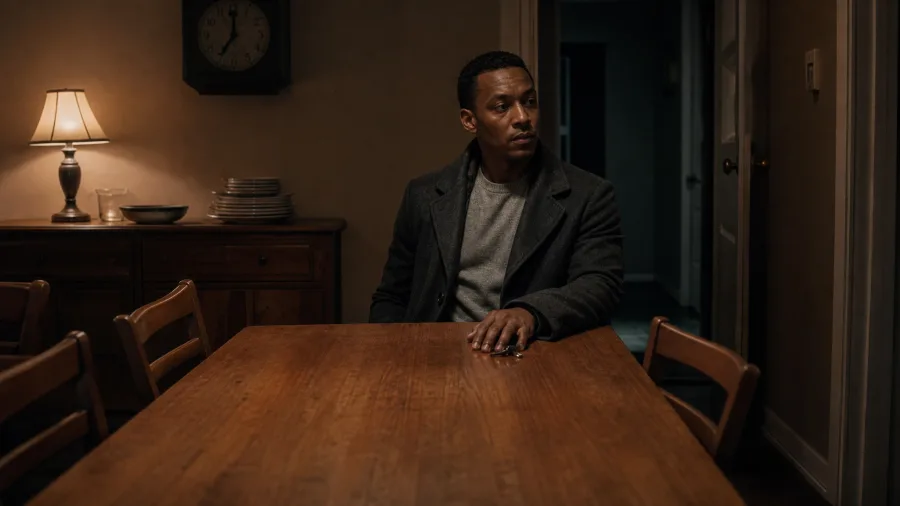
It’s four o’clock on a Sunday and he’s already standing in the driveway with his keys out, and the grandchildren ate lunch in the car on the way over. The visit was polite, warm even, and it lasted forty minutes. From the chair by the window it looks like a son with somewhere better to be.
What is actually in the room is older. An absence, a harshness, a move at fourteen that nobody ever explained — if old advice gets hidden to avoid a flood, an old injury gets hidden to avoid a wound, and the wound is the one that sets the length of visits. Raising it now feels cruel, because he is old and the time is short, and it looks like kicking a man already down.
So the real subject rides along in the car, unspoken, and every visit gets charged for it in politeness. The early exit, the grandchildren kept to a short Sunday lunch, the safe subjects — none of it is about the weather.
The way out is not an ambush on a Sunday afternoon. It is one structured conversation, arranged in advance, ideally with a witness in the room or a therapist, where the complaint gets said once and heard. Until that happens, the politeness is the shape the distance takes.
The Visit That Stays Short vs. The One That Opens
Polite and short
- Weather, traffic, the game
- You keep your coat on
- Grandchildren visit for ninety minutes
- He asks nothing because he senses a wall
- Both of you leave relieved and a little worse
Structured and honest
- One named subject, agreed in advance
- A set time limit you both know
- A witness or counselor if the wound is old
- You say once and stop talking
- Grandchildren stay longer once the air clears
Care and Unspoken Love
The last group is the plainest and the hardest. By the time you get here, the earlier silences have done their work: help is refused, troubles are hidden, and love is a sentence reserved for emergencies.
These three cost the most in years, not in arguments.
They also require the least skill. They require saying the small thing on an ordinary day.
7. Offers of help get refused, so sons stop

The son who stops offering is not the son who stopped caring. He is the son who offered twice and got told he was fussing.
The first refusal lands as a small insult, and the feeling afterward has a name the son cannot use out loud: guilt, because he is relieved. That relief is the hinge. When a father turns down the ride, the money toward the roof, the name of a man who does gutters, the son is briefly off the hook, and the second offer costs more resolve than the first. So he waits to be asked, and being asked is the one thing the father will not do.
The ramp is the version that hurts. A son prices a ramp for the side steps and mentions it, and the father says he is not an invalid. The ramp goes unmentioned after that, and the son notices six months later that his father has started coming in through the garage, skipping the two steps into the kitchen, and the two of them have stopped talking about getting him a chair.
What tends to reach past this is not a general offer. “Anything you need” sounds like a doorway to everything, and a father hears it as being made into a patient. A ride to the one appointment on Thursday, a hand with one repair on a specific Saturday, help arranged and described rather than debated – one request, said plainly, once.
There are fathers who ask directly and sons who say flat out that the offer stands. For the rest, the refusal protects a man’s sense of his own standing and costs him the thing he needs. The smallest move is one specific offer, not a wide-open one, and then the son letting the offer sit out loud without a fight.
💡 Tip: Make the offer about a time and a task: "I'll come Saturday and fix the gate." Not "let me know if you need anything."
The Hidden-Trouble Ledger at a Glance
💼 Job loss
Told in March, heard in July
🏠 Separation
Learned from a cousin
💳 Debt
Discovered after the fact
🩺 Own diagnosis
Kept back for months
📞 Typical filter
A sibling or a neighbor
The default excuse
"Work is fine." It is the sentence that buys a few months and spends the father's sense that he is still inside his own family.
8. His own troubles stay hidden to spare you

Because a man in his seventies cannot fix a lost job or a marriage coming apart, and your son knows you will lie awake over what you cannot touch.
So a job disappears in March and the news reaches you from a cousin in July. Through the spring, work was fine. The trouble held back is usually large — a separation, a debt, a diagnosis of his own — and the cost is that you find out late, or secondhand, and feel shut out of your own family.
What opens it is asking about his life specifically, and then not answering with advice or a story about your own youth. He is protecting you from a worry you cannot fix, and paying for it with the one person who would still listen.
Four Ways These Silences Get Reopened
9. “I love you” goes unsaid and hardens

Two words, and some fathers go whole decades without saying them at a kitchen table. In many homes the rule is not silence but substitution: love is a rebuilt fence, a set of winter tires, money pressed into a hand at the door, and the words get left to funerals.
Which is why the bedside version does not count as a solution. It is said once, under duress, with tubes in the way and a nurse in the corridor, and the son hears it as a verdict rather than an ordinary fact. Said at a bedside, it cannot simply be repeated next week the way a commonplace sentence needs to be.
The smaller version costs nothing and builds its own habit. A father finishes a call about a brake job with “love you” and hangs up before the son can do anything about it, and the son says it back, and the next call is easier because the sentence has been used before. The father can go first – he wrote the rule, and he can retire it. A Tuesday, a call about a brake job, a two-word line at the end – the easier call is the one that follows.
Frequently Asked Questions
Why won’t my son tell me what’s really worrying him about getting older?
Because a son saying he fears becoming you lands as a verdict on you, not a confession by him. The feared thing is specific – a temper, a habit, a diagnosis – and he is watching his own version of it. It becomes sayable when you name your own version first, or when he keeps your diagnosis out of the sentence and frames it as “this is about me.”
Is my son keeping track of my health without telling me?
Probably, in small ordinary ways: a call to a sibling, a neighbor, the pharmacy, the patient portal. It starts when direct questions get “I’m fine” for the tenth time. The cost is that you are never trusted with the information, so you cannot show judgment or ask for help. One specific direct question, about one appointment or one pill, is what breaks the covert route.
Why does my son seem to be pulling away while I’m still here?
He is often grieving a version of you – the driver, the memory that held names, the man who handled things – and it has no name. Saying it sounds like writing you off. He takes the keys and leaves early because watching you misremember a route is the thing he cannot say. Name it as missing the old version, not as a euphemism for dying.
Does my son still need me to say I’m proud of him?
Yes, and specifically. What he wants is one named thing – the remodel, the years of showing up, the way he handles his own child – not a general “you’re doing fine.” He will not ask because it sounds needy. Say one specific thing, unprompted, with no advice attached.
Why did my son stop offering to help me?
Because the offer was refused, then the next offer was never made. Usually the help asked for felt like a verdict on your independence, and he heard rejection. The middle path is one small specific offer – a ride to one appointment, a hand with one repair – rather than a general “anything you need.” If he says he will keep offering, he means it.
Can neither of us just say it?
The rule in most families is that love is shown through work, repairs and money, never words. Nobody wrote it down; everybody follows it. The father can retire it first because he set it. A “love you” at the end of a call about a brake job, repeated until it is a habit, is the whole move.
The Sentence You Say Before the Hospital Corridor
Pick one, the one that matches your situation, and say it plainly, once, with no preamble, then stop. The second sentence is usually the one that ruins the first. While your father is still healthy and sharp, raise the pride item or the old injury, because he can hear it and there is time to repair what it opens. Once he is already declining, say the grief and the care and love items first, before pride and old injuries, which can turn into a late accusation when they arrive too late to answer.
A father reading this can open the door from his own side by naming one of the nine about himself first, his own fear of ending up like his father, his own missed pride sentence, and that gives the son permission to answer.
Weather, cars and logistics are the safe corridor around one of nine sentences, and you have been walking it for years. The hospital corridor is the worst deadline for any of them. This week is the better one. Choose the item and the day, and say the plain sentence once.
Pick One. Say It This Week.
Choose the single silence from these nine that fits your situation, write the one-sentence version tonight, and say it on the next ordinary call. No preamble. Then stop talking.