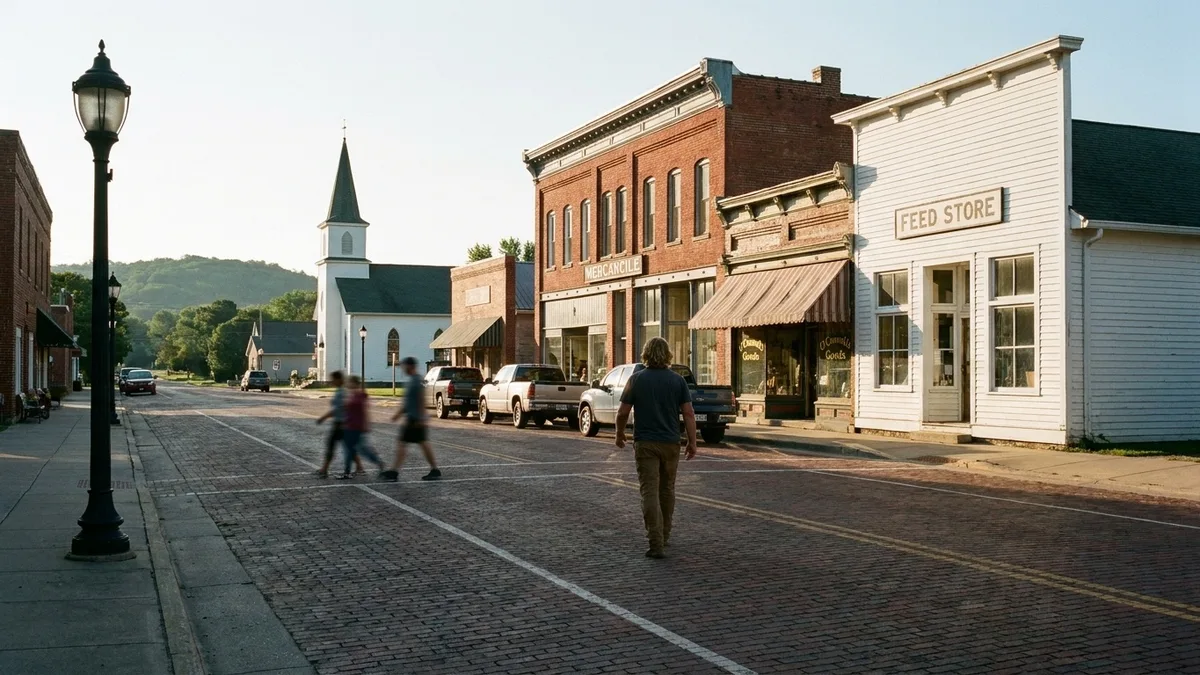
The planning mistake here is collecting all twelve in one weekend, hitting the third at 4 p.m. with the shops locked and the light gone. You have seen the photos – the white steeple at Ashford Falls, the brick row at Cedar Bluff, the adobe church at Cienega – and you suspect a confection. All twelve are towns under 3,000 people with districts of 3 to 8 blocks, storefronts from roughly 1870 to 1930, free, ungated and open to traffic, where the hardware store, diner, mercantile, feed store and post office trade in the same blocks crews film.
Pick two or three by the working life and the light you want, not by the count. Allow two to three hours a street, an extra hour for a courthouse square, river landing or dock, about $14 for a counter lunch and $95-$180 for a room. Aim for May – June or September – October, weekday mornings. Then check each street’s page or call the store before leaving – winter and Monday hours are short.
By the end you will know your afternoon town, your weekend pair, and the one to skip if shops matter more than architecture.
Quick Tips Before You Start
Go on a weekday morning
Shops open by 9 or 10, the light is on the facades, and the sidewalks are empty until lunch.
Carry cash for lunch
Counter lunches run about $14, and a few of the older diners still prefer cash for small tickets.
Call ahead in winter
Winter hours shorten on several of these streets, and a Monday can mean everything is shut.
Park on the street
Free on-street parking with 2-hour limits on some blocks; no meters and no paid lots in any of the twelve.
1. Walk the green at Ashford Falls
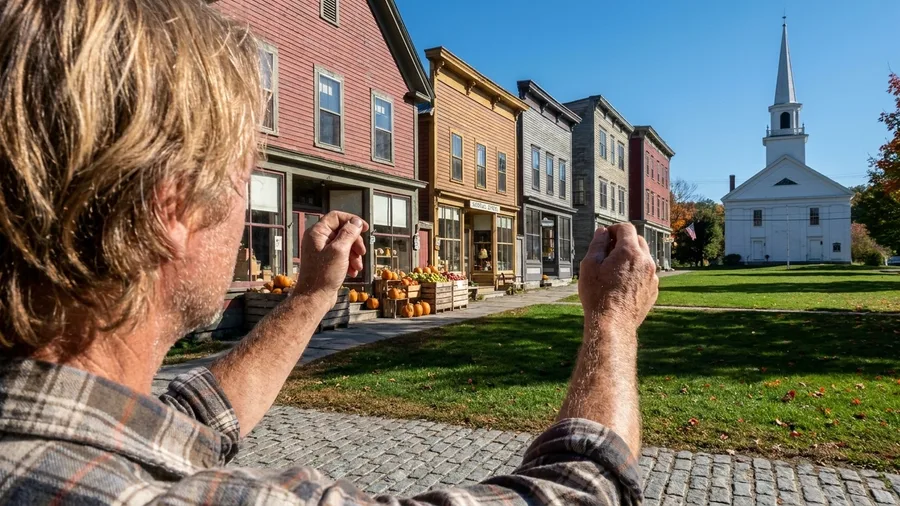
Ashford Falls is a village green with a steeple at the end of it, and you can walk the whole thing before your coffee goes cold. Five blocks of clapboard storefronts from the 1890s face the green, painted the colors old Vermonters actually used, and the white meetinghouse rises at the north end so that every northward glance is a photograph you have already seen online.
Walk it north from the low end and you pass the town offices in a clapboard building that has been the town offices for a century, the general store with its produce in wooden crates out front, a lunch counter with maybe eight stools. The post office is in there too, open its posted hours, mail going out. None of it is dressing; the mail truck pulls up while you are standing there and a woman in a fleece jacket walks in with a stack of letters and walks out again. Two hours on foot and you have seen the street twice, once down and once back.
Park free on the street and mind the two-hour signs on some blocks; there are no meters and no paid lots, which is part of why this town works as a stop rather than a commitment. A Saturday in May or June puts the market on the green, stalls and coolers and someone selling seedlings, and that adds an hour to your visit whether you plan it or not. If the budget matters as much as the view, these cheaper movie-set destinations deliver the same backdrop for less. Lunch at the counter runs about $14. Come on a weekday morning if you want the green to yourself, because the shot is only half the point – the post office and the store being open behind it is the other half.
💡 Tip: Walk to the north end of the green first. That is the view the photograph everyone has seen was taken from, and it is empty before 10 a.m.
| Town, state | The set it looks like | Blocks to walk | Time to give it | Go at |
|---|---|---|---|---|
| Ashford Falls, VT | White clapboard and a green | 5 | 2–3 hours | Saturday morning market |
| Cedar Bluff, IA | Brick commercial row above rail tracks | 3–5 | 1.5–2 hours | When a train is due |
| Laurel Springs, NC | Courthouse square in mountains | Ring + 2 | 2 hours | Before 10 a.m. weekday |
| Marston Ferry, VA | Colonial doors down to a river landing | 4 | 1.5–2 hours | Mid-morning |
| Copper Creek, MT | False-front Western blocks | 3 | 1.5 hours | Late afternoon |
| Willow Bend, TX | Limestone courthouse under live oaks | 5 | 2 hours or an evening | Dance hall night |
| Harborside, ME | Shingled wharves and granite steps | 3–5 | 2 hours | Early morning before boats leave |
| Slate Run, PA | Porches against a valley wall | 2 | 1.5–2 hours | Midday |
| Cypress Landing, MS | Live oaks over cast-iron galleries | 4 | 2–3 hours | May–June or Sept–Oct morning |
| Alder Point, OR | Flat timber storefronts facing water | 4 | 2 hours | Any wet afternoon |
| Cienega, NM | Adobe walls and a church at the end | 2 | 1 hour | Late afternoon light |
| Dry Creek, WY | Board sidewalks and a wooden saloon | 3 | 2 hours | Check winter hours first |
2. Catch the train through Cedar Bluff
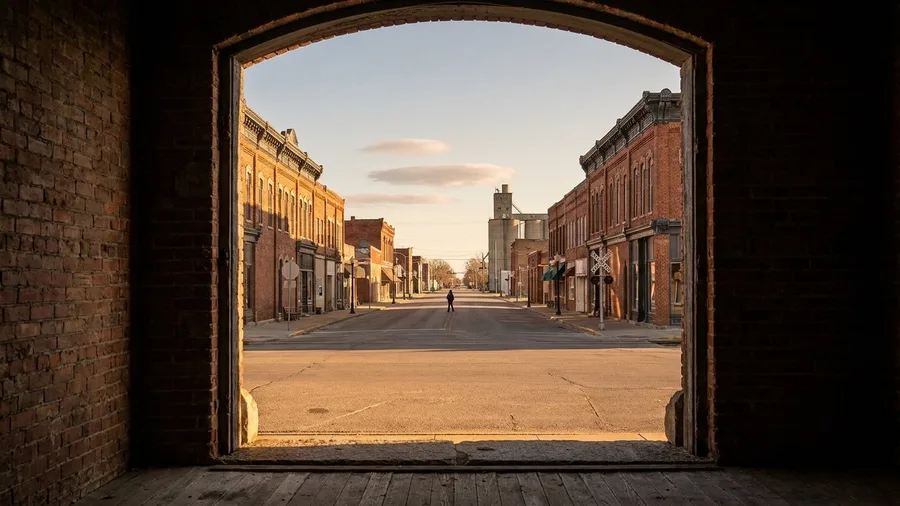
You hear the bells before you see the train, and the street empties as the crossing clears.
That mid-block rail line is why Cedar Bluff is the brick answer to a white-clapboard green: instead of a steeple closing the view, the flat commercial blocks run straight at a concrete grain elevator at the north end, iron cornices and all. The catch is that the view you came for depends on a working train, so build slack into your arrival rather than racing to catch a photograph. Three to five blocks take 90 minutes to two; the diner on the east side serves a plate for about $14, with free on-street parking.
💡 Tip: The view that earns the detour is from the south end of the block, looking north at the elevator with the brick fronts in the foreground.
Cedar Bluff — At a Glance
🧱 Walk length
3 to 5 blocks, all of it on the same side of the tracks
🚂 What you are waiting for
A freight, not a schedule: no posted timetable, so ask at the diner or watch for the signal
🌾 Where to stand
North end by the elevator, looking back down the block for the full brick run
🥪 Cost of the stop
About $14 for the plate; $0 to walk, park and look
🅿️ Skip it if
You are on a tight clock — the train decides the shot, not you
Best hour
Weekday late morning: the street is near empty, the light is on the east cornices, and a midday freight is likelier than at the weekend.
3. Circle the courthouse at Laurel Springs
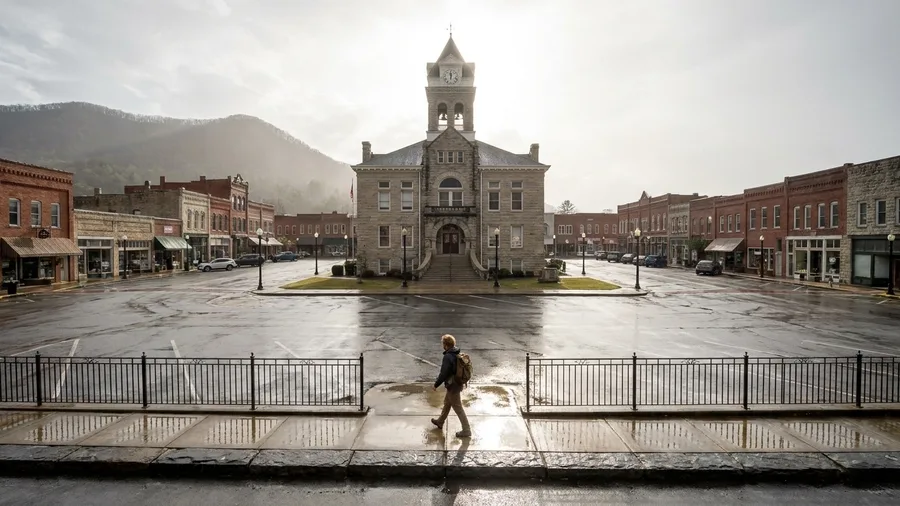
Two hours on foot, no admission, free curb parking, and a plate at the counter for about $14: that is the whole bill for a square that swaps the tracks and grain elevator for a courthouse and a ridge.
The courthouse dates to the 1900s and sits dead center, stone and clock and steps, with a full ring of storefronts facing in toward it. Walk the ring rather than the sidewalk outside it and the square turns from a photograph into a plan – the shops all aimed at the civic building, the civic building aimed back. From the north corner the ridge line shows above the roofs and the whole thing resolves as a mountain town, not a flat set someone built for a camera.
Timing is the entire trick here. A weekday arrival before 10 a.m. gives you empty sidewalks and low sun lying flat across the facades, which is the light that makes the storefronts read as painted wood and old glass rather than as flat color. Shops shut at 5. Come at 6 and you get the square, the courthouse steps and the closed doors, and nothing else, which is worth knowing before you build an evening around it.
This is a civic street, not a commercial one: the courthouse is where the county does its business, the ring of shops is where people buy their hardware and their lunch, and the 5 o’clock closing is not a tourist inconvenience but the actual schedule of a working town. Note it, plan around it, and the square rewards you. Treat it as a stage set to be visited at your leisure and you will arrive to locked doors and wonder what the fuss was about.
💡 Tip: Stand at the north corner and frame the courthouse with the ridge above the roofline. That is the shot that says mountains, not backlot.
⚠️ COMMON MISTAKE
Do not save the square for sunset
Laurel Springs shops close at 5, and the courthouse square is a civic space, not a lit stage. Arriving at 6 p.m. gets you the walk and a locked door on every storefront.
4. Is Marston Ferry worth the detour?
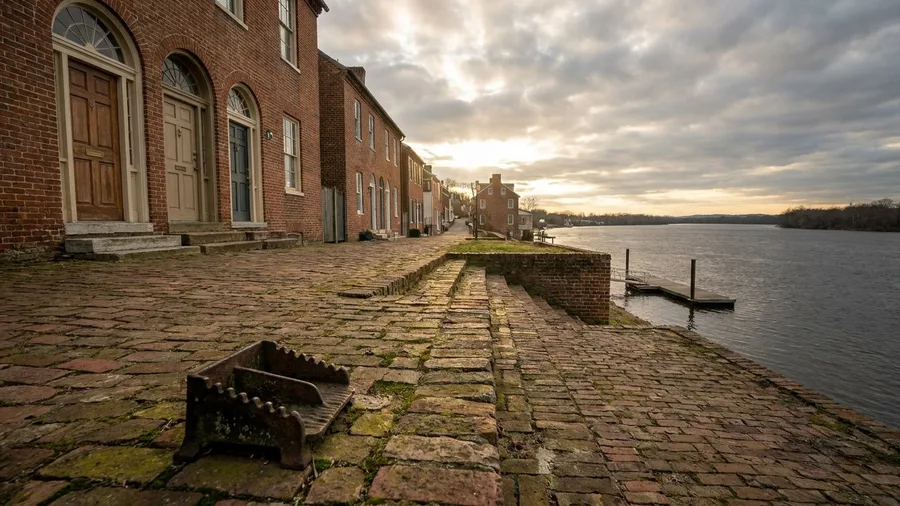
A courthouse square holds its ground against a ridge; Marston Ferry gives its ground away, dropping in stages to a landing where a ferry once crossed. What is the actual draw? A brick walkway and one row of doorways, built between the 1790s and the 1830s, close enough that you walk past a fanlight at arm’s length and can see the seam of a hand-blown pane without leaning. The river reach at the bottom is not a walk back you squeeze in afterward. It is the halfway mark of the visit.
Budget 90 minutes for the slope down and the climb back, then give the water path another hour – the grade is real and the brick is uneven underfoot. Street parking costs nothing, and a counter lunch in town runs about $14. Something to know before you point a camera: most of the length is people’s homes, original doors still hung in frames and still in use tonight, so stay on the sidewalk, keep your voice where it is, and it is the cramped scale, not staging, that makes these blocks feel like a set.
5. Stand under the false fronts of Copper Creek
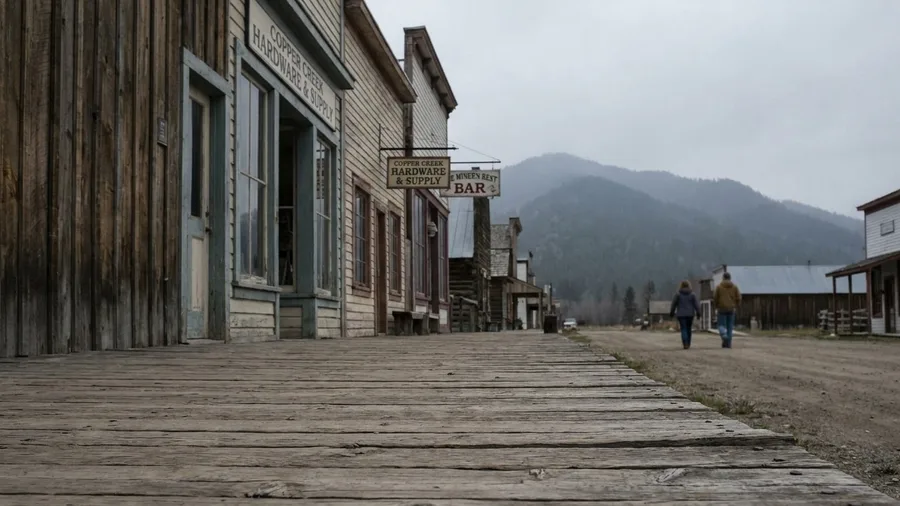
The first surprise is the sound your boots make, a hollow knock on board sidewalks that a poured concrete street would swallow. The second is the light: the three-storey false fronts throw flat parapet shadows across the boards, roofs lower and out of sight behind them, and the mountain wall closes the far end of the view like a curtain you cannot walk behind.
False fronts hide roofs, not use. The hardware store still sells to people who work, the bar still opens, and both sit behind the same movie-set parapets that photograph in every direction. To catch it right, stand at the street-end corner at the crossroad, where the mountain and the parapets line up into the frame you came for. Three blocks take 90 minutes on foot, more if you go into the store and talk to whoever is behind the counter.
Budget the splurge honestly. A room in town or on the highway runs $95-$180, lunch at the counter about $14, and street parking costs nothing. If you are overnighting to photograph the empty street at dawn, pay for the room. If you are passing through, the 90 minutes and a $14 lunch are the whole expense, and the parapets are free.
💡 Tip: Ask at the bar which night the locals come in. The street is quiet at 8 p.m. and busy at 9, and the difference is worth planning around.
A working evening in Willow Bend
6. Time Willow Bend for the dance hall
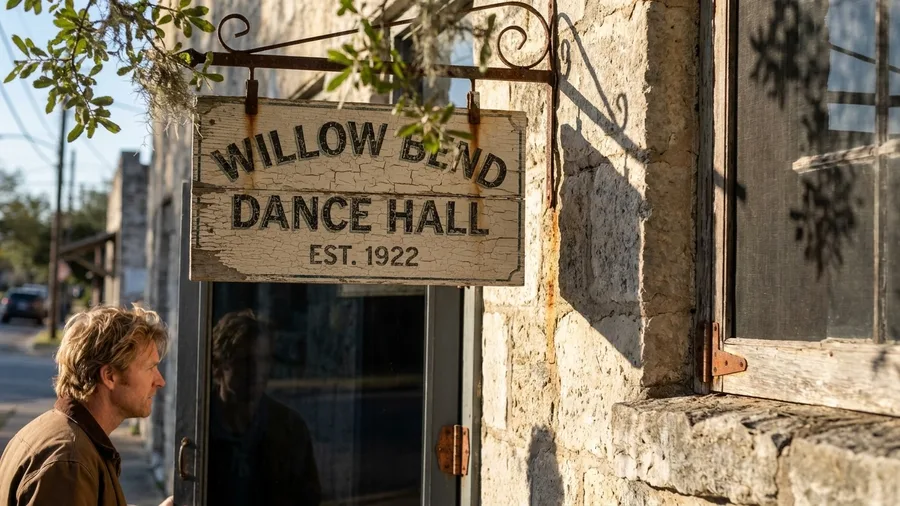
Do not book a room without checking the hall’s calendar or calling first. The courthouse square is the weekday draw, but the 1920s dance hall is why you stay past dark, and on a week with no band you have paid for a bed and gotten a walkable five blocks. The dance hall and the limestone courthouse are both in use, and the street between them is the walk from civic morning to musical night, not a set dressing.
If the hall is booked, plan the whole evening around it, not the two hours on foot. Five blocks goes fast in daylight; a room runs $95-$180, lunch about $14, and parking on the street is free. The courthouse under the live oaks with 1880s storefronts facing in is worth the daylight, but the evening with a band is the reason this street is on the list.
Set-piece look vs working street
What the photos promise
- Empty sidewalks at any hour
- Perfect light on every facade
- Every storefront open and dressed
- A full day of things to do
- No cars in the shot
What the working street gives you
- Empty before 10 a.m., busy by noon
- Light on one side of the street in the morning
- Shops open 9 or 10 to 5, closed Mondays
- Two to three hours, not a day
- Free parking on the block, cars in the frame
7. Stay clear of the hoist at Harborside
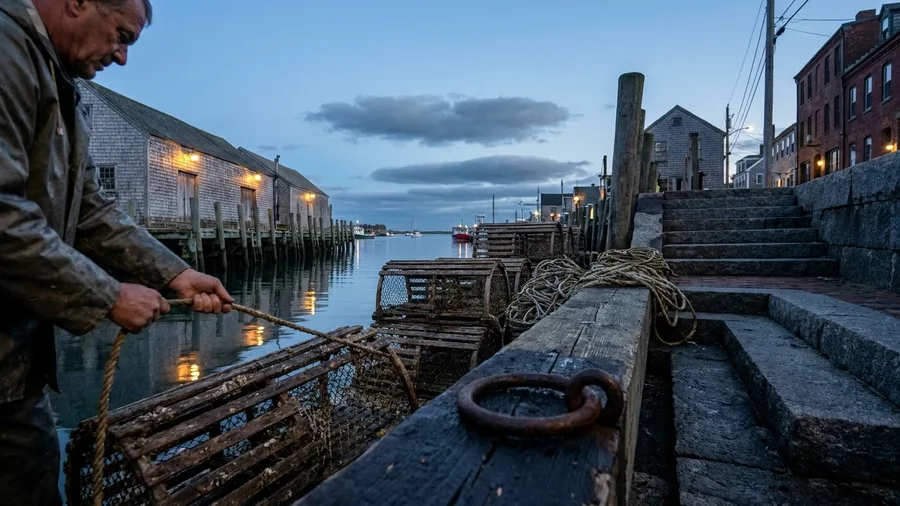
Harborside is worth the detour only if you get there before the boats leave. Arrive at first light, when the tide is still slack and the diesel engines are warming up along the pier, and you’ll have the granite steps to yourself. The wharf sheds are clad in weathered cedar shingles that have gone silver-gray, and the steps, cut from local granite in the nineteenth century, rise from the water to the street in a series of shallow flights. Three to five blocks of shops climb up from the landing – a chandlery, a provisions store, a diner with a counter – but the working heart is down at the water, where the catch comes in and the gear is stacked.
💡 Tip: The granite steps up from the water are the shot, and they are empty before the first boat leaves. After that, you are in someone's way.
8. Sit on a porch in Slate Run
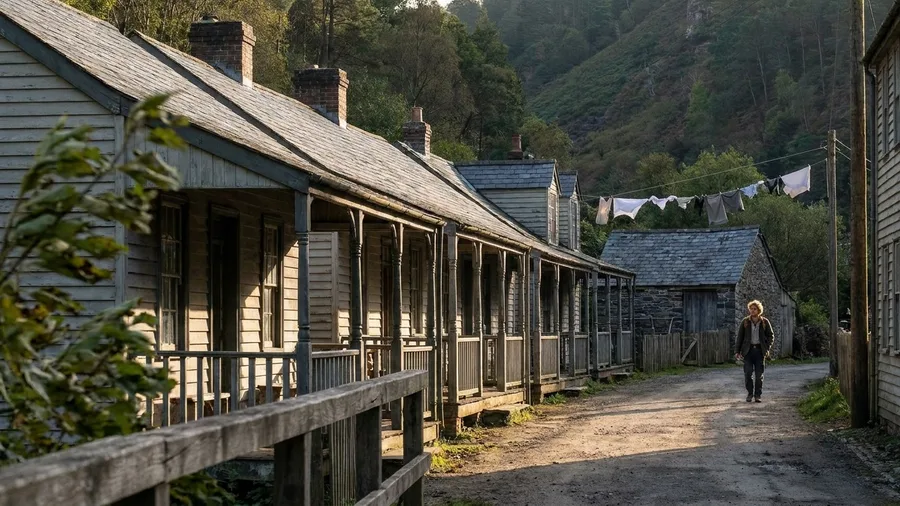
A harbor street runs on tide tables and the schedules of boats; this street runs on a creek and the pull of a wooded valley wall, and the effort it asks is almost nothing – no gate, no admission, no ticket, just a free spot on the street. You give up an hour and a half to two hours and you walk away with a portrait of a quarry town that still lives in its own buildings. That is a hard thing to beat.
Twelve streets, by the numbers
9. Find the light under Cypress Landing’s oaks
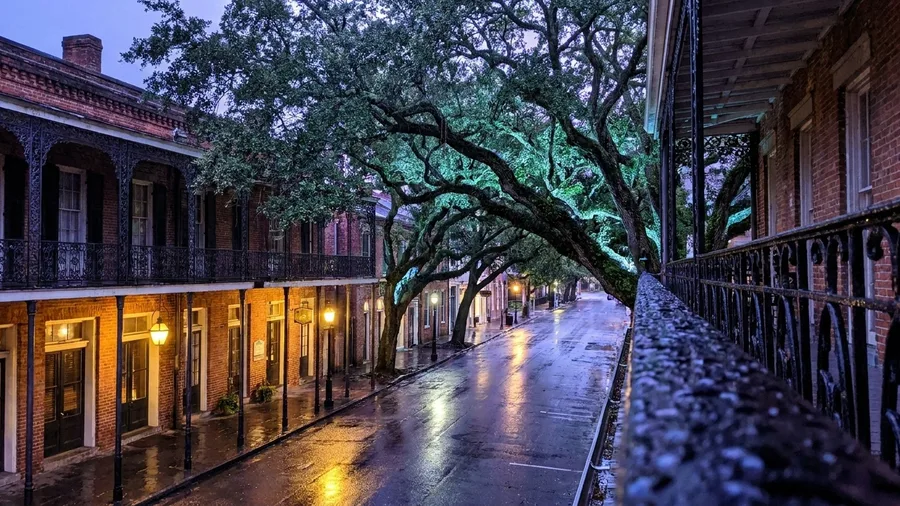
You turn the corner where the street meets the river and the live oaks close over the roadway like a ceiling, their branches meeting high enough to let the car pass but low enough to hold the light, and you understand immediately why every photograph from Cypress Landing looks the way it does. The cast-iron galleries on the upper storeys run below that green ceiling in a rhythm of columns and railings that catches the filtered sun in stripes across the brick below.
The riverfront end of the street is where the oaks open up and the light comes through unobstructed – and that is also where the locals go to stand and look out, rather than crowding under the densest canopy where the photographs are best. Morning is the time for the light under the branches; two to three hours covers the whole street, with a counter lunch about $14 and free on-street parking.
May and June or September and October beat summer here not because of crowds but because of heat and mosquitoes that make the shade less of a refuge than it looks in pictures. The galleries are on working storeys and the oaks shade a real roadway that carries traffic every day; the frame is a street, not a stage.
💡 Tip: Locals walk the riverfront end in the early morning and leave the canopy block for the heat of the day. Follow them.
10. Duck under the awnings at Alder Point
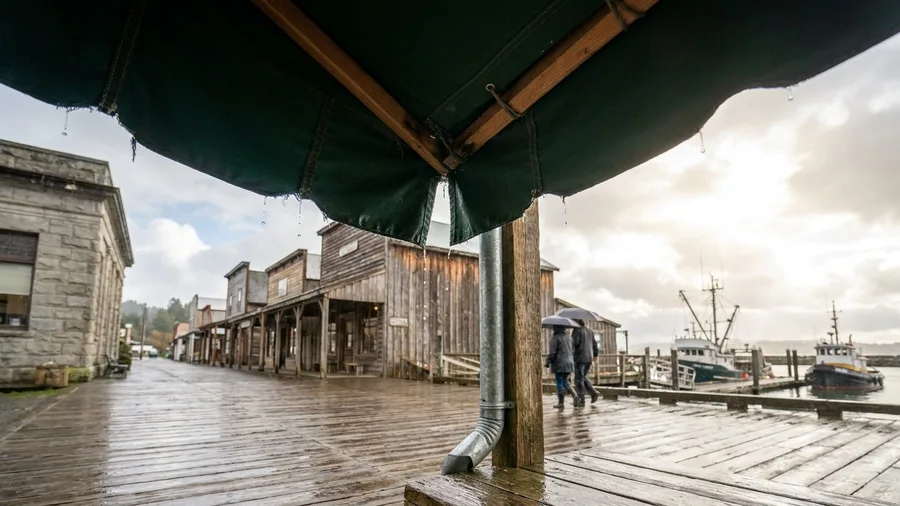
A shaded street under oaks asks nothing of you but to look up; Alder Point asks you to dress for rain and walk anyway, and it gives back more for the trouble. Four flat blocks run in fir and cedar, no hill to climb, storefronts topped by deep awnings and a 1920s bank front at the corner. Flat is the point: you cover the whole street on foot without ever judging a slope.
Rain is the default here, and the awnings are the reason the town still functions wet. A wet afternoon goes awning to awning from the first storefront to the bank front, never back to the car, and you stay dry the length of the street. If you came for wildlife, the honest likelihood is at the water rather than on the street: a fishing boat and a small tug tie up at the dock through a weekday, and that dock is still working gear, not a backdrop.
Two hours covers all four blocks, parking is free on-street with the usual 2-hour limits on some, and a counter lunch runs about $14. What sets it apart from other waterfront streets is timber money that never left the buildings and a dock that still earns its keep. The awnings were cut for weather, not for a camera, and that is exactly why the street looks arranged and isn’t.
🚶 How to walk a Main Street in two hours
Park on the block
Free on-street, 2-hour limits on some blocks; check the sign before you walk away.
Walk to the view terminator
The steeple, the elevator, the courthouse or the river landing — start at the end that closes the view.
Walk back on the other side
The light is on one side in the morning and the other in the afternoon.
Eat at the counter
About $14, and the person serving knows the town's hours better than any website.
Ask about the next block
Every one of these streets has one more thing worth seeing that is not on a sign.
11. Will Cienega suit you or not?
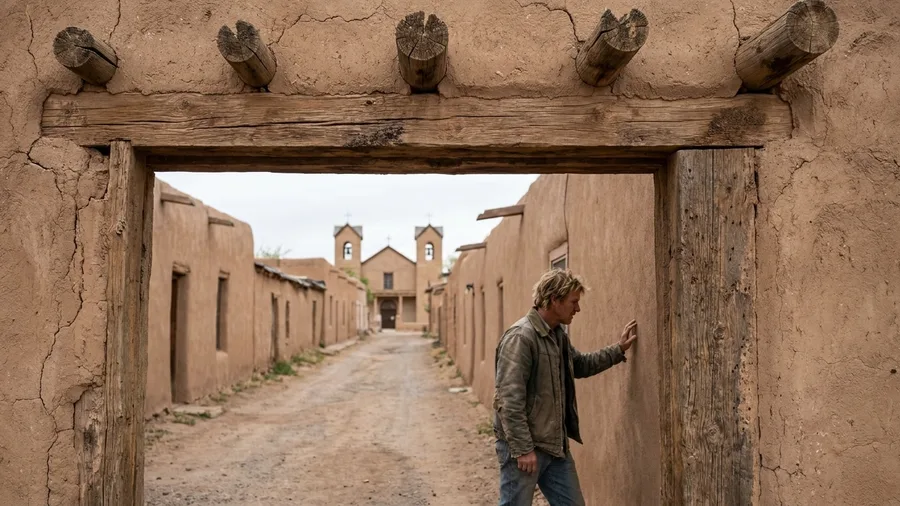
Is it a set or a town? It’s a town, and the giveaway is the height of the walls. Where a timber street builds deep awnings against rain, Cienega builds for sun, and the whole frontage sits low and single-storey from end to end, with no two-storey facade anywhere along the street. That low run of earth-colored walls, vigas poking out near the roofline, and a church with towers closing the view at the far end is why it reads as a set: real light on real walls, not painted flats. Families will find it easy on the legs and short on distractions – an hour covers the street, so time your arrival, not your stay, and land in late afternoon when the walls take the light.
Late afternoon is the hour worth planning around, with a counter lunch about $14 and free on-street parking in the meantime. Who it does not suit: anyone who wants shops to browse, because the draw is the frontage itself; and anyone who plans to wander in with a camera and no manners, because the adobe is occupied and the church still operates. Ask first before photographing people, church interiors or the pueblo, and check the church door for posted hours rather than assuming it is open.
12. Order the plate at Dry Creek
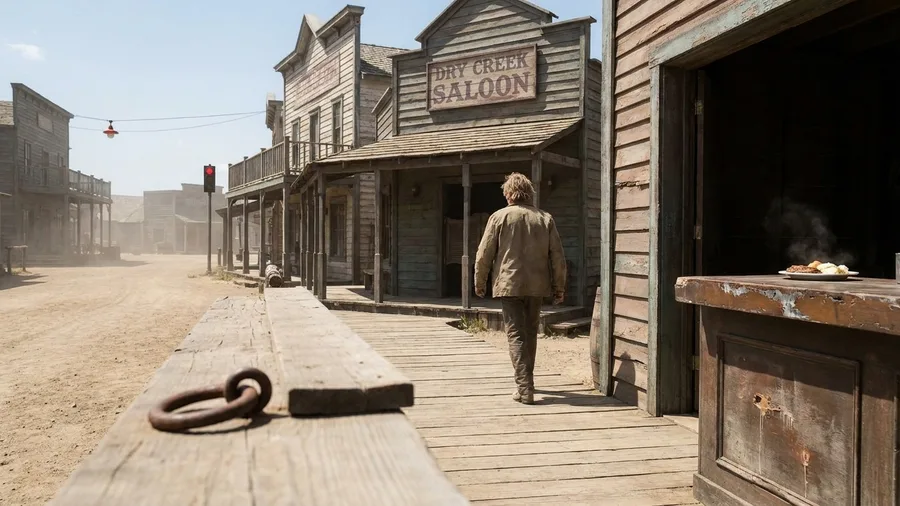
Dry Creek is board sidewalks, a wooden saloon and flat-roofed storefronts that kept their original timber and never got the brick upgrade. That refusal to modernize is what makes it the least altered street on the list, and also the thinnest on services. Three blocks take two hours, and there is no traffic light anywhere in town – just a flashing signal at the crossroad, which tells you how much traffic it handles.
Order the plate at the saloon, about $14, and eat it because the room around you is the reason you drove. But do the driving maths first: fill the tank before the last stretch, since stations thin out, and plan to sleep in the nearest town with a room at $95-$180. A core of businesses trades year-round while some storefronts open summer only, and winter hours shorten, so call before you commit to the drive. Parking is free on-street when you arrive.
💡 Tip: Ask what is on the plate that day. The saloon cooks what the town eats, not a menu written for visitors.
Frequently Asked Questions
Are these streets actually free to visit?
All twelve are free, ungated and open to traffic. There are no admission booths, and parking is free on-street with 2-hour limits posted on some blocks. A counter lunch runs about $14 and a room $95–$180 if you stay.
How long do I need for each one?
Two to three hours covers a street on foot. Add an hour where there is a courthouse square, a river landing or a dock. The shortest, Cienega, takes about an hour, and the largest squares reward a full afternoon.
When is the best time to go?
May–June and September–October. Summer weekends are busiest and weekday mornings are emptiest, which matters most on the streets with the tightest storefront rows.
Do I need to book ahead?
Book a room if you are staying overnight, especially in Willow Bend when the dance hall has a band. For the walk itself, nothing needs booking — but call ahead in winter, because hours shorten and some storefronts open summer only.
Which one should I skip if I want shops rather than architecture?
Skip Dry Creek if you want a full afternoon of browsing. It is the least altered street and also the thinnest on services, with some storefronts open summer only. Choose Ashford Falls or Cedar Bluff instead.
Choose the afternoon, then make the call
If you have an afternoon, take Ashford Falls: five blocks, the green and the steeple, two hours on foot, a $14 counter lunch and free on-street parking. The other eleven can wait.
For a weekend, pair Ashford Falls with Harborside – one inland green and white steeple, one working harbor of shingled sheds and granite steps. Both are two-hour walks with free street parking, and the $95-$180 room budget covers the night. Skip Marston Ferry if shops matter more than architecture: the draw is 1790s – 1830s doors and fanlights at arm’s length and a river landing, with long residential stretches. It is a walk, not a shopping row.
Before you leave the house, check each street’s page or call the store for current hours, because these are working main streets and winter and Monday hours are short. The photos hold up because the post office, the diner, the hardware store and the dock are still on the clock.
Check the hours before you leave the house
These are working Main Streets, and winter and Monday hours are short. Call the store or check the town's own page for the one you picked, then set the alarm for a weekday morning.