
Ancient people found the same things funny you do – and laughed openly at targets that would end a career today. The structure of the joke was identical; the permission structure around it was not.
The oldest recorded joke on earth is pressed into a Sumerian clay tablet from around 1900 BCE. It is a wry observation about a woman who had never sat on a man’s lap. The first reaction on reading it is not archaeological curiosity – it is mild surprise that it still lands, nearly four thousand years later.
The default assumption tends to run the other way: that ancient humor would be so buried under cultural distance as to be incomprehensible, more artifact than comedy. The evidence does not hold that up.
What ancient people laughed at maps onto modern humor with unsettling precision at the level of mechanics, and diverges sharply at the level of targets. That gap between the two is the most psychologically revealing thing the whole record has to offer – because it shows, in the same corpus, exactly what in human humor is fixed and exactly what is learned.
The Oldest Written Joke Is Sumerian
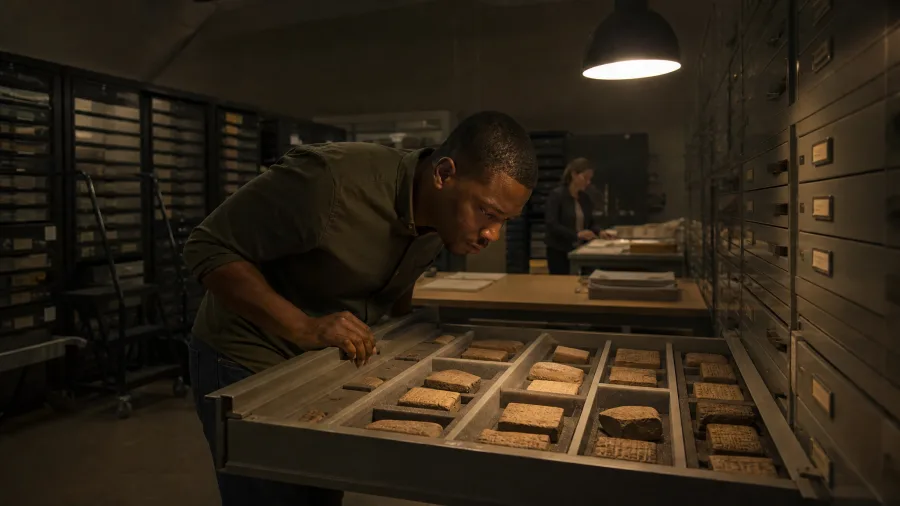
Roughly 3,900 years ago, someone pressed a stylus into wet clay in Sumer and recorded a joke. The joke – a wry remark about a woman who had apparently never sat on a man’s lap – is sexual in implication, deadpan in delivery, and still just barely recognizable as what it is. That last part is the thing worth pausing on.
Whoever carved that tablet was not inventing a new form. The setup, the implied gap between what is said and what is meant, the assumption that the audience would fill in the rest – those choices only work if the form already existed in the minds of the people hearing it. The tablet is evidence of a shared cultural object, not the birth of one.
But that tablet survived because clay is hard and Mesopotamian soil is dry. The joke a carpenter made in a workshop in Memphis around 1200 BCE, the insult traded between two merchants in an Assyrian market – those vanished the moment the sound stopped. Written jokes are the fraction that were considered worth inscribing and then happened not to get lost.
That gap matters for any claim about what ancient people typically found funny. What survives is durable and fortunate, not necessarily representative. The Sumerian tablet is one data point from an ocean of spoken, performed, forgotten humor – useful evidence, but thin evidence, and the distinction between the two is worth keeping in view for everything that follows.
One Joke Book Survived Almost Intact

One larger body of ancient humor did survive, and it is still readable start to finish today. The Philogelos – which translates roughly as ‘The Laughter Lover’ – is a Greek-language collection attributed to two writers, Hierocles and Philagrius, compiled somewhere around the 4th or 5th century CE. It runs to approximately 265 jokes.
The structure is remarkably consistent. A fool is established – usually the absent-minded intellectual who cannot manage basic human functions, or a resident of Abdera, a town that had become cultural shorthand for provincial stupidity. A situation is set up. The fool confirms his incompetence with a specific, absurd act. Repeat, 265 times.
One joke from the collection: a student is informed that his father has died, and responds that it does not surprise him, since the man was always sickly. The format is identical to a modern anti-joke – the setup expects grief, the punchline substitutes clinical detachment, and the humor lives entirely in the gap between the two. The pause before the deflation is built into the phrasing.
The choice of the over-educated fool as the reliable target is not accidental. In a world where rhetoric and formal education carried enormous social weight, the joke punishes someone who holds status without earning it – who can cite philosophy but cannot respond to his own father’s death like a functioning adult. The audience laughs because it has already spotted what the scholar cannot see. That tells you what the audience valued, and what it feared about the people above it.
What People Get Wrong About Ancient Humor
Bodily Functions Got Laughs Without Apology
Ancient comedy was not primarily a literary affair. It was performed, physical, and public – and that is where bodily humor becomes impossible to separate from the record.
Aristophanes’ comedies, staged in Athens during the 5th century BCE, contain explicit fart jokes, toilet humor, and broad physical gags. These were not underground performances. They ran at public religious festivals before audiences numbering in the thousands – the same citizens who that week might sit in the civic assembly or watch a tragedy by Sophocles. No one in that crowd sorted the afternoon into ‘serious’ and ‘lowbrow’. The categories did not exist that way.
Relief theory offers a useful explanation here. Laughter tends to discharge tension that accumulates around taboo subjects – and every human culture develops taboos around the body. Wherever that tension exists, comedy about the body follows, because the release is what the mechanism runs on. The specific content matters less than the fact that a boundary exists and the joke crosses it.
What is historically unusual is not that ancient audiences laughed at fart jokes. It is that modern audiences feel the need to apologize for it.
The reflex to label bodily humor lowbrow – to distinguish oneself from the kind of person who finds it funny – is a relatively recent form of self-consciousness. Athenian audiences felt none of it. A joke about bodily functions performed inside a religious civic festival was simply a joke, and the fact that it landed in the same space as tragedy was not a contradiction anyone needed to resolve.
💡 PRO TIP
Relief Theory in One Sentence
Wherever a society creates a taboo, it simultaneously creates the pressure that comedy about that taboo releases. Change the taboo, and the comedy changes with it — the release mechanism stays identical.
Stock Fools Were the Reliable Comic Target

Specific social types were the other reliable engine of ancient comedy – and the same type appears across Sumerian, Greek, Egyptian, and Roman material with almost no variation: the pompous, the incompetent, the oblivious.
The Philogelos returns to the absent-minded scholar so often the character functions like a recurring sketch figure. He forgets his father has died. He asks a question and cannot parse the obvious answer. He has absorbed enormous amounts of formal education and cannot navigate a single ordinary human situation. The men from Abdera, a town that served Greco-Roman humor as a shorthand for provincial stupidity, make the same errors in a different costume. Egyptian satirical material targets the official who abuses rank and still cannot see the trick being played on him.
The psychological explanation is called superiority theory. Getting the joke requires recognizing the fool’s mistake before he does – and that recognition, however brief, positions the audience above the fool. The laughter is partly the pleasure of that elevation confirmed.
Each culture’s fool is a precise mirror of its anxieties about its elite. The Philogelos targets the over-educated academic because in a world where rhetoric carried enormous social weight, the gap between claimed learning and actual competence was a live tension. Egyptian material targets the abuse of rank for the same reason – rank was the organizing principle, so its abuse was the thing most worth puncturing.
But the trickster jokes complicate this. Plenty of ancient material survives in which the supposed fool outsmarts the authority figure entirely – the reversal is the punchline. The same audiences who laughed at the scholar’s incompetence also laughed at the moment the underestimated person wins. Superiority theory explains half the archive. The other half needs something more.
Sex Jokes Were Explicit and Everywhere
Ancient sexual humor was not more explicit than modern sexual humor so much as differently aimed – the content was direct, but what the joke was actually punishing was specific.
At Pompeii, preserved intact by the eruption of 79 CE, sexual taunts and puns were written openly on public walls and inside taverns – not scratched in corners but placed where everyone passing could read them. There was no equivalent of a content warning, because none was expected. At Deir el-Medina around 1100 BCE, Egyptian papyri showed animals in human roles, including sexually transgressive scenarios; the inversion of the natural order was the joke’s engine, but the sexual content itself was handled without apparent hesitation.
Explicit, then, is not quite the difference.
The real difference is in the targeting. The standard figures ancient sexual humor punished were the cuckolded husband – the man who failed to control his own household – and the man in a sexually passive role. Neither of these is a joke about sex as a subject. Both are jokes about a failure of standing. The comedy lands on whoever has lost dominance, not on sexuality itself, which was not the source of shame.
Modern sexual humor has shifted that axis. Squeamishness about explicit content – the idea that the subject itself is transgressive – is largely a modern arrangement, one the ancient world did not share. What has changed is the honor-and-shame hierarchy the jokes once ran on. That hierarchy has moved, and jokes built on its specific architecture no longer carry the same charge. The machine is identical; the fuel has changed.
Ancient Humor — Key Sources at a Glance
🏺 Oldest recorded joke
Sumerian tablet, c. 1900 BCE
📖 Oldest surviving joke book
Philogelos, ~265 jokes, 4th–5th c. CE
🎭 Public comedy performances
Aristophanes, Athens, 5th c. BCE
🪨 Street-level humor
Pompeii graffiti, preserved 79 CE
🐭 Satirical visual humor
Egyptian papyri, Deir el-Medina, c. 1100 BCE
📜 Wit as oratory science
Cicero, De Oratore, 55 BCE
The span
Nearly two thousand years of written comic material survives across five distinct cultures — enough to find the patterns, not enough to see the full picture.
Rulers Were Mocked When the Context Made It Safe
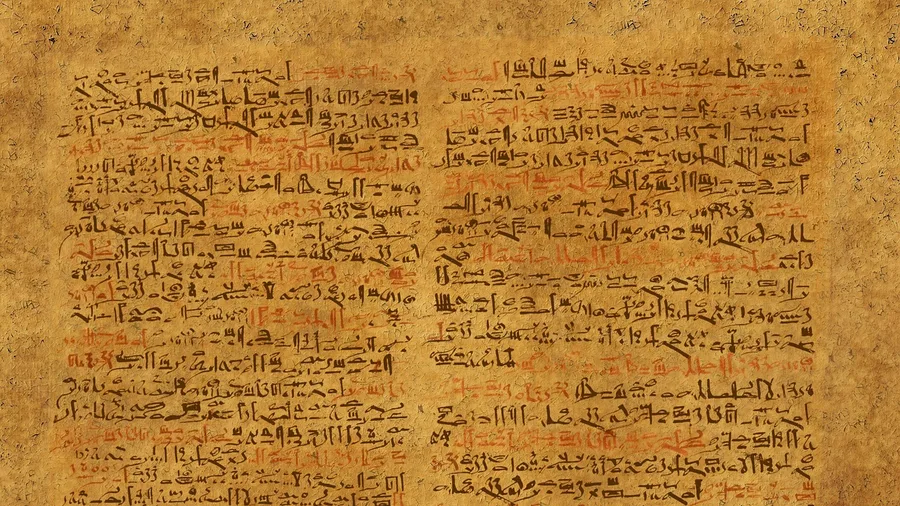
Mocking those at the very top of the hierarchy was possible – but only when the joke was structured to give the maker a way out.
The Egyptian satirical papyri from Deir el-Medina, dated around 1100 BCE, offer the clearest example. Mice besiege a cat-pharaoh’s fortress. The entire social order is inverted: the prey commands the army, the predator holds the citadel, the bottom has become the top. The image mocks authority directly, but through animal allegory it also mocks no one in particular. If challenged, the maker could claim it was simply a drawing of mice. That deniability was not incidental – it was the condition that made the joke survivable.
Roman graffiti at Pompeii worked differently. Insults aimed at emperors were written by hand, anonymously, on walls anyone could see. The anonymity was the protection; the public placement was the point. Someone writing an imperial insult on a tavern wall was not making a private complaint – they were making a communal one, verifying that the frustration was shared, that other people would read it and recognize exactly what it meant.
Researchers who study political humor describe this function as sanctioned transgression. The frustration is real. The joke allows it to discharge without crossing into direct challenge, which makes the humor useful to those below and tolerable to those above – up to a point.
That point was firm. Where the indirection dropped and a joke became an identifiable, direct attack on a specific ruler, the protection evaporated. The mice were safe. The name on the wall was not.
Wit and Wordplay Coexisted With Crude Humor
Ancient humor was never only crude – Cicero wrote a systematic treatise on wit in 55 BCE, De Oratore, that classified puns, irony, understatement, and comic timing as craft skills a Roman orator could study and improve, the same way one would study rhetoric or gesture.
That treatise sat on shelves in the same civilization that produced the graffiti at Pompeii. Greek riddles and wordplay circulated alongside Aristophanes’ fart jokes and the broad fool-comedy of the Philogelos – not as a separate, elevated tradition kept away from the lowbrow material, but in the same cultural space, read and enjoyed by overlapping audiences.
The social distinction was real, though.
Wit signaled education. Parsing an ironic understatement in a senate speech demonstrated that you belonged to the world where such things were currency. Bodily humor belonged to the festival, the tavern, the shared physical experience that crossed class lines. The educated Roman who annotated Cicero in the morning could laugh at a crude wall inscription in the afternoon without any sense of contradiction, because the two forms were not rivals – they operated on different social registers without one canceling the other.
That coexistence is the point. Humor functioned simultaneously as a class signal and as a leveler – the fart joke landed for the senator and the laborer in the same room, while the ironic understatement sorted the audience by who had caught it. Both mechanisms were always running. Ancient humor was not waiting to become sophisticated; it already held both at once.
How a Philogelos Joke Actually Works
Three Humor Theories Map Onto Ancient Jokes

The reasons ancient people laughed at these things map almost exactly onto the explanations researchers use for modern laughter – not because the theories were retrofitted, but because the same three mechanisms keep appearing independently in material separated by thousands of years.
The first is superiority: laughter as a fast confirmation that the laugher is not the fool on display. Every Philogelos joke about the absent-minded scholar runs on this engine – the audience sees through the error the scholar cannot, and that recognition is the pleasure. The second is incongruity: laughter triggered when two incompatible frames collide and then snap together. The Egyptian papyri showing mice laying siege to a cat-pharaoh’s fortress work exactly this way – the systematic inversion of expected order is what makes the image funny, not any single detail in it.
Relief theory is the third.
Aristophanes performed bodily humor at civic religious festivals before audiences in the thousands. The taboo around the body was real; the festival created a sanctioned moment to discharge the tension that taboo generated. The laughter was the release, not the transgression. What matters for the broader argument is that all three mechanisms appear across sources with no shared transmission – Sumerian, Egyptian, Greek, Roman – which points toward something cognitive rather than culturally installed.
The honest limit: delivery, timing, and the actual sound of a crowd laughing are entirely gone. What survives is text. A theory of ancient humor assembled only from written records is missing the most important variable – whether any of this reliably produced laughter at all, or just the intention of it.
What Stayed the Same vs. What Changed
Unchanged Across 4,000 Years
- Setup → violated expectation → release arc
- Stock fool figures punished for social failure
- Wordplay and pun structures
- Mockery of authority through indirection
- Shared laughter as a membership signal
Shifted With the Culture
- Which groups count as acceptable targets
- Which sexual positions signal shame vs. status
- The class associations of different humor types
- How much deniability mockery of power requires
- Whether bodily humor needs a 'lowbrow' apology
The Targets Changed; the Joke Structure Did Not
What the mechanisms cannot explain is why some ancient jokes still land and others have turned to ash on the page. The answer is not in the structure.
The Philogelos contains jokes built on enslaved people as a category of stupidity, and on the inhabitants of particular regions as self-evidently laughable. Read them now and nothing fires. The circuit that was supposed to close – the shared assumption that this group is beneath contempt – simply is not there anymore. The premise was never funny in itself; it was the agreed-upon permission to treat certain people as the fool, and that permission has been withdrawn. Without it, the joke is just a clause and a non-sequitur.
Then read the Philogelos joke about the absent-minded scholar who hears that his father has died and replies that it is no surprise, the man was always sickly. That one still moves. It works because it follows the same arc every functional joke follows: establish a type, put that type in a situation requiring ordinary human response, then let the type’s defining failure replace that response. The setup-subversion-release pattern is untouched by two thousand years of social change.
The stability of that form while the targets shift is the most concrete thing the whole record offers. Comic mechanics – violated expectation, the small rush of superiority, the release of tension – appear to run in cognitive hardware. What and who can be loaded into those mechanics as targets is something societies decide, and then decide again. Which means making a class of jokes stop working does not require anything as drastic as altering how the mind processes incongruity. It only requires withdrawing the agreement that the premise is fair game.
⚠️ COMMON MISTAKE
Don't Confuse Form With Content
Pointing at an ancient ethnic slur joke and saying 'see, humans have always been like this' mistakes the structure for the premise. The structure — violated expectation, superiority confirmation — is universal. The specific premise that makes a group the target of contempt is cultural, not hardwired, and the evidence for that is that it changes.
Shared Laughter Marked Who Belonged
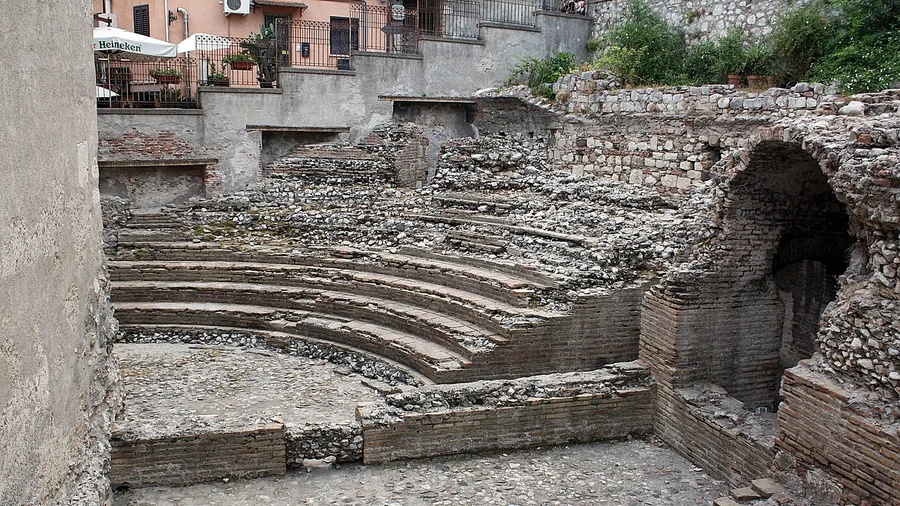
Getting the joke in an Athenian theater was never a private experience. Aristophanes packed his comedies with references to specific politicians, mythological figures, and civic disputes that every Athenian citizen was expected to recognize on contact – a joke that hinged on a current general’s reputation worked only if the audience already shared that reputation as common knowledge. Laughter in that room was confirmation: it meant you knew what your neighbor knew, that you had absorbed the same stories, the same scandals, the same city.
Cicero understood the mechanism clearly enough to write it down. In De Oratore he treats the ability to make an audience laugh not as a personality trait but as a rhetorical instrument – one that creates, in the moment of shared release, a consensus that the speaker can then carry forward into the argument. The crowd that laughs together has briefly agreed, and agreement is what persuasion requires.
That function has not moved. In-group humor still works as a fast, low-cost test of shared values and shared knowledge – a joke that lands with one group and offends another is not a failure of content but a confirmation that the two groups are not reading from the same map.
The same mechanism runs from the Sumerian tablet through the Pompeii walls to the present without interruption. Shared laughter was never a luxury that complex societies developed after they had solved other problems. Every group on record used it from the beginning, as a way of confirming who was in the room together and understanding the same thing at the same moment.
📜 Humor Through the Ancient Record
c. 1900 BCE — Sumer
A clay tablet records the oldest known joke: a wry, sexually implied observation in deadpan form, already assuming a shared audience.
c. 1100 BCE — Egypt
Deir el-Medina papyri show mice besieging a cat-pharaoh, animals playing human roles to mock social hierarchy through deniable allegory.
5th century BCE — Athens
Aristophanes performs explicit bodily and political comedy at state-sanctioned religious festivals before thousands of citizens.
55 BCE — Rome
Cicero publishes De Oratore, classifying wit as a systematic craft skill available to orators, covering puns, irony, and comic timing.
79 CE — Pompeii
Volcanic ash preserves Roman graffiti on public walls: sexual taunts, wordplay, insults aimed at emperors, written openly for anyone to read.
4th–5th century CE — Greek-speaking Rome
The Philogelos is compiled: 265 jokes, still readable today, whose punchline structure is identical to jokes written in the last decade.
Frequently Asked Questions
What is the oldest joke in human history?
The oldest recorded joke comes from a Sumerian clay tablet dated to approximately 1900 BCE. It is a brief, wry observation with a sexual implication — deadpan in delivery and structured exactly like a modern one-liner. Whether it was genuinely the first joke humans ever told is impossible to say; it is simply the oldest one that survived in a durable material.
Did ancient people understand irony and sarcasm?
Yes. Cicero’s De Oratore, written in 55 BCE, classifies irony and understatement as distinct rhetorical tools to be studied and applied deliberately. Greek comedy also relies heavily on dramatic irony — the audience knowing something a character does not — as a structural device. Irony was not a modern invention; it appears in sources across multiple ancient traditions.
Would ancient jokes actually make a modern person laugh?
Some would. The Philogelos contains anti-jokes and absurdist set-ups that map cleanly onto modern formats — the structure is recognizable enough that several classicists have noted specific jokes that would work unaltered today. Others have collapsed entirely because the premise — that a particular group is inherently inferior — no longer commands the audience agreement the joke requires. The mechanics survive; some of the permission does not.
Is humor really a psychological universal, or is that overstated?
The evidence is strong that the underlying cognitive mechanics — incongruity resolution, superiority confirmation, taboo-tension release — operate across every culture with a humor record. What varies significantly is which content activates those mechanics, because what counts as incongruent, who qualifies as a fool, and which topics are taboo are all socially defined. So: the engine is universal, the fuel is cultural.
Why do so many ancient jokes punch down at specific groups?
Superiority theory offers the clearest explanation: laughter functions partly as a fast social confirmation that the laugher is not the target. In a stratified society, jokes that confirm existing hierarchies get institutional support — they are easier to perform publicly, less likely to be punished, and require no audience members to question their own position. The jokes that survive in writing disproportionately reflect what those with literacy and resources found safe to record.
What does ancient humor tell us about psychology that modern examples don’t?
It gives you the control group. When the same punchline structure appears on a Sumerian tablet, in a Greek joke book, and in Roman graffiti — with no shared transmission and across thousands of years — it becomes very hard to argue that the structure is a product of one particular culture. The separation in time and place is what makes the pattern meaningful rather than coincidental.
The Form That Held Still While the Targets Moved
The Sumerian tablet, the Philogelos, the Pompeii walls, the Athenian stage – they all run on the same engines. Incongruity, a poke at someone lower or higher in the room, tension finding a way out. Every modern comedian uses the same machinery without knowing the technical names for it. That sameness is real and it runs deep.
The difference is in where the jokes were aimed. Some of those premises have been withdrawn by history and do not recover – not because the mechanism broke, but because the audience stopped agreeing that the target was fair game. Comic architecture appears to be species-wide. The permissions are social, have moved before, and will move again.
The next time the question surfaces whether human nature actually changes, humor is the most precise instrument available for answering it. Return to the clay tablet: a sex joke, still faintly recognizable, not because nothing has changed but because the machine that made it funny is still running in the same hardware. Hold that against everything the targets have shifted away from, and you have both answers at once.
Go Read a Few Philogelos Jokes Yourself
Several complete English translations of the Philogelos are freely available online. Read ten jokes and notice which ones still land and which have gone flat — that comparison is the thesis of this article, made concrete in about four minutes.