
Some of the longest marriages contain whole years when the two people would not have picked each other at a dinner party. That is not a contradiction. It is the ordinary shape of a bond that outlasts moods.
Year twenty, the breakfast table. The same person butters the toast the same way, chews, scrolls the phone, and this morning every one of those details is unbearable. Then comes the thought: maybe the love has gone.
You walked in believing real love would never produce this, that the irritation must be the first crack. But two clocks run at once. Commitment is chosen and re-chosen; fondness moves with sleep, hunger, money, the calendar. A bad morning is weather. It is not the climate.
Closeness is where friction lives, so what you carry out of here is a way to sort an ordinary off-day from contempt and fear, and the moves — timing, repair, small attention — that let liking return.
Two Measures of a Relationship
Which one are you actually reading?
Love is commitment; liking is daily weather

Yes, and it is the ordinary condition of sharing a life rather than a failure of one. Two clocks run side by side in any long partnership, and they keep different time. Commitment is decided and then re-decided across years. Fondness moves hour to hour on sleep, hunger, the email from the boss, the traffic on the way home.
Picture the breakfast you have eaten a thousand times. Same person across the table, same method with the toast, chewing, scrolling through the phone with one thumb. On a good morning this is simply Tuesday. On a bad one, every mouthful is a small trial.
the shared life is still being chosen at that same table. The bond is answering a different question than the one your irritation is asking. Not am I enjoying this person right now, but am I staying, showing up, keeping the agreements we made.
A day of not liking someone sits inside that larger answer without threatening it. What the distinction will not cover is a standing diet of contempt or cruelty, the eye-roll that greets everything they say, the joke at their expense in front of friends. That is a separate problem and it needs a separate response.
So one grating Tuesday morning is not evidence against fifty years. Pattern is what carries the information, weeks and months of it, not the mood of a single breakfast.
A fifty-year bond includes ordinary off-days

Decades together produce repetition by design, and repetition is where friction lives. The dishes: whose turn, asked again at 11pm with the sink full. The alarm set for 6:40 by one person and slept through by the other. A bill that arrives and sits on the counter unopened for a week. The in-laws’ visit, planned in a phone call that one of you heard only half of. The recycling argument, back for a fourth time this month.
Multiply that across fifty years and you get thousands of small collisions. The same argument returning is the arithmetic of sharing a life, not a signal that the life is declining.
The useful split is between irritation that has a trigger and passes, and dislike that becomes the baseline. Temporary annoyance has a cause you can name and it lifts by evening. Chronic dislike is a mood that precedes the event: you dread the front door, the coat in the hall makes you slump before a single word is spoken.
One bad afternoon tells you almost nothing. What carries the information is frequency, whether repair follows, and whether the other person’s attempts to reconnect land when they reach for you.
Weather reports are noisy that way. You are being asked to read the season, not the afternoon.
Contempt is the warning, not mere annoyance
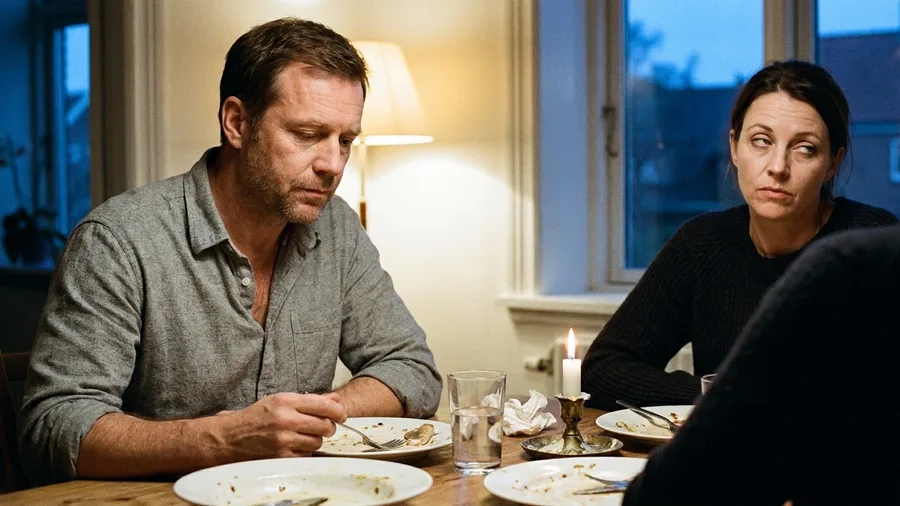
Not liking your partner becomes a real worry when contempt enters, not when annoyance does. Frustration and love can sit in the same room without trouble. Contempt is a different substance: it puts one partner beneath the other and lets the arrangement show.
You can hear it in the grammar. Annoyance targets a habit, and it usually sounds like this drives me up the wall. Contempt targets a person, and the message underneath is that you are beneath me. It shows up as the eye-roll that greets a perfectly ordinary sentence, the nickname that stings, a story told at a friend’s table with your partner as the punchline, a visible flinch of disgust at the way they eat, the mimicry of their voice, the sneer held half a beat too long.
Fear and cruelty belong in the same warning band: threats, intimidation, control of money or movement, humiliation delivered in private or in front of others.
If contempt or fear is repeating, the answer is professional help or safety planning, couples work where safety allows it and individual or legal support where it does not. A pep talk or a weekend away will not touch it. This is climate, and it does not blow over on its own. Waiting for a better mood is the wrong move.
⚠️ COMMON MISTAKE
Don't Wait for the Mood to Pass
Contempt and fear are not weather. If you notice eye-rolling, name-calling, or intimidation as a standing pattern, treat it as a climate problem that needs action this month — not a phase to outlast.
Shared logistics create friction, not incompatibility
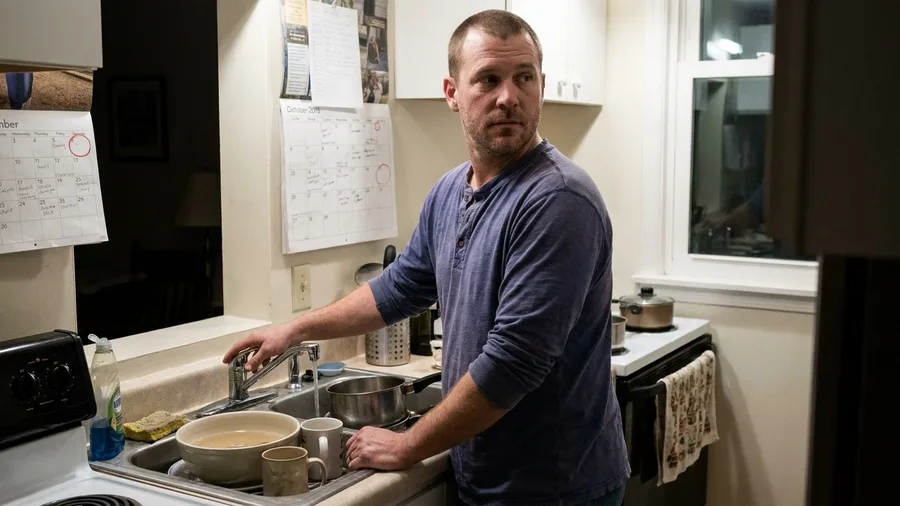
Small things sting because the shared life runs on them, and they carry the question of whether you are alone in it. The dishes still in the sink at 11pm, the bill that went unpaid because nobody logged in, the Saturday double-booked with two families who both expect you – none of these are the love, and all of them are where it gets tested.
Underneath the dishes is fairness. Someone carries the running list in their head – the dentist appointment, the form for the school, the fact that the filter needs changing – and someone waits to be told, and the difference between those two positions is what the argument is actually about. A kitchen left messy at night does not read as a mess. It reads as I do not matter enough to be thought of.
What makes this friction worth separating out is that it is mechanical, not mysterious. Assign the dishes to a person by name. Put the bill on autopay. One shared calendar that both of you can see and neither of you has to remind the other about. Give the call to the relatives an owner. These are fixes, and they work, which is more than can be said for diagnosing the marriage from the state of the counter.
Some friction can be forecast, and anything you can forecast you can shrink. That is the hopeful part of an ordinary bad evening: it is not asking you to feel differently about the person. It is asking you to put the work somewhere other than the shared space between you.
Familiarity makes flaws louder and care easier

You are harder on them because you are close enough to see the unpowdered version. Some of the friction is systems; the rest is what proximity itself does to attention.
At home the small courtesies drop away. Doors get left ajar, the humming returns at the same point in the same song, and the story about the airport has been told at four dinner parties now.
The same lens that catches the nose-blowing also catches the rest of it. You hear the wince when they stand up too fast, see the flat expression that means a rough day at work, notice the pills are three days from running out, and put the kettle on before they ask.
It is one mechanism running in both directions. The person who notices you skipped lunch and sets a plate in front of you is the same person whose chewing is unbearable at seven in the morning.
A stranger’s habits are invisible because you are never there at six, never share the bathroom at half past, never stand in the kitchen while they do it. Annoyance is the fee that comes with the access.
The weather only cuts this sharply because you live inside it. The closeness that scrapes against you is the same closeness that makes the care land at all.
Different rhythms are not different values
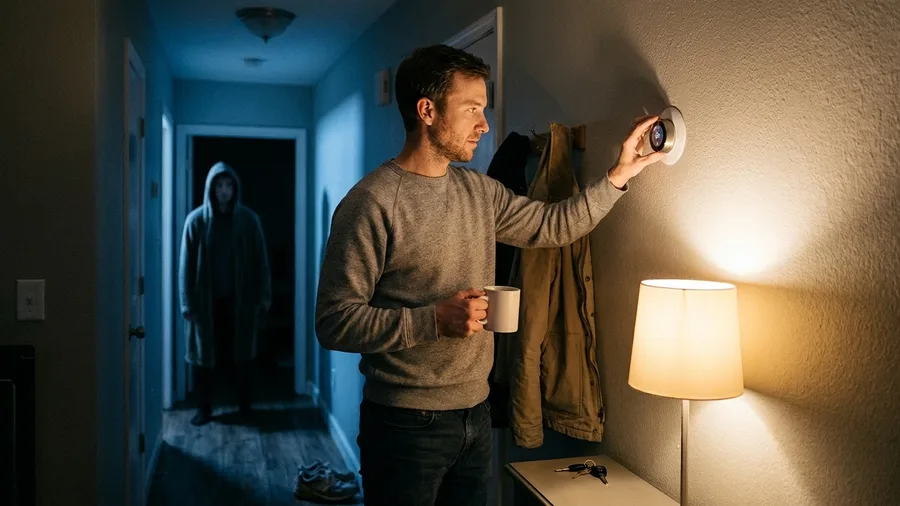
A difference in rhythm is a scheduling question, not evidence of a mismatch. Some of what rubs is habit, and some is something deeper; telling the two apart is the move worth making.
One of you is awake and functional at six and flagging by nine at night; the other is comatose at dawn and sharp at midnight. Shoes land by the door against clear surfaces, a house full of people on Saturday against a locked-in empty one.
None of that is a moral failing on either side, so it can be traded. Coffee quietly at dawn, headphones after ten, a basket set by the door where the shoes can go.
Values and safety sit somewhere else entirely: money or movement controlled, respect withdrawn as routine, loyalty turned into a weapon, a no that gets ignored.
Look at where the line falls. The night owl reading until one in the morning is a schedule to negotiate. The same night owl telling a room that early risers live boring lives is contempt, and it is a different animal entirely.
If the thermostat is the evidence you have been gathering, you are measuring the wrong thing. Real problems leave different fingerprints.
Good bonds allow low-contact days
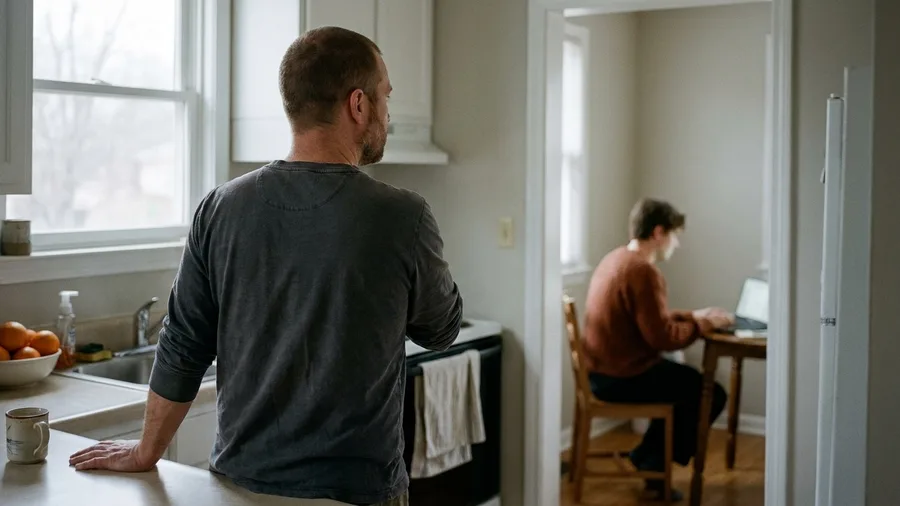
Not every annoyance needs a conversation, and durable couples leave room to be irritated in peace. Some evenings they are simply parallel: one in the kitchen, one in the study, separate screens, a nod on the stairs. Nobody is sulking. Nobody is being punished. The bond holds fine through the silence because the silence is not doing any work.
Timing is the skill underneath it. The feeling arrives at 11pm, sharp and fully formed, and the useful move is to know it is really a 10am conversation. That does not mean swallowing it. Saying ‘that thing about the dishes, can we talk about it in the morning’ is already handling it, because the grievance now has an appointment instead of an audience.
The line runs between healthy space and stonewalling, and it is the return that marks it. ‘I need a quiet evening’ is space: the evening happens, it ends, and the next morning has coffee and ordinary talk in it. Withdrawal with no way back is different. The door closes and stays closed, and the silence starts to function as a verdict rather than a rest.
So the rule sorts itself. Address what repeats and does harm: the same complaint surfacing every week is a topic, and it deserves a real sit-down. A foul Tuesday is weather. Let that one pass through, since chasing every mood into a full discussion is its own kind of grind. Quiet evenings do not change the climate. They give it room to settle.
💡 PRO TIP
Name the Return
When you ask for space, say when it ends: 'I need a quiet hour, then let's walk the dog.' That one sentence separates healthy distance from stonewalling.
Repair matters more than never feeling annoyed

Space gives a bad day room to cool; what decides whether it leaves a mark is whether the two of you find your way back. The question worth asking after a sharp exchange is not whether irritation showed up. It is whether anything followed it.
Repair rarely arrives as a speech. Usually it is small and specific: ‘I was short with you about the dishes and that wasn’t fair.’ Not ‘sorry you felt that way,’ not ‘I’m sorry, but’ – the second half of that sentence undoes the first. The specificity is the point. A general apology asks to be forgiven; a precise one proves you were paying attention.
Then there is the rest of the kit: a joke at your own expense, a hand on the shoulder on the way past, a declared pause – a walk around the block, a shower, a night’s sleep before the topic is reopened. Repair does not have to happen at once. It has to happen at all, and it has to happen reliably.
The most common way it fails is the ledger. ‘I did snap at you, and you were ignoring me all weekend.’ Whatever truth sits in the second clause, appending it turns repair into a trial. Owning your part and stopping there is not weakness. It is what keeps the exchange from becoming a tally.
Repair also has to flow both ways. Where one partner apologizes first every single time, that person ends up carrying the entire emotional climate alone – and eventually stops mentioning it. Repetition is what makes it credible. One repair is a good day. Repair as a habit is the thing that keeps a sour Tuesday from setting into a bad season.
Commitment is a choice you repeat
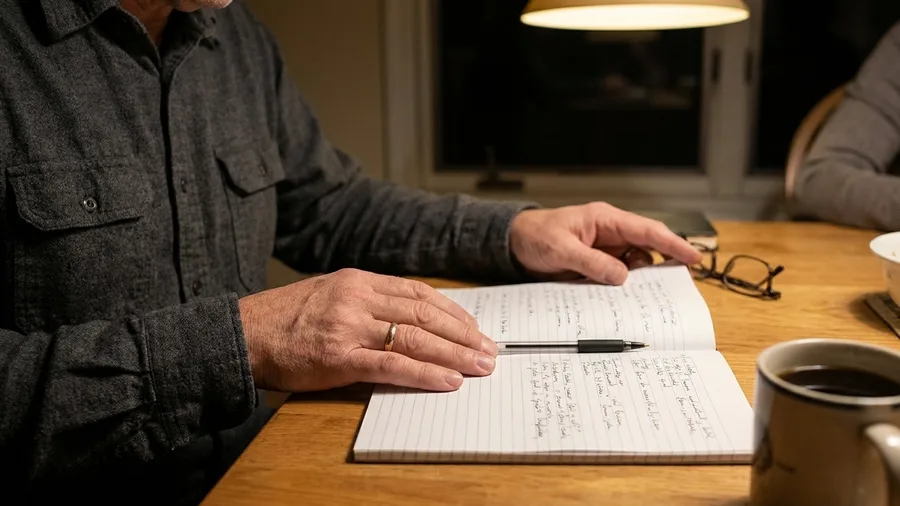
Beneath every repair sits a larger act: staying, chosen again after the bad day rather than waiting for the feeling to return first. Commitment is a verb. It is a pan washed at ten at night, a shift covered, the phone call to your mother-in-law you did not want to make and made anyway.
It is also the hour you stay in the room while the hard conversation runs past the point where walking out would have felt good, because walking out was not what you were doing. None of that requires fondness at the moment you do it. That is the part people miss.
On a day you do not much like them, the shared life can still be named out loud. Something like: ‘I’m still in this, and I need the money conversation to change.’ One sentence carrying both halves – the staying and the asking.
Because a boundary lives inside the choice. Picking the relationship is not agreeing to contempt, to being mocked, to being the one who is always wrong. Remaining in a house is not consenting to be humiliated. Those are separate decisions and deserve to be kept separate.
A plain form that helps: a page with two columns. On the left, what you are choosing today. On the right, what still needs to change. The left column keeps you in. The right keeps you honest about why the day was hard.
You are not required to enjoy the weather. You are deciding, again, to live in the climate.
Liking returns through small shared attention

The liking comes back the same way it eroded, in increments too small to announce. A thanks for the coffee poured before you asked. Two people at the dishwasher, one loading, one drying, saying nothing much. A twenty-minute walk around the block. A real question about the meeting with the boss, phone face down on the table, eyes up.
None of this feels like much while it is happening. That is the point of it.
The grand gesture cannot substitute, and the reason is timing. A weekend away booked after eight months of no attention reads to the other person as a bill being settled, not a reconnection. It arrives too late to be spontaneous and too large to be believed.
What actually works is smaller and more regular. A couple who have not laughed together in months find it again over a half-painted hallway, a bad TV show, the dog’s walk. The shared task does the work; the laughing is a by-product nobody planned. Track it across weeks rather than days: is there more warmth, more reaching, more ease when the front door opens? Weeks are the right unit, because a single Tuesday tells you nothing.
One honest caveat. If fondness has not stirred after months of consistent small attention, that is not failure at the tactic. It is information, and it usually means the problem sits somewhere the coffee and the walk cannot reach. Reassess, and bring in someone who can see the pattern from outside.
Climate is the sum of daily weather. Enough small good days and the season itself changes.
Ordinary Off-Day vs. Warning Pattern
Ordinary off-day
- You can name the trigger — bad sleep, a deadline, a missed meal
- The irritation passes within hours or a day
- You still make coffee or ask about their day
- Repair happens without keeping score
- You can laugh about it later
Warning pattern
- You dread the front door or the sound of their key
- Eye-rolling, sneering, or name-calling is routine
- You feel small, afraid, or humiliated regularly
- Repair never happens, or only after days of silence
- You avoid bringing things up to keep the peace
Frequently Asked Questions
Is it normal to go through phases of not liking your partner?
Yes. Temporary irritation has a trigger and passes, while chronic dislike is a baseline. If you can name the trigger and the feeling lifts within a day or two, you are in ordinary weather. If you dread the front door for weeks, that is a pattern worth examining.
How do I tell the difference between annoyance and contempt?
Annoyance targets a habit (‘this drives me up the wall’), while contempt targets the person (‘you are beneath me’). Contempt shows up as eye-rolling, sneering, name-calling, or mocking in front of others. If it is routine, it is a warning sign, not a bad mood.
What if my partner and I have different rhythms — am I with the wrong person?
Different rhythms are negotiable preferences, not moral failings. The morning person and the night owl can live well together with quiet coffee at dawn and headphones after ten. The problem is not the schedule; it is contempt about the schedule.
How do we repair after a bad day?
Use a specific apology (‘I snapped about the dishes and it was unfair’), self-deprecating humour, or an agreed reset like a walk or a night’s sleep. Own your part without bringing up theirs. Repair works best when it is mutual and repeated, not a one-time grand gesture.
Can we get the liking back after years of feeling annoyed?
Yes, through small repeated exchanges: thanks for the coffee, unloading the dishwasher together, a twenty-minute walk with phones down. Grand gestures do not substitute for consistent attention. Track it across weeks; if fondness has not returned after months of trying, bring in outside help.
When should we seek professional help?
Seek help when contempt, fear, or cruelty dominates the relationship, or when repair never happens. Couples therapy can work where safety allows it; individual or legal help is the priority where it does not. Do not wait for a better mood to address a climate problem.
The Verdict on Not Liking Them Today
daily dislike is not the emergency. Safety, repair and fondness that returns are what matter. If contempt, fear or cruelty dominates, name that as the relationship problem to act on – not a dry spell to sit out. Get help with it.
Back at the breakfast table in year twenty: the toast, the chewing, the phone. The irritation is real, and so is the choice sitting right there beside it.
Fifty years is not fifty years of liking. It is fifty years of noticing, repairing and choosing again, with fondness coming back in small ordinary exchanges rather than grand ones. Tomorrow, say the warm thing before the gripe, and let the rest settle.
Name Your Weather
Look back over the last two weeks. Was the dislike a passing storm or the standing climate? If it is climate, the repair moves above are your first step.