
The first talk is not the one that settles it. Families expect a single hard conversation; the driving, the hearing, the stairs get worked out over months, in small installs, on weekday evenings after the dishes. There will be a fourth or fifth round. What you say in the first two minutes decides whether there is a sixth.
Picture the kitchen table. He is 78, a minor parking-lot scrape last month, and he is still driving to church, the pharmacy, and the weekly card game. The hearing aid stays in the bedroom more nights than not, your adult daughter is raising it by phone, and somewhere in all of this he says, ‘I’m not a child.’
What is really being argued is not the car keys or the hearing aid. Both of you are arguing about whether his judgment still counts. Win the point cleanly and you have ended the conversation, not settled it.
So this holds seven exact sentences, each with the moment to use it and the line to avoid, meant to lower the heat without withdrawing the worry. You can choose one to open with in your next real argument and think about what comes afterward without making it into a campaign.
Quick Tips Before You Start
Pick your moment
Weekday evenings after dinner work better than mornings or when the adult daughter is on speakerphone.
Sit beside, not across
A side-by-side chair at the kitchen table reads as alliance; across the table reads as a hearing.
One topic per pass
Do not bundle the hearing aid, the pharmacy run, and the daughter's phone call into a single conversation.
Write the step down
If you two will remember the agreement differently by morning, put it on the fridge with a date.
Skip 'calm down'
It is a command about his state, and it usually raises the volume rather than lowering it.
1. The ‘Help Me Understand’ Opener

The first time I tried this, I said it and then kept talking, which meant I hadn’t really asked anything.
It was a Tuesday, maybe a quarter past seven, and the plates were still on the table. He had just said ‘I’m not a child’ and I had a folder in my head with last month’s scrape in it, the dented fender at the pharmacy lot, the estimate I hadn’t mentioned yet. What I actually said was ‘Help me understand what this looks like from where you’re sitting,’ and then, because the silence lasted two seconds, I filled it: ‘because I’m worried about the church lot, and honestly the pharmacy.’ By the time I finished, I had made a statement with a question stapled to the front of it. He heard the staple.
Researchers who study how people talk through disagreement keep landing on the same finding: a question about someone’s own experience is almost impossible to answer wrongly, so it doesn’t put them on defense the way a charge does. ‘Why did you do that?’ and ‘You need to explain yourself’ both ask him to justify the scrape, and the only thing he can defend with is the scrape. Ask instead what the route looks like from the driver’s seat and he’s describing the church parking lot he’s used for thirty years, the pharmacy with the wide entrance, the card game on Thursdays where he’s the one who drives two of the other fellows. The conversation changes subject because you changed it.
The part I got wrong is the follow-up. One question, then stop. No ‘but.’ The word ‘but’ is a hinge, and what comes after it is what the other person remembers hearing. ‘Help me understand the route – but I’m worried about the left turn’ is not a request for information; it’s a request for information so you can knock it down. Leave the worry out of that first pass. It will still be there in a minute, and it will land better once he’s finished a sentence without being interrupted.
What this buys is small and specific. He stays the person who knows something you don’t – which roads are bad at 5 p.m., where the card game moved to when the old hall closed – rather than the subject of a report being assembled about him. That switch is worth more than any argument you could win at the table.
So say the sentence, ask one thing, and let the answer be the whole answer, even if it takes him a while to get to it.
💡 Tip: If he asks why you are asking, say plainly: 'Because I want to get this right, and I don't think I have the whole picture.'
⚠️ COMMON MISTAKE
Do not turn the opener into a setup
The single most common failure is adding 'but' after 'Help me understand.' It announces that his answer is about to be overruled, and the next sentence is heard as the real attack. Ask, then be quiet long enough for him to finish.
2. The ‘Same Side’ Reassurance
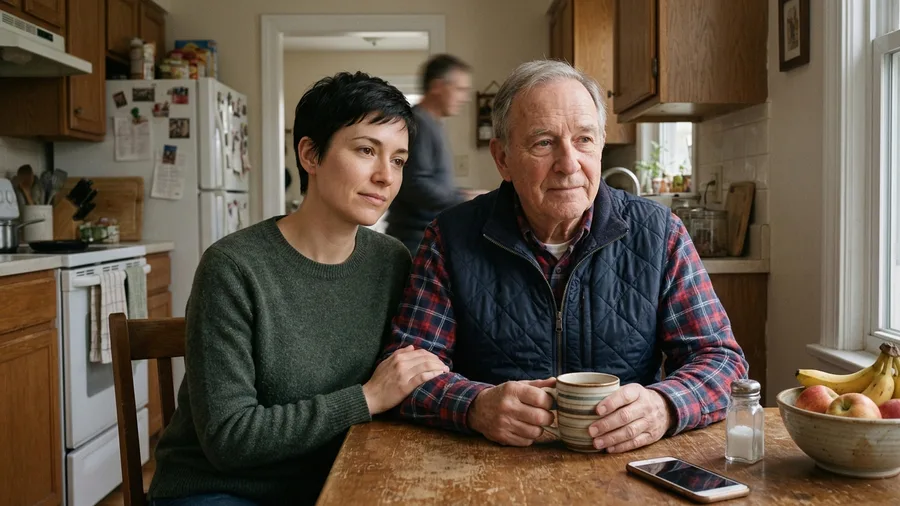
A worry spoken out loud can sound like a coalition, and a coalition is what turns a conversation into a loyalty test.
His view is on the table now, and the phone rings the next evening: your daughter, who means well, asking whether the driving should be raised with the doctor. He hears the two of you aligned on the other end of the line and something in the room goes stiff. The exact sentence for that moment is ‘I’m on your side – even when I’m worried or we disagree.’ Say it before the concern, not after.
Then move. Sit down beside him instead of across from him, and put the worry in a single sentence: ‘I’m on your side, and I’m still worried about the left turn out of the church lot.’ The chair and the words are doing the same job – neither one drops the issue, and neither one makes it mutiny. Forty-four years is the thing being ranked above the point, and saying so out loud costs nothing.
Being disagreed with is not the same as being left. That distinction is the whole phrase.
💡 Tip: If the daughter's call is the trigger, say out loud: 'She called me, not to gang up on you—she is worried and she asked me to talk with you.'
| Phrase to say | Use it when | What it protects |
|---|---|---|
| Help me understand what this looks like from where you’re sitting. | He has just said ‘I’m not a child’ and you have not yet stated your position. | His role as the expert on his own experience. |
| I’m on your side—even when I’m worried or we disagree. | The talk has become a loyalty test after the daughter’s phone call. | The marriage above the point being made. |
| What would feel respectful to you while we talk about this? | The subject is the hearing aid, the driving, or the bedroom upstairs. | His vote on how the conversation runs. |
| Let’s slow this down and take one thing at a time. | Voices are rising or the same point has come around a third time. | The pace, which is the one thing you both control. |
| I came in too hot. Can we try that again? | You have just said something sharp, like ‘Maybe we should just take the keys.’ | The concern, by removing the delivery that made it dismissible. |
| What am I missing about what this is like for you? | He has gone quiet or said ‘You don’t get it.’ | His chance to correct you rather than be assessed. |
| What’s the smallest next step we can agree on? | Both sides have been heard and the topic needs a landing. | One testable action, not a surrender of the car. |
3. The ‘What Feels Respectful?’ Question
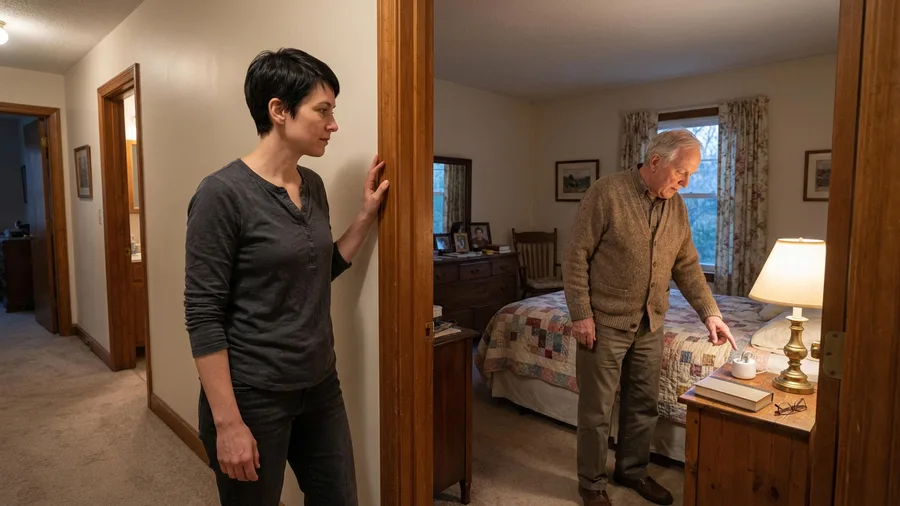
Ask it once and you get a rule you can keep for months; skip it and you get the same argument back in three weeks.
Loyalty isn’t the question anymore – the question is how the conversation will treat him while the subject is still open. So ask: ‘What would feel respectful to you while we talk about this?’ It works on the hearing aid left in the bedroom, the driving, the money, the bedroom that’s upstairs in a two-story house. Anywhere he hears ‘you can’t manage’ is where it belongs.
Take one concrete condition and honor it. If he says ‘Don’t bring it up in front of the kids,’ then the daughter’s calls stay outside that boundary, and you keep the boundary even when it’s inconvenient. The part to avoid is announcing your fix first – a plan delivered before the question answers it for him and turns the sentence into decoration. What he gets is a vote on the process, not the outcome, and that vote is often enough to keep him in the room.
💡 Tip: Write the condition down if it is likely to be forgotten—'not in front of the kids' on a sticky note is a real agreement.
What Respect Has to Look Like, Layer by Layer
From the smallest, most personal condition down to the foundation of the whole conversation
Work from the top down: honor the smallest condition first, and the larger ones become possible.
4. The ‘Let’s Slow Down’ Reset

Say the pace out loud: ‘Let’s slow this down and take one thing at a time.’
Use it the moment voices climb, or when he has missed your last two sentences because the aid is in the bedroom, or when the same point has circled back for the third time. Then set a real pause – ten minutes, a glass of water, and one topic only when you sit back down. Not the hearing aid and the pharmacy run and your daughter’s phone call in a single pass. ‘Calm down’ is the line to avoid; it is an order about his state, and it tends to spike the volume rather than drop it, because the reset is naming the person instead of the pace.
Pace is the one thing the two of you still control when the subject itself will not be settled tonight.
Reset the Pace, Not the Person
Say this
- Say the line, then stop. The ten-minute pause starts when you stop talking.
- Use it once. Said twice, it becomes nagging in a softer voice.
- Call the topic back after the pause: 'Back to the pharmacy.' This buys a restart, not a verdict.
- If voices climb again after the ten minutes, end the evening. The point is a topic, not a win.
Not this
- Repeating it twice in a row – the second one ends in an eye roll.
- If the volume is already shouting, skip the line; any phrase sounds like an order there.
- If either of you is too hungry or too tired, the pause will not hold; try again the next night.
- The line only works when you truly mean to drop the other two topics tonight.
5. The ‘I Came In Too Hot’ Repair

The line lands before you can catch it. “Maybe we should just take the keys” is out, and the kitchen goes quiet in a way that tells you the concern just became the least important thing in the room.
Defending the content now, explaining that you did not mean it that way, adds heat instead of removing it. Name your own delivery first. “I came in too hot. Can we try that again?” is the whole move.
What spoils it is the tail: “but you made me” or “but you know the driving worries me.” Any ‘but’ makes the apology a setup and cancels it. The words above stand alone, and the repair is finished when they do.
This is built for the spouse who has already said he is not a child and will not go first. Going first costs the one who said it very little, and it gives him a way to step back without losing face. The concern about the driving stays on the table; the delivery that made it easy to wave off does not.
💡 Tip: Use the same phrase if you hear yourself getting louder: 'I came in too hot on that one.' It works even mid-sentence.
💡 PRO TIP
Let him correct you, not be corrected
The repair phrase works only if you say it before you defend your point. Name your own delivery first; if you lead with why you were right, the apology is heard as another move in the argument.
6. The ‘What Am I Missing?’ Invitation
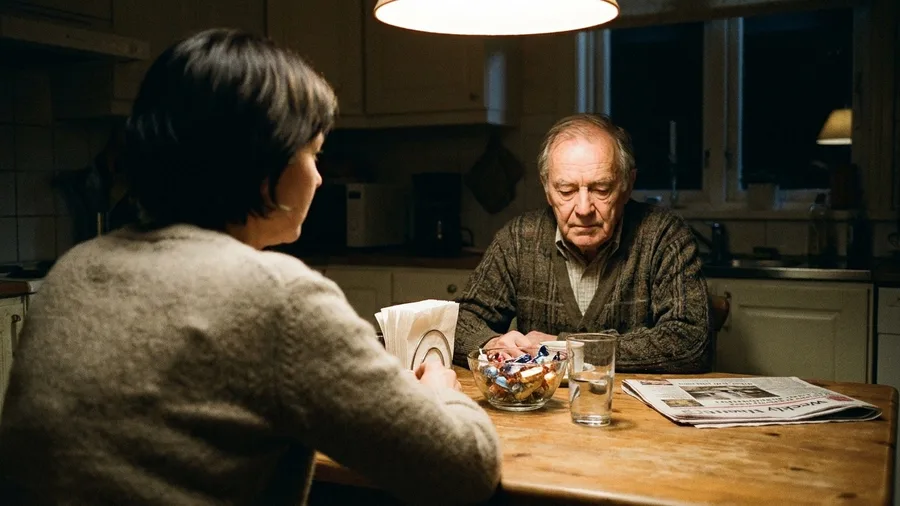
The usual advice is to ask what is really going on. It sounds open. It lands as a diagnosis, an accusation from someone who has already made up their mind, and the spouse hears a verdict with a question mark on the end.
Ask instead to be corrected: ‘What am I missing about what this is like for you?’ Use it after you have stated a concern and he goes quiet, or says ‘You don’t get it.’ Then listen for one fact or feeling and say it back before you respond to anything.
If the weekly card game is the only place he still sees the same four guys since he retired, say that back to him before anyone mentions a route or a mirror. Asking to be corrected puts him in the position of the one who knows, not the one being assessed – which is the difference between him describing his life and him defending it.
🗣️ One Conversation, Start to Finish
Open with his view
Say 'Help me understand what this looks like from where you're sitting,' then stop talking.
Reassure the bond
Say 'I'm on your side—even when I'm worried or we disagree,' and sit beside him.
Ask what respect looks like
Say 'What would feel respectful to you while we talk about this?' and keep one condition.
Reset the pace
If voices rise, say 'Let's slow this down and take one thing at a time,' then pause ten minutes.
Repair your own line
If you said something sharp, say 'I came in too hot. Can we try that again?' with no 'but'.
Invite what you're missing
Say 'What am I missing about what this is like for you?' and reflect one fact back.
Agree on one small step
Say 'What's the smallest next step we can agree on?' and write it down with a date.
7. The ‘Smallest Next Step’ Agreement
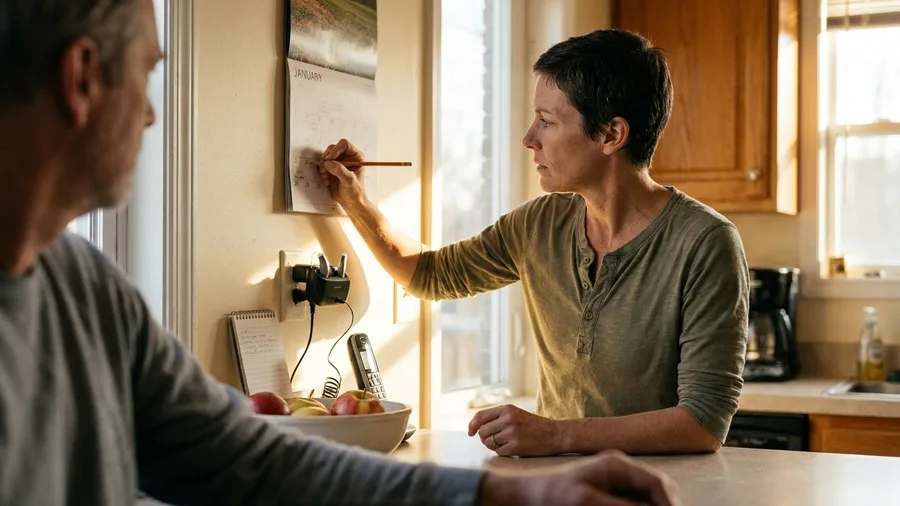
” That question arrives near the end of a kitchen-table talk that has finally gone somewhere, and it is worth answering with one sentence rather than a plan. The sentence is: “What’s the smallest next step we can agree on?”
By this point the unspoken piece has usually come out – the card game is the only place he still sees the same four guys, the pharmacy run is the one errand he does alone – and both of you can see what might actually change. The move now is to shrink it until it is testable: call the family doctor together on Monday, move the hearing aid charger from the bedroom to the kitchen counter, drive the church route together once this weekend with both of you in the car.
Small is the whole point. One drive to church is not a ruling on the parking lot; moving a charger is not a verdict on anyone’s memory. A step that size asks neither of you to concede the entire argument, which is precisely why it can be agreed to at the table instead of deferred to another night.
Make it specific, give it a date, and keep it reversible. “Let’s deal with this soon” is not a step, and by morning the two of you will remember it differently anyway, so say the day out loud and write it on the pad by the phone if that is what it takes. Nothing here settles the driving question – he is not signing away the car over a glass of water, and he should hear that plainly.
Here is the self-test, answerable in about ten seconds. Can you name the next step, the day it happens, and what would tell you whether it worked? If all three are clear, you have an agreement. If only the worry is clear, you have had a good talk and nothing more, and the same argument will be waiting next week. If the step keeps growing every time you describe it, you are asking for a concession and calling it a compromise.
The phrase does one job: it turns a conversation that has been about who is right into one small thing two people can do and then look at together. What comes after that belongs to the doctor, the hearing specialist, and eventually the licensing agency – not to the kitchen table.
💡 Tip: Put the agreement on the fridge with a date: 'Saturday, 10am—drive the church route together.' A date turns a conversation into a plan.
Frequently Asked Questions
What if my spouse refuses to talk about the driving at all?
Start with the smallest possible step rather than the whole question: a joint call to the family doctor, or one drive together on a Saturday. If even that is refused, the refusal itself is worth naming calmly: ‘I hear that you don’t want to talk about this. I’m going to bring it up again next week, because I love you and I’m worried.’
Should I bring up the hearing aid and the driving in the same conversation?
No. One topic per pass. The reset phrase—’Let’s slow this down and take one thing at a time’—exists precisely because bundling the hearing aid, the pharmacy run, and the daughter’s phone call into one evening turns every concern into a verdict on his competence.
How do I handle it when our adult daughter raises the same concerns by phone?
Keep the daughter’s calls outside the conversation you have with your spouse, especially if he has asked not to be discussed in front of the kids. Tell him plainly that she called because she is worried, not because the two of you are ganging up on him. Then keep the actual decision between the two of you.
What if I already said something sharp before I read this?
Use the repair phrase as soon as you can: ‘I came in too hot. Can we try that again?’ Say it without a ‘but’ and without explaining why you were right. The repair works because it names your delivery, not his reaction, and it gives him a way to stand down without losing face.
Do these phrases work for money or health arguments too?
Yes. The same seven phrases apply to the two-story house with the bedroom upstairs, to money, and to health decisions. What changes is the outside expert you point toward—an accountant, the family doctor, a hearing specialist—rather than the state licensing agency. The phrases themselves stay the same.
The Phrase to Say First, and the Step to Propose by Tomorrow
These seven phrases are not a gracious way to lose. Everyone keeps the concern in the room and leaves him his standing, and that is the only combination that keeps him talking. For the driving, the hearing, the health decisions, this is communication and nothing more. The actual thresholds come from the family doctor, a hearing specialist, and the state licensing agency. Say the phrase, then let those people carry the rules.
Which one to say first depends on where you are standing. If a sharp line is already out and the room has gone quiet, use the repair: ‘I came in too hot. Can we try that again?’ Say it without a but, then wait. If nothing has been said yet and he is dug in, lead with ‘What would feel respectful to you while we talk about this?’ and keep one of the conditions he names.
Within twenty-four hours, propose the single step out loud: one call to the doctor the two of you make together, the charger moved from the bedroom to the kitchen, one drive to church with both of you in the car. Then go back to the kitchen table on a weekday evening. When he says ‘I’m not a child,’ the next sentence can be ‘Help me understand what this looks like from where you’re sitting’ instead of last month’s scrape, relitigated.
Pick One Phrase and Use It This Week
Choose the phrase that fits your next conversation—repair if you are mid-argument, respect if your spouse is dug in—and propose one small step within twenty-four hours. Write it down with a date.