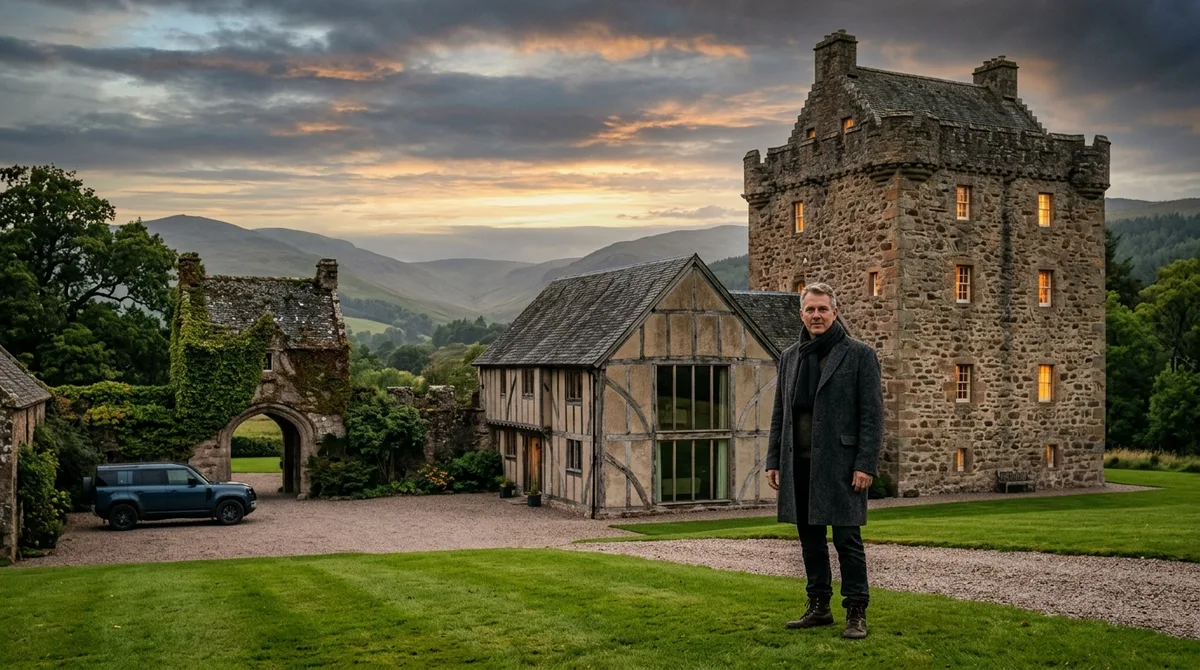
You step past the ticket desk into a grand stone corridor, expecting cold museum ropes and silent exhibition glass. Instead, a modern coat rack hangs beside a 14th-century arched doorway, and the faint scent of wood smoke drifts from a fully functioning private kitchen down the hall.
Most visitors assume historic Scottish fortresses are entirely state-managed ruins. In reality, a select few remain private family homes where people sleep, cook, and raise children behind stone walls built centuries ago.
The Living Fortress Paradox: How Historic Castles Survive in Private Hands
Living inside a pre-1700 Scottish stone giant requires constant financial engineering. State-run ruins rely on government agency budgets, but privately owned clan seats survive through a combination of working agricultural estates, private land endowments, targeted heritage grants, and public admission ticket sales.
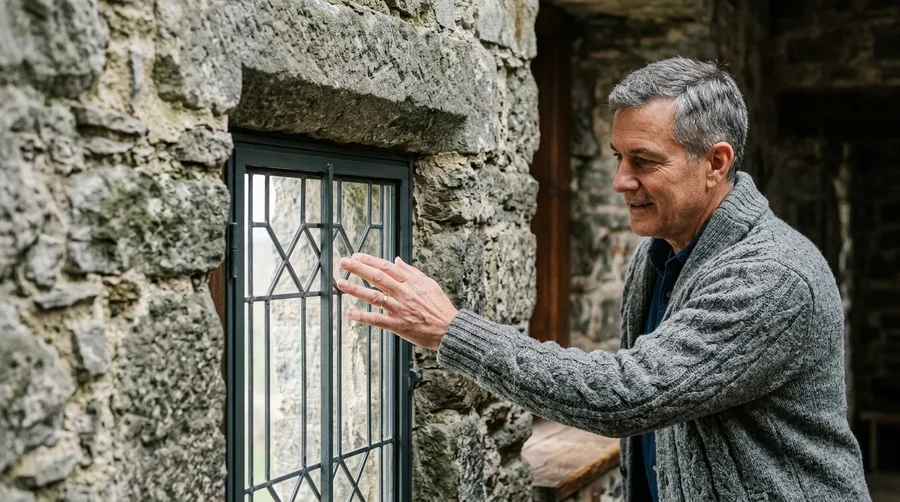
Ancient defense walls now conceal state-of-the-art biomass heating systems, discrete copper plumbing lines, and hidden fire-suppression networks. Thick rubble-fill masonry provides incredible thermal mass, though managing window draftiness takes daily effort.
Daily maintenance involves repairing lime mortar joints using traditional hand-mixed materials. Without continuous human habitation and active heating, dampness rots roof timbers within a single generation.
💡 PRO TIP
Category A Listed Building Rules
Private Scottish homeowners must secure strict consent before altering any external stonework, historic roofing slate, or internal timber framing.
1. Blair Castle — Atholl Estates, Perthshire
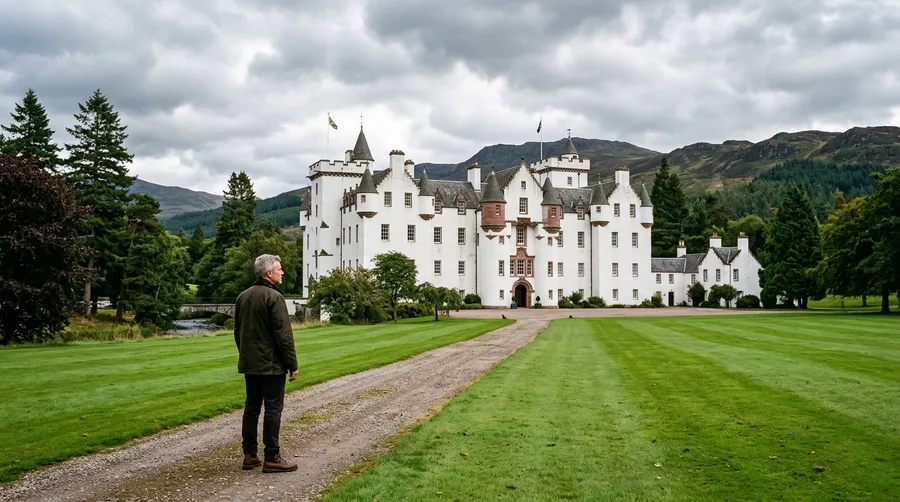
The core tower of Blair Castle was built in 1269 by John Comyn, Badenoch, establishing a formidable defensive foothold in the central Highlands. Centuries of conflict transformed the stark medieval garrison into a comfortable Georgian-styled baronial residence.
It serves as the ancestral seat of the Dukes of Atholl and home to Europe’s last remaining private army, the Atholl Highlanders. Family members still occupy private residential wings while managing thousands of surrounding Perthshire estate acres.
💡 Tip: Book estate tours early to access the private ballroom adorned with hundreds of mounted antlers.
Blair Castle — At a Glance
🏰 Original Build
1269 AD
🛡️ Clan Seat
Duke of Atholl
🌲 Estate Size
145,000 Acres
Unique Feature
Home to Europe's only legal private infantry bodyguard.
2. Dunvegan Castle — Isle of Skye
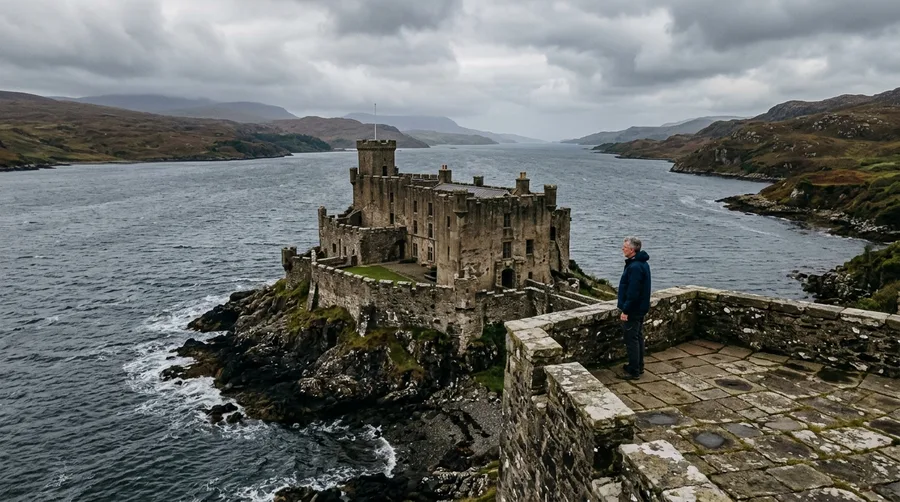
Perched directly on a rock platform overlooking a sea loch, Dunvegan has remained continuously inhabited since the 13th century. Salt spray crashes against its ancient curtain walls during winter gales.
It functions as the historic ancestral seat of the Chiefs of Clan MacLeod for 800 consecutive years. The family maintains private living quarters within the upper stories while opening select heritage rooms to summer visitors.
Inside rests the legendary Fairy Flag, a sacred silken banner tied to clan folklore and centuries of romantic tradition.
3. Cawdor Castle — Nairn
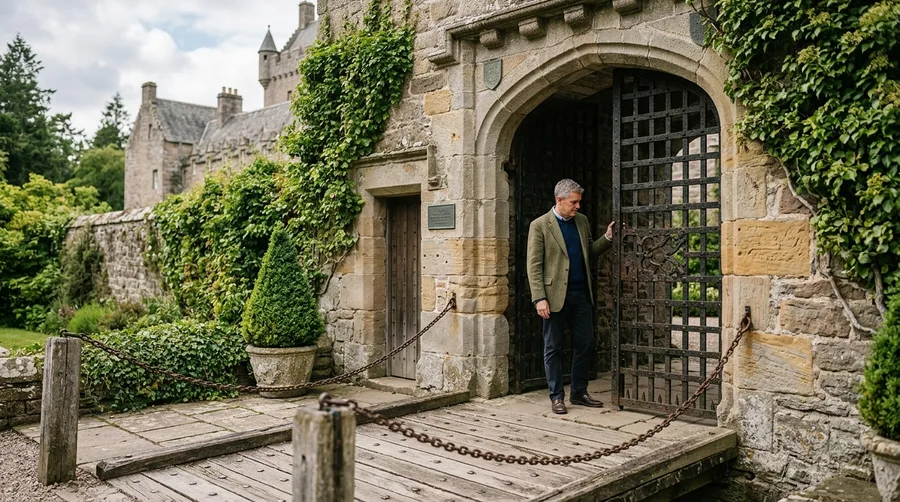
Built around an ancient thorn tree radiocarbon-dated to approximately 1372, Cawdor features a formidable 15th-century tower house core. The original iron yett gate remains fully operational in its stone groove.
It serves as the private home of the Dowager Countess Cawdor and the broader family estate. While William Shakespeare famously linked the castle to his fictional tragedy Macbeth, historical records place the actual construction long after the real king’s lifetime.
Family portraits, tapestries, and deep stone window seats prove this fortress is lived in year-round rather than treated as a sterile exhibit.
⚠️ COMMON MISTAKE
Fictional vs Actual History
Do not assume literary references dictate construction dates; Cawdor's iconic central tower was raised centuries after Macbeth's era.
4. Traquair House — Innerleithen, Peeblesshire
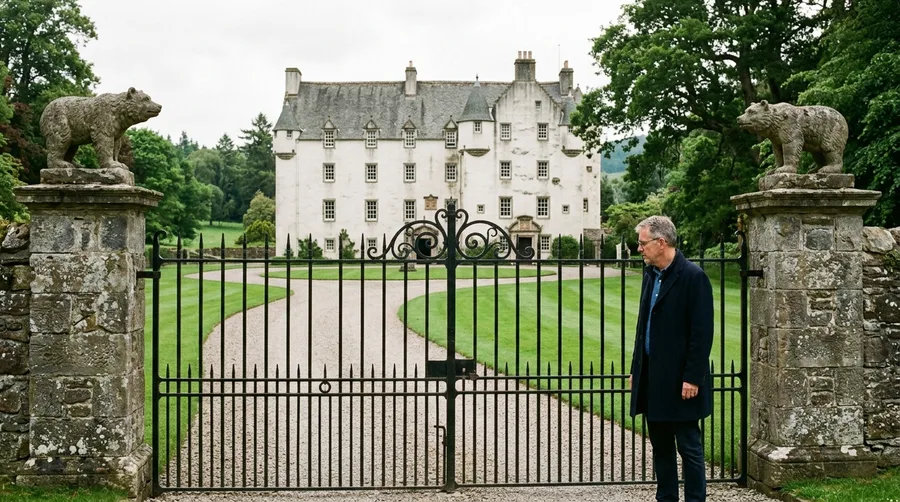
Traquair began as a royal hunting lodge in 1107 before evolving into a heavily fortified mansion during the 15th century. It holds the title of Scotland’s oldest continuously inhabited house.
The Maxwell Stuart family has lived here since 1491, maintaining a steadfast Jacobite and recusant Catholic history through centuries of political upheaval. Secret priest holes remain tucked behind wood-paneled walls.
The famous wrought-iron Bear Gates, closed in 1745 after Bonnie Prince Charlie departed, stay shut by family tradition until a Stuart monarch reclaims the British throne.
Traquair House Highlights
5. Kinross House — Perth and Kinross
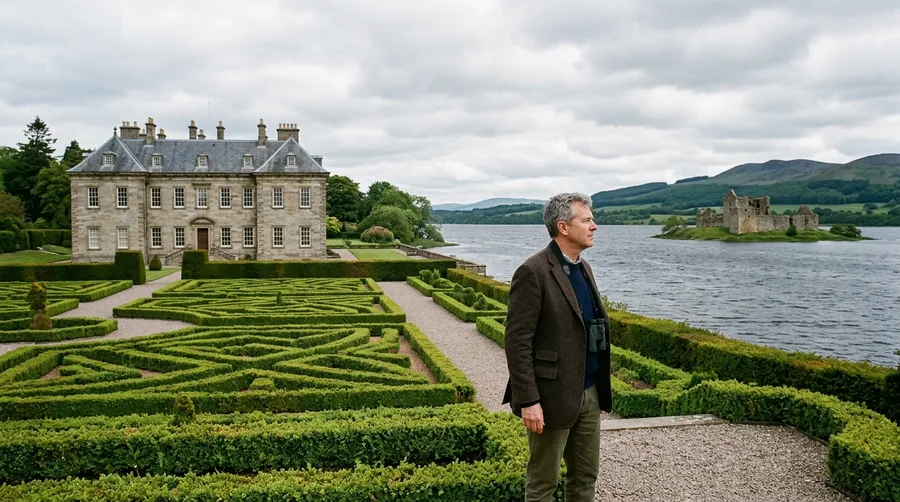
Constructed between 1686 and 1693 by architect Sir William Bruce, Kinross House represents a masterclass in neoclassical Scottish design. It discarded heavy medieval defense in favor of balanced light and symmetrical proportions.
The estate is privately owned, meticulously restored, and inhabited as a modern family residence and exclusive-use hospitality property. Its formal gardens drop straight down to the waters of Loch Leven.
From the drawing room windows, residents look across the lake toward the roofless ruins of Lochleven Castle where Mary Queen of Scots was imprisoned.
6. Fyvie Castle — Aberdeenshire
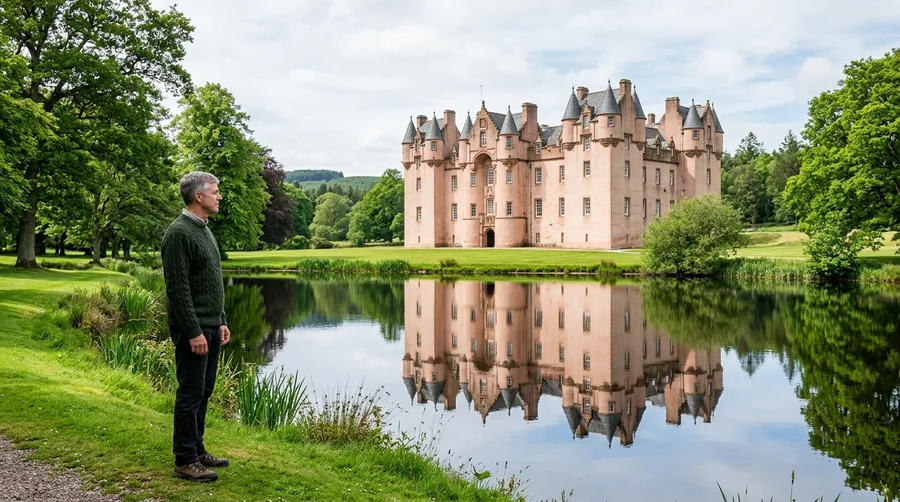
Established around 1211, Fyvie grew through centuries of distinct expansions funded by successive owning families including the Prestons, Meldrums, Setons, Gordons, and Leith-Formbes.
It remained a private family home for over 800 years before passing into the care of the National Trust for Scotland, though private residential wings and estate warden apartments remain actively occupied.
The magnificent grand turnpike stair climbs past opulent Edwardian interiors, showcasing how elite domestic styles evolved inside medieval stone walls.
7. Glamis Castle — Angus
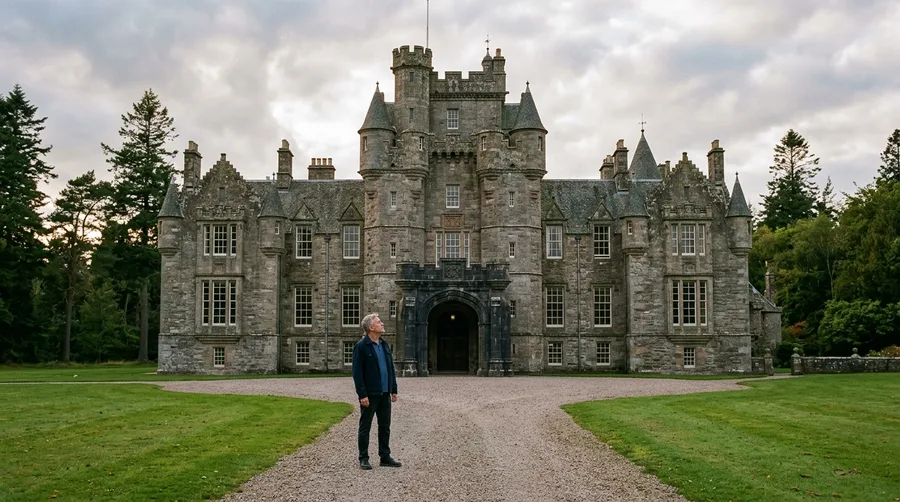
Recorded as a royal hunting seat from the 14th century, Glamis features an L-plan tower house core built largely in the 15th century. Extensive 17th-century French chateau-style wings expanded its footprint.
It served as the childhood home of Queen Elizabeth The Queen Mother and the birthplace of Princess Margaret. The Earls of Strathmore and Kinghorne maintain private family apartments here today.
Balancing private residential privacy with selective public heritage tours requires careful architectural zoning and separate secure entry wings.
8. Inveraray Castle — Argyll
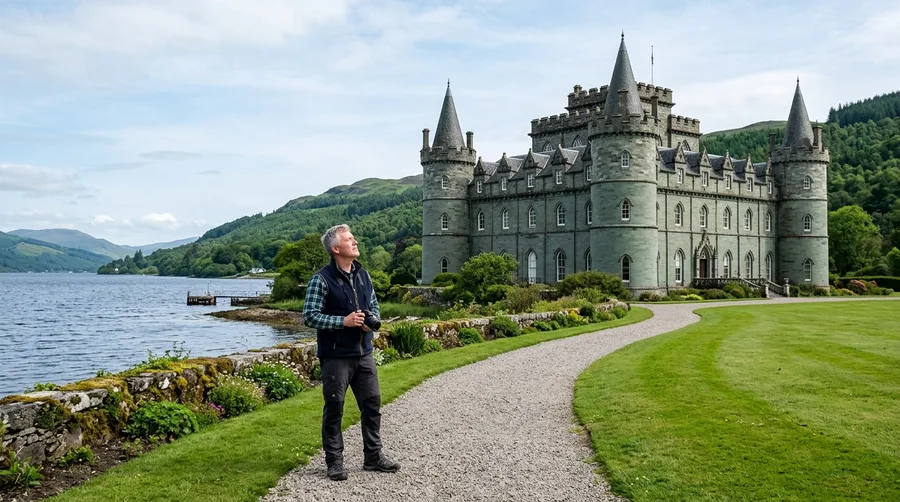
Built beginning in 1745, Inveraray serves as the striking Gothic revival headquarters for the Dukes of Argyll. Its iconic conical pepper-pot towers loom over the edge of Loch Fyne.
Clan chiefs have continuously inhabited this grand estate for generations, balancing public room tours with private family quarters tucked into the upper levels.
The armoury hall holds over 1,300 antique pikes, muskets, and broadswords used in historical Highland clan conflicts.
9. Eilean Donan Castle — Ross-shire
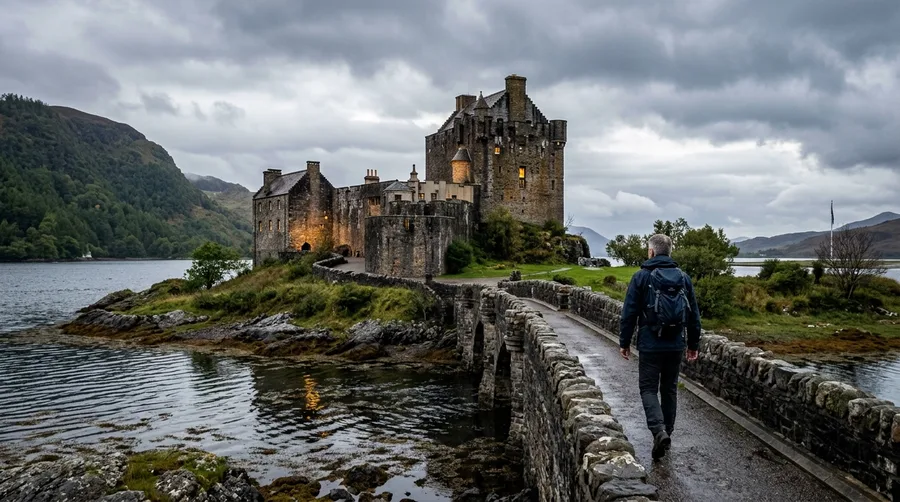
While largely reconstructed in the 20th century following centuries of ruinous abandonment after the 1719 Jacobite rising, Eilean Donan sits on the exact medieval foundations of a 13th-century MacRae stronghold.
The MacRae family heritage trust uses portions of the castle complex for private clan gatherings and warden quarters, proving that ancient footprints can successfully support modern re-habitation.
Connected to the mainland by a narrow stone arched bridge, its iconic silhouette anchors the western sea approach.
10. Kelburn Castle — Fairlie, Ayrshire
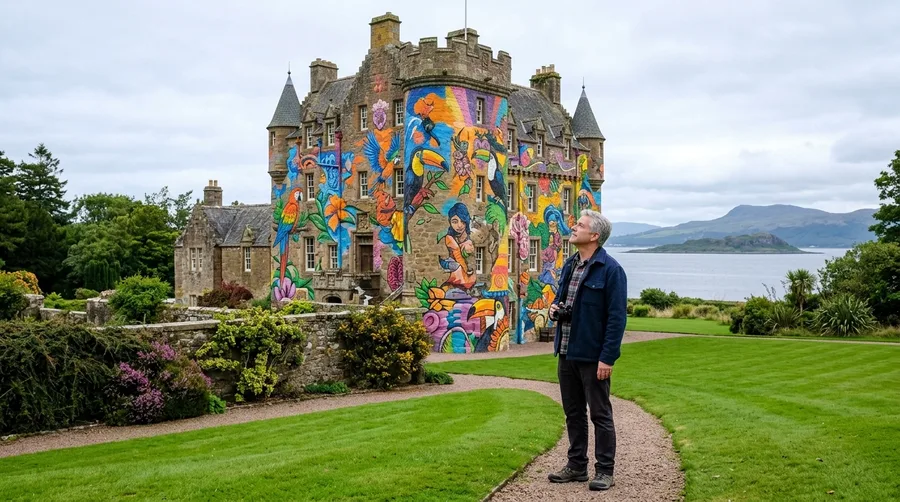
Dating back to the 13th century when the Boyle family acquired the land, Kelburn features a central 16th-century tower house combined with later baronial domestic expansions.
The Earl of Glasgow’s family still calls this coastal estate home, keeping centuries of continuous family occupancy alive along the Firth of Clyde.
In recent years, the family made headlines by commissioning Brazilian graffiti artists to paint vibrant murals across one stone facade, proving that historic habitation requires creative evolution.
💡 Tip: Explore the surrounding glen trails featuring secret waterfalls and deep ravine flora.
The Conservation Consensus: Balancing Modern Living with Historic Preservation
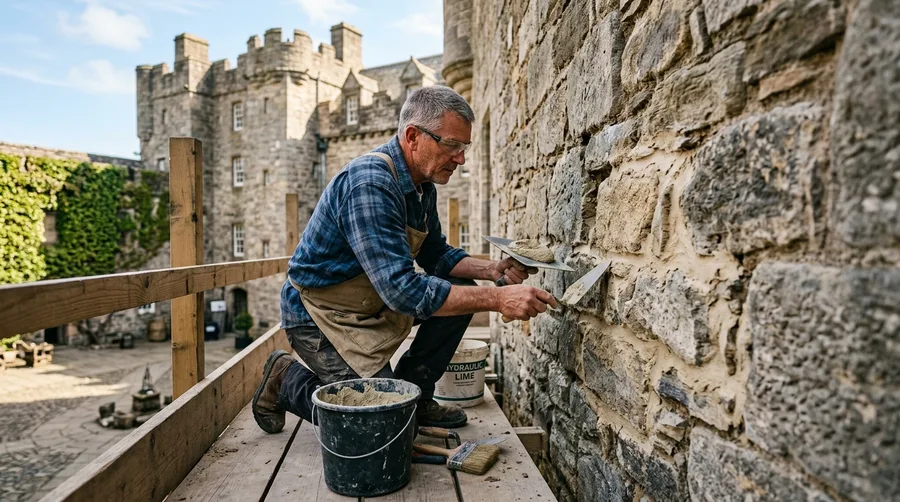
Heritage architects agree on a single fundamental truth: private habitation is the most effective tool for preventing structural collapse. Empty ruins decay within a century, while daily domestic use ensures immediate roof repairs.
Engineering challenges include managing stone dampness, preventing timber rot from trapped moisture, and retaining heat inside walls up to nine feet thick. Owners rely on breathable hydraulic lime mortars rather than modern synthetic sealants.
Historic Environment Scotland enforces strict preservation boundaries to ensure modern conveniences never compromise original medieval architectural integrity.
Inhabited Castles vs. Abandoned Ruins
Lived-In Fortresses
- Continuous daily roof and gutter inspections
- Active heating prevents destructive frost damage
- Private capital funds expensive masonry repairs
- Living heritage traditions pass down intact
Abandoned Shells
- Unchecked water ingress rots internal timbers
- Collapsed slate roofs expose masonry to frost
- Vandalism and stone theft accelerate decay
- Requires heavy state subsidies to stabilize
⏳ Evolution of a Living Scottish Castle
13th Century
Builders erect a stark stone defensive peel tower over strategic sea or river approaches.
16th Century
Clans add L-plan wings, gun loops, and decorative crow-stepped gables for status.
18th Century
Owners punch large sash windows through thick walls to let in natural light.
Modern Era
Residents install discreet biomass boilers and modern plumbing behind historic masonry.
Annual Castle Maintenance Reality
Figures scale significantly higher for larger Category A estates.
Restoring an Ancient Scottish Wing
A castle kept warm by human laughter and daily living survives a thousand winters; a museum left empty surrenders to the damp in fifty.
— Historic Scottish Conservation Maxim
Survival Factors for Historic Fortresses
Key metrics behind multi-century residential continuity
The Scale of Living Heritage
Hard facts on Scotland's inhabited medieval strongholds
Frequently Asked Questions
Can anyone buy a lived-in Scottish castle, or are they all inherited?
While most historic clan seats pass down through family bloodlines for centuries, properties occasionally appear on the open market through specialized estate agents. Buyers must possess significant capital to handle mandatory listed-building conservation regulations and high maintenance costs.
How do people practically heat stone castles built before 1700?
Modern owners integrate high-efficiency biomass pellet boilers, ground-source heat pumps, and zoned radiators. Strategic underfloor heating in select living wings helps counter massive stone thermal mass without altering historic masonry.
Are Scottish castles cold and damp to live in today?
Thick rubble-fill walls naturally moderate extreme temperature swings, but older masonry still attracts condensation. Maintaining constant low-level background heat and using breathable lime plaster keeps modern living spaces comfortable.
Can visitors access the private residential quarters of these castles?
Public tours are strictly restricted to state rooms, historic halls, and museums. Family living apartments occupy separate secure wings, towers, or upper floors closed off to general daytime ticket holders.
Who legally funds the massive upkeep of privately owned historic Scottish fortresses?
Upkeep relies on a hybrid financial model combining private family capital, agricultural land rentals, commercial estate tourism, wedding venue hosting, and specialized heritage conservation grants.
Guardians of the Stone: Why Scotland’s Living Castles Matter
Walking through these ancient corridors reveals that Scotland’s history is not locked behind museum glass. Daily domestic life remains the ultimate preservation tool against the elements.
Support these historic estates by booking guided tours, respecting private residential boundaries, and appreciating the families who keep the medieval world alive.