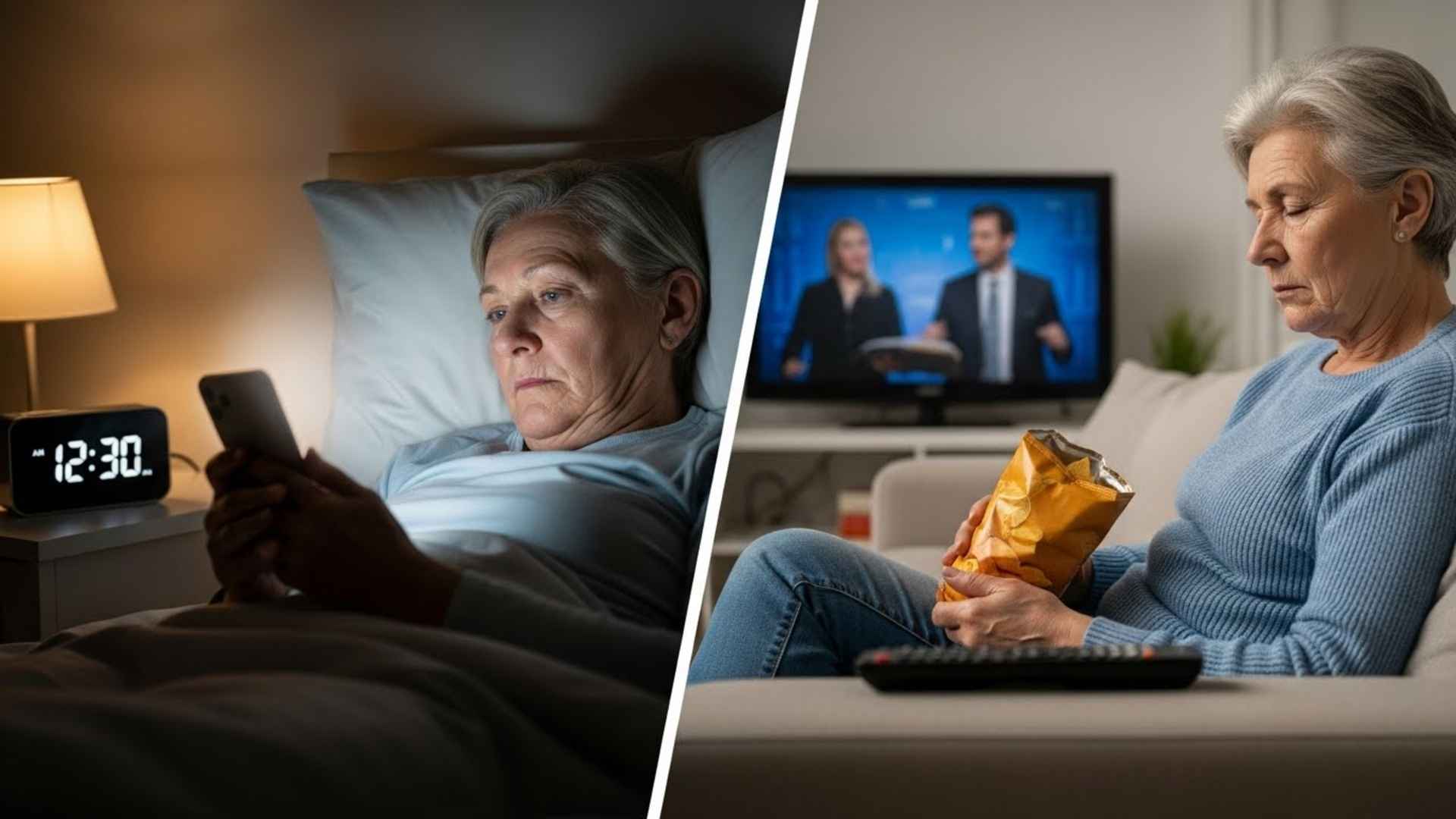
Look, I get it. Somewhere around age 50, sleep stops being something you just do and starts being something you have to manage.
Maybe you’ve found yourself staring at the ceiling at 3 A.M., doing mental math on how many hours you can get if you fall asleep right now. Or maybe you’ve started joking about your “old person” bedtime. But here’s the thing—and I’m going to be honest because this matters—sleep isn’t just a pause button. It’s the most critical deep-cleaning cycle your brain has.
For years, we thought poor sleep was just a symptom of getting older, or maybe a side effect of dementia. But the science has flipped. We now know that poor sleep is actually a driver of the disease. Recent research is terrifyingly clear: people with weak or fragmented sleep rhythms face a dementia risk that is nearly 2.5 times higher than those who sleep soundly.
That’s a massive number. But here’s the good news: this is fixable. We aren’t helpless. By fixing twelve specific mistakes—things most of us do without thinking—we can literally change the trajectory of our brain health.
Let’s walk through them, one by one.
The Science: Why Your Brain Needs the “Night Shift”
Before we get to the mistakes, you need to visualize what’s happening in your head. Imagine your brain is like a bustling city. During the day, the streets are packed with traffic (neurons firing), creating a lot of trash (metabolic waste like beta-amyloid and tau proteins).
When you sleep, specifically during deep sleep, the “traffic” clears out. A plumbing system called the glymphatic system kicks into high gear. It pumps cerebral spinal fluid through your brain tissues, physically washing away that toxic trash.
If you don’t sleep deeply? The trash trucks never come. The waste piles up. And over decades, that pile-up forms the plaques associated with Alzheimer’s. It’s that simple.
1. Ignoring the Snore (The Oxygen Thief)
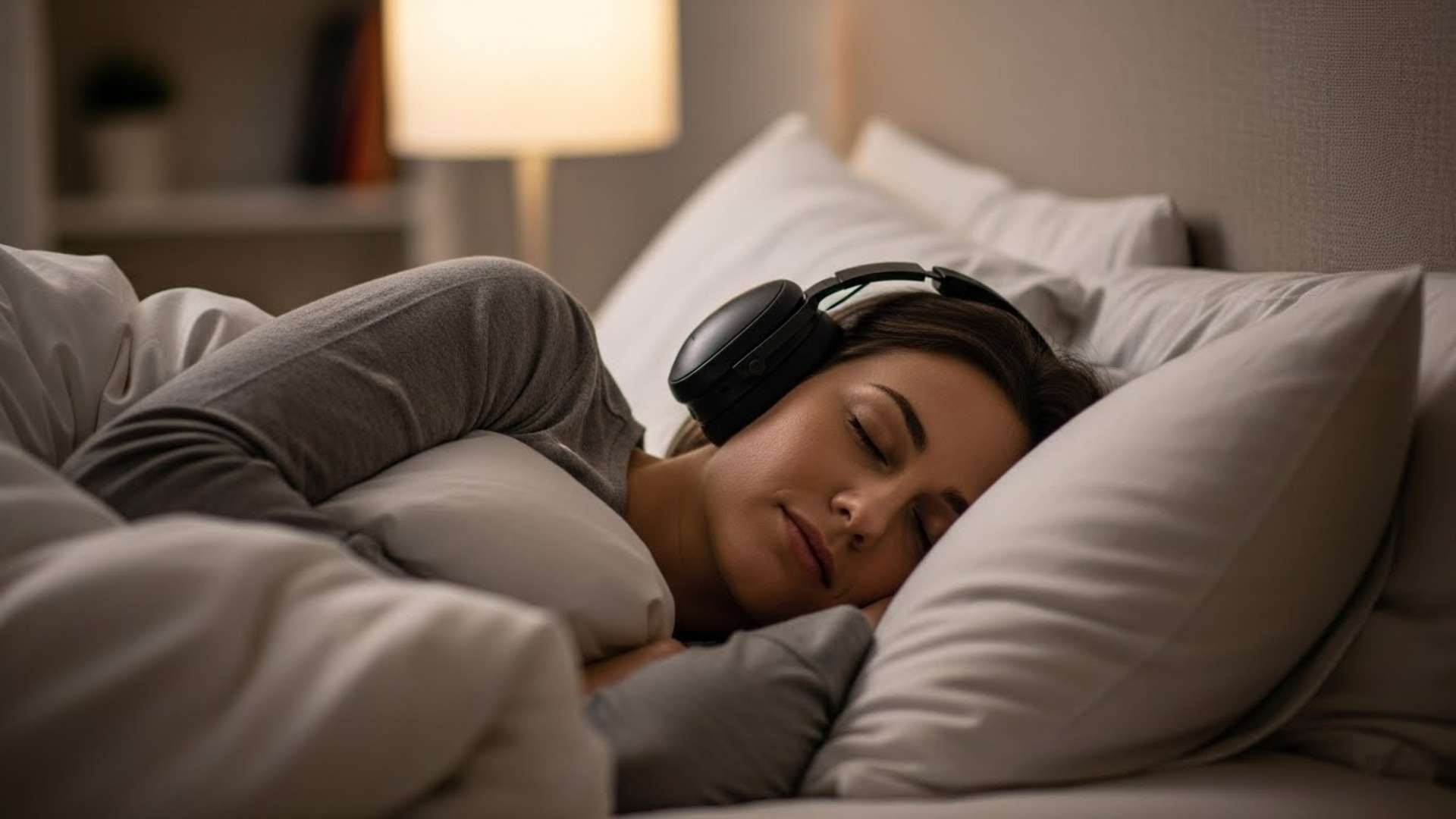
We tend to laugh off snoring. We nudge our partners, roll over, and joke about it the next morning. But if you are over 50, loud snoring is often the sound of your brain suffocating.
This is usually Obstructive Sleep Apnea (OSA). It means your airway collapses, your oxygen drops, and your brain panics, waking you up just enough to breathe but not enough for you to remember. This happens hundreds of times a night.
Why it’s dangerous:
It’s a double whammy. First, you starve the hippocampus (the memory center) of oxygen. Second, you never get into that deep “cleaning” sleep. The stats are brutal: women with sleep-disordered breathing are significantly more likely to develop dementia than those without.
The Fix:
Don’t ignore it. If you snore, get tested.
Treatment works. Using a CPAP machine or a dental device can stabilize cognitive decline. It’s not the sexiest bedtime accessory, but it saves your brain.
2. The “Helper” Pills (The Benadryl Trap)

This one makes me angry because so many people don’t know it. You can’t sleep, so you grab a Tylenol PM, a ZzzQuil, or maybe a prescription sedative. You think, “I just need to knock myself out.”
Here is the problem: Sedation is not sleep.
Many over-the-counter sleep aids contain diphenhydramine (Benadryl), which is an anticholinergic. These drugs block acetylcholine, a chemical your brain needs for memory. Studies have linked long-term use of these drugs to a significantly higher risk of dementia—and the risk might persist even after you stop taking them.
Table: The “Sleep Aids” You Should Question
| Drug Type | Common Names | Why it’s Risky |
| Antihistamines | Benadryl, Tylenol PM, Unisom | Anticholinergic; blocks memory chemicals. |
| Benzodiazepines | Xanax, Valium, Ativan | Increases dementia risk; frequent use linked to 79% higher risk in some groups. |
| “Z-Drugs” | Ambien, Lunesta | Can cause confusion and falls; does not produce natural restorative sleep. |
The Fix:
Talk to your doctor about CBT-I (Cognitive Behavioral Therapy for Insomnia). It’s the gold standard for fixing insomnia without destroying your memory chemicals.
3. The Nightcap (The Alcohol Lie)

I know. I love a glass of wine in the evening too. It helps you unwind, and it definitely helps you fall asleep faster. But alcohol is the enemy of staying asleep.
Alcohol is a “REM thief.” It might knock you out initially, but as your body metabolizes it, it releases stimulating chemicals that wake you up in the second half of the night. You lose the REM sleep that acts as emotional therapy for your brain.
Even worse, new genetic research suggests there might not be a “safe” level of alcohol for dementia risk. Even moderate drinking can accelerate brain volume loss.
The Fix:
Stop drinking 3 hours before bed. Let your liver process the alcohol while you’re still awake watching Netflix, not while you’re trying to clean your brain.
4. Hiding from the Morning Sun

We obsess over blocking light at night (which we’ll get to), but we forget that our biological clock needs a “start” signal every morning.
As we age, our eyes naturally yellow and our pupils shrink. A 60-year-old eye takes in significantly less light than a 20-year-old eye. If you stay inside all morning, your brain never gets the strong “IT IS DAYTIME” signal. This leaves your circadian rhythm weak and flat.
The Stat:
A massive study showed that people who get 1.5 to 2 hours of outdoor light daily have the lowest dementia risk. Those who get very little outdoor light face a much higher risk.
The Fix:
Get outside for 15–30 minutes immediately after waking up. Drink your coffee on the porch. Walk the dog. If you can’t, get a 10,000 lux therapy lamp.
The Blue
Light Bath
Screen light screams “Wake up!” to your brain.
It suppresses melatonin—the sleep hormone. For older adults, it’s like drinking coffee at 10 PM. ☕
- 1-Hour Rule: No screens 60 mins before bed.
- Tech Shield: Use “Night Shift” or blue-light glasses.
You knew this was coming. Staring at an iPad, phone, or TV right before bed is a disaster.
The blue light from these screens screams “Wake up!” to your brain. It suppresses melatonin, the hormone that signals sleep onset. For older adults, who already produce less melatonin naturally, this is like pouring coffee into your evening tea.
The Fix:
- The 1-Hour Rule: No screens 60 minutes before bed.
- Tech Shield: If you must use a screen, use “Night Shift” modes or wear blue-light blocking glasses.
6. Turning Up the Heat
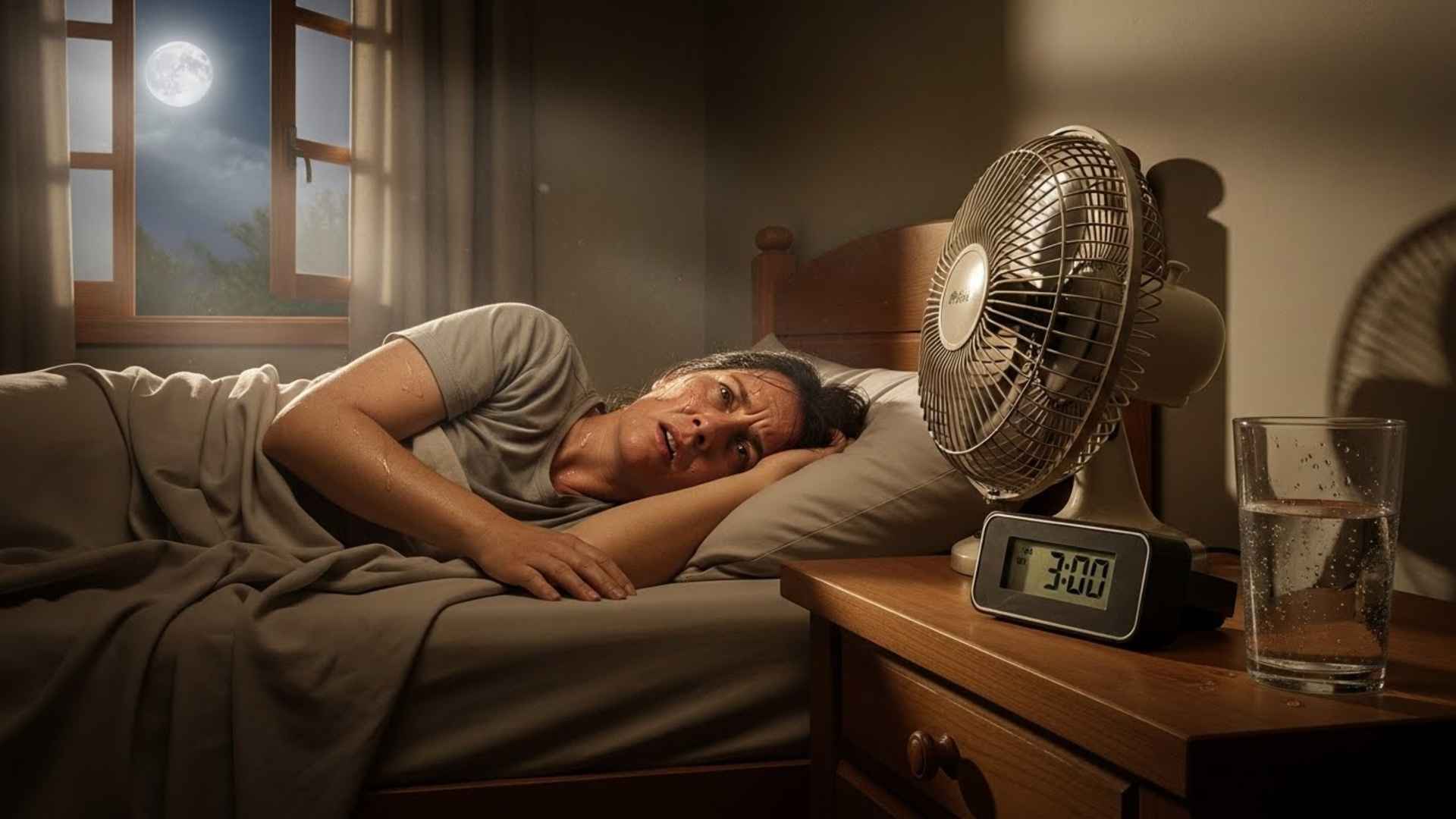
It’s cozy to be warm, right? But your body needs to drop its core temperature by about 2-3 degrees Fahrenheit to initiate sleep. If your bedroom is a sauna, your body can’t cool down, and you’ll toss and turn.
Research specifically on older adults pinpoints the sweet spot: sleep efficiency drops when the room gets above 77°F.
The “Warm Bath” Hack:
Paradoxically, the best way to cool your core is to warm your skin. Taking a warm bath or shower (104-108°F) about 90 minutes before bed brings blood to the surface. When you step out, that heat radiates away, causing your core temperature to plummet. It works like magic—studies show it can reduce the time it takes to fall asleep by 36%.
The Fix:
Keep the bedroom between 68°F and 77°F.22 Take that warm bath 1-2 hours before bed.
7. The “Just Resting” Nap

When you didn’t sleep well last night, a nap feels like the only way to survive. But napping is dangerous territory.
Think of “sleep pressure” (adenosine) like a balloon filling up all day. You need that balloon to be ready to pop by 10 P.M. If you nap at 3 P.M., you let air out of the balloon. Come bedtime, you aren’t tired enough, so you don’t sleep, so you nap again tomorrow. It’s a vicious cycle.
The Stat:
Older women who nap excessively (showing “increasing daytime sleepiness”) have a doubled risk of developing dementia compared to those with stable sleep.
The Fix:
- Cap it: 20 minutes max.
- Time it: Never after 3 P.M..
8. The Sedentary Slump

I’ll be blunt: if you don’t move your body, your body won’t feel the need to rest. Physical activity builds that “sleep pressure” we talked about.
Sedentary days lead to “flat” circadian rhythms—where you aren’t fully awake during the day and aren’t fully asleep at night. This “flatness” is exactly what researchers see in patients with early-stage dementia.
The Fix:
You don’t need to run a marathon. Just walking a few thousand steps a day or doing moderate aerobic exercise can stabilize your rhythm and protect against decline.
9. The Midnight Bathroom Trips (Nocturia)
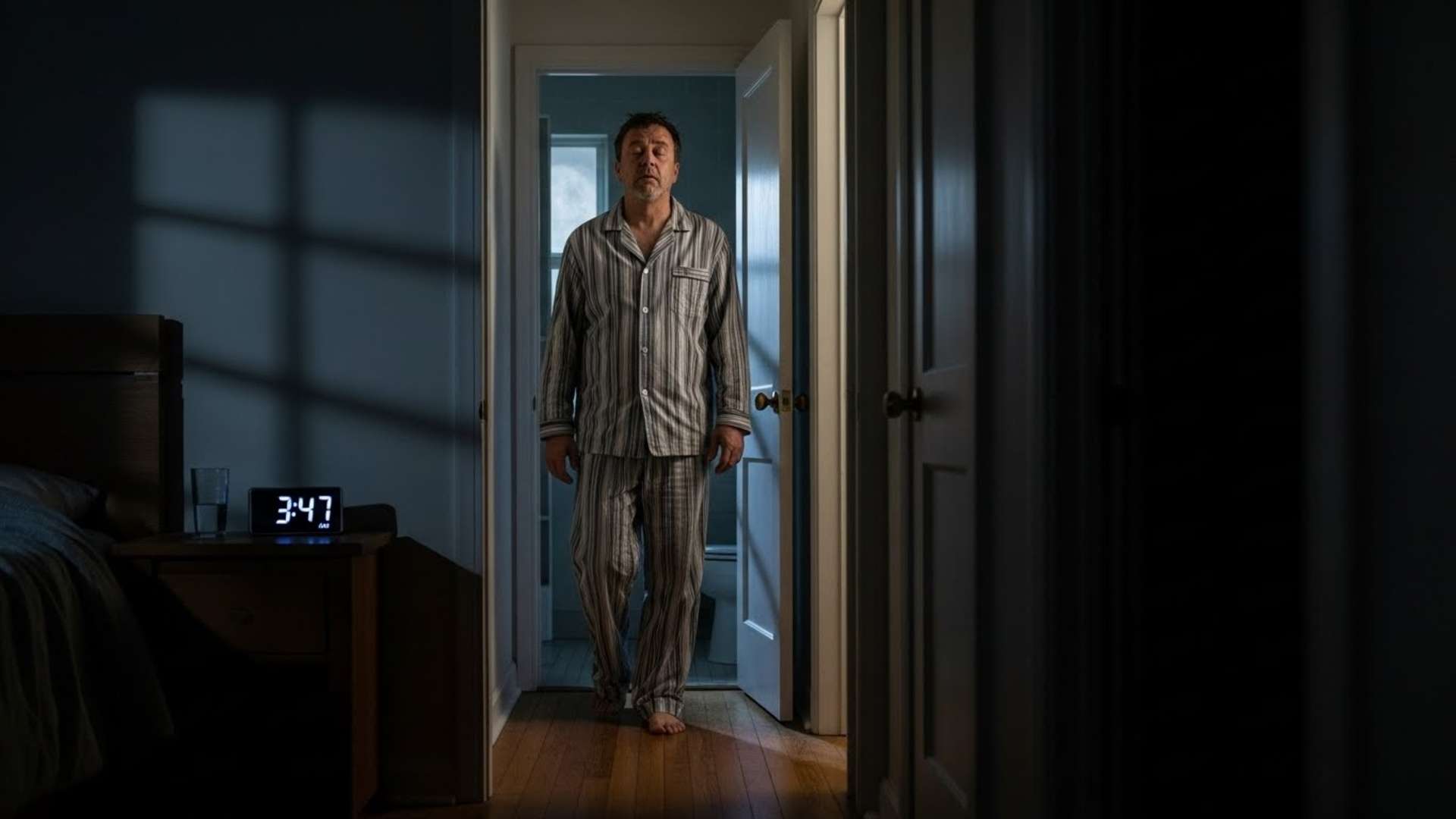
Waking up to pee three times a night isn’t just “aging.” It’s fragmenting your sleep cycle, preventing you from completing the deep cleaning stages.
Here is a secret: It’s often not a bladder problem; it’s a fluid problem. During the day, gravity pulls fluid into your legs (cankles, anyone?). When you lie down at night, that fluid rushes back to your kidneys, which turn it into urine.
The Fix:
Compression Socks: Wear them during the day to prevent pooling.
Legs Up: Elevate your legs above your heart for an hour in the late afternoon. Get the fluid out before you go to sleep.
10. Living on “Social Jetlag”
Do you wake up at 6 A.M. on weekdays but sleep until 9 A.M. on weekends? That’s “social jetlag.”
Your aging brain craves predictability. When you constantly shift your wake-up time, you are essentially constantly jet-lagged. A study tracking over 2,000 seniors found that those with irregular sleep-wake patterns had a significantly higher risk of dementia.
The Fix:
Set an anchor time. Wake up at the same time every single day. Yes, even Sunday.
11. The Magnesium Gap
Our ability to absorb nutrients declines as we age. Many of us are deficient in magnesium, a mineral that acts as the body’s natural “brake pedal,” calming the nervous system.
Without it, you stay stuck in “fight or flight” mode. Studies show magnesium supplementation in the elderly can improve sleep efficiency and reduce those early morning awakenings.
The Fix:
Look at your diet. Are you eating leafy greens, nuts, and seeds? Talk to your doctor about magnesium glycinate (it’s easier on the stomach than other forms).
The Lone Wolf
Life
🐺Loneliness isn’t just a feeling; it destroys sleep.
Social interaction is a zeitgeber (time-giver). Without it, your brain loses its anchor.
Result: Fragmented sleep & rapid cognitive decline. 📉
Join a club or schedule a morning walk.
This is the one we least expect. Loneliness destroys sleep.
Social interaction is a “zeitgeber”—a time-giver. It tells your brain “we are awake and active.” When we isolate ourselves, our circadian rhythms lose their anchor. Social isolation is linked to fragmented sleep and rapid cognitive decline.
The Fix:
Treat socializing like medicine. Join a club, volunteer, or just schedule a regular morning walk with a friend.
Tools to Help You Master the “Night Shift”
You don’t need to buy your way to better sleep, but let’s be honest: changing lifetime habits is hard. The right tools can bridge the gap between “knowing what to do” and actually doing it. Think of these products not as gadgets, but as environmental cues that do the heavy lifting for your brain. They act as physical triggers—telling your body exactly when to energize and when to power down—so you don’t have to rely entirely on willpower to fight your biology.
Here are five products that align perfectly with the neurobiology of deep sleep:
1. Carex Day-Light Classic Plus Bright Light Therapy Lamp

If you can’t get outside for 30 minutes every morning, this is the clinical standard substitute. Unlike smaller, cheaper “happy lights,” this unit provides the full 10,000 lux of light at a comfortable 12-inch distance, which is critical for actually hitting the threshold to reset your circadian clock and clear out sleep inertia. Use it for 20–30 minutes while you read or check emails in the morning to anchor your rhythm.
2. Manta Sleep Mask
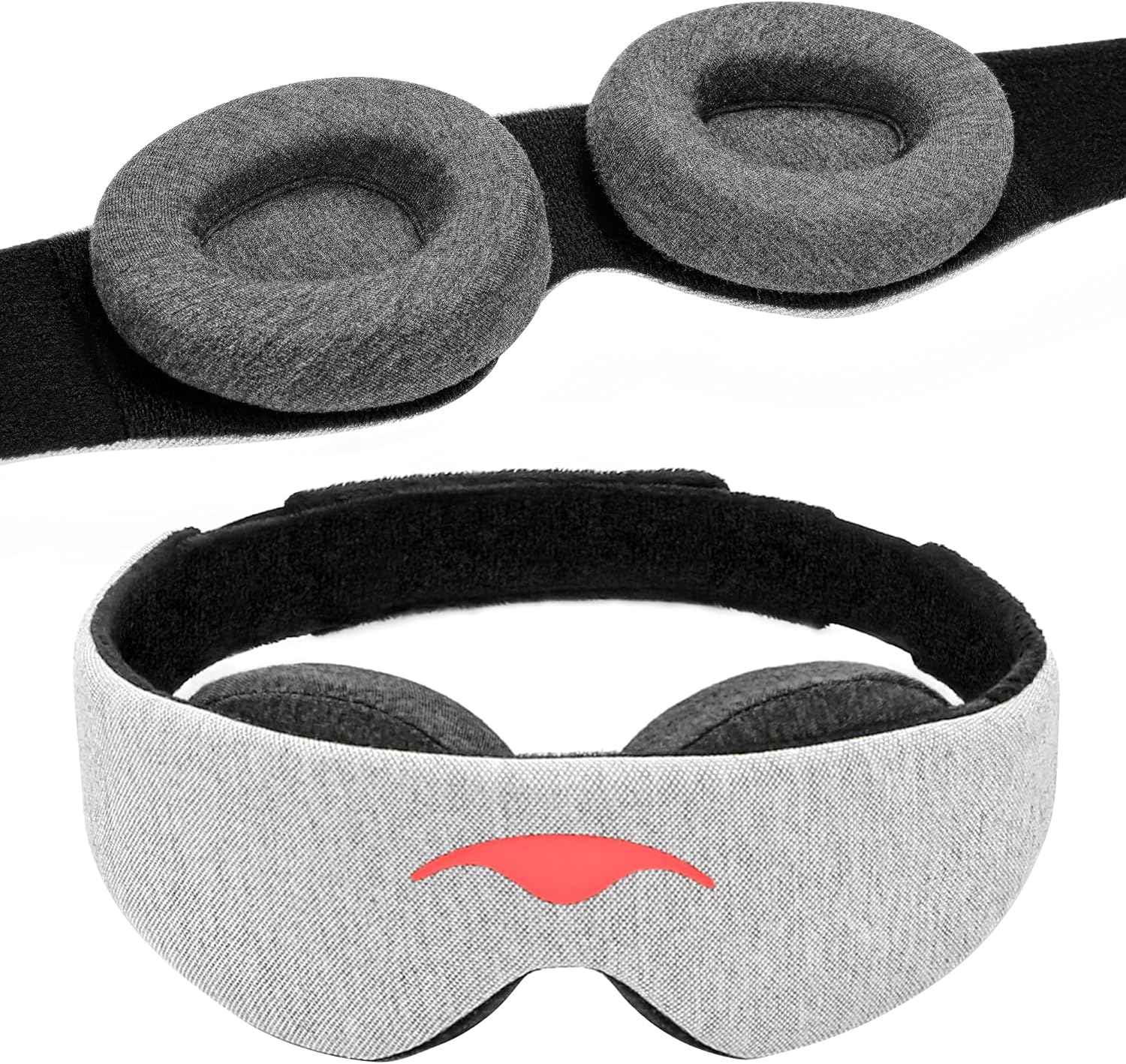
Standard sleep masks apply pressure to your eyelids, which can actually disrupt Rapid Eye Movement (REM) sleep. The Manta mask is different—it has hollow “eye cups” that block 100% of the light while allowing your eyes to blink and move freely. This total blackout is essential for preventing sleep fragmentation, especially if you have a partner who reads or streetlights creeping in.
3. Sockwell Graduated Compression Socks

To tackle Mistake #9 (Nocturia), wearing these during the day can be a game-changer. They use graduated compression to prevent fluid from pooling in your legs and ankles while you’re active. This means there is less fluid for your body to process into urine when you lie down at night, potentially saving you that 3 A.M. bathroom trip. Plus, the merino wool blend regulates temperature better than synthetic fabrics.
4. Swanwick Blue Light Blocking Glasses (“Swannies”)

If you struggle to follow the “No Screens” rule 100% of the time, these act as a safety net. Unlike clear “computer glasses,” these have orange lenses that block over 99% of the blue light spectrum that suppresses melatonin. Put them on 2 hours before bed, and you can watch TV or use your tablet without tricking your brain into thinking it’s noon.
5. Hatch Restore 3 Smart Sleep Assistant

This replaces the jarring, cortisol-spiking alarm on your phone. It uses a sunrise simulation to gradually wake you up with light before sound, mimicking a natural dawn. For the evening, it has a “sunset” feature to dim the room and built-in white noise/brown noise options to mask environmental sounds that might fragment your sleep. It’s an all-in-one system for regulating your bedroom environment.