Cognitive Researcher: 5 ‘Brain Games’ That Actually Accelerate Mental Decline (And 3 That Don’t)See


You know that moment? The one where you’re standing in the kitchen, staring at an open drawer, and you have absolutely no idea what you came in there for?
We’ve all been there. And usually, we laugh it off. “I’m losing it,” we joke. But deep down, there’s a tiny sliver of icy fear. Because we know that the brain is the one organ we can’t afford to lose.
So, we try to do something about it. We download those colorful “brain training” apps that promise to raise our IQ in 15 minutes a day. We play word games on our phones while half-watching Netflix, telling ourselves we’re multitasking and keeping our minds sharp. We think we’re doing the work.
But here’s the uncomfortable truth I found while digging into the neuroscience: We might be actively making things worse.
It turns out the brain doesn’t care about our good intentions. It cares about biology. And the biology of gaming is complicated. Some games act like high-octane fuel for your neural networks, building actual physical mass in the memory centers of your brain. Others? They’re more like cognitive junk food—tasty, addictive, and ultimately leaving your brain starving for real nourishment.
Let’s break down the science of why some “brain games” are actually rotting our gray matter, and which ones are the real fountain of youth.
The “Toxic 5”: Games That Can Accelerate Decline
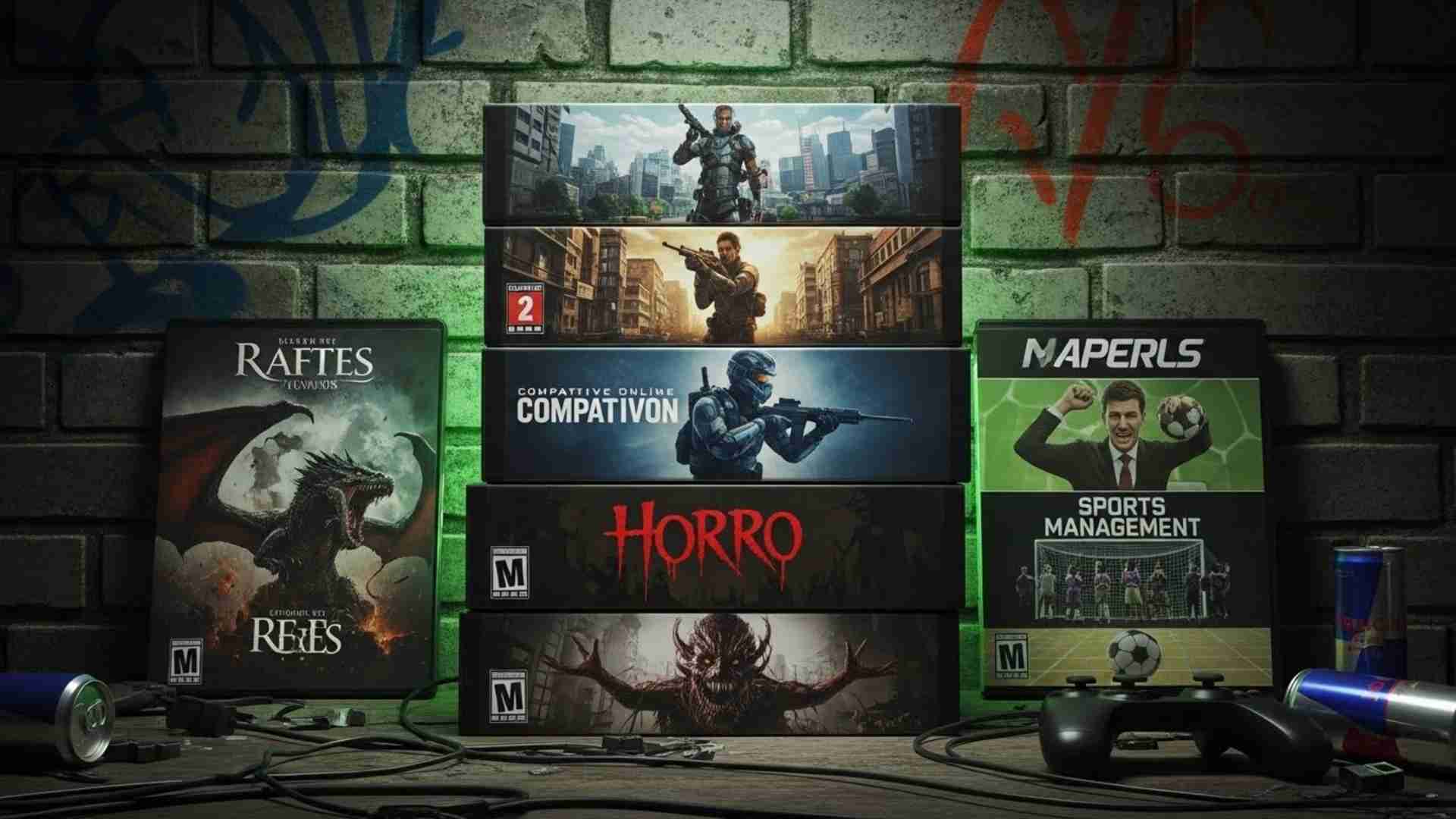
Let’s rip the band-aid off. These are the games often marketed as “relaxing” or “sharpening,” but the science suggests they might be doing the opposite.
1. The Shooter Trap (FPS Games)
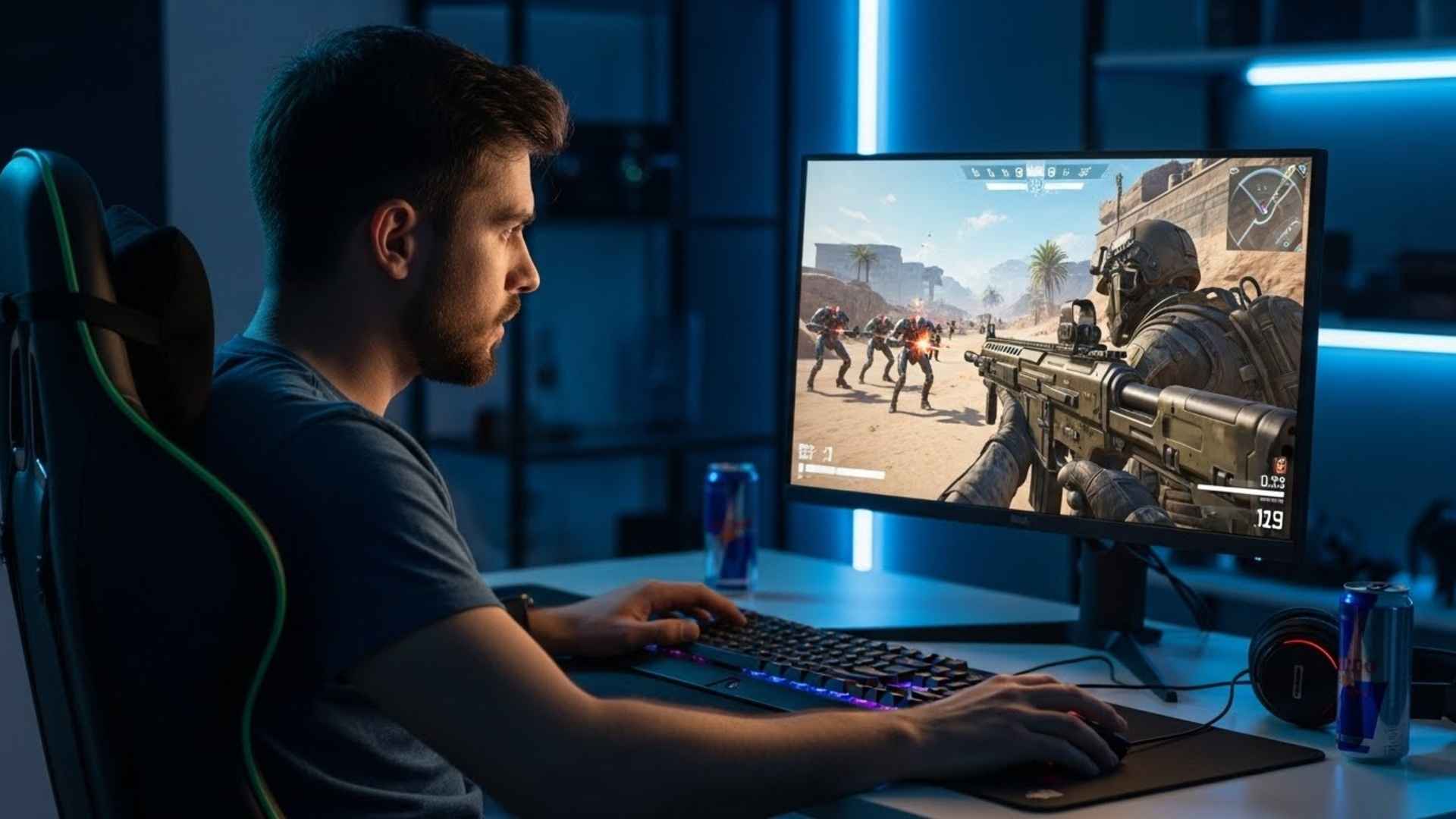
- The Myth: “These fast-paced games improve my reflexes, so they must be good for my brain.”
- The Reality: They might be shrinking your hippocampus.
This was a bombshell finding from researchers Greg West and Véronique Bohbot. They looked at players of First-Person Shooters (think Call of Duty or Killzone) and found something alarming. Because these games often have on-screen GPS markers and require split-second reactions, players stop navigating spatially. They stop looking at landmarks (“The castle is North”) and start memorizing muscle movements (“Run straight, turn left, shoot”).
The Stat: Habitual action gamers are nearly twice as likely to rely on this “response learning” (Autopilot) compared to non-gamers. In one study, participants who played FPS games for 90 hours using this strategy showed statistically significant atrophy (shrinkage) in the hippocampus.
You’re getting faster, sure. But you might be losing your ability to navigate the real world.
2. The “Dopamine Drip” (Match-3 & Infinite Scrollers)
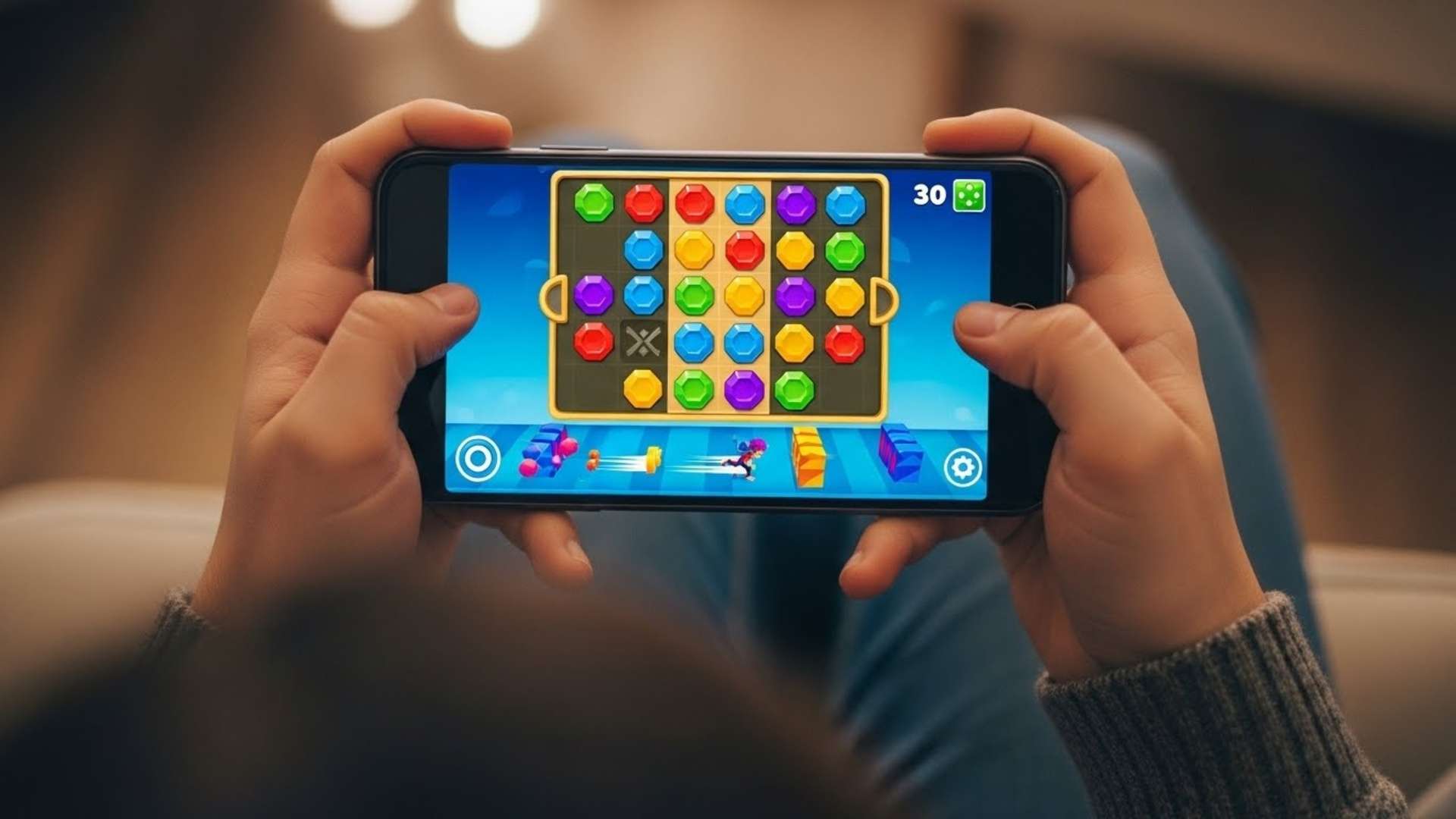
- The Myth: “Candy Crush is a puzzle. I’m solving problems!”
- The Reality: You aren’t solving problems; you’re pulling a slot machine lever.
I hate to be the bearer of bad news, but games like Candy Crush or mindless infinite scrolling apps are not “active” gaming. They are “passive” engagement. The game design relies on what’s called a Variable Ratio Schedule of Reinforcement—the exact same psychological trick used in slot machines.
You swipe, you get a flashy “Divine!” explosion, and your brain gets a hit of dopamine. But are you thinking? Are you planning? No. You’re in a “ludic loop,” a trance state where you are chemically engaged but cognitively asleep.
The Stat: A massive study of over 462,000 people found that passive screen behavior (like TV or mindless scrolling) is linked to increased dementia risk, whereas active computer use (where you actually have to think) is protective.
The False Prophet
Commercial Brain Training AppsReality Check
The Study: 11,000 participants. 6 weeks intense training.
The Result: ZERO transfer effects. You just get better at the game, not at life. 🚫
- The Myth: “I play Lumosity for 15 minutes a day to raise my IQ.”
- The Reality: You’re just getting really good at playing Lumosity.
This is the billion-dollar lie. We want to believe that tapping bubbles on a screen will make us smarter at work or better at remembering names. But science calls this “Transfer,” and it rarely happens.
The Study: A massive investigation led by neuroscientist Adrian Owen involved 11,000 participants. After six weeks of intense brain training, the results were brutal: “Zero transfer effects.” The participants got better at the games, but their general reasoning, memory, and planning skills didn’t budge an inch compared to people who just browsed the internet.
It’s like doing bicep curls and expecting your running time to improve. It just doesn’t work that way.
4. The “Attention Thief” (Idle/Clicker Games)

- The Myth: “It plays itself in the background! It’s harmless fun.”
- The Reality: It’s training your brain to be distractible.
Idle games (like Cookie Clicker) are designed to interrupt you. They run in the background, pinging you to come back and click a button. This forces your brain into a state of chronic multitasking.
The Consequence: Heavy media multitaskers—people who constantly switch between streams of info—actually show lower grey matter density in the Anterior Cingulate Cortex (ACC). That’s the part of the brain responsible for error detection and emotional control. By fracturing your attention 100 times a day, you are eroding your ability to do deep, sustained work.
5. The “Stress Factory” (Gacha & Loot Boxes)
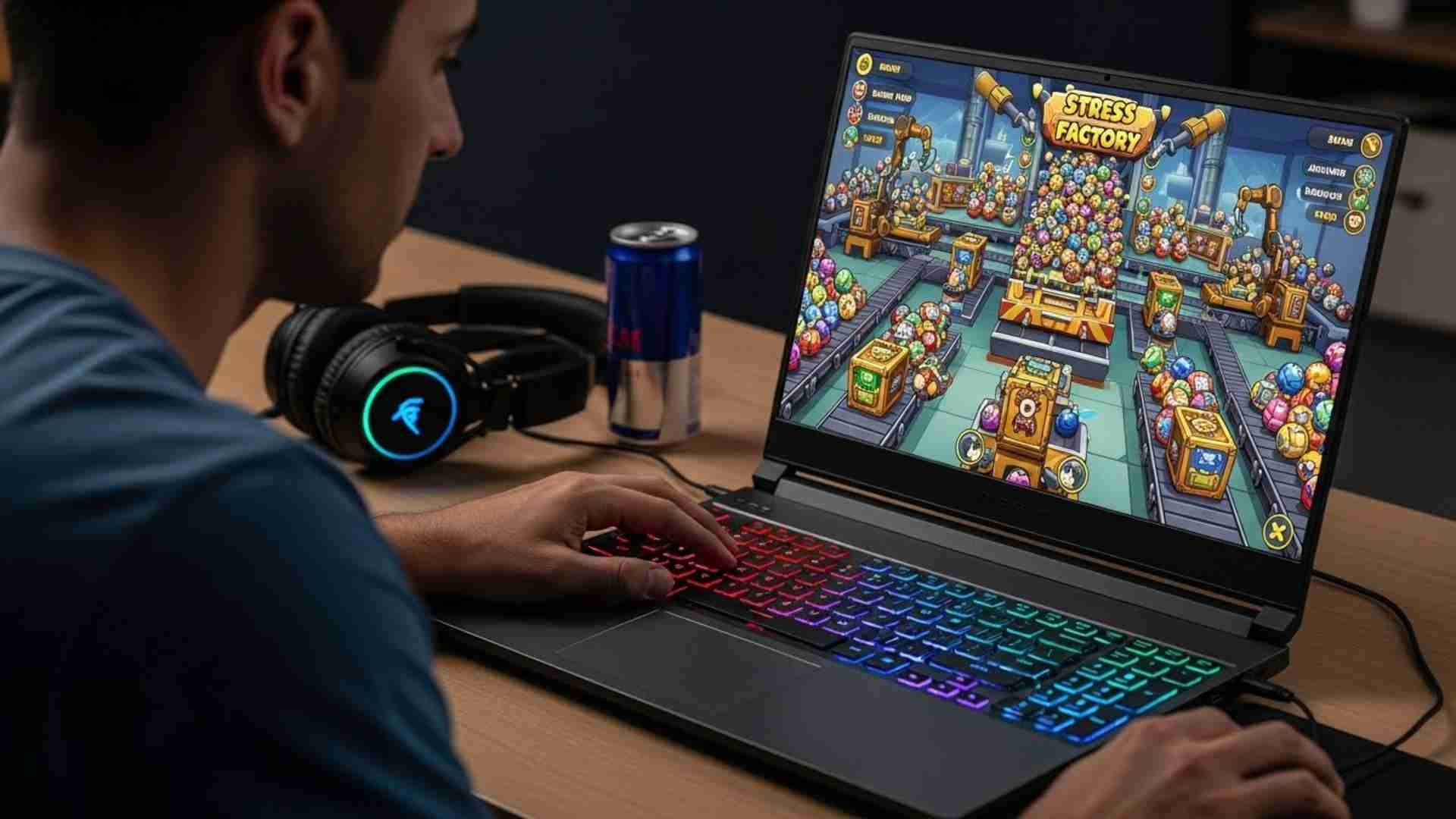
- The Myth: “I’ll just buy one crate, maybe I’ll get the rare item.”
- The Reality: It’s gambling, and it stresses your brain out.
These games exploit the “near-miss” psychology. They create financial anxiety and psychological distress, which elevates cortisol levels. High cortisol is neurotoxic—it literally kills brain cells in the hippocampus. If a game makes you anxious about money or “missing out,” it’s not a hobby. It’s a health risk.
The “Good” Games: 3 Ways to Actually Build a Better Brain

Okay, enough doom and gloom. The good news is that the right kind of gaming can be incredibly powerful medicine. We’re talking about games that force you to learn, map, and adapt.
1. The “Spatial Architect” (3D Platformers)
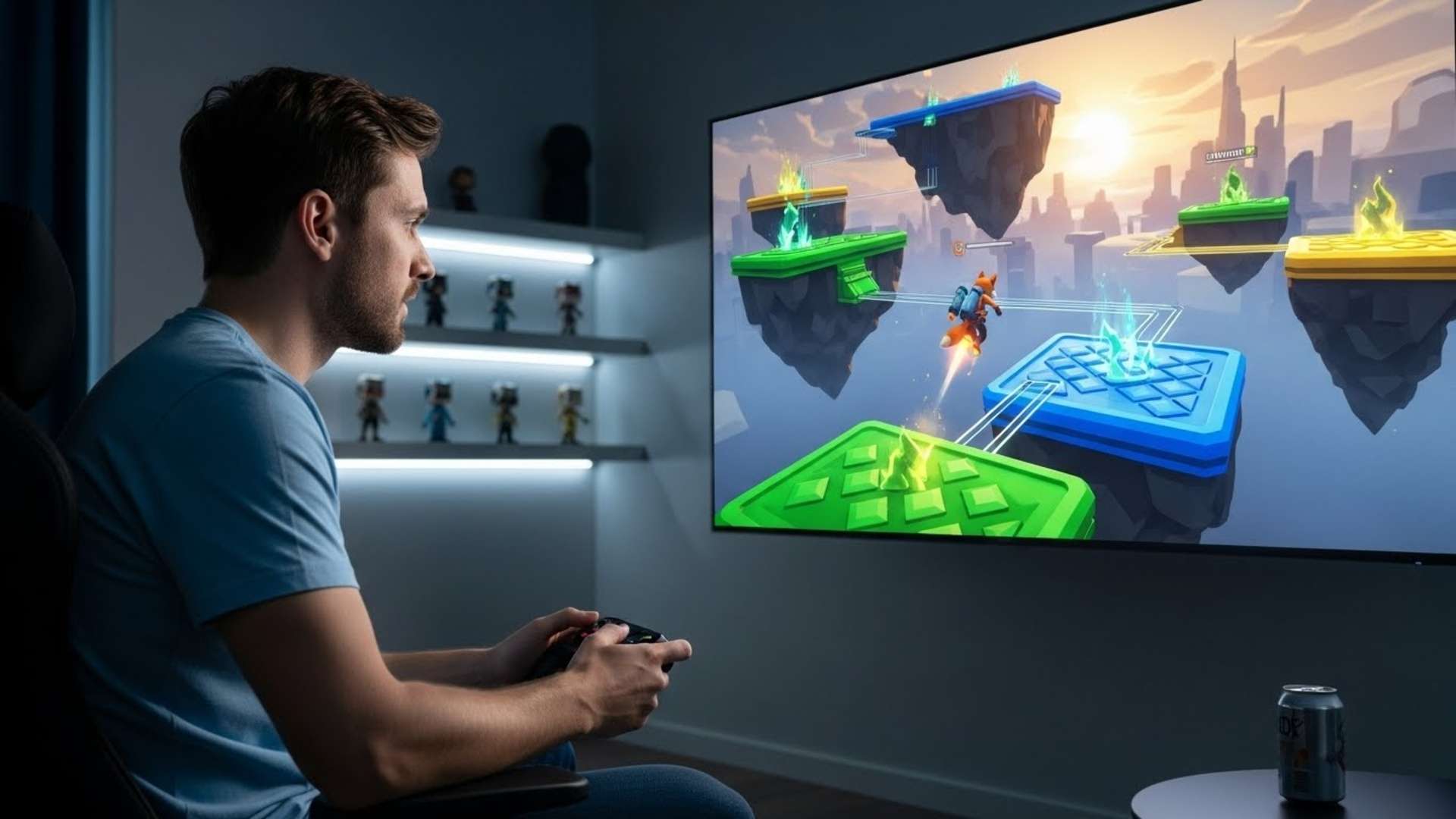
Play This: Super Mario Odyssey, The Legend of Zelda, Minecraft
Remember the hippocampus? The map-maker? It loves 3D platformers. When you play a game like Super Mario 64, you have to build a mental model of a complex world. “I need to jump on this platform to get to that ledge, which leads to the mountain…”
The Proof: A landmark study showed that older adults (ages 55-75) who played Super Mario 64 for just 30 minutes a day saw significant grey matter growth in the hippocampus. The control group that played Solitaire? They showed no growth (and actually some decline).
Why it works: You are actively exploring. You aren’t following an arrow; you are learning a world.
CEO Simulator
Real-Time StrategyPlay This: StarCraft II, Civilization, Age of Empires
If you want to train your brain to handle chaos, play Real-Time Strategy (RTS) games. These games require you to manage an economy, build infrastructure, and fight a war—all at the same time.
The Proof: Researchers found that playing StarCraft increases “cognitive flexibility”—your brain’s ability to switch tasks and think about multiple concepts simultaneously. It even strengthens the connections (white matter) between your planning centers and your visual centers.
It’s the cognitive equivalent of conducting an orchestra while sprinting.
3. The “True Problem Solver” (Complex Puzzle Games)
Play This: Portal 2, The Talos Principle
Forget the simple “tap the red square” apps. You need puzzles that make you feel stupid at first. You need games that require physics, logic, and lateral thinking.
The Proof: A study directly pitted Portal 2 against Lumosity. The result? Portal 2 smashed it. Players showed statistically significant advantages in problem-solving, spatial skills, and persistence compared to the brain-training group.
Why? Because Portal 2 is hard. It’s novel. It forces you to learn a new way of thinking, not just tap a screen faster.
Tools to Upgrade Your Cognitive Hygiene
You definitely don’t need expensive gadgets to keep your brain sharp—a walk in a new neighborhood or a difficult conversation about politics can do the trick. However, if you want to make the “Cognitive Gaming Protocol” easier to stick to (and frankly, a lot more fun), there are specific tools that align perfectly with the neuroscience we just covered. These aren’t just toys; think of them as your home gym for executive function and spatial memory.
Here are 5 products that turn these scientific principles into action:
1. Nintendo Switch – OLED Model with Mario Kart 8 Deluxe

If you want to get into “Active Gaming,” this is the gold standard entry point. The Switch is unique because it supports motion controls (getting you off the couch) and plays the exact library of games—like Zelda and Mario Odyssey—that researchers use to boost hippocampal volume. I recommend the OLED model specifically because the larger, sharper screen reduces eye strain, making it much more accessible for older eyes or long sessions.
2. Ring Fit Adventure (Nintendo Switch)

This is arguably the most effective “brain-body” tool on the market. It’s not just a game; it’s a dual-task training system. You have to physically jog, squat, and press a resistance ring to fight monsters, forcing your brain to coordinate complex motor planning while your heart rate rises. It hits the “physicality” and “cognitive load” requirements simultaneously, making it a potent weapon against decline.
3. Meta Quest 3

If you want to truly engage your spatial memory, flat screens can’t compete with Virtual Reality. The Meta Quest 3 places you inside the environment, forcing your brain to map 3D spaces naturally. Games like Beat Saber (rhythm and reflex) or Puzzling Places (3D spatial reasoning) create a level of immersion that tricks your brain into a flow state instantly. Plus, it’s a serious workout.
4. Catan (Board Game)

We mentioned that social connection is a massive protector against dementia. Catan is the perfect antidote to isolation. Unlike simple luck-based games, it requires negotiation, resource management, and predicting other players’ moves (Theory of Mind). It keeps your “social brain” active and competitive, which is something digital games often miss.
5. ThinkFun Gravity Maze

For those moments when you want to train your logic without staring at a screen, this is a brilliant analog option. It’s a marble run combined with a logic puzzle. You have to visualize the path of the marble in 3D space and build the towers to match. It explicitly targets the “visuospatial sketchpad” of your working memory—exactly the kind of challenge that keeps the prefrontal cortex firing.