
Most people assume a marriage with no shouting, no slammed doors and no grand public declarations has gone flat, and that real love should look louder than that. Watch what a quiet couple actually does on an ordinary Tuesday and the assumption starts to wobble. The calm is not the absence of feeling. It is the absence of performance.
Low drama means low reactivity, not low emotion. Affection, disagreement and desire are all still in the room; they have just stopped being staged for an audience, including the two of you.
So the calm itself is not the diagnosis. What tells you which kind of quiet you are living in is whether warmth, engagement and repair are still moving between you, or whether silence has quietly taken safety’s place.
By the end you should be able to tell warm quiet from cold quiet, know what to protect in an ordinary week, and decide whether this is the week you finally name the topic you have both been walking around.
The question is never whether your marriage is quiet. It is whether the quiet is warm.
| What you notice | Warm quiet | Cold quiet | What it means |
|---|---|---|---|
| Eye contact during conversation | Frequent, easy | Rare, darting | Engagement vs. distance |
| Follow-up questions | Asked naturally | Rarely or never | Curiosity vs. indifference |
| Repair after a sharp tone | Comes within hours | Never comes | Safety vs. walking on eggshells |
| Conflict style | Name it, listen, change one thing | Change the subject or withdraw | Repair vs. stonewalling |
| Daily rituals | Coffee made, note left, check-in text | No small gestures | Warmth vs. task completion |
| Time together | Shared routines plus novelty slots | Parallel schedules, separate weekends | Connection vs. roommate mode |
Quiet means low drama, not no feeling
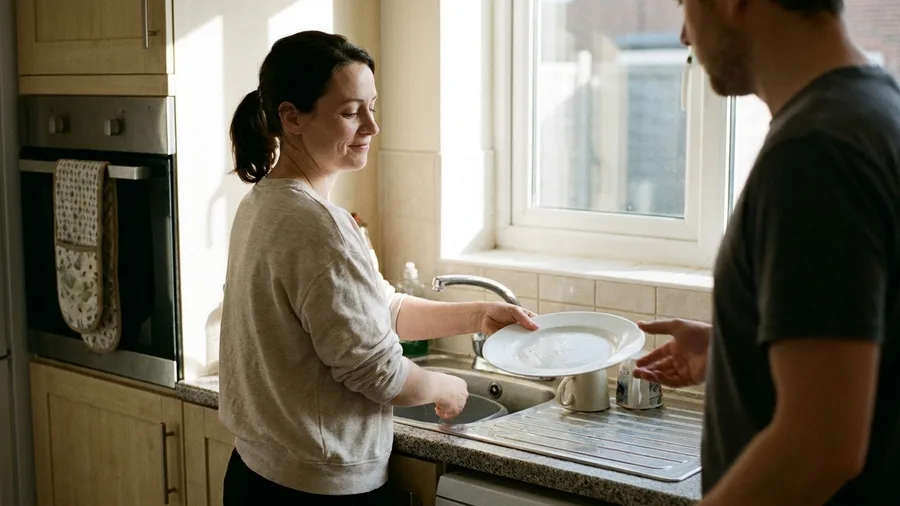
Quiet means the reactivity is low and the performing has stopped, not that the feeling has gone. A marriage can be calm and still full of want.
Picture the warmth that runs under a low-drama house. One of you repeats a line from a bad movie every time the dishes come out, and the other laughs before the joke lands. There is a text at noon about the meeting that went badly. There is a hand flat on a back at the kitchen sink, held for a second longer than it needed to be. None of it is loud. All of it is contact.
Avoidance has a different texture, and you can feel it in a room. Two people schedule their evenings around each other so the overlap stays thin. They ask no follow-up questions, skip eye contact on the way past, and keep the whole conversation on groceries and the recycling. The house is calm too. The difference is nobody is reaching.
Here is the trap for the reader who suspects they have settled for less passion. If you grew up around slammed doors or spent years in a cycle of fight and reconcile, a house with no shouting can read as flat. But fewer theatrical highs and lows is not the same as no feeling. What is missing may be the drama, not the love, and those are two very different losses.
The test is not how loudly the affection shows. It is whether anyone is reaching at all.
Calm creates room for ordinary affection

Passion does not go anywhere; it stops competing with drama for the same hours. A household that is not bracing for the next blow-up has slack in it, and slack is where small affectionate gestures get made.
Watch a kitchen at 6:35 on a Tuesday. One of you is still half asleep, and the other has already put the mug out on the counter, filled, sugar in, no announcement made about it. A text at noon that says the pharmacy run is handled lands the same way. Ten minutes at bedtime with the phones face down on the nightstand, saying nothing in particular, does the rest.
Heat is not the same thing as being known. A fight that ends at 1 a.m. and a reconciliation that runs until 2 produces a vivid night and very little information about who the other person is on an ordinary Wednesday. A gesture repeated with attention does something quieter and more durable: it tells the partner they were being watched, and remembered.
Comfort alone will not carry it. Calm couples still need something new moving through the week, or the familiarity flattens into routine maintenance. Try a recipe neither of you has cooked on the first Friday of the month, take a different route on the evening walk, start a kiss that is not part of the goodbye sequence at the door.
One thing to copy, if none of this is happening yet. Leave a note by the coffee maker that names one specific thing you noticed about their day, not a heart and not a compliment. Something like: you handled that call well this morning.
Predictability can feel safe, not stale
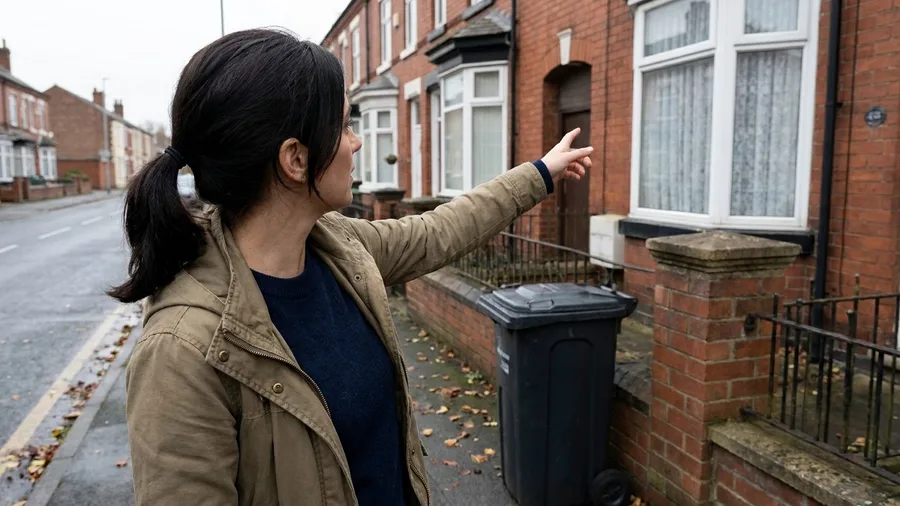
Predictability feels stale only when curiosity drops out of it; the routine itself is not the problem. Reliable can be the most restful thing in a life.
The difference shows up in small moves. Knowing your partner will handle the school form and then saying thank you when they do is dependable. Assuming they will handle it, never asking, never noticing the hour it took, is robotic. The task is identical. The warmth is not.
You can add freshness without turning the household upside down. A monthly Sunday drive with no destination. One new recipe on a weeknight. Small changes keep the ground moving under a steady roof.
Which kind of reader you are changes what that looks like. A routine-anchored person thrives on knowing the plan and finds surprise stressful. A novelty-seeking person needs a standing spontaneity slot, a surprise walk on a Tuesday, so the wanting has somewhere to go. Both are workable if you say which one you are.
Safety without curiosity drifts, though, and it drifts quietly. Two calendars that never touch, no questions beyond logistics, no hand on a shoulder for a week straight: reliability starts to feel like distance. The routine did not fail. The interest did.
💡 PRO TIP
Name one thing you noticed
Once a day, tell your partner something you observed about them—not a compliment, just a detail. 'You handled that call well' or 'I saw you switched to decaf.' It signals attention without performance.
Fewer performative fights leave more trust

Quiet couples disagree about money, in-laws, parenting and sex like everyone else; what changes is where the disagreement happens. The difference sits in the audience. A performative fight has one: the jab about the burnt roast delivered while guests are still holding forks, the tally of who folded last week’s laundry recited at a dinner party, the score kept so publicly that neither of you can quietly concede anything.
A repair-oriented disagreement waits until the plates are cleared. One partner says the thing plainly – ‘when you promised to handle the car and didn’t, I felt dropped’ – and stays in the room until it lands. The other listens without defending, and one concrete thing changes: the calendar gets a reminder, the call gets made before Friday.
The payoff is a lighter memory. There is less scorekeeping, because nothing was broadcast to be replayed, and more trust that a complaint will be heard rather than performed.
Suppression is not the same as repair. Swallowing a grievance and smiling through dinner while the distance widens under the table leaves the issue exactly where it started. Surfacing it and staying until it is heard is the move that keeps quiet marriages warm rather than merely quiet.
What quiet couples build, from foundation up
The layers that make calm feel warm instead of cold
Emotional safety lowers the need to perform

When a complaint gets heard and settled in private, the couple stops needing to manage how they look to each other. A quiet marriage feels good to some people because it removes the second job of monitoring your own performance.
Emotional safety means you can be ordinary, wrong or worn out without losing your standing in the house. Forget the dentist appointment and your partner says, ‘Okay, let’s call and rebook’ and then goes back to the mail. No raised eyebrow, no story repeated at dinner.
The performing version looks like a different household. Photos are chosen for what they say about the marriage, happiness gets presented at parties with a hand on a shoulder and a rehearsed anecdote, and every tone is checked for a slip, one sentence at a time.
The signs are quiet ones. A car ride with the radio off and nothing filling it. A mistake admitted flatly, with no joke thrown over the top to soften the landing. A small failure, the ruined sauce, the missed bus, that cannot be used against you later.
Which way you read the calm depends on what calm used to mean. If you came out of volatile years, an unraised voice can register as indifference, because in that house the noise was proof someone cared. If you run high on novelty, easy silence reads as hollow. Neither reading is a verdict on the marriage.
🗓️ What a warm quiet week looks like
Morning
Set out your partner's mug before the alarm; leave a note about one thing you noticed.
Midday
Send one text that names a shared errand or a small update.
Evening
Spend ten minutes without phones, just talking about the day.
Midweek
Try one new recipe or take a different walking route together.
Weekend
Do one routine task side by side—errands count—and say thank you.
Before bed
After any sharp tone, make one repair attempt: 'I'm sorry I snapped.'
Shared routines carry more than grand gestures
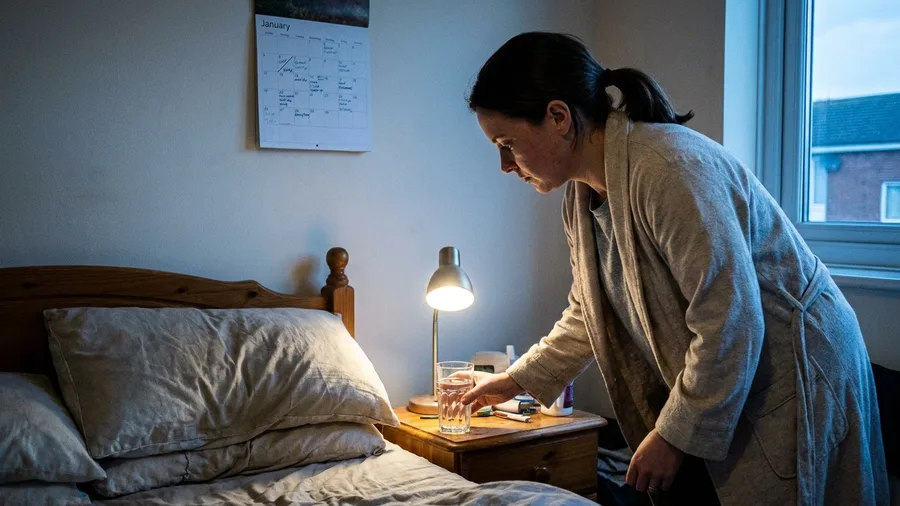
Routine is romantic in a slow, unphotographed way: it is the repetition that puts you on your partner’s radar without anyone making a speech about it. Safety gets spent in small actions, mostly on weekdays, mostly unnoticed.
The care is in the doing. The coffee maker is loaded before the other person wakes. The recycling goes out without a reminder. Your partner’s dental appointment for the 14th goes into the shared calendar while they are on a call, so they never think about it once.
Four years of that tells someone their needs are being tracked. One anniversary bouquet tells them someone remembered to order flowers. The bouquet can be lovely and still not prove the daily thing, not the way a full glass of water already sitting on the nightstand proves it.
And there is a version that slips back into task completion. Someone keeps buying the usual coffee without noticing that their partner switched to decaf two months ago, cutting back on caffeine per the doctor. The errand is handled. The change went unregistered.
Routine carries affection only when attention rides along with it. Otherwise it is a household running well, which is not quite the same thing.
Warm quiet vs. cold quiet
Warm quiet
- Eye contact and follow-up questions
- Repair attempts after friction
- Shared small rituals
- Curiosity about the day
- Easy silence that feels companionable
Cold quiet
- Avoidance of eye contact
- No repair, only withdrawal
- Conversation limited to logistics
- No curiosity, parallel lives
- Silence that feels tense or empty
Low social comparison protects the relationship

Loud couples are not happier; they are more visible. The anniversary post with the rooftop photo and the paragraph about how he still surprises her is a single frame, chosen from a year you were not there for. What you did not see was the ordinary Tuesday of that same marriage.
Social circles do this too. At the dinner table another couple narrates their latest reconciliation, the slammed door, the silent week, the dramatic making-up, and everyone leans in, and later you drive home wondering whether your own quiet kitchen means something is missing. It does not mean that. It means no one has given your marriage a script.
A camera-ready post is a snapshot. Private repair and private humor are the actual bond. The post shows a moment someone chose to present; the repair is what happened at eleven at night when one of you said, honestly, that the comment at dinner had stung.
There is real relief in stopping the grading. You stop measuring your evenings against the loudest version on display, and you start measuring against your own rituals, the way you always know to buy the good bread on Fridays.
One exception matters. If the two of you genuinely enjoy the running commentary, the public teasing and the party walk-in with a hand on the back, that is not a performance. That is your language, and you should keep speaking it.
Quiet marriage check-in — at a glance
🔄 Repair speed
Within hours
👀 Eye contact
Daily
❓ Follow-up questions
Routine
📅 Novelty slot
Monthly
🗣️ Hard topics surfaced
Weekly
What matters most
If repair is missing, the rest is just habit.
Silence becomes avoidance when issues never surface
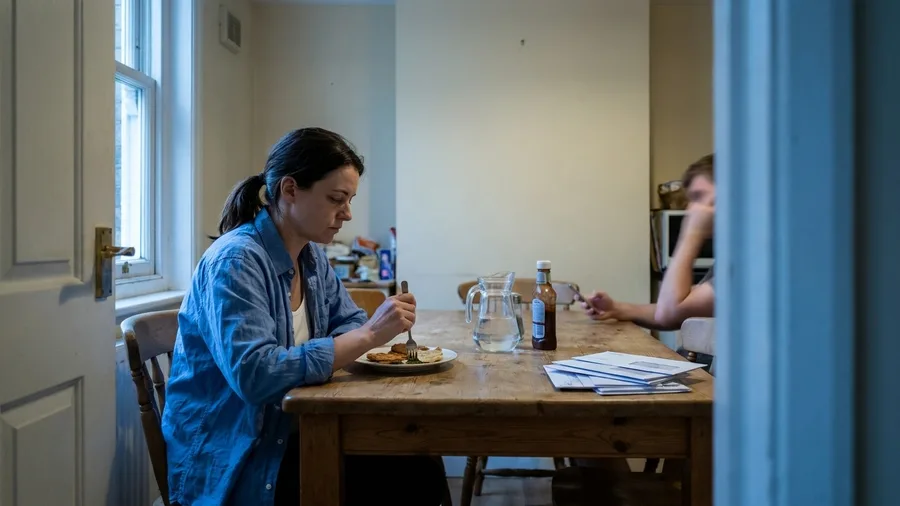
Peaceful couples can raise a hard thing and come back to calm, and that is the difference between shelter and avoidance, because privacy protects a marriage until it starts keeping topics away from the table. After a while, a comment from last month sits there untended. Nothing was said about it. It is still in the room.
Watch how the day gets discussed. If the conversation stays on groceries, the school run and whose turn the trash is, and never touches the thing that stung, you are not protecting anybody. You are walking on eggshells with the heels taken off.
Healthy quiet has a return path. One of you says the awkward thing, the other listens, and by the end of the evening the room is warm again. Stonewalling sounds different, a flat “I’m fine” that closes the door, and it stays closed.
The cost builds without a single raised voice. Fewer real exchanges, a grievance collected in silence, and eventually two people running a household very efficiently as roommates. Calm, competent, and known to no one.
The fix is small and specific. Name one avoided thing and put a time on it. “I have been avoiding the topic of your mother’s visits. Can we talk for twenty minutes on Saturday?” Not tonight, not now, not whenever you are ready. A date and a clock.
The quiet that should worry you
Count how many of these are present. More than two is a signal to act.
Contempt and loneliness can hide inside calm

A quiet marriage can be profoundly lonely, and the absence of shouting is no defense against it. When avoidance hardens, the house can still look stable from the outside while inside it nobody asks a real question, and nobody feels known.
The cold version has tells. An eye-roll when you tell a story that took a small piece of courage to tell. A shrug at your day. Separate weekends that are not discussed but simply assumed, until the two of you are running parallel lives in one address.
The warm version is also visible. Eye contact across the room. Real interest in the meeting that went badly. A repair after a sharp tone, an apology offered before the evening is over. Shared humor in the kitchen over nothing at all. Both versions are quiet. Only one is safe.
If contempt has entered, the mockery, the dismissiveness, the long indifference that greets your good news, this is the point for a therapist. Couples counseling is not a last resort. It is what you do when the quiet has gone cold.
And if the fear in the house is about your safety, that goes to an individual therapist or a safety plan, not a couples appointment.
Three traps that turn quiet into cold
Quiet is not enough without repair and warmth

Warmth, engagement and repair are what separate a quiet marriage that is working from one that has simply gone still. Strip those away and the same low-drama surface can hide two very different households: one where a hard thing gets heard, another where it gets buried until nobody bothers to mention it. The calm itself was never the deciding fact.
Two questions settle it. Can you raise something difficult and be met rather than managed? And is affection still moving between you in ordinary ways, a hand on the shoulder, a text about the day, a joke only the two of you understand? When those are present, quiet is the shape security takes.
Protect warmth and repair before anything else, because they are carrying the marriage, not decorating it. That means the morning check-in over the coffee, the apology that comes soon after a sharp remark, the small acknowledgements that tell a partner they were noticed that day. None of it is extra. Without those exchanges, a calm house is only a quiet one.
Watch what happens across repeats. If a hard thing keeps meeting contempt, stonewalling, or dread before you even bring it up, a couples therapist is the next step, and fear about your own safety calls for something different again: a safety plan and outside help, sooner rather than later. Warm quiet is worth protecting. Cold quiet is worth naming out loud.
Frequently Asked Questions
Is a quiet marriage a sign of lost passion?
Not necessarily. Quiet often means low drama, not low feeling. Passion can be present in small rituals and steady attention. The key is whether warmth and curiosity still exist.
How can I tell if we’re peaceful or just avoiding issues?
Try raising a hard topic calmly. In a healthy quiet marriage, you can name the issue and be heard. In avoidance, topics stay off-limits and conversation stays on logistics.
Do quiet couples fight less often?
They may fight less performatively—no public jabs or scorekeeping—but they still disagree. The difference is they repair in private and don’t let grievances pile up.
What if my partner seems content with silence?
Silence can feel safe to one person and empty to another. Talk about it directly: ‘I miss hearing about your day.’ Ask for one daily check-in and see how they respond.
When should we seek therapy?
If contempt, stonewalling, or fear is present, or if repair attempts consistently fail, a couples therapist can help. If safety is a concern, individual help or safety planning is the priority.
Can social media make quiet marriages feel inadequate?
Yes. Public displays can create comparison, but they’re snapshots. Judge your marriage by its private rituals—repair, humor, attention—not by what others post.
The quiet that earns its peace
quiet is a good sign when it arrives with warmth, repair and engagement, and a warning sign when it is silence standing in for safety. Those are different marriages wearing the same calm surface.
The opening worry has flipped. You are no longer asking whether your marriage is too quiet. You are asking whether the quiet is warm, and that question you can actually answer from the inside of an ordinary week.
So pick one move. In a calm moment, name the topic you have both been avoiding, or add a single daily ritual of warmth and keep it for a month. If contempt has set in, or if fear is what keeps the peace, that goes to a therapist rather than another silent evening.
Quiet was never the goal. Warm quiet is, and that is something you build on purpose, out loud, one Tuesday at a time.
Start with one repair
Pick one small warmth ritual to add this week, or name one avoided topic. That single move tells you which kind of quiet you're living in.