Livestock have no evolutionary path toward defending themselves against the people who raise them — not because captivity drained their instincts, but because of something far more deeply structural.
Evolutionary biologist Alida de Flamingh laid out the reason in a piece for The Conversation. The piece is aimed at a general audience and presents no original data, but the core logic it describes fits how evolutionary biology is broadly understood.
Most people assume farm animals are docile the way a river-smoothed stone is rounded – centuries of handling slowly taking the edges off. The mechanism, though, is more structural than that.
Farm animals are passive because every generation, the animals that pushed back were quietly taken out of the breeding pool before that trait could build. The animals never got a vote.
Humans do not just keep farm animals – they decide which ones reproduce. Any trait that might work against humans gets cut at the source, every generation, with no way for a counter-pressure to grow. The sections below show exactly how that works, and why giving it more time would not change the answer.
Whoever controls breeding controls what spreads
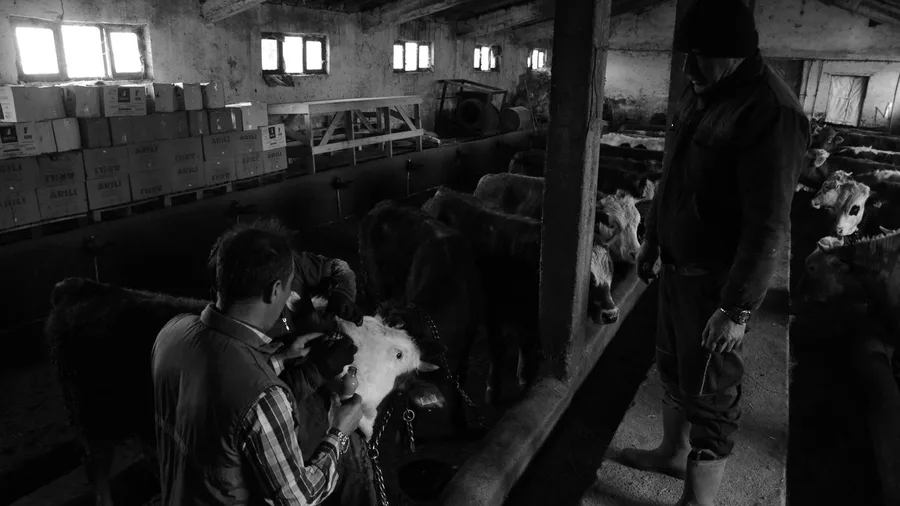
Farm animals cannot evolve against the people who keep them because those same people decide which animals get to reproduce – and that single fact closes the door on any trait that would push back.
Evolutionary biologist Alida de Flamingh makes this case in a children’s explainer published in The Conversation. It is not a research paper. There are no original measurements, no trial groups, no statistical results, and no underlying study record was reachable to check the claims against.
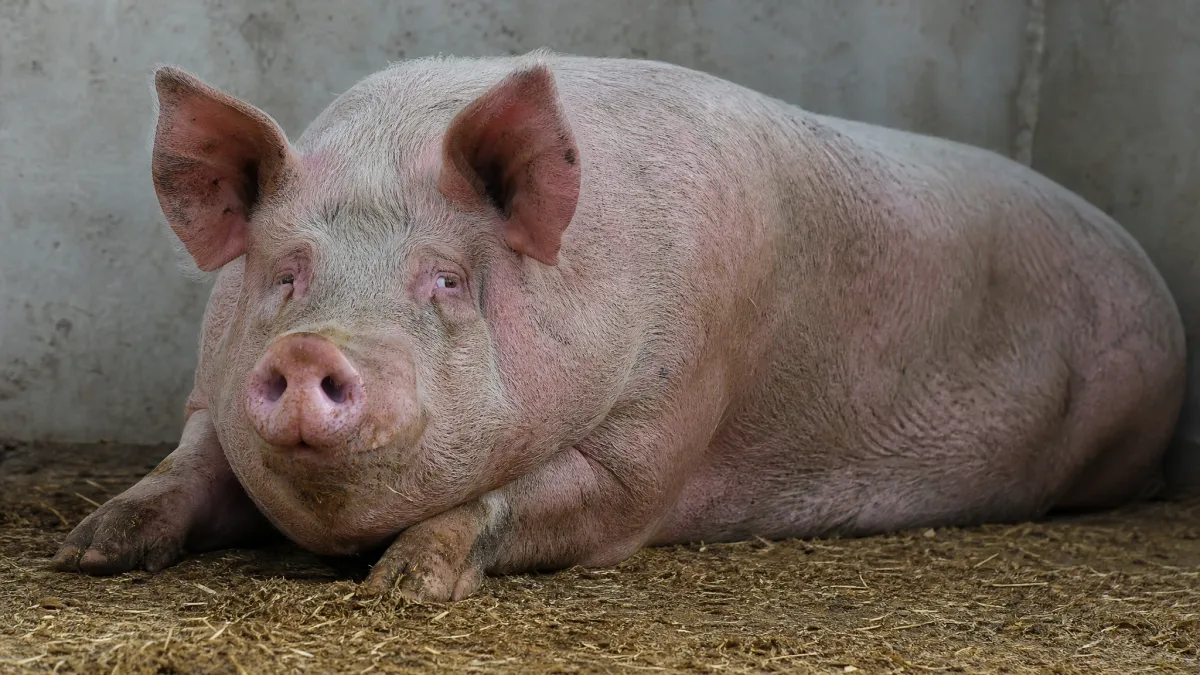
The mechanism is simple enough to follow. A farmer looks at the animals in the barn and chooses which ones breed next season. A cow that kicks, a chicken that barely lays, a pig that charges the fence – any of those animals may be left out of breeding. When they are left out, whatever made them difficult stays out of the gene pool too.
De Flamingh is direct about the conclusion: selective breeding, as the engine of domestication, is precisely what blocks farm animals from developing any adaptive resistance to the humans who control them.
That is not a statement about how tough or timid any one animal is. It is a statement about the whole population across many generations. In the wild, no single agent stands between an animal and its chance to reproduce. On a farm, one does – and that agent is the same party the animal would need to evolve against. The pressure and the gate are held by the same hand.
Wild animals can run an evolutionary arms race — farm animals cannot
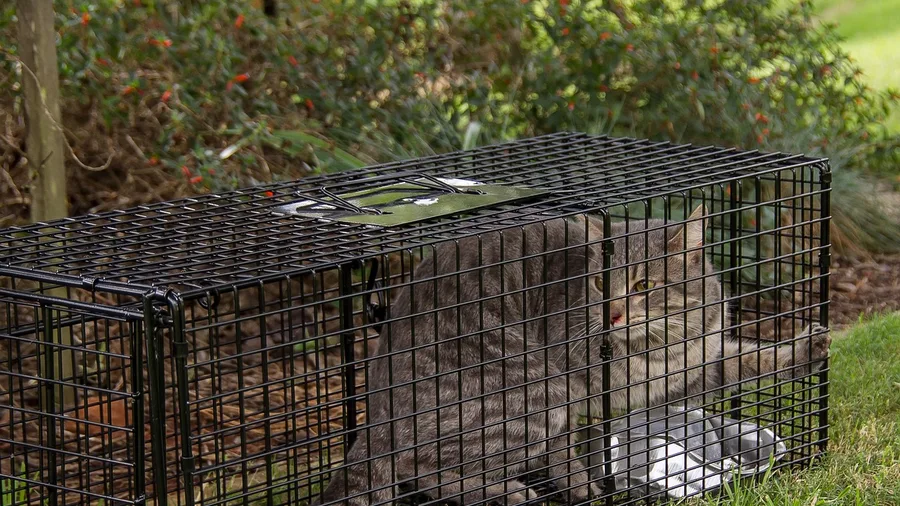
Wild animals facing human pressure can shift across generations in ways farm animals cannot, and the reason is entirely about who holds the gate to reproduction.
Natural selection is not a strategy. It is a filter. Some individuals in a population happen to carry a trait that makes them harder to catch, harder to spot, or less appealing to a hunter. Those individuals survive longer and leave more offspring. The trait becomes more common across generations – not because any animal aimed for it, but simply because the carriers were the ones still alive to breed.
Humans can apply intense pressure on wild populations – through hunting, poaching, or habitat loss – without ever controlling which survivors mate with which. A wild animal that escapes a hunter does not need anyone’s permission to reproduce. Its traits move forward on their own.
On a farm, the same agent that culls the population also decides who breeds next. That double role closes the loop. There is no gap between ‘survives’ and ‘reproduces’ that a resistant trait could slip through, because the same hand manages both sides.
De Flamingh’s observation draws a sharp line between two worlds: tame foxes bred for docility and tuskless elephants shaped by poaching pressure both show that human decisions can redirect the course of animal evolution. The foxes demonstrate what occurs when humans deliberately control who reproduces and which trait gets locked in. The elephants show what happens when human-driven mortality acts on a wild population while the gate to reproduction remains otherwise open. The gap between those two outcomes has nothing to do with animal intelligence or generation length. It comes down entirely to one question: is reproduction free, or is it managed by the very party applying the selective pressure?
⚠️ COMMON MISTAKE
Evolution is not a response to a challenge
Animals do not generate new traits because they need them. Evolution is a filter on variation that already exists. If a useful trait is not already present in the population, no amount of pressure will create it — and on a farm, even if it exists, the farmer may prevent it from spreading.
War turned tuskless elephants into survivors
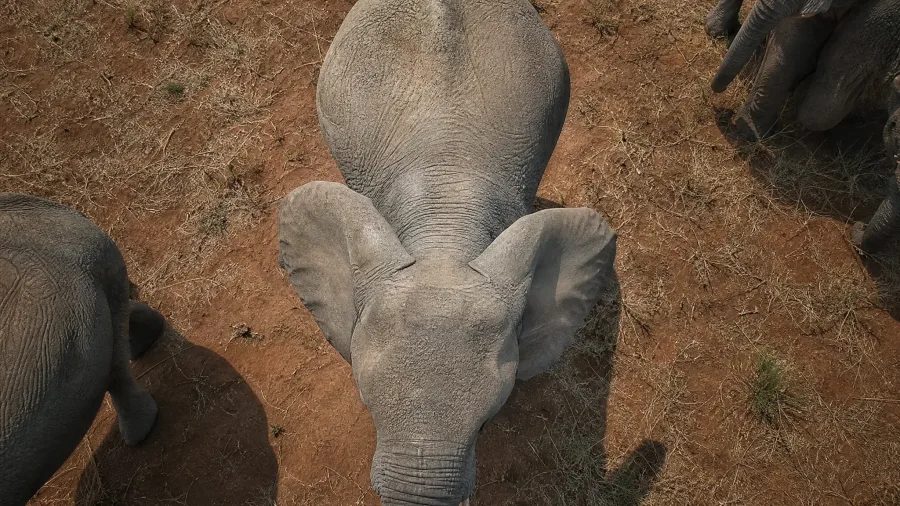
Gorongosa National Park in Mozambique offers one of the clearest real cases of humans driving change in a wild animal population – and it happened fast, under the worst possible conditions.
During the country’s civil war, poachers killed large numbers of elephants in Gorongosa for their ivory. Tusks were the target. A tusked elephant was worth killing; a tuskless one was not.
Some female African bush elephants had been born without tusks before any of this started. That trait already existed in the population. When the killing began, those tuskless females were simply passed over. They survived. They bred.
Their calves carried the same genes. Over time, tusklessness became more common across the Gorongosa population – not because any elephant changed in response to danger, but because the ones who happened to lack tusks were the ones still alive to reproduce.
No park ranger, no farmer, no outside agent decided which elephants mated with which. The gate was open. A protective trait spread on its own, which is exactly what cannot happen on a farm.
A separate team of scientists has studied ancient animal DNA to trace how domestication shaped farm animals – looking at things like coat color in goats and horses, and aggression levels and egg output in chickens. The Gorongosa story sits apart from that work. It is not about managed breeding at all. It is what selection looks like when no one is managing anything.
The Numbers Behind the Mechanism
How fast selective breeding actually reshapes a population
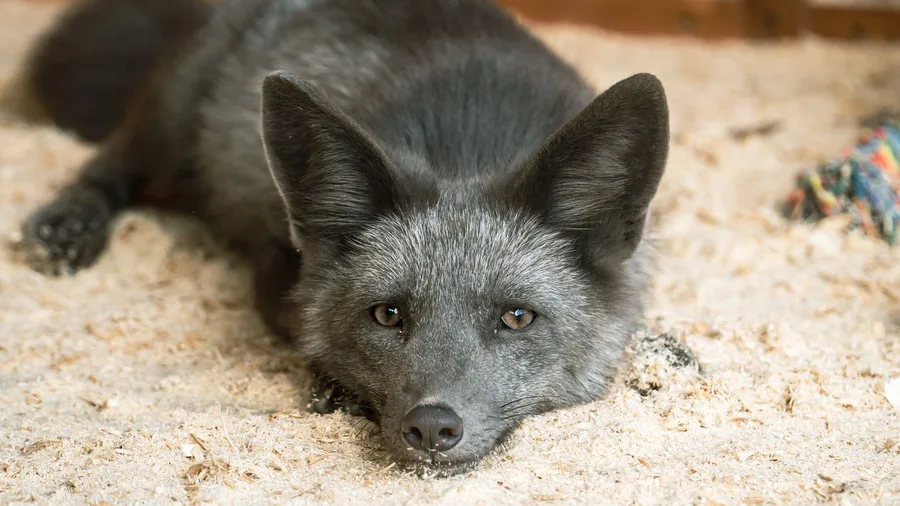
Six generations – that is all it took.
The Russian silver fox experiment, which started in 1952 and still runs today, gives the clearest clock for how fast controlled breeding works. Scientists selected foxes purely on one trait: willingness to approach humans calmly. Within six generations, those foxes were wagging their tails, licking hands, and actively seeking to be petted. That is not a long time.
The mechanism behind that speed is simple. Each generation, only the foxes showing the wanted trait got to breed. The others did not. Variation did not drift randomly in every direction – it was steered, cut down, aimed. Traits pile up fast when every generation runs through the same filter.
Dogs, which evolutionary biologists describe as the first animals humans domesticated, are the long version of the same story. Every tail-wag a dog owner sees today is a behaviour that accumulated through exactly this process, applied across far more generations than six, starting from wolves.
The filter works in any direction a breeder points it. Ancient animal DNA shows that selective breeding shifted coat colours in goats and horses, dialled aggression down in chickens, and pushed egg output up – whichever trait a farmer kept selecting for moved forward, and whichever trait got excluded faded.
That is the answer to the idea that farm animals might resist humans given enough time. Time is not the missing ingredient. The Russian foxes went from wild to hand-tame in six generations. If breeding control can install friendliness that quickly, it can remove resistance just as fast. More generations would not reverse that; they would only deepen it, as long as the same hand holds the gate.
The elephants did not decide to lose their tusks
Tuskless elephants in Gorongosa did not sense the danger and grow tuskless in response.
The trait was already there. Before poachers arrived, some female elephants in the population carried genes linked to tusklessness – they were simply a minority, less conspicuous, less studied. When heavy poaching targeted tusked elephants for ivory, it was not generating anything new. It was removing one group and leaving another. The survivors bred. Their offspring were more likely to carry the same genes. Across generations, that is how a rare trait becomes common – not through invention, but through the death of its alternative.
The same thing happens on a farm, running in reverse. An aggressive cow does not sense that aggression will cost it its place in the breeding pool and suppress the behaviour. The farmer simply does not choose that cow to breed. The aggression does not get passed on. The cow is not a participant in the process at all.
This matters because the word ‘adapt’ carries a hidden implication. It sounds like the animal noticed a problem and responded. Evolution does not work that way. It is a filter on what already exists in a population – not a mechanism that builds new traits on demand.
For the headline question, that distinction is everything. Farm animals are not holding back some latent ability to resist humans. Managed breeding removes any trait that might head in that direction, generation after generation, without the animals contributing anything to the outcome at all.
Wild Population vs. Farm Population: Who Holds the Gate
Wild animals under human pressure
- Humans apply pressure but do not control breeding
- Survivors reproduce freely — useful traits compound
- Tuskless Gorongosa elephants spread their genes unimpeded
- No single agent closes the loop between pressure and reproduction
- Protective traits can accumulate across generations
Farm animals under selective breeding
- Farmers control both the pressure and the breeding gate
- Aggressive or low-producing animals excluded from breeding
- Any protective trait dies with the individual who carries it
- The same agent that culls also decides who breeds next
- Resistance has no route into the next generation
What this source can and cannot tell you
The logic here is sound, but the source behind it has real limits a reader should know about.
Every claim in this article traces back to a single children’s explainer by evolutionary biologist Alida de Flamingh, published in The Conversation. It is not a research paper. It presents no raw data, no sample sizes, and no statistics. When no study record was reachable to check the specific claims, that left the single news page as the only foundation.
Some details are thin on the ground. The 1952 start date for the fox experiment is given. But for the Gorongosa elephant work and the ancient-DNA research on domestic animals, there are no journal names, no paper titles, no authors beyond de Flamingh herself. A reader who wants to go deeper has no signpost to follow.
What does that mean for how much to trust the explanation? The core ideas – that selective breeding filters a population one generation at a time, that natural selection works on traits already present rather than building new ones from scratch – match how evolutionary biology is broadly taught. That part is solid ground.
The specific framings and examples, though, rest entirely on what one accessible page chose to include. A children’s explainer is built to be clear and readable, not to lay out evidence a reader can weigh independently. That is a legitimate way to write about science, but it is a different thing from a citable source.
Hold the explanation at that level: the underlying logic is well-grounded, but the specific details cannot be verified from here.
The question selective breeding still leaves open
The mechanism described here is clear about one thing – but it goes quiet when two forces pull against each other at once. Suppose a cow developed a trait that pushed her milk output higher and made her more aggressive toward farm workers. The farmer wants the extra milk. The farmer does not want the aggression. Both pressures are real, and the breeding filter would have to serve both at the same time. Which one wins, and across how many generations?
That question has no settled answer.
The Gorongosa elephants leave a different loose thread. Poaching pressure has eased in the park since Mozambique’s civil war ended. But that does not mean tusked elephants will return to their earlier numbers. Tusklessness may now be so embedded in the gene pool that the population stays shifted even without hunters driving the selection. Or the balance might slowly tip back. Either way, the outcome is not known.
Both puzzles point to the same gap. The filter model – farmers control the gate, so only approved traits pass through – works cleanly when one pressure runs in one direction. The moment two pressures point different ways, the model stops giving answers. That is not a flaw in the explanation; it is just where the clean version of the story runs out and the harder questions begin.
The headline has a clear structural answer. The edge cases where that structure meets competing pressures do not.
Frequently Asked Questions
Can farm animals ever evolve to resist humans given enough time?
Time alone would not change the outcome. The problem is not how fast evolution works but who controls breeding. As long as farmers decide which animals have babies, any trait that might count as resistance gets removed before it can build up across many animal lifetimes. More animal lifetimes under the same system just produce more of the same result.
Why did the Gorongosa elephants (large tusked animals) develop tusklessness (being born without tusks) but farm animals cannot do the same thing?
In Gorongosa, no one controlled which elephants mated with which — survivors bred freely, so the no-tusk trait spread through the group on its own. On a farm, the farmer stands between each animal and having babies. A farm animal carrying a useful protective trait would need to be picked to breed for that trait to spread, and a farmer has no reason to pick something that works against them.
How quickly can controlled breeding change an animal population?
The Russian silver fox experiment showed visible changes in behavior within six animal lifetimes of picking for tameness alone — foxes began tail-wagging, hand-licking, and seeking contact with people. The experiment started in 1952 and continues today. Six animal lifetimes is fast on a human timescale for some species, which is partly why taming wild animals into farm animals has worked so well throughout history.
Did the elephants in Gorongosa develop tusklessness as a response to poaching?
No. The no-tusk trait already existed in some animals before poaching began. Poaching did not create tuskless elephants — it killed tusked ones at higher rates, leaving tuskless animals to have more babies. The trait spread because those animals survived, not because any elephant grew a new feature in response to the threat.
Is the science behind farm animal taming well established?
The broad mechanisms — controlled breeding acting as a filter across many animal lifetimes, natural selection acting on existing variation — match mainstream evolutionary biology. However, the specific article this explanation draws on is a children’s explainer, not a checked scientific study. No original data or primary sources were presented, and no underlying study record was reachable for independent verification.
Were dogs always tamed the way farm animals are today?
Dogs are described as the first animals humans tamed, originally coming from wolves. The process that produced the familiar behaviors people observe in dogs today — seeking contact, responding to human signals — is the same filtering mechanism at work in the fox experiment: animals with wanted traits had babies, others did not, and the traits built up across many animal lifetimes.
The Trait That Would Pull in Both Directions
Humans do not control farm animal evolution by winning fights with individual animals. They control it by holding the gate to reproduction. Every generation, traits that could build into resistance are removed before they can add up. That stays true as long as the same hand holds the gate.
The passivity of farm animals is not a leftover from wild spirit being worn down. It is the live, ongoing output of a filter that has been running for generations – in measurable form since the fox experiment began in 1952, and far longer for animals like dogs, which descend from wolves.
what happens when one trait does two things at once? If a chicken became both a higher egg producer and harder to handle – genuinely more valuable and less manageable in the same body – which pressure would a farmer act on across breeding cycles, and how many generations before one wins out over the other?
Sources
- Why haven’t farm animals evolved against humans? A biologist explains why there won’t be a chicken uprising anytime soon – theconversation.com (news report) · 2026-10-19