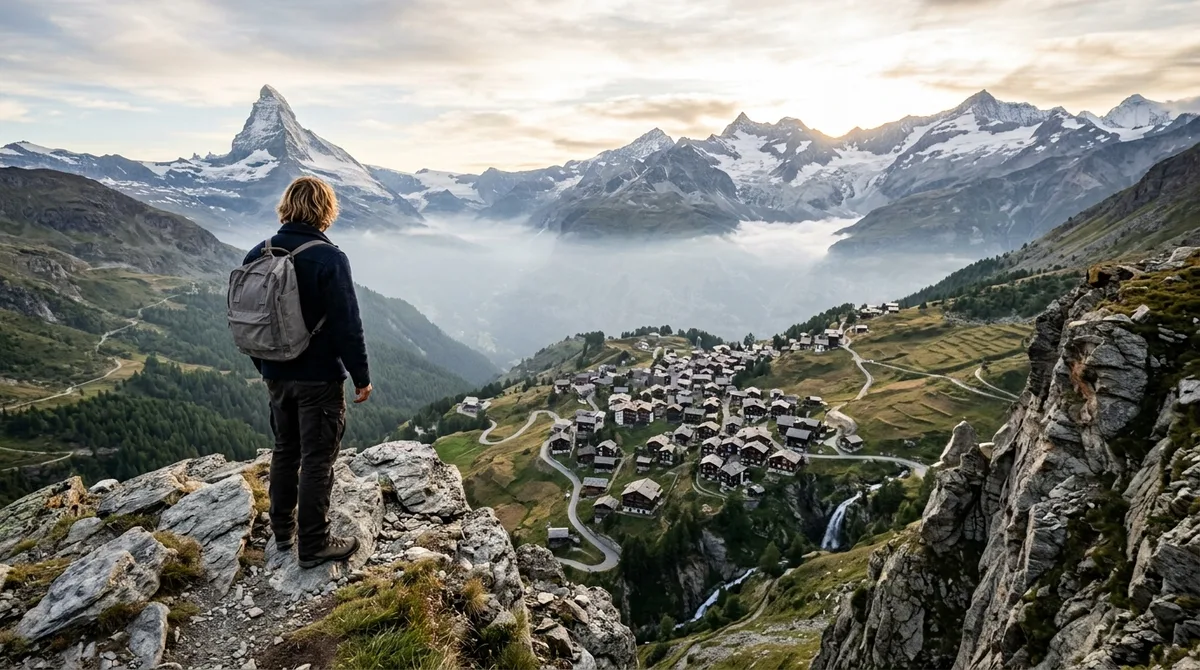
Switzerland’s strict federal heritage laws protect hundreds of vernacular alpine settlements from suburban sprawl, but true historical isolation is increasingly rare.
You can book a standard resort stay and ride crowded cable cars all week, or you can venture into car-free enclaves where agropastoral life persists.
The journey covers centuries of timber architecture, steep valley trails, and uncommercialized mountain passes.
Snorkel through alpine lakes, walk ancient irrigation channels, sample wood-fired polenta, and sleep in 400-year-old Walser grain stores.
This guide gives you the exact routes, honest trade-offs, and timing tricks to experience the real alpine pulse without getting trapped in tourist queues.
Quick Tips Before You Start
Transport Pass
Buy a Swiss Travel Pass to cover trains, post-buses, and boat transfers without buying individual tickets.
Cash vs Cards
Always carry Swiss Francs in cash for remote alpine dairies and small family-run bakeries.
Footwear
Pack sturdy lug-soled boots because historic cobblestones and steep village staircases get slick in rain.
Seasonality
Target June or September to find mountain passes fully open while avoiding peak July crowds.
How Far Is the Drive from Zurich to the Valais Alps?
The drive to the core alpine heritage zone takes roughly three hours along major motorways before narrowing into winding mountain passes.
You will need to account for car-train shuttles through the Furka or Lötschberg tunnels if you travel during winter months.
Always check pass opening schedules before setting out, as heavy snow can close high-altitude routes abruptly even in late spring.
Do You Need a Car or Can You Rely on Trains?
Many of the best historic villages enforce strict car-free policies that require you to park in multi-story garages miles away.
You should take the regional PostBus instead, which climbs sheer cliff edges with precision timing and drops you directly in the village square.
Renting a car offers flexibility for remote valleys like Avers, but trains and buses provide a far more relaxed alpine transit experience.
The Alpine Heritage Route Map
Save this route map before you go to navigate winding mountain passes and car-free village parking hubs.
At a Glance
1. Saas-Fee: The Glacier Amphitheater
Crowds swarm the main commercial plaza every single afternoon during peak ski season.
Despite deep popularity and strict car-free rules, the perimeter electric taxis and massive ski tunnels manage foot traffic efficiently enough to preserve the quiet village core.
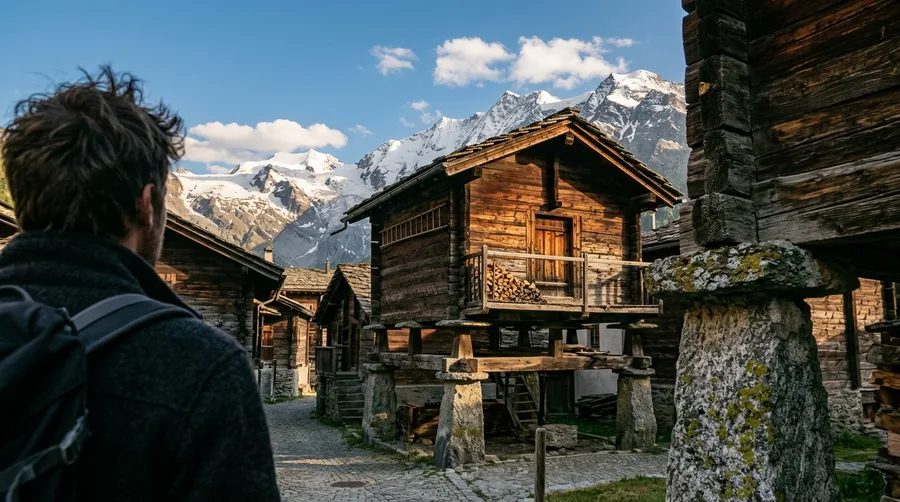
You will find 400-year-old traditional Walser barns raised on stone stilts to deter mice clustered tightly in the oldest quarters.
Skip the main commercial drag and head straight to the older quarter of Hinterdorf for authentic timber grain stores.
Another common pitfall is rushing the walk; take your time exploring the narrow alleys.
💡 Tip: Walk the Hinterdorf trail at 7 AM before day-trippers arrive from Visp.
⚠️ COMMON MISTAKE
Avoid Peak Midday Parking Fails
Do not attempt to park in the main village multi-story structures after 10 AM during winter weekends. Use the lower valley parking and take the shuttle bus instead.
2. Soglio: The Sun-Drenched Terrace
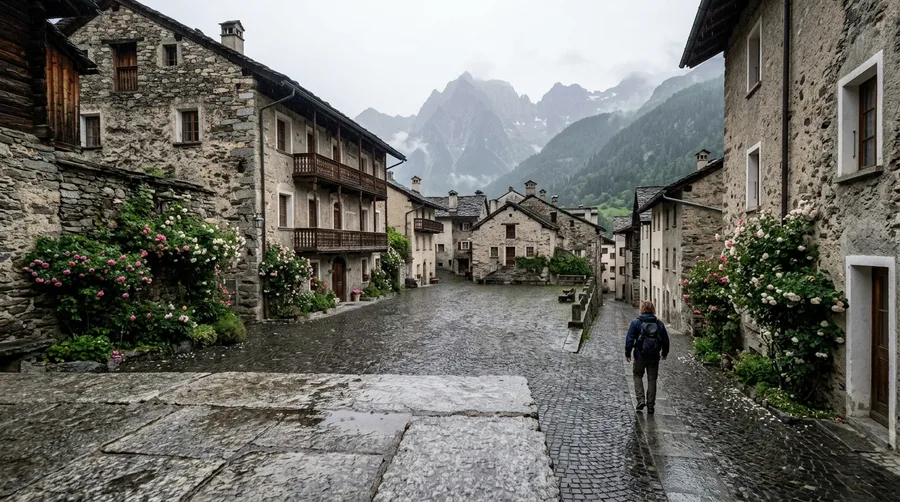
Chestnut smoke fills the narrow stone alleys just as the morning light hits the Palazzo Salis gardens.
Arrive before 8:30 AM or after 6:00 PM when day-trippers from Italy clear out entirely.
The afternoon sun illuminates centuries-old rose beds against weathered granite facades in the Bregaglia Valley.
Silence returns to the piazza the moment the last tour van departs down the switchbacks.
3. Zermatt’s Hinterdorf: The Hidden Timber Core
Expect to pay upwards of CHF 350 to 500 per night for a historic chalet stay in this upscale zone.
You must also budget for the mandatory CHF 160 round-trip Gornergrat mountain railway ticket.
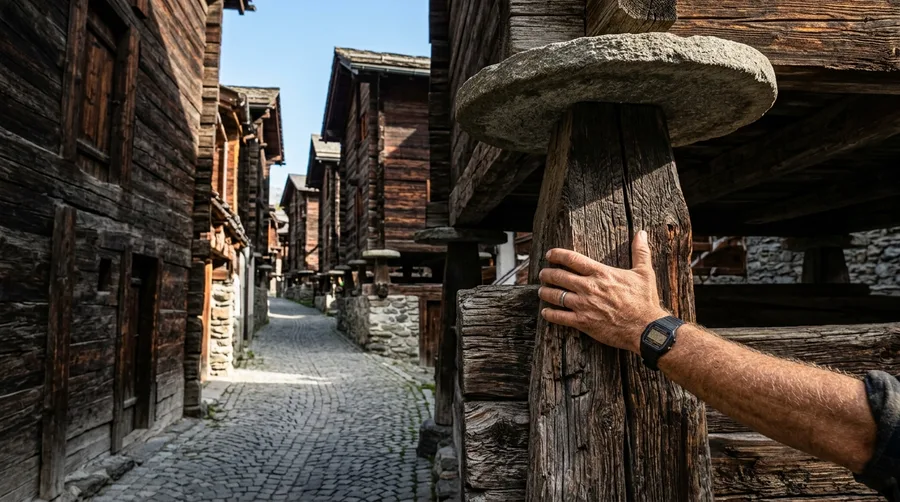
Tucked right behind the bustling commercial spine lies Hinterdorfstrasse, a cluster of 30 authentic 16th-to-18th-century Valais barns and storehouses.
Engineers placed flat stone discs called Tatzen atop wooden posts to prevent rodents from climbing into grain supplies.
Book a guided architectural walking tour through the local heritage foundation to access locked interiors of ancient granaries.
This deep historical immersion justifies its steep price tag through absolute structural preservation.
Zermatt Hinterdorf Metrics
Key figures behind the historic timber quarter
4. Grimentz: The Geranium-Draped Valais Gem
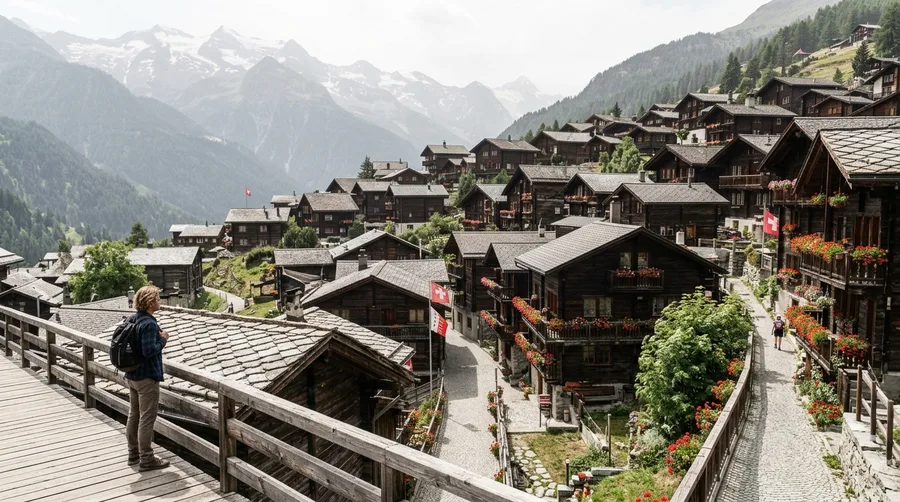
Tightly packed sun-baked wooden chalets famous for cascading red geraniums define this remarkably preserved Valais canyon village.
Well-paved central pathways, free local post-bus transit connections, and gentle meadow walks make the settlement highly suitable for families.
The village rests on a steep slope with uneven cobblestones and historic staircases, making it genuinely difficult for wheelchair users or strollers without rugged wheels.
You can visit the historic Grand Chalet built in 1550 and view the community bread-baking oven still fired up for visitors during summer festivals.
Grimentz Exploration Checklist
-
Inspect stroller wheel durability Cobblestones require rugged pneumatic tires.
-
Check PostBus schedules Departures run hourly toward Zinal.
-
Reserve Grand Chalet entry Book baking-day tours 24 hours in advance.
5. Guarda: The Engadin Sgraffito Enclave
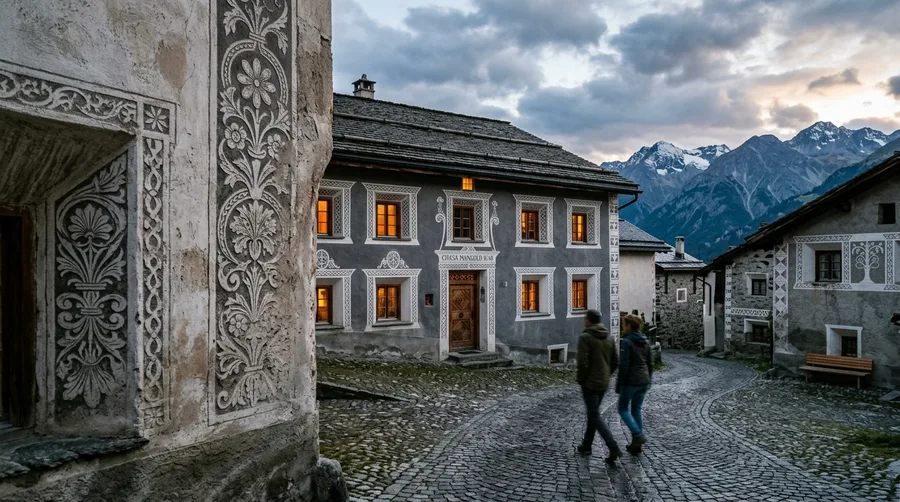
Step off the post-bus into the sharp alpine air of the Lower Engadin, where the silence is broken only by the distant chime of church bells and the crunch of gravel underfoot.
Guarda is intensely residential and traditional; restaurants and shops close early, and nightlife is virtually nonexistent.
Artisans scraped away white plaster to reveal dark gray underlayers of geometric and floral motifs using the intricate 17th-century sgraffito facade technique.
Base your visit around the local tradition of speaking Rumantsch, and respect the strict afternoon quiet hours enforced by residents.
🌱 GROWING TIP
Mastering Sgraffito Photography
Shoot Engadin facades during overcast mid-mornings to eliminate harsh shadows across the layered plaster artwork.
6. Morcote: The Lakeside Sub-Alpine Time Capsule
How do you experience a premier Swiss historical site without spending a single franc on transit passes or entry tickets?
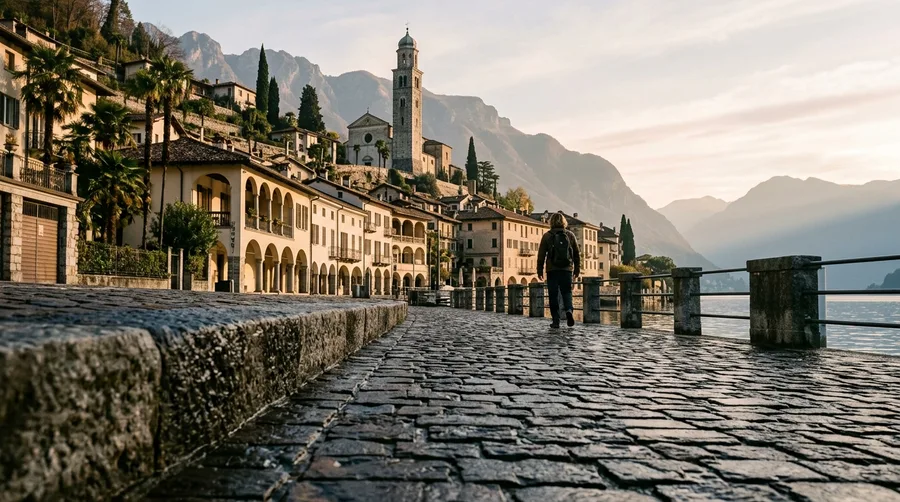
You wander the arcaded patrician houses and subtropical lake-facing promenades of Morcote on Lake Lugano entirely on foot.
Climbing the 400 monumental stone steps costs nothing and leads you directly to the hilltop Church of Santa Maria del Sasso and its historic monumental cemetery.
You can reach the village via the complimentary Ticino Ticket provided by regional hotels, eliminating local transport costs entirely.
Morcote Visitor Lanes
- Lakeside Arcades — Free strolls along the historic merchant arches
- 400 Stone Steps — Steep physical climb requiring good cardio
- Peak Ferry Docks — Avoid midday crowds during peak summer weekends
7. Müstair: The Carolingian Sanctuary
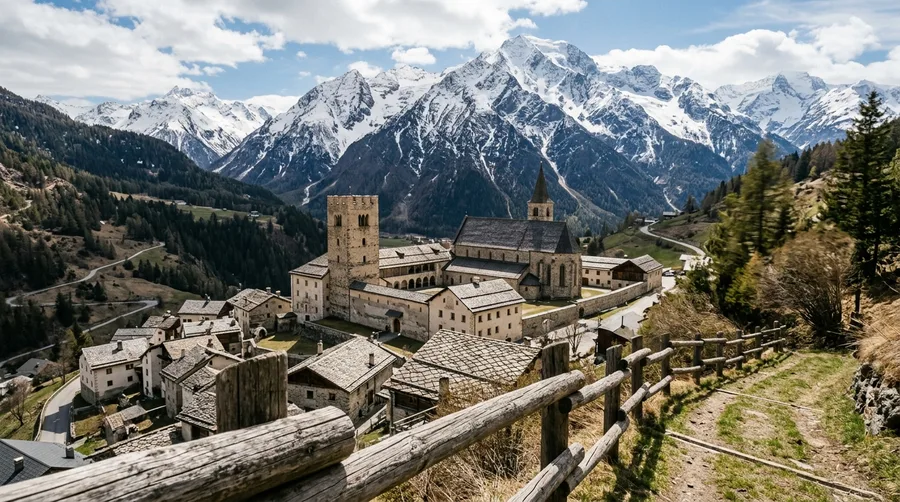
Stand at the eastern ridge above the Benedictine Convent of St. John at 7:00 AM for the single most historically charged architectural photograph in the Swiss Alps.
Walk 15 minutes up the agricultural track behind the monastery toward Plantout for an elevated framing of the UNESCO-listed monastic rooftops against the Ortler Alps.
The ancient complex preserves the world’s largest sequence of 8th-century Carolingian frescoes.
Morning light hits the monastery’s defensive tower while the surrounding valley remains wrapped in deep blue shadow.
8. Simplon Village: The Napoleonic Mountain Pass Stop
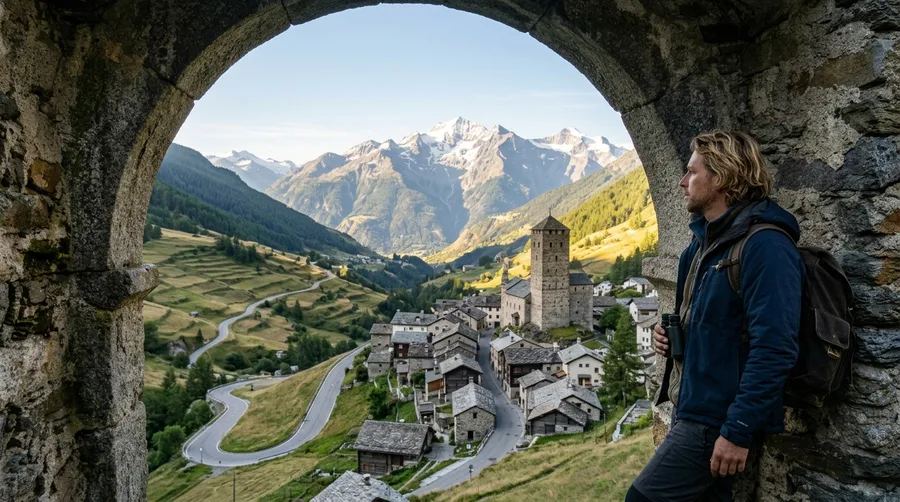
Zermatt and Saas-Fee charge exorbitant prices for alpine isolation, but Simplon Village offers rugged, uncommercialized stone architecture built along Napoleon’s historic trans-alpine military road.
The Alter Stockalperturm, a massive 17th-century fortress-style trading post built by a salt baron, stands unexpectedly amidst quiet alpine pastures.
Free roadside parking, inexpensive local bakeries serving regional rye bread, and zero tourist crowds even in peak summer make this an ideal budget stop.
Navigate the dramatic hairpin turns of the Simplon Pass road carefully, and stop safely at the stone eagle monument viewpoint to catch your breath.
9. Evolène: The Valley of Traditions
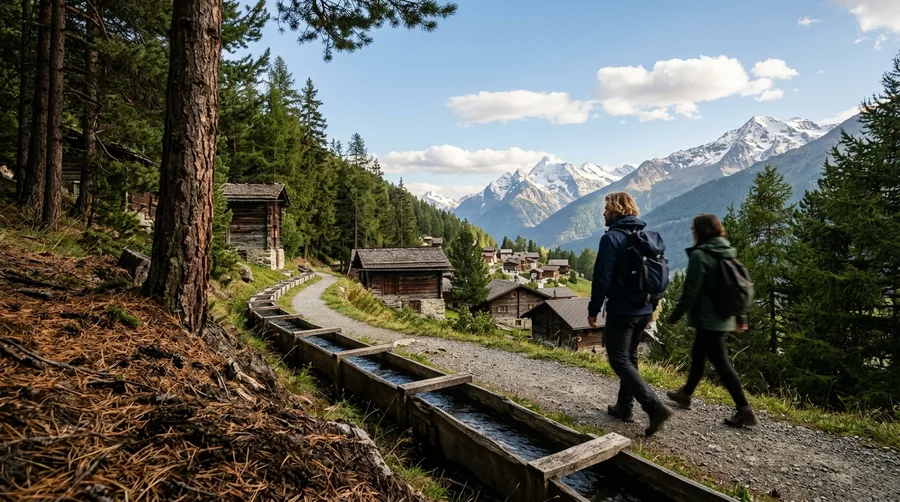
Hike the 6.5-kilometer heritage trail connecting Evolène to the abandoned hamlet of Lannaz in exactly two hours of moderate walking.
Traverse ancient irrigation channels known as bisses and pine-needle forest paths while observing untouched log houses darkened by centuries of sun.
Evolène is one of the few places where locals still regularly wear traditional pleated regional costumes and speak Arpitan patois.
Rent traditional snowshoes or hiking poles at the village cooperative to tackle the incline safely.
10. Bosco Gurin: The Walser Linguistic Island
Do not attempt to drive here after heavy snowfall without proper winter tires or chains, as the single access road cuts through steep, avalanche-prone gorges.
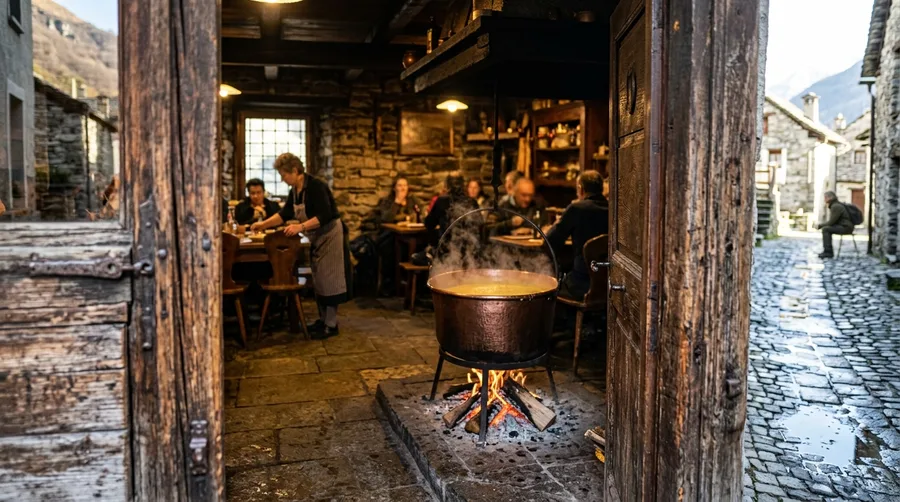
Order Gurin Walser Polenta, slow-cooked over an open wood fire in copper cauldrons, priced at roughly CHF 22 at local mountain inns.
Bosco Gurin is Ticino’s only German-speaking village, settled by Walser migrants in 1253 who preserved their distinct Alemannic dialect and timber blockhouse architecture.
Pair your polenta with local alpine cheese and dried mountain meats cured in drafty attic storehouses.
⚠️ COMMON MISTAKE
Winter Driving Hazard Warning
Never drive into Bosco Gurin without checking avalanche control status. PostBus drivers carry mandatory emergency clearance radios for good reason.
11. Val Müstair: The Dark Sky Sanctuary
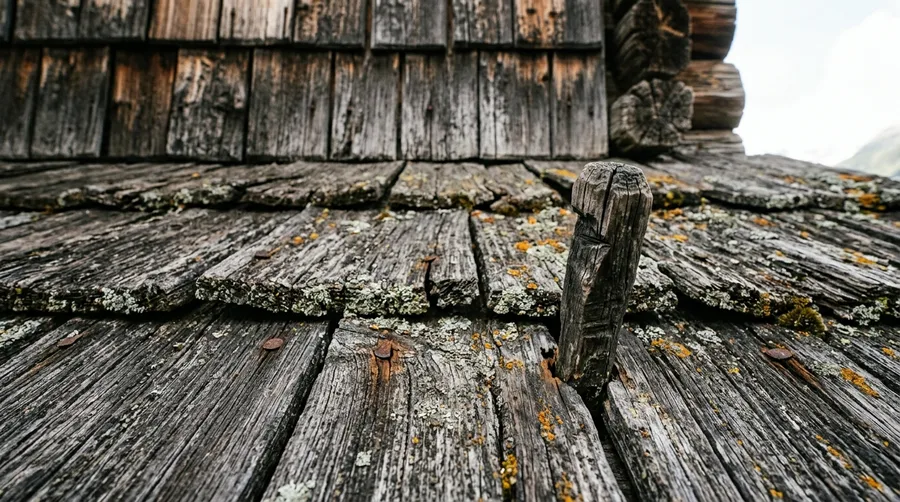
How did a remote valley on the Italian border spend centuries resisting feudal landlords to preserve its unique linguistic and agricultural autonomy?
Local farmers united during the 15th-century peasant revolts against the Bishop of Chur to purchase their own freedom and establish communal land rights.
This fierce independence protected the clustered timber architecture of Tschierv and Lü from modern suburban sprawl.
Visit the local mill in Tschierv to see centuries-old water-powered grain milling still operational today.
Val Müstair Myths vs Facts
12. Val di Lei & Avers: The Edge of Isolation
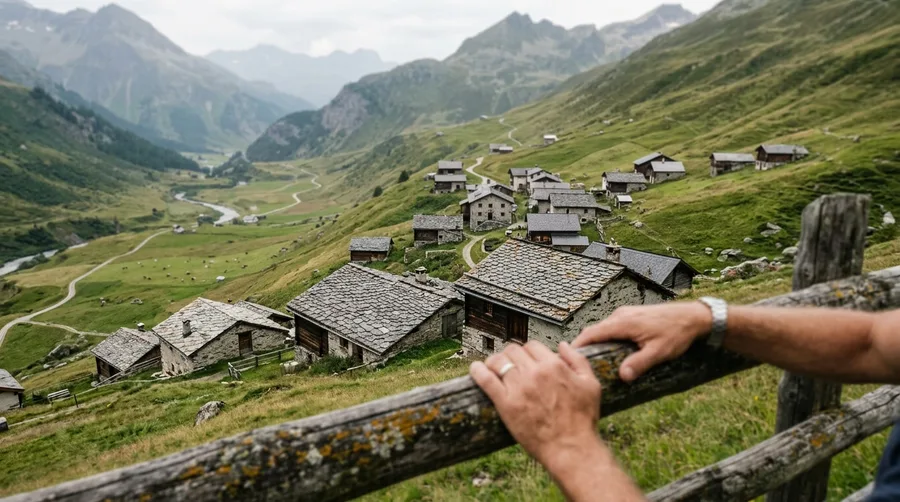
Taste glacier-fed spring water from a hollowed wooden trough, listen to the wind howling across treeless high-plateau pastures, and note the absolute absence of cellular service.
Juf is Europe’s highest permanently inhabited village at 2,126 meters, where only a handful of families reside year-round.
Tourists flock to St. Moritz 45 minutes away, but local Swiss naturalists head up the Avers Valley to observe ibex herds and walk high-altitude mule tracks.
Bring cash, as card readers fail frequently in these high mountain passes, and check the PostBus timetable meticulously since departures are limited to twice daily.
13. Speicher: The Appenzell Timber Masterpiece
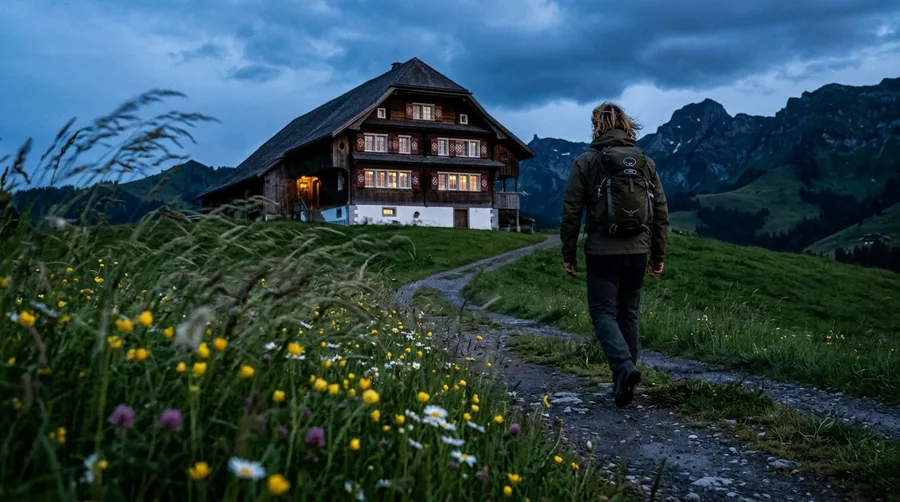
Base yourself in Speicher to experience the rolling green hills of Appenzellerland alongside reliable sightings of wild alpine ibex and soaring golden eagles.
You have a realistic 70% chance of spotting chamois and alpine marmots along the upland ridge trails of Vögelsegg, accessible via the historic rack railway.
Magnificent 18th-century timber houses with ornamental painted shutters and wide gables line the village center, built during the height of the Appenzell linen-weaving boom.
Hike early in the morning along the Egg-Stand ridge when wildlife descends to graze on lower meadow grasses.
Frequently Asked Questions
Do I need a car to visit these Swiss mountain villages?
No car is necessary. Switzerland’s PostBus and rail network reaches nearly all of these locations, and settlements like Zermatt and Saas-Fee enforce strict car-free policies.
When is the best time of year to visit for historical photography without crowds?
Late May to mid-June and September to October offer ideal morning lighting, open alpine passes, and minimal tourist congestion across the valleys.
Are credit cards accepted in these remote alpine villages?
Major hotels accept cards, but smaller bakery stalls, mountain dairy huts, and historic museums operate strictly on cash or regional mobile payment apps like Twint.
Can I drink the water from public village fountains?
Yes. Unless explicitly marked with a warning sign, all historic stone fountains in Swiss mountain villages flow with pristine, drinkable alpine spring water.
How do I handle language barriers in linguistic enclaves like Val Müstair or Bosco Gurin?
Standard German is universally understood across all cantons, but learning basic greetings in Rumantsch or Italian shows vital respect to local residents.
Beyond the Postcard: Finding the Real Alpine Pulse
Switzerland’s true charm lies not in its international luxury hubs, but in these protected micro-communities where isolation became a tool for architectural preservation.
Travel slowly, respect local quiet hours, and support community-run cooperatives to ensure these time-locked alpine sanctuaries survive for generations to come.