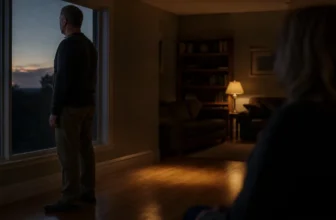
Three hours. That is roughly how long a bad exchange lasts now, where it once ran for three days. The difference is not that you have gone soft or stopped caring. It is that the recovery got faster, and nobody handed you a certificate for it.
Most people arrive at this question convinced the opposite is true. A flat email from a colleague ruined a whole evening, a deadline slipped past you, and you needed to ask for help sooner than you wanted to. The old scorecard reads all of that as decline, because it only ever counted visible strain as proof of coping.
The evidence tends to run the other way. Arguments that used to cost a week now cost an afternoon. Apologies come without a ledger attached. Small annoyances get picked up and put down instead of filed as exhibits. Being corrected stings for a minute and then releases you.
None of that is a personality transplant. Emotional aging looks like lower friction and faster repair far more often than it looks like more control. Pick the one sign below you recognise without effort. Then ask someone close to you which of these they have noticed in you, and let their answer stand in place of your own grade.
Quick Tips Before You Start
Time the repair, not the fight
Notice how long a rift lasts, not how often you argue. Fewer fights is not the same as faster repair.
Keep no receipts
A real apology names the thing that happened and then stops. The moment it lists concessions, it is a negotiation.
Treat envy as data
Write down the exact thing you envy — the day off, the book, the nerve — and make one small move toward it.
Check the sleep
If a flat email no longer ruins your evening, that is not numbness. That is your baseline holding.
One outside witness
Ask one person who knows you which of these they have noticed. A solo grade is the old scorecard playing again.
Friction and repair
1. You repair a rift in hours, not weeks

You and your partner have a sharp exchange at the kitchen counter on Thursday evening, and by Friday morning one of you sends a message: that went badly, can we talk.
The old version of this took days. You replayed the argument on the drive to work, drafted a rebuttal you never sent, waited for the other person to move first, and by Sunday the disagreement had hardened into a story about the two of you. The repair now starts before that story can set. The message names what happened, the tone or the missed commitment, rather than smoothing it into whatever and moving on.
Researchers who study close relationships keep finding the same thing: how quickly a couple gets back to each other after a disagreement predicts more than how often they disagree. Distance and slow recovery are what wear a bond down, not the argument itself.
So the question underneath this is fair, and the answer is usually the second thing. Avoidance leaves the issue unnamed and lets it gather. A same-day check-in does the opposite, because the sharp tone still gets said out loud and the missed commitment still gets acknowledged. You have simply stopped believing the point matters more than the relationship. If a cooling-off week used to feel necessary and hours now feel like enough, the friction has shrunk where it once cost you a whole week.
💡 Tip: If the check-in arrives before the other person has finished being angry, you have found the sign. The issue still gets named; only the three-day replay is gone.
Your Repair Score — At a Glance
⏳ Average repair time
Same day
🧾 Apologies kept as receipts
None
📁 Old grievances reopened
Rarely
🤲 Help requested
Early
🎭 Auditioning for approval
Rarely
The pattern that matters
Every field measures lower friction, not higher achievement.
2. You apologize first and mean it, without scorekeeping

For most people in a relationship that is safe, it is the second.
The old arithmetic ran in the background: who apologized last, who gave in the time before that, who had been right. Every apology got entered into the ledger, and going first felt like losing a point. The newer version is quieter. You say I was wrong, or I shouldn’t have said it that way, and the sentence costs less than protecting the record. No tally gets kept, because the tally was never the thing worth keeping.
There is a test that separates repair from appeasement. A real apology does not arrive with a but you attached, and it does not come with a receipt or wait for matching contrition from the other side. It stands on its own and then the evening continues. If yours keeps a hook in it, waiting to pull the other person in, that is the old ledger with new words.
What it buys over months is a shorter distance between the two of you and no backlog of unpaid debts. What it spends is the small pleasure of being right, which tends to be cheaper than it felt. One caveat sits underneath all of this: in a relationship that is not safe, apologizing first can be a habit of keeping the peace rather than repair, and that is a different thing. Where the ground is steady, going first is what security looks like from the outside.
💡 Tip: This does not apply to relationships where you are unsafe. If apologizing first is a habit of appeasement rather than repair, that is a different pattern and worth talking over with someone who can see it clearly.
Friction and repair
A disagreement happens, and by the evening one of you has put it back on the table instead of letting it age.
The older pattern ran for days. You rehearsed the argument on the way to work, drafted replies you never sent, waited for the other person to come to you, and by the third day the argument had turned into a case about whether the relationship worked. Now the check-in comes first: a text, a call, a sentence that says that went badly, can we talk. The specific thing gets named, the sharp tone or the missed commitment, rather than disappearing into a vague whatever that means neither of you has to look at it.
This is where quick repair and papering over part company. Papering over skips the naming and hopes the feeling fades. Quick repair keeps the naming and drops the punishment. Trust in the relationship is doing the work, because you are betting the conversation can survive the topic.
People who once needed a full week to cool off find a few hours enough, and that is not avoidance, since the issue still gets said out loud. It is reduced friction, not fewer conflicts. The arguments still come; the repair time has simply shrunk from days to hours.
3. Small annoyances stay small instead of becoming evidence

The socks get picked up, the late reply gets answered, and nothing is filed. That quiet is easy to mistake for giving up, which is why people who have actually stopped keeping a list can worry they have stopped caring.
The old version of the same evening charged interest. A sock on the floor, a text that came three hours late with no explanation – each one went into a private folder of proof that this person did not really care, and the folder was reopened at the next small slight, then the next, until a sock could be produced as evidence in an argument about the whole relationship.
What changed is where the annoyance stops. It gets said once – “the socks on the floor get to me, just put them in the basket” – and then it is done; it does not get stored. That is not the same as swallowing something that matters, because a repeated hurt or a boundary that keeps getting crossed still gets named, and named plainly. Small is not the same as unimportant. It only means small.
⚠️ COMMON MISTAKE
Letting go is not amnesia
Real letting go names the thing once and moves on. If you have said nothing and felt resentful for weeks, that is not letting go — that is storing up a receipt. Say the sentence early, while the sock is still just a sock.
4. You can be wrong out loud without crumbling

The standard advice is to stop caring what people think, as if correction only stings for people who are insecure. That is backwards. The sting tracks how much of your worth you have parked in being right, and people who never cared about competence rarely flinch at all.
Picture the meeting. Someone points out that the figure on slide four is wrong, the figure you checked twice the night before. The old response is physical: heat in the face, a rush of words, and a three-day replay at odd hours – the meeting again, the correction again, a new version where you got it right.
The available sentence now is shorter. “You’re right, I got that wrong” – and then the slide gets fixed and the meeting keeps going. No collapse, no overnight audit of your whole character.
This is not indifference. Preparation still happens, competence still matters, the figure still gets checked twice. The difference is that an error no longer proves a defect; it proves tiredness, or a stale source, or a handoff that dropped a number – and all three get attended to.
People raised to be the reliable one, the oldest child, the student praised for never making mistakes, tend to feel this shift first, because correction used to arrive as a demotion. Now it arrives as a note.
That is the scorecard moving. It used to charge your worth for every error. Now it charges attention, and the attention runs out in about a minute.
💡 Tip: Notice the state of your body right after being corrected. A hot face and a racing mind mean the old scorecard is still charging interest. A flat "Got it, I'll fix that" means it has loosened.
How Much a Mistake Costs You Now
Where old reactions sit on the scale from passing information to wrecking the day
- Fixing the error and moving on: The correction lands, you adjust, the task continues.
- Saying "You're right, I got that wrong" out loud: A slightly raw moment, then done — worth every bit of discomfort.
- Replaying the moment for an evening: Unwelcome, and a sign the old tally is still at work.
- Turning the error into a verdict on your character: The old scorecard's most expensive charge. If this still runs for days, that is the thing to work on.
Your own scorecard
5. Asking for help early is now your default

“I should have been able to handle that myself.” It’s the sentence that follows the admission, almost on reflex, and it’s worth checking what came before it. The test is simple: think of the last problem you took to someone else. Did you take it while it was still small, or after it had already run you over?
If the call went out at the front end, that’s the change. The request goes out while the decision is still open, while a second pair of eyes can still catch the thing you missed, while there’s still time to line up another way home before the car actually fails. It’s not a handoff. Nothing gets dumped on the other person; you’re still doing the work and simply not doing it blind, and the trade is concrete: the job stays on its feet, the person helping isn’t handed a rescue that’s already five steps past repair, and you’re not lying awake at 2 a.m. rehearsing what you got wrong.
If instead you can’t remember the last time you asked before the point of no return, that’s not a character flaw. It’s the old setting still running, the one where needing help early felt like a failure. The reflex of saying “I’m fine” to keep help at a distance is the same old setting, and the psychology of avoiding help shows what it protects.
🌱 GROWING TIP
The early-ask test
Before the deadline, ask yourself: could one phone call make this smaller? If the answer is yes and you haven't made it yet, you're still on the old clock. Make the call while the problem is boring.
Your own scorecard
A private scorecard gets rewritten the moment being wrong stops feeling like a demotion. The person who once treated an early request for backup as an admission of failure starts reaching out while the problem is still small.
The old collapse point was a cliff. You waited until there was no choice left — until the deadline had already slipped, until the sleepless night had already been spent staring at the ceiling, until the situation was too big for one person to carry. Asking then felt like a confession because by then it was a rescue.
The new ask point arrives much earlier. A second opinion before the decision gets made, not after it goes sideways. A ride lined up before the car trouble strands you on the shoulder. An extension requested on a Tuesday, when the deadline is still three weeks out and nobody has to scramble. Small asks, made while the cost is still cheap.
What this protects is worth naming. The task gets done without the last-minute wreckage, the relationship is not handed a grown crisis to clean up, and you sleep. The helper is not being asked to pull you out of a fire you could have prevented; they are being asked for a favor, which is a far easier thing to say yes to.
6. Grief and a good laugh can share an afternoon

You are sitting in a folding chair at the service, and your phone buzzes with a photo from the game — the small one has just scored. Two hours earlier you had cried through the eulogy. Now, standing in the parking lot, you are laughing at the picture before you quite notice you are doing it.
There was a time when that laugh would have felt like a betrayal. The old rule held that grief gets the whole room, one feeling at a time, and any warmth on a hard day meant you had not loved enough or were not sad enough. So you would have swallowed it, or worse, punished yourself for it later.
The capacity that has grown is the ability to hold both without needing them to cancel. A hard morning does not erase a warm evening. Neither one is disloyal to the other. If help can arrive before a collapse, then a good feeling can arrive alongside a heavy one and simply stand there beside it.
“I’m still sad. This doesn’t mean I’m not.” To yourself, when the guilt shows up after a good hour: “I can miss him and enjoy this game. Both are true right now.” And the simplest one, said out loud if it helps: “Grief doesn’t get the whole room anymore. It gets a seat.”
People who thought joy after a loss was disloyal tend to find this the strangest relief on the list. You stop policing your own feelings, stop auditioning a sadness proportional to the loss, and let an afternoon hold what it actually holds.
The point is not that the feelings get simpler. It is that they no longer have to take turns.
💡 Tip: If holding both feelings feels impossible and the flatness lasts longer than a few weeks, that is worth talking to a doctor or counselor about. Grief that stays frozen is not the same as grief that moves.
7. You forgive your younger self for past choices

Thirty years, and the same decision still comes back for a hearing — the money left on the table at 27, the move you did not make, the thing you said to someone who is now gone.
It reads like proof of a flaw you should have fixed by now. What it actually signals is something milder: the permission that lets grief and laughter share a day has turned backward, onto the younger person who made that call with far less information than you are holding today.
The new loop names what you did not know then — the money, the health scare nobody had mentioned, the family pressure, the version of the facts you had. The choice looks like the best one available with what was on the table, which is a different thing from a good one. Forgiving yourself does not pretend the choice did not hurt someone; amends can still get made. What changes is that the case no longer needs daily prosecution, which frees the energy for the present instead of the archive.
8. Envy becomes information instead of a verdict

The version of this I got wrong for years: someone’s kitchen renovation or long weekend in a place I’d only seen in photos, and by the time I finished the tour of it in my head I had a small, sour case against myself. Their house wasn’t the problem. My reaction to it was the verdict.
The useful turn is to read the feeling as a pointer. Somebody mentions their Friday off and the envy flares – that is not proof you failed at work, it is a note that says time. Somebody mentions a published book, and the note says craft, or recognition, or the discipline you keep meaning to start. Write the exact thing on the back of an envelope: not ‘their success’ but ‘their Friday off.’ The vaguer the envy, the harder it is to answer.
One honest limit. Envy that curdles into contempt – the muttered comment about how they must have cut corners, the satisfaction when their project stalls – has stopped being information and become harm. That version needs looking at for what it is. The ordinary case is smaller: a feeling that names a want, and one first move toward it.
💡 Tip: Watch for envy that turns into contempt or sabotage. That is not information — that is harm, and it needs a different response.
💡 PRO TIP
Turn envy into one question
When envy shows up, ask: what exactly is the thing? Not the whole life — the one detail. Write it in a sentence and circle one small step toward it. Envy loses its teeth the moment it has a to-do.
Other people’s weather
The last three signs are about how much other people’s moods and verdicts cost you. A flat email, a younger colleague’s promotion, a friend’s bad news that you cannot fix.
The old scorecard treated other people’s reactions as a report card on you. The new one treats them as weather — something to notice, respond to if needed, and not confuse with your own worth.
9. Younger colleagues’ success reads as news, not a verdict

Someone twenty years behind you gets the promotion, and the old reflex was to do mental math: their age, your age, the gap, the lag. The obvious advice is to feel nothing, to be happy for them and mean it. That is not what happens, and telling yourself to skip straight to graciousness usually just pushes the arithmetic underground.
The real shift is smaller and more useful. Their win stays news. You find yourself asking how: what was the pitch, what tool did they learn, who helped them get in the room. That question is not a referendum on your age or your shelf life. A colleague half your time at the job can be faster at one thing and still be a person you can learn a move or two from, and curiosity is cheaper than arithmetic.
The honest exception: envy still shows up, and it may sit there for an afternoon. It just doesn’t run the day or harden into disdain for the person who got the title. And the shift doesn’t mean you have to stop wanting your own next thing – admiration and a plan can share a desk.
10. You can sit with someone’s pain without fixing it

Because the advice reflex was never really about the other person. It was about your own discomfort at their distress, and a fix was the fastest way to relieve it. Within thirty seconds of someone starting on their bad week, you were already solving.
Picture the kitchen table. A friend tells you the thing, and instead of the list of four things she should do about it, you say, ‘That sounds really hard,’ and then you wait. The pause is the hard part. You feel the feeling she is carrying, and you leave it with her rather than picking it up and handing back a plan. Nothing about that is passive; the room stays steady because you didn’t flinch.
This is a particular shift for the ones who were useful to be needed – the family therapist at eleven, the fixer, the person whose job was to keep everyone okay. The old cost of listening was the urge to make it your problem. The new cost is smaller: you tolerate their discomfort without exporting it back as advice.
Sometimes a plan is still wanted, and you’ll know. Most of the time, being in the room and not reaching for the toolbox is the help.
11. Not being everyone’s favorite stopped costing you sleep

“If I had just worded that email better, she wouldn’t have replied so short.” The common advice here is to stop caring what people think, and it is wrong. What actually changes is the invoice. A clipped reply at 9 a.m. used to buy you an entire evening of replays, retracing the sentence, picturing the frown on the other end of it, drafting a follow-up you never sent.
Now the flatness gets logged, you decide whether anything needs doing, and the evening runs to its end anyway. The capacity to sit with an uncomfortable feeling without rushing to fix it is a learned skill, and the psychology of boredom explains how that skill quietly faded. Ask yourself the plain question: whose opinion of you still gets to decide what time you fall asleep?
You will not be everyone’s favorite, so do not confuse this with manners. Ending the audition does not mean the sharp reply or the turned shoulder; warmth, decency, and the willingness to repair a real rift stay exactly where they were. Approval has simply moved from a requirement to a preference, which is why you can be decent without performing for it.
Auditioning vs. Being Decent
Old scorecard: auditioning
- Replaying an email to detect disapproval
- Changing your tone to match the room
- Saying yes to protect the verdict
- Losing an evening to someone else's mood
- Sleep that turns on being liked
New scorecard: being decent
- Noticing the flatness without making it law
- Choosing warmth on purpose
- Refusing clearly, with no apology loop
- Waiting for the weather to pass
- Sleep that stays put
Frequently Asked Questions
What if I recognize only two or three of these signs?
Two or three is enough to show movement. Pick the one you recognized without effort and treat it as evidence for a week — notice when the old cost would have been higher and what actually happened. That is a more honest measure than a quiz.
Is reduced conflict the same as emotional maturity?
No. Fewer fights can be withdrawal. What matters is repair speed and whether the issue still gets named. A relationship with no conflict and no repair is not the goal.
I still feel insecure. Does that cancel these signs?
Not at all. Envy, insecurity and a flat email still landing are normal. These signs measure whether those feelings run your day or sit alongside it, not whether the feelings vanish.
Where do I start if I want to move one of these forward?
Start with the earliest sign in the list — the same-day check-in. It is the most visible change and the easiest to practice this week. The rest tend to follow.
How do I check progress without a therapist?
Ask one person who knows you well which of these they have noticed. We are poor judges of this in our own mirror, but people who know us are reasonably good reporters. Take that answer as the grade, not your own.
Which Sign You Already Recognize Without Effort
You are probably aging better emotionally than the old scorecard says, and the evidence is unglamorous: faster repair, cheaper apology, smaller files, help asked for early, grief and laughter sharing an afternoon, envy read as a clue, a younger colleague’s promotion received as news, listening without a toolbox, disapproval weathered without a lost night.
So the flat email or the forgotten deadline is no longer a verdict on decline. It is one data point among behaviors that cost less than they once did, and that is what a changed baseline looks like from the inside, where it is hardest to see.
Find the one sign you read without effort, the one that was already true before you finished the sentence. That is your evidence. Then ask a person close to you which of these they have noticed. The answer stops being a solo grade.
The scorecard was never the point; the life it was measuring is. Three hours is not a smaller version of three days. It is a different evening entirely, and the people around you can already tell you so.
Ask One Person This Week
Pick the sign you recognized first and ask someone close to you if they have noticed it. That answer is a better score than the one in your own head.