
A headline made a promise: science has ruled, and your boss talks too much in meetings. That would be a useful thing to know. Anyone who has spent an hour listening to one person fill a room would love a citation to back up what they already feel.
The problem is simple. That specific finding – bosses should speak less – does not appear anywhere in the available text of the review the headline is based on.
What does exist is serious work. Liana Kreamer, an organizational psychologist at the Florida Institute of Technology, published a review drawing on more than three decades of meeting research in a leading journal dedicated to the study of organizational psychology and behavior. It looks at cost, purpose, and why people gather at all. None of that quite adds up to the headline’s verdict.
The gap between what the headline claims and what the coverage actually shows is worth knowing before you carry that claim into your next argument. This article lays out what can be checked, what cannot, and where the field has genuinely left questions open.
The boss-talking finding is not in the available text
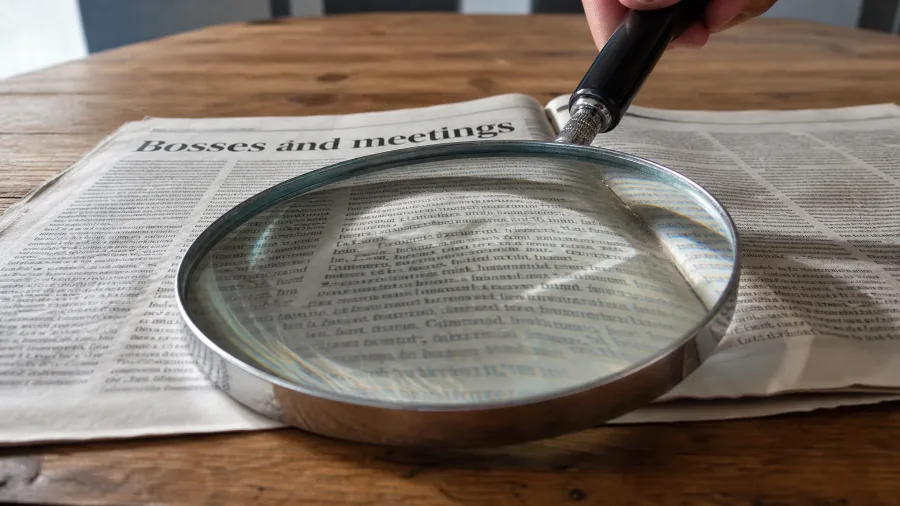
The headline’s promise – that research has established senior leaders should speak less in meetings – does not appear anywhere in the available text of Kreamer’s review.
That is the central thing to hold onto before reading anything else here. The specific claim about bosses’ speaking time cannot be found, checked, or traced from what is publicly accessible.
Part of the problem is access. No DOI and no preprint link was reachable from the coverage at Ars Technica, which means the full review text could not be consulted. There is no way to confirm whether the finding is buried deeper in the original paper or absent entirely.
The framing makes the gap worse. Saying “science says” points to something concrete: a result that was measured, tested, and held up under scrutiny. What the available text offers is a summary of a broad synthesis – a survey of many studies rather than a single controlled result. That is a meaningful difference.
A synthesis can be valuable and rigorous. It can also resist being compressed into one instruction. When a news headline turns a wide-ranging literature review into a single, clear directive about how much a boss should talk, something has been added that the underlying work may not support. Readers deserve to know that gap exists before they carry the headline into their next argument.
Thirty years of research was sold as one verdict

The work behind the coverage is not a single new experiment. It is a review – a project of reading across many separate studies and pulling together what they collectively found.
The author is Liana Kreamer, who works in organizational psychology at the Florida Institute of Technology. Her review appeared in a journal dedicated to summarizing the state of research fields, not to reporting one fresh test.
Spanning more than three decades of accumulated work, the review draws on findings from many different research groups studying different meeting contexts. No single controlled experiment sits at its center.
That matters for the headline’s claim. When a review pulls together results from many studies – each using different methods, different populations, different definitions of a good or bad meeting – it rarely delivers one clean instruction. Saying bosses should talk less is a stronger, simpler verdict than that kind of synthesis usually supports.
Anyone who wants to check what the review actually found – including whether the boss-speaking claim appears at all – should search for it directly by looking up Kreamer’s work. No shorter path to the original text was available from the coverage.
⚠️ COMMON MISTAKE
Citing coverage is not citing science
A news article about a review is two steps from the original data. Before using 'science says' in any argument about meeting behavior, get to the actual review. Coverage can misframe or oversimplify what a synthesis found, and in this case the key finding in the headline could not be verified from what is publicly accessible.
Meeting science itself is surprisingly young
Meeting science is newer than the phrase makes it sound. Until recently, the systematic study of what happens in workplace meetings was a tiny niche inside the broader field of organizational psychology – a curiosity rather than a proper discipline.
Only now is it recognized as a growing specialization. That recognition is recent enough that even a review spanning thirty-plus years is drawing on a body of work that is still relatively thin.
Consider what thirty years means in context. Fields like sleep research or cognitive psychology have been building evidence for a century or more. They have enough accumulated data to support confident, well-tested claims. Meeting science does not yet have that depth.
Kreamer defines what she is studying as a gathering that has some intended purpose or organizational framework behind it. That definition is wide on purpose. It covers a two-minute stand-up, a quarterly board session, and a video check-in with a remote team. A definition that broad is necessary in a young field still working out its own boundaries.
The practical implication is straightforward. The open questions in meeting science still outnumber the settled answers. Citing this field as though it has handed down a firm verdict – bosses must talk less, full stop – asks the research to carry more weight than it currently can.
What the coverage can actually confirm
All figures from Ars Technica coverage of Kreamer (2026). No DOI was reachable to verify against the original.
The time cost falls hardest on the people running things

The clearest numbers the field keeps returning to are not about speaking patterns – they are about time.
Start with the aggregate: close to one billion meetings happen around the world on any given day. That figure is almost too large to hold in mind, so consider what it means for a single person near the top of an organization. CEOs spend nearly three-quarters of their working hours in meetings – not occasionally, not during busy stretches, but as the default shape of the working day.
Managers face a different but related pressure. The biggest single drain on their time is not attending meetings as a participant. It is the work that surrounds the meeting: planning the agenda, preparing materials, running the session itself. That preparation cost lands on the people who already have the most decisions to make.
These are among the better-supported figures in the coverage of Kreamer’s review – they recur in meeting research rather than appearing in only one study. They matter here because they frame everything else. Any claim about what leaders should or should not do in meetings sits inside this context: the people with the most control over how meetings run are also the ones paying the steepest personal time cost when those meetings go wrong.
Getting meetings right, in other words, is not an abstract organizational concern. It is a concrete daily problem for the people best placed to fix it.
Virtual meetings gave researchers something they never had before

The reason meeting science is growing now, rather than two decades ago, comes down to a single practical shift: video calls left a paper trail.
When meetings happened in rooms, a researcher who wanted to study them had to be in the room too – watching, timing, taking notes. That limited everything: sample sizes stayed small, and behavioral patterns were hard to measure with any precision. Archived virtual meetings changed that. Recordings, transcripts, and automatic logs of who spoke when are now available at a scale that was simply out of reach before the mass adoption of video calls.
The data is behavioral, not just anecdotal.
A researcher can now pull thousands of hours of meetings and measure exactly when each speaker started and stopped, how often they were interrupted, how the pattern shifted after someone senior entered the conversation. That kind of granular evidence was not something the field could build on before. It is the main reason meeting science – once a tiny niche – is expanding today.
There is a side point worth noting for anyone who regularly joins a work video call: those sessions may be feeding that research, whether the people on the call know it or not.
What the accumulated data will eventually show about speaking patterns – and in particular whether it will confirm or complicate the headline’s claim about senior leaders talking too much – is still open. The available coverage of Kreamer’s review does not say that question has been answered.
People have been gathering like this long before the office existed
Meetings are not a corporate invention. Long before anyone had an office, people gathered in fields, market squares, and town halls to share news, settle disputes, and plan collective action.
This is not a finding from the review – it is plain historical context. But it matters for how the topic gets framed. When something has existed across every human culture and every era of recorded history, it stops looking like a managerial mistake and starts looking like a feature of how people work together.
The office meeting is just the latest version of a very old habit.
That shift in framing changes the question. The problem is not that people gather – they always have, and research suggests meeting fulfills real human needs to connect, communicate, and cooperate. The problem is why so many of these gatherings feel unproductive or unnecessary once they are wrapped in a corporate calendar.
Kreamer’s review defines a meeting simply as a gathering with some purpose or structure – a definition broad enough to cover a village council as easily as a Monday stand-up. Under that definition, the behavior predates the boardroom by thousands of years.
So anyone looking to argue that meetings are an artificial imposition, or that the whole practice should be discarded, is arguing against something far older than the modern workplace. The more useful argument is narrower: not whether to gather, but how – and what specifically goes wrong when gathering turns into a drain rather than a gain.
Meetings serve real human needs, not just agenda items
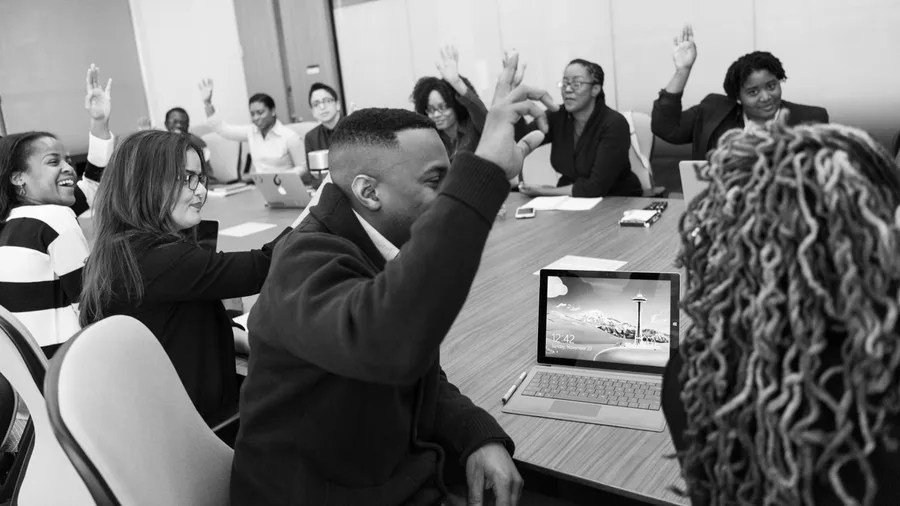
One reason gathering persists, even when it feels costly, is that it does something a spreadsheet of lost hours cannot capture.
Kreamer’s review ties the act of meeting to three things people need at work: to feel connected, to share information, and to work toward goals with others. Those are not soft extras. They are needs that affect how well people function – and how long they stay.
A time-cost calculation counts how many hours a manager spent in a conference room. It does not count what people walked away with: a clearer sense of where the team stands, a problem aired before it became a crisis, or simply the feeling that someone listened.
That is the tension the review’s coverage raises but does not resolve. The same body of research that documents a punishing time burden also points to meeting as something people and organizations genuinely require. Neither side of that ledger cancels the other out.
The available coverage does not say when the benefits outweigh the costs – or what conditions tip it one way. Meeting size, how often they happen, what they are for, who runs them: those variables almost certainly matter. But the excerpt offers no data on any of them. The question of whether a given meeting was worth holding stays open.
What the reporting shows vs. what it does not
Confirmed from the reporting we have
- ~1 billion meetings happen worldwide each day
- CEOs spend ~75% of their workday in meetings
- Planning meetings takes the biggest share of managers' time
- Meeting science is a growing but young field
- Online video archives are widening what researchers can study
Not in the text we have
- Any data on how long bosses talk vs. how well meetings go
- A suggestion that senior leaders should speak less
- How many people were studied or what method was used
- Whether the findings apply to face-to-face vs. online meetings
- A DOI or preprint ID to check the original review
Readers cannot verify what the review actually found
Before weighing costs against benefits, there is a more basic problem: the review itself cannot currently be read and checked.
No DOI – the standard link to a published paper – was reachable from the coverage. There is no preprint posted online either. That means nothing in this article, or in the news coverage it draws on, can be traced back to Kreamer’s original text.
This matters for every claim, not just the headline one. The figure of close to a billion meetings a day, the link between meeting and human need, any detail about how virtual and in-person findings differ – all of it sits behind the same gap. Readers have the news page, not the source.
Anyone who wants to check sample sizes, read the actual method, or find out whether the boss-speaking claim appears anywhere in the text will need to look up the review directly. Search for Liana Kreamer’s name and her institution, the Florida Institute of Technology. That is the only reliable route to what the research actually says.
Coverage of a review is a summary of a summary. Using it to settle an argument – especially one framed as what the evidence has proven – requires getting to the original first.
Whether meetings are worth the cost stays unresolved

– is one the available coverage does not answer.
The cost side is well documented. Nearly a billion meetings happen every day. CEOs fill close to three-quarters of their working hours in them. For managers, organizing and running meetings eats more time than any other single task.
That is a heavy bill. But the same review’s coverage also points the other way: gathering together appears to meet real needs that people carry into work – for connection, for shared understanding, for moving toward something together.
The available text does not say which side wins. It does not identify the point at which the time spent stops being worthwhile, or describe the kind of meeting where the trade-off goes the right way. Factors like how many people attend, how often a team meets, what purpose the meeting serves, and how the person running it behaves almost certainly shift the balance. No data on those variables appears in what can be checked here.
So the honest position is this: the burden is real, the benefit is real, and the conditions that determine which one dominates on a given Tuesday morning remain, for now, an open question.
Virtual and in-person findings may not transfer cleanly

One specific dimension of that unresolved variation is methodological: much of the newest meeting research is built on data from video calls, not rooms.
When a meeting is recorded and archived digitally, researchers can measure exactly who spoke, for how long, in what order, and how often they were interrupted. That kind of behavioral record simply did not exist at scale until video calls became routine. The data is precise, abundant, and searchable – which is why archived virtual meetings are now a primary source feeding the field’s growth.
But a video call is not a stand-in for a conference room. In-person meetings carry physical presence, unrecorded side conversations, facial expressions visible to everyone at the table, and the social dynamics of shared space. Those elements either disappear on a video call or get flattened into a grid of faces. The two formats are genuinely different environments, not interchangeable ones.
That gap matters for anyone hoping to apply meeting science findings to their own workplace. A result derived from video-call transcripts may not transfer cleanly to the in-person meetings that still fill a large share of office calendars. This applies to any claim the coverage makes, including anything about how much senior leaders should speak.
The available coverage does not indicate whether Kreamer’s review addresses this directly. Treating the transfer as established would go further than the evidence supports.
Frequently Asked Questions
Does science actually say bosses should talk less in meetings?
That specific finding does not appear in the available coverage of Kreamer’s review. No data, no measured result, and no recommendation about senior leaders’ speaking time is present in the excerpt that was reachable. The full review may address it, but no DOI was accessible to check.
Who wrote the meeting science review and where was it published?
The review was written by Liana Kreamer, an organizational psychologist at the Florida Institute of Technology. It was published in the Annual Review of Organizational Psychology and Organizational Behavior in 2026, and it synthesizes more than three decades of accumulated research on workplace meetings.
How many meetings happen worldwide each day?
The coverage of Kreamer’s review puts the figure at close to one billion meetings per day around the world. That number comes from the news coverage alone; the underlying source within the review was not reachable for verification.
Why is meeting science growing so fast right now?
Archived virtual meetings — with their transcripts, turn-taking records, and timing data — give researchers a volume and quality of behavioral data that was not available when all meetings happened in physical rooms. The mass adoption of video calls created the data infrastructure the field had been missing.
Do findings from video call research apply to in-person meetings?
That is an open question. Virtual and in-person meetings differ in physical presence, nonverbal cues, informal side conversation, and spatial dynamics. The available coverage does not say Kreamer’s review directly addresses whether findings derived from virtual archives transfer to in-person settings.
How do researchers define a meeting?
Kreamer defines a meeting as a gathering ‘with some goal or structure to the event.’ The definition is deliberately broad, covering everything from brief stand-ups and video check-ins to full board sessions, as long as there is some shared purpose or organizing structure.
What Specific Speaking Patterns Still Need an Answer
The question this coverage raises but never answers is the one the headline promised to settle: what have researchers actually shown about how much senior leaders talk in meetings, and does it change outcomes? That finding may sit inside Kreamer’s full review. The available coverage does not let anyone check.
The headline sent readers here with the promise of a clean verdict. What the evidence actually offers is a large synthesis of a young field. The time cost of meetings is well documented. The human value of gathering is real. The specific claim about boss behavior cannot be traced to its source from what is publicly accessible.
The most useful thing to take into the next meeting argument is not the headline. It is the original review: look up Liana Kreamer at the Florida Institute of Technology, find the paper, and read what it says. Then decide what science has and has not settled.
Sources
- Science says your boss should talk less in meetings – arstechnica.com (news report) · 2026-10-17