
A near-miss on the highway leaves your hands shaking and the moment locked in your mind for years. Meanwhile, a perfectly ordinary Tuesday from the same month has vanished without a trace.
That is not a flaw in how memory works. A study published in Science Advances on 12 December 2025 by researchers at Yale University now shows, for the first time, which brain networks cortisol – the body’s main stress hormone – reshapes to make this happen.
A charged moment, an argument, a piece of sudden bad news: these sit in memory like photographs while routine days disappear. The gap between them turns out to reflect something the brain is doing on purpose.
Cortisol does not improve memory across the board. What it does is make two separate brain systems – one that tracks how intense an experience feels, and one that locks experiences into memory – work more closely together and more selectively. By the end of this article, the reader can judge what that means for learning, where the finding’s limits are, and why the most practical question it raises does not yet have an answer.
Emotional memories outlast ordinary ones for a reason

The brain is not broken when an ordinary Tuesday vanishes while a heated argument from the same month stays sharp in every detail – it is making a choice about what deserves space.
Cortisol, the hormone the body releases during stress, has long been known to play some role in why emotional events stick. Scientists also knew that a small almond-shaped structure deep in the brain, the amygdala, helps register emotional intensity. But how cortisol directs activity across wider brain networks – coordinating region with region, system with system – was not understood before this work.
That is the question Elizabeth Goldfarb set out to answer.
Goldfarb holds a dual appointment at Yale, serving on the psychiatry faculty at the School of Medicine and on the psychology faculty within Arts and Sciences. Her lab approaches stress as a biological tool rather than a pure liability: stress responses emerged through evolution to help organisms survive, and she has spent years trying to map exactly how they do that for memory.
The results appear in Science Advances. The approach combined a controlled drug dose with live brain imaging – not self-report, not survey data, not behaviour alone. That combination made it possible to watch specific network patterns shift as cortisol moved through the brain.
Researchers used a pill to isolate cortisol inside a scanner
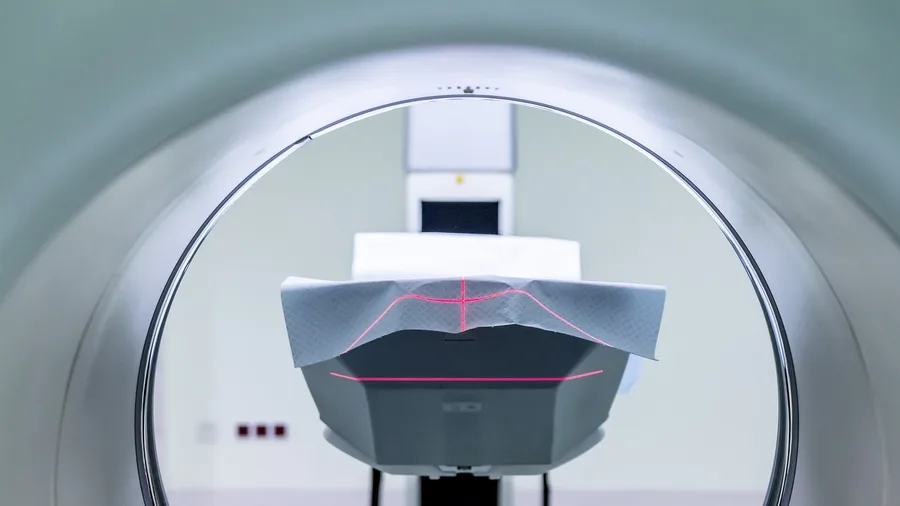
The practical problem with studying cortisol in a scanner is that real stress is messy – panic, distraction, and physical arousal all arrive together, making it hard to pin effects on the hormone alone. The Yale team sidestepped that by giving participants a hydrocortisone pill, a manufactured form of cortisol, before they entered the scanner.
Each person also came back on a separate visit and took an inactive placebo instead. Neither the participants nor the researchers administering the pills knew which was which on any given day – a double-blind design that keeps expectations from shaping the results. Because everyone completed both sessions, each person served as their own control.
The pill is not the same thing as a stress response your body builds on its own. It delivers cortisol without the racing heart, the adrenaline, or the situation that caused the stress – so the study can speak to what cortisol does to brain networks, but not to what a bad day at work does.
Inside the scanner, participants viewed a series of pictures. Memory for those images was checked the following day – not right after the session – so the researchers were measuring whether a memory had been locked in overnight, not just whether something registered in the moment.
The team also used a new analytical tool called dynamic connectome-based predictive modeling, or dCPM. Standard connectivity analysis needs several minutes of brain data to produce a single estimate. This method worked in windows of roughly five seconds, short enough to catch how networks shifted from one image to the next rather than averaging those shifts into noise.
What the experiment measured
Cortisol makes arousal and memory networks converge

Those short windows let the scans do something older methods could not: show which brain networks were active for each individual picture, and how cortisol changed them in real time.
Two network systems turned out to do separate jobs. One – the salience network – tracked how emotionally intense a participant found a given image. A different set of regions, spanning visual, frontoparietal, and default mode areas, predicted something else entirely: whether that image would still be remembered the next day.
Two networks, two jobs.
Under cortisol, both systems shifted. The arousal-tracking network fired more reliably and more strongly than it did under placebo. The memory network did the opposite of expanding – it narrowed, responding mainly to images the participant found emotionally significant rather than treating every picture the same way.
The most important finding was what happened between the two systems. Under cortisol, they overlapped – in structure and in timing – more than they did under placebo. The arousal side and the memory side began acting in coordination rather than running parallel and separate.
Goldfarb describes emotional memory as two distinct brain events: first, reading an experience as intense; second, pushing it into long-term storage. What the scans suggest is that cortisol pulls those two events closer together – so that feeling something strongly and encoding it deeply happen more as one step than two.
💡 PRO TIP
The network link has a practical edge
Goldfarb put it directly: "This is in part related to your brain increasing engagement of networks that track emotional intensity. So, if you are stressed out and trying to learn something new, it might help to think about exciting elements or strong feelings connected to what you are learning."
Stress sharpens only what already feels meaningful
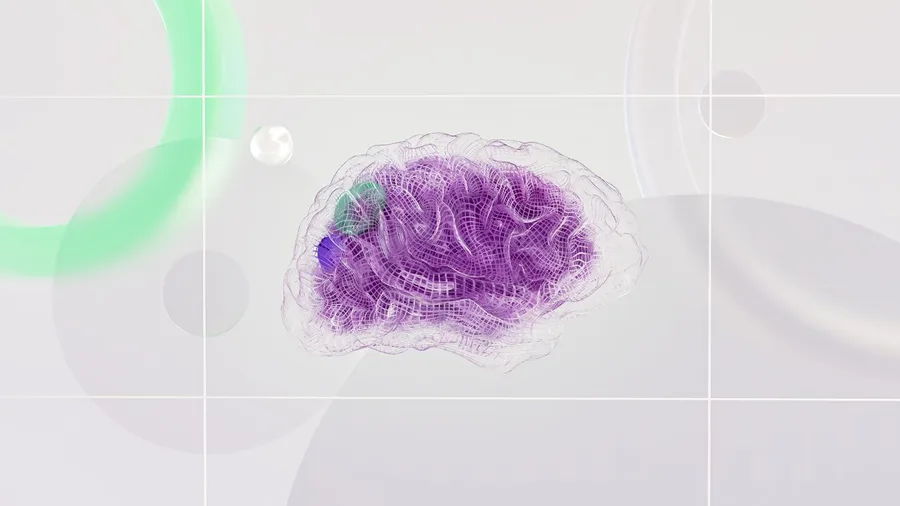
That narrowing of the memory network is the finding’s most important boundary: cortisol does not sharpen memory for everything a person encounters while stressed – only for material they find emotionally significant.
Scientists already knew, from earlier work, that cortisol’s effect on memory depended on emotional arousal. What this study adds is an explanation for why. Under cortisol, the memory-encoding networks pulled away from neutral images and responded more strongly to charged ones. The arousal network and the memory network moved closer together – a kind of coordination that does not appear under placebo. That coordination is what the scans made visible for the first time.
Boring material does not get that treatment.
As Goldfarb explained, the effect comes down to how the brain shifts its priorities under pressure, ramping up activity in circuits that register emotional intensity. The practical upshot is that when you are stressed and trying to absorb new material, it can help to connect that material to its most vivid or emotionally charged aspects, effectively giving your brain the affective signal it is already primed to respond to.
That is a real suggestion, but it carries a limit. A lecture full of dry facts stays dry no matter the cortisol level. The stress response targets what already feels meaningful to the person experiencing it – it does not manufacture meaning where none exists. Treating stress as a general aid to studying, or expecting it to make all information stick better, is not something this finding supports.
What this study shows vs. what it does not
What the evidence supports
- Cortisol increases arousal-network engagement for emotionally intense images
- Memory-encoding networks narrow their focus to salient material under cortisol
- The two network systems overlap more under cortisol than under placebo
- The memory advantage shows up on next-day testing — overnight consolidation
What the evidence does not show
- Whether naturally induced stress produces the same network changes
- Whether the memory advantage lasts beyond the following day
- Whether the effect holds at scale — sample size is not reported in available sources
- Whether people under chronic cortisol elevation show the same pattern
A pill in a scanner is not the same as everyday stress

The effect is selective – but that selective effect was measured in a very specific setting, and a few things about that setting matter before drawing wider conclusions.
Participants took a hydrocortisone pill, not a stress response their own bodies produced. A tablet delivers a controlled dose at a known time. Real stress – a difficult conversation, a looming deadline, a physical threat – raises cortisol through a different chain of events and alongside other hormones. Whether the network changes seen here would appear in those conditions is not something this study can confirm.
How many people took part is not reported in the available sources. That matters because a study’s confidence in its network patterns depends partly on the number of participants. Without that figure, a reader has no way to judge how well the results might hold up in a different group.
The memory test came the morning after the scan. That window captures one night of consolidation – the process by which the brain stabilises a fresh memory during sleep. Whether that advantage would still show up a week later, or a month later, was not tested. The finding is specifically about overnight retention, not long-term memory.
The researchers describe the neural networks involved as previously unknown contributors to this process. That phrase, from the paper’s own abstract, is worth sitting with. The associations between cortisol, connectivity, and memory are now mapped, but the causal steps between them are not yet fully worked out. This is early-stage science, and the map will change.
Whether emotion can be engineered into learning is still open

The deepest question the study raises is not about cortisol at all.
Cortisol caused the arousal network and the memory network to work in concert. But what if emotional intensity itself – without any rise in cortisol – could do the same thing? The study does not say. It shows that cortisol produces the overlap; it cannot say whether the overlap requires cortisol or whether feeling genuinely curious, personally connected, or gripped by a story might get there too.
That gap is not a minor technical detail.
If emotional salience is the active ingredient, then learning could in principle be designed around it – building in personal relevance, real stakes, or narrative pull. But this study cannot confirm whether those approaches would recruit the same brain networks. They might. They might not. The circuitry may need the hormone, not just the feeling.
There is a second open question, and it points in a darker direction. People who live with persistently high cortisol – from chronic stress, not a single controlled dose – might show an altered version of this connectivity all the time. If so, the question is not which memories get strengthened in a one-hour session; it is which experiences get selected and which ones drop away across months or years. A single-session experiment cannot touch that.
Neither question has an answer yet. Where emotional engagement ends and cortisol begins, and what long-term stress does to the same networks, remains open work.
Frequently Asked Questions
Does being stressed while studying help you remember what you learn?
Only if you find the material emotionally significant. The Yale study found that cortisol narrows the brain’s memory-encoding networks to focus on emotionally salient experiences — neutral or routine information does not receive the same boost. Stress is not a general memory enhancer, and treating it as one is not supported by the evidence.
What is the salience network and what does it do?
The salience network is a large-scale brain system that helps detect and prioritise experiences worth paying attention to — particularly those with emotional or survival significance. In this study, it was the network whose activity predicted how emotionally intense a participant rated the pictures they viewed.
What is cortisol and why does it affect memory?
Cortisol is the body’s primary stress hormone, released by the adrenal glands in response to perceived threat or challenge. It is widely understood to influence learning and memory, particularly for emotional experiences. The Yale study helps explain the brain-network mechanism behind that influence, though the full causal chain is not yet resolved.
How is this study different from previous research on stress and memory?
Earlier work established that cortisol’s memory effect depends on emotional arousal at the behavioural level. This study adds a mechanistic account: using a new high-temporal-resolution method called dCPM, it identified which specific whole-brain networks are involved and showed that cortisol causes those networks to converge — something previous methods could not detect.
Does this mean chronic stress is good for memory?
The study cannot answer that question. It was conducted in a controlled single-session design with a pharmacological dose of cortisol, not with participants experiencing ongoing stress. Whether persistently elevated cortisol alters network connectivity over time — and what that would mean for memory — remains genuinely open.
Was memory tested immediately after viewing the pictures?
No. Memory was tested the day after the scanning session, not immediately. That means the study specifically measured consolidation — the stabilisation of a memory overnight — rather than how well participants recalled images right after seeing them. Whether the advantage persists beyond the next day was not examined.
The Ingredient the Study Has Not Isolated Yet
Cortisol pulls two brain systems closer together. One tracks how intense an experience feels. The other decides what gets stored. Under cortisol, those two systems overlap more, and the memory system narrows its focus to whatever already feels meaningful. That coupling is the finding.
That is why a charged moment from years ago outlasts an ordinary Tuesday. It is not random. The brain is running a priority system, and researchers have now mapped part of it for the first time.
What the study cannot answer is whether you need cortisol – or any physical stress – to trigger that same overlap. If emotional engagement alone could bring those two networks into the same close coordination, a person might get the memory benefit without the cost. That question is where the science now sits, unresolved and genuinely worth asking.
Sources
- Yale scientists discover how stress changes the brain to make memories stronger – ScienceDaily (news report) · 2026-10-16
- Dynamic brain mechanisms supporting salient memories under cortisol – Science Advances (peer-reviewed paper) · 2025-12-12