
The planning takes a few evenings. The adjustment takes about two years, and nobody warns you which kind you are getting.
The belief most people carry in is simple: more shared time should mean more closeness. Then the last day of work arrives, and the hours multiply without anyone asking whether the week can hold them. In the couple married 35 years, both retiring at 65, shared waking hours climb from roughly 10 to 15 a week to 40 to 50. That jump does not manufacture intimacy. It exposes every expectation that was never said out loud.
Closeness afterward is built, not granted. It comes from redesigning time, roles, money, separate space, and caregiving on purpose, before the shared hours land, rather than trusting that love alone will sort it out.
By the end you will know which conversations to have before the last day and which signs mean the two of you need help from outside the house.
Quick Tips Before You Start
Name the hours
Before the last day of work, sketch a typical week together and mark which blocks are shared, which are separate.
Ask the design question
For every change, ask: is this being left to expose old patterns, or named and redesigned now?
Schedule the unglamorous talks
Money, chores, caregiving, separate space — each gets its own 45-minute conversation, not a passing comment.
Protect one separate morning
Each partner needs a recurring block that belongs only to them. It is not a threat to closeness; it is what makes closeness interesting.
The New Shape of Togetherness
Before retirement, the week had a shape. Commutes, meetings, school pickups, and separate social circles divided the hours without anyone having to negotiate them. Retirement removes the dividers and leaves two people holding the same open calendar.
This first theme is about what happens in those first weeks and months. The couples who grow closer do not love each other more — they notice that the hours need structure and they build it before the structure disappears.
1. Sudden togetherness exposes unspoken expectations
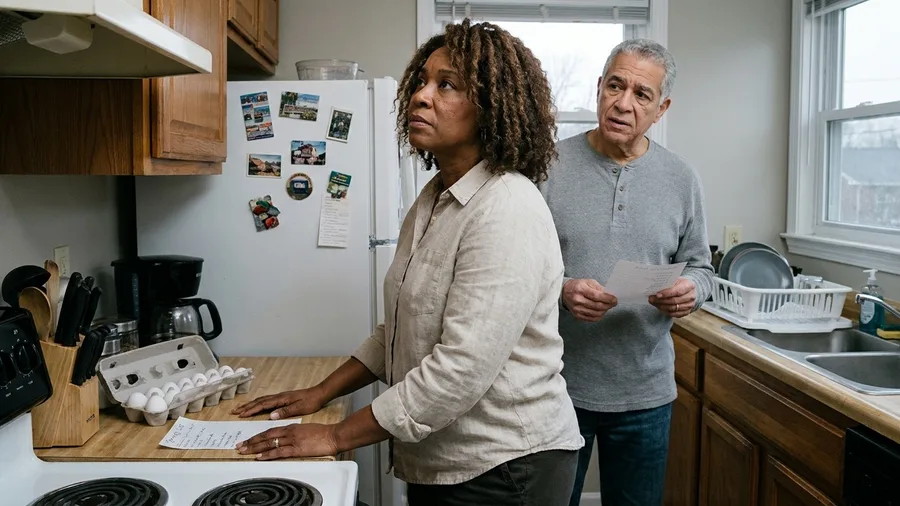
Ten to fifteen hours a week. That is roughly what a couple married 35 years spends awake and together before both retire at 65. After the last day of work, the same two people are looking at 40 to 50.
The hours do not arrive with a plan attached. They arrive with a Friday, a cake, and a Monday morning that has nothing scheduled in it. What fills that Monday is whatever the couple already assumed about each other, and most couples have never said those assumptions out loud. One partner hears ‘we finally have time for each other’ and means every hour of it. The other hears the same sentence and pictures two chairs and a quiet house.
Assumed closeness treats all 40 to 50 hours as automatic together time, and that is where the friction starts. The partner who retires into an established home routine has a system already running, and a second person moving through it at 9 a.m. reads as an inspection rather than company. So you follow them to the store. You drift into the kitchen while they are on the phone. You mean to be near them; what lands is a shadow. The followed partner feels watched, not loved, and that feeling is a design signal, not a character flaw in either of you.
The exception is real, and it is worth naming clearly. Being together that much is genuinely fine when the hours have shape. A shared breakfast, then two separate mornings, then a calendar on the fridge that says who is where on Thursday. That structure is the difference between closeness and surveillance, and it costs one conversation. Couples who plan it tend to describe the extra time as a gift. Couples who do not tend to describe it as crowding.
The separate blocks help both people, and they help the one who was already home most. That partner keeps the rhythm they built and gets a stretch of the day that is still theirs. The newly retired partner gets a morning that belongs to them instead of a house that belongs to someone else’s schedule.
The design question is timing. Are those extra hours named before the last day of work, or left to expose the expectations afterward? Named first, they are something you built. Left alone, they are something that happens to you.
💡 Tip: Put a shared calendar on the fridge. Mark separate blocks in one color and shared blocks in another. The visual makes crowding obvious before it becomes a fight.
⚠️ COMMON MISTAKE
Do not treat every hour as together time
Assuming all 40 to 50 shared waking hours are automatic couple time is the fastest route to resentment. Name the separate blocks first; the shared ones will feel earned instead of enforced.
2. Separate routines protect closeness rather than threaten it

The mistake is assuming that loving someone means wanting to be beside them every hour, and that separate mornings signal a problem. Ask yourself one question and answer it honestly. What would you each be doing on a Tuesday at 9 a.m. if nobody was watching? If the answer is that you would both be sitting in the same room waiting to see what the other wanted, that is not closeness. That is a vacuum with two people in it.
Before retirement, each partner had a commute, a work routine, and a set of people who were not the spouse. Those structures vanish on the same weekend. Separate routines put something back. One person at the gym and the library from 8 to 10, the other at a woodworking co-op from 9 to 11, and each of them comes home with a story the other has not heard.
The version that goes wrong is when one partner drops all independent activity to be together, and the other becomes their whole social world. The couple loses all slack, and every mood lands on one person. The schedule that works is plain. Mondays, Wednesdays, and Fridays are individual mornings. Tuesdays and Thursdays are a shared volunteer shift. Evenings are together. The separate blocks are the design choice that protects the closeness, not the thing that threatens it.
💡 Tip: Try a Monday/Wednesday/Friday separate-morning pattern. Tuesday and Thursday can be a shared volunteer shift. Evenings stay together. Write it down and test it for two weeks.
| Retirement change | What closer couples do | What distancing couples do |
|---|---|---|
| Shared waking hours jump from 10-15 to 40-50 a week | Plan shared rituals and separate blocks in advance | Assume all 40-50 hours are automatic together time |
| Work routines and social circles disappear | Each partner builds at least one new individual routine | Each becomes the other’s main social contact |
| Both stop work on the same Friday | Rehearse a phased exit or part-time bridge | Face the new hours with no structure at all |
| Household tasks were divided by who was home | List tasks, assign owners and backups, check in weekly | One partner keeps doing everything and resentment grows |
| Paychecks turn into a fixed $4,500 monthly income | Hold a monthly budget check-in with personal no-questions amounts | Hidden spending stays hidden until a bill lands |
| One partner has a family health history | Name caregiving expectations early, before a crisis | Assume ‘of course you will do it’ and absorb the role |
3. A gradual retirement transition beats a sudden stop

“We want to retire on the same day and start our life together.” It is a lovely sentence, and it hides a bet: that two people can absorb 40 to 50 shared waking hours with no rehearsal and no structure left standing.
The sudden stop is what the reader often hears as the romantic choice. Both leave work on the same Friday at 65, and by the following week the commute, the routine, and the workplace circle are simply gone. What looks like a fresh start is closer to a cliff. The couple walks off it together, holding hands, with nothing underneath.
A phased exit reads to many people as hesitation, as one foot still in the old life. What it actually signals is a buffer. Part-time work, a consulting contract, or a staged schedule leaves some structure in place while the couple tests new mornings, new chores, and separate space. The routines that keep closeness from curdling have somewhere to form before the calendar is completely full.
Staggering carries its own risks, and they cut both ways. The retired partner fills days alone and the working partner feels set adrift from them; or the work identity ends with no new role and that partner is at loose ends while the other still has somewhere to be. Staggered timing tends to fit when one partner has the stronger work identity, a health limitation, or a caregiving pull. The working partner keeps their social contact while the other builds a new routine, and both keep renegotiating instead of assuming.
Retirement Timing — At a Glance
📅 Hours you gain per week
About 30 more
☀️ First thing to schedule
Separate mornings
⚡ Staggering fits when
One strong work identity
🗒️ Talk to have before
Caregiving expectations
🔁 Repair style that helps
Bicker, then fix fast
Design question
Have you named which hours are shared and which are yours before the calendar fills?
4. Purpose gaps create distance that chores cannot fill

It is 10:40 on a Tuesday and you have already been to the hardware store, dropped off the recycling, and answered two emails that did not need answering. The day is full. Something in it feels like waiting.
Work handed you three things at once: structure, people, and the plain fact of being needed somewhere by someone. Retirement takes all three on the same Friday, and errands can eat eight hours without touching the third. That gap is what makes a full calendar feel hollow. What closes it is a recurring role with someone expecting you at a set hour – a tutoring slot, a church committee, a repair shift at the volunteer workshop – and couples do well to split this deliberately: one shared project like a garden plot or a weekly shift together, and one separate commitment each, so neither partner becomes the sole source of consequence.
Watch for the version where the days are errands and screens and nothing else, and the conversation shrinks to groceries and who has a doctor’s appointment. When the needed slot stays empty, the distance is quiet and slow, and no amount of shared chores touches it.
💡 Tip: Each partner names one recurring commitment outside the house before the first month of retirement ends. One tutors, one repairs instruments. The commitment must have a time and a person who expects you.
What Fills the Purpose Gap — Ranked
Roles, Money, and Logistics
The first months of retirement are not just about time. They are about who does what, who pays for what, and who will care for whom if health changes. These are the conversations most couples avoid until a crisis forces them.
The couples who grow closer have these conversations early and keep them short. A 20-minute weekly check on chores. A 45-minute monthly check on money. A single honest talk about caregiving before anyone needs it. The logistics are not romantic, but they are the scaffolding that keeps the romance from collapsing under resentment.
5. Chores must be renegotiated, not inherited

The chore split almost never gets renegotiated, because nobody thinks it needs to be.
It was built on a question that retirement has just answered differently: who is home, and who earns more. That logic ran the laundry, the meals, the appointment scheduling, the yard, the bills, and the gifts for years. Now both of you are in the kitchen at 9:15 on a Wednesday and there is one sink. One of you says “you always did the bills” and means it as a fact. The other hears it as a sentence about the next decade. The first partner is often the one who ran the household alone, and the new shared time lands on their system like an inspection.
The fix is a list and a date. Sit down once with the weekly tasks written out – cooking, dishes, laundry, yard, bills, cars, gifts, cleaning – give each one an owner and a backup, and then hold twenty minutes every week to check how it is going. Not “helping.” Owning. Say plainly that this is a redraw of who controls what, because it is.
💡 Tip: List every weekly task — cooking, dishes, laundry, yard, bills, cars, gifts, cleaning — and assign an owner and a backup. Hold a 20-minute weekly check instead of calling tasks 'help.'
6. Money stress shrinks the room for closeness

You name it on a calendar before it names you.
The number is fixed now – in this example around $4,500 a month, a paid-off home, two adult children paying their own rent – and there is no cushion for the surprise. The quiet damage runs both ways: one of you buys tools or gifts, the other covers groceries and the annual property tax bill, and neither sees the whole ledger until a statement lands. So put a 45-minute check on the same date every month, all accounts and the upcoming bills on the table, and agree on a small personal amount each of you can spend with no questions asked.
When cuts are needed, start with the duplicate subscription and the extra meals out. Then say the sentence that matters: “Before we cut anything either of us cares about, let’s name the two things we’re protecting.” A modest trip, the visits to the grandchildren. A cut made by one partner alone reads as control.
💰 The Monthly Money Check-In
Book 45 minutes, same date
Not a text thread, not a kitchen ambush. A timed slot both of you agreed to, so the number gets discussed before it arrives.
One screen, both looking
Whoever usually holds the ledger reads it aloud. The other partner follows on the same screen. The discrepancy closes in minutes, not at tax time.
Look 60 days out, not 30
Fixed income means annual bills land like surprises. The property tax and insurance are visible two months early, so the cut happens before the pressure.
Set the no-questions amount together
Same number for both. One partner setting it for the other is the control the prose warns about, even when the amount is generous.
Each names one thing to protect
One priority per partner before any cut is proposed. A cut that arrives without the other's protected item attached reads as a verdict on their judgment.
7. Caregiving expectations need to be spoken aloud

The bill for silence arrives years later, in a hospital corridor, when one of you is holding a clipboard and nobody has said out loud who is supposed to be there tomorrow. Take a couple who both leave work at 65 in good health, and one of them has a parent who spent a decade needing help. That family history is already a plan. It simply hasn’t been read out yet.
What usually fills the gap is an assumption, and it is almost never spoken: ‘of course you will do it.’ That sentence covers a year of appointments, a shelf of pill bottles, a recovery that runs eight weeks and lands entirely on whoever has the freer calendar or the smaller pension. Nobody chose it. It was assigned by default, and defaults turn into resentment precisely because the sacrifice was never named.
A short conversation, held while both of you are well, covers family health history, current medications, doctors, insurance, and the official record of legal documents. The couple with a known health gap needs this first, before a crisis hands the role to whoever happens to be standing nearby. The reframe is small and it changes everything: name the tasks, name what outside help you would accept, and name what happens if the caregiver falls ill too.
💡 Tip: Have the practical conversation early: family health history, current medications, doctors, insurance, and the official source for legal documents. Couples with a known health gap need it most, before a crisis assigns the role.
Assumed Care vs. Agreed Care
Assumed care
- One partner assumes the other will do it
- Appointments, medications, and recovery fall to the flexible or lower-income partner
- Resentment builds from unspoken sacrifice
- Outside help is seen as a failure or a threat
Agreed care
- Who takes which tasks is named in advance
- Outside help is discussed and agreed on
- A backup plan exists if the caregiver's health fails
- Both partners know the family history and the legal documents
The Deeper Patterns That Decide
The first two themes are about design: time, routines, purpose, chores, money, care. This final theme is about the patterns underneath the design. How you argue, how you repair, and how you keep friends outside the marriage will decide whether the redesign holds or slides back into old habits.
Retirement amplifies whatever conflict style already existed. The couples who grow closer are not the ones who never argue — they are the ones who repair quickly and keep their social world wide enough that every mood does not land on the marriage.
8. Old communication habits get louder in retirement

The common advice is to talk more. More talking is not the lever, because retirement does not install a new way of arguing. It runs the old one through more repetitions, and even careful roles and agreements pass through the same way of fighting the couple already had.
Researchers who study couple conflict keep finding the same thing: it is not how often a couple disagrees that predicts trouble, but the pattern inside the disagreement, and whether repair follows it. Retirement removes the buffers. The commute that let a sharp morning cool off is gone. The same small issue about the dishes can now surface at breakfast, at lunch, and again at dinner.
The illustrative couple argues occasionally and repairs quickly, which is an asset, not a neutral detail. Quick repair is what keeps a pattern from setting, and the question with 40 to 50 shared waking hours a week is whether the extra repetitions outrun how fast they come back to each other.
A fifteen-minute check-in once a week protects that. What felt crowded. What felt distant. No problem-solving during it, because the point is to hear the weather, not to fix the house. One partner says the errands feel like being followed. The other says the silence at lunch feels like being erased. Both are information, and neither needs a verdict that day.
Repair needs a phrase small enough to reach for mid-flare: ‘We are on the same side; that came out sharper than the feeling.’
The argument about the dishes is almost never about the dishes. Underneath is the feeling of not being heard, and naming that after the surface argument does more than winning the surface ever will, particularly when the hours leave less room to cool down.
9. Friendships outside the marriage keep the marriage interesting

A few years back, a person close to me would have answered this question wrongly, insisting that everything retired couples do belongs in the same frame. The couple that does everything together was the ideal. Lately I have come to think that is exactly the arrangement that wears thin fastest, and I was wrong about it for a long time.
When the workplace circle disappears at retirement, each partner can quietly become the other’s entire social world, until a single bad mood lands on the marriage with nowhere else to go. Repair takes energy, and energy of that kind tends to come from outside the house: your partner’s poker night or choir, your book group or the trail you walk with people who first met you thirty years ago. Those friends return you home with a story and a little space, and space is what makes the reunion worth something.
The line between freedom and secrecy is drawn clearly. Say who, where, and when, keep the shared accounts visible, and don’t use an evening out to complain about the marriage. Secrecy starts when time with friends becomes an exit rather than a recharge. Two couple friends and one individual friendship each, kept on the monthly calendar and guarded like a dentist appointment, is the design that keeps the marriage curious rather than each other’s only room.
💡 Tip: Keep two couple friends and at least one individual friendship each on the monthly calendar, protected like appointments. The design question is whether outside relationships keep the marriage interesting or leave it isolated.
The Closeness Pyramid
What to build first, from the foundation up
10. The prior relationship sets the starting point, not the outcome

“We’ve always fought like this. What difference will a calendar make now?” The difference depends on what the fighting looks like. A couple who bicker over the dishes on Tuesday and share a real laugh by Tuesday night is working with something useful: the repair is already there, and added hours give it more practice. A couple whose arguments end in a two-day silence, or in one person deciding the other is simply beneath answering, runs the same negotiations through a colder room.
The history sets the difficulty, not the score. A couple can still lay down a shared calendar, hold a monthly money check-in, guard separate mornings, and use a repair phrase after a sharp exchange, and those habits can shift the temperature even after years of strain. What tends to block the next step is the audit – one partner re-litigating every past failure before agreeing to try. Threats, physical intimidation, relentless contempt, days of stonewalling, one partner holding the money or the care as leverage: those patterns are beyond what a kitchen-table redesign can fix, and they call for a professional, not a chore chart.
Frequently Asked Questions
Is it better to retire at the same time or one before the other?
Staggered timing often works better when one partner has a strong work identity, a health limitation, or a caregiving pull. The working partner keeps social contact while the retired partner builds a new routine, and both renegotiate rather than assume. If you do retire together, plan a phased exit or part-time bridge so the sudden stop does not leave 40 to 50 shared waking hours with no structure.
How do we handle money now that paychecks have stopped?
Hold a monthly budget check-in on a fixed date. Open all accounts together, list upcoming bills, agree on a small personal amount each partner can spend with no questions, and name one cut and one shared priority. With a fixed income around $4,500 a month and no paycheck cushion, a routine conversation prevents hidden spending from becoming an ambush.
Why do small arguments feel bigger now?
Retirement amplifies whatever conflict style already existed because there are more hours and fewer buffers. A small issue can happen at breakfast, lunch, and dinner. The protective move is a weekly 15-minute check-in on what felt crowded and what felt distant, plus a reliable repair phrase after a flare.
Should we have separate friends or do everything as a couple?
Keep at least one individual friendship each and two couple friends on the monthly calendar. Separate social networks bring outside stories and perspective, and they keep the marriage from being the only mirror. Tell the other who, where, and when, keep shared money transparent, and do not use friends to complain about the marriage.
What if one of us gets sick?
Have the practical conversation early: family health history, current medications, doctors, insurance, and the official source for legal documents. Name who takes which tasks, what outside help is acceptable, and what happens if the caregiver’s own health fails. Assumed caregiving builds resentment; agreed caregiving builds a plan.
Are we doomed if we have already been struggling?
No. The prior relationship sets the starting point, not the outcome. Daily patterns can change the climate even after years of strain. But if there are threats, physical intimidation, relentless contempt, stonewalling for days, or one partner controlling money or care, seek professional help — those patterns are too entrenched for self-design.
The Calendar You Build Before the Last Day
closeness after retirement is built by deliberate redesign, not luck. The same climb from 10 to 15 shared waking hours to 40 to 50 can pull a couple together or wear them down, and the difference is whether time, roles, money, separate space, and caregiving got named before the last day of work.
If the size of that jump is what worried you, read it as a design problem rather than a verdict on the marriage. Then schedule the design conversation before the last day: 60 to 90 minutes, five items on the table, each of you writing down your top three concerns first.
A couple married 35 years, with around $4,500 a month and the house paid off, does not need a second honeymoon. It needs a calendar, a budget, a chore list, and one honest sentence about who will nurse whom. The planning is still a few evenings. The two years that follow are the ones those evenings decide.