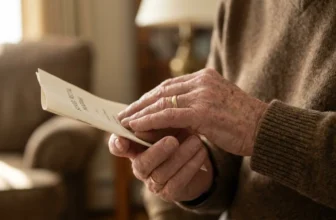
The text arrives at 7:42 on a Tuesday: ‘Home by nine. Lasagna in the fridge.’ No question mark, no apology, no follow-up. One of you is already at the choir rehearsal with a folding chair under one arm. The other is at the kitchen table with a half-finished crossword and the radio on low. Neither phone gets checked again for the rest of the evening.
It is easy to walk into that scene and start grading it. You think of the couples you know who still do everything together, or the ones a generation younger who post the weekends away, and the comparison makes a quiet house feel like a verdict. After 60, though, separate time and a short goodbye often signal trust rather than distance. The real question was never whether friction or space exists. It is whether repair, consideration and dignity are still there.
What follows are ten ordinary signs, and they are checkpoints for a single week, not a pass or fail on the whole marriage. By the end you should be able to tell which worries are worth a conversation and which are simply the shape of a solid partnership, then name one sign you recognize to your spouse this week.
Quick Tips Before You Start
Pick one sign
Choose the one that made you pause, not all ten at once.
Look at last week
Check the actual week you just had, not the marriage in general.
Say it out loud
Mention what you noticed to your spouse before you decide what it means.
No scoreboard
If a sign turns into an argument about old grievances, stop and reset.
Space and Repair
The first two signs are about how you handle distance and friction. Both are things couples worry about most and should worry about least, as long as the repair is still there.
A marriage that can tolerate an evening apart and a ten-minute argument is doing something right. The test is whether the time apart and the quick repair leave you both able to come back together, or whether they are the only way you avoid the harder conversation.
1. You can spend an evening apart without worry
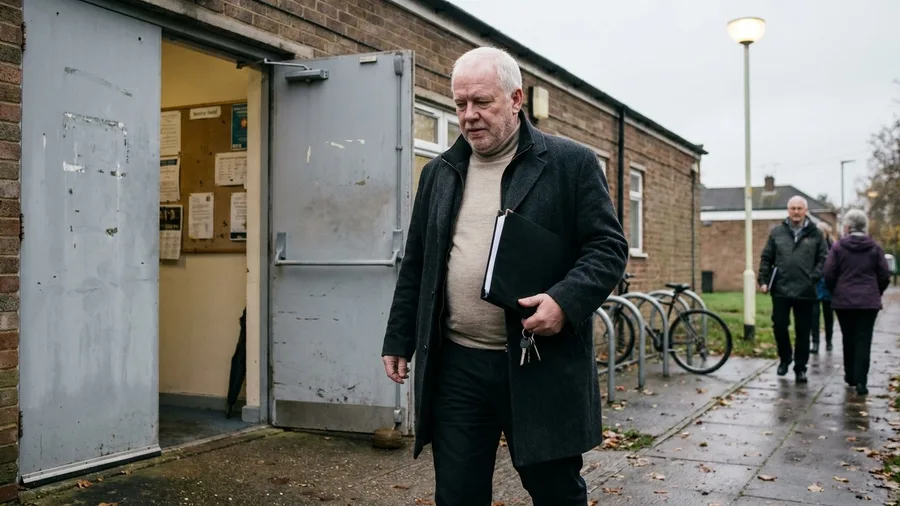
Two evenings a week, one of you is out. Tuesday choir, Thursday club, and the other stays home with a book, a game, a project spread across the table. Nobody calls to check in.
Both of you know when the other will be back and what the house needs before then, so the evening doesn’t need watching. That ease is trust doing its quiet work: you expect the other to return, and you expect the return to be fine.
The time apart is meant to refill a person, not to escape the marriage, and you can tell by what happens after: the door, the shared talk about the evening, the small re-entry. The one time it deserves a second look is when the apartness has become the only relief from tension in the house. Then the trouble isn’t the space. It’s the repair that stopped happening.
💡 Tip: Set a return time before you leave and stick to it. Predictability is what makes the space feel safe rather than like a door left open.
⚠️ COMMON MISTAKE
Don't mistake space for avoidance
If every hard conversation gets postponed until one of you has somewhere else to be, the separate time has become the strategy. The fix is to name one conversation and put it on the calendar for a day when you are both home.
2. Small arguments end without a scoreboard
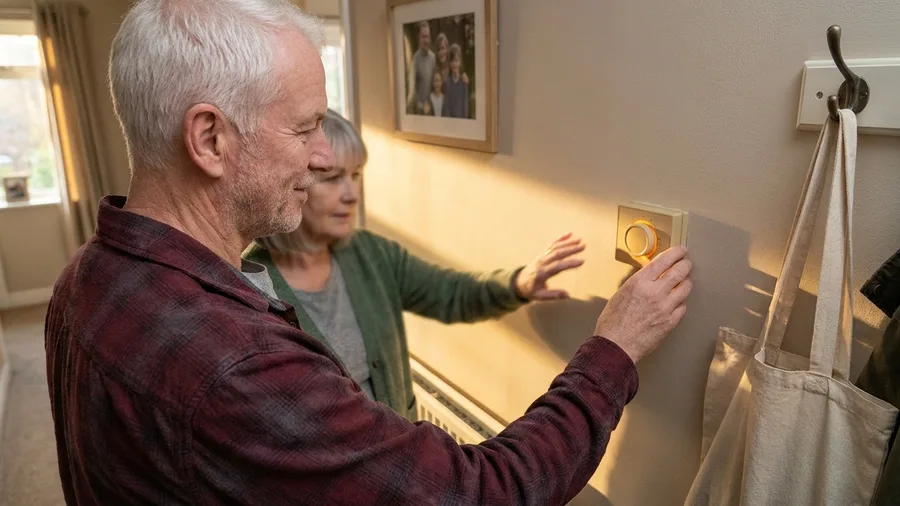
Usually not. The thing worth watching is not whether voices rise over the thermostat, but what happens in the ten minutes after they do.
Picture it: the house is set at 68 because it always has been, and one of you wants 71. One of you bumps it up; the other bumps it back. In the moment it feels like a real argument. It never was one. Two people with different bodies, different circulation, sharing one dial.
Then comes the repair. Somebody says ‘fine, put on a sweater, I’ll turn it down.’ Somebody cracks a joke about the heating bill. A hand lands on a shoulder as one of you walks past. The point gets dropped. What matters is not the absence of friction but how quickly it closes. A marriage that can end a small fight in minutes is doing something right; the argument never had a chance to become a case file.
Serious matters are a different story and deserve more than a shrug. A health scare, money trouble, a grown child in crisis: those need time, action, and sometimes a counselor. Repairing a thermostat dispute in sixty seconds does not mean you should sweep everything else under the rug. It means small things are allowed to stay small.
Now the counterweight. Scorekeeping turns one small friction into a dossier: the thermostat gets linked back to the Thanksgiving your brother-in-law was rude, the time you forgot the anniversary, the groceries you brought home wrong three weeks ago. Every grievance gets added to the pile, and each new one is settled by weight of evidence rather than the issue at hand. That is the trouble, not the bickering itself. The clash over the temperature dial is just weather; a running ledger of old wrongs is climate.
So the honest read on your own week is simpler than you think. If a disagreement escalates, voices rise, and someone apologizes or makes a joke and it’s done, you are not in trouble; you are doing the ordinary work of two people sharing a house. The habit to watch for is the one that keeps score. A marriage that can throw out the scoreboard and start fresh on the next disagreement is stronger than a quiet one that never argues at all.
Quick Repair vs. Scorekeeping
Quick repair
- Repair starts before 10 minutes pass
- The next argument opens on its own topic
- Neither of you brings up last month's version
- You can name the thing you fought about
Scorekeeping
- Repair never arrives; the topic just pauses
- Old fights get cited as precedent
- A running tally decides who is owed
- You remember the verdict, not the cause
3. You still ask before making a plan
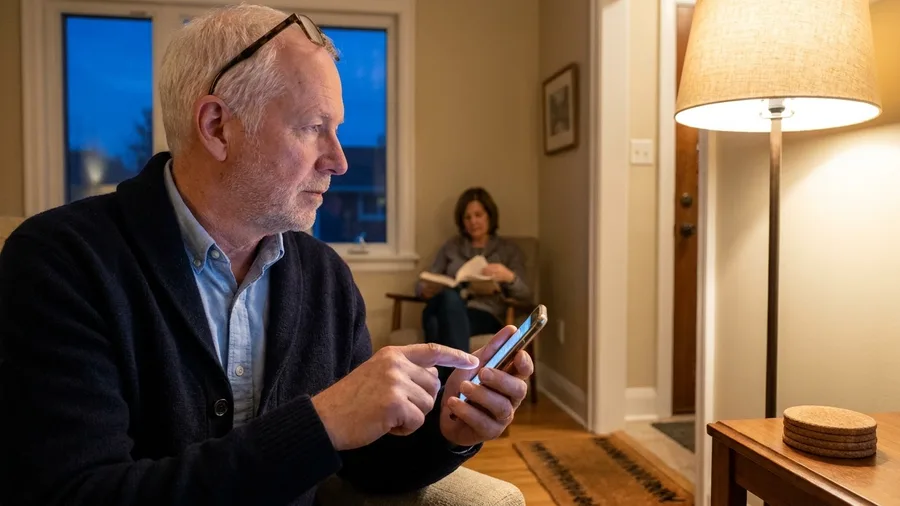
You’ve found a flight, the dates work, the price is fine, and your finger is on the button. Before you press it, you think: does this land on a day that’s already full?
That half-second pause is the whole test, and it says something good. It means you still treat the other person’s time, space, and money as real. A trip, guests for the weekend, a new appliance: nothing large gets committed before the one at home knows. Asking permission suggests someone is in charge. Consideration says the other person’s day belongs to them, not to you.
It matters more now than it used to. When both of you are home more, the calendars stop being separate and start overlapping, and a small plan made in the morning can reshape the other’s afternoon. The check-in is how you keep room for each other.
You don’t need a committee meeting over a new kettle. A routine for the everyday purchases and a call before the large ones keeps consideration from hardening into control.
💡 Tip: Use a shared calendar, paper or phone, for anything that costs over a hundred dollars or takes more than an afternoon. Small purchases don't need a committee.
Respect and Independence
Signs 4 and 5 are about the quiet mechanics of respect. They show up when one of you needs something and when one of you is losing something, and in both cases the question is whether the other person keeps their dignity.
This is where marriages either treat each other as capable adults or slide into parent and child. The signs below tell you which side you’re on.
4. You can name what you need without a fight
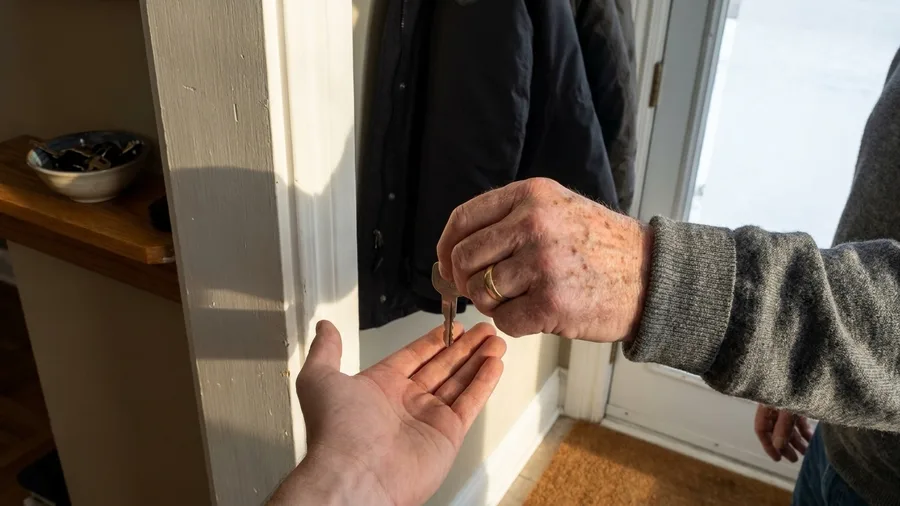
The version of this I got wrong for years looked like competence. I would notice the car needed servicing, book it, take it in, and mention it a week later over dinner as a fact rather than a request. That works until it does not, and when it stops working the person who was never asked starts to feel less like a partner and more like a member of the household staff.
The plain ask is smaller and harder than it sounds. “I need you to drive me to the appointment on Thursday” names the need, names the day, and stops. It carries no “you always leave me to sort this out” and no “if you loved me you would already know”, the two sentences that turn a request into a test the other person cannot pass.
What you leave room for matters as much as what you say. The other person can confirm the time, agree, or say Thursday is impossible and offer Wednesday instead. The ask survives being answered honestly, which is the difference between a request and a demand dressed up as one.
The cost of never asking is quiet and it compounds. Your spouse learns to read your silences, guesses wrong, and gets blamed for the guess; you carry the load alone and start keeping a private tally of everything you never asked for. Naming the need without apologising for it is not weakness. It is the part that stops the guessing.
💡 PRO TIP
Ask for the whole thing
When you need help, name the whole ask in one sentence, including what you don't need. 'Can you drive me Thursday at 2, and just wait in the car?' saves the other person from having to guess how much is required.
5. You protect each other’s dignity

The harm tends to arrive through kindness that nobody negotiated. One spouse starts answering for the other at the pharmacy counter, decides the night driving is over without saying so, quietly moves the walker to the door where it is easier to reach. Every one of those is care. Every one also removes a small decision from the person who was making it.
Picture the audiologist’s waiting room. One of you has the appointment; the other came along and is now doing the talking, explaining the hearing, choosing the model. The version that protects dignity looks almost identical and is not: sit beside, let them describe their own ears, and wait in the car if that is what they would rather have.
The other risk is doing nothing because stepping in feels like taking over. A fall, a doubled dose, a missed medication: safety needs a plain word before the accident, not after it. Medical and legal questions belong to the doctor or pharmacist. The marriage question is narrower and harder, and it is this: whatever help gets offered, does the person still keep their own place at the table?
The Dignity Check: What Helps and What Takes Over
Plans and History
Signs 6 through 8 are about time: how you talk about the future, how you handle money, and how you use the past. Couples who can do all three without flinching are in better shape than they often realize.
None of these require a perfect plan. They require a shared language for what comes next and a shared archive of what came before.
6. You talk about the next move before it’s forced

The usual advice is some version of don’t bring it up yet, don’t spoil the good years, wait until there is a reason. It sounds gentle. It is also the advice that guarantees the conversation happens in a hospital corridor at a time chosen by someone else.
The trigger rarely arrives with a bell. One of you starts taking the stairs one at a time and holding the rail. The spare room downstairs sits empty while the bedroom stays upstairs. The drive to the weekly club turns from routine into a task someone dreads. The moment to talk is while those things are mild, because a conversation about a preference is easy and a conversation in the middle of a crisis is not.
What the talk is not: a legal or financial plan. It is two people saying what they want. Whether they would rather stay put with help, move closer to family, hold onto the car for another two years, downsize before it has to be done to them. Timing, money, and what each person actually hopes for. A lawyer or a financial planner handles the rules for housing, care, taxes, and documents; nobody in this conversation should be guessing at those.
It is fair to worry that raising it sounds like an announcement that the end is near. It is the opposite of that. A plan made for a future you are both still in is a way of saying the future is worth arranging together, and a plan can be revised every year if either of you changes your mind.
A crisis is what narrows the choices. In a hospital, a fall, a sudden week of decisions, the options collapse into whatever is available and whoever is in the room. In an unhurried conversation at the kitchen table on a Sunday, they are still wide open.
So the morbid version and the caring version start with the same sentence. “I have been thinking about the stairs.” What makes it care is that it is said before anyone has to say it.
💡 Tip: Schedule the conversation for a Saturday morning, not a Sunday night. Put it on the calendar like an appointment so it doesn't get postponed indefinitely.
🗺️ The Next-Move Conversation in Four Steps
Pick the trigger
Name the thing that started the thought: stairs, a spare room, or a long drive.
Share the picture
Each of you describes what you want the next five years to look like.
List the unknowns
Write down the money, family, and legal questions you cannot answer yourselves.
Book the expert
Make one appointment with an elder-law attorney or financial planner to close the gaps.
7. You have a money routine that doesn’t hide
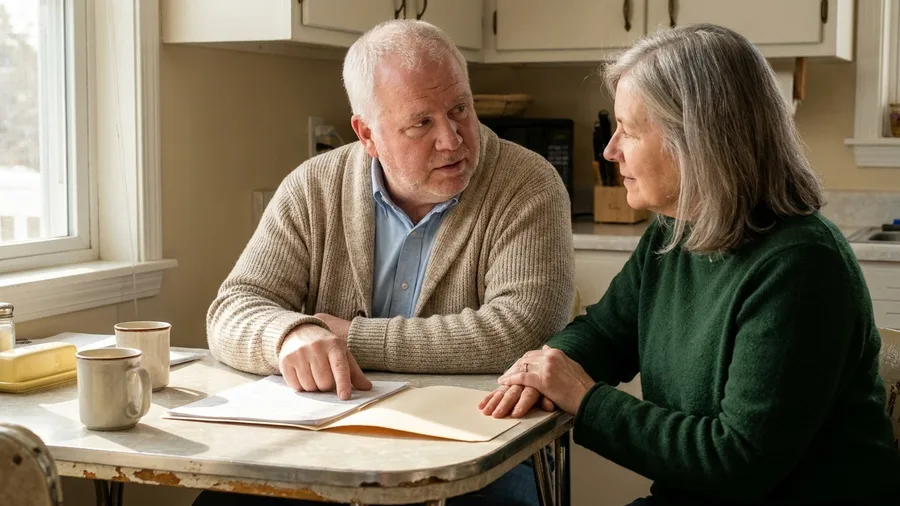
Money gets handled by some routine both people know about, whether that is a monthly hour at the kitchen table, a folder where the will and the insurance papers live, or a spending limit you both agreed on. Enough planning about housing and care turns on money that the honest question is not whether you keep any of it separate, but whether either of you is running a second set of books.
Private spending money is fine. Separate accounts for a hobby or a gift fund are fine. What is not fine is hidden debt or an account the other person does not know exists, because at that point money has become a separate life. Even when one of you handles every form, both of you should know where the will, the insurance, and the account information are kept.
Tax, benefit, and investment rules belong to an accountant or an official source, not to this page. The marriage sign is simpler than any rate: the system is visible to both of you.
The Money Routine — At a Glance
📅 First step
Build the account list before the review
🗂️ Folder contents
Will, insurance, account list, passwords
💵 Threshold rule
Name the number, and what counts as a gift
🔐 Access check
Each person opens it once, alone
🧾 When to call in help
Before a pension, benefit or tax decision
The honesty test
Ask your spouse to find the will and account list now. Time it. Anything over five minutes is the gap.
8. You still laugh at the same old stories

” The photo of the station wagon loaded for the camping trip is barely out, and one of you is already laughing before the leaky-tent part arrives. Money routines keep the practical present honest; this is the other half, the shared past that still works on both of you.
Researchers who study how couples talk about their history keep finding the same thing: the couples who stay close are the ones who can tell the old stories with warmth and detail, and the ones in trouble tell the same events flatly or not at all. The story reminds each of you of a self that exists outside the current roles and ailments.
So the laughing matters. It is a living resource, not nostalgia for its own sake. The check people miss is balance: at least one new plan or memory sitting alongside the old ones. A short trip, a restaurant neither of you has tried, a class you sign up for together. That keeps the marriage from becoming only an archive. If the past is the one subject that feels safe to talk about, name that, because shared history connects when it opens the present and stops connecting when it replaces it.
A Week of Small New Memories
Attunement and Care
The last two signs are the ones people most often mistake for weakness: noticing when the other isn’t okay, and accepting care without losing your place.
Both require the trust built by everything above. If the earlier signs are in place, these two usually follow.
9. You notice when the other is not okay

Laughter at a well-worn story only lands when you are watching the face telling it, and that habit of watching is the same one that catches the plate left half-eaten or the shoes still by the door at four in the afternoon.
When the person who has taken the same walk every afternoon since retiring is still in the chair at five, you have a choice: ask once, or ask properly. “You didn’t go today” is a question. “You didn’t go today – sit down a minute, what changed” is one that leaves room for an answer. No spouse catches every signal, and missing one is not proof that the two of you have drifted; some low days go unnoticed and that is normal.
What moves a marriage isn’t vigilance – it’s that the second question gets asked. But a low mood that lasts weeks, a withdrawal that doesn’t lift, confusion or a real change in how the other person moves through the day needs a doctor’s eye, not just a spouse’s care.
💡 Tip: Use a specific opener: 'You didn't walk after dinner tonight. What's going on?' Specific beats 'Are you okay?' every time.
10. You can be cared for without losing your place

“I don’t want to be a burden.” It is the line people say at the kitchen table the week before a hip replacement, and it is usually said by the person who has spent years doing the lifting. Recovery from surgery or a broken hip asks something unfamiliar of a marriage: one spouse needs help with meals, transport, and medication, sometimes for weeks. The question underneath the polite refusal is not whether the other will show up. It is whether being helped will cost the person their place in the household.
The strongest version of this keeps roles intact. Tasks get divided, outside help gets called in, and the person recovering keeps the decisions they can still make, like what is for dinner or which appointment slot works. Help arrives, but it does not take over. That distinction is everything: a ride to physical therapy is support, while being told which shirt to wear is a demotion.
What is rarely said out loud is that caregiving is tiring. Resentment can build in the quiet parts of a week, and naming it early is a mark of a working partnership, not a failure. “I’m tired, can we ask someone to come in twice a week” is a sentence that keeps care mutual instead of letting it harden into obligation.
One arrangement does not fit here: the couple where one person has always managed everything and still refuses all help, even when the other offers. That is not mutual care. It is a permanent parent-child setup wearing the clothes of devotion, and it will not survive the first real recovery.
Frequently Asked Questions
Does spending time apart mean our marriage is fading?
Not by itself. Time apart refills each of you and signals trust that the other will return. The sign tells you something only if separate time is the only relief from tension; then the missing piece is repair, not the space.
We still argue about small things. Is that a bad sign?
Usually no. Small friction that ends in repair within the hour is a sign of engagement. The trouble is scorekeeping, when a thermostat argument gets linked to every old grievance.
Should we still check in before booking a trip or buying something big?
Yes, but as consideration, not permission. After retirement your schedules overlap more, so a quick check before committing keeps both of you in the picture.
How do we talk about downsizing without it feeling like the end?
Start early, on a Saturday morning, and frame it as a plan you can change. Bring in an elder-law attorney or financial planner for the rules; the conversation itself is the care.
Is it normal to keep some money separate?
Separate fun money can be fine. Hidden debt or hidden accounts are different, because they turn money into a separate life. Both partners should know where the will and account information are kept.
The Sign You Already Recognized
These are ordinary signs, not a test. A calm house and separate evenings are not evidence that something has failed. The warnings are specific and few: time apart as the only relief from tension, arguments that keep a score, money one person cannot see, help that cannot be accepted, a withdrawal that does not lift. Those are worth attention. Quiet on its own is not.
So bring the comparison back down to scale. The younger couple and the louder marriage are not the measure. Your own week is, the one where the lasagna was already in the fridge and nobody needed a second text to know the evening was fine.
Pick the sign that made you pause and say it out loud this week. The Tuesday club night, the quick fix to the thermostat, the Thursday drive, named plainly as something you are glad is there. Then let the conversation go wherever it goes, which may be nowhere in particular. It does not need to be a reckoning. It only needs to be said.
Name the sign you recognized
Go back through the ten signs, pick the one that felt most like your week, and mention it to your spouse tonight. One sentence is enough to start the conversation.