
Her name comes up on a family group thread and a message gets typed out, deleted, typed again, and sent as nothing.
You come to this with a phone in hand after years of silence, half convinced that reaching out means finally staging the conversation that was missed.
It does not. First contact is not the verdict on the relationship. It is a cheap test of whether a reply can land without a demand for resolution attached to it.
What follows is a sequence, not a summit: an honesty check, a short message, a bounded afternoon, listening, a specific apology, small scheduled check-ins, agreed limits, and an honest talk about what this can be. Repair here is built move by move, which is also why it survives a bad week.
By the end you will know whether to start with the message or with the check, and you will have one opener to send.
Quick Tips Before You Start
Write It Down First
A one-page honesty check keeps your first message from carrying every old grievance.
Pick a Low-Stakes Day
Send the first message on a weekday afternoon, not a birthday or holiday when expectations run high.
Give Silence Room
A delayed reply is information about pace, not a verdict on the relationship.
Agree an Exit Line
Before any meeting, both people choose a sentence like 'I need to head out by three' and use it without apology.
Screen for Safety First
If there is active violence, addiction, or coercion, talk to a professional or a helpline before any family conversation.
1. A one-page honesty check before contact
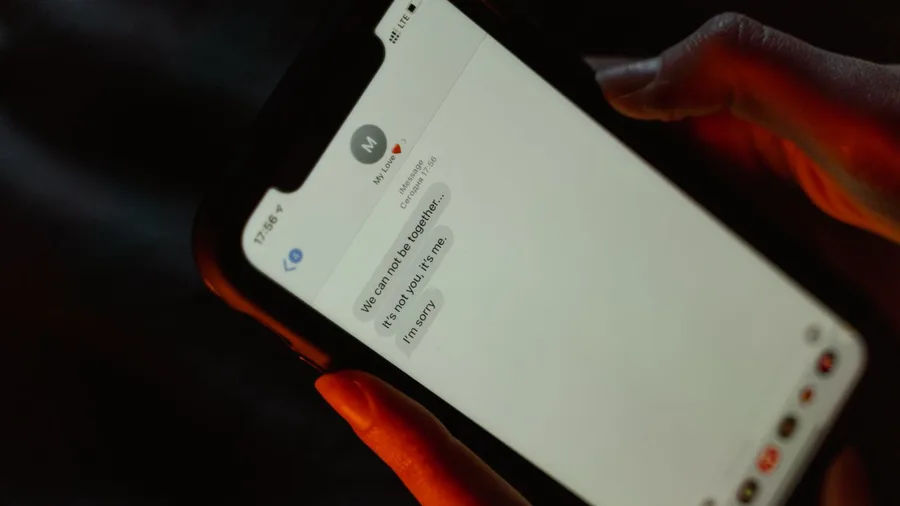
It is ten at night and you have drafted the message four times. Each version is longer than the last. You delete the whole thread, set the phone face down, and pick it up again. The question underneath is not really what to type. It is whether any of this is worth the risk, and what you are supposed to have sorted out before you press send.
A single sheet of paper settles most of it. Rule three columns down the page and label them want, fear, and not-in-first-contact. In the first, write one plain sentence naming what you actually hope for: occasional updates that prove he is all right, a genuine friendship with real conversation, or an apology for a specific thing. Pick one of the three. “Closer” is not an answer, because vague closeness cannot tell you what to type or how to read a reply that comes back short.
Fill the second column with what you are afraid of, honestly. He will reply out of duty. She will use it to relitigate a fight. You will get one polite message and nothing after. Naming the fear does not dissolve it, but it stops the fear from writing the opener for you.
The third column holds what stays out of first contact. Choose one incident or old pattern and write it there with a note that this message will not touch it. The missed graduation. The holiday she left two days early without saying why. Keeping it off the page does not mean forgetting it. It means the first thing you send is not carrying a grievance it cannot bear, so the reply does not have to defend against a charge you never meant to file.
Before any of that, run one quiet check. If there is active violence, an addiction that shapes the contact, or coercion around money, care, or access, this sheet is not the tool. The first move belongs to a professional or a safety service, and a written honesty check is no substitute for protection.
Then set the bar where this first step can actually clear it. The message that follows is not asking for resolution. It is asking one question: is the channel open? A reply, even a plain one, answers that. Whatever the past cost, a reply is enough to work with.
💡 Tip: Keep the page somewhere private. You are not sending it; it is a compass, not a script.
2. A low-pressure first message with no blame

” two people with the same silence in their family will ask it in almost identical words. One is a man in his sixties, the other a woman in her thirties, and neither can get past the blank box on the screen.
could the other person answer this in a single line without explaining themselves? If yes, send it. If the reply would have to be a paragraph, a phone call, or an account of the last five years, you have raised the stakes past what a first message can hold, and the opener needs to shrink.
A version that passes is two or three sentences. “I have been thinking about you. The garden is in its usual summer mess.” Then one easy question he can answer in half a line: do you still have that photo from the lake, or what are you building in the workshop these days? A neutral memory or an ordinary interest gives the other person something to hold onto, and an answerable question gives them a low-cost way back.
What keeps that message easy is what it leaves out. No mention of the silence, no grievance, no request for a call. Those three items turn a reply into a summit, and a summit is not something either of you has agreed to yet. Someone with a clear want, a kept-out topic, and a checked safety picture can send a short note like this without the whole past riding on it. A late reply or a thin one tells you the pace, not the verdict.
💡 PRO TIP
Send it on a Tuesday
Weekday afternoons get faster replies than Sunday nights or holidays, when expectations and old memories run highest. A quick reply on a Tuesday tells you the channel is open without the weight of a special occasion.
3. A short shared activity instead of a big talk

Sixty to ninety minutes. That is the length of the first meeting, and it is deliberately shorter than a meal feels like it should be.
Because the message that asked for one answerable line has already proved contact can happen without a demand, the next step is a walk, a museum, or a casual lunch with a hard stop, not a whole holiday or an open day with no edges. Each person holds an exit line agreed beforehand, “I need to head out by three,” and it needs no excuse when it lands.
Three ordinary topics will carry the conversation: work, a hobby, a family update. That is the frame, a visit between two people with things to say, not a relationship audit at the table. It handles drift and awkwardness well. What it cannot do is carry a specific wound, which needs its own conversation later; a bounded afternoon keeps the pressure low precisely by not pretending to be that conversation.
💡 Tip: Choose a place you can leave easily: a cafe near a bus stop, a museum with benches, a park with a parking lot close by.
4. A listening rule for old grievances

Your instinct when she brings up the missed graduation is to explain the traffic, the ticket, the shift you couldn’t swap. That explanation is the thing that keeps the wound open.
Before you answer anything, say her grievance back to her in one plain sentence. “You felt abandoned when the visit got cancelled.” That sentence does more than a defense ever will, because it tells her the point landed before you start arguing about dates. Then ask the question that moves the ground: “What would have helped you then?” It stops the exchange being a fact-debate and hands it back to her experience, where it belongs.
That first exchange bans four words: “that’s not how it happened.” Your account gets its own time later, agreed out loud, so defense can’t jump the queue and hijack the moment. This runs both directions. She may need to hear your side without being drafted into managing your guilt, and you may need to hear hers without correcting the year.
Hearing the grievance first is what makes room for an apology that actually names something, rather than defending what you meant.
Judging Whether the First Attempt Worked — and When to Stop for Today
Reads as a real opening
- She corrects a detail of your one-sentence reflection — that is her confirming the frame, not failing it
- She answers the 'what would have helped' question with a specific memory, however small
- She agrees to a day and time for your side, even vaguely ('not today, but soon')
- The tone drops, or the pace slows, before the conversation ends
Reads as another defence
- She repeats the same grievance in a louder voice — the reflection did not land, so say it again, not a new defence
- She goes flat or silent after your reflection — stop, name it ('I can see that landed badly'), and offer to pick it up another day
- She starts managing your feelings ('I don't want to upset you') — that is the cue to say your guilt is yours to carry
- You have answered three of her points with 'but' — end the exchange there and book the later conversation explicitly
5. A repair apology that names your part

The apology that opens with “I was doing my best” makes her argue for her own hurt, and she will lose either way. Leave the shield at the door.
Name what was done, name the effect, say what changes. “The holiday was cancelled without telling you; that left you waiting; next time the plan changes, the call happens first.” That is the whole shape. No “but you also,” no backstory. The amends should match the harm, whether that is a longer conversation or simply showing up consistently instead of promising a new personality.
Give it without asking for forgiveness or setting a deadline. She may only nod and say nothing, and that counts.
6. A steady rhythm of small check-ins

The rhythm that holds after distance is small and scheduled: a text on Sunday, a call the first Tuesday of the month.
You send a photo of the tomato plants. She answers with a thumbs-up or nothing at all, and neither one is a verdict. The schedule is explicit so nobody has to negotiate it each week, and the low-stakes thread gives contact a reason that isn’t repair.
When a reply doesn’t come, wait. Try once more later. A second message after silence is a check-in, not a demand. If she has asked for no contact, that request governs, and predictability matters more than intensity.
What Predictable Contact Actually Changes
The small numbers that build trust
7. A boundary plan for politics and partners

You decide, before the next visit, which two or three subjects sit the evening out. Politics, an ex-partner, how the daughter is raising her kids – named in advance, so neither of you can later claim the other brought it up as a loyalty test.
Agree on a phrase and what it does. “Let’s leave that one” means the topic closes on the spot, with no parting shot and no last correction, and either person can say it.
Then work out who is in the room. A partner does not carry messages between father and daughter and is not asked to referee an old grievance; a visit is named as one where the partner comes or one where it is the two of you, decided rather than assumed.
A boundary that is never enforced is just a topic with a polite label. If the same subject keeps breaking through, end the call warmly and try again the following week – the limit holds because you keep leaving and coming back, not because you finally explain it well enough.
💡 Tip: Write the parked topics on a sticky note and put it on the fridge before the visit so neither of you has to remember under stress.
🔄 The Repair Sequence at a Glance
Private honesty check
Write one page naming what you want, what you fear, and what stays out of the first message.
Low-pressure first message
Send a short text with a neutral memory and an easy question.
Bounded first meeting
Meet for 60 to 90 minutes with an agreed exit line.
Listening and repair
Reflect grievances back before responding, and offer a three-part apology.
Steady check-ins
Set a weekly text and a monthly call, and wait rather than escalate silence.
Boundary plan
Park two or three topics and agree on a pause phrase.
Next-step talk
After several calm contacts, discuss frequency and what each person can offer now.
8. A next-step talk about what this becomes

The usual advice is to sit down and finally define the relationship – to say out loud what you both want it to become. In practice that talk tends to arrive too early and buckle under its own weight. Researchers who study adult family relationships describe the same pattern from the other direction: contact that is regular and predictable does more for closeness than a single conversation that tries to settle everything at once.
What helps instead is a plain exchange of current capacity. Not what either of you owes from the years that were missed, but what is actually on the table now – a retired father with weekday afternoons free, a daughter with two young children and little room for a monthly trip, caregiving limits said honestly rather than discovered in a crisis.
A limited form is allowed to be the answer. Holiday calls and a visit or two a year can be a sustainable relationship rather than a verdict on how much either person cares. Then put one plan on paper for the next three months – the weekly text, the monthly call, one visit – with a date to ask what is working and what is not.
And keep a stop rule. If either of you consistently feels worse after contact, push less rather than harder, and consider a family therapist or counselor. Worsening is information: it says change the format, or bring in help, not that you should try one more time at higher volume.
Repair at a Glance
⏱️ First meeting length
60–90 min
📅 Check-in rhythm
Weekly text, monthly call
🗣️ Pause phrase
"Let's leave that one"
🛟 Safety screen
Before any contact
🔁 Review point
3 months
The goal
A sustainable relationship is better than a forced summit.
Frequently Asked Questions
What if my daughter doesn’t reply to the first message?
Wait at least a week before trying once more. A delayed reply is information about pace, not a verdict. If she has asked for no contact, that request governs and you should not push further without a professional’s help.
How do I apologize for something that happened years ago?
Name what you did, name the likely effect, and say what you will do differently. Leave out excuses. Offer a concrete amend, such as a changed holiday plan, and do not demand forgiveness or a timeline.
What if we disagree about politics or a partner?
Park two or three topics before the next visit. Agree on a pause phrase like “Let’s leave that one” and drop the subject without a last word. If the boundary is broken, end the call and try again next week.
How often should we talk after years of distance?
Start with a weekly text and a monthly call, set on specific days. A low-stakes shared thread, like a sports update or a photo, gives contact a reason outside repair. Predictability matters more than intensity.
When should we see a family therapist?
If either person keeps feeling worse after contacts, or if a specific wound keeps derailing conversations, a family therapist or counselor can help. Worsening is a signal to change the format or get help, not to push harder.
The First Step, and the Signal to Slow Down
Here is the rule. If the distance is mostly drift, open with the low-pressure message. If there is a specific wound or a safety question, open with the one-page check, and consider a counselor before you meet at all.
This week, send two or three sentences: one neutral memory, one question she can answer in a line. No mention of the years, the grievance, or a request for a call.
If the reply is thin, or does not come, or you feel dread building before you press send, wait and try once more later. Pace is not a failure of the repair; it is part of it.
That phone with the unsent message on it is not a verdict. It is a place where one small, safe move gets tested, and the relationship grows out of those repeats, not a single redemptive talk.
Start With One Small Move
This week, write your one-page honesty check or send the short message. A reply is enough to prove the channel is open.