
How old a person feels on a given Tuesday has surprisingly little to do with the number on their birth certificate.
Most people treat felt age as something that happens to them – a slow tightening they can either accept or resist with varying degrees of dignity. What the psychology research actually shows is different: the daily habits a person runs determine, to a measurable degree, how old they feel from the inside. Not by denial, and not by pretending the body is not changing, but by shaping the internal frame through which those changes get interpreted.
The giveaway is the phrase ‘at my age.’ It shows up in small decisions and large ones – the course not started, the career move not pursued, the physical challenge quietly retired from before it was even proposed out loud. Every time that phrase fires, it is doing something specific: collapsing a description into a forecast.
Felt age and chronological age are not the same variable, and the distance between them is largely determined by identifiable psychological habits, not by biology alone. Six of those habits do the most work. Each has a clear mechanism and a concrete first step – and by the end, it will be obvious which one to try this week and which to layer in next, so this becomes a sequence rather than a pile.
Quick Tips Before You Start
Pick One Habit First
Starting all six at once almost always means finishing none. Choose the one that maps closest to something already in your routine.
Write It Down
Naming the habit on paper — what it is, when you will do it — doubles the chance it survives the first week.
Track Felt Experience, Not Just Behavior
Note how you feel after three weeks on a habit, not just whether you did it. That is the signal this article is aiming at.
Expect a Lag
Most psychological habits take two to four weeks before the felt shift shows up. Non-response in week one is normal, not evidence the habit is wrong.
1. Treating Your Age as a Description, Not a Forecast

think of something you considered doing recently – a course, a career move, a physical challenge – and notice the reason you gave yourself for not pursuing it. If ‘my age’ appeared anywhere in that reason, the question worth asking is whether age was the actual barrier or simply the nearest explanation that closed the conversation fastest.
Saying ‘I am 58’ is a fact. Saying ‘at my age, I can’t really start something like that’ is a choice dressed up as a fact – a psychological move, not a logical one. The habit is catching that move at the moment it forms, in thought or out loud, and rewriting it before it settles: ‘at my age’ becomes ‘right now’ or ‘given where I’m starting from.’ One version bolts the door. The other leaves it open.
This matters most to people who have already begun declining things reflexively, using age as the reason before they have actually examined whether the real obstacle is something else – cost, timing, confidence, circumstance. A genuine physical limit is still a limit, and the habit does not ask anyone to pretend otherwise. What it asks is that the limit be assigned to the specific situation, not to a category called ‘my age’ that quietly closes down everything at once.
The mechanism is not motivational. Language shapes the frame through which experience gets interpreted – use ‘someone my age’ as an identity label often enough and the mind begins looking for evidence to confirm it in every interaction, every small setback, every moment of effort. That confirmation loop is self-reinforcing. The habit interrupts it at its source, which is earlier than most people think: not in the decision, but in the sentence that precedes it.
2. Keeping One Goal That Scares You Slightly
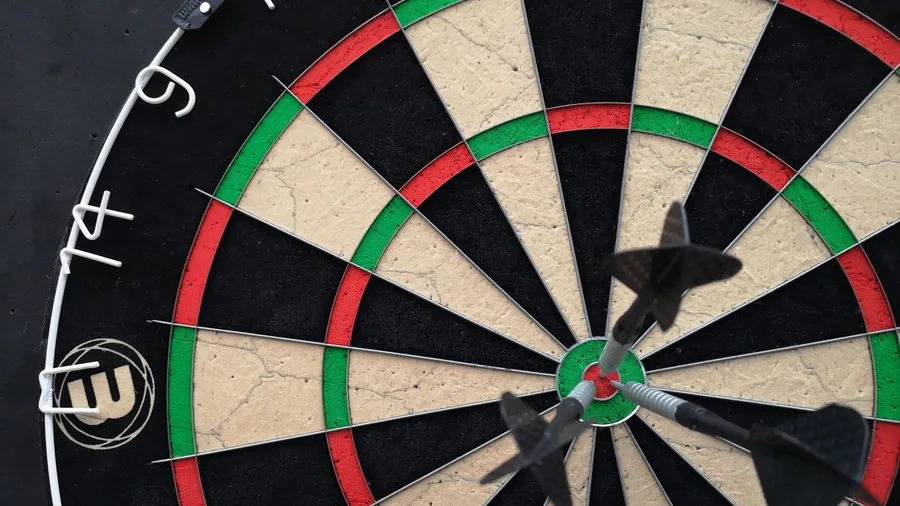
‘I keep meaning to get back to that’ is one of the more revealing things a person can say. Not because the intention is wrong, but because ‘meaning to’ is the grammar of a fantasy, not a goal. A fantasy sits somewhere in the future. A live goal has a next step that exists today.
The difference shows up clearly in two people who both say they want to learn something new. One has a vague plan to look into it eventually. The other signed up for the Tuesday class last week, went once, made three obvious mistakes, and is already thinking about Thursday. The second person is not more disciplined – they just crossed the line from intention into something with stakes. That slight possibility of failure is precisely what makes the planning and anticipation systems run.
When no live goal is in place, those systems go quiet. Motivation, forward-thinking, and the small daily pleasure of working toward something all flatten out – and that flatness gets read as slowing down, as ‘just getting older,’ when it is actually the predictable result of those systems sitting idle. For people whose identity was built entirely around a role that has since contracted, the first move is not finding the goal but giving themselves permission to want something again before the goal is even named.
💡 Tip: If finding a goal feels impossible, start smaller: allow yourself to want something before the goal is even named. The wanting comes first.
⚠️ COMMON MISTAKE
Bucket Lists Are Not the Same as Live Goals
A bucket list is a wish deferred to 'eventually.' A live goal has a next action you can take this week. If your goal does not have a specific first step and a rough timeline, it is still a wish — and wishes do not engage the planning systems that make this habit work.
3. Investing in Friendships the Way You Invest in Assets
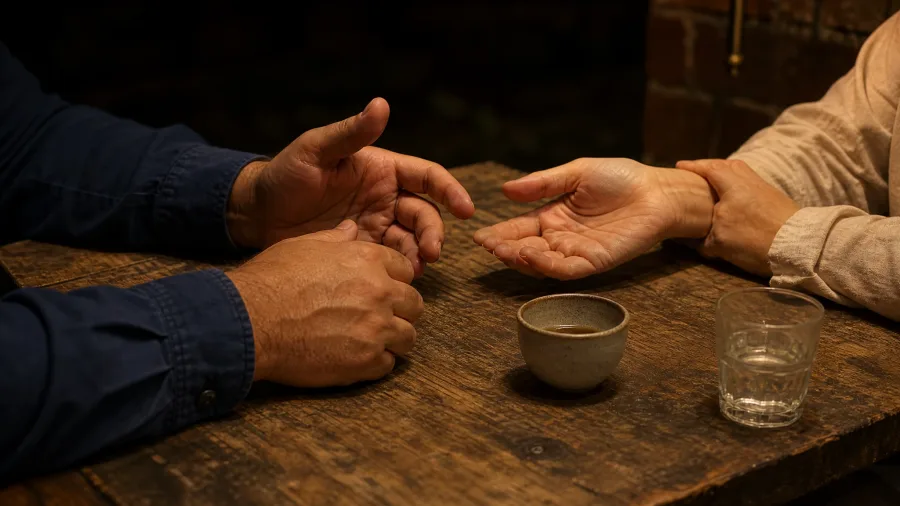
Ten minutes, placed on purpose, is enough to keep a friendship alive. Not a grand plan, not a significant gesture – a call that gets made because you put it on the calendar, a lunch scheduled three weeks out before either person gets busy, a follow-up to something a friend mentioned the last time you spoke. These are small acts, but they signal something: this relationship is being tended rather than left to run on its own momentum.
That distinction – between responding when someone reaches out and actually initiating – is what separates a friendship that persists from one that quietly expires through mutual inaction. Both people are probably well-intentioned. Neither is deliberately withdrawing. But without someone making the next move, the gap between contact grows until the friendship exists mainly as a warm memory.
When close friendships thin out, the result is a recognizable feeling that does not announce itself as loneliness. It is subtler than that – a slow sense of the world contracting, of being less known, less embedded in anything ongoing. That feeling maps almost exactly onto what people describe when they say they feel old. It is not age producing the feeling; it is the absence of the relational texture that makes life feel current.
This habit is hardest for people whose social life was organized around work or an active parenting structure that has since shrunk. The circle contracted through circumstance, not neglect, which means rebuilding it requires something specific: treating the effort as a legitimate use of time rather than a luxury that can wait. Evaluating which friendships to keep and which to end is a practical place to begin that rebuilding. The mechanism is direct – being known and valued by people who are still actively in your life is tied to a felt sense of relevance and vitality. When that thins, the psychological experience of aging accelerates. When it is maintained, something measurable holds.
What Each Pattern Actually Costs Over 12 Months
Passive Contact
- Each unanswered gap trains both people that silence is the default
- Friendships maintained this way typically shrink to 1-2 contacts a year
- You stay liked but stop being known — the difference that matters
- Works fine for acquaintances; quietly kills close friendships
Active Investment
- 10 minutes of deliberate contact per week is the minimum effective dose
- A scheduled lunch 3 weeks out survives busy calendars; a vague plan does not
- Following up on what a friend mentioned signals you were actually listening
- One initiated contact often restarts reciprocal momentum for months
4. Scheduling Novelty Rather Than Waiting for It

‘Stay curious’ is the advice. It sounds reasonable until you realise it describes almost nothing – because most people already consume something new every single day. A documentary about deep-sea biology. A restaurant with a cuisine they’ve never tried. The endless scroll of novel information. That’s curiosity as reception. It doesn’t move the needle.
What actually changes how the brain ages is generative novelty – being required to make something, practice something, produce something. The cognitive load of receiving information and the cognitive load of correcting your own errors are not the same thing. The second kind is the one that matters here.
There’s a practical test for whether an activity qualifies. If the first few sessions involve real errors, moments where autopilot fails and conscious attention is forced back online, it clears the bar. If it can be done comfortably from week one, it doesn’t. The discomfort is not incidental – it is the mechanism.
As a weekly habit, this doesn’t mean booking an adventure or adding another commitment to an already full schedule. It means one standing block – a 45-minute slot on a specific day, recurring – where the brain is in that generative state on a regular cadence rather than whenever inspiration happens to arrive. Which, without the appointment, is rarely.
For people who find novelty uncomfortable rather than energising, the habit scales down without losing its function. A different route on a familiar walk. A technique not tried before in a craft already known. The productive uncertainty is smaller, but it is still there, and it still does the work – resisting the cognitive narrowing that quietly accumulates when a person spends most of their time operating inside fully mastered territory.
🧠 How to Install a Novelty Habit in Four Weeks
Choose One Generative Activity
The activity must require you to correct your own errors — not just receive input. If there is nothing to get wrong, it does not qualify.
Schedule the First Session This Week
Assign a day and a start time before you close this page. 'This week' without a slot almost never happens.
Expect Errors in Sessions 1 to 3
If it feels easy immediately, the bar was set too low. Move up one level of difficulty before week two, not after month one.
Make It Recurring
The same slot, the same day, for all four weeks. Consistency is what shifts this from an event into a standing cognitive demand.
Assess After Week Four
One honest question: is autopilot still failing at least once per session? If not, the activity has become reception. Raise the difficulty or replace it.
5. Reframing Physical Change as Adaptation, Not Loss

You finish a run and notice the recovery taking longer than it used to. The thought that follows is automatic: ‘I’m losing it.’ That’s not an observation – it’s a verdict. And the verdict is optional.
The event is fixed. The interpretation isn’t. ‘My body is losing resilience’ and ‘my body is telling me to build more recovery into the schedule’ describe the same physiology. One casts the body as failing; the other casts it as communicating. The second frame leaves you with something to do, which is psychologically different from decline. This isn’t denial – the change is fully acknowledged in both readings. What shifts is whether you’re in a collaborative relationship with your body or an adversarial one.
The habit also pairs directly with actual medical attention, not instead of it. Notice the change, get it assessed, follow through on care – and then choose the interpretation that preserves agency rather than surrendering it. The reframe applies to the meaning attached after honest acknowledgment. That’s the only place it belongs.
How You Read Physical Change: A Quick Sort
- 🟢 I notice the change and adjust the plan — Acknowledges the signal, builds in the recovery, keeps moving — adaptation frame in action.
- 🟢 I get it checked when something persists — Active health management running alongside reframing, not instead of it.
- 🟡 I notice the change but avoid thinking about it — Neither loss nor adaptation — avoidance delays the adjusted plan and the medical check.
- 🟡 I push through without adjusting anything — Effort without information. The body is sending a signal; ignoring it is not the adaptation frame.
- 🔴 I treat every change as evidence of decline — Loss frame running consistently — this is the one that produces the ongoing-defeat texture.
- 🔴 I use the change to avoid activity entirely — The body cast as an obstacle rather than a collaborator. The habit is designed to interrupt exactly this.
6. Protecting Sleep as Active Psychological Maintenance

Most people approach this backwards. They know sleep matters, so they aim at a number of hours, fall short a few nights, and conclude the whole effort is too rigid to maintain. The number is the wrong target.
What actually builds better sleep is three things working together: a consistent bed and wake time the body can rely on, a brief wind-down routine that signals the shift reliably each night, and the removal of one specific disruptor – the particular thing that most reliably delays or fragments sleep for this person. Bright screen until midnight, a heavy meal at 10 p.m., a stressful task that runs to the last moment before bed. One of those is almost always the culprit, and removing one thing is sustainable in a way that overhauling an entire pre-sleep environment is not.
The reason it matters this much to felt age is specific. Chronic shortfall produces a recognisable texture: fogginess in recall and processing, a flatness in mood, a general sense of reduced capacity. That texture mimics aging so closely that most people attribute it directly to their age – which means they stop trying to fix it. The functional question is not how many hours were logged but whether waking up feels restored or depleted. Sleep is when the brain consolidates memory, regulates emotion, and clears metabolic byproducts. Treating it as passive downtime is the error. Every other habit in this article runs on the system that sleep maintains.
💡 Tip: For recommended sleep durations, a physician or official public-health guidance is the right source. The functional signal to track here is simple: do you wake feeling restored or depleted?
Frequently Asked Questions
Does mindset really change anything physical, or just how you feel about it?
Both, and the distinction matters less than it sounds. Research on self-perception of aging consistently finds that people with more positive age self-perceptions walk faster, recover from illness faster, and report fewer functional limitations over time. The mechanism is not magic — it operates through behavior. A person who does not define themselves by age limits keeps engaging in the activities that maintain physical capacity. The mindset shapes what a person does; what a person does shapes the body.
What if I genuinely cannot think of a goal that interests me?
That is a signal, not a character flaw. When a person has spent years organizing their identity around a role that has since contracted — a career, a caregiving role, a family structure — the wanting can go quiet before the goal does. The starting point is not generating a goal list. It is allowing yourself to notice small pulls of interest without immediately dismissing them as impractical. The goal comes after the wanting is permitted.
Is socializing enough, or does it need to be deep friendship specifically?
The research on loneliness and aging consistently distinguishes between the number of contacts and the felt quality of connection. Casual contact is useful but does not produce the same effect as feeling genuinely known and valued by specific people. A large acquaintance network with no close bonds tends to leave the ambient-loneliness texture intact. Two or three active, maintained close friendships appear to do more for psychological vitality than a wide but shallow social circle.
I sleep seven to eight hours but still wake feeling depleted. What is wrong?
Duration is only one variable. Fragmented sleep — sleep interrupted by waking, noise, or light — does not produce the same restorative effect as consolidated sleep of the same total length. Consistency of timing matters too: irregular sleep and wake times disrupt the circadian rhythm in ways that produce daytime fatigue regardless of total hours. If persistent depletion continues after addressing the obvious disruptors, a physician can assess whether an underlying sleep disorder is involved.
Can reframing physical change go too far — where it becomes actual denial?
Yes, and the line is worth drawing clearly. Reframing means choosing an interpretation after acknowledging the reality. Denial means bypassing the acknowledgment. The practical test: have you noticed the change, considered whether it needs medical attention, and followed through? If yes, the reframe applies to the meaning you attach going forward. If you are using the reframe to avoid noticing, assessing, or following through — that is denial, and it belongs in a different category.
Which of the six habits is the fastest to produce a felt shift?
Sleep improvement tends to produce the fastest change in felt experience — often within two weeks of consistent schedule and one removed disruptor — because the cognitive and emotional texture of poor sleep is itself so closely mimics the felt experience of aging. The mindset habit runs a close second, because the shift in self-labeling language can interrupt the cognitive loop immediately. Start with sleep, then layer in the mindset habit.
Sleep First, Then the Story You Tell Yourself
Start with sleep. One change to the 30 minutes before bed – the screen that goes off earlier, the temperature that drops, the consistent wake time that anchors the whole schedule – tends to produce a felt shift faster than anything else on this list. The fogginess and mood flatness that have quietly been filed under ‘getting older’ often begin to lift within days. That shift is not cosmetic; it makes every other habit on this list more accessible, because it restores the system all of them run on.
Once that improvement is running, add the mindset habit. Catching age-limiting self-statements at the moment they form requires no equipment, no scheduling, and no one else’s participation. It operates on every decision made throughout the day, which means the feedback loop is short and the practice accumulates fast.
The person who walked in organizing their choices around ‘at my age’ is worth returning to here, because that phrase is a choice – not a fact, not an inevitability, not a form of wisdom. It gets made and remade dozens of times a week, across exactly the six categories this article named. Felt age is a running output of those choices, which means it can be revised. The most available place to start is the next 30 minutes before sleep tonight.
The FAQ Has Your Starting Point
Scroll up to the FAQ section — the last two questions map out exactly which habit to start with and why, so you leave with one concrete action rather than a list.