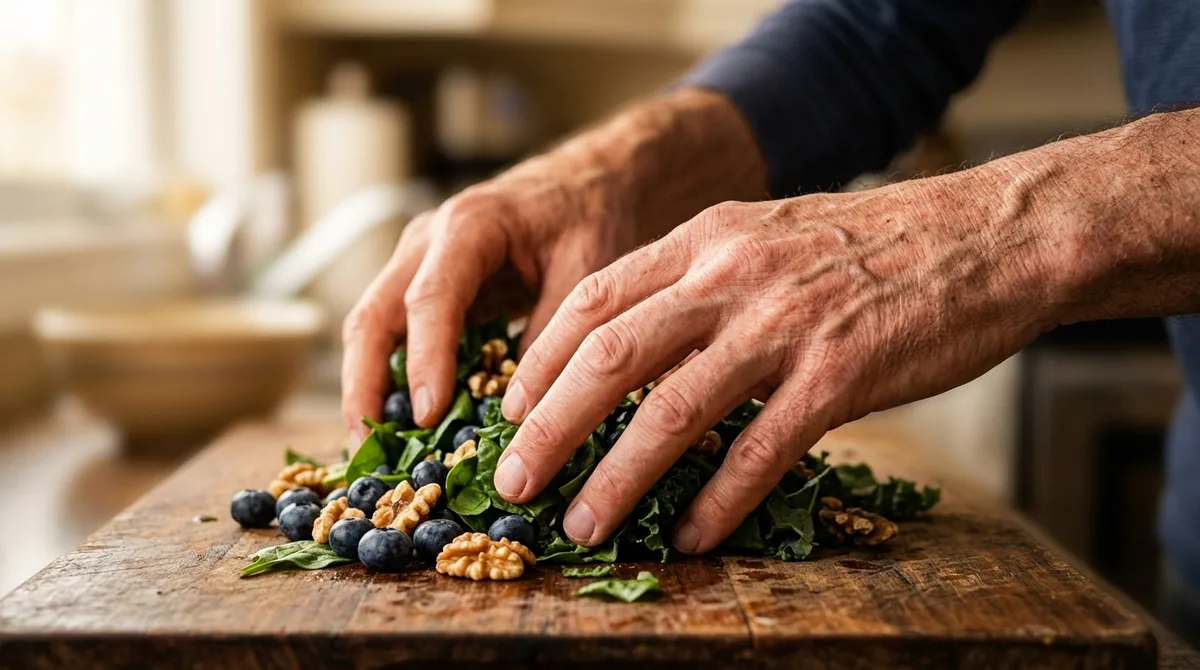
You reach the top of the stairs, and your heart is pounding harder than it used to, leaving you wondering if your daily routines are actually protecting your cardiovascular system.
For decades, medical advice boiled down to a single restriction: put down the salt shaker. But recent cardiology guidelines and clinical data show that focusing purely on subtraction misses the bigger picture of arterial health and cellular repair.
After reviewing current cardiology literature and speaking with clinical practitioners who treat patients over 50 every single day, a much more proactive picture emerges. You do not just need to restrict; you need to add specific nutrient-dense foods that actively support vascular elasticity and lower arterial inflammation.
Quick Tips Before You Start
Focus on Addition
Add one therapeutic food group per week instead of overhauling your entire kitchen at once.
Shop the Perimeter
Fresh produce, raw nuts, and quality proteins live on the outer aisles for a reason.
Give It Time
Arterial remodeling takes consistent daily nutrition over at least six to eight weeks to register.
Know Your Numbers
Pair dietary adjustments with regular blood pressure and lipid panel checks alongside your physician.
1. Walnuts for Endothelial Function

You might assume all nuts are equal.
Walnuts possess a unique fatty acid profile that directly targets the delicate lining of your blood vessels.
After 50, your endothelium loses some of its natural elasticity, making it harder for vessels to dilate properly under stress.
The alpha-linolenic acid found abundantly in walnuts helps restore that flexibility by boosting nitric oxide production.
Eat a standard one-ounce handful, roughly fourteen walnut halves, daily as a snack or tossed into your morning oats.
💡 Tip: Store shelled walnuts in an airtight glass jar in the refrigerator to prevent the delicate oils from turning rancid.
At a Glance — Walnuts
2. Fermented Kefir for Blood Pressure

Your gut microbiome dictates more about your blood pressure than you might realize, and standard yogurt often lacks the diverse probiotic strains needed for vascular support.
Cardiologists point to fermented kefir as a powerhouse because its live bacteria strains produce peptides that naturally inhibit the enzymes driving up blood pressure.
Pour one cup of plain, unsweetened kefir into your daily routine, replacing sugary dairy drinks entirely.
If the tart flavor catches you off guard, blend it with a handful of frozen raspberries to soften the bite without adding processed sugar.
Kefir Facts for Vascular Health
Source: Clinical observations on gut-heart axis connectivity.
3. Fatty Fish for Triglycerides

Taking fish oil capsules feels convenient, but eating wild-caught cold-water fish delivers a complex matrix of nutrients that supplements simply cannot replicate.
As we age, managing serum triglycerides becomes critical for keeping arterial walls free of calcified plaque buildup.
Aim for three servings of wild salmon, sardines, or mackerel per week, cooked gently via baking or poaching rather than deep frying.
If fresh fish is hard to source, canned wild sockeye salmon offers identical omega-3 fatty acids at a fraction of the cost.
💡 Tip: Check canned labels for wild-caught instead of farmed to ensure a much higher omega-3 to omega-6 ratio.
⚠️ COMMON MISTAKE
The Farmed Fish Trap
Many people buy cheap farmed salmon thinking they are getting heart benefits, but the feed profile drastically reduces the anti-inflammatory omega-3 content. Always choose wild varieties.
4. Dark Leafy Greens for Nitrates
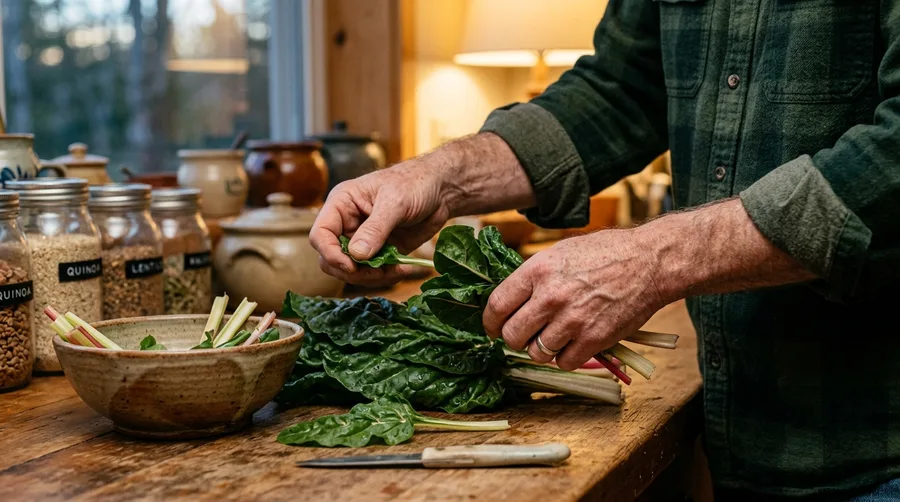
Salad greens often get dismissed as rabbit food, but Swiss chard, spinach, and arugula are essentially natural vasodilators for aging blood vessels.
As we move past 40, arterial stiffness naturally increases, making the body’s natural production of nitric oxide more sluggish than it used to be.
These greens supply inorganic nitrates that your body converts directly into nitric oxide, a crucial molecule that relaxes smooth muscle in artery walls and lowers vascular resistance.
Aim for at least two cups of lightly sautéed or raw greens daily, dressed simply with extra virgin olive oil and lemon juice to aid iron absorption.
If raw greens irritate your digestion, light steaming breaks down the tough fibrous cell walls while keeping the nitrate content completely intact.
5. Extra Virgin Olive Oil for Polyphenols

Pouring standard vegetable oil over your food does nothing for your cardiovascular system, whereas high-polyphenol extra virgin olive oil acts as an active cellular shield.
As we move past 50, cumulative oxidative stress steadily wears down arterial linings, making daily cellular protection a practical necessity rather than an abstract wellness goal.
Polyphenols fight this cellular damage by neutralizing free radicals before they can stiffen blood vessels or trigger inflammatory cascades in the cardiovascular system.
Use two tablespoons of genuine extra virgin olive oil daily as a finishing oil on vegetables or in salad dressings rather than high-heat frying.
Look for dark glass bottles with harvest dates clearly printed to ensure the delicate polyphenols have not degraded on store shelves.
Buying and Storing Guide
6. Legumes and Soluble Fiber

Beans and lentils rarely make trendy health headlines, yet their high soluble fiber content makes them an undisputed anchor for heart health.
Soluble fiber binds directly to cholesterol in your digestive tract, helping your body excrete it before it ever reaches your bloodstream.
Incorporate a half-cup of lentils, chickpeas, or black beans into soups, salads, or grain bowls at least four times a week.
If beans traditionally cause digestive distress, rinse canned varieties thoroughly and introduce them in small portions to let your gut microbiome adapt over two weeks.
💡 Tip: Add a strip of kombu seaweed to cooking water for dried beans to break down complex sugars and eliminate gas.
Legume Prep Safety Lanes
- Rinsed Canned Beans — Quick, convenient, and retains 80 percent of the soluble fiber.
- Slow-Cooked Dried Beans — Maximum flavor and zero additives when soaked overnight first.
- Unsoaked Instant Boiling — Can trigger severe digestive bloating if consumed without proper breakdown.
- Refried Canned Varieties — Often loaded with saturated animal fats and excessive sodium.
Select preparation methods that fit your digestion and schedule.
7. Berries for Vascular Wall Protection

Your morning cereal topping is doing heavy lifting behind the scenes.
Blueberries, blackberries, and raspberries pack anthocyanins, the potent pigments that give them their rich color while defending your circulatory system.
These plant compounds reduce systemic inflammation and keep blood platelets from sticking together inappropriately.
Eat one cup of fresh or thawed frozen berries daily as a standalone snack or folded into plain Greek yogurt.
Because frozen berries are picked and frozen at peak ripeness, they maintain equal or superior antioxidant levels compared to fresh berries sitting in transit.
Frequently Asked Questions
Do I still need to worry about sodium if I eat these foods?
Yes, sodium management remains important, but adding these nutrient-dense foods shifts your physiological balance by supplying potassium, magnesium, and nitrates that counteract salt’s constricting effects on blood vessels.
How long before these dietary changes show up on my blood pressure cuff?
Most clinical studies on endothelial function and dietary polyphenols note measurable improvements in vascular elasticity within six to eight weeks of consistent daily intake.
Are frozen berries as heart-healthy as fresh ones?
Frozen berries are typically flash-frozen within hours of harvest, locking in high concentrations of antioxidants that often surpass fresh berries that have spent days in transit.
Can I get enough omega-3 fatty acids from walnuts instead of fish?
Walnuts provide plant-based ALA omega-3s, which are beneficial, but your body converts them less efficiently than the EPA and DHA found directly in cold-water fish.
Start With This One
If overhauling your entire diet feels overwhelming today, pick just one food from this list—perhaps a handful of walnuts or a cup of kefir—and incorporate it consistently for the next two weeks.
Small, sustainable additions compound over time, giving your cardiovascular system the raw materials it needs to stay resilient at any age.