
By the end of this piece, you will be able to name the six regrets that surface most often in the 70s and sort them into what is still actionable and what only needs a question asked honestly.
Most people in their 70s do not point to a single catastrophe. They point to something they kept almost doing – a conversation they circled for years without having, a path they looked at and walked past, a friendship they meant to pick back up. The scale is rarely dramatic. The recognition is.
What researchers and therapists who work with older adults keep finding is that the sharpest regret is not for the things that went wrong but for the things that never happened. The risk not taken. The word held back. The pleasure deferred to a date that quietly expired.
These six are specific enough to recognize, and early enough – in the 40s, 50s, and 60s – to still do something about. Some of them have a concrete move available this week. One of them requires no move at all, only a question you may have been avoiding.
Quick Tips Before You Start
Name It Specifically
Before each entry, ask whether the pattern applies to you. A vague yes is less useful than one concrete moment you can name.
One Regret at a Time
Don't try to act on six things after reading this. Pick the entry that lands hardest and sit with it for a week.
Read the Exceptions
Several entries name when the behavior is genuinely fine. Read those before deciding a regret belongs to you.
Midlife Is Not Late
Most corrective actions here are easier now than at 70. The window is open — but it does not stay open indefinitely.
Both People Matter
None of these entries treat the other person as an obstacle. The advice only works when you bring that same respect to it.
1. The Silence That Outlasted Everything
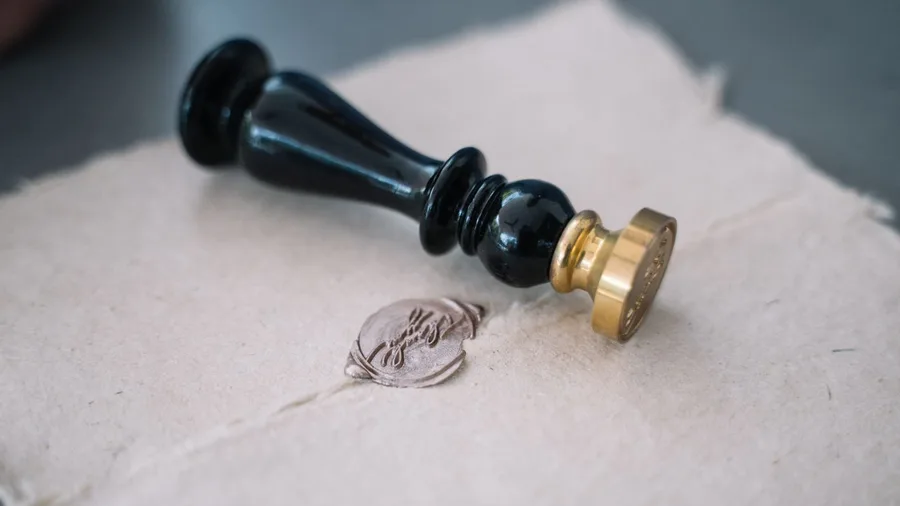
The heaviest relational pain people carry into their 70s is rarely a fight that went too far. It is a conversation that was ready – the gratitude that sat in the chest for a decade, the honest thing a parent needed to hear, the three words a partner waited for – and simply never moved. Not suppressed in a dramatic moment. Just never spoken.
Two different forces produce that silence, and they call for different responses. One is fear: the worry that saying it will change something, invite rejection, or open a door that cannot be closed again. The other is something quieter – the relationship developed its own temperature over years, a tone in which that kind of directness had no precedent, and neither person ever shifted it.
Fear-based silence can sometimes still be addressed while the other person is present and well. The habit-based kind is harder, because one honest sentence is not the fix – the whole register of the relationship has to move first. That is a longer project, but it is not a closed one.
What people almost never regret is having said too much. Nobody lies awake at 74 wishing they had been more guarded with someone they loved. The pain moves in one direction. And the window they describe missing was not a dramatic final scene – it was an ordinary Tuesday when the person was still well enough to actually respond, and the moment passed without either of them knowing it was the last one.
💡 Tip: Write it down first. Getting the words on paper before you say them reduces the chance of the sentence arriving sideways.
What Late-Life Regret Actually Looks Like
2. The Safer Choice, Not the Wanted One

‘Be practical’ is the advice handed down at every fork in the road, and for years it holds together as a reasonable position. Then something shifts. By the time most people reach their 70s, the case for the practical choice has quietly collapsed – the salary, the stability, the sensible logic – and what sits in its place is not a reasoned conclusion but plain grief for something they never tried.
That asymmetry is what makes this regret stick. Someone who spent three years building the thing they wanted and watched it fail has something to stand on: an attempt, an honest result. Someone who never tried has no such footing, just the open question of what might have been – and open questions do not close on their own. One honest caveat: people who carried real dependents and made a constrained choice under genuine financial pressure often do not share this regret. The reader needs to look at their own situation squarely before deciding whether it applies.
The people who avoided this regret rarely quit their stable jobs. They kept a practice alive on weeknights, built a sideline slowly over years, treated the wanted thing as real even when it was small. The parallel bet is still available to someone in their 40s or 50s. The window that is closing is the one where the practical choice still feels like a satisfying answer.
💡 Tip: The parallel bet is still available. The window for running something alongside stable work does not close until you close it.
⚠️ COMMON MISTAKE
The Consolation That Doesn't Hold
Telling yourself the practical choice was wise is a reasonable position at 35 and a leaking one at 55. The argument tends to dissolve on its own — what you do before it dissolves is the question.
3. The Friendships That Just Stopped

Most people assume that if a friendship ends, something will mark the ending – a falling out, a final conversation, a clear moment of loss. That is almost never what happens. The friendship simply stops receiving attention, and one day it is accurate to say it is gone, even though no one chose that.
The reason it happens so consistently is structural. School and early work keep friendships alive automatically – shared buildings, overlapping schedules, proximity that requires no effort. When that scaffolding disappears, the behavior it was holding up disappears with it, and most people never replace it deliberately. Contact drops from weekly to monthly. Monthly becomes a birthday text. The text stops feeling like closeness and starts feeling like the ghost of it.
What hits hardest in the 70s is not the loneliness in the present tense – it is the recognition that rebuilding is so much harder at that point. The mutual contexts are gone, the shared history is decades old, and the energy required to close the distance is highest precisely when it is lowest.
The people who avoided this regret did one thing differently: they stopped relying on spontaneity to keep closeness alive. A standing monthly call. A trip taken every year with the same person. A regular meal that goes in the calendar. Recurring structure, placed deliberately where proximity used to be.
A Week of Friendship Maintenance
4. The Body That Eroded Quietly

You are standing at a wedding, watching the processional start, and you realize your knees will not carry you down that aisle without help. Not because of an accident. Not because of bad luck. Because of a decade of small decisions that felt, at the time, like no decision at all.
This is the shape the regret takes in people’s 70s – not ‘I wish I had been healthier’ as an abstraction, but a single foreclosed moment that names the cost exactly. Someone who stopped being able to travel at 68, not 78. Someone who could not get down on the floor with a grandchild. The body did not fail dramatically; it eroded by increments, each one invisible, until a specific door closed.
Part of what made the erosion so easy to ignore in midlife is that the brain treats the future self as genuinely distant – almost fictional. The 55-year-old body feels like someone else’s problem. Researchers who study how people think about their own futures find this gap is not laziness; it is a real limit in how the mind constructs what has not yet happened. The 70-year-old who pays the price is not the same person, until they are.
An important distinction belongs here. Some people whose health declined did everything within reason and still faced serious illness – genetics, circumstance, bad fortune. They carry a different and smaller weight, closer to grief than regret. The logic of this entry applies to preventable erosion, not to every body that failed. The reader is the one who can locate themselves honestly on that line.
What people who avoided this regret did was name the specific capability worth protecting – not ‘health’ as a category, but the ability to walk a trail, board a plane without help, be physically present at the events that matter. Concrete goals outlast vague intentions. The body at 50 is more recoverable than the body at 70, and that window is not sentimental – it is just a fact about how repair works.
Capabilities Worth Protecting Now
✈️ Travel capacity
Peaks in your 50s-60s
🏃 Mobility window
Easier to maintain than rebuild
👨👩👧 Physical presence
Weddings, graduations, milestones
💪 Strength baseline
Harder to rebuild after 60
🧠 Cognitive reserve
Exercise's most documented benefit
The question that changes the goal
What do you want to still be able to do at 75? Name it before setting any health target.
5. Joy Waiting for Perfect Conditions

Count the things currently sitting behind a condition. The trip to the country a parent grew up in, waiting until the mortgage shrinks. The painting practice, waiting until the children leave. The long, unhurried visit with an aging parent, waiting until work settles. Most people have at least two. Some have a list.
The reason deferral feels like a plan rather than a loss is that the brain consistently treats future time as roomier and more flexible than present time – so ‘later’ feels like a genuine option, not a gamble. In retrospect, from the 70s, it looks exactly like a gamble that was lost. The people who avoided this regret were not less busy or more financially free; they took a reduced version of the deferred thing and treated it as real – a weekend instead of a month, one afternoon a week with the canvas, the phone call made on a Tuesday rather than planned for the holidays.
The self-check takes ten seconds: name one thing waiting on a condition, then ask whether a smaller version of it could happen before the condition arrives. If the answer is yes and the answer has been yes for two years, the condition is not a plan – it is a postponement wearing the clothes of one.
💡 Tip: Ask: could a reduced version of the thing happen before the condition is met? If yes, that is the move.
📅 Breaking the When-Then Pattern
Name the deferred thing
Write down the one activity or experience currently sitting behind a condition.
Identify the condition
Write out the specific threshold plainly — 'when X happens, then I will do Y.'
Assess the condition honestly
Ask whether the condition is genuinely necessary or a movable deadline you have been quietly renewing for years.
Design the small version
Find the reduced form of the deferred thing that could happen before the condition is ever met.
Put it in the calendar
Give the small version a specific date in the next three weeks — not a plan to make a plan.
6. The Beliefs They Never Examined

‘I did everything I was supposed to do.’ People say this in their 70s with an expression that is not pride. It is the first sign of this particular regret – the realization that ‘supposed to’ was always someone else’s sentence.
The obvious reading is that this is a midlife crisis arriving late – a sudden desire for something different, a restlessness, a want. It is not that. A midlife crisis is about appetite; this regret is about inquiry that never happened. The people who carry it did not want the wrong things. They simply never stopped to ask whether the values directing their choices – the version of success absorbed from family, the definition of a good life inherited from class or culture – were actually ones they had chosen. The system ran in the background, organizing decades, and no one ever opened it up.
Mortality is what finally makes borrowed values feel insufficient. A framework that worked well enough as background noise becomes unbearable when it has to carry the weight of an ending – when the question shifts from ‘what should I do next’ to ‘what did this mean.’ People who reach that question with an examined answer, even a conventional one, tend to find it bearable. The regret belongs specifically to those whose inherited frame never quite fit and who never investigated the gap.
That is the counterintuitive part: examination is not a universal prescription. People who held traditional or inherited beliefs and looked at them honestly – or whose received values genuinely matched their own experience – carry no such regret at all. The question is not whether your values are original; it is whether they are actually yours.
What the Identity Regret Actually Costs
Frequently Asked Questions
Is it too late to address these regrets after 60?
For most of the five action-based regrets, no. Friendships can be reconnected, bodies respond to consistent movement more readily than most people expect, and unsaid things can still be said. The one regret requiring a shift in thinking — examining your inherited values — has no age limit at all. What changes after 70 is not the possibility but the narrowing window and the higher energy cost of acting on it.
Why do people wait so long to admit these regrets to themselves?
Two mechanisms dominate. The first is the consoling narrative — the practical choice was wise, the friendship would have faded anyway, the health problems were inevitable. The second is that these regrets are cumulative and quiet, easy to defer examining until the space for action feels genuinely compressed. By the 70s, both mechanisms tend to lose their grip at the same time, which is why the admission arrives so suddenly.
What is the difference between a midlife reassessment and the identity regret described here?
A midlife reassessment is about wanting something different — it is a comparison between the life you have and an imagined alternative. The identity regret is more fundamental: the person never asked the question at all. It is not about the answer but about the absence of the question. People who examined their values and stayed with conventional choices rarely carry this regret. The examination is what matters, not the conclusion it reaches.
Do people who journal or reflect regularly end up with fewer of these regrets?
There is a plausible mechanism: regular reflection surfaces the when-then patterns, drifting friendships, and borrowed beliefs before they calcify. But reflection without action does not resolve action-based regrets — it can deepen them if it produces clarity without change. The people who seem to carry fewer of these regrets combined regular reflection with a consistently low threshold for small corrective moves.
What if the person I needed to speak to is no longer alive?
The silence regret is the one that sometimes cannot be repaired in the conventional sense. What remains available is an honest account of the unsaid thing — written down, spoken aloud to someone who knew them, or acknowledged privately without an audience. That is not a consolation prize. It is what closure actually looks like when the original conversation is no longer possible, and it carries more weight than most people expect.
Which Half of the List Is Yours
Five of these regrets – the unspoken word, the safer road taken, the friendship left to drift, the body allowed to erode, the joy held in waiting – still have action available. Not a large action. One conversation started. One standing plan with one specific person. One small version of the deferred thing done before the condition is met. The move does not have to close the whole gap; it has to interrupt the pattern.
The sixth works differently. It asks only that you look at what you treat as settled – how a life should be organized, what counts as success, what you are actually optimizing for – and ask where that came from. If you would still choose it, the frame holds. If not, that is worth knowing now rather than in twenty years, when the main thing left to do is name it.
The regrets that weigh heaviest in the 70s did not announce themselves at the time. They looked like an ordinary Tuesday. A call not made. A trip not booked. A friend’s name that stayed on a mental list and never moved to a sent message. The way to keep that Tuesday from becoming the thing you cannot stop thinking about is the same across every item on this list: get specific. Not ‘connection’ – whose name. Not ‘adventure’ – which trip. Not ‘something creative’ – what, and when. Specificity is the only thing that turns a regret still forming into one that never fully arrives.