
You catch your reflection in the oven glass while waiting for the tea to steep, and wonder when your metabolism decided to shift gears permanently.
After trying every restrictive diet that left you tired and irritable, finding a sustainable approach to health after fifty feels like learning a new language.
Quick Tips Before You Start
Downsize Your Dinnerware
Swap standard 11-inch dinner plates for 9-inch salad plates to naturally control portions.
Prioritize Protein First
Eat your protein source before touching carbohydrates to stabilize blood sugar levels.
Hydrate Before Meals
Drink a full glass of water fifteen minutes before sitting down to eat.
Slow Down the Pace
Put your fork down between bites to give your natural satiety signals time to kick in.
1. Switching to Nine Inch Plates

Your eyes deceive you every single time you look at a large dinner plate, making normal portions look like a sad snack.
Standard modern dinner plates measure eleven to twelve inches across, which requires nearly thirty percent more food to visually fill than the plates we used decades ago.
When you swap to a nine-inch ceramic salad plate, your brain registers a full meal without you needing to pile food mountain-high.
This simple visual trick eliminates the urge to overfill your serving without requiring any willpower at all.
Plate Rule Basics
2. Dividing Your Plate By Halves

You stare at a mound of pasta and realize you have no idea where your vegetables are supposed to fit.
Dietitians consistently recommend dividing your visual plate space before any food touches it, starting with a firm boundary for produce.
Fill half your nine-inch plate with non-starchy vegetables like roasted broccoli, steamed green beans, or a crisp mixed greens salad.
This leaves you with plenty of fiber and volume, which slows down digestion and keeps your energy steady through the afternoon.
⚠️ COMMON MISTAKE
Mistaking Starchy Sides for Vegetables
Corn, peas, and potatoes count as carbohydrates, not your vegetable half. Keep your greens genuinely non-starchy to manage blood sugar effectively.
3. Securing Your Protein Quarter

Muscle mass tends to slip away quietly after fifty unless you give your body a concrete reason to hold onto it.
After fifty, your muscles experience what researchers call anabolic resistance, meaning they need a higher concentration of amino acids to trigger muscle protein synthesis.
Dedicate one quarter of your plate to a clean protein source, aiming for roughly 25 to 30 grams per meal.
Choose a palm-sized portion of wild salmon, grilled chicken breast, firm tofu, or tempeh to hit this target effortlessly.
Protein Sources — At a Glance
🐟 Best Choice
Wild salmon or sardines
⚖️ Target Amount
25-30g per meal
🌱 Plant Option
Tempeh or lentils
⚠️ Watch Out
Processed deli meats
Why It Matters
Adequate protein intake preserves lean muscle mass and stabilizes metabolism as you age.
4. Managing Your Carbohydrate Quarter
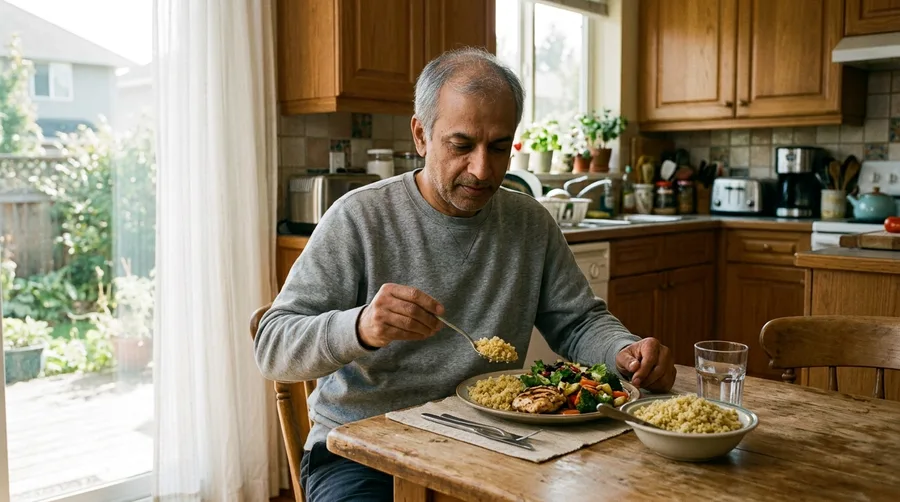
You feel completely drained by three in the afternoon because lunch was mostly a heavy wave of refined carbohydrates.
Carbohydrates are not your enemy, but the type and quantity matter significantly more after your metabolism shifts in midlife.
Insulin sensitivity changes as we age, meaning large portions of refined starches linger in the bloodstream longer and convert to energy less efficiently.
Reserve the final quarter of your plate for quality complex carbohydrates like quinoa, roasted sweet potatoes, or steel-cut oats.
This measured amount delivers sustained brain fuel without causing the sharp blood sugar spikes and subsequent crashes that trigger sugar cravings.
A good rule of thumb is keeping this portion roughly the size of your closed fist, which provides enough glycogen replenishment for daily movement without overloading your system.
Portion & Timing Thresholds
5. Adding Healthy Fats Wisely

Dry skin and stubborn belly fat make you wonder if eating fat-free is actually working against your long-term health goals.
Dietary fats support hormone production and cellular health, which becomes vital during and after the transition through menopause.
Drizzle half a tablespoon of extra virgin olive oil over your salad or add four slices of Hass avocado to your plate.
Keep fats portion-controlled because they pack dense calories into tiny volumes, making it easy to overshoot your daily energy balance.
Midlife Nutrition Facts
6. Eating in the Correct Order

You finish your dinner feeling bloated and sluggish, wondering why heavy meals hit your digestive system so much harder now.
Gastroenterologists and metabolic researchers note that the sequence in which you consume your food alters your post-meal glucose response.
Eat your vegetables and protein first, saving your carbohydrates and any sweet components for the very end of the meal.
This sequencing creates a fibrous mesh in your upper intestine that slows down glucose absorption, flattening your blood sugar curve significantly.
💡 PRO TIP
The Sequence Advantage
Eating fiber and protein before carbs reduces overall insulin spikes by up to forty percent, curbing fat storage and post-meal fatigue.
7. Hydrating Before Every Meal

You reach for a snack at ten in the morning, mistakenly thinking your body is asking for food when it is actually asking for water.
As we age, our natural sense of thirst declines, making mild dehydration feel identical to a sudden drop in physical energy.
Drink sixteen ounces of plain water about fifteen minutes before you sit down for any meal or substantial snack.
This primes your digestive tract and naturally reduces the amount of food you consume because your stomach lining already feels partially full.
Beverage Choices for Weight Management
- Filtered water with lemon — Drink freely throughout the day and before meals.
- Diet sodas with artificial sweeteners — Limit to one daily as they can maintain sweet cravings.
- Sugary store-bought fruit juices — Avoid completely due to concentrated liquid fructose.
8. Slowing Down Your Eating Pace

You realize you inhaled your entire lunch while standing over the kitchen counter answering work emails.
Your stomach needs roughly twenty minutes to signal satiety hormones like leptin to your brain, which is far longer than it takes to clear a plate when eating quickly.
Put your fork down between every single bite and take a deliberate breath before picking it back up.
This simple pause allows your natural fullness cues to register before you accidentally overeat past the point of comfort.
9. Eliminating Liquid Sugars

You wonder why your evening glass of wine or sweetened iced tea leaves you feeling puffy and heavier the next morning.
Liquid calories bypass the mechanical chewing process that triggers satiety, flooding your liver with fructose or alcohol without registering as food.
When metabolism naturally slows in your fifties, processed liquid sugars spike insulin instantly while leaving your stomach entirely empty.
Swap sugary drinks, flavored coffees, and heavy evening cocktails for sparkling water infused with fresh mint or cucumber slices.
Cutting liquid sugar is often the single fastest dietary change that drops visceral fat without making you feel starved.
10. Prepping Vegetables in Advance

You stand in front of the refrigerator at six in the evening feeling too exhausted to wash and chop raw broccoli.
Convenience dictates what you eat when willpower runs low at the end of a long, tiring day.
Spend thirty minutes washing, chopping, and roasting a large batch of mixed vegetables immediately after bringing them home from the grocery store.
Having pre-roasted vegetables ready in glass storage containers makes building a balanced plate as effortless as reheating food.
11. Tracking Progress Beyond the Scale

You step on the bathroom scale only to see the number unchanged, which threatens to derail your entire motivation.
Body weight fluctuates daily due to water retention, sodium intake, and hormonal shifts, making the scale an unreliable daily judge of fat loss.
Measure your success by how your favorite trousers fit around your waist and whether your morning joint stiffness is easing up.
Taking monthly progress photos and noting your energy levels gives you an honest picture of real metabolic healing.
12. Handling Social Dining Situations

You look at a restaurant menu and feel anxious about how to maintain your new habits while dining out with friends.
Social connection is a core pillar of longevity, and hiding at home to avoid food temptations does more harm than good.
Scan the menu ahead of time for grilled proteins and vegetable sides, and ask the server to swap fries for a double portion of greens.
Focus on the conversation and company rather than the food, treating the meal as nourishment rather than the main event of the evening.
13. Navigating Evening Sugar Cravings

You find yourself standing in front of the pantry at nine at night looking for something sweet to finish the day.
Evening sugar cravings after fifty often signal habit loops, emotional fatigue, or inadequate protein intake earlier in the day.
When your blood sugar dips because dinner lacked sufficient staying power, your brain screams for quick fuel.
Brew a cup of caffeine-free cinnamon or peppermint herbal tea instead of giving in to processed sweets, which interrupts the physical cue of the kitchen raid.
If you genuinely need a treat, square away a single piece of 85% dark chocolate, letting it melt slowly on your tongue.
That small square satisfies the palate without spiking glucose right before your sleep window.
14. Adjusting Portions on Rest Days

You eat the exact same heavy portions on days you sit at your desk as you do on days you hike or garden.
Energy expenditure changes depending on your daily activity levels, and matching your intake prevents gradual weight creep.
Scale back your carbohydrate quarter slightly on low-activity days while keeping your protein and vegetable portions identical.
This intuitive flexibility honors your body’s changing energy demands without requiring obsessive calorie counting apps.
15. Maintaining Consistency Without Perfection

You slip up at a family birthday party and eat a slice of cake, making you feel like your entire week of healthy eating is ruined.
Perfectionism is the fastest route back to old habits because it treats health as an all-or-nothing game.
Adopt the eighty-twenty rule, aiming for consistent plate balance during most meals while leaving room for life’s inevitable treats.
Your body responds to long-term patterns, not isolated meals, so simply return to your plate rule at the very next meal.
Frequently Asked Questions
Do I need to weigh my food on a kitchen scale?
Not at all. The visual plate rule replaces strict weighing by using proportions on a nine-inch plate, making portion control intuitive and sustainable for everyday life.
What if I feel hungry after finishing a smaller plate?
Drink a large glass of water and wait ten minutes. Often mild thirst masks as lingering hunger. If you are genuinely still hungry, add another serving of non-starchy vegetables.
Can I follow this approach if I eat a plant-based diet?
Yes. Simply swap animal proteins for high-protein plant sources like tempeh, lentils, organic edamame, or organic tofu while keeping the same half-plate vegetable ratio.
How long before I notice changes in my weight or energy?
Most people notice stable afternoon energy levels within the first two weeks. Visible changes in body composition and clothing fit typically show up around four to six weeks.
Start With This One
If you change only one thing today, swap your large dinner plate for a nine-inch salad plate at your very next meal and divide it down the middle with vegetables.
Give this simple visual habit thirty days to work its way into your daily routine, and watch how effortlessly your body responds to consistent care.