
You look at the clock and wonder why evening heaviness ruins your sleep.
Generations of researchers have traveled to Japan to understand why so many residents remain active and sharp well past ninety. Dietary traditions observed across these island communities rely on simple, nutrient-dense ingredients prepared with intention. You can adopt these exact evening habits tonight to support your own metabolic health and sleep quality.
Quick Tips Before You Start
Swap White Rice
Replace refined grains with purple sweet potatoes for sustained energy.
Portion Control
Stop eating when you feel about eighty percent full.
Warm Infusions
Sip jasmine or green tea instead of heavy nighttime snacks.
1. Purple Sweet Potato Foundation

You reach for comfort foods at night because your body seeks steady energy.
Okinawans make purple sweet potatoes the cornerstone of their evening meal.
These tubers deliver high levels of anthocyanins, powerful antioxidants that help manage inflammation and blood sugar levels as you age.
Bake them whole and slice them warm with a touch of sesame oil.
⚠️ COMMON MISTAKE
Avoid Heavy Late-Night Carbs
Eating refined starches right before bed spikes blood sugar and disrupts deep sleep cycles.
2. Bitter Melon Stir-Fry

Your palate might resist bitter flavors at first, but your metabolism quietly appreciates them.
Traditional dinners frequently feature bitter melon, known locally as goya, lightly stir-fried with firm tofu and shiitake mushrooms.
Research on metabolic health highlights specific compounds in bitter melon that assist with glucose uptake, a mechanism that becomes increasingly relevant for blood sugar stability as we move past forty.
Slice the melon thin, salt it to draw out excess moisture, and rinse before cooking to keep the intensity approachable.
Expect your taste buds to adapt in about two to three weeks of consistent inclusion.
Best For
3. Plant-Heavy Plate Ratios

Meat occupies a very small corner of a traditional Okinawan evening plate.
Plant foods make up roughly ninety percent of the daily intake across these communities, shifting how the digestive tract winds down for sleep.
Vegetables, legumes, and roots provide dense micronutrients without the sluggish digestion that accompanies heavy animal proteins late in the evening.
Fill four-fifths of your dinner bowl with colorful vegetables before adding any protein.
That simple visual shift changes the entire architecture of your evening meal.
Plant Ratio — At a Glance
🌾 Fiber Threshold
40 grams minimum daily
🍠 Root Prep
Steamed or baked, never fried
🔄 Target Adaptation
2 to 3 weeks for gut adjustment
⚠️ Skip If
Active flare-up of diverticulitis
Implementation Shift
Ramp up fiber gradually by 5 grams each week to prevent severe bloating.
4. Miso Soup Starter

Your evening digestion slows down after fifty, which is why a heavy dinner often sits like a stone by bedtime.
A small bowl of miso soup begins the evening meal, waking up the digestive tract with live cultures and gentle warmth.
Fermented soybean paste supplies amino acids and probiotics that support gut health during your resting hours.
Dissolve one tablespoon of aged barley miso into warm dashi broth, taking care never to let it boil.
Boiling kills the beneficial bacteria you are after, leaving you with just salty water instead of active digestive support.
💡 PRO TIP
Preserve Live Cultures
Add miso paste at the very end of cooking after removing the pot from heat to protect the beneficial enzymes.
5. Mindful Portions and Hara Hachi Bu

You often overeat simply because you eat too quickly to notice fullness.
As metabolism naturally slows down after fifty, racing through a meal routinely leads to sluggish digestion and restless sleep.
The cultural practice of hara hachi bu reminds diners to stop eating when they reach eighty percent capacity.
This mindful pause gives satiety signals enough time to reach your brain, preventing midnight bloating.
Put your utensils down between every few bites and check in with your hunger level.
Evening Food Choices
- 🍠 Purple sweet potatoes and steamed greens — Provides steady energy and rich antioxidants without heavy digestion.
- 🍚 White rice in large quantities — Can spike blood sugar if eaten late; keep portions modest.
- 🍟 Fried foods and processed snacks — Causes nighttime acid reflux and disrupts restorative sleep.
6. Seafood and Seaweed Infusion

Omega-3 fatty acids and mineral-rich seaweeds protect your cardiovascular health.
Local diets incorporate small portions of fresh fish alongside nutrient-dense seaweeds like kombu and wakame. These additions supply essential trace minerals that modern land-based diets often lack.
Add a strip of dried kombu to your soup stock or toss rehydrated wakame into a cucumber salad.
Food is medicine when chosen with intention, but it becomes a burden when consumed in haste.
— What traditional dietary studies consistently emphasize
7. Jasmin Tea and Social Connection

Dessert after dinner feels like a harmless habit until you notice how it wrecks your sleep quality at fifty.
Sanpin-cha, a traditional jasmine-scented green tea, offers a warm alternative that delivers gentle polyphenols without keeping you awake.
The compound action of antioxidant-rich green tea helps protect cellular health while the evening ritual winds down your nervous system.
Researchers studying longevity communities consistently point to shared evening routines as a primary driver for lowering cortisol before bed.
Brew loose jasmine green tea leaves in a ceramic teapot for three minutes and share a cup with someone in your household tonight.
8. Turmeric and Jasmine Spice Integration
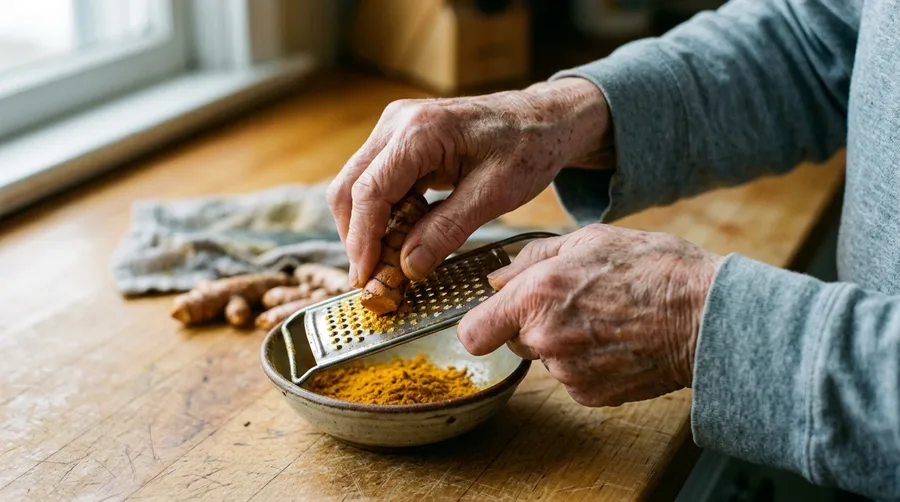
Simple anti-inflammatory spices flavor evening dishes across the islands.
Curcumin from fresh turmeric root finds its way into broths and vegetable sides, supporting joint comfort and cellular health.
As cartilage faces more daily wear in our fifties and sixties, working natural compounds into your food helps manage low-grade systemic inflammation without adding another pill to the weekly organizer.
Incorporate these roots daily for subtle warmth.
Grate a half teaspoon of fresh turmeric into your cooking water when steaming grains.
9. Garlic and Scallion Aromatics

Your kitchen smells incredible, but that is a secondary benefit.
Garlic, onions, and scallions form the aromatic foundation of evening meals in longevity hotspots because they pack sulfur compounds that actively support cellular defense as we age.
High heat destroys those beneficial compounds before they ever hit your plate.
Sauté minced garlic gently in sesame oil over medium-low heat until just fragrant, keeping the temperature moderate so the bioactive properties remain intact.
10. Tofu and Legume Proteins

Heavy evening meats are a fast track to restless sleep and morning sluggishness after 50.
Plant-based soy proteins step in to keep your muscle mass supported without taxing a digestive system that prefers an early wind-down.
Fresh tofu and edamame supply complete amino acids while your body diverts its nightly energy toward cellular repair instead of breaking down a heavy steak.
Pan-sear firm tofu cubes until golden and toss them into your vegetable stir-fry for an easy twenty grams of clean protein that leaves you waking up light on your feet.
11. Mugwort and Local Herb Additions

Your evening broth needs a sharp edge.
Wild herbs gathered locally provide unique bitter profiles that stimulate digestion and wake up a tired palate after fifty.
Fushimi and other local greens appear frequently in soups, offering distinct earthy flavors that anchor traditional meals.
These traditional greens supply vitamins A, C, and K along with valuable dietary fiber to support gut motility as metabolism slows.
Chop wild greens finely and stir them into your broth during the final minute of cooking to preserve their bright color and active compounds.
12. Savoring Slowly with Family

The psychological aspect of eating matters just as much as the ingredients on your plate.
Meals are treated as social events where conversation flows and eating pace remains unhurried. Slow dining activates the parasympathetic nervous system, improving nutrient absorption.
Turn off screens during dinner and focus your attention on the people across the table.
13. Low Glycemic Evening Roots

Managing evening blood sugar prevents nighttime awakenings and energy crashes.
Root vegetables like daikon radish and yams provide satisfying bulk without causing rapid glucose spikes. Their slow-release starches keep your metabolism steady through the night hours.
Simmer daikon rounds in a light broth until translucent and tender.
14. Sesame and Seed Garnishes

Healthy fats from seeds finish dishes with a nutty depth and essential nutrients.
Black and white sesame seeds provide valuable minerals, including calcium and magnesium, which support bone density and muscle relaxation before sleep.
Toast sesame seeds lightly in a dry pan and crush them before sprinkling over your meal.
15. Gratitude Before Evening Rest

Your evening meal is completely finished, but your nervous system is still racing.
Expressing gratitude for the food and community lowers cortisol levels, helping your body transition smoothly into sleep mode.
This final mental shift completes the evening health routine.
Take three slow breaths and acknowledge the nourishment before leaving the table.
Frequently Asked Questions
Can I substitute regular potatoes for purple sweet potatoes?
While regular potatoes provide good energy, purple sweet potatoes offer significantly higher levels of anthocyanins and antioxidants, which are key to the traditional longevity benefits observed in Okinawan diets.
How early should I eat my final evening meal?
Aim to finish your dinner roughly three hours before going to bed. This allows your digestive system to process the food adequately, leading to deeper and more restorative sleep quality.
Is soy safe to consume every evening?
Traditional diets incorporate moderate amounts of minimally processed soy like tofu and miso daily. These whole-food forms provide clean protein and beneficial plant compounds without the drawbacks of highly processed isolates.
What if I cannot find bitter melon near me?
You can substitute other bitter greens like dandelion greens, Swiss chard, or small amounts of radicchio to achieve a similar stimulating effect on your digestion.
Your First Step Toward Better Evening Habits
Start tonight by swapping your heavy evening starch for a baked purple sweet potato and a warm bowl of miso soup.
Observe how much lighter you feel by morning, and let that simple shift guide your kitchen choices all week long.