You step off the train in London, Paris, or Berlin, and the social contract is immediately clear: avoid eye contact, keep your voice low, and let everyone exist in silent isolation. Public transit is a zone of quiet reserve where strangers maintain strict emotional distance.
Then you land in the United States, and within ten minutes at baggage claim, a stranger is complimenting your sneakers and asking where you flew in from. For European travelers experiencing this for the first time, it is an absolute culture shock that upends everything they know about urban etiquette.
The Stranger Across the Aisle and the Shock of Openness
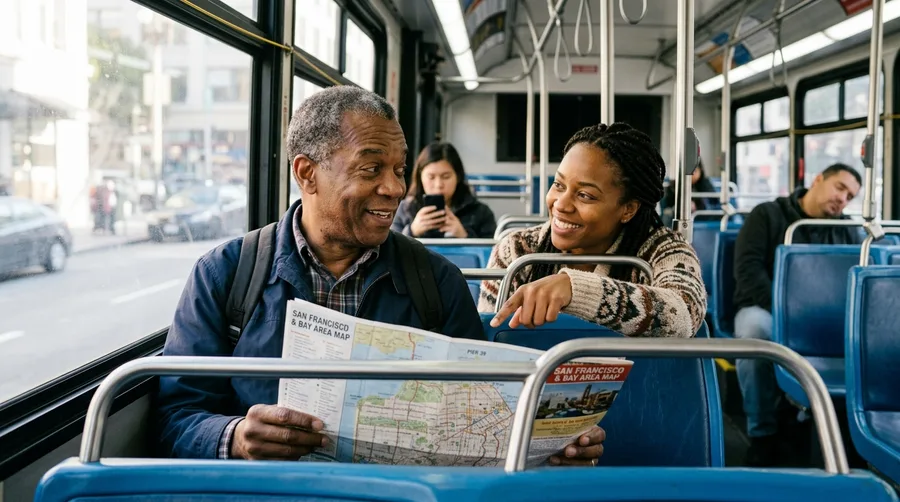
Walking down an American sidewalk or boarding a commuter bus brings an entirely different auditory and social landscape.
A local rider looks right at you, smiles warmly, and asks how your morning is shaping up with genuine conversational cadence.
This immediate verbal warmth triggers acute psychological friction for visitors raised in cultures where unprompted chatting feels invasive or suspicious.
Europeans often check behind themselves to see if the speaker is actually addressing someone else entirely.
The underlying cultural divide comes down to how public space is perceived across the Atlantic.
💡 PRO TIP
Understanding the Public Space Divide
Europeans treat public spaces as zones of negative politeness, prioritizing non-interference. Americans treat them as zones of positive politeness, using casual interaction to build instant social harmony.
The Sociological Mechanics Behind American Public Warmth
Historical roots in American egalitarianism stripped away rigid social hierarchies, mandating a baseline of casual friendliness across all classes.
Individualism paradoxically fosters outward sociability to establish quick, frictionless cooperation in a highly mobile, multi-ethnic society.
Cultural anthropologists note that low-context communication styles in the United States rely heavily on explicit verbal reassurance rather than subtle social cues.
Friendliness is not a promise of lifelong intimacy, but a social lubricant designed to make shared spaces pleasant and safe.
1. The Grocery Store Checkout Conversation

The cashier asks about your weekend plans, your outfit origin, or what you plan to cook with your fresh produce.
You freeze, wondering if this is a customer service script or a genuine inquiry.
It is actually a micro-connection designed to treat you like a human rather than a transaction.
European shoppers are used to swift, silent barcode scanning with barely a glance from the cashier.
Checkout Culture — At a Glance
⏱️ Interaction Time
45 Seconds
💬 Typical Question
'Any fun weekend plans?'
🛒 Primary Goal
Humanizing the Transaction
Key Contrast
US cashiers engage personally while European cashiers prioritize speed and silence.
2. The Impromptu Sidewalk Compliment
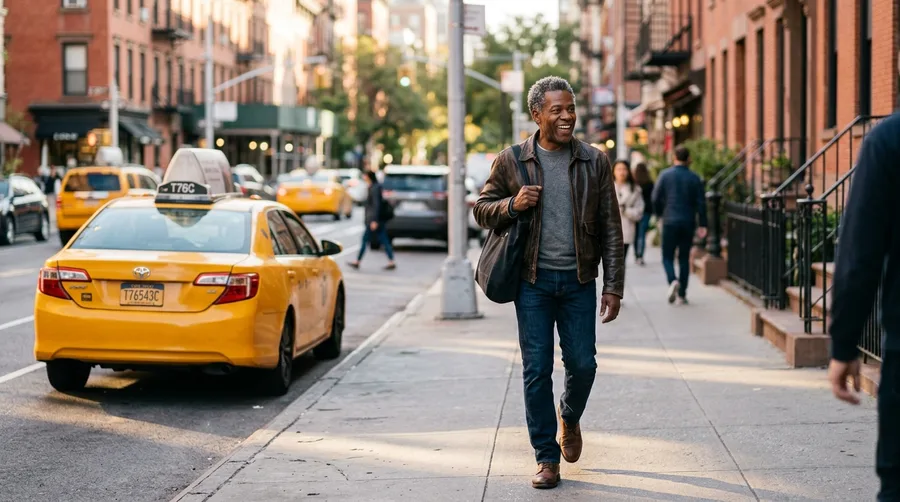
Total strangers call out loud praise for your leather jacket, vintage boots, or haircut while passing you on a busy avenue.
European visitors feel an instant jolt of self-conscious panic because public appearances are rarely commented on by unknown pedestrians.
This unprompted validation lifts your mood instantly and shatters the defensive armor you brought from home.
The Statistics of Stranger Interaction
How cultural habits diverge across borders
3. The Lost-in-Public Rescue Mission
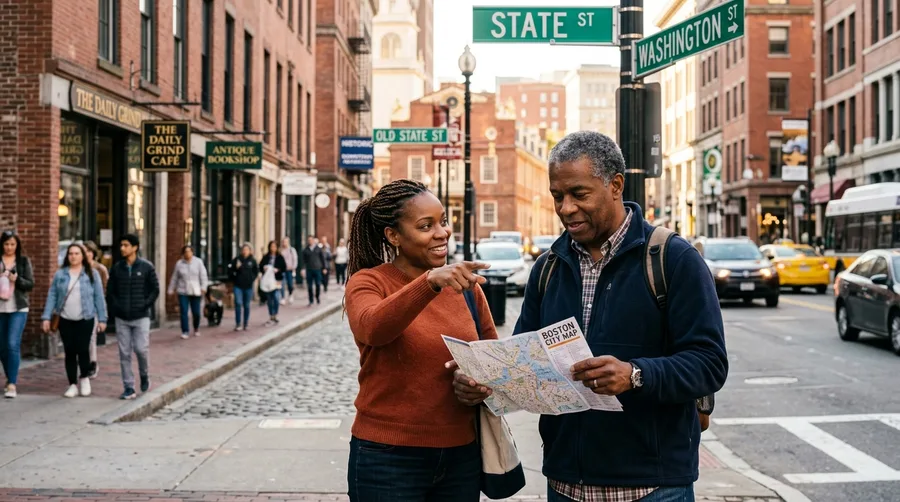
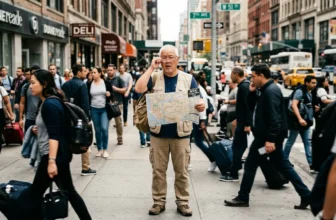
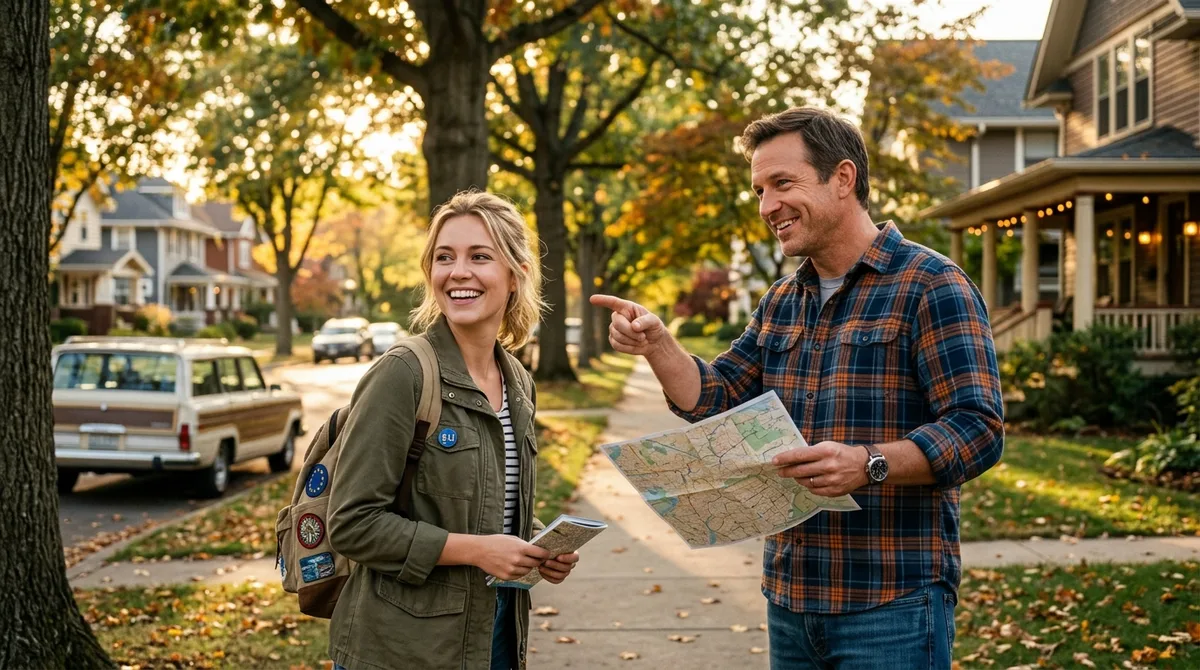
You pull out a paper map or stare confused at your smartphone screen on a busy street corner.
Within seconds, an American stops and asks, ‘You guys okay? Where are you trying to get?’
This proactive helpfulness stuns visitors who expect locals to ignore lost tourists.
Many European travelers share stories of being walked three blocks out of a stranger’s way to ensure they find their destination.
Urban Helpfulness: US vs. Europe
American Approach
- Proactive intervention when someone looks lost
- Direct conversational approach
- Offering unsolicited directions and local tips
- High verbal warmth in public spaces
European Approach
- Waiting for the traveler to ask first
- Respecting personal space and privacy
- Providing accurate directions when prompted
- Maintaining quiet reserve in transit zones
4. The Rideshare Confessional
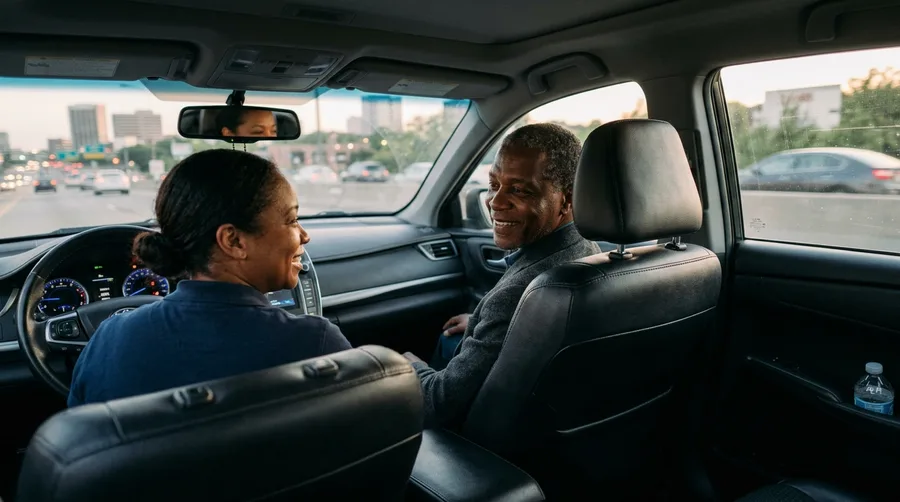
You slide into the back seat of an Uber, expecting a silent ride to your hotel.
Instead, the driver launches into a warm greeting, quickly turning the trip into a deep discussion about life philosophies, family lore, and local restaurant recommendations.
Initial European panic over oversharing gives way to realizing the interaction has a safe, temporary boundary.
⚠️ COMMON MISTAKE
Misinterpreting the Rideshare Chat
Don't treat an open rideshare driver as an intrusion. Lean into the temporary therapeutic chat; it is a signature feature of American transit culture.
5. The Neighborly Welcome Wagon
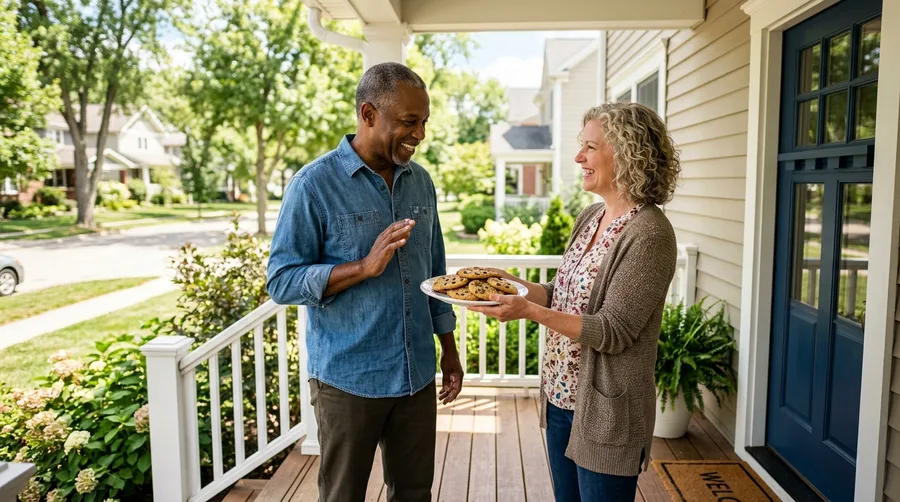
Within 24 hours of moving into a new rental or suburban home, neighbors show up bearing baked goods, coffee, or local tips.
This contrasts sharply with European apartment culture, where quiet non-interference reigns and formal introductions take weeks.
Community boundaries dissolve rapidly in American residential neighborhoods.
Welcome Wagon Reception
How quickly neighbors arrive with greetings
6. The Restroom Line Bonding
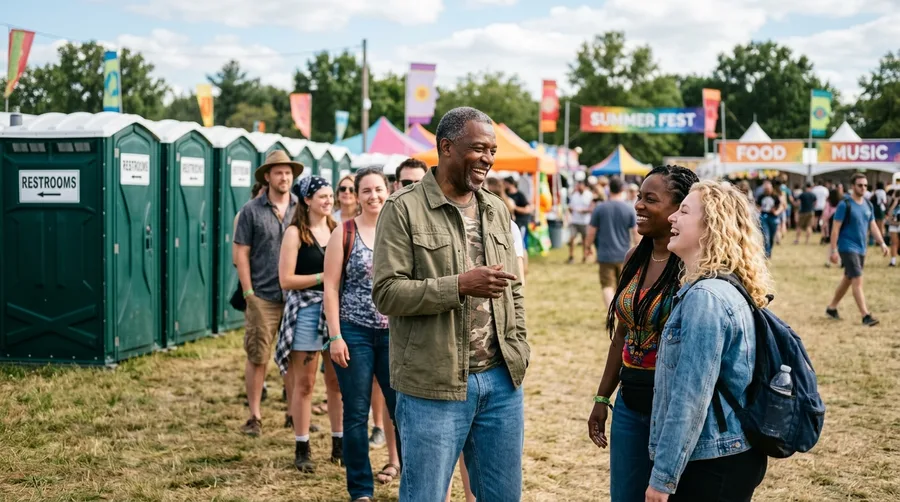
Waiting in a long restroom line at a festival or highway rest stop turns into collective commiseration and laughter among strangers.
Shared temporary grievances instantly break down stranger anxiety into lighthearted solidarity.
People trade jokes about venue planning and plumbing capacities while maintaining absolute ease.
7. The Workplace How Are You Greeting
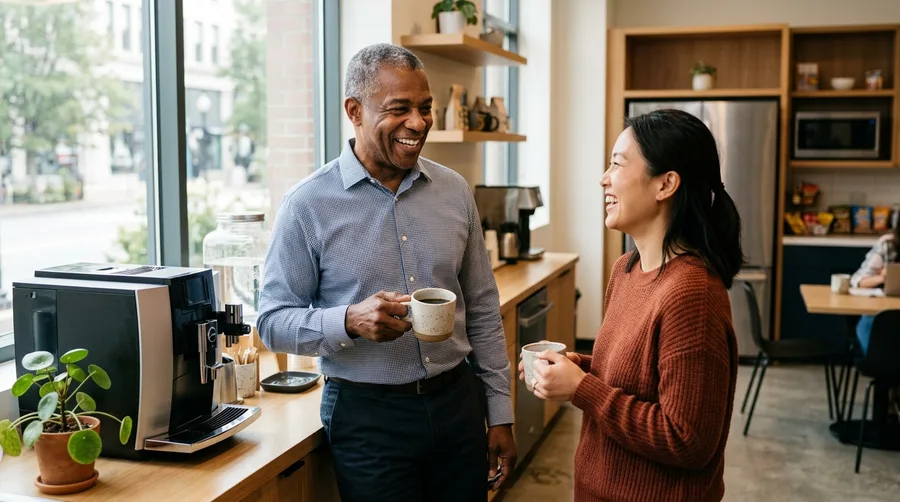
You hear the standard American greeting exchange and initially over-answer with actual medical or emotional updates.
You quickly realize the phrase is ritualistic social lubricant rather than a deep diagnostic inquiry.
Accepting the greeting at face value keeps interactions smooth and upbeat.
American friendliness is a commitment to making public spaces frictionless, not a promise of lifelong intimacy.
— Cross-Cultural Observation
8. The Dog Park Social Network

Dogs act as social currency that forces absolute strangers to chat about training, breeds, and life stories within minutes.
European dog-walking habits are often much quieter, handling pets with strict independence.
In the US, a fenced dog park operates like an informal neighborhood town hall.
9. The Gas Station Life Story
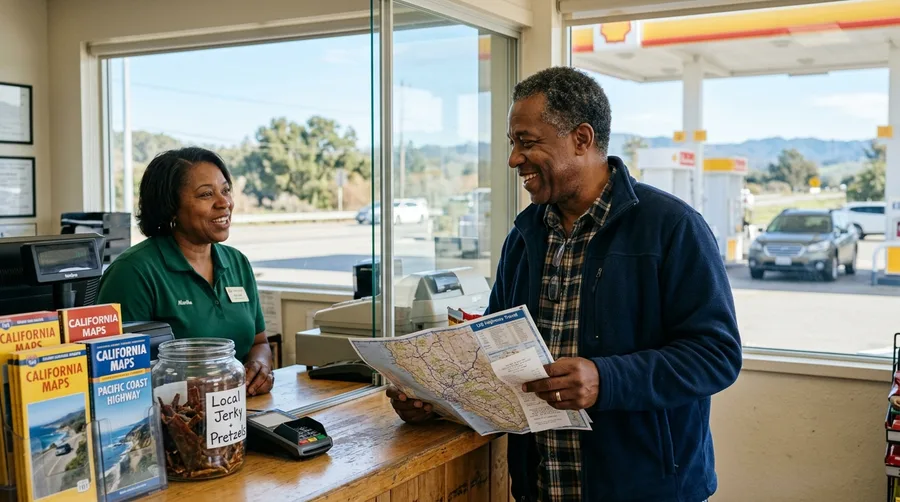
Spontaneous interactions at rural or highway pit stops involve clerks or locals asking about your accent and origins.
Geographic curiosity drives warm, hospitable inquiries about where travelers are headed.
A simple fill-up turns into a five-minute chat about regional road conditions.
10. The Server Upselling Empathy
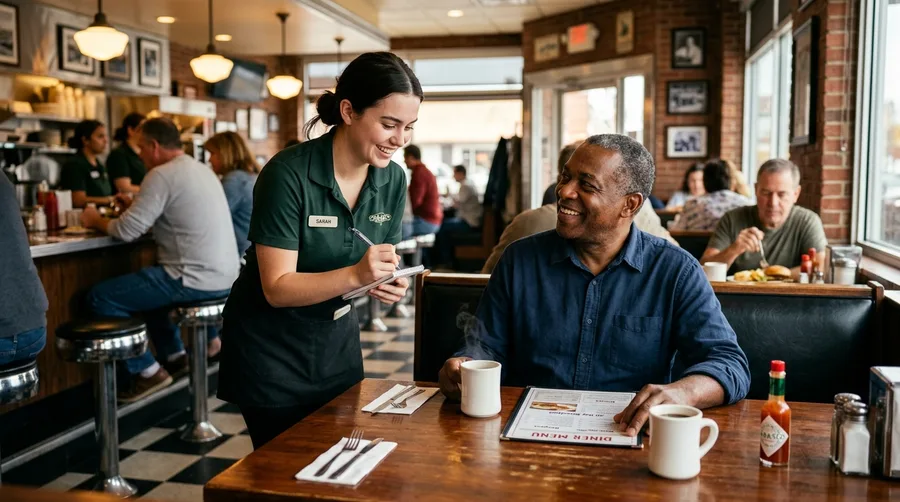
Attentive, high-energy service styles from American waitstaff contrast sharply with reserved European dining norms.
Tipping culture and hospitality training intersect to create an impression of deep personal investment in your evening.
Servers check in regularly to ensure your experience exceeds expectations.
11. The Gym Equipment Generosity
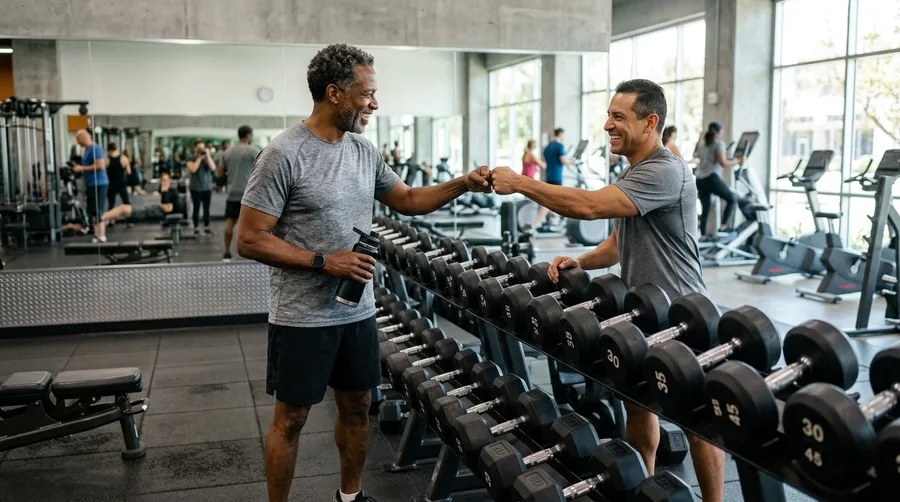
Fitness settings feature strangers offering spotters, sharing weights freely, and cheering on personal records.
Insular fitness cultures abroad often treat gym floors as strictly isolated zones.
American fitness spaces cultivate an encouraging collective team spirit.
12. The Airport Gate Consensus
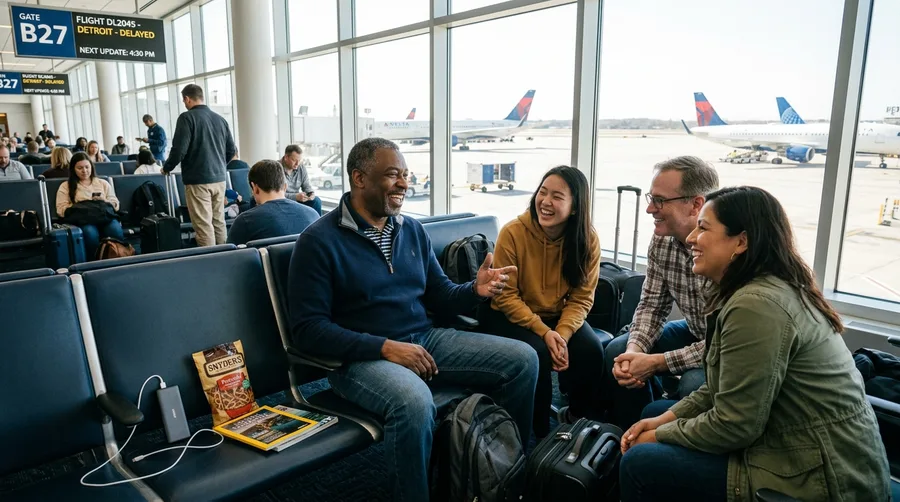
Delayed-flight scenarios turn entire boarding gates into an impromptu community sharing snacks, stories, and travel gripes.
This is the ultimate climax of American public casualness: collective ease under shared stress.
Strangers become temporary travel companions sharing portable chargers and snacks.
The European Tourist Mindset Shift
🗺️ Evolution of Cultural Adaptation
Shock
Experiencing unprompted warmth from strangers at baggage claim.
Hesitation
Questioning the motives behind cashier banter and street compliments.
Adjustment
Realizing public friendliness is a social lubricant, not a deep intimacy trap.
Liberation
Leaning into casual conversations without overthinking social boundaries.
The Deeper Shift: Superficial or Soulful?
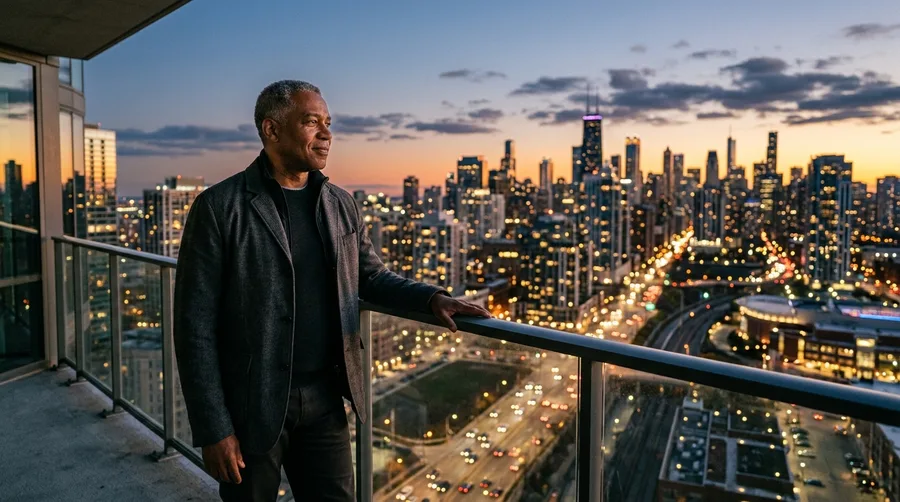
Critics often dismiss American warmth as shallow compared to slower-burning European friendships.
Strip away the cynicism, and you find a social framework designed to ensure nobody feels invisible in public spaces.
Emotional generosity acts as social glue in a society built on diverse backgrounds and constant movement.
Embracing this openness allows you to experience American cities with total psychological freedom.
Best Practices for Visitors
Navigating the Culture Shift Yourself
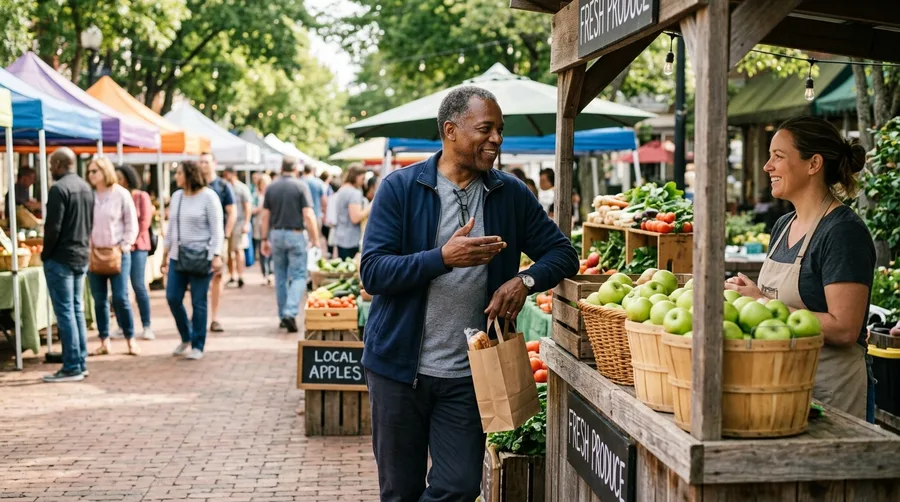
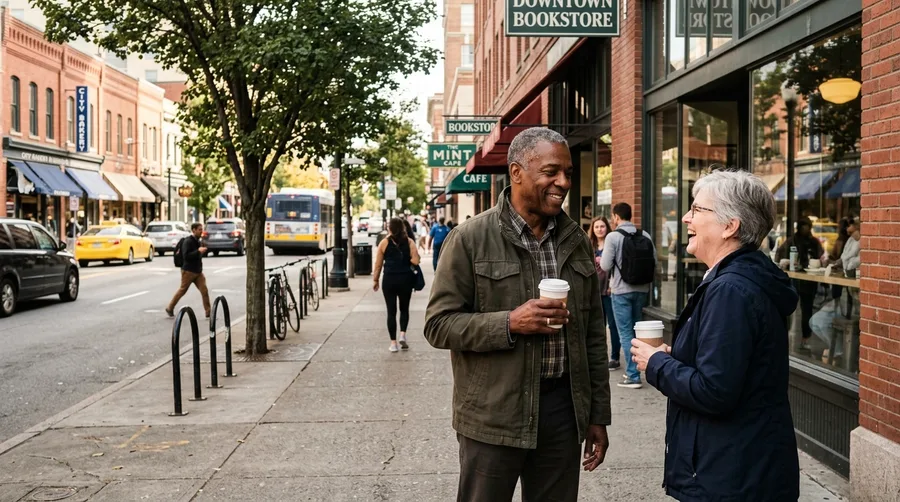
Lean into everyday conversations at coffee shops and grocery checkouts without feeling obligated to overshare personal details.
Respond naturally to street compliments with a simple thank you and a smile.
Letting go of European reserve transforms your entire travel experience from guarded observation to genuine participation.
Social Energy Investment
Frequently Asked Questions
Why do American strangers ask ‘How are you?’ if they don’t want a long medical update?
It is a ritualistic social greeting used as a verbal handshake rather than a diagnostic inquiry. A simple ‘Good, how are you?’ keeps the interaction flowing smoothly.
Is American friendliness different in the South versus the Northeast or West Coast?
Yes, regional styles vary. Southern hospitality features slower, elaborate conversational warmth, while the Midwest offers neighborly helpfulness and coastal cities mix speed with casual friendliness.
Do Americans actually mean it when they say ‘Let’s grab coffee sometime’?
Often it functions as a warm closing statement rather than a fixed calendar invitation. However, if you follow up enthusiastically, many will happily schedule it.
How should a European traveler handle feeling overwhelmed by US social energy?
Pace yourself and take quiet breaks when needed. You are never obligated to match every high-energy interaction; a polite smile and brief response are entirely sufficient.
Why do service workers seem so personally invested in your day?
Tipping culture and service industry training combine to encourage high engagement, but genuine cultural friendliness also drives service staff to treat customers like welcomed guests.
Why American Friendliness Is Actually a Masterclass in Social Grace
Experiencing unprompted kindness changes how you view public spaces long after you return home to reserved European streets.
Carry a bit of American openness back with you, and watch how easily you brighten someone else’s ordinary Tuesday.