Most people assume a long marriage means two people know each other, and I assumed it longer than most. I am 69, a retired school librarian outside Columbus, married to the same man since June 1980, and for all those years I believed I could tell you his opinions, his habits, his silences. Then in March I moved the paint cans in the garage to get the car back in and found a shoebox marked ‘1972-1979’ in blue ballpoint.
The years on that label ended before we met, before the department store counter where I sold him a lamp in 1977. Inside were about 40 letters, a spiral notebook of journal pages, a folding road map of northern Minnesota, and six photographs of a brother named Danny, who died at 24 in a car crash in 1976. In 45 years of marriage, nobody in his family had ever said that name in front of me.
There was no affair behind the paint cans, no second family. There was ordinary management of a busy life and a question nobody had put on the table.
That is the part worth knowing, because the same gap can sit in a marriage that looks fine from the street. The rest of this is what fourteen months of asking actually cost me and what it produced, so you can decide whether to ask one question about the years before you.
Curiosity vs. Audit — How the Same Question Lands
Curiosity
- Tells me about a day from before we met that you still think about.
- Sits with the answer, however short.
- Asks again next Friday regardless.
- Notices what the answer reveals about the person, not the marriage.
Audit
- Why didn't you ever tell me about him?
- Follows up with a demand for more detail.
- Brings the answer up later as evidence in an old argument.
- Treats a short answer as a refusal.
The Box Was Labeled With Years Before Me
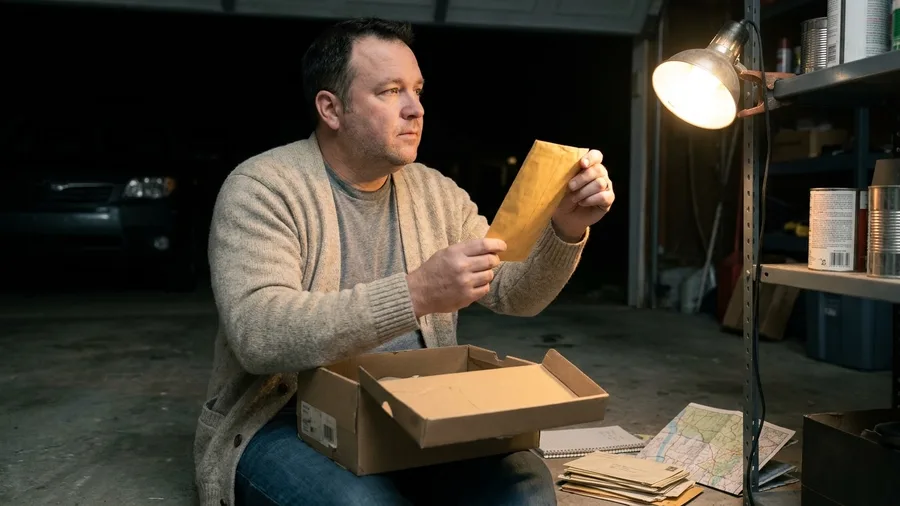
In March I cleared the garage to get the car back in, and behind the paint cans stood a shoebox I had moved around for years without ever opening.
The lid was marked ‘1972-1979’ in blue ballpoint, my husband’s straight-up-and-down hand. Those years end before we ever met, which happened in 1977 at the department store counter where I worked and he came in and bought a lamp. We married in June 1980. The box was not locked and it was not hidden. It was filed.
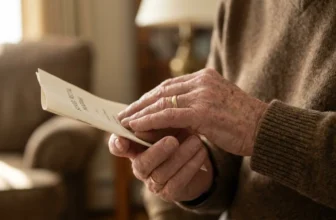
Inside were about 40 letters, a spiral notebook journal, a folding road map of northern Minnesota, and six photographs of a young man I would later learn was his brother, Danny.
I read the first letter standing up, then sat down on the concrete and stayed there. It was postmarked 1973 and described a canoe trip, portages and rain and someone dropping a pack in the water. I finished the whole stack at 12:20 a.m., cold through my jeans, with the garage light humming.
What unsettled me was not scandal. It was how ordinary the box was, and how a whole life had sat filed behind my paint cans while I walked past it to the car.
He Had a Brother I Never Heard Of
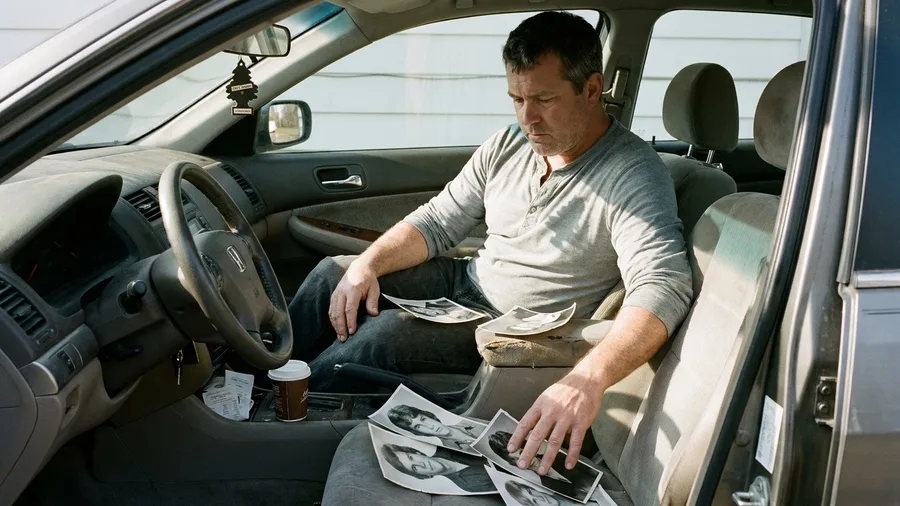
Because nobody in his family ever said the name aloud in my presence, not once in four and a half decades.
Danny was twenty-four when a car took him in 1976. My husband was twenty-one, the younger brother, and the house he grew up in settled on a rule afterward: the name stayed out of the room. Not a photograph on the wall, not a mention over the holiday table, not a story that started and got cut off. Grief got folded into a drawer and the drawer got closed.
The wall is where the six photographs would have hung. It started instead with his parents’ anniversary portrait, so Danny was never framed. He was filed, and the file sat in a shoebox behind the paint cans for the better part of a decade.
I knew his mother’s potato casserole. I knew which chair his father sat in at Christmas. I sat through the wakes and the weddings and the graduation parties, and no one ever turned to me and said, there was another one. I never asked, either.
When I finally brought the box out to him, he looked at it a long moment and said, “I didn’t think you’d want that.” Four words, offered without defense, and I have thought about them more than almost anything else he has said.
A name gone quiet is not proof a love went quiet with it. More often it is a family’s old habit of protecting each other, carried into a marriage nobody thought to test.
💡 PRO TIP
A missing name is not a missing love
A name that never comes up at the dinner table may be a family rule your spouse brought into the marriage, not proof that the person meant nothing. Before you decide you were kept in the dark, check whether anyone ever said the name out loud.
One Question Bought Me Two Hours
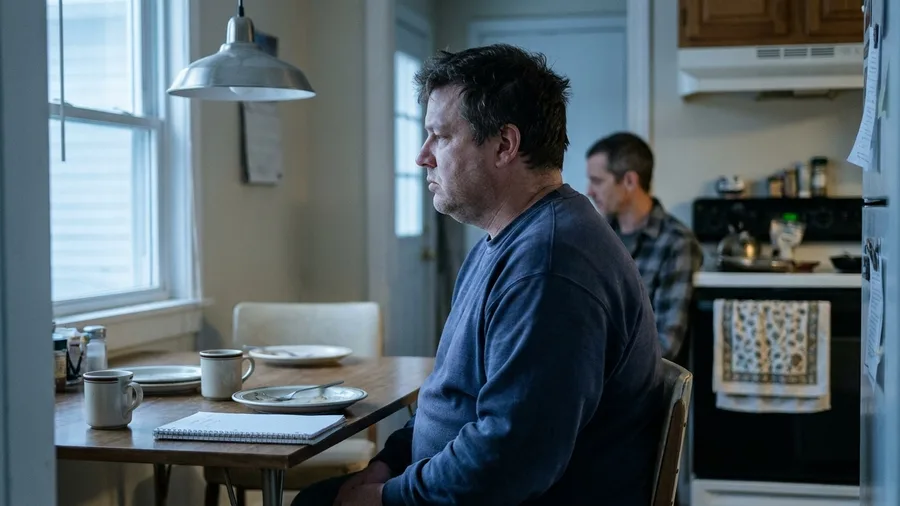
It bought two hours at the kitchen table, and it cost me the story I had been telling myself about a man I already knew.
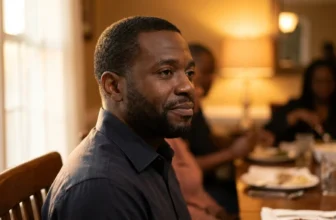
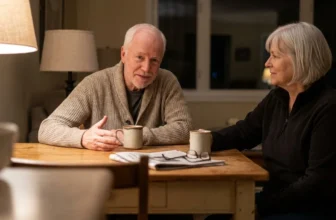
I waited until after supper, plates pushed to the side, coffee still warm. He had been retired three years by then, seventy-one years old, and I had spent all that time not putting the question to him. I said four words: “Tell me about Danny.”
He talked. He gave me a birth date and a 1969 Ford Galaxie with a bad second gear, and he told me that the radio in that car was playing “American Pie” the night the call came in. He laughed once, hard, at something I have since forgotten, and then stopped. After that he was quiet, and then he pushed back from the table and went out to the garage.
A two-hour answer is not a confession. It is what happens when a question finally gets put on the table, and I had never once put it there.
I stood at the sink at 11:15 and washed the plates. I left the pots soaking until morning and did not care. Then I found a spiral notebook, opened to the first page, and wrote one word on it: Danny. I wanted it somewhere that would not close.
🗓️ How One Question Became a Weekly Habit
March — the box
Finding the shoebox behind the paint cans started everything.
March — the first question
I asked about Danny at the kitchen table; he talked for two hours and then went to the garage.
April — the notebook
I wrote questions in a spiral notebook and kept it under the takeout menus.
Every Friday, 6:30
We started eating dinner without phones, bills, or the children's schedules.
Fourteen months
The notebook filled with 60 questions, one asked each week.
The seventh month
He asked me a question back, and I admitted I had wanted to leave Ohio at 20.
We Ran the Marriage Like a Logistics Company
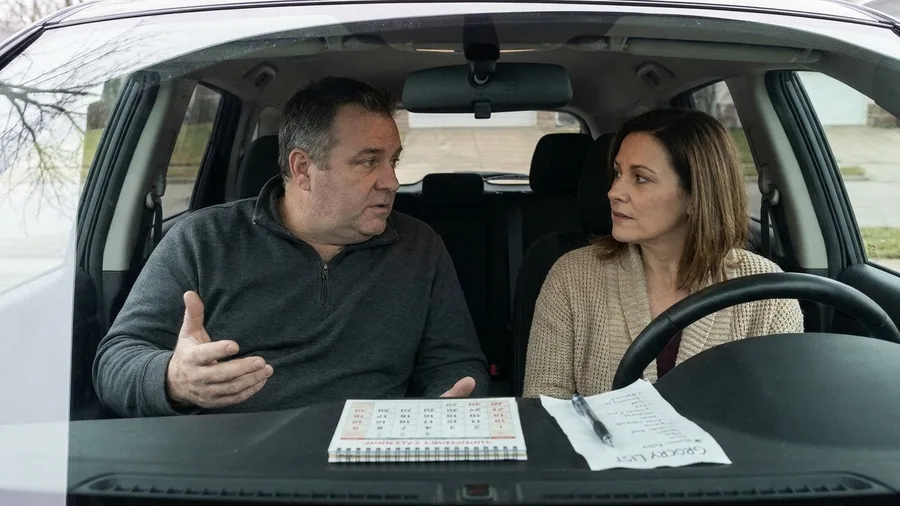
Somebody who can talk for two hours about a brother once the question is put on the table was not walled off; the years went to other business, and that business had a rhythm.
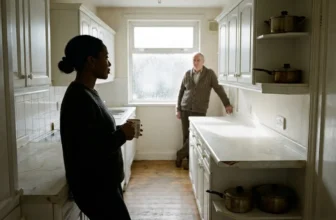
Two jobs, two kids, a house we have now lived in for 38 years, three grandchildren, and a refrigerator door that was never blank. A budget envelope sat in the drawer with items on it in my handwriting and his. The pediatrician’s number, the school forms with their deadlines, every grandchild’s birthday: mine. The furnace filter, the car inspections, the county tax dates: his. Neither of us ever wrote down what we thought at two in the morning, because there was no line on that calendar for it.
The Tuesday version of our household ran like a small office that had found its groove. Anything that needed doing got done, and anything that did not get done had no one assigned to it, so it sat.
This is the part I have had to say slowly to myself: a marriage can run clean, kind and competent for decades and still never once ask who the other person is. Competence is efficient that way. A furnace that gets filtered does not prompt a conversation about your father, and a packed calendar gives you a perfectly good reason to be somewhere.
If your household hums and the inside of it feels quiet, the thing to look at first may be the agenda rather than the love.
Thirty-Four Years of Work I Never Saw
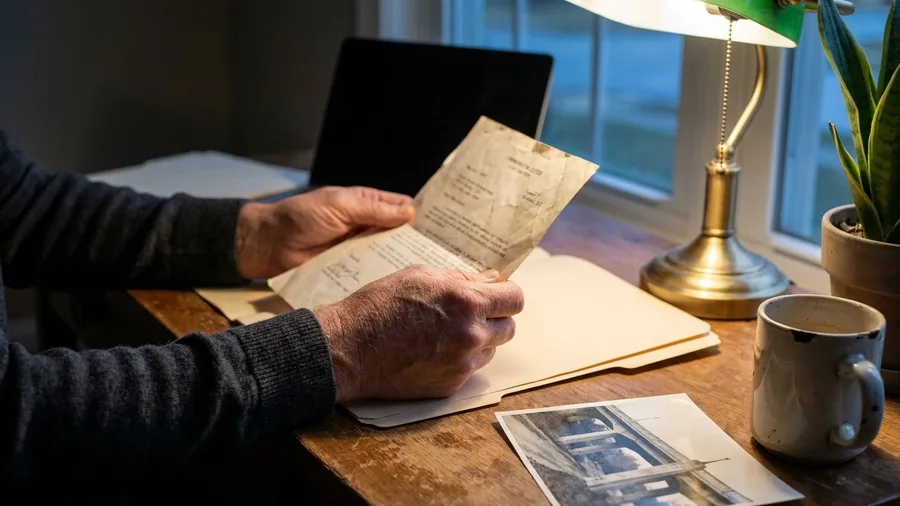
The biggest block on his calendar that I never entered was 34 years with the county, and this year I could not describe a single ordinary Tuesday of it.
He was a civil engineer there and stopped going in three years ago. The send-off was a sheet cake in an annex room with folding chairs, and I slipped out early to drive a grandchild home from practice, so I have a memory of the cake and almost none of the speeches.
I can produce two names from three and a half decades: Ray Metz and Alice Frame. That is the whole list. I do not know where he ate lunch, whether he ate lunch, or who he sat across from. He talked about one bridge project and called it ‘the job,’ and I never asked him what made it different from the other bridges.
After the shoebox, I opened his desk drawer. In a folder I had never had cause to touch were photographs of a bridge deck and a commendation letter with his name on it. I sat there feeling like someone reading about a country she had never visited; the county was not a rival to me, it was just a place nobody had told me to go.
A working life is one whole volume of a person. Missing it is not the same as being wronged.
The Gap in Our Marriage — At a Glance
👫 Years together
45
📅 Years before we met
3 in the box
🗣️ First unasked name
Danny
⏰ Length of first answer
2 hours
📓 Questions asked since
60
🍽️ Weekly dinner slot
Friday 6:30
The turning point
One question at the kitchen table turned a silent archive into a weekly practice.
Lonely and Married Can Share an Address
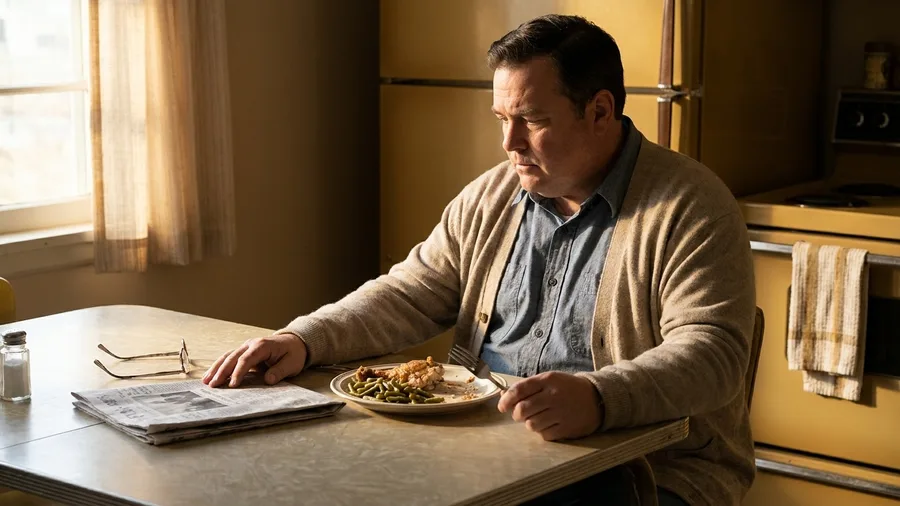
There were two words sitting inside a marriage that looked fine from the street: lonely and married, sharing one address.
The plain version: a gap between running a household with someone and knowing what that person thinks about at night, when the house is quiet and the day is over and there is no grandchild to hand something to.
I am not a therapist and this is one story, not a diagnosis, not a statistic. If the feeling is heavy or it has been there for years, that is work for a licensed professional, and the APA has ways to find one.
What I recognize in hindsight is not a shortage of conversation. We talked constantly. The roof, the bills, the grandchildren’s report cards, the neighbor’s fence. Plenty of words. None of it about what either of us thought or feared or wanted. Not once did one of us open the door and ask the other a question that did not have a practical answer.
The feeling is not automatically abuse, neglect or a bad marriage. Some marriages have a larger wound underneath and need more than a Friday dinner. But for a good many of us the wound is smaller and stranger: two people who never built the habit of asking, and mistook the running of a household for the knowing.
It can be a practice problem. Practice problems have drills.
He Wasn’t Hiding; I Wasn’t Asking
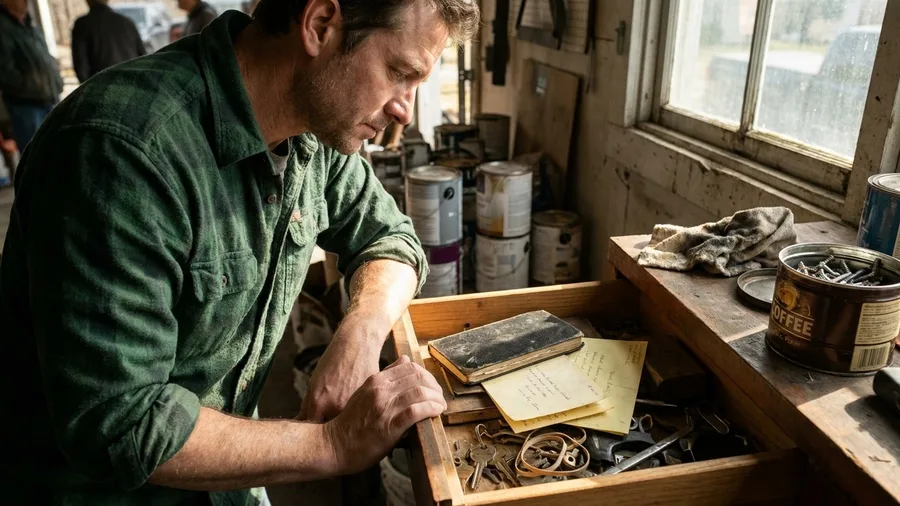
The box sat behind the paint cans, not in a lockbox under the floorboards, and when I finally asked him about it he said the plainest thing: “It wasn’t a secret. It was just mine.” That sentence did more work on me than the letters did.
I had spent the first week after the discovery building a case I never said out loud. Forty-five years and a dead brother I had never heard named. Somewhere in there I had decided the silence meant something was being kept from me. It took the box being exactly where a person stores their own things – unpadded, unmarked, unguarded – to see the shape of what had actually happened.
Secrecy is a thing hidden from someone who is looking. An unasked question is a thing left alone because nobody came looking. He had made an assumption about my interest, and I had made an assumption about his past, and the two assumptions agreed to leave each other in peace.
Some marriages are nothing like this, and I want to be careful about it. There are partners who talk about their day and their father and their worst year without being asked, and who are met halfway every time. This is not a story about them, and I am not going to rank their marriage below mine to make mine interesting.
What people who already know each other seem to do is ask in ordinary weeks, not in emergencies. “What did your father’s voice sound like?” on a Tuesday. Not after a shoebox, not after a diagnosis, not after a retirement party you left early.
So before you decide you were deceived, check whether the question was ever asked in a way that left room for an answer. Mine had not been.
What Actually Closes the Gap
From the loudest thing you can do to the quietest — and what each one really repairs
Adapted from 14 months of Friday dinners and a spiral notebook.
Forty-Five Years In, We Started Weekly Dinners
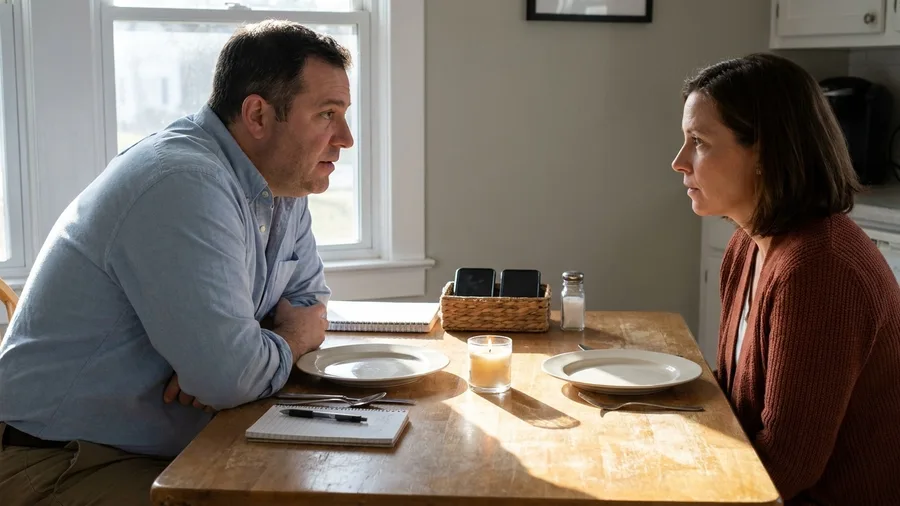
If asking was the missing piece, the test was whether a question on the calendar could do what 45 years of politeness had not, so I wrote it in ink: Fridays, 6:30, on the paper calendar by the refrigerator. No phones at the table. No bills, no talk about the children’s schedules or the tax dates. For the first few weeks I felt foolish, two people in their late sixties sitting in a kitchen set up like an interview.
I kept the questions in a spiral notebook in the drawer under the takeout menus, where I would see it while reaching for a pen. Sixty questions over fourteen months. I wrote each one the night before, sometimes crossed one out and wrote a smaller one.
The first three Fridays were rough. He answered in single words that were almost walls: ‘Fine.’ ‘No.’ ‘Maybe.’ Then came the Friday I was tired and said we should skip it, and he agreed too fast, which told me more than any long answer he had given me.
The rule that saved it was small. One question, no fixing what he said, and no circling back later to check whether the answer had held up. A short answer still counted as a dinner. Some weeks he gave me two sentences and I let them be two sentences.
That is the part I would hand anyone: a slot on the calendar beats good intentions, because it takes curiosity out of the mood it has to be in and places it where errands already live. Logistics ran our marriage for decades. Now they ran this instead.
The Man I Found Was Sadder and Funnier
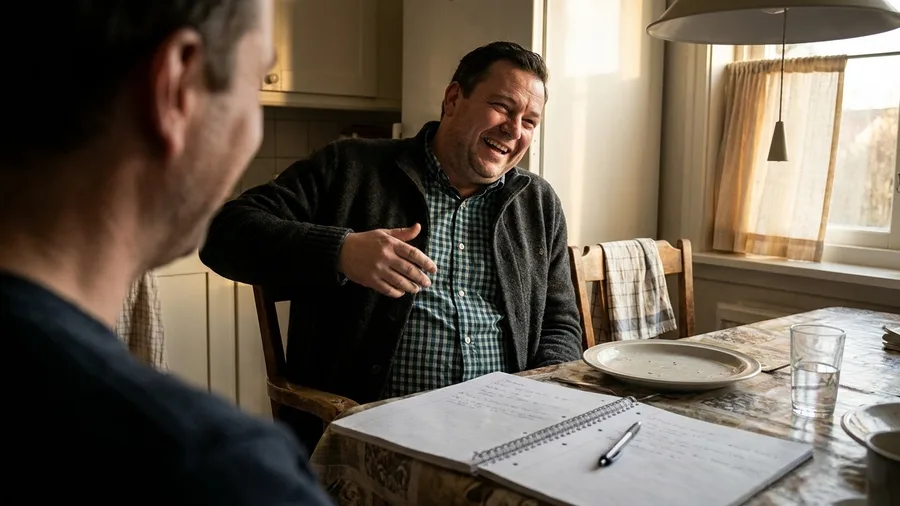
The man at the table turned out to be sadder than the one I had managed for four decades, and funnier than any of us had seen.
The sad part arrived in pieces over those months: Danny, and the job he turned down in 1985, and the boat he never bought because a man with three kids does not buy a boat, and the admission – said to the tablecloth, not to me – that he did not want to be a burden to our children when his knees went.
Then the other half. Once he had an audience he started doing impressions. A county commissioner, all gravel and self-importance. A survey crew arguing over a stake. A cow in a culvert, lowing with real conviction, while I laughed so hard I had to set my water down. Our children had never seen it. Forty-one and thirty-eight years old, and there was a version of their father they had never met.
In the seventh month it turned around. He asked me the questions. “What did you want at 20?” He asked it while drying a plate, casual as the weather. I told him I had wanted to leave Ohio and never said so, and he stood there with the towel.
I had a box of my own, it turned out: a summer I saved for and did not take, a friendship I let go in my thirties for no good reason, a version of me he had never been introduced to. The questions ran both ways once they had somewhere to sit.
A person who emerges may not match the spouse you have been running the household with. That is not a threat to the marriage. It only becomes one if you treat the new information as something to hold against the old.
🌱 GROWING TIP
Your first question is not a rescue
Ask an ordinary meal, with phones away and no fixing afterwards. The question is not a crisis intervention. It is an invitation, and it works better when there is nothing at stake but the answer.
Ask One Question About the Years Before You
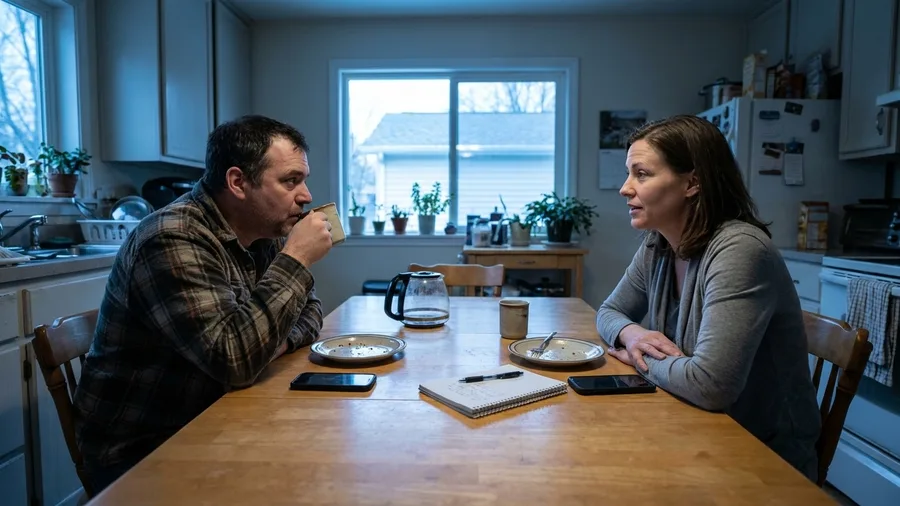
You never asked about the years before you, so ask now, in plain words, at a table with the phones turned over. The exact first question is: “Tell me about a day from before we met that you still think about.” That is the whole opening move. Not “Tell me about your past,” not a lead-in about how you have been reading old letters; one open day, spoken aloud, at a meal.
The ordinary meal is the point. Not a crisis, not a diagnosis, not an anniversary, not the night after a funeral. A crisis crowds the room and forces an answer; a Tuesday dinner leaves space for a short one. Put the question on the table with the plates and want nothing from it but to hear what comes back. No fixing. If the answer troubles you, sit with it and say nothing that sounds like a plan.
Expect one of three things. Surprise, brevity, or a subject change. A partner might startle at being asked after decades, or answer in nine words and reach for the salt. A short first answer is not a refusal. It may be the first test of whether the question is real, and whether it will come again next week or vanish like every other good intention. I asked mine and got two hours, and then he went out to the garage, and I still counted it.
One thing to avoid above all: treating the answer as evidence. The old argument about the boat, the money, the holiday that went wrong, the brother who was never mentioned, none of it belongs in the room while he is talking. The answer is not proof of anything, and if you reach for it as ammunition you will teach him to be careful, and you will not get another.
Ask tonight if you have never asked. If your partner already talks and meets you halfway, this is not your article, and the question is not a repair. For everyone else, the gap is one sentence wide and has been waiting years to be crossed.
Frequently Asked Questions
How can you be married for 45 years and not know your spouse had a sibling?
A missing name is often a family rule rather than a deliberate concealment. If the family stopped speaking that name after a death, the spouse may carry that rule into the marriage without ever testing it. The name goes unspoken because no one asks.
Is it normal to feel lonely in a long marriage?
Feeling lonely inside a functioning marriage is common enough that therapists describe it often. It usually means the conversation covers logistics but not interior life. It is not automatically a sign of abuse or a doomed marriage. It is a practice gap that can be addressed.
What if my partner won’t answer questions about the past?
A short answer or a subject change on the first try is not a refusal. It may be a test of whether the question will be asked again. Keep the slot, keep the question open, and do not treat the first silence as a verdict.
How do I start without making it feel like an interrogation?
Ask one specific, open question over an ordinary meal, then listen without following up with a demand for more detail. Do not bring up the answer later as evidence in an argument. Curiosity is a habit, not a one-time audit.
Does this mean my spouse was keeping secrets?
Not necessarily. Secrecy hides something from someone who is asking. An unasked question leaves something unshared because no one asked. The distinction matters before you decide you were deceived.
What if my partner already shares everything?
Then the question is not a repair for you. Couples who already talk about their past and their day are not the audience for this practice. The exercise is for the person who has never asked and whose spouse has never been asked.
The Question You Ask Tonight
The gap is ordinary, unglamorous and closeable. Asking cost me the comfort of a settled story about my husband, and it produced two hours about Danny, sixty questions on paper, and a man who now asks me things back.
The box marked ‘1972-1979’ still sits behind the paint cans. But Danny’s name gets said at Friday dinner now, and the label no longer marks a life I am locked out of. It marks a stretch of years I know something about.
If you have never asked, tonight’s question is this: “Tell me about a day from before we met that you still think about.” He may be startled, may give you one sentence, may go quiet and head for the garage. A short first answer is not a refusal. This is for the person who has never asked, not the one whose partner already talks and is met halfway. Ask again next Friday, and the marriage you assumed you had may turn out to be one question deeper than you thought.
Ask One Question This Friday
Put a real dinner on the calendar, phones away, and ask the one question you have never asked. Then write the answer down.