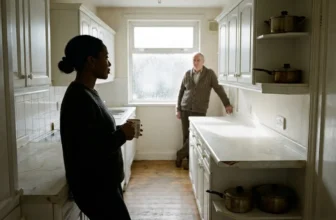
Four hours. That is the stretch from the first knock at the door to the last coat pulled off the pile, and it is the entire window most families get on a couple’s actual life together.
You have just come from one of those afternoons. One couple at the table looked finished: coordinated without matching, funny in the right places, a hand on a back on the way past the potatoes. No friction anyone could point to. You drove home doing arithmetic on your own relationship.
The arithmetic is the problem. The flawless table version is usually a performance, sometimes a truce, occasionally a shield held up for somebody else in the room, and none of that is evidence of a better marriage.
The polished couple is not the benchmark. Public ease and private repair are two different tests, and once you can tell them apart the comparison loosens its grip. By the end you will have one move: if you have been performing, one honest conversation with someone safe; if you have been comparing, one question about how that couple repairs rather than how they appear.
Family gatherings reward the performance, not the truth
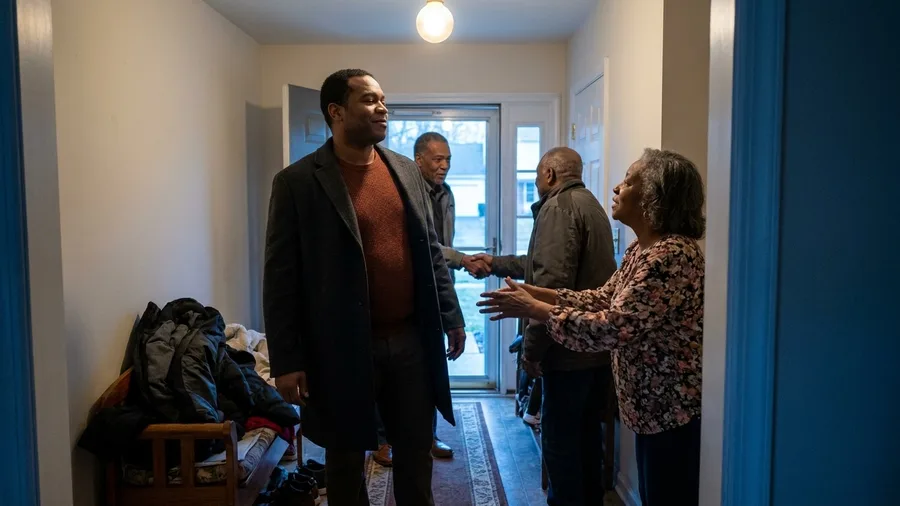
A couple that is struggling can look flawless at a family party because the party asks for a version of them, not the truth of them. The audience has known both people for years and keeps a stored portrait: the funny one, the steady one, the partner everyone decided was a good match before the second holiday. That portrait is what the room expects to see come through the door, and it is easier to hand over than to correct.
The gathering is short. Four hours at a table, a kitchen full of uncles, a toast, coats back on. The mask has an end time, a driveway, and a car door, and everyone performing knows it. A sprint rewards a sprint.
Dropping it would cost something specific. An aunt leaning in over the dish towel with a careful question, pity in the kitchen, the follow-up phone call two weeks later, a comment repeated at the next birthday. The couple pays either way, so the cheaper bill is the one that keeps the room calm.
What the table rewards is the portrait, not the private repair. Performance is the price of admission, and couples understood that long before they started performing.
Fragile couples often produce the most polished performance

The more fragile a couple feels, the harder they tend to work the room, because the polished picture is the last piece they can still control. So you get over-correction: the extra compliment volunteered before anyone asks, the matching outfits, the inside joke about how they met that has clearly been told in the car on the way over.
Each polished line says the same sentence twice, once to the family and once to the couple themselves, that nothing is wrong.
Set that against a couple who are solid. They can afford to relax, to let a small disagreement show over who is sitting where, and to recover without checking whether the audience caught it. Ease leaves room for separate people. Performance keeps everyone on script.
The counterweight matters: not every struggling couple performs. Some stop, and ask a sibling or a friend for help instead. The act is a choice, not a fixed law, and plenty choose the harder, plainer route.
Still, when you are looking for a tell, polished display can scale with strain, because it is the only lever left. The public picture is least trustworthy exactly where it is most flawless.
| At the gathering | Genuine ease | Performed harmony |
|---|---|---|
| Who they talk to | Split up for stretches, each caught up in their own conversation | Stay within arm’s reach the whole evening |
| Small disagreement | A sharp word about seating, then it passes in a minute | No friction at all, or one that goes cold |
| Repair in public | An apology, a hand on the back, a joke that lands | Repair is avoided as if it were a leak |
| Silence | Comfortable, no checking of faces | Filled fast, with a glance sideways |
| The goodbye | Whoever said goodbye to whom, no choreography | A staged exit, coordinated to the last wave |
They are protecting someone else, not just themselves

The mask usually has a beneficiary. A couple can hold the act together because a seven-year-old is at the table and does not need to spend Christmas Eve watching her parents decide whether they still like each other; because a father in his eighties has been fragile since the spring and the update can wait; because a sister’s engagement dinner is in its second hour and the toast has not been made yet. The performance is aimed at someone across the room.
The moment is loaded on purpose. It is the first holiday since the funeral, the first dinner after a long absence, the anniversary nobody wants to explain twice. Those are the tables where a single wrong word would follow the plates around all evening.
The trade is uneven. The person being shielded walks away feeling held and safe, unaware of the work it took. The couple walks into the driveway with the unspoken thing still sitting between them, and the car ride home is unusually quiet.
Here is the harder part. The reason can be love and still teach the wrong lesson. Spare someone enough times and the couple starts treating candor itself as the threat, as if the marriage can only stay safe while nobody names anything.
🌱 GROWING TIP
Leave the driveway thirty seconds longer
If you are the couple in the act, try this on the way home before you turn the radio on: say the one thing the mask covered. Not the whole fight, just the sentence. 'I spent that dinner pretending I was fine.' Thirty seconds, no resolution required. Naming the act while it is still warm is far easier than naming it a week later in bed.
A public truce looks like harmony but is not

By the time the car turns into the driveway, the terms are already set. Who handles the uncle who asks about money. What gets left in the car: the argument from Tuesday, the job news, the thing about his mother. When to leave, and which excuse gets used. The negotiation happens fast and nobody names it, so the family walks in on two people who have quietly agreed to a version of themselves for the next four hours.
That agreement is a truce, and a truce and a repair are not the same thing. A truce gets you through the evening without a scene. A repair is the slower work of coming back together after something has gone wrong, and it happens later, or it doesn’t happen at all. The family sees the ceasefire and reads it as closeness, because from across the table they look identical.
The tell comes after dessert. The truce holds right up until the last goodbye, and then the car door closes and the temperature drops. Not a fight, usually. Just a silence with a shape to it, and two people staring at the road.
A pause can be honest if it is said out loud: “We are not doing this at dinner. We will come back to it tonight.” Those words change the quiet from a performance into a plan. What the reader needs to test is not whether the table was calm, but whether the calm had a follow-up once the plates were cleared.
The two hours after the door
Where the cost of the act actually shows up
Patterns described by couples therapists, not a survey figure.
Rehearsing the happy script makes the real talk harder
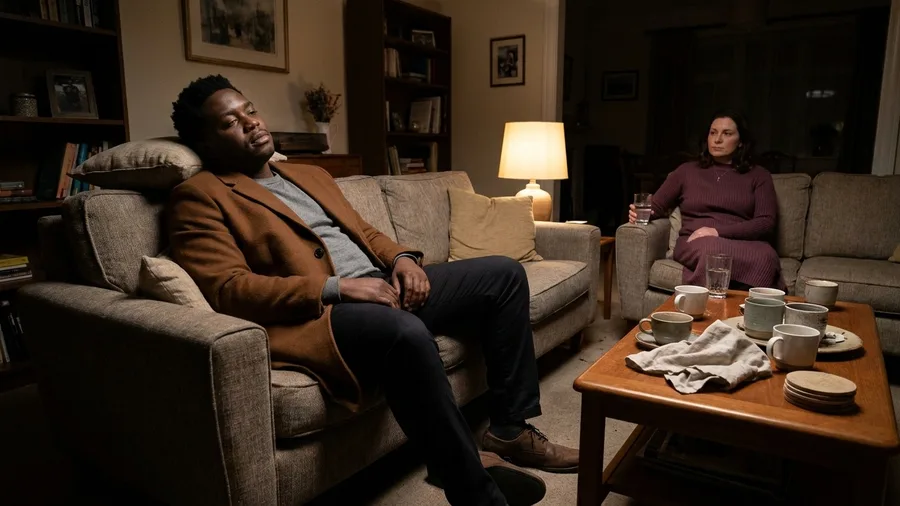
An unnamed truce does not close the distance behind it. It adds to it, one gathering at a time. The pattern is nearly mechanical: perform for four hours, drive home wrecked, put off the conversation because everyone is tired, then do the whole thing again at the next birthday, the next holiday, the next wedding.
Each hour of the act raises the price of the truth. By the third or fourth gathering, the thing that cannot be said has grown heavy enough that saying it would mean admitting the last two years were a show. So it stays down.
The cost shows up as a specific kind of loneliness: two people alone together in a crowded room. You can be passing a dish to someone you love, laughing at the right moment, and feel further from them than from the cousin you see twice a year.
There are physical tells if you know to look for them. The silence on the drive home. The way one of them collapses onto the couch the moment the door shuts, the performance dropping off like a coat. The mask stops being a symptom of the problem and becomes part of it. The distance being hidden keeps growing precisely because it stays hidden, and the next performance has to work harder to cover the ground it lost.
The better the act, the less help they get
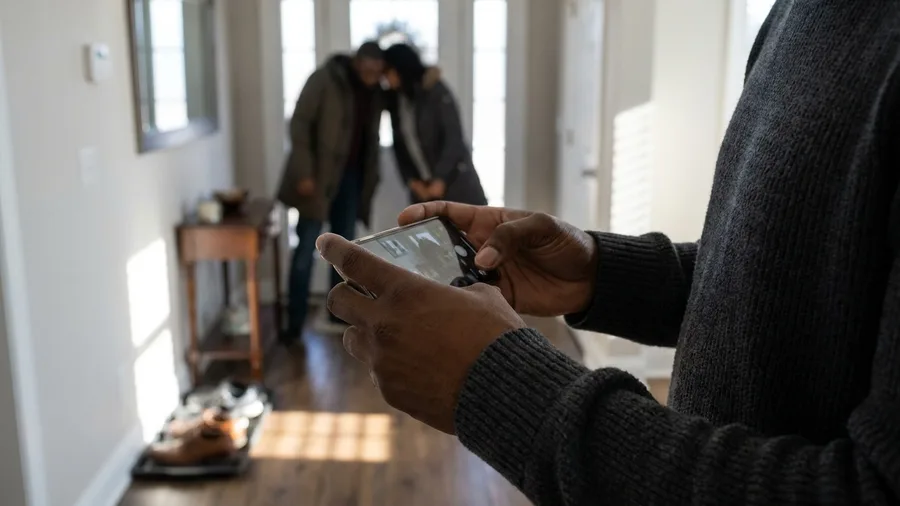
The better the act gets, the fewer people think to ask. Friends and family look at the couple, see two people who need nothing, and move on to the cousin who is visibly falling apart. Help flows toward visible trouble. A convincing performance reads as trouble that isn’t there.
So the couple with the most strain ends up with the least support. The display is strongest exactly where the need runs highest, and the people around them take the display at face value.
Part of this sits with the audience. “You two seemed so happy on Saturday” is a compliment, and a compliment rewards the act. “How are you doing when no one is around?” is a different sentence entirely. It opens a door, because it asks about the hours the performance was built to cover.
If you want to get past the show and reach the people underneath it, ask about the parts nobody saw. “What was the weekend like for you once everyone left?” is a question that cannot be answered with a polished line. The audience’s belief is half the trap, and the reader who stops feeding it is doing the couple a service the couple cannot ask for.
Couples who bicker openly are often the safer bet
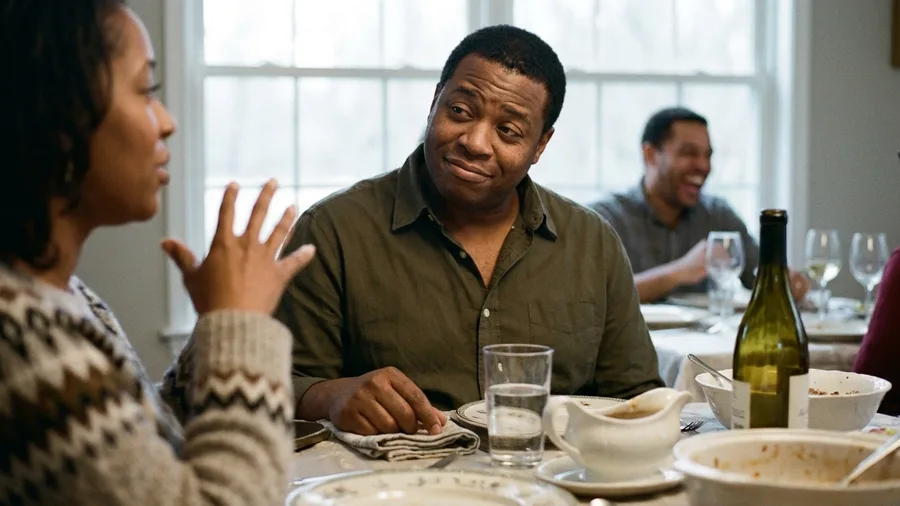
Bickering at the table worries people far less than it should, because a couple who can argue about the seating chart and come back from it is showing you the repair, not the fracture. Two public styles sit at that table. One is small friction handled in the open, a sharp exchange about who sits where, an eye roll that gets a laugh. The other is harmony with no rough edge at all, and the second is the one that tells you less.
Watch what happens after the snapped word. The apology comes a minute later, the eye roll ends, someone changes the subject and it works, a hand lands on the other’s back before the plates are cleared. That is the muscle, and it is being used in front of you.
Not every open fight is safe to read that way. The line is contempt: one partner mocking the other in front of the room, a story told at their expense to get a laugh, one person going quiet while the other performs the argument for the audience. That is not repair in progress. That is repair being refused while the room watches.
So the health signal is not whether friction appears, it is whether the pair of them come back to connection where you can see it. Bickering couples who recover are showing you what the couple with the flawless table may be doing only behind a closed car door, if they are doing it at all. Look for the return, not the absence of conflict.
Ease or performance: what to look for
Genuine ease
- They separate and each holds their own conversation
- Small friction shows and is repaired in a minute
- Silence sits without anyone checking faces
- Their exit isn't choreographed for the room
Performed harmony
- Constant proximity, always in reach of each other
- Checking the partner's face before speaking
- Agreeing past the point of truth to keep it smooth
- Laughing a heartbeat before the joke actually lands
Watch the small transitions, not the big smiles
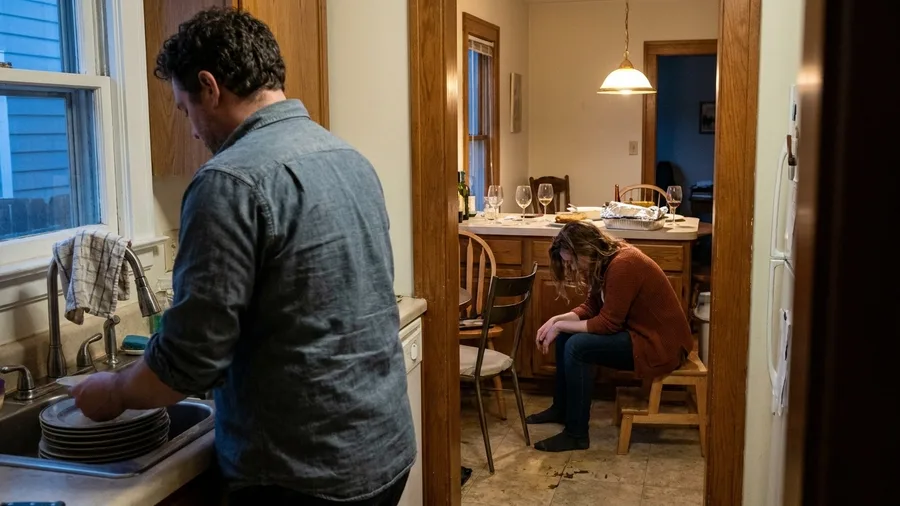
The difference between ease and performance shows up in the transitions, in the seconds when the pose has to drop. Watch the kitchen, not the dinner table.
In real ease, the two of them will separate. One drifts into a conversation about a car, the other ends up with a cousin by the fridge, and neither keeps checking. Silence between them sits comfortably, because nobody is on duty.
In performed harmony, they stay within arm’s reach the whole night. One partner’s eyes keep moving to the other’s face after each joke, scanning for the right reaction. They agree past the point of truth, nod through an opinion they will argue about in the car.
The most revealing moments are the smallest. The doorway hug at the end, the half-second after a joke lands or doesn’t, the walk to the car park. The performance has an end time, and the last few minutes before it does are the hardest to fake.
Watch who does repair when something slips in those minutes. A snapped word in the hallway, followed by a quiet exchange, a shrug that ends it, a change of tone. You are not measuring whether they ever irritate each other. You are measuring what happens in the space right after.
One honest step, in order
The first move is not a performance of honesty either.
Drop the mask with one safe person first

If the mask is yours, the first move is not telling your family the truth. It is telling one person the truth, chosen carefully, and saying one plain sentence out loud. That person is not the parent who needs the happy picture kept intact, and not the sibling who will carry it to the next gathering. Someone outside the couple, ideally, who can hold what you say without spending it.
The sentence can be almost this small: that things between the two of you do not match how they look at these events. Say it once, to that one person, in a kitchen or on a walk, with no plan to repeat it. No announcement to the family, no public confession, no group message.
Expect two things at once. Relief, because being known is its own kind of rest, and fear, because the picture is now out of your hands. The person may not know what to do next, and that is not the point. The point is being known, not managed.
This first move is not a performance of honesty either. It is a small private test of whether the mask can come down in front of one safe face before it ever comes down at the family table.
What comparison usually leaves out
⏱️ What you watched
4 hours of event
🗓️ What it skips
The rest of the year
🪑 The fair test
How they repair
🧾 Your evidence
One good evening
😅 Their view of you
Probably flattering
Watch for
You are comparing your private Tuesday to their staged holiday, and both sides of that comparison are false.
Your whole year is not their four hours
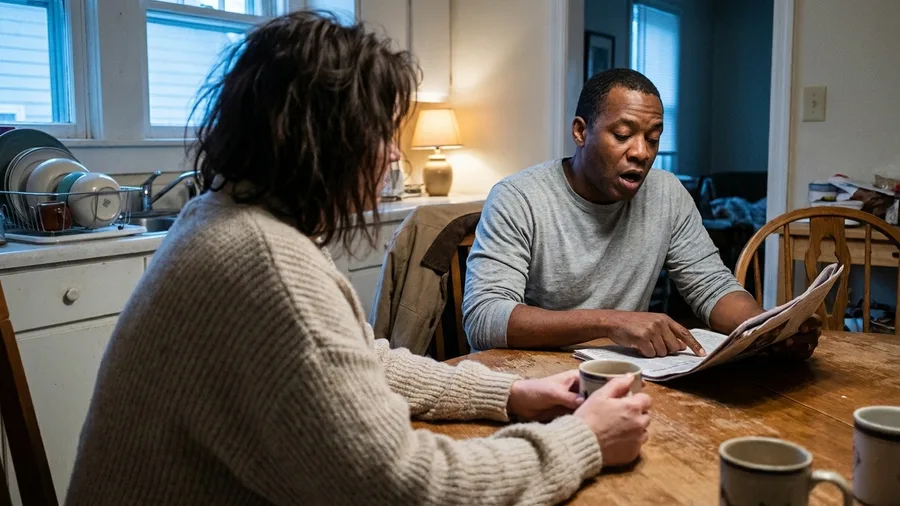
A private question aimed at the other couple will do more for you than an hour of comparison, because the thing you are envying was never the thing you saw. What you saw was four hours at a table. What you are measuring it against is an ordinary Tuesday night at home, dishes in the sink, someone tired, a conversation about a bill. Those are not the same test, and no amount of staring across a table will make them one.
The other couple had a public reason to hold it together. You had a Wednesday.
Notice what the comparison actually stacks up: their best-observed hours against your least-photographed ones. Nobody coordinates an outfit for a Tuesday. Nobody rehearses a shared joke for the evening the boiler makes a noise and one of you has had a long day and neither of you is at your most charming. The gap you feel is largely a gap in conditions, not in quality.
The useful measure is not how they looked. It is how they come back after a hard night.
That is a question you can only answer by asking it of someone who knows them, or, better, by turning it on your own house. How do the two of you return after a sharp exchange, a bad week, a stretch where the talk ran thin? If there is a route back, you are holding the thing the table was never going to show anyone.
And the envy is not a one-way street. A couple who performs well may be looking at your unplanned ease and wondering why their own evenings feel like a job.
Three easy mistakes with what you just read
What the family table can and cannot tell you
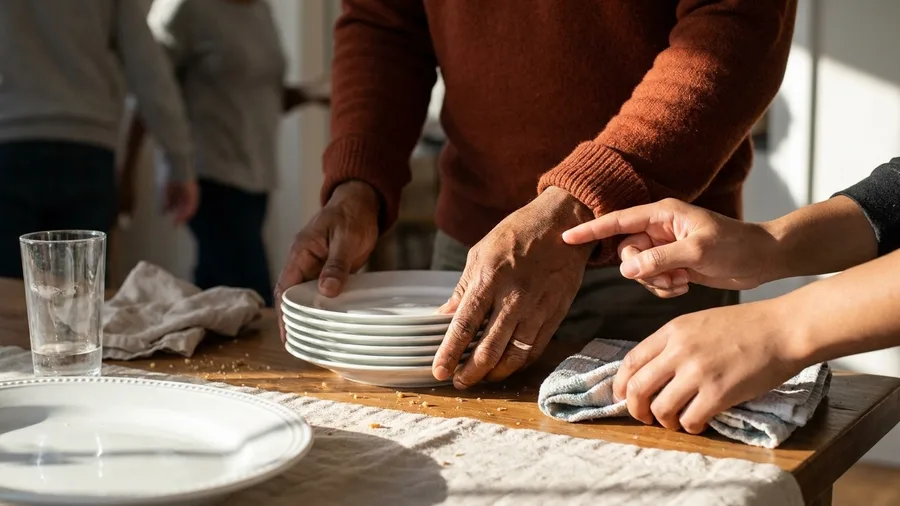
The family table tells you plenty about how a couple handles an audience and almost nothing about how they handle a Tuesday. It is strong evidence of wit, timing, coordination, and patience for your uncle’s opinions. It is weak evidence of repair, and repair is the thing that holds a marriage together when the room has emptied out.
Watch the transitions and the recovery and ten minutes will teach you more than a decade of watching the smiles. You will simply be learning about public repair, which is a fraction of the private kind.
Take the moment the plates are cleared. One partner makes a dry remark about the washing-up, the other answers a beat too sharp, and then you see it: the small correction, a hand at the elbow, the joke that lands softer. That tells you something real. What it does not tell you is whether the same couple can find their way back on a night when nobody is watching and nothing is at stake but the two of them.
The flawless pair may be the most fragile in the room, and the pair bickering over the seating chart may have the sturdier base. Neither is guaranteed. The room is showing you the surface of both, and the surface is all it has ever had to offer.
Frequently Asked Questions
Why would a couple who is struggling look so good at a family party?
Because a family gathering has a script the couple already knows: who each partner is supposed to be, how long the event lasts, and what dropping the act would cost. Four hours is short enough to run on adrenaline, and the payoff is enormous: no questions, no pity, no family gossip that follows you for years.
Is there a link between how bad things are and how perfect they look?
There can be. The public picture is the last piece of the relationship a struggling couple still controls, so over-correction, extra compliments and rehearsed jokes can scale with the strain. It is not a rule. Some couples stop performing and ask for help; the act is a choice, not a certainty.
How can I tell the difference between genuine ease and a performance?
Watch the transitions: the kitchen, the goodbye, the parking lot, the half-second after a joke. Genuine ease leaves room for two separate people, comfortable silence and small friction that passes quickly. Performed harmony stays close, checks faces, agrees too fast, and drops abruptly once the audience is gone.
Should I be more worried about a couple who argues at the table?
Usually less. Open bickering that gets repaired within a minute or two is the pair showing you their mechanism for coming back together. What is worth worrying about is contempt or humiliation, or one partner going quiet and small while the other performs the fight for the room.
If I’m the couple everyone thinks is perfect, what do I actually do?
Pick one discreet person outside your family and marriage, and say one true sentence: ‘We are not doing as well as we look.’ No announcement to the family, no public confession, no request for anyone to fix it. The first move is a small private test of whether the mask can come off.
How do I stop feeling bad about my own relationship after seeing a couple like that?
Stop judging on the public picture and switch to a private question: how do they repair after a hard night, and how do we? You are comparing your ordinary week against another couple’s staged four hours, which is not a fair test of either relationship.
The perfect couple at the table is not the benchmark
The perfect couple at the table is not the benchmark, and the four hours are not a verdict. A competent performance is a skill, and plenty of couples are skilled at it. The measure that survives the car ride home is repair, and a family gathering is built to hide exactly that.
What you saw was one polished window, not the whole year. The coordinated outfits, the shared joke, the plate passed without being asked for: all of it is a surface a family taught them to keep smooth.
So take one step for whichever side you are on. If the mask is yours, say one true sentence this week to one safe person outside the family. If you have been comparing, ask how that couple comes back after a hard night rather than how they looked at dinner.
The aim was never to look unbreakable in front of your relatives. It is to be known by someone, and to be the couple still talking in the hallway once the last coat is gone.
Pick your one next move
If you are performing, tell one safe person the true sentence this week. If you are comparing, ask one repair question about that couple instead of admiring the show.