The couples who look most inseparable in their sixties are usually the ones you see least of, and the closeness on display is a recent performance, not an old habit. That matters because so many people are measuring a perfectly good marriage against a script written for strangers to watch.
You like your spouse, and that is not a small thing. But the confiding has thinned out, the shared hobbies never took, and somewhere under the ordinary week sits a low-grade guilt that this is what coasting looks like, or worse, what quietly failing looks like.
Snapshots lie. What you see of other couples is selected minutes, edited and timed, not their ordinary Tuesday, so the comparison was never fair to begin with.
A marriage that runs on separate friends, separate mornings and steady cooperation is a real model, not a consolation prize. The only real deficit is loneliness, and that shows up as feeling alone in the same house, not as a shortage of deep talks.
By the end you should be able to place your own marriage in one of three buckets and take the first step that fits it, whether that means protecting the anchor, restarting small contact, or saying the lonely part out loud.
The best-friends standard is newer than your vows
Nothing is wrong with a marriage that runs on steady cooperation instead of best-friend disclosure. The standard most couples now measure themselves against is recent, and it asks one spouse to be four people at once: lover, confidant, hobby partner, and the person you bring every worry to.
That bundle is a modern expectation. The reader’s parents’ generation split the same roles across a wider circle. A sister got the confidences, a neighbor got the hobby, a church friend heard the fear about money, and a workmate got the complaints about the job. No single relationship was asked to carry all of it, and nobody called that a failing marriage.
Look for an official definition that requires best-friendship and you will not find one. Clinicians and researchers who study marriage do not list it as a criterion of a good one. The checklists that demand it are cultural advice passing as a standard.
The older working model treated marriage as a division of duties and long cooperation. One spouse handled the accounts, the other handled the household, and together they kept the week running. Affection showed in reliability rather than in disclosure: the car serviced, the appointment remembered, the kettle on before the other one asked.
Couples who genuinely are best friends are not the problem here and not the benchmark either. Granting a companionable marriage permission to be ordinary does not take anything away from them. It just stops one way of doing it from being sold as the only way.
| The best-friends ideal | The companionable marriage |
|---|---|
| Asks for one person to be lover, confidant, hobby partner and emotional coach | Divides those roles among spouse, siblings, friends and workmates |
| Measures closeness by disclosure and shared interests | Measures it by reliability, shared meals and steady cooperation |
| Needs continual re-earning and mood management | Survives boring weeks, minor illness and bad news without repair work |
| Leaves one person carrying every confidence | Spreads confidences so no single person carries everything |
| Shows well in public and on a screen | Shows in an ordinary Tuesday nobody photographs |
Other couples’ closeness is a curated highlight reel
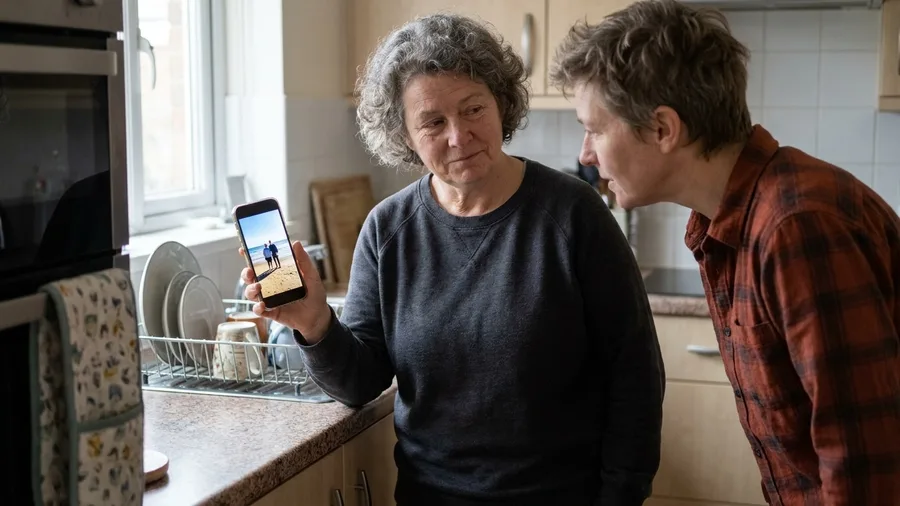
What you are watching when another couple finishes each other’s sentences is a performance, timed and staged, not a window into their Tuesday. The shared hobby, the anniversary trip with the caption, the two of them laughing at a joke only they get – all of it is a selected moment, and the camera cuts before the dishes.
Nobody gets to sit in another couple’s kitchen at 7 a.m. on a wet Wednesday and watch them argue about whose turn it is to call the plumber. The screen shows the ten minutes after the disagreement was smoothed over, or the half hour before the quiet dinner where neither of them says much at all.
So when the comparison flares – usually late, usually after a phone has been put down – the honest question is not whether they look closer. It is what you would actually know about that marriage after a month of living inside it. The answer tends to include a routine, some irritation, probably separate rooms, and a great many unposted days exactly like yours.
Here is the part that catches people out. A couple in real trouble can hide it just as convincingly as a happy one can stage it, so visible strain is no safer an indicator than visible closeness – both are edited. The pair who finish each other’s sentences have chosen which minutes to show you, and they have left the rest in the drawer where everyone else keeps theirs.
What that drawer usually holds is the ordinary weather of a long marriage, which is to say it looks a great deal like what is in yours. The comparison is not between your private hours and their private hours; it is between your private hours and their best ten minutes, and that is not a contest anyone can win.
Partnership and confiding are separate skills
The two competences get blurred, and separating them takes most of the guilt out of the room. Partnership is what shows up on the day the boiler breaks or the diagnosis lands: shared decisions, presence in a crisis, the logistics of a life held together. Confiding is something else. It is being known in detail, saying the fear out loud, being the first call with small news.
A spouse can be excellent at the first and perfectly ordinary at the second, and one does not guarantee the other. The man who has never missed a mortgage payment in forty years may still tell his sister about the biopsy before he tells his wife. That is not a cold marriage. It is a competent partner whose disclosure goes through a different door.
Siblings, lifelong friends, a therapist: these can carry confidences without subtracting anything from the marriage. Using them is not betrayal, and it does not loosen the reliability underneath. The person still turns up with the car keys.
There is a limit worth stating plainly. Some couples build the whole marriage around being each other’s main confidant, and for them, nothing here applies. That is a legitimate model. It is simply not the required one.
💡 PRO TIP
Name the role, not the person
When you catch yourself wishing your spouse were more of a confidant, say so as a role rather than a complaint: 'I need somewhere to put the small stuff, and I'm going to start calling my sister on Sundays.' That is a request for a working arrangement, not a verdict on the marriage.
Steadiness does more daily work than deep disclosure
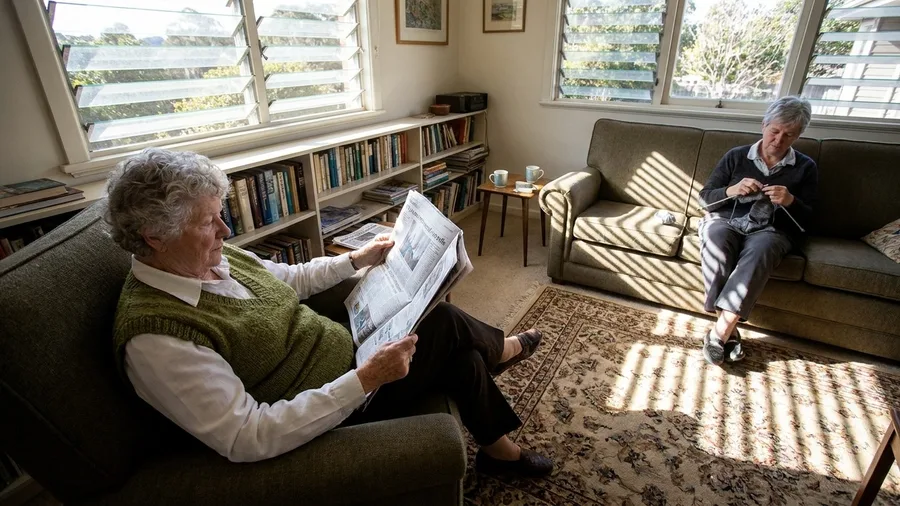
The everyday work of a long marriage is done by steadiness, not by disclosure.
It shows up in small, unglamorous moments: two plates at the same table, a shared run to the hardware store, a comfortable quiet in the same room where nobody is performing interest. Someone finds the car keys without being asked. Someone remembers the bins go out Tuesday night, and that the boiler man is coming Thursday. None of it is romantic. All of it is the marriage actually running.
That steadiness is sturdier than the performative kind, because it does not have to be re-earned each week.
It doesn’t require you to strike the right mood, or manage your partner’s mood, or come up with something to say. It survives the boring weeks that make up most of a year, the ordinary illness where one of you is flat on the sofa, and the bad news that arrives by phone on a Friday afternoon. Deep late-night disclosure often cracks in exactly those weeks. A partner who says ‘sit down, I’ve got your tea’ does not.
The easy-silence idea
Chosen distance vs. feared distance
Chosen and easy
- You look forward to the other one coming home
- Silence in the same room feels restful, not loaded
- Separate mornings are mentioned openly and cheerfully
- You can tell the other person the small news of your day
- Being alone and being together both feel available to you
Feared and tense
- You feel relief when the other person leaves the room
- You scan for reasons to stay out of the house
- You stop asking for help because the asking feels too heavy
- You eat separately without having arranged to
- The thought of a whole retired week together tightens your chest
Separate friends keep one person from carrying everything

Two people each carrying their own friends is not a sign the marriage is weak; it is what stops one spouse from having to meet every need the other has.
A friend who has known you since you were nineteen can do something your husband or wife cannot: they remember the person you were before the mortgage, the children, and the years of the same daily conversations. Work friends give you somewhere to talk through the job you have just left. A friend you walk with every Saturday will listen to you complain about your knee and then change the subject. Your spouse hears the same complaint and starts fixing it, because that is what spouses do.
When one person becomes the only outlet, small things get heavy.
Every minor irritation has to be brought to the one person available. And because it is the same face every time, you start editing: you keep the bin lorry story to yourself, you gloss over the ache, you decide the question about the will is too large to raise tonight. None of that is betrayal. It is simply too much to ask of one person. Quiet resentment is what happens when a partner is the sole listener and neither of you has said so.
The test is whether you can mention the friend and the time spent without bracing for a fight.
If the answer is yes, that friendship belongs to the marriage infrastructure, not to drifting. If the name brings a guarded pause, that is the sentence worth talking about.
Is this distance safe, careful, or a stop sign?
- Separate bedrooms and both sleep well, or talk about it openly
- Separate hobbies and friends mentioned without bracing for a fight
- A weekly anchor that keeps you current: a walk, a call, a meal
- Long stretches of no contact unless there is a practical reason — Comfortable at first, and worth checking before it settles in
- Relief when the other one leaves the room
- Eating separately without ever having arranged it
- Nobody to tell the small news to
- Not asking for help because the asking feels too heavy
- Scanning for reasons to stay out of the house
Parallel time is not the same as growing apart

Different rooms, different trips, and sometimes different bedrooms are how two people arrange a long shared life; they are a setup, not a diagnosis.
Go back twenty years and the same separate setup was still there, and nobody called it a problem. The office, the shared calendar, the friends, the holidays, the separate routines, the weekday evenings with errands in the background. Those years did not read as a drift. What has changed is the removal of the built-in gap, not the nature of the two people.
The clue is in what happens at the door.
When your spouse says they are going out, do you feel a small lift, or relief with an edge of guilt underneath? When they come back, is there a thing to tell them? If the day’s small news is ready and waiting, the distance is chosen and easy. If you have already decided what not to mention, the distance is doing something else: it is holding off a conversation.
Separate rooms and solo trips protect sleep, interests, and sanity. They become a problem only when they are the one place a couple can go to avoid saying something to each other. Chosen distance leaves you current with one another. Feared distance leaves one or both of you watching, editing, scanning. The same closed door reads differently from each side.
Retirement exposes the deal you never negotiated
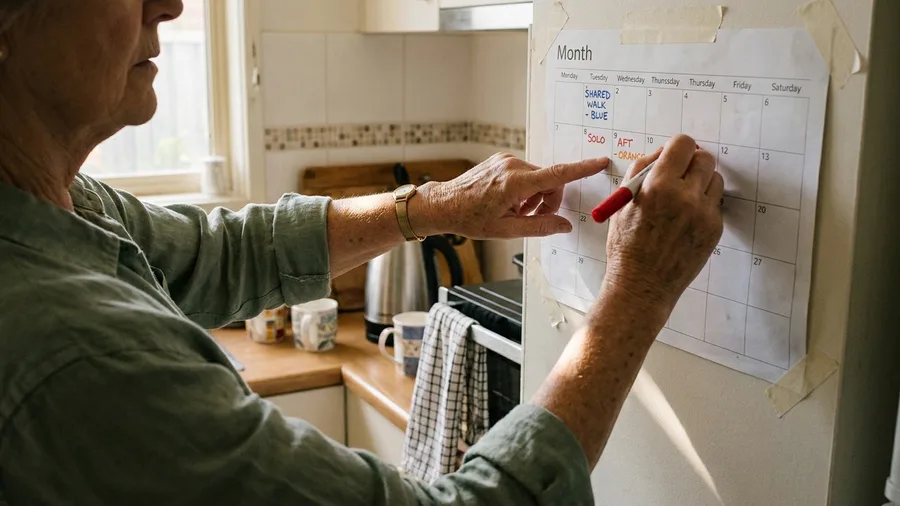
Retirement gets tense because two people who had a rhythm built by jobs suddenly have all the hours with nothing written into them.
The commute did the quiet work. One of you left at seven-thirty, the other had the kitchen until nine. Lunch happened somewhere else, with other people. Evening came after a gap that organized the whole day, so by six there was something to say and the space to say it in. Retirement removes all three gaps at once, and the hours that were never planned because they never existed have to be planned now.
More shared time does not quietly turn into closeness. It turns into friction with a subject. He wants the kitchen cleared by nine; you want the thermostat at sixty-eight and the errands run at your speed, not his. Small things, and they repeat daily now instead of twice a week.
The fix is to agree the shape of the week out loud. One morning with friends, one afternoon solo, one shared meal or walk written in on purpose rather than left to chance.
Do that and the distance becomes chosen and easy. Leave it unspoken and the same hours get contested, and the argument is never really about the thermostat.
🗓️ Agreeing the shape of a retired week
Name the hours
Write down the hours you will both be in the house with no work routine organizing them.
Mark time apart
Put one morning with friends and one solo afternoon on the calendar on purpose.
Choose one shared anchor
Pick a recurring thing that keeps you current: a weekly walk, a meal out, a Sunday call.
Split the turf
Agree who uses the kitchen, the study, or the car at which times so the friction has somewhere to go.
Review it after a month
Keep what felt easy and rewrite what felt like a schedule imposed from outside.
One shared anchor beats a shared hobby
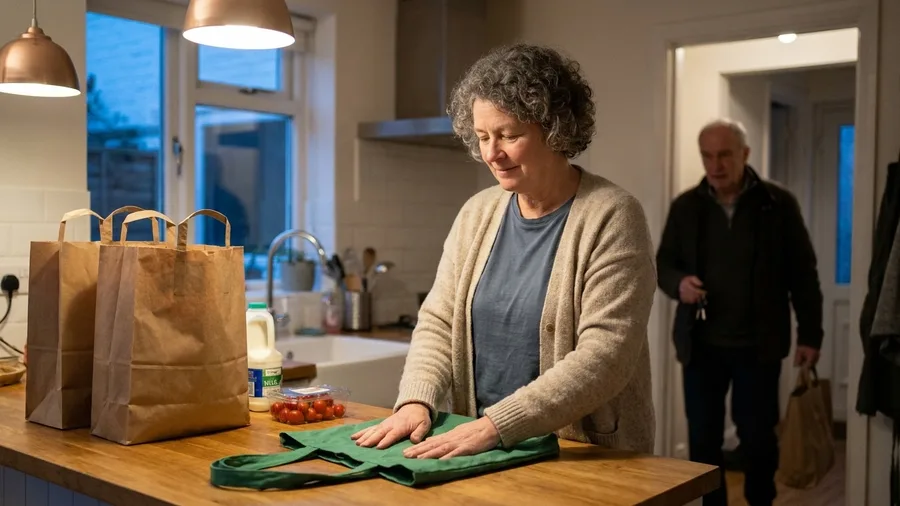
Hobbies in common matter far less than one recurring thing that keeps the two of you current.
The weekly walk. The standing Sunday call to the family. Breakfast out on the same morning every week, same cafe, same table, no plan beyond it. These are small, and that is the point: they survive bad weeks, need no equipment and no booking, and can be picked back up after the flu or a month away without anyone feeling that something has to be renegotiated.
Something elaborate, by contrast, tends to lapse. The trip that takes planning gets postponed. The club you both joined meets twice, then one of you loses interest, and now the missed meetings carry a small weight no one mentions.
Sometimes the anchor is already there but has gone purely logistical, like the Saturday shop. It became a chore instead of contact. Don’t scrap it; separate the two. A coffee after the trolley is unloaded, a walk before you get in the car, ten minutes at the kitchen table with no list in front of you.
That is all an anchor asks of you: chosen, easy contact, at a rhythm both of you can keep, without demanding that either of you become the other’s best confidant. Recurrence is the whole thing. Whatever form it takes, the point is that it comes around again next week, and the week after, and does not need to be arranged.
Anchors, ranked by how little they ask
Loneliness inside the marriage is the real warning
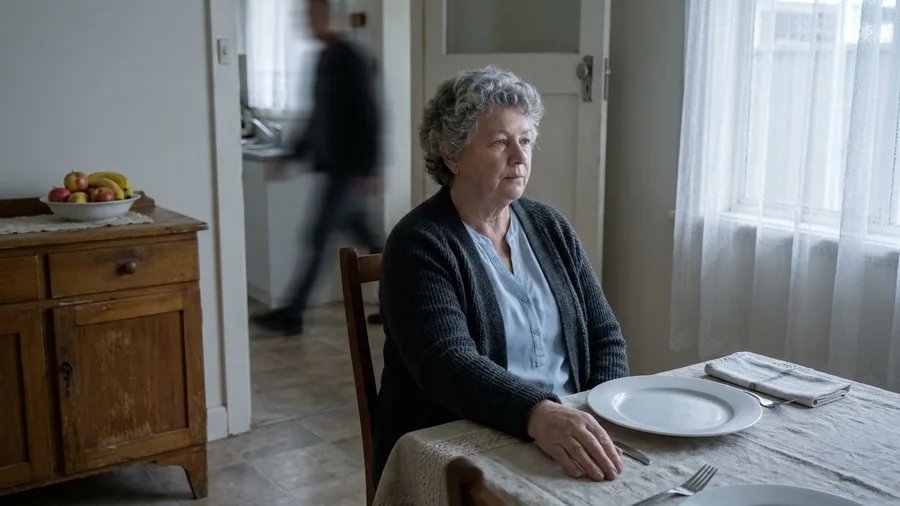
The warning sign is not how much the two of you share, but whether you feel alone in the same house.
A recurring coffee keeps a companionable marriage current; it cannot answer this question for you. Loneliness inside the marriage is the line between companionable and neglected, and it runs through the ordinary day rather than the grand conversation.
Watch for the specific things. Something small happens and there is nobody to tell it to. You stub your toe, see something odd in the garden, hear a piece of good news and the first person you think of is not in the room. You stop asking for help because asking costs more than handling it alone. You feel relief when the front door closes and they are out. You find yourself eating separately without ever having decided to, or scanning for a reason to stay out an extra hour.
The distinction underneath all of it is choosing solitude versus being stranded in it. The same empty afternoon restores you when you picked it and depletes you when it was handed to you.
What to try first is small. Name one piece of news, or make one request for help, directly. If that is met with contempt, or refused often enough that you stop trying, couples therapy is worth bringing in.
⚠️ COMMON MISTAKE
Don't spring a state-of-the-union talk
The mistake couples make when they finally name the loneliness is to schedule a big conversation about the whole marriage at once. Start with one small piece of news and one request for help, in a normal room, on a normal evening. The big talk can come later, if it needs to.
Illness turns the friendship question into logistics
It holds on logistics long before it holds on confidences. When one of you gets sick, the marriage stops being a conversation about closeness and becomes a week of appointments, pill timers, and rides to a building with bad parking. Someone has to drive, sit in the waiting room, keep the medication straight, cook what can be eaten, and field the calls from family asking for updates.
That someone is usually the well spouse, and the load is quiet. It accumulates in sleep loss and in the small math of a day that has no room left in it.
What carries a marriage through this is not how much you have disclosed to each other. It is accumulated goodwill: the reliable Tuesday, the years of turning up, and the separate friends who can actually help. A spouse who has kept her own people and his own people has a bench to call when the week collapses.
Old resentments resurface under caregiving weight. Something said sharply in the third week is rarely about the third week. Naming it early, in your own words and without a list, keeps it from hardening into something colder than tiredness.
Bring in the adult children, the friends, the paid help. The goal is a network around the two of you, not one heroic spouse running the whole thing alone. A marriage that was companionable before the illness is the one with the best odds here.
Three situations, three different first moves
Three situations, and the first move differs in each: contented companions, quiet drift, lonely in the same house. The care load just described sorts itself the same way, which tells you the sorting was never about how much you share but about whether the distance is chosen and easy or tense.
Contented companions have distance they picked, and no loneliness underneath it. The first move is no action at all beyond dropping the guilt, and then one small protective act: keep the weekly walk, the Friday meal, the Sunday call to the family, whatever the anchor is, and do not let a busy month quietly cancel it.
Quiet drift is comfortable but no longer current, the anchor lapsed somewhere in the last year or two. The first move is one small recurring point of contact restarted, not a state-of-the-union talk. Ten minutes with coffee before the news goes on, a walk after dinner, a call on a set day. Recurring beats long, and it can be resumed after a bad week.
Lonely in the same house is the one that needs saying out loud. Raise the loneliness directly in one specific sentence, not a list of grievances: ‘I feel alone in this house and I do not want to.’ If that meets contempt or repeated refusal, couples therapy is worth bringing in. The distance was never the problem; being stranded in it is.
🌱 GROWING TIP
If you only do one thing this week
Pick the move that matches your situation, and make it recurring rather than dramatic. One ten-minute coffee on Sunday, one walk after dinner, one sentence naming a small piece of news: that is the whole of it, and it is enough to tell you which marriage you are in.
Frequently Asked Questions
Is it normal to have separate bedrooms in a good marriage after 60?
Yes, when it is chosen and easy. Separate bedrooms can protect sleep, interests, and sanity, and they become a problem only when they are the only place the couple can avoid a conversation. The test is whether you can talk about them openly and whether the rest of the week still keeps you current.
How can I tell if my spouse and I are drifting apart or just doing our own thing?
Separate interests and separate time are arrangements, not verdicts. The signal is whether the quiet between you is chosen and easy or avoided and tense: look forward to them coming home, or relief when they leave. That answer tells you more than the number of evenings you spend apart.
Should my spouse be the one I tell everything to?
Not necessarily. Partnership and confiding are separate skills, and the same spouse can be excellent at showing up and ordinary at being your main confidant. Confidences can go to siblings, lifelong friends, or a therapist, and using them is not a betrayal of the marriage.
What if we have no hobbies in common?
Shared interests are less important than one recurring anchor that keeps you current: a weekly walk, a standing Sunday call, a regular meal out. Recurring beats elaborate because it survives a bad week and does not need planning or equipment.
Why has retirement made things suddenly tense between us?
Retirement removes the routines that organized the week and multiplies the hours together. More shared time can produce more friction over small things like the thermostat, the kitchen, and the schedule. The fix is agreeing the shape of a week out loud, with time apart written in on purpose.
When should we consider couples therapy?
If naming the loneliness or asking for help is met with contempt or repeated refusal, bring in a couples therapist. Do it before the distance hardens into spite, and name the loneliness rather than a list of grievances when you go.
The verdict is not closeness, it is whether you feel alone in the house
The verdict is plain: a marriage that runs on fondness and separate routines is a working arrangement, and the absence of best-friend intimacy only counts against it when you are genuinely lonely inside it, as with your best years behind you. Those are different situations, and they call for different first moves.
Go back to the guilt you started with. The couples who appear to share everything are showing you their best ten minutes, and the gap you feel against that is not evidence of anything. The evidence is whether the same house feels lonely on an ordinary evening when the other one is home.
So decide which you are. Contented companions can set the guilt down and protect the one recurring thing that keeps them current. Quiet drift needs one small contact restarted this week, not a summit about the marriage. And if you are lonely in the same house, say it in one plain sentence, or bring in a therapist. Nobody has to perform a closeness they never wanted. Start with the smallest move that matches, and make it this week.
Which of the three are you?
Look back at the traffic-light list and the three situations. Pick your row, then make one recurring move this week, and see which marriage you actually have.