
The moving truck idles at the curb while a neighbor two doors down watches a sofa being angled through the front door of a house it never lived in. By the time the truck pulls away, the story is already set: someone must have cheated.
Anyone in their fifties or sixties has heard some version of it. He left for someone from work. She just up and went. It’s tidy, it’s tellable, and it almost never matches what was actually happening. The affair tends to be the last scene, not the first; the thing that ends the silence is rarely the thing that started it. What usually started it was subtler – a schedule that emptied out, a job that stopped organizing the week, a retirement neither of them described out loud, care duties nobody agreed to. The marriage was held up by scaffolding, and when the scaffolding came down, no one proposed anything to replace it.
So the real question isn’t whether there was a scandal. It’s what used to hold the two of you together, whether any of it is still standing, and whether either of you has said a word about what comes next. That’s a question the reader can answer at the kitchen table.
You can name the structure that’s gone in your own marriage, or in your parents’. You can decide whether there’s still room to renegotiate – and if there is, get the next-chapter conversation onto the calendar before the retirement party, not after. If the split is already underway, the next call is a licensed couples therapist or a financial planner.
Quick Tips Before You Start
Pick the date now
Schedule the 'what do the next twenty years look like' conversation before a retirement date gets locked in, not after the party.
Write down the blank
Name the exact structure that has gone – the kids' calendar, the commute, the parent you were caring for – out loud, in one sentence.
One decision, one week
Take a single upcoming choice, like where to spend next winter, and make it jointly this week instead of announcing it.
Bring in a neutral third
A licensed couples therapist for the talk, a fee-only financial planner for the numbers, and both before the moving truck.
Count the years honestly
At sixty, twenty more years is a real stretch of adult life. Make decisions as though it will feel that long.
The Scaffolding Comes Down
Every long marriage carries hidden structure: schedules, jobs, a plan for retirement nobody actually said out loud. When that structure is removed, the relationship is exposed for whatever it had become underneath.
This first group of signals covers that hand-off – the empty house, the Monday after retirement, the two incompatible plans. None of them is a betrayal. All of them are deadlines, and every deadline can be met early.
1. The marriage was held together by the kids’ schedule
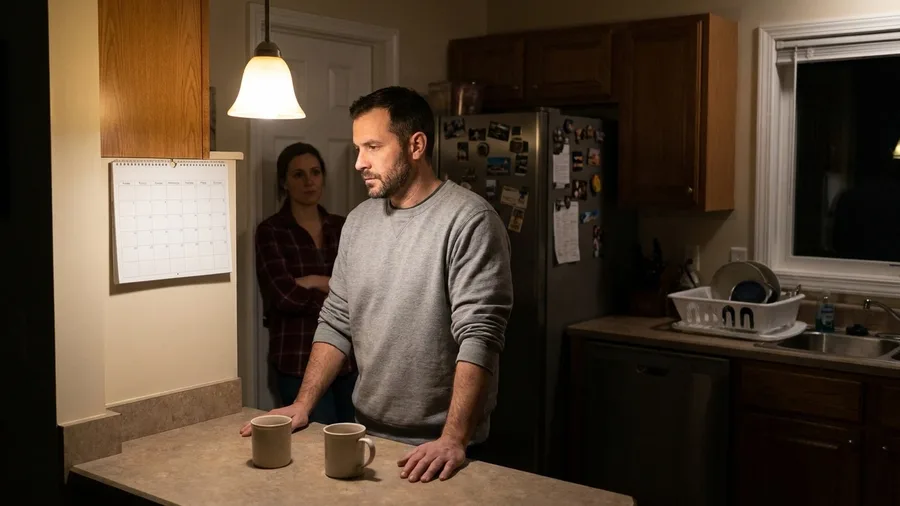
The split very often arrives a year or two after the last child moves out. Not during the soccer years, not during the college applications, but in the quiet that follows.
For a couple in their late fifties or sixties, married thirty-odd years, that quiet is new. For most of the marriage, the shared calendar did the organizing. Sunday belonged to a recital, and the school holidays scheduled the flights. A week’s conversation could run on a furnace filter and whether either of them had booked the pediatric checkup. Deciding things about the children filled the space. The marriage never had to face a topic of its own.
Then the last one moves out, and the calendar has one Sunday belong to nobody. A Saturday that used to mean driving to a tournament becomes two adults in the same kitchen at 9 a.m. with nothing to talk about beyond the week’s errands. That rerun of Thursday, one year later, is what people call the collapse.
It is also, in many marriages, the best stretch. The children leaving can surface a marriage that was always there, still working, now with a clear calendar and a person still worth talking to. The question worth asking of your own house is not whether the last move-out hurt, but what used to fill the space and whether either of you has since proposed a replacement: a standing trip, a shared project, a Saturday that belongs to you both.
💡 Tip: Pick one recurring appointment – a Thursday walk, a monthly dinner – and put it on the calendar before the last move-out day, not after.
What Survives The Retirement Monday, And What Does Not
Couples who renegotiate
- Talk through a typical week before the retirement date
- Agree who has which mornings and which errands
- Plan separate interests and one shared project
- Name care expectations openly and set money aside for help
Couples who assume it will sort itself out
- Let the job be the only shared structure
- Let the day define itself after the party
- Let the move-out calendar go blank with no replacement
- Let the plan for the last chapter get researched by one person alone
2. Retirement puts both of them home all day

The usual advice is to fill the time, to book the cruises and the gym classes and treat early retirement as a permanent holiday. That is not what makes the difference.
Retirement removes a scaffold, not just a paycheck. The job had been taking the hours, and it carried a lot besides: a title people used, a commute with a shape to the day, people who expected you somewhere by nine. It also quietly absorbed conflict, because a couple with two busy jobs only has the evenings to argue in, and that keeps the arguments small. When the work stops, all of it arrives at once, usually within a year. The first Monday after the party sets the tone: two people sit at the kitchen table at ten in the morning, each waiting for the other to say what the day is for, and neither has an answer.
The couples who come out ahead usually talk plainly about what retirement will actually contain, before it does. They discuss territory and time and who gets the kitchen in the morning. They decide what the days will hold that means something beyond being together in the same house. The difference is a plan for time, space, and purpose, not more togetherness.
What tends to go wrong is not the amount of shared time but that nobody ever asked what the time would be filled with. The job had been the shared structure of the day. If no new one is proposed, the afternoons teach both of them what they had been avoiding.
💡 Tip: In the month before a retirement date, write out a typical week together – mornings, afternoons, evenings – and mark who is where.
| The cause people name | What is usually underneath |
|---|---|
| He met someone at work | Years of conversation that had already stopped by the time the last child moved out |
| She just left out of nowhere | The blank calendar after the final move-out, met with no new shared project |
| It blew up right after he retired | Two people home all day in territory that had never been negotiated |
| They wanted different things | A retirement plan one partner had researched and the other had never been asked about |
| There was no big fight, she just went | Twenty years of small resentments, eye-rolls and silence coming due in one bad season |
| He could not handle her illness | Years of assumed caregiving, refused after the first parent’s funeral |
| Neither of them had money problems | A paid-off house and two pensions divided into two households that each cost more |
The Bill for Years of Small Things
Not every late divorce is a scaffold that came down. Some are a bill that finally came due. Decades of small resentments, warmth withheld a little at a time, care duties assumed and never spoken, and one health scare that made the arithmetic visible all at once.
These are the hardest to see from outside, because none of them involves an affair or any single dramatic event. No one points to the sigh that met every comment, or the day one of them stopped making comments at all. The house looks quiet, and the quiet is exactly the problem.
The signals are small. Someone answers every remark with a sigh, and the other simply stops talking. Affection and touch dry up years before anyone names it, and the two of them settle into separate rooms and separate evenings, the day’s messages a grocery list and a reminder about the furnace filter. A funeral or a diagnosis sets years left against years already spent, and the ledger gets audited because there is finally time to read it.
Some of these marriages are recoverable. The ones that recover name the pattern out loud, stop keeping score, and get help instead of waiting for a single cause to confess.
3. One has a plan for the next twenty years

“I thought we’d already decided,” she says, standing in the doorway of the room he is packing. She means the condo near the grandchildren, the one she has been researching since spring. He thought they’d decided to stay in the house.
The disagreement is not unusual, and it is not the problem. At this point the plan has dates attached, money attached, a house attached. There is no someday left to postpone it to, because you are late fifties to late sixties and retirement is here or nearly here. One of you is looking at travel, or snowbird winters, or a second place, or regular money set aside for the grandchildren. The other is looking at the town they raised children in and cannot picture leaving.
What makes this survivable or not is timing. Named early, it is a negotiation. Two people comparing what they actually want the last stretch to hold, willing to trade. Named after the truck is booked, it is a decision one person discovers they were never part of.
One partner almost always assumes the plan is settled. Calls it “our plan” before the other has been asked. The other has spent years being asked what they want for dinner and rarely what they want the last chapter to contain. When the question arrives already answered, the answer can feel like a quiet eviction from the next twenty years.
The move: ask before the calendar does. “Before we pick a date, tell me what you picture, honestly, and don’t guess at mine.” It is not a disagreement that breaks a marriage at this stage. The already-decided plan, handed over late, is the thing that does.
⚠️ COMMON MISTAKE
The Plan You Think You Both Agreed To
Assuming the next chapter is already settled is the single most expensive assumption in a long marriage. Ask the other person, in words, what they want the last twenty years to contain – and listen to the answer even if it is not yours.
Leaving Stopped Being Unaffordable
Money is the quiet half of this story. A generation ago, a woman in her sixties with no pension of her own, a house in both names and a husband’s pension arriving monthly usually could not leave, even when she wanted to.
That math has changed. These next entries cover what changed, and what still costs more than people expect.
4. Decades of small resentments finally come due
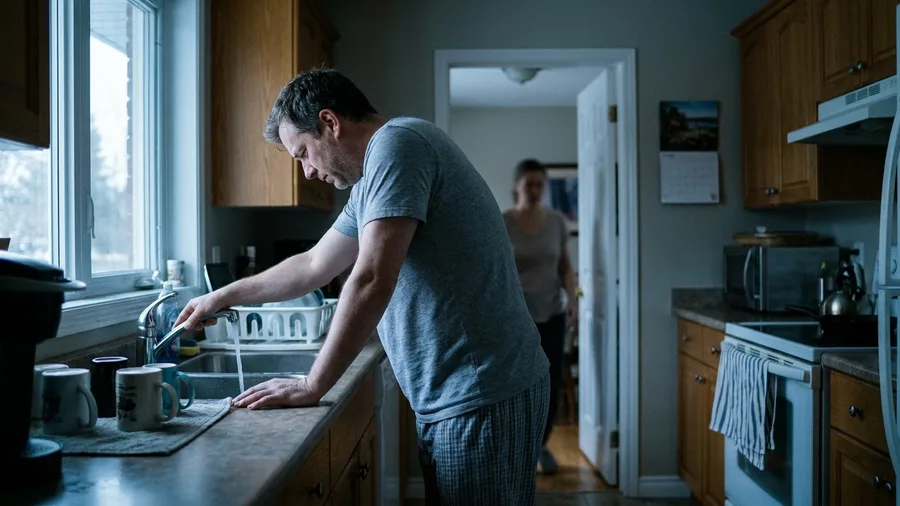
I used to assume the marriages that ended quietly had something buried in them. Some event nobody would name. The couples who never fought, I thought, were the safe ones.
Backwards. The absence of fights is not peace. The damage is withdrawal: stopped asking, stopped explaining, stopped touching. One person answers every comment with a sigh, the other stops making comments, and the house goes quiet in front of the family. Years of small criticisms and eye-rolls add up with no single event required.
What changes is that the time arrives to audit it. Children gone, work no longer a buffer, retirement or a health event leaving the days open and nothing to absorb the quiet. Some couples recover from this. They name the pattern out loud, stop scorekeeping, practice the repair, and seek help rather than waiting for a cause to confess.
💡 Tip: The next time a small irritation comes up, say it out loud within the hour. Scorekeeping is the habit to break, not the argument.
5. They became roommates who split the bills
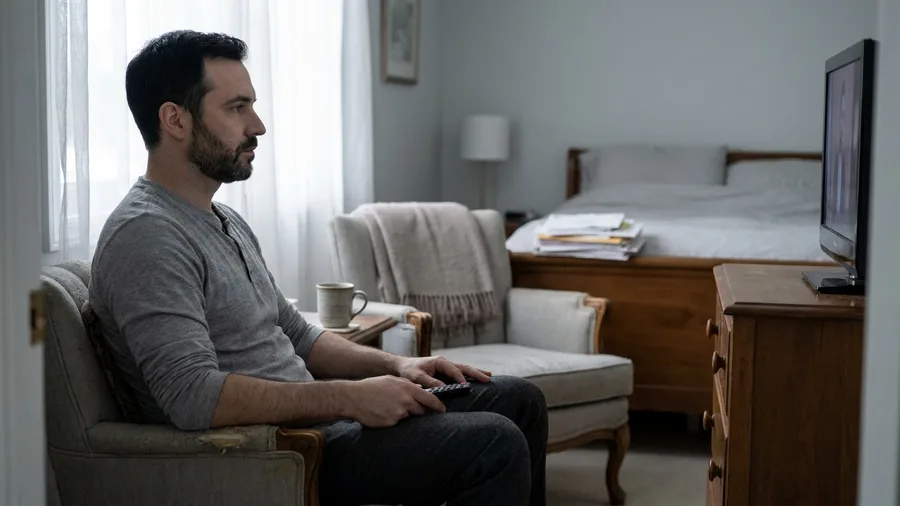
The cost of this one is that it looks fine from the outside. Nobody fights, nobody leaves, and the marriage quietly stops being a marriage while everyone admires how well you get along.
Here is the ten-second test. When did you last reach for them, just because? Separate evenings, separate rooms, conversation about groceries, appointments, bills, the adult children’s schedules. One watches television in the den, the other reads in the bedroom, and the day’s text messages are a shopping list and a reminder about the furnace filter. If nobody reaches, the silence is already answering the question.
Restarting is deliberate, not spontaneous: scheduled shared activity, a real conversation about touch and affection, each person keeping their own interests, counseling if the flatness has run years. This is the reason people name out loud, and the reason the paperwork rarely contains.
6. Caregiving debt comes due before anyone is ill
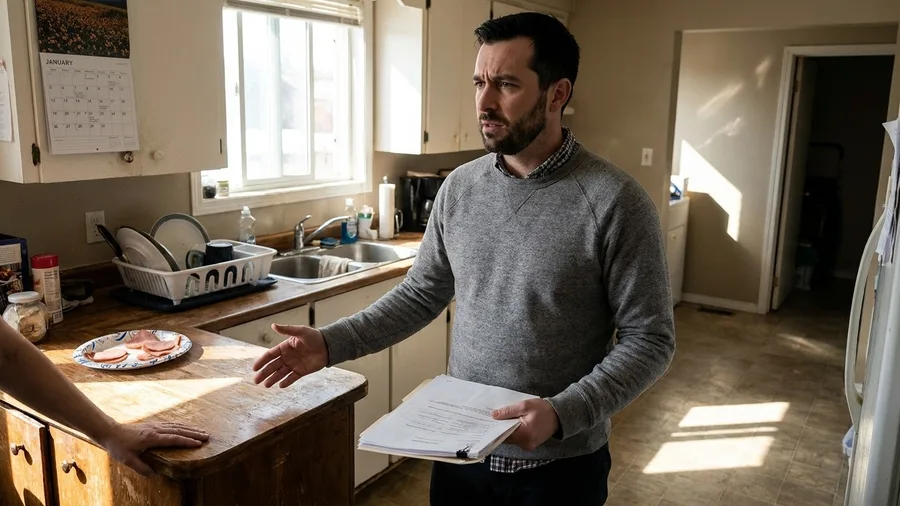
The funeral is over and the cars have gone and the paper plate with the cold cuts is still on the counter. His father is now a man who cannot be left alone, and everyone in the room has already done the arithmetic. His mother’s last three years went to hospital corridors, pharmacy runs, and a calendar nobody asked her to keep.
Now the wife stands in that kitchen and says the sentence out loud. “I did that once. I’m not doing it again.” She may add a detail: that she missed her sister’s wedding, or that a year of her life went to appointments and clean sheets. He nods and says, “I know,” and files it as grief talk. It is not grief talk.
This is the thing people leave for before a single diagnosis exists. The care has not started, but the ledger has: one spouse looks at the older generation and sees their own next decade arrive early, already staffed and unpaid. The spouse who did the nursing last time is almost always the one who gets assigned the next shift, which means whoever had the smaller career.
He is not a bad man for assuming. Nobody said the words, so nobody had to hear them refused. His father’s decline turned a private assumption into a visible job, and the job wore a name. Often hers, because it wore hers the last time too.
What separates couples this doesn’t surprise is not luck. They name the terms before anyone is sick: who does hands-on care and who does not, whether outside help is acceptable and what it costs, whose money gets set aside. The lines are the point, not the sentiment.
“If your dad needs full-time help, I will help arrange it. I won’t be the one providing it.” Say it while both of you are well. “That was three years of my life and I’m not doing it again.” Say it before the phone rings. “I need the number for what we can spend on care, and I need us to agree before it’s spent.”
💡 Tip: Write down the jobs: doctor visits, medications, bathing, insurance calls. Then assign one outside service you would pay for before the next crisis.
7. A health scare resets how much time is left

Because it turns a vague discontent into an arithmetic problem. A friend dies at sixty-six. The couple is sixty-four. They drive home from the service and neither says anything, and both are working the same sum: two decades left, maybe less, and this is what fills them.
At forty the identical trouble could have been postponed, because the horizon was still indefinite. At this stage the horizon has a number on it. The scare does not create a new problem – the marriage was already in trouble – it changes the question from whether to endure to how much of the remaining time goes to this arrangement.
The same shock sends some couples toward each other. What separates them is whether they name the fear and build a shared plan for the years left, or use the funeral as a verdict on the person sitting beside them in the car.
Leaving stopped being unaffordable
8. She can afford to leave now

Two decades ago, one income could not cover two households, and the spouse who had been out of paid work for fifteen years had nowhere to go. Now the house is largely paid off, there is a pension, often an inheritance, and leaving is survivable in a way it was not.
Survivable is not the same as cheap. The house gets sold or bought out, the pension is split, one mortgage becomes two rents, and the same retirement savings now covers two sets of utilities, insurance, and travel. Both people end with less.
For the couple with nothing but a pension, leaving is still close to impossible, and money explains a lot of who files at this stage without explaining all of it. Readers who want the rates can find them at the CDC’s National Center for Health Statistics and the National Center for Family & Marriage Research.
💡 Tip: Before deciding anything, get a fee-only financial planner to model two households from the same retirement savings. The number is usually clarifying.
What The Money Changes
In the illustrative case: a paid-off house, one retirement, two households
For actual rates, the CDC's National Center for Health Statistics and the National Center for Family & Marriage Research publish them.
9. Twenty more years is too long to be unhappy
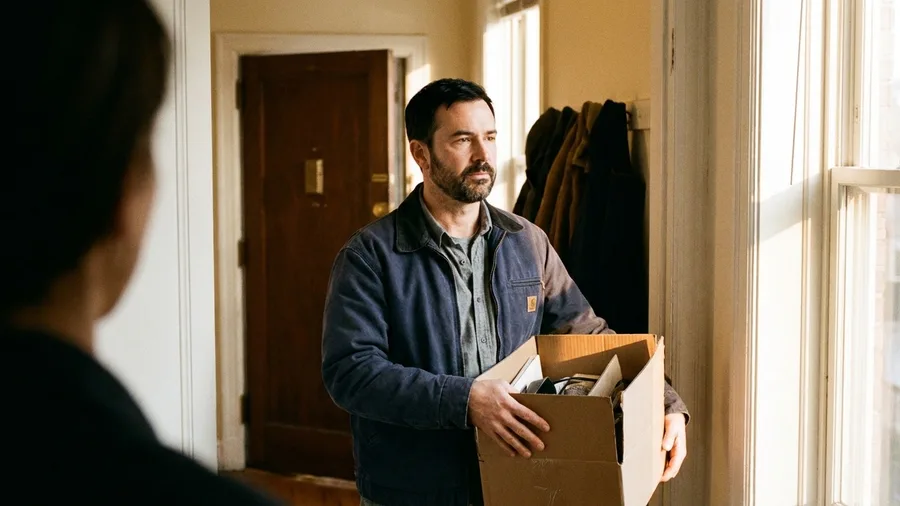
“I’m too old to start over.” It’s the line that ends most of these conversations before they begin, and it miscalculates the arithmetic. At sixty-two, a person may still have twenty good years ahead of them – not a short tail but a full stretch, a third of adult life. The real question isn’t whether leaving is possible. It’s how many of those years get spent in the current arrangement.
That calculation runs both ways, and it’s worth being honest about it. For some couples, the marriage is good enough, and leaving would trade a workable life for a smaller one – less money, fewer friends, a rental instead of a paid-off house. The same math that argues for exit can argue for repair.
For a sixty-two-year-old who leaves: a paid-off house becomes a rental, two adult children get the news, and the couple friends who don’t choose sides become the new social circle. It isn’t too late. It’s simply expensive, and the price is worth naming before the decision gets made.
What It Is Actually About
The last two entries correct the story everyone tells at the mailbox. The affair is usually the exit, not the cause – and the real cause is plain enough to name in one sentence.
Read these two together. The first is what happened. The second is what to do about it, and what it does not describe.
10. The affair is usually the exit, not the cause

“He left for someone from work.” That sentence travels through a family in a single afternoon, and “they had run out of conversation by the time the last child left” does not travel at all. One event, one person to carry the blame, something to tell the relatives.
“He left for someone from work.” It is a better story precisely because it is short.
In most late-life splits, distance came first. An affair makes leaving thinkable or visible; it is rarely the first crack. The exception is real, though, and worth stating plainly: sometimes betrayal genuinely is the cause. You tell the difference by asking which came first, the distance or the affair. A warm, functioning marriage that breaks at the affair is not the same marriage as one already emptied out.
Naming the affair also lets the whole family skip the harder conversation about the twenty years before it. The blank calendar after the last move-out, the first Monday of retirement, the plan nobody asked for, the small resentments tallied and left unsettled. For the reader, the question isn’t whether an affair happened. It’s whether it was the exit or the cause, and the answer changes what can be repaired and what the family story leaves out.
Four Moves That Make It Worse
11. What it is really about, and who it misses

The cost of missing the answer is that it lands on the affair, or the sudden departure, and the timing of everything before it goes unexamined. Read together, the pieces say one thing: the marriage outlived the structure it was built around. The children’s schedules, the jobs, the assumptions about the last chapter, all gone or changed, and no one renegotiated.
This doesn’t describe every couple. Some name the shift early, before retirement or the last move-out rather than after, and decide together what the next chapter holds.
If you are inside it, the question is which structure has gone and whether a new one can still be proposed. If you are watching your parents, the same question explains the timing without any affair in it at all. The first thing to do is one conversation about what the next twenty years look like, scheduled before the retirement date and not in its aftermath. A couple already in the middle of it should talk to a licensed couples therapist or a financial planner, not a magazine.
Frequently Asked Questions
Why do couples split after thirty years, right when the children finally leave?
The kids’ schedule was the shared structure. Once the last calendar goes blank, the marriage has to stand on its own and nobody built a replacement. The split usually lands a year or two after the final move-out, which is why it looks sudden from outside.
Is an affair the real cause in most late-life divorces?
Usually not. The distance nearly always comes first, and the affair gives it a name and an exit. A warm marriage that breaks at an affair is a different case from one that had already emptied out, and which came first is the tell.
Isn’t it too late to start over at sixty?
That framing usually hides a different question: how many years does the current arrangement get? At sixty, twenty more years is a real stretch of adult life, not a short tail. For some people the honest answer is repair rather than leaving, and the same arithmetic supports it.
We never fight – is that a good sign?
Not by itself. Withdrawal – stopped asking, stopped explaining, stopped touching – does more damage than open argument. The test is when you last touched each other on purpose, with no reason at all, and could name the moment.
Where can I find actual divorce rates at this age?
The CDC’s National Center for Health Statistics and the National Center for Family & Marriage Research publish them. This article deliberately keeps numbers out and sticks to the pattern, because the pattern is what tells you what to do next.
The Structure That Went Missing, And The One Conversation That Names It
Late-life marriages rarely end over an affair. They end because the structure the marriage was built around went missing – the kids’ schedule, the job that set the week, the retirement plan both assumed, the care contract neither ever spoke – and no new one was proposed in time. Of course, this doesn’t describe the couples who saw the shift coming and said so, who talked through the last move-out and the retirement date while there was still room to compromise, who built a shared project before the calendar emptied. They did the same work, only earlier.
The family story names one event: he had an affair, she just left. The actual sequence is quieter – the blank Saturday, the first Monday of retirement, the moving truck booked before anyone suggested a conversation, the ledger of years of small resentments, the exit that finally became affordable.
So the one thing to do first, before retirement rather than after, is to sit down and talk about what the next chapter looks like: an hour, both plans on the table, paper and a pen. That hour costs far less than two households. If the crisis is already here, the next call should go to a licensed couples therapist or a financial planner.
Pick the Date Before the Moving Truck Does
Open the calendar tonight and book one hour with your spouse about what the next twenty years look like – then bring both plans to the table, not one.