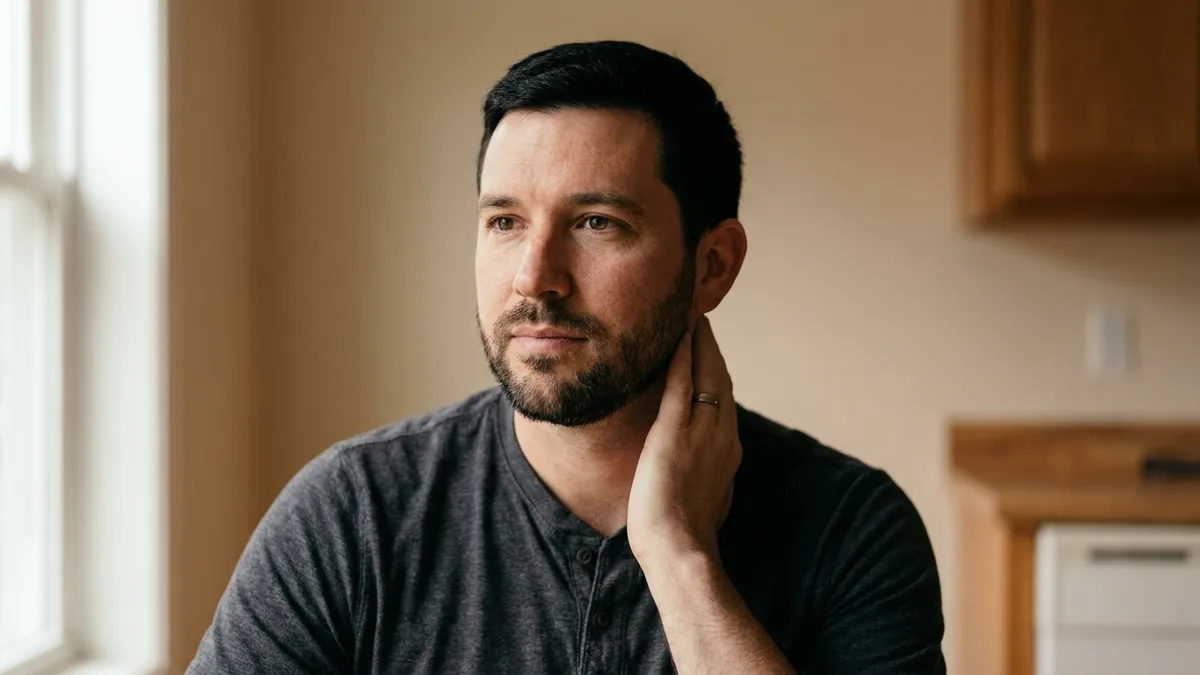
One in three men past fifty has low testosterone, and fewer than one in ten ever brings it up with a doctor. The other nine are the ones living in your house.
You have seen the changes before he has narrated a single one. The wince at the kitchen counter he waves off as nothing, the beard trimmer that appeared on the sink, the Saturday hike that quietly fell off the calendar without a conversation. He is not hiding a diagnosis. He is hiding the fact that he has already noticed.
The silence is not blankness. It is work – the active protection of a self-image that suddenly feels under audit, by his own body, by the mirror, by whoever is handing out the heavy bags now.
What he will not admit is not a secret for you to extract. It is a fear that needs to be sayable first. That changes your job: no fight, no diagnosis, no pep talk.
This week, make room for one admission only – the ache he clocked before you did – and open it with something low and flat: ‘I noticed the Saturday hike dropped off. Do you miss it?’
Quick Tips Before You Start
Ask about the activity, not the body part
The ache is too close. The dropped hobby is safe to mention.
Skip the diagnosis
'You should see someone' sounds like a verdict on his body, not care.
Leave one opening, then space
A check-in becomes surveillance if it repeats before he answers.
Offer company, not assistance
'I'm going to the store; want to ride along?' lands better than 'Let me help.'
Compliment the effort, not the result
He hears 'you're declining' when you mean 'I see you.'
The body he’s bargaining with
This is where it starts: a stiffness, a breathlessness, a number on a form. He notices it before you do, and he does not narrate it. Instead he adjusts, quietly, and hopes the adjustment goes unseen.
The three admissions in this section are about the body, the vanity that guards it, and the fear of becoming the one who needs help. Get these wrong and the silence hardens.
1. He noticed the first ache before you did.
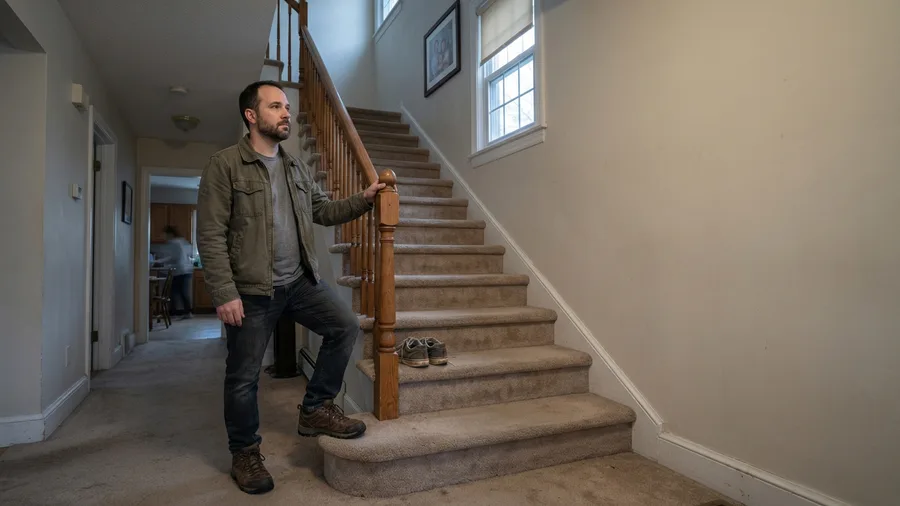
The advice is to ask him outright how he’s feeling, and it fails almost every time. Long before a wife names a stiffness or a shortness of breath, her husband has already logged it. He felt the twinge on the stairs on Tuesday. He noticed he had to sit down to tie his shoes. What the research on how people manage illness keeps finding is that the noticing is not the hard part. The reporting is. He has the information, and the job he has given himself is to keep it off the record.
So the cover-up stays small on purpose. He waves off a wince at the counter and keeps talking about the neighbors. He lets you wrestle the forty-pound bag of soil out of the trunk, saying nothing about the shoulder, and the silence sounds like agreement that you’re stronger.
The cost arrives later and sideways. You catch the grimace on the last stair, or you realize one Saturday that the hike he used to plan his week around has not come up since spring. He didn’t just stop the hike. He lost the pleasure of it, privately, rather than say a joint had begun to argue with him.
‘You should see someone’ arrives as a verdict on his body, not as care, and he hears the closing of a case. What opens him instead is the loss, not the part. Try: ‘I noticed the Saturday hike dropped off. Do you miss it?’
💡 Tip: Name the loss, not the symptom. He can talk about missing the hike; he can't talk about his knee.
💡 PRO TIP
Ask for his advice on something real
Then use it and tell him what happened. Respect is being seen as useful, and that signal lands deeper than any compliment about his appearance.
2. He’s more vain about aging than he lets on.
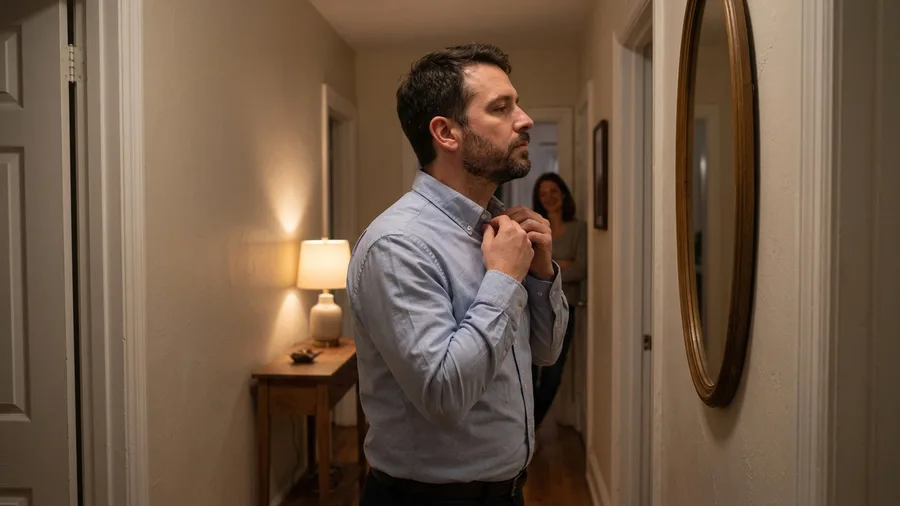
I used to read a man fussing over a new beard trimmer, an old-age joke rehearsed at dinner, a sudden refusal to stand in the group photo, as a vanity problem, and I said so once. I was wrong about what I was looking at. Hair, gut, stamina, the ability to still haul the suitcase up the stairs alone – these are not decorations to him. They are the public scoreboard, and it is being read.
Once the body’s first private bargains are made, the bargaining gets louder where other people can see it. A gym push at an odd hour, a shirt bought two sizes down, a joke that lands a little too hard. Tease him about any of it, even warmly, and your face says you’re declining when you meant I see you. Compliment the choosing, not the result: ‘I like that you’re taking care of yourself.’
3. He’s afraid of becoming the fragile one.
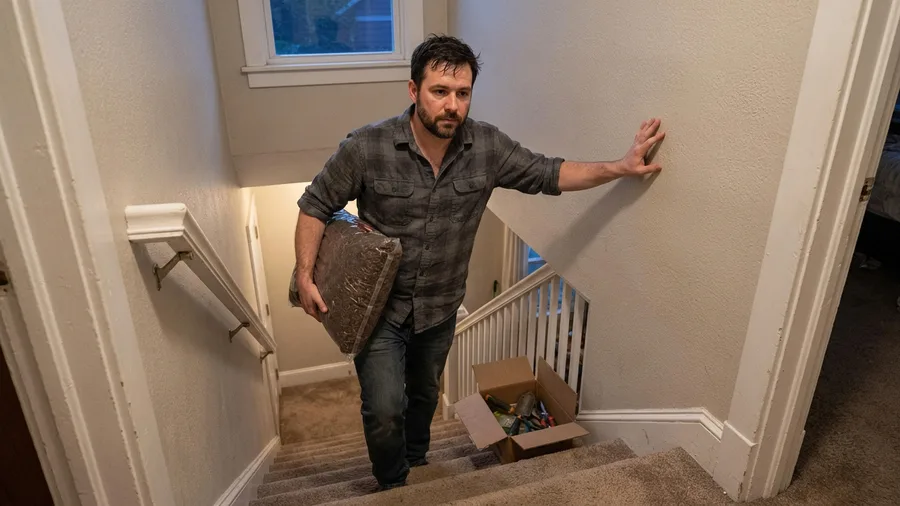
Because the offer lands somewhere other than where you aimed it. You mean I’m right here, and what reaches him is a quieter sentence: she’s decided I can’t manage this anymore. The help is small. The verdict inside it is not.
Watch where it happens. He’s wrestling a lid that won’t give, you take it from his hands without a word, and he goes flat for the rest of the afternoon. Or he asks for directions, you pull up the map, and he drives the next ten minutes without speaking. A doctor’s form sits on the table for three days because filling it out means admitting he couldn’t.
So he overcorrects. He hauls the mulch himself and pays for it on the stairs that night, quietly. The glasses stay in the drawer, the hearing aid in its box, the cane in the closet, because each one is an announcement he isn’t ready to make. He would rather strain than be seen straining.
The way through is to stop offering help and start offering company. Not can I carry that, but I’m heading to the store, want to ride along. Two sets of hands, no verdict attached. It’s a small difference in wording and a large one in what he hears.
💡 Tip: Let him carry the bag. Carry the conversation instead.
⚠️ COMMON MISTAKE
Don't diagnose the silence
Telling him to see a doctor, get his hearing checked, or slow down lands as a verdict on his body. He hears 'you're failing' and the door closes. Ask about the activity he gave up instead.
The scoreboard he won’t retire
Work, money, being the one who fixes things. These are the numbers he has been adding up since his twenties, and they do not switch off just because his knees have opinions now.
In this section, he measures his worth in what he still produces, fears becoming invisible, and won’t admit he is lonely for his friends.
4. He measures his worth in what he still produces.

It is fine for a man to care about his work and his income, to want the title and the paycheck and the standing that comes with them. The trouble starts when those things stop being what he does and become what he is.
Watch the scoreboard he keeps when he thinks no one is reading it. A promotion he mentions twice and then never again. A repair he insists on doing himself, badly, on a Sunday, rather than call the guy he knows would finish it in an hour. The moment the conversation turns to money, his jaw does something and the answer comes out flat: ‘It’s handled.’ Those are not boasts. They are proof, gathered and re-gathered, that he still counts.
What sits under the scoreboard is a quieter fear than losing the job. It is being replaceable, being the one people are kind to instead of the one they call. A younger colleague who learns the system in a month and starts finishing his sentences; the numbers on a screen at eleven at night; a week when he is tired in a way a nap does not touch and he says nothing about it, because tired is not a thing the capable one gets to be.
Here is the exception that makes this workable. A man who cares about his output and can say so plainly is not on the scoreboard, or not trapped by it. He can admit a hard quarter without the room tilting, can take a hand with the fence without reading it as a verdict. The tell is whether he can name a weakness out loud and stay in the chair. If he can, this is drive, and it is fine. If every admission of strain comes back as a joke, a snap, or a change of subject, the scoreboard has become the whole ledger.
The response that lands is not a performance review. ‘How’s work’ gets a summary; ‘Are they treating you right’ gets a defense. What gets through is narrow and specific: ‘What’s the part of work that’s heaviest right now?’ It asks about a weight, not a rank, and it does not require him to be winning to answer.
Ask it once, and if you get a one-word answer, leave it. The man who measures himself in output is not going to hand over the deepest item on the first request. You are not trying to lower the score. You are letting him say a hard thing in a room where it will not be scored.
💡 Tip: Don't ask 'How's work?' Ask about the heaviest part. The first invites a status report; the second invites the truth.
5. He’s quietly terrified of being invisible.
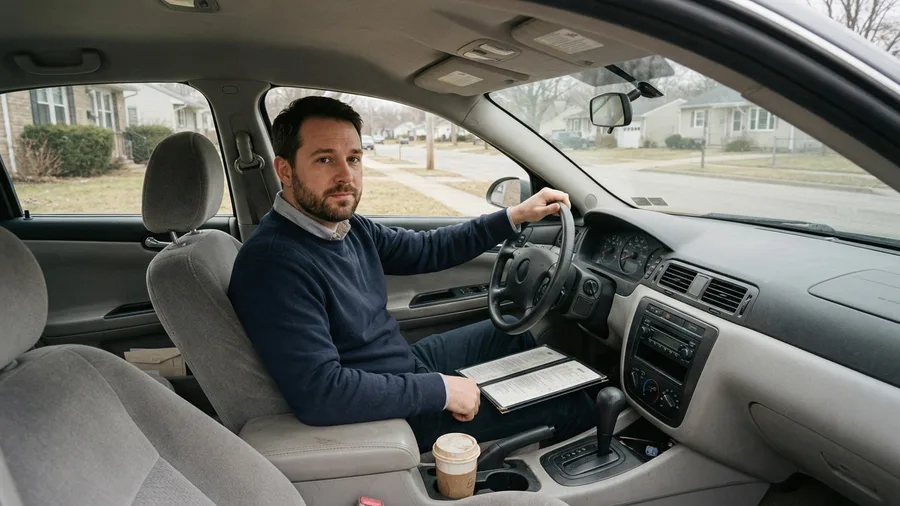
There is a particular kind of fade that takes about six months: no one asks his opinion on the project anymore, the younger guys at the table talk across him like he is a chair, and the waiter at the restaurant asks you first, twice, while he sits with his menu open.
What comes out of that is rarely sadness. It is cynicism (‘none of it matters anyway’), a flat ‘I don’t care,’ quiet withdrawal to the garage, or a sudden stiff demand for respect that arrives out of nowhere and lands on you. Underneath is a distinction worth knowing: admiration is applause, and respect is being seen as useful. Most men will trade all the applause for the second and never say so once.
The move is small: ask him something real and actually use the answer. A car noise, a work problem, a decision about the roof. Then let him see it land.
6. He won’t admit he’s lonely for his friends.

The cost shows up before the cause does. He is short with you on a Sunday afternoon, restless by four, scrolling his phone with the television on and nothing he wants to watch. The weekend was the problem, not you, and it will take you a while to see that.
The pattern behind it is passive and old. Friends drift, no one initiates, and he decides he will not be the one chasing. So he waits for the invitation, then notices it does not come, then files it as proof he was never that important to them anyway. Ask and you get the shrug and the script: ‘Everyone’s busy.’ ‘It’s fine.’ ‘I don’t need a babysitter.’ He means none of it. What he means is that picking up the phone feels like asking, and asking feels like a kind of need he would rather not have.
So the social weight slides onto you. You become the calendar, the host, the one who remembers the birthdays, and then he leans on you for every conversation he is not having elsewhere, which is a lot for one marriage to carry.
The step that helps is low-stakes and recurring. Not a ‘playdate,’ not a scheduled intervention with his old friends, just a standing reason to call: a monthly lunch that renews itself, a Saturday walk, a game on the first Thursday that does not need renegotiating each time. Something he can show up to without having asked for it.
What he hears vs. what you meant
What you said
- 'You should see someone.'
- 'Let me help with that.'
- 'You look good for your age.'
- 'How are you feeling?'
What he heard
- 'Your body is failing.'
- 'You can't do it anymore.'
- 'You're declining.'
- 'I'm monitoring you.'
Feelings that come out sideways
Anger, humor, and sex. These are the three channels where his fear goes when it cannot go anywhere else. None of them look like fear from the outside.
The entries in this section show you what is actually being said when he snaps, jokes, or goes quiet in bed.
7. He’d rather be angry than scared.
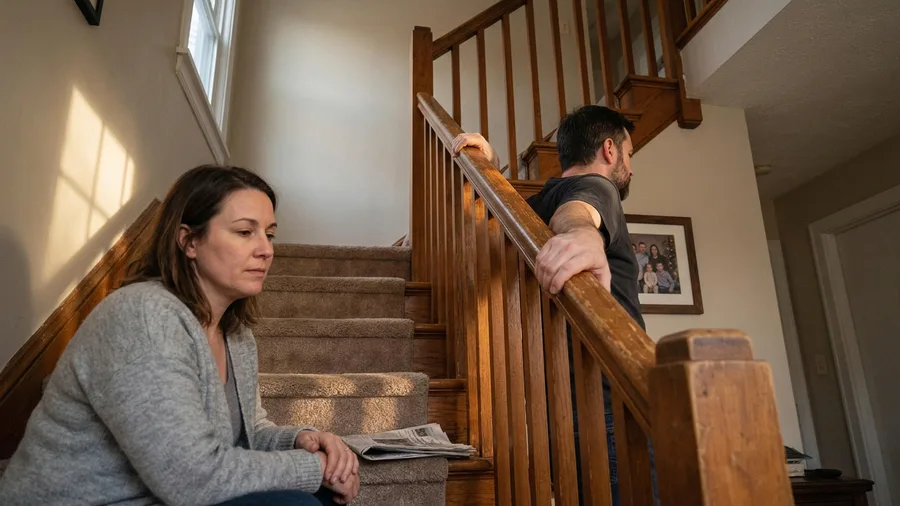
“I’m just saying, maybe get the blood pressure checked.” “I’m fine. Drop it.” The subject was a cough that had lasted three weeks. The sharpness came out of nowhere and landed on you, and now you are the one apologizing for caring. When a man has no words for the fear, the fear comes out wearing anger, because anger at least feels like something he can stand in.
Watch what the snapping is attached to. A question about a doctor, a plan for the next ten years, a remark that he seemed winded on the stairs. Anger is a cheaper emotion to feel than helplessness or grief for the body he used to have, and it arrives faster, so it arrives first.
You can win the exchange and lose the point. If you answer the temper with your own, he gets to be difficult and you get to be right, and the fear underneath goes untouched for another season. Once, gently, name it. “I think that scared you more than it scared me.” Or give him a door and a time: “Let’s talk after dinner.” Then let it be after dinner.
8. He uses humor to end the conversation.

The jokes come out on the drive home from the appointment, somewhere between the pharmacy and the turn onto your street. “Well, I’m officially falling apart,” he says, and laughs, and the laugh is doing a job. “Over the hill.” “At my age, what do you expect.” He is telling you the true thing without taking ownership of it, and the laugh is the receipt that says we are not actually discussing this.
It works, briefly, which is why he keeps doing it. A joke lets him say the frightening sentence and then stand outside it. So do not laugh along and do not turn it into an interview. Say one light thing, once: “That one sounded less like a joke.” Then let the silence sit there without filling it.
One signal worth noticing: the jokes get repetitive, then darker, then stop altogether. It is the stopping that should get your attention, not the laughing.
💡 Tip: If he repeats the same self-deprecating line, it is no longer a joke. It is a report.
9. He’s scared about sex and won’t say it first.

You noticed it before you had a word for it. The jokes about his body stopped being funny to him and started being a shield, and then the bedroom went quiet in a different way than tiredness makes it quiet. So the question is not what is wrong with the marriage. The question is why he stopped bringing it up.
What he is likely carrying is not disinterest. It is performance pressure, a fear of being turned down, a bit of shame, and grief for a younger body he trusted to do what he asked. What you see instead is avoidance, a joke at the wrong moment, sudden affection that arrives at eleven in the morning and vanishes by eleven at night, or plain silence that you read as rejection.
“You’re fine” is the fastest way to end the conversation, because it tells him not to feel what he is feeling. It reassures you more than it reassures him.
So lead with closeness, not with a scorecard. “I miss you” lands differently than “What’s wrong?” One is an invitation to come toward you. The other sounds like a report card he has to bring home.
What the silence costs over a year
Mortality and the way in
This is where the silence gets heavier. Death, losing you, and the question of whether he can still be asked.
The final four admissions are about mortality, the marriage, and the one invitation that makes any of it usable.
10. He’s already imagined his own funeral.
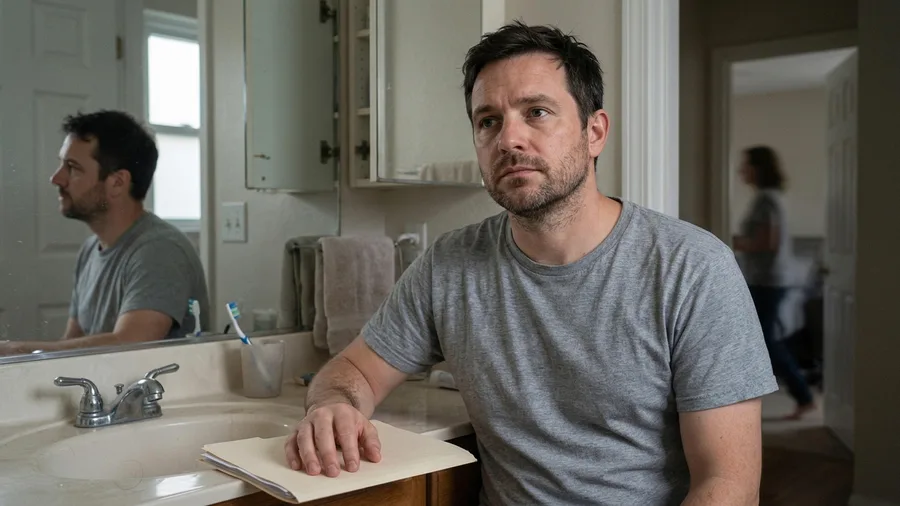
He is picturing the funeral, and he is not telling you he is doing it. It surfaces at odd hours: he is quiet after a friend’s service, or he mentions a fine tax detail for a plan he will not describe.
The trigger often looks smaller than a death. A parent’s diagnosis moves his sense of the timeline, and a milestone birthday does the same. A single gray hair he keeps leaning into the bathroom mirror to check can be enough to turn the whole subject on. He goes quiet at funerals, or he comes home talking numbers, or he puts a five-year plan together on a Sunday when there was no plan for anything. He is rehearsing, and rehearsal is the point: some part of him is running the scene, trying it on, checking whether it can be survived.
Not all of that rehearsal is fear. The check on the will, the folder with the account numbers, the phone call to the insurance agent, the decision about who holds the information if something goes wrong – that is preparation, and preparation is paperwork and decisions. The other thing, the quiet at the funeral, the sudden talk of what he might have done differently in his thirties, the phone call late at night about the friend’s numbers – that is the mind going round the same fear without a plan attached to it. The first has a destination. The second only repeats.
Here is a test you can take in ten seconds, and the answer tells you which one you are watching. Ask yourself, when he brings it up, whether the subject has an action attached – a form to sign, a call to make, a name to add – or only a mood that returns on its own. Action means he is preparing; the fear is being managed. A loop with no plan means it is sitting on him, and he has no way to put it down.
The question that opens it is not the one about death. It is the one about what he wants. When the mood comes up and the folder is on the counter, you can ask, not as a plan, “What do you want the next ten years to look like?” It gives him somewhere to go with the rehearsal, a picture instead of a dread, and it lets him say the thing he has been carrying without saying the funeral. The answer may be short. He may shrug and change the subject. That is fine – the door is open, and the picture is there now, and he can come back to it when he is ready.
💡 Tip: If he brings up the will or the plan, don't change the subject. That is him opening the door.
11. He’s more afraid of losing you than of dying.
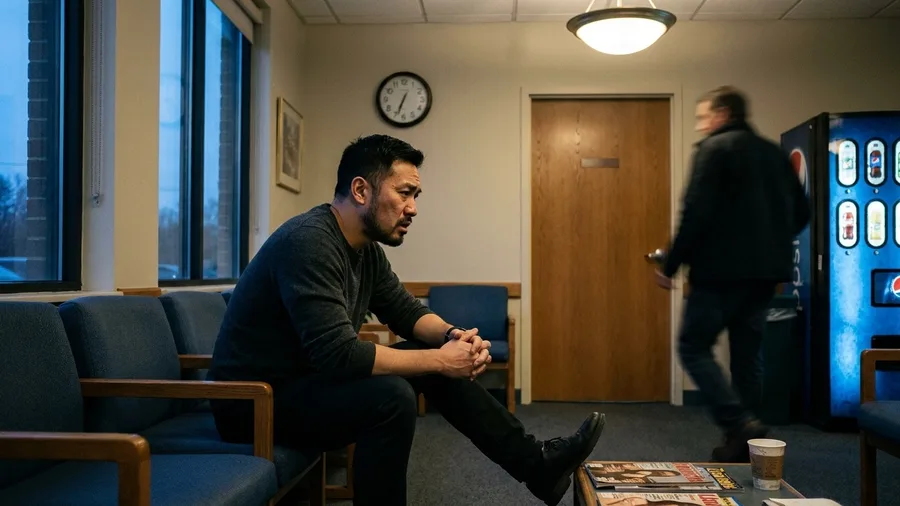
“I’m not going anywhere,” he says, and his voice is too loud, and he is already on his feet, looking for the paperwork.
It comes out sideways. You mention a routine appointment and he is asking who is driving, what time, whether you need him. A friend’s divorce makes him quiet for a day and then he is asking about your will. A conversation about who would take care of whom gets him moving a folder that did not need moving. He is overreacting, or shutting down, or controlling the plan, and what he will not say is that the plan is who he is without you, and that he is more afraid of being the one who needs care than of the care itself. The cost is quiet and it mounts over months: you stop mentioning the appointments, or you learn to make a plan before you say anything, and the marriage loses a door it needs.
When you say it, say it and stop. “I’m not going anywhere” – and then one practical thing: who calls whom, where the folder sits, which number is on the fridge. That gives him a thing to hold, which is what the overreaction was after, and it does not hand him the job of managing your feelings for you.
12. He wants you to ask, and he’ll deny it.
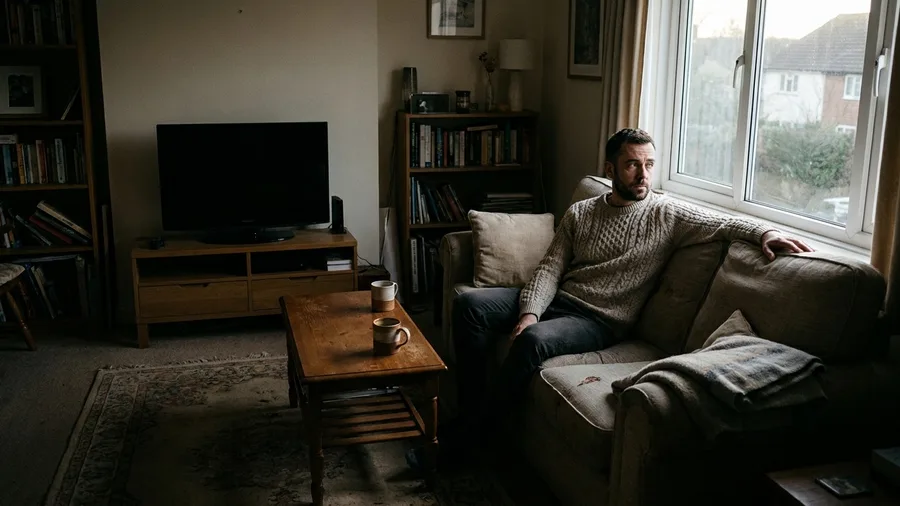
The cost of asking badly is that he stops being in the room. You ask once, then twice, then you make it a list of concerns and book a conversation, and he learns that being honest gets a follow-up meeting. So he goes quiet for a month.
Still, the desire is there. The clumsy truth of the last admission is that he wants the question asked – and will deny the wanting the minute it lands too hard. The opener that works is one real invitation and then space: “What was the hardest part of today?” – specific, tied to a day, not “How are you feeling?” – said once while you are both standing in the kitchen, then left where it is. No second question. No third.
The signs he is ready follow the offer. He brings the thing up again two days later and asks your opinion on it. He asks a question back. Or he stays in the room after the conversation has ended – on the couch, or in the doorway, not leaving.
💡 Tip: If he stays in the room after the conversation would normally end, that is him saying yes.
Three ways the invitation goes wrong
Frequently Asked Questions
How do I know if his silence is normal aging or something I should worry about?
Watch the direction of the change, not the change itself. A man who adjusts and keeps most of his life intact is bargaining with aging. A man who withdraws from activities, friends, and conversation over months is worth a gentle, direct question. If you are unsure, ask him once: ‘You seem to have dropped a few things lately. Is that by choice?’ His answer will tell you more than any symptom.
Should I tell him to see a doctor about his memory or his mood?
You can say what you notice without diagnosing. ‘I’ve noticed you seem more tired lately’ is an observation. ‘You should get checked’ is a verdict. If you are genuinely worried, offer to go with him rather than sending him. And if the change is sudden or severe, say so plainly and make the appointment yourself.
Why does he get angry when I’m just trying to help?
Because help, in that moment, sounds like a diagnosis. He hears ‘you can’t do it anymore’ even when you mean ‘I’m here.’ The anger is usually covering fear or shame. Name the fear gently once, or give him an exit and a time. ‘Let’s talk after dinner’ works better than pursuing the fight.
How do I get him to open up without nagging?
One real opening, then space. Ask a specific, time-bound question—’What was the hardest part of today?’—not ‘How are you feeling?’ Then let the silence sit. If he brings it up again, asks a question back, or stays in the room, he is ready. If he doesn’t, let it be and try again another day.
What if he never admits any of this?
That is allowed. The goal is not to get him to admit all twelve. It is to let one true thing be sayable. Pick the admission you can make room for first—often the activity he gave up—and ask about that. If he never takes the opening, you have still changed the tone of the room, and that is not nothing.
The One Invitation You Make This Week
The goal is not to get him to admit all twelve. It is to let one true thing be sayable in this house without the marriage turning into an interrogation or a diagnosis, and one true thing is enough to start with.
So start with admission one, the ache he noticed before you did. Ask about the activity he gave up, not the body part. ‘I noticed the Saturday hike dropped off. Do you miss it?’ – then leave the silence alone and let him decide whether to fill it.
The wince at the counter, the trimmer on the sink, the bag he handed over without a word: the same detail becomes a door the moment it is met as an observation about something he lost, not a verdict about his body.
One admission said out loud changes the room. It does not fix anything yet, and it does not need to. The other eleven can wait until he brings them back to you, and he will bring them back more easily now that one of them survived the air.
One question. One opening.
This week, ask about the activity he gave up. Then let the silence do its work. That is how one true thing becomes sayable.