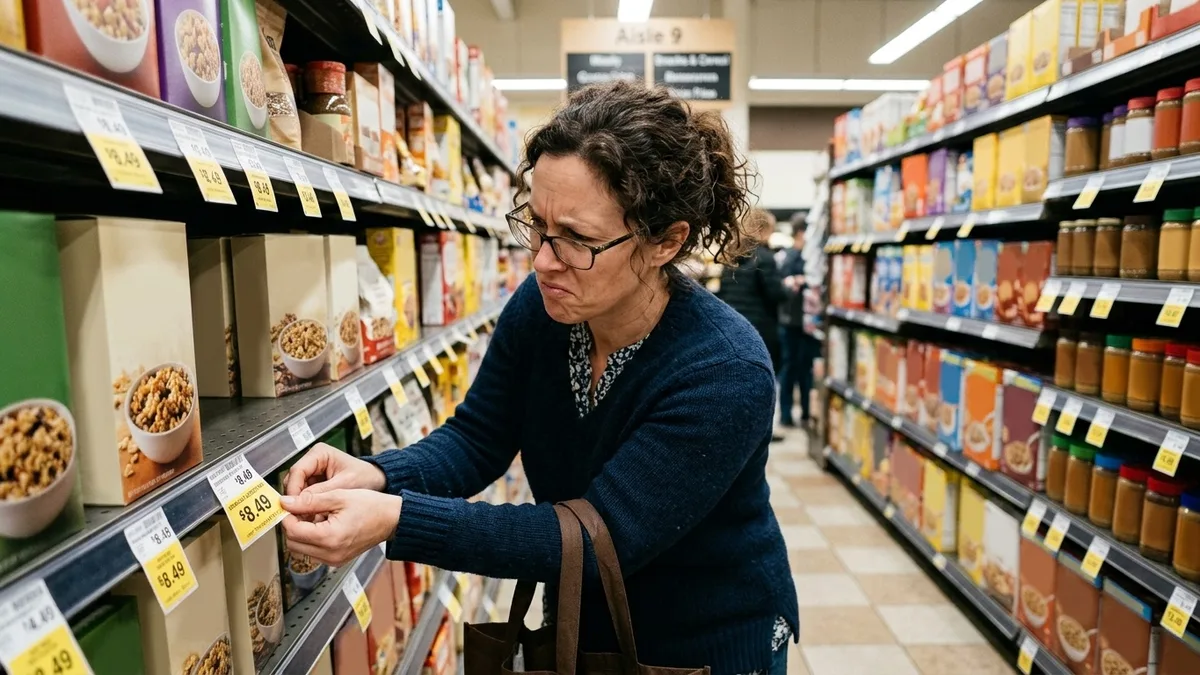
You stand in the grocery aisle staring at a box of cereal, noticing the smaller weight printed at the bottom and the higher number on the shelf tag.
By the end of this article, you will be able to look past these psychological adjustments and calculate the true cost of everyday goods instantly.
At a Glance
Why the Numbers on the Shelf Feel Completely Wrong
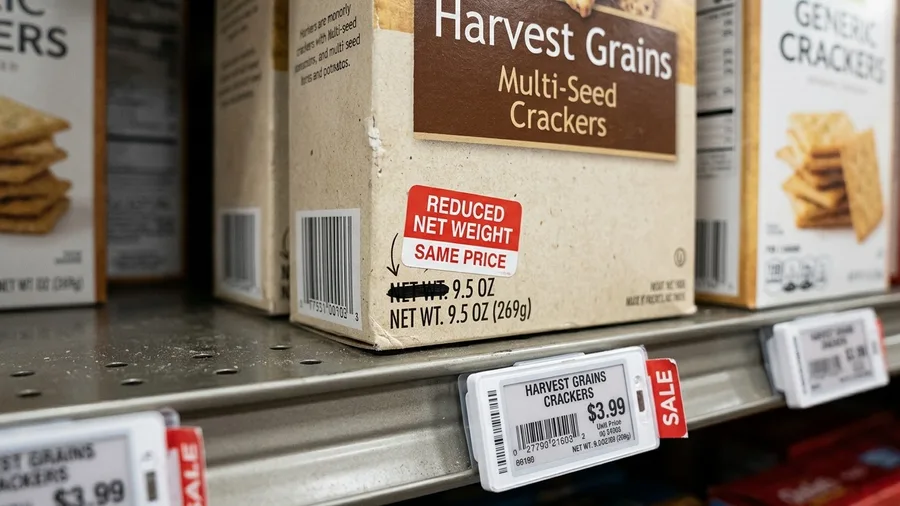
Assuming that a price tag reflects simple material costs plus a steady profit margin is a quiet mistake that quietly costs you hundreds of dollars every single year.
Most people think the number on the shelf is just math.
You stand in the grocery aisle staring at a familiar box of cereal, wondering why your weekly bill keeps creeping upward while your cart looks noticeably emptier.
The obvious instinct is to blame inflation on basic supply chain bottlenecks or rising labor costs, figuring the manufacturer is simply passing along unavoidable expenses to stay afloat.
That straightforward assumption breaks down the moment raw materials spike and companies face a stark choice between posting a shocking price jump or shrinking portions quietly.
Instead of risking a visible price hike that sends you straight to a competing brand, corporations alter the volume, dilute the formulation, or decrease the net weight behind the scenes.
You end up paying the exact same amount for fifteen percent less product, which makes the effective inflation rate much higher than any official government index suggests.
The correct move is to ignore the headline price entirely and train yourself to look exclusively at the unit pricing label on the edge of the shelf.
When you calculate the cost per ounce rather than trusting the box, the illusion shatters immediately and you regain control over your spending.
⚠️ COMMON MISTAKE
Assuming Package Sizes Stay Constant
Never trust that a familiar box holds the same amount it did last year. Always check the net weight printed near the bottom edge.
The Mechanics Behind Shrinking Packages and Rising Costs

Three ounces disappear from a box of cereal or a tub of laundry detergent overnight while the price tag stays stubbornly identical.
Manufacturers know your brain anchors heavily to familiar numbers like four dollars or five dollars, and raising that sticker price to five-fifty triggers immediate resistance that drops sales sharply.
Trimming the actual weight lets them keep the familiar price intact while quietly passing the inflation burden directly to you without causing an upfront panic.
You carry the financial loss without realizing it until you run out of the item noticeably faster than you used to, paying the exact same amount for significantly less product.
Check the unit price label on the shelf instead of trusting the big bold number on the front, and compare the cost per ounce or per gram before you toss the item into your cart.
Where Your Money Actually Goes
How Retailers Use Anchoring to Manipulate Your Spending
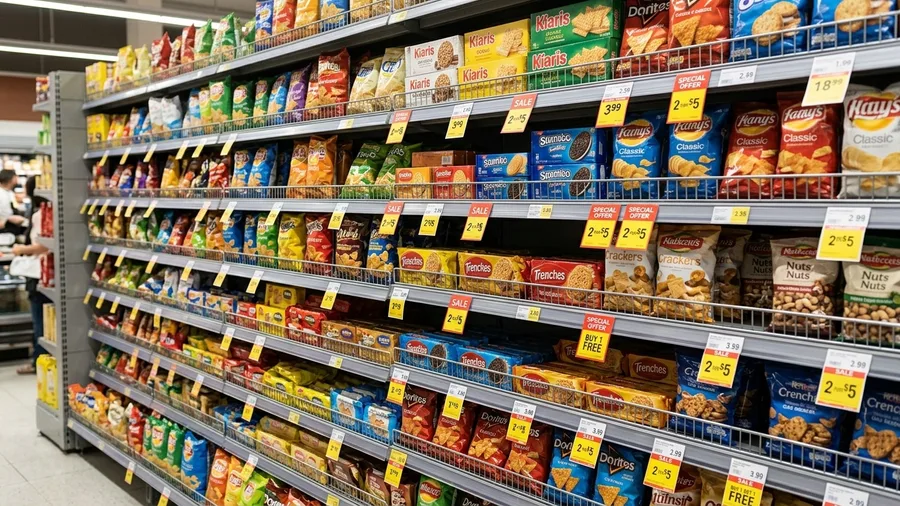
Retail environments are carefully engineered to distort your sense of normal value through strategic anchor pricing.
When you see a luxury tier item priced at twelve dollars, the ten-dollar option next to it suddenly feels like a sensible compromise.
This contrast makes you overlook the fact that both items cost significantly more to manufacture than they did two years ago.
Breaking this mental loop requires ignoring the comparison items entirely and evaluating the single product against your actual utility.
Best Tactics to Beat Price Anchoring
Reading Unit Pricing Like a Trained Economist
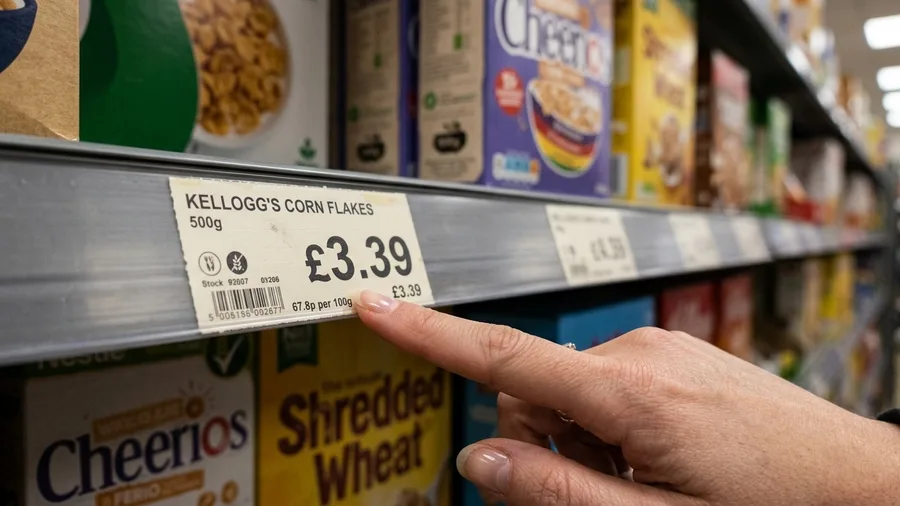
Why do we automatically assume that buying in bulk always saves money?
The small text tucked into the corner of the shelf tag actually tells a completely different story. While the big bold numbers show the total package cost, the unit price reveals the exact cost per ounce, pound, or liter. A larger bulk package frequently carries a higher unit price than a standard size when stores rely on volume deception to catch inattentive shoppers.
Check that tiny number before dropping the item into your cart.
Unit Price Comparison — At a Glance
🏷️ Display Price
$4.99
⚖️ Net Weight
12 oz
📊 Unit Cost
$0.42 / oz
💡 Verdict
Check smaller size
Pro Rule
Always look at the unit cost line, never the big bold number on the front.
Why Store Brands Quietly Outperform Name Brands During Inflation Spikes
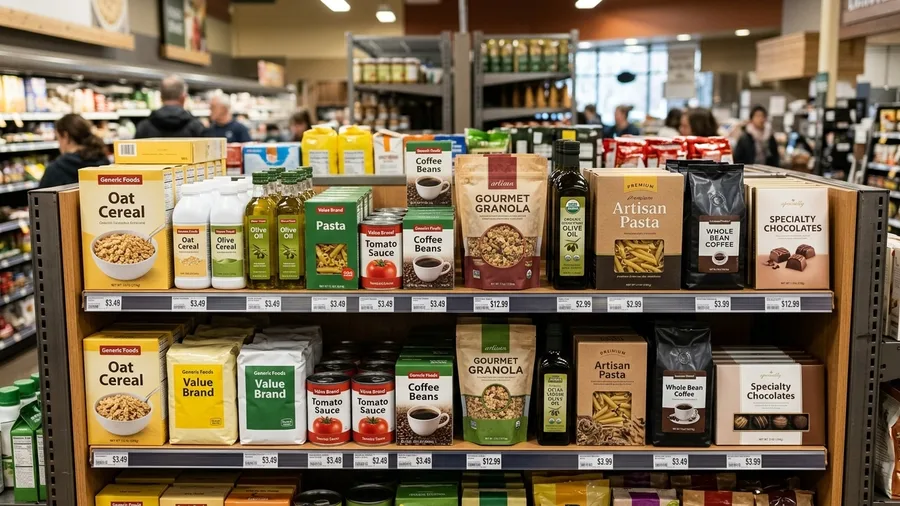
I used to think buying the generic brand of canned tomatoes or flour meant settling for lower quality, as if the higher price tag on the name-brand version guaranteed a better outcome in the kitchen.
When inflation spikes, people naturally assume that paying more for a prominent label buys superior ingredients, while store brands must be cutting corners somewhere vital to keep costs down.
The reality is that major manufacturers often produce both the premium label and the supermarket brand on the exact same assembly line, meaning the physical contents of the package are identical.
The extra money you spend on the famous label goes entirely toward national advertising campaigns and legacy branding rather than any meaningful upgrade in quality, leaving your grocery budget vulnerable to corporate markups.
Hidden Realities of Modern Retail Pricing
Building a Personal System to Protect Your Budget Every Single Week
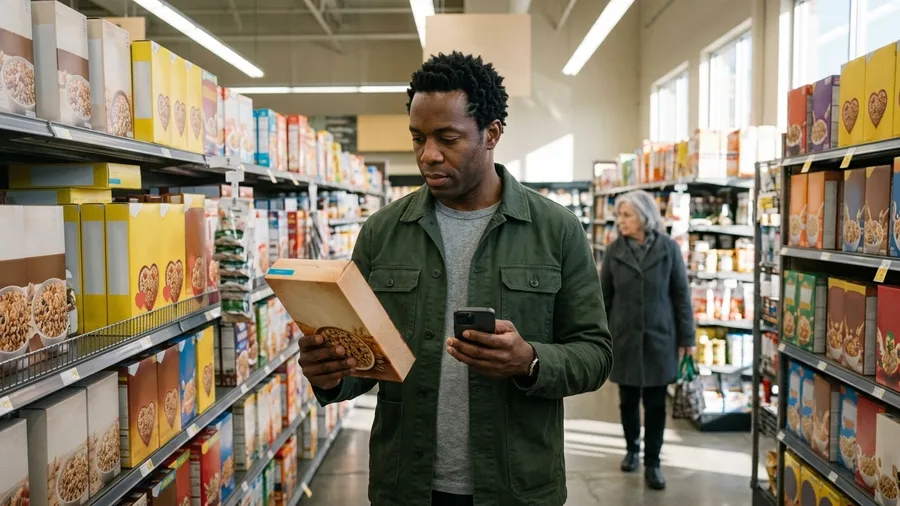
You are standing in the middle aisle on a Thursday evening, staring at a box of cereal that looks lighter in your hand despite costing fifty cents more than it did last month.
Most financial advice insists that you need to audit every single receipt down to the penny to protect your household from rising costs.
That level of rigid tracking burns out within three weeks because life is simply too busy for full-time ledger work.
The exception to this rule appears when you stop trying to track everything and instead narrow your focus entirely to your five staple items.
When you limit your baseline logs to the few goods you purchase on autopilot every single week, maintaining financial control suddenly becomes effortless.
Open your phone right now and type out the exact unit prices for your milk, eggs, coffee, bread, and favorite detergent so you have a permanent anchor against retail creep.
📋 Your Step-by-Step Value Verification Routine
Establish Baselines
Record the unit cost of your top five regular purchases before heading out.
Check Unit Tags
Ignore the big bold numbers and read the small cost-per-unit label first.
Inspect Packaging
Look closely at the net weight to spot any recent stealth volume reductions.
Audit Alternatives
Compare the store brand equivalent to verify if the name brand premium is justified.
Frequently Asked Questions
Why do package sizes shrink instead of prices going up directly?
Manufacturers shrink package sizes to avoid triggering psychological resistance from shoppers who are anchored to specific price points. This allows them to pass inflation costs quietly.
Where can I find the unit price on grocery store shelves?
The unit price is printed in small text on the bottom corner of the shelf label, usually showing the cost per ounce, pound, or count. Always check this number first.
Are store brands always lower quality than name brands?
Store brands frequently come from the exact same manufacturing facilities as name brands. You are often paying for national advertising rather than superior ingredients.
How can I easily track price changes over time?
Keep a simple notes file on your phone listing the unit price of your five most frequently purchased items. Updating this list weekly reveals true inflation trends.
The Freedom of Seeing Through Retail Illusions
You do not need to overhaul your entire shopping routine overnight or spend hours analyzing every single item in the store.
Start with just three core staples on your next trip, check their unit pricing, and let that clarity change how you see every tag from now on.
Check Your Pantry Staples Today
Open your kitchen cabinet right now, pick up your most used item, and check its unit price against your last receipt.