Seven in ten children who had accounts on banned platforms in Australia were still on those platforms after the ban took effect in December 2025. They were not breaking through sophisticated security. They were using fake ages, changed appearances, and VPNs.
Australia disabled millions of under-16 accounts. It did not matter much. Roughly 61% of 12- to 15-year-olds kept getting in anyway. The UK has since passed a similar ban. More than 20 countries – among them Greece, the UAE, and Canada – are looking at doing the same. The political momentum is real.
The assumption driving all of it is that keeping young people off social media will slow a documented rise in youth mental illness. That link has not been proven. Researchers who study this question are still arguing about it, and no ban has been running long enough to show whether mental health actually improves.
The billions flowing from platform lawsuits look like a second line of protection. But that money faces the same problem that swallowed tobacco settlement funds: it is earmarked but not enforceable.
For any parent, educator, or policymaker trying to make sense of this: the bans are a real response to a real concern, but they are running ahead of the evidence. The enforcement has a hole in it. The funding has a hole in it. What follows works through each one.
Rising mental health data drove the bans
The numbers behind the bans are stark. In 2021, roughly one in five young people globally showed signs of serious anxiety, and about one in four showed signs of depression. A 2026 study goes further, claiming that teenagers today are more than twice as likely to experience mental illness as teenagers were 50 years ago.
That second figure has driven a lot of legislation. But it has no author attached to it, no journal, and no way to look up the original data. The source is a news analysis published in The Conversation, not a peer-reviewed paper. A claim that large, cited that widely in policy debates, should come with a verifiable origin.
A widely read book called ‘The Anxious Generation’ gave the argument its widest audience. It named the ways platforms may harm young people: broken sleep, shortened attention, feedback loops that feel like addiction, loneliness, and the pressure of constant social comparison. The book gave legislators a clear story to point to.
The policy response has been fast. Australia banned children under 16 from social media in December 2025. The UK followed. More than 20 countries – including Greece, the UAE, and Canada – are now weighing similar rules.
Money has also started moving. Meta and YouTube have settled or paid out more than $17 billion in lawsuits, with some funds described as going toward mental-health programs. Whether that money actually reaches those programs is a question the settlements do not yet answer.
Social media’s causal role is genuinely disputed
The causal link that justifies the bans – that social media is what drove mental illness higher – is not settled among researchers who study this question.
Part of the problem is timing. Better clinical tools now catch anxiety and depression that went undiagnosed before. That change alone pushes the numbers up, with no change in how young people actually feel. The COVID-19 pandemic added another push: prolonged isolation is itself a known cause of mental distress.
The years of rising youth mental illness are also the years smartphones spread widely, the years of a global pandemic, and the years clinicians got better at spotting these conditions. Separating social media’s role from those other forces is genuinely hard. Most studies that try to do it find a weak or inconsistent link.
Teenagers themselves add something worth noting. In a Pew survey, 80% of U.S. teens said social media helps them stay in touch with their friends’ lives. Most users do not experience these platforms as purely damaging.
It is where the science currently sits. If mental illness is rising for several reasons at once, banning one platform does not touch the others. The expected benefit of a ban shrinks considerably once that possibility is taken seriously.
⚠️ COMMON MISTAKE
The evidence gap is not a minor detail
The 2026 statistic most often cited in ban debates — that youth mental illness has more than doubled in 50 years — comes from a source with no author, journal, or DOI attached. A figure this central to the policy case deserves a verifiable source before it drives legislation across 20 countries.
Most banned kids are still on the platforms
The practical answer is straightforward: the bans are not keeping most kids off the platforms.
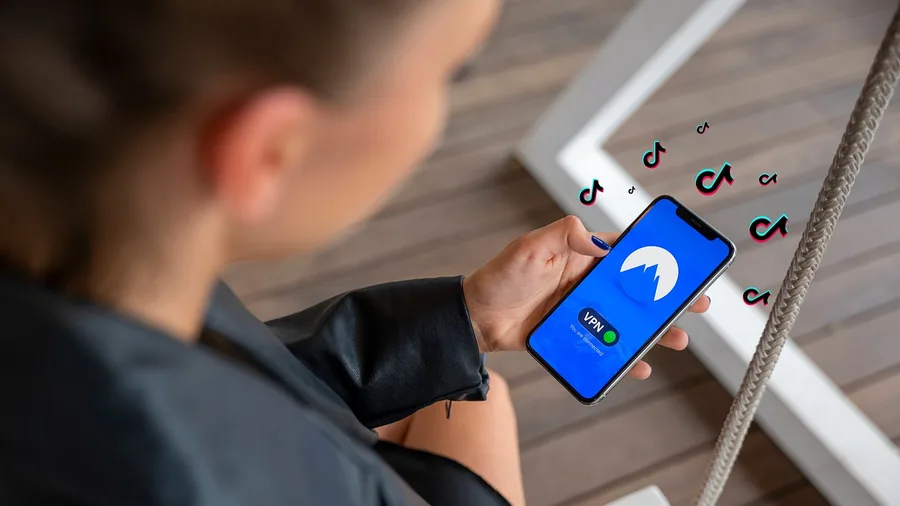
After Australia disabled millions of accounts, roughly 61% of children aged 12 to 15 kept getting through. They used fake IDs, changed their appearance to fool age-checks, or switched on a VPN to route around enforcement. The accounts were gone; the access was not.
The government’s own safety commissioner found the same thing from a different angle. Seven in 10 children who had accounts on restricted platforms were still active on those platforms once the ban was in effect. More than 80% of teens aged 10 to 15 were still using social media regularly.
These are compliance figures from an enforcement report, not a controlled study. They can show whether children stayed on the platforms. They cannot show whether mental health changed at all.
The ban also has almost no history behind it. Australia’s is among the first anywhere, and the data covers the opening months only. Calling any of this an early result is generous – there has not been nearly enough time to measure an effect on wellbeing.
A policy that most of the people it targets work around within weeks has more than a technical problem. It raises a harder question: whether the enforcement design is solid enough to build on, before more than 20 other countries copy the same approach.
Age checks are easy to beat and invasive
The methods teenagers use to stay on banned platforms are not sophisticated – and that is exactly the problem.
A fake birthday entered at sign-up takes seconds. A VPN, which routes a device’s traffic through a server in another country, is free to download and widely discussed in school group chats. Makeup or a change in lighting can fool a biometric selfie scan. None of these workarounds require technical skill, and none of them are secrets.
Biometric scans are worth pausing on. When a platform asks a 14-year-old to submit a selfie to verify age, that image and the facial data extracted from it become part of the platform’s records. A parent sitting beside their child during sign-up may have no idea the scan is retained, who can access it, or for how long.
Tightening verification to close that gap creates its own problem.
UK lawmakers are now debating whether to restrict consumer VPN access – partly because VPNs are the most common tool teenagers use to bypass geographic enforcement. A VPN restriction would affect adults who use them for remote work, personal privacy, or secure banking, not only teenagers evading age checks. The enforcement tool and the collateral damage cannot be separated.
This is the core tension: any system aggressive enough to meaningfully block determined teenagers collects more sensitive data or removes tools that adults depend on. Weaker systems leave the 61% gap intact. No age-verification approach currently in use has threaded that needle, and the privacy cost of one that could may turn out to exceed the harm it was designed to prevent.
The numbers behind the ban debate
Settlement billions have no path to mental health
Lawsuit money offers a second line of accountability – but the path from settlement to mental-health service is not as straight as it looks.
In August 2026, Meta settled with a group of U.S. states for $17 billion. The announced uses sound concrete: mental-health infrastructure, school and community programs, public health campaigns. The problem is that ‘announced’ and ‘required’ are not the same thing.
No binding mechanism in the settlement forces states to spend these funds on those purposes. The allocation is described, not enforced. Once the money lands in a state budget, its fate depends on whatever fiscal priorities that legislature is managing at the time – a budget shortfall, a competing spending bill, a change in administration.
That is not a drafting oversight.
Civil settlements are routinely structured this way. Funds get described as earmarked to satisfy plaintiffs and generate good headlines, but the architecture of the agreement does not lock the money in place. States receive it as relatively flexible revenue, and what happens next is a political question, not a legal one.
The closest historical parallel to this structure is already resolved – and its outcome is public record. What happened to the tobacco settlement money is exactly the test case for what ‘earmarked but unenforceable’ produces over time.
Tobacco money is a warning, not a model
The tobacco settlement was presented as a win for public health: states had sued tobacco companies over smoking-related medical costs, and a share of the money was pointed at programs to stop young people from smoking.
That framing did not hold.
By 2026, states collect $21.7 billion a year from tobacco settlements and tobacco taxes combined. Of that, just 3.4% goes to tobacco-reduction programs. The rest flows into general state budgets.
The reason is simple. The money was described as earmarked, but no rule required it to stay that way. As state budgets tightened over the years, the funds were quietly pulled toward other uses. No one broke a law. The structure just allowed it.
That same structure is present in the Meta settlement right now. The money is described as going toward mental health. No binding mechanism keeps it there.
What would actually prevent the same drift? An independent fund, mandatory public reporting, or clawback rules if states misspend the money – any of these could help. None of them are in the current agreement, and no legislature has yet written them in.
Full ban vs. safe-by-default settings
Full ban
- 61% of targeted teens get around it within months
- Needs a system to check users ages that collects personal details about them
- Pushes teenagers toward VPNs and fake IDs
- Removes both harmful and useful ways of using the platform
- No data on young peoples well-being yet — bans are too new
Safe-by-default settings
- Turns on stricter who-can-see-you and who-can-find-you settings automatically when you sign up
- No age-checking system needed, so no personal details collected
- Stays on even for people who are already signed in
- Does not cut off useful ways of connecting with others
- Can be done right now at the app level, no new laws needed
Safety-by-default settings offer a proposed middle ground
The numbers behind the bans and the lawsuits are shakier than their policy weight suggests.
The statistics in widest circulation trace back to a news analysis piece published in The Conversation – an opinion-style article, not a peer-reviewed study. No DOI, no journal, no author trail leads from it to verifiable primary research. When a figure this central to a legislative push has no checkable source, that matters.
Take the claim that today’s 14-to-20-year-olds are more than twice as likely to experience mental illness as the same age group was half a century ago. That number appears without an author, a journal name, or any identifier that would let a reader confirm it. A statistic of that size, cited in parliaments and school board meetings, deserves a traceable origin – and this one does not have one.
The Australian compliance data has a different problem. Those figures come from an enforcement update, not a controlled study. They can tell you how many children stayed on restricted platforms – 7 in 10 who held accounts, by the safety commissioner’s count – but they cannot show whether any child’s mental health changed because of the ban. A headcount is not an outcome measure.
Most bans have been running for months, not years. No study with enough time elapsed to measure mental-health effects has yet reported results. The question the bans were designed to answer – do young people get healthier when they are removed from these platforms – is still, genuinely, open.
None of this makes the worry about youth mental health wrong. It means the policy moved faster than the evidence, and anyone quoting these numbers to justify a ban should know where they came from.
The evidence base is weaker than the debate implies

One proposed alternative targets the experience on the platform rather than access to it – and it does not require an age check at the door.
A safety-by-default model would make a new minor’s account unsearchable and set tighter privacy controls automatically at sign-up. The account would stay that way unless the user chose to change it. No biometric scan, no ID upload, no VPN to route around.
That structural difference matters. A ban tries to block entry and fails the moment a teenager uses a false name or a VPN. Default privacy settings, by contrast, stay in place even after the user is already logged in – circumventing them requires a deliberate choice, not a workaround.
This approach also sidesteps the privacy trade-off that makes aggressive age verification so uncomfortable. Collecting a selfie scan or a government ID from every new user creates a database of children’s biometric data; a default-settings model collects nothing extra.
It is not a proven fix. No mental-health outcome data exists for this approach, and it has not been tested at the scale of the Australian or UK bans. Whether it would reduce the harms that motivated those bans is genuinely unknown.
It is, however, something a parent or school can act on today. When helping a young person create a new account on any platform, checking the privacy and searchability settings takes minutes and does not depend on what any law currently requires.
The enforcement question no ban has answered
Ban yet has solved the two core problems: how to keep minors off platforms reliably, and how to make sure the money meant to help them actually gets there.
Every age-check method in use can be beaten. Fake IDs, VPNs, and a change of appearance are enough – 61% of Australian 12-to-15-year-olds found a way through within months. Tighten the checks further and you run into a different problem: systems capable of stopping most teenagers have to collect sensitive personal data to do it, from the very children the ban is meant to protect.
No mechanism has closed that gap yet.
The money side has the same unresolved structure. Settlement funds described as going toward mental-health programs carry no binding rule that keeps them there. The tobacco record is direct: of the roughly $21.7 billion that states collect annually through tobacco settlements and taxes, only about 3.4 cents of every dollar actually funds tobacco-reduction efforts. The remainder has drifted into general budgets over time. Without enforceable rules, social media settlement money is likely to follow the same path.
There is a third thing the bans have not settled. In a Pew survey, 80% of U.S. teens said social media helps them stay in touch with their friends. A teenager removed from those platforms may simply be cut off from people they rely on. Losing that connection is a real cost, and no ban has yet weighed it against the expected benefit.
The bans have been running for months, not years. Whether any of them make young people healthier is still unknown. The question worth pressing any legislator or school board is simple: what would proof actually look like, and when would anyone expect to see it?
Frequently Asked Questions
Has Australia’s social media ban improved youth mental health outcomes?
No outcome data exists yet. The ban took effect in December 2025 and is too recent for any study to have measured mental-health changes with a meaningful follow-up period. What enforcement data does show is that most targeted teens are still online, which makes any effect harder to detect even when enough time has passed.
Why can’t countries just require better age verification to make bans work?
Every more-aggressive verification system collects more personal data — biometric scans, document uploads — from the children it is designed to protect. Tightening verification enough to approach full compliance creates a data-collection problem that may be worse than the one it solves. UK lawmakers are already debating VPN restrictions as a downstream enforcement measure, which would affect adults as well as teenagers.
Will the Meta $17 billion settlement actually fund mental health programs?
It may, but there is no binding mechanism in the settlement that requires states to spend the funds on mental-health programs rather than general revenue. The tobacco settlement of 1998 was structured similarly, and by 2026, states direct just 3.4% of tobacco settlement and tax income to tobacco-reduction programs. The same drift is structurally possible here.
Is social media actually causing the rise in youth anxiety and depression?
Researchers have not reached consensus on this. The same period that saw rising smartphone use also brought COVID-19 isolation, economic disruption, and improved clinical awareness of anxiety and depression — each of which independently raises measured prevalence. A causal link has not been established, and the direction of the relationship between social media use and mental illness is still debated in the literature.
What can a parent do right now without waiting for legislation to catch up?
Review privacy and searchability settings on any account a young person holds — most platforms allow accounts to be made unsearchable and restrict who can send messages, and these settings can be applied regardless of the user’s age or what any law requires. That is the practical version of the safety-by-default approach discussed in the debate, and it does not require a ban or a legislative timeline.
How many countries have actually banned minors from social media so far?
Australia and the UK have enacted bans — Australia’s covering children under 16 from December 2025, the UK following with a similar prohibition. More than 20 other countries, including Greece, the UAE, and Canada, are currently considering equivalent measures but had not enacted them as of the source date.
Still Online, Still Waiting for Answers
The bans are a genuine attempt to address a genuine problem. But right now, most banned kids are still online. The science linking social media to mental illness is contested. The figures used to justify the bans have verifiable gaps. And no mental-health outcome data exists yet to show whether any of it is working.
The $17 billion in settlements sounds like accountability. But the money reaches state governments without binding rules on how it must be spent. That is exactly how tobacco settlement funds ended up in general revenue. The Meta settlement is built the same way.
The honest answer to whether bans protect young people’s mental health is: not demonstrably, not yet, and possibly not in their current form. The question still worth pressing – at school board meetings, in legislatures, and at home – is the one the bans have not answered: what would actually keep a determined teenager off a platform, without invading their privacy or cutting off the kids who rely on these spaces for connection? That is the same problem the seven-in-ten figure pointed to from the start.
Sources
- Can social media bans protect young people’s mental health? Early research suggests that bans aren’t the answer – theconversation.com (news report) · 2026-10-16