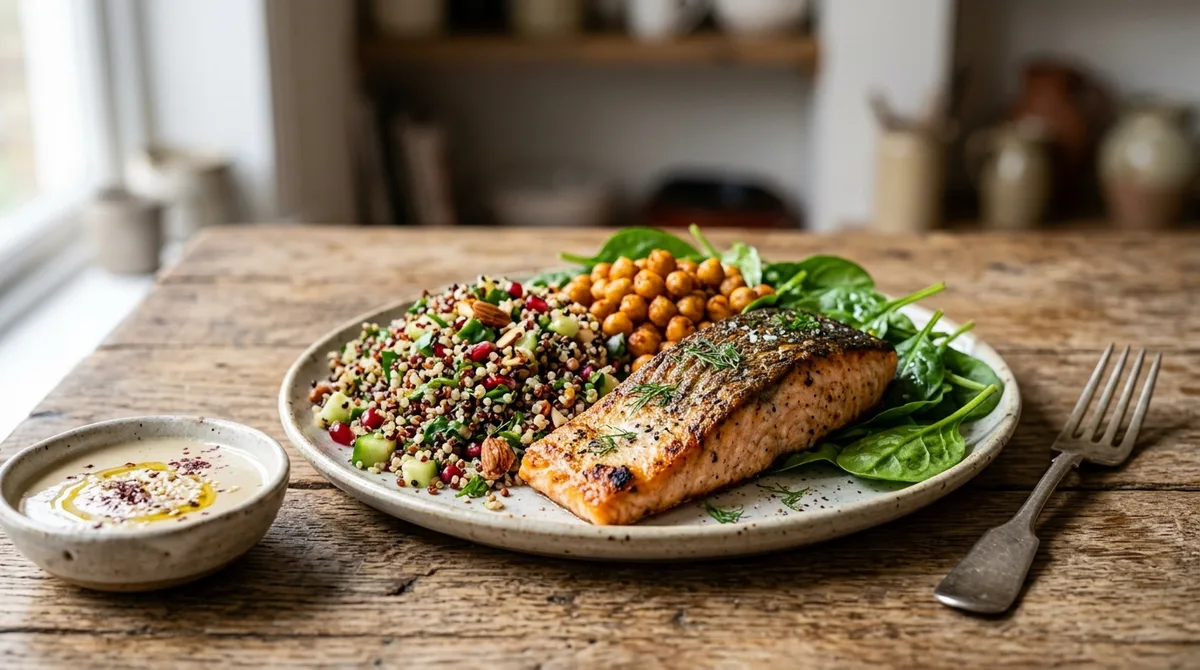
You reach for the same cereal every morning and wonder why your afternoon energy dips so sharply.
After 50, your body processes protein differently than it did decades ago, a phenomenon researchers call anabolic resistance. Eating a small amount at breakfast and a massive steak at dinner leaves your muscles under-stimulated for most of the day. Dietitians who specialize in longevity nutrition consistently point to this uneven distribution as the hidden reason for age-related muscle loss.
Here is the exact framework to fix your daily intake, protect your mobility, and support sustained energy without complicated meal prep.
Quick Tips Before You Start
Weigh Your Food
Guessing grams leads to under-eating protein by up to thirty percent.
Spread It Out
Aim for twenty-five to thirty grams per meal rather than one large dinner.
Stay Hydrated
Higher protein intake requires adequate water to support kidney function.
Pair With Movement
Combine your protein meals with resistance training to stimulate muscle synthesis.
1. Understanding Anabolic Resistance in Midlife

Your muscles simply stop responding to small amounts of amino acids the way they used to.
Research on adults over 60 shows that it takes a noticeably higher threshold of leucine, an essential amino acid, to effectively trigger muscle protein synthesis than it did at 30.
If your morning meal consists only of toast and black coffee, your muscles receive zero chemical signal to repair or grow until well into the afternoon.
That metabolic shift requires rethinking breakfast entirely instead of relying on carbohydrate-heavy convenience foods.
The practical fix demands shifting your daily protein distribution so that every single meal clears at least the 25-gram mark, keeping your metabolism responsive all day.
2. Fixing the Front-Loaded Breakfast Habit

Mornings are usually when protein intake drops to nearly zero.
Toast, oatmeal without additives, and pastries provide almost no functional muscle support.
When dietitians evaluate a client’s food log, breakfast is almost always the culprit behind mid-morning crashes and gradual strength decline.
Swap the grain-heavy start for three whole eggs paired with cottage cheese, or a scoop of unflavored whey protein mixed into warm porridge.
This simple morning adjustment immediately closes the daily amino acid gap without adding calories.
💡 Tip: Add a tablespoon of hemp seeds to your morning bowl for an extra five grams of plant protein.
Protein Source Traffic Light
- 🟢 Wild Salmon and Sardines — High leucine content plus anti-inflammatory omega-3 fatty acids.
- 🟢 Greek Yogurt and Cottage Cheese — Slow-digesting casein supports overnight muscle recovery.
- 🟡 Plant-Based Protein Powders — Check ingredient labels for heavy metals and added sugars.
- 🔴 Processed Deli Meats — High sodium and preservatives outweigh the protein benefit.
3. Targeting the Twenty-Five Gram Threshold

Numbers matter when you are trying to outsmart biological resistance.
Every meal needs to contain roughly twenty-five to thirty grams of protein to cross the activation threshold for muscle repair. Eating ten grams here and fifteen grams there simply does not trigger the same physiological response.
Measure your portions for one week using a simple digital kitchen scale until your eye learns what thirty grams of chicken breast, salmon, or tempeh actually looks like on a standard dinner plate.
Protein Distribution — At a Glance
🍳 Breakfast Target
25-30g protein
🥗 Lunch Target
25-30g protein
🥩 Dinner Target
30-35g protein
⏰ Meal Spacing
4 to 5 hours apart
🏋️♀️ Best Pairing
Resistance training
The Core Rule
Evenly spacing your intake maximizes muscle protein synthesis all day long.
4. Balancing Animal and Plant Sources

You do not need to eat meat at every single sitting to hit your goals.
Plant proteins are valuable, but they often lack complete amino acid profiles or require larger portion sizes to match the leucine content found in animal proteins. If you prefer a plant-forward diet, combine legumes with grains or supplement with a clean pea protein isolate.
The goal is not dietary purity; it is hitting your daily totals without overloading your digestive system with excessive fiber or saturated fats.
⚠️ COMMON MISTAKE
Relying Solely on Plant Grains
Eating large bowls of rice and beans provides calories and fiber, but the low concentration of essential amino acids means your muscles miss out on the repair signal they need after 50.
5. Prioritizing Leucine-Rich Foods

Leucine is the primary trigger that flips your body’s muscle-building switch.
Without enough leucine in a single meal, your cells will not initiate protein synthesis regardless of your overall daily intake.
That biological bottleneck is why hitting your total daily grams matters less if the individual meals lack punch.
Foods naturally dense in this amino acid include lean beef, poultry, fish, eggs, and dairy products like Parmesan cheese.
When planning your grocery list, check for these specific items to ensure every meal carries enough activation power to maintain your physical strength.
6. Timing Protein Around Physical Activity

When you move matters just as much as what is on your plate.
Consuming a protein-rich meal within two hours of strength training amplifies muscle recovery and adaptation.
Post-workout nutrition helps repair micro-tears in muscle fibers and supports bone density improvements as we age.
Keep a portable protein source like hard-boiled eggs or a clean shake ready for busy days when your workout runs close to mealtime.
Best For
7. Managing Digestion and Hydration Changes

Stepping up your protein intake after 50 can suddenly make your digestive tract feel like it is working overtime.
As we age, stomach acid production tends to decrease, which is why denser proteins can suddenly sit in your stomach like a brick and leave you feeling sluggish.
If you notice persistent bloating after shifting your meals, you do not have to give up on your nutrition goals.
Slow-cooked meats, bone broth, and fermented dairy give your system a much easier head start by breaking down structures before they ever hit your plate.
Pair every single increase in dietary protein with an extra glass of water to keep your kidneys processing metabolic waste efficiently without missing a beat.
Digestive Support Essentials
8. Overcoming Afternoon Energy Slumps

That three o clock fatigue is often a silent cry for more amino acids.
When lunch lacks sufficient protein, your blood sugar rollercoasters, leaving you reaching for sugary snacks.
Shifting your midday meal to include thirty grams of clean protein stabilizes energy levels for the remainder of the afternoon by preventing the sharp glucose spikes and subsequent crashes that hit harder after forty.
Keep canned tuna, roasted chickpeas, or pre-cooked chicken breast in your refrigerator to make midday protein assembly effortless.
💡 PRO TIP
The Lunch Prep Shortcut
Cook double portions of chicken or fish during your Sunday dinner so your weekday lunches require zero cooking time, ensuring you never skip your protein target.
9. Supporting Bone Density Through Nutrition

Your bones are not just hard calcium blocks waiting for a supplement.
Roughly half of your actual bone volume is made of a flexible protein matrix structure that holds mineral deposits in place, meaning protein and bone strength operate as essential partners in your skeletal system.
Dietitians consistently emphasize that adequate daily protein intake is just as critical for preserving bone mineral density as calcium and vitamin D, especially as natural bone resorption outpaces formation after 50.
Combine your protein-rich meals with weight-bearing exercises like brisk walking or light resistance training to stimulate the mechanical loading your bones need to stay dense and resilient.
Aim for consistent daily distribution rather than one evening catch-up to give your skeletal remodeling cycle the steady building blocks it requires.
10. Evaluating Evening Meal Proportions

Dinner is usually when most people accidentally consume seventy percent of their daily protein.
While a large steak at night feels satisfying, your body can only utilize a finite amount of protein for muscle synthesis in a single sitting.
The excess is burned for energy or stored, leaving your morning and afternoon muscles starved.
Trim your dinner portion slightly and redistribute those grams into your breakfast and lunch plates for a balanced twenty-four-hour cycle.
11. Simplifying Grocery Shopping for One or Two

Buying fresh protein for a smaller household requires a smart strategy to avoid food waste.
Buy family packs of chicken breasts or fish fillets, portion them into single-serving freezer bags immediately upon returning home, and thaw only what you need the night before.
Stock your pantry with shelf-stable staples like canned sardines, tuna, and red lentil pasta to ensure you never run out of options.
12. Tracking Your Intake Without Obsession

Counting every gram forever is exhausting and completely unnecessary for long-term health.
Use an app or a simple notebook for just one week to build your awareness of standard protein portions.
Once you recognize that three eggs give you eighteen grams and a palm-sized piece of fish gives you thirty, you can transition to intuitive balancing without second-guessing every plate.
Focus on consistency rather than perfection.
Missing your target on a Tuesday does not derail your progress as long as your overall weekly pattern remains solid.
13. Recognizing Signs of Inadequate Protein

Your body sends subtle signals when it lacks the building blocks for repair.
Persistent hair shedding, brittle fingernails, slow recovery after minor walks, and frequent muscle soreness are common indicators that your daily protein intake needs adjustment.
Pay attention to these physical cues and test a two-week shift toward evenly distributed meals before assuming normal aging is to blame.
When dietary intake drops below what your tissues require, repair processes slow down noticeably.
That minor tweak can clarify whether your afternoon fatigue stems from nutrition or just a busy week.
14. Adapting Your Routine While Traveling

Travel disrupts eating patterns faster than almost anything else.
Airport food options skew heavily toward refined carbohydrates and pastries, making it easy to fall back into old low-protein habits while away from home.
Pack travel-friendly protein sources like individual whey protein packets, beef jerky without added sugars, or roasted pumpkin seeds to keep your daily rhythm intact on the road.
A simple strategy that physical therapists and nutritionists recommend is stashing a shaker bottle and three single-serve packets in your carry-on before leaving the house.
That small preparation step bridges the gap until your next proper meal without relying on terminal snacks.
15. Building a Sustainable Lifelong Habit

Lasting health changes come from routines you can maintain without feeling restricted.
Do not overhaul your entire kitchen overnight. Pick one meal, start with breakfast, and upgrade its protein content this week, then tackle lunch once the morning habit feels automatic.
Give your body four to six weeks to adjust to the new distribution, and notice how your morning stiffness and afternoon energy levels begin to shift for the better.
Frequently Asked Questions
How much total protein do I need daily after 50?
Most dietitians recommend aiming for approximately 1.2 to 1.5 grams of protein per kilogram of body weight daily. For a 150-pound adult, this translates to roughly 80 to 100 grams spread evenly across three meals.
Can I get enough protein on a vegetarian diet?
Yes, but it requires careful planning. Incorporating Greek yogurt, cottage cheese, eggs, tofu, tempeh, lentils, and high-quality plant protein powders helps you hit the 25-gram threshold per meal without excess calories.
Is too much protein harmful to my kidneys?
For healthy adults with normal kidney function, research shows that higher protein intakes are safe. If you have pre-existing kidney disease, consult your physician before making significant dietary changes.
Why does meal timing matter more after 50?
Age-related anabolic resistance means your muscles require a higher concentration of amino acids at one time to trigger repair. Spreading your protein prevents missed opportunities for muscle synthesis throughout the day.
What is the easiest meal to fix first?
Breakfast is almost always the easiest starting point. Most people consume very little protein in the morning, so adding eggs, Greek yogurt, or a protein shake creates an immediate improvement in your daily total.
Your First Week of Better Protein Habits
Start tomorrow morning by swapping your usual toast for three eggs or a cup of Greek yogurt.
Notice how your morning energy holds steady without that familiar eleven o’clock slump. Master that single meal for seven days before adjusting your lunch, and let consistency do the heavy lifting.