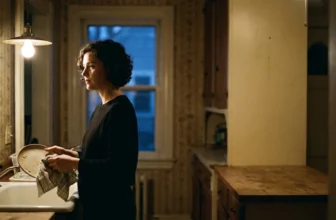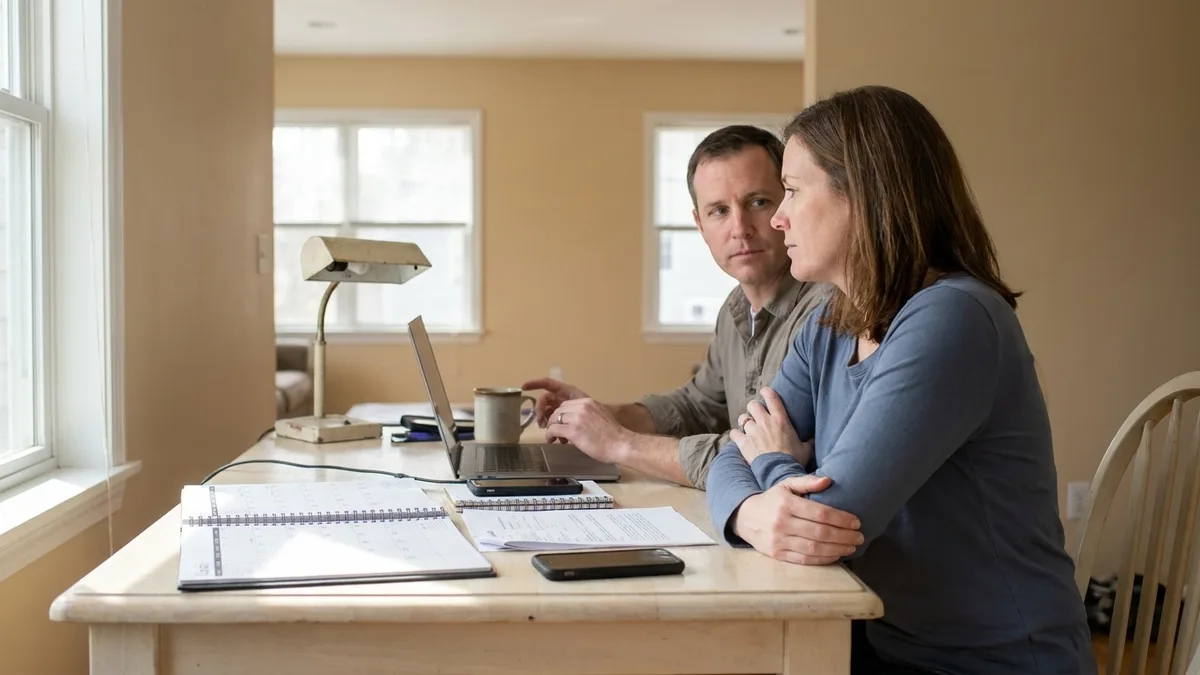
The surprising part is not that retirement strains a marriage. It is that the last day of work is almost never the culprit. The silence that follows is.
You have heard the milestone blamed, so you brace for the anniversary, the party, the goodbye card. But the strain arrives quietly, in the absence of the structure work supplied for decades. Dana, 64, and Miguel, 66, had about 45 hours a week apart without ever deciding it. Then they retired within 14 months of each other, and walked into a house with one shared desk and 168 hours a week of each other’s company. By 9:30 on their first retired Monday they had jointly settled eleven small things: thermostat, coffee, dog walk, lunch, the afternoon.
Retirement is the trigger. Unbroken shared time is the cause. The danger is not the last day of work but the sudden absence of time apart, and that absence is something you can design around.
Before the last day, or in the first month after it, you can set up solo hours, name who owns which room and which decisions, and have one honest conversation about territory. Do that, and the first retired year becomes something you designed rather than endured.
It isn’t retirement; it’s the empty calendar
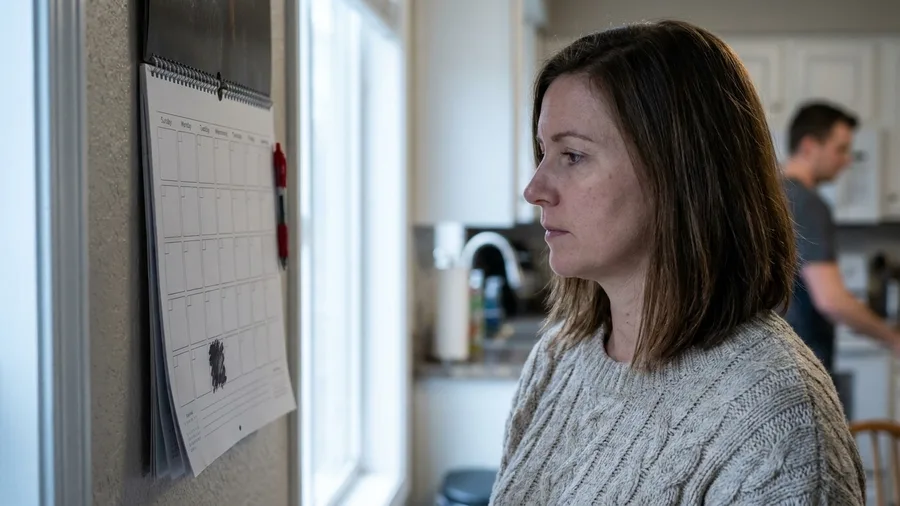
What ends on the last day is not the thing that was holding the marriage together. The job was.
A working couple spends most of the week apart without ever deciding to. Miguel put 45 hours a week into an HVAC service route that started at a shop across town and ended wherever the last call was; Dana put 40 hours into a school district office plus a 35-minute commute in each direction. Add the commute to the office week and the two of them were separated by something close to 55 hours, and the road supplied the rest for him. Nobody scheduled that. It came with the paychecks.
The first retired Monday arrives with no shift start, no commute, no departure to organize the morning around, and no return trip to cap the afternoon. Losing a job costs a role and an income. Losing a schedule costs the separator, and the separator was doing quiet work the whole time.
That is why the milestone catches the blame. The last day of work is the moment the structure disappears, so it gets credit for everything that follows.
There is no number to attach to this, and it does not need one. It is a pattern couples describe and counselors hear often, and the American Psychological Association is the place to look if you want the research literature behind it.
The practical consequence is short: what you prepare is the calendar, not the anniversary.
| Working week | First retired week | What to build in |
|---|---|---|
| 45 hours apart (his road week, her office plus commute) | 168 hours in the same house, roughly 110 waking hours within earshot | A 90-minute solo block each morning, 7:00-8:30 and 8:30-10:00 |
| Coffee, dog walk and thermostat settled by default, not discussion | Eleven small joint decisions before 9:30 on Monday | Assigned defaults so the same decisions are not renegotiated daily |
| Two cars, one driveway, separate departure times | Two cars, one driveway, no reason to leave | Two full separate weekdays, Tuesday and Thursday, with own plans |
| Shared office used at different hours | One desk, two people, no schedule | Named desk hours: hers 7:00-8:30, his 8:30-10:00 |
| Household money reviewed around pay cycles | $5,200 monthly from Social Security, a small pension and savings | A fixed budget review, first Sunday of the month |
The holiday phase hides the missing structure
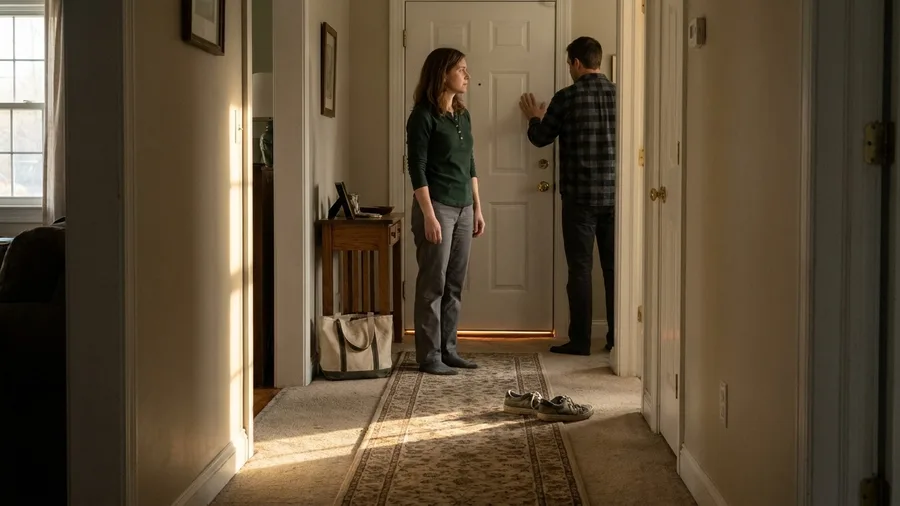
A filled calendar can keep the missing structure out of sight for weeks.
The first month of retirement usually runs on vacation energy. There is a trip booked within the first six months, a garage project that needs the table saw cleared out, grandchildren visiting over a long weekend, and a stack of appointments postponed for years finally getting scheduled. The calendar looks full. Nobody asks what happens when it empties, because it is not empty yet.
Then comes a Monday with nothing on it. Nine in the morning, no guests, no project deadline, no reason for either person to leave the house. Dana takes the shared desk to sort the household papers that have been accumulating since spring. Miguel drifts out to the garage, putters for an hour, and starts checking the clock around eleven because he expects company at lunch. Her closed door reads to him as a door being shut on him. His drift reads to her as a man with nothing to do and no plan to get something.
Neither of those readings is accurate. They are what a missing structure feels like from inside a marriage.
The week to watch is the one after the trip, after the garage project, after the last visiting child pulls out of the driveway. That is when the vacation energy drains, the calendar goes blank, and what gets called sudden incompatibility shows itself to be something plainer – two people with no separation and no plan for making any.
Work supplied the space; now you build it

The separation you are missing had a schedule you never set. For thirty-one years Dana left the house at 7:40, drove thirty-five minutes, and the office held her until the drive home; Miguel’s service calls scattered him across three counties for forty-five hours a week. Neither of them arranged that distance. The job did, daily, without a conversation.
Now the house does the opposite. Seventeen hundred square feet, three bedrooms, one converted to a shared office, two cars nose to tail in one driveway, and seven days of both people inside it. Strip out sleep and you get roughly 110 waking hours within earshot of each other.
The fix is naming territory by room and by clock, out loud. Dana takes the shared office 7:00 to 8:30, Miguel 8:30 to 10:00; the kitchen and the TV room get their own hours on the same list. Alone in the same house means a shut door, headphones, a room that belongs to one person for that block.
I have watched couples skip this because the plan felt cold, and it holds right up until February. The porch is under six inches of rain, the errands are done by ten, there is no commute to absorb anyone, and two people plus one desk have to fill a whole wet afternoon. Name the rooms and the hours before the weather does it for you.
💡 PRO TIP
Name the room and the hours
Write the schedule on paper: office 7:00-8:30 hers, 8:30-10:00 his. Kitchen and TV room hours listed the same way. A closed door means the block is real, not a mood.
Small decisions double when nobody leaves the house
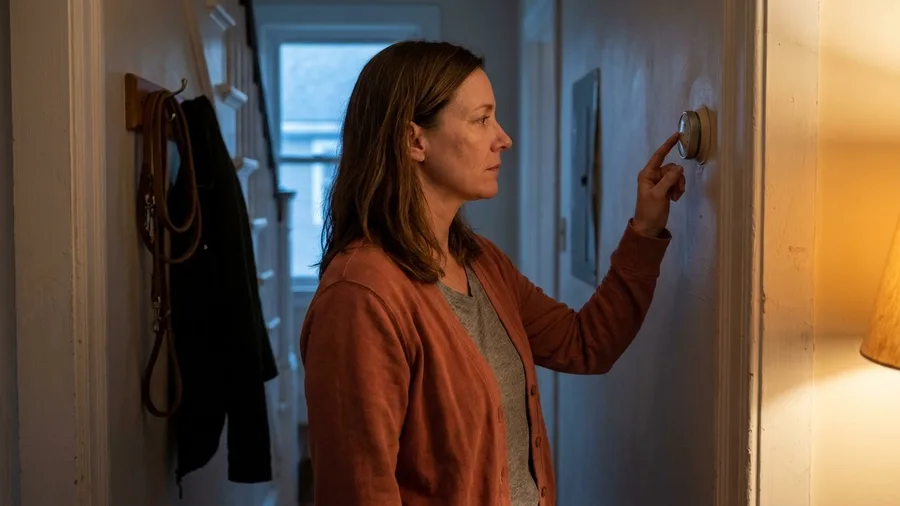
Because the decisions used to settle themselves while one of you was thirty-five minutes down the road. When Dana drove to the school district office and Miguel was between service calls on the other side of the county, nobody had to agree on coffee or the dog, because the commute and the road already fixed their timing before either of them woke up.
Now the same trivial choices need a second signature. By 9:30 on their first retired Monday, Dana and Miguel had jointly settled eleven small things: the thermostat, coffee, the dog walk, lunch, the afternoon, and six more of the same size and weight. Nothing on that list is a fight worth having.
The volume is the problem. Eleven negotiations before midmorning leaves a residue that surfaces as a short tone over the thermostat or a sigh about the dog, and the irritation lands on whatever is nearest, which is usually the other person. The coffee is never the subject.
Each of those choices was once a default one partner owned by necessity. Dana’s 35-minute commute set when coffee happened and when the dog went out; Miguel’s road schedule set the afternoon pattern and where the thermostat sat between calls. Nobody assigned those defaults, so nobody notices them missing until the house has no road in it.
Try this on an ordinary morning: count how many decisions you and your partner both have to sign off on before ten. If the number is double digits, the fix is fewer signatures, not better arguments. Hand the thermostat to one person for the week, the dog walk to the other, and let coffee belong to whoever gets there first. The proxy is the load, and the load is what you can actually cut.
Two managers, one household, no job description
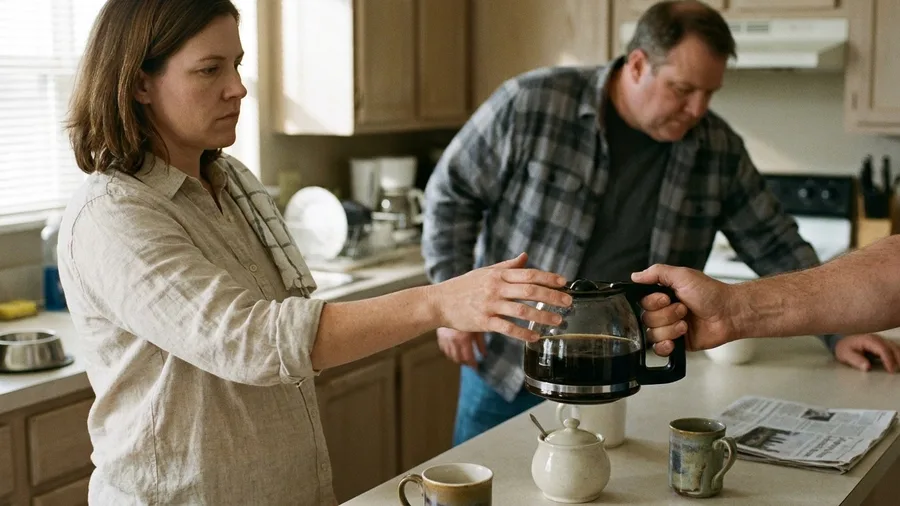
Because the partner who has run this house for years is not going to hand over the controls just because someone now has free mornings. Dana kept the kitchen, the bills, the dog and the schedule moving for three decades around a 40-hour office week and a 35-minute commute each way. That authority was earned one Tuesday at a time.
Migration retired with no service calls to answer, so his first free morning finds him offering to help with the coffee, the bills, the kitchen. He means it as participation. Dana hears an audit of systems she built without him, and the offer reads as a question about whether she has been doing it right.
The 14-month stagger sharpens all of it. Dana stopped work 14 months before Miguel and had already settled into the kitchen, the 7 a.m. gym slot and the TV room by the time his last day came. He did not arrive as a co-owner. He walked into a rhythm somebody else had set, which is how a man ends up feeling like a guest in a house he pays for.
The answer is jurisdiction, not assistance. Hand over whole jobs and stop supervising them once they are handed. Give Miguel the garage, the cars and the monthly bill review, and let those be his to run badly or well. Then the help becomes ownership, and ownership is what removes the guest feeling.
Defend less; assign more. It is easier to name three things that are now genuinely his than to keep inspecting the eleven you would rather keep.
One wants to go; the other wants to putter
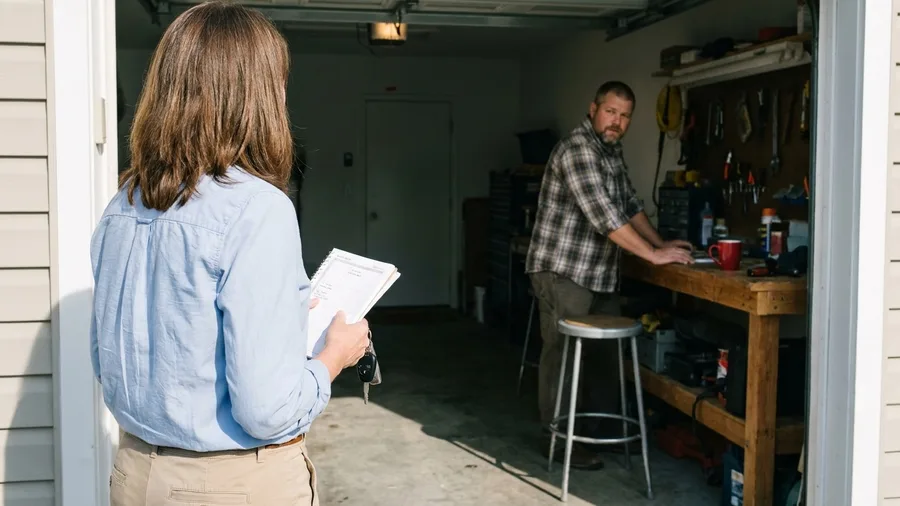
Two people can want the same Tuesday to look completely different, and neither of them is wrong. Dana fills hers before it starts: the bank, the pharmacy, a return at the hardware store, the walk she has been promising herself since March. Miguel’s Tuesday has no list on it. The garage, a tool he means to sort, the TV on low, coffee at ten and again at eleven, and nothing on the clock to argue with.
a man who knew how to be at ease. And he, watching her come through the door with her shoes off and the day still running in her head, found her plans charming, because there was only so much evening left for them to fill.
Ten o’clock on a Wednesday morning has no such limit. He settles into the garage and hears her car start, and something in his chest reads it as her leaving him. She comes back at two and finds him where she left him, and reads it as the whole day going by with nothing to show. Neither reads it as a difference in pace. Both read it as a verdict on how they would rather spend the one day.
The 90-minute block each morning was the smallest thing Dana and Miguel changed, and the one that quieted this most. She takes 7:00 to 8:30. He takes 8:30 to 10:00. Nobody negotiates a Tuesday, because by ten o’clock each of them has already had a stretch of the day on their own terms, and the rest of it is a choice rather than a correction. Protect the block and the speed stops reading as rejection.
A planned Tuesday vs. an open Tuesday
Planned apart
- Solo block 7:00-8:30, then 8:30-10:00
- Tuesday: separate plans, own errands
- Lunch is self-serve, not a summit
- One joint decision at dinner
Open together
- Both home at 9 a.m. with no plan
- Eleven small decisions before 9:30
- Closed door read as rejection
- Pace difference read as judgment
Old arguments get more airtime, not more resolution

Because when the loop has no exit, a grievance from 1998 gets the whole day to itself. Work never resolved anything; it interrupted. A shift start at 6:40, the 35-minute commute, bedtime, the next obligation. One of you had to leave the room, and leaving broke the circuit.
Retirement takes the exit out of the house. The same complaint that used to run twenty minutes and then hit a red light at the end of the driveway now has nowhere to be put down, so it gets picked back up, and picked up again, with the same words and the same result.
Ten in the morning is the worst possible time to reopen it. Both of you are home. Nothing is due. There is no errand waiting, no meeting pulling one of you away, and the entire rest of the day is sitting in the same room with the unfinished argument.
So name it, set a time, and get out of the room. ‘I want to talk about the Florida thing, and I want to do it Thursday at seven, not now.’ Then take the solo block or the errand, because the point of moving it is to arrive with something other than a full morning of rehearsal behind you.
And here is the threshold worth marking clearly: if the same conflict keeps coming back without either of you moving, more airtime is not the same thing as working on it. That is when the two of you stop talking about it alone and take it to a counselor.
Staggered retirements leave the second one a guest
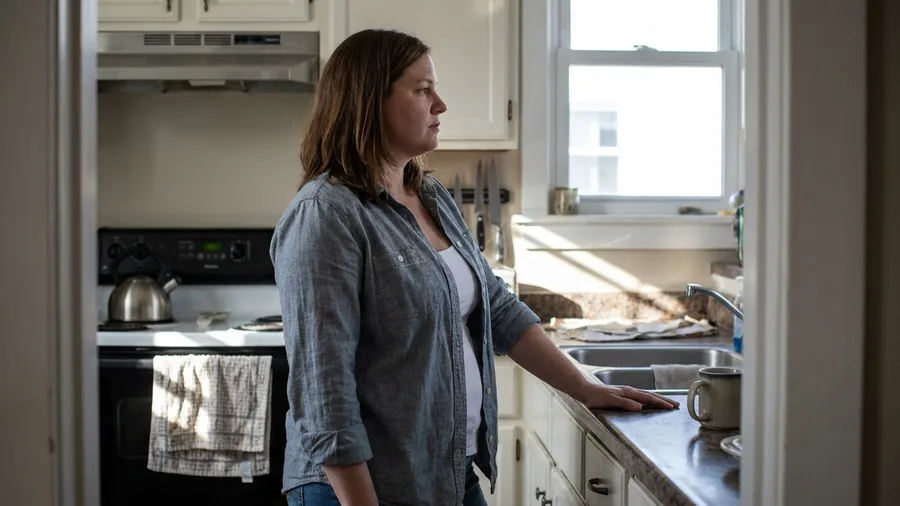
It matters a great deal. Fourteen months is enough for one person to furnish a whole household rhythm alone, and the second retiree walks into it as a visitor.
Dana stopped first. By the time Miguel’s last day came, the kitchen was organized her way, the 7 a.m. gym slot was hers, and the TV room had a routine attached to it that nobody had voted on. Miguel came home to a house that already had an owner.
Not a co-owner of his own morning, either. Coffee timing, kitchen use, TV room occupancy, shared-office hours, the dog walk, the monthly budget review, who does which household jobs, all of it had been settled by fourteen months of one person living there full time, and none of it had been discussed.
The stagger is not disqualifying. Plenty of couples do it this way and settle well, but only if the reset happens on purpose and happens in the first week, not whenever the friction gets loud enough to require it.
If you are the one walking in second, ask for the reset directly: ‘Before we settle into this, I want to go through the rooms, the hours, the budget and the jobs as if we are both starting fresh, because I am.’ Do not wait to be hosted in your own house.
How the week divides
One couple's hours, before and after the last day
Percentages of a 168-hour week, rounded.
Couples with separate lives barely notice the change
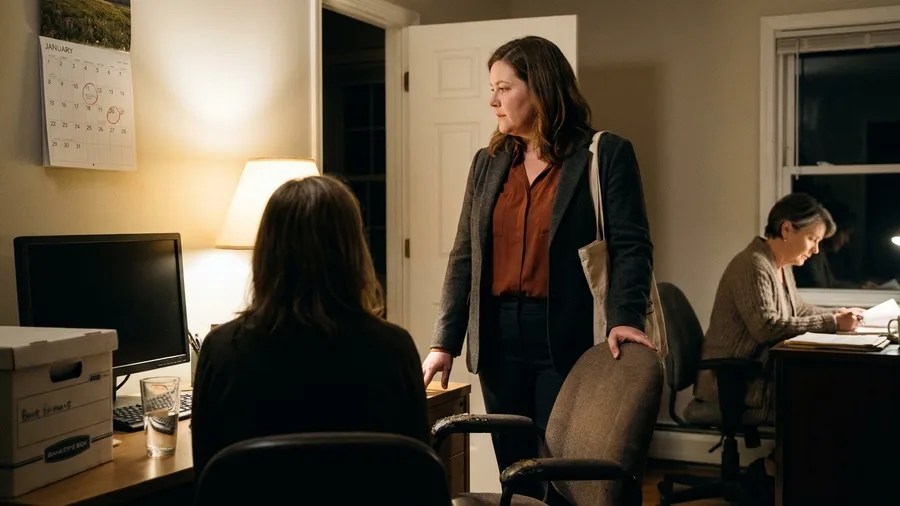
The couples who sail through the first retired year usually had a life apart before the last day ever arrived. They had standing poker nights and choir rehearsals, a friend who calls on Wednesdays, a workshop in the basement nobody else enters. Retirement adds hours to that structure but does not create the separation question from scratch.
The couples at risk are the ones whose entire social world was the office. Friday night was the department dinner, Saturday the company picnic, every friend a coworker. When the last day comes, that calendar empties overnight and there is no outside plan to replace it. Friday becomes two people at home with nothing but each other and a whole weekend of pressure riding on it.
Closeness is not immunity, either. A pair who genuinely like each other can still get underfoot in 1,700 square feet with one shared office and one shared desk. Even the best marriage starts to itch when the same two people occupy the same small rooms for 110 waking hours a week with no door between them.
So take an honest inventory before the last day. List the friends, hobbies, rooms, standing dates and recurring commitments each of you already has, then mark what the office supplied and nothing else does. Where the office was the whole social world, build the substitute deliberately, because the calendar will not fill itself and the empty Friday will find you both at home.
The retirement schedule kit — at a glance
⏰ Morning solo block
90 minutes each
📆 Separate days
Tuesday + Thursday
💵 Budget review
First Sunday, $5,200
🪑 Shared desk
7:00-8:30 / 8:30-10:00
Start with
The 90-minute block is the easiest thing to add and the one most couples skip.
Separate time on the calendar beats togetherness
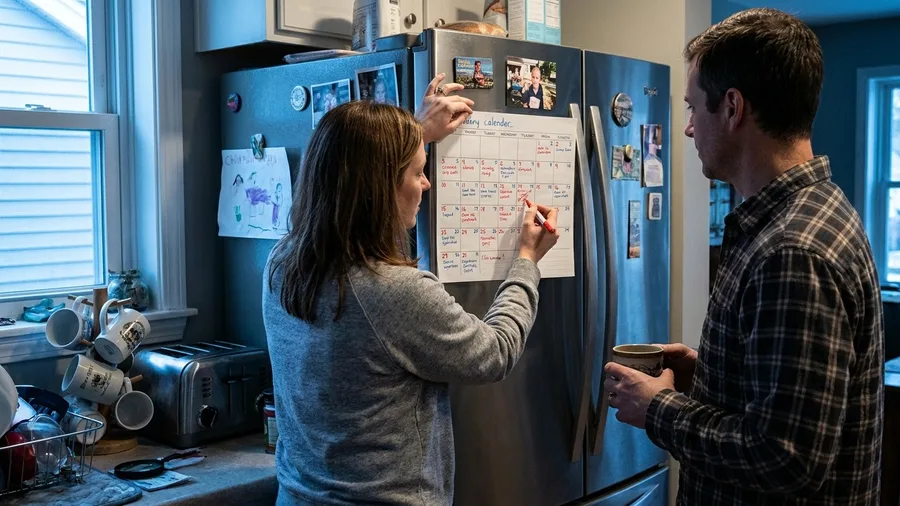
The couples who come out of the first retired year intact do the same unfashionable thing: they put their time apart on a calendar, in ink, next to their time together. Dana keeps 7:00 to 8:30 each morning, Miguel takes 8:30 to 10:00, and Tuesday and Thursday belong to each of them separately, with their own plans and their own people.
Draw it in two colors. Hers and his, on one shared calendar on the kitchen wall, so the apart blocks are visible to both of you at a glance and cannot be quietly eroded by a mood.
This is the part people resist, because an hour behind a closed door can feel like a verdict on the marriage. It is the opposite. The solo block is how two people keep liking each other at 4 p.m. on a wet Wednesday, not an escape route out of the house.
What it protects is the thing closeness eats: the small store of things you each have to report back. Miguel comes in from the garage with something he saw, Dana comes out of her office with a call she took, and there is a real exchange instead of two people who have been in the same room since breakfast.
Name the blocks out loud and set them running before the friction starts, not after three bad weeks have made separation feel like defeat. A calendar both of you can see turns apart time into routine. Left unspoken, it gets decided by whoever is more irritated on the day, and that is no schedule at all.
Settle the territory talk before the last day
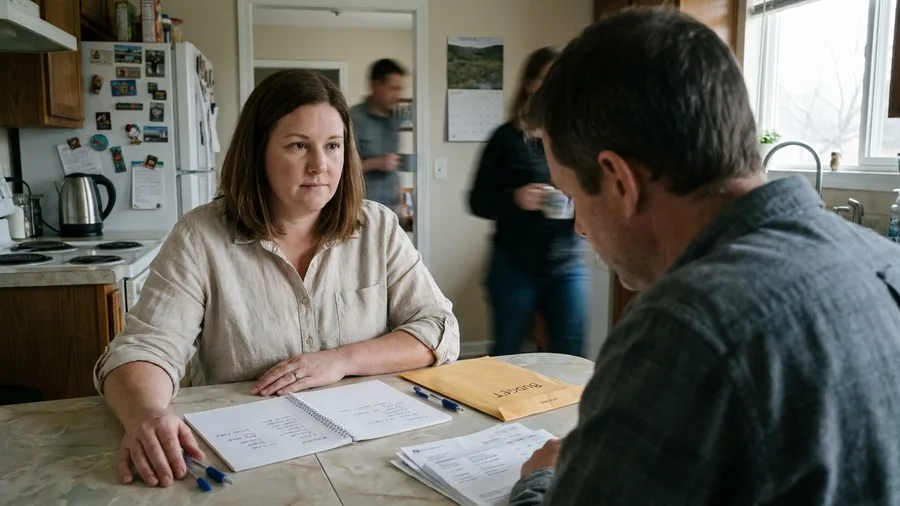
A calendar sorts hours and rooms. Money and chores are the two things couples leave sitting longest, and they are the reason to have one talk out loud rather than a grid on the fridge.
Three items belong on the table at that talk. Whose rooms and hours are whose. Who watches the $5,200 a month that arrives from Social Security, a small pension and savings, and where the paperwork lives. And who does which household jobs, named task by task rather than left to whoever notices first.
Give each one a slot so it stops being a mood. The budget gets the first Sunday of the month, an hour at the kitchen table with the statements out. The shared office splits 7:00 to 8:30 and 8:30 to 10:00, the kitchen and the TV room get owners, and Tuesday and Thursday stay separate days nobody books over. What is written down stops being re-argued.
Skip it and the same three subjects come back disguised. The thermostat setting, whose turn the coffee is, the dog walk at 7:15, whether lunch is at noon or one – each turns into a small vote on territory, money and who counts. Dana and Miguel settled eleven of those before 9:30 on their first Monday, and none of the eleven was really about the coffee.
Time it a few months before the last day, or inside the first fortnight if work has already stopped. Write the three lists on one sheet – rooms and hours, budget owner, job list – and put it where both of you can see it. That sheet is what keeps the first retired year from becoming a negotiation nobody admits they are having.
🧭 The first-week reset
Book the solo blocks first
Claim them before anyone claims you. If one of you is still working, the retired one takes the earlier slot.
Hand over a room, not a corner
Ownership means the other knocks. A shared desk with no hours is the desk you both lose.
Agree the days, then leave the house
Separate days only work if something is actually booked. A Tuesday at home is still a Tuesday together.
Name one name for the money
One person opens the statements; both read them. Two people 'keeping an eye on it' means neither does.
Write the jobs before week one
Do the list while you still have separate routines to copy from. After the last day, neither of you remembers who did what.
Frequently Asked Questions
Does retirement actually cause divorce?
The milestone itself doesn’t. The sudden loss of structure does. Couples who replace the automatic separation work provided with deliberate solo time and named territory tend to adjust; those who assume constant togetherness is the reward often struggle. The problem is the empty calendar, not the anniversary.
How much time apart is healthy after retirement?
There is no universal number, but a useful starting point is a 90-minute solo block each morning and at least one full separate weekday. What matters is that the apart time is on the calendar and treated as non-negotiable, not squeezed in when someone remembers to ask.
What if my spouse retired years ago and already runs the house?
Ask for a first-week-style reset now rather than waiting to be hosted. Name the rooms, hours and tasks you want to own, and put them on the calendar. The longer the pattern sets, the harder it is to renegotiate, so start with one room and one task rather than the whole household.
We love spending time together. Do we still need separate schedules?
Yes, especially in a smaller house with one shared desk. Closeness doesn’t create immunity to the friction of unbroken time. Separate blocks are maintenance, not a verdict on the relationship, and they are what let you keep liking each other through a wet February.
How do we handle old arguments that keep coming up?
Name the issue, set a specific time to discuss it, and take a solo block or errand first. If the same conflict repeats with no movement after several attempts, stop rehearsing it and see a counselor. More airtime is not the same as resolution.
The Week the Togetherness Gets Rebuilt
Retirement is the trigger. Unbroken time is the cause. The fix is designed separation, not more togetherness.
The first thing to do is put a recurring two-hour block apart on the calendar for each of you, and name who owns which room and which decisions. Do it before the last day of work if you can, in the first month if you can’t. The couples who struggle here are not the ones who love each other least. A hard first year is a scheduling problem to solve, not a verdict on the marriage.
Build the calendar before the last day
Open a shared calendar today and block two hours apart for each of you this week. Then write down who owns the kitchen, the TV room and the shared desk.