You wake up at 3 a.m. staring at the ceiling, wondering why your usual evening routine suddenly leaves you wired and restless. The mirror shows puffiness around your eyes that refuses to budge by noon, and your afternoon slump feels less like tiredness and more like a total system shutdown. When you hit fifty, the margin for error in your daily habits narrows significantly. What your body processed effortlessly at thirty now lingers, inflaming joints and disrupting sleep cycles.
Dietitians who work with older adults see the same pattern repeat across office visits and client logs. The culprit is rarely your dinner plate. It is almost always what you are drinking while you prep that dinner or sip during the morning commute. Swap out a few specific beverage habits, and your energy levels start smoothing out within two weeks.
Quick Tips Before You Start
Track the Liquid Sugar
Liquid calories bypass your natural fullness cues completely.
Mind the Cutoff Time
Shift your stimulant intake earlier to protect deep sleep stages.
Check the Sodium
Bottled options often pack more salt than a bag of chips.
Flavor Naturally
Infuse plain water with real citrus instead of buying packets.
1. Artificially Sweetened Diet Sodas

You reach for the zero-sugar option thinking you are bypassing the calorie trap, but your afternoon diet cola is doing more harm than good.
Artificial sweeteners like aspartame and sucralose trigger subtle metabolic confusion in aging digestive tracts, often increasing cravings for sweets later in the evening.
Your gut microbiome shifts in response to these chemical compounds, making blood sugar regulation harder than it was a decade ago.
Dietitians point out that the sweet taste without the expected energy delivery tricks your brain into demanding real carbohydrates.
Switch to plain sparkling water with a squeeze of fresh lime or a dash of bitters to satisfy the need for carbonation without the chemical additives.
💡 Tip: Skip the chemical aftertaste entirely by switching to unsweetened flavored sparkling waters.
⚠️ COMMON MISTAKE
The Zero-Calorie Trap
Many people assume zero calories means zero physiological impact. Your metabolism processes artificial compounds differently after fifty, often resulting in stubborn abdominal bloating and erratic energy crashes.
2. Flavored Coffee Shop Creamers

That morning coffee feels harmless until you read the ingredient label on your favorite flavored liquid creamer.
Most commercial creamers rely heavily on hydrogenated oils and high-fructose corn syrup to achieve that velvety texture.
After fifty, your liver processes processed fats and added sugars with much less efficiency.
This sluggish processing leads directly to systemic low-grade inflammation that aggravates morning joint stiffness before you even start your day.
Pouring two tablespoons of sweet creamer into your morning brew adds up to thirty grams of refined sugar before you even leave the kitchen.
Transition to unsweetened oat milk or a splash of whole organic dairy paired with a tiny pinch of cinnamon for natural warmth and flavor.
Morning Coffee Add-Ins — At a Glance
🥄 Sugar Content
Up to 5g per tablespoon
🔥 Inflammation Risk
High from refined oils
⏳ Energy Impact
Spike followed by heavy crash
💡 Better Choice
Plain whole milk or oat milk
The Hidden Cost
Flavored creamers introduce inflammatory trans fats and sugars into your system at its most vulnerable morning window.
3. Store-Bought Green Smoothie Bottles
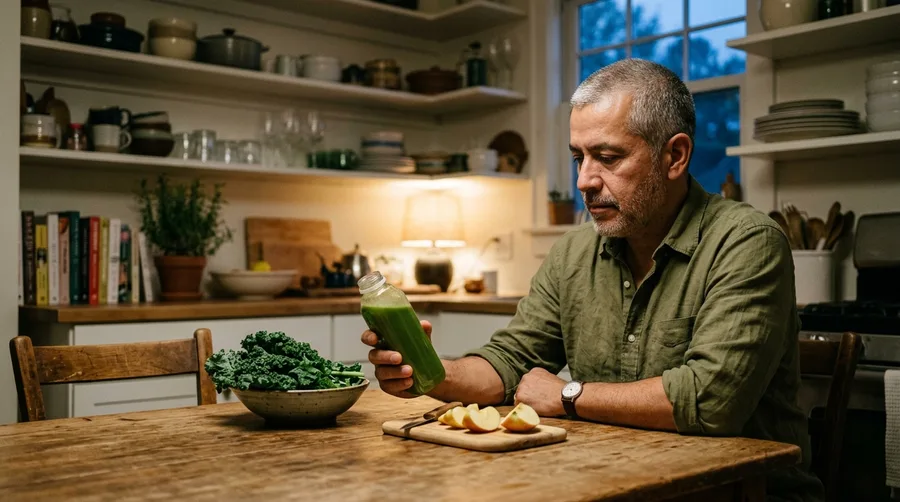
You grab a bottled green juice off the supermarket shelf thinking you are doing your body a massive favor.
Read the nutrition facts closely, and you will often find thirty-eight grams of sugar packed into a single sixteen-ounce bottle.
Without the natural fiber matrix of whole fruits and vegetables, liquid fructose hits your bloodstream instantly, forcing your pancreas to scramble.
Dietitians consistently advise pressing your own blends at home or eating whole produce instead of drinking commercial concoctions that have been pasteurized and stored for weeks.
Blend a cup of fresh spinach, half an avocado, and protein powder at home for a genuinely nourishing breakfast alternative.
💡 Tip: Liquid fruit sugars spike blood glucose faster than eating the whole piece of fruit directly.
4. Heavy Evening Alcoholic Nightcaps

That relaxing glass of wine to unwind feels like a reliable sleep aid until you track your actual sleep architecture.
Alcohol sedates your nervous system initially, but as your liver metabolizes it during the night, it triggers a rebound effect that wakes you up around 2 a.m.
As we age, our total body water percentage decreases, meaning alcohol concentrates faster in the bloodstream and taxes our organs more heavily than it did decades ago.
Cut off alcohol at least three hours before bed to protect your restorative rapid eye movement sleep cycles.
Swap your evening glass of wine for a warm cup of organic chamomile tea infused with a splash of tart cherry juice.
Alcohol is the single most effective sleep disruptor disguised as a relaxation tool.
— What sleep specialists repeat in clinic
5. High-Sodium Vegetable Juice Cocktails

You might assume a glass of vegetable juice counts toward your daily produce goals without any downside.
Check the back of the can, and you will often discover six hundred milligrams of sodium in a single serving.
Excess sodium stiffens blood vessels and causes fluid retention, which places unnecessary strain on your cardiovascular system as you age.
Dietitians recommend looking for low-sodium certified organic varieties or making fresh vegetable juices using celery, cucumber, and lemon at home.
Keep your daily sodium intake balanced by pairing any savory beverage with plenty of pure filtered water.
💡 Tip: Always check the sodium percentage on canned vegetable juices before pouring.
Beverage Safety Lanes
- 💧 Filtered Water & Herbal Tea — The foundation of daily hydration without additives.
- ☕ Black Coffee & Plain Dairy — Fine in moderation if kept free of heavy syrups.
- 🥤 Sugary Sodas & Energy Drinks — Best avoided entirely to protect metabolic health.
Frequently Asked Questions
How much water should I drink daily after turning fifty?
Most adults need around eight to ten glasses daily, though individual requirements vary based on activity levels and climate. Listen to your body and keep a glass nearby throughout the day.
Are diet sodas completely safe if I have no diabetes history?
While they lack sugar, artificial sweeteners can still negatively impact gut health and trigger sweet cravings. Moderation or replacement with sparkling water is ideal.
Can I still enjoy my morning coffee without the creamer?
Absolutely. Try transitioning with small amounts of whole dairy, unsweetened plant milks, or a dash of cinnamon to eliminate refined sugars gradually.
Why does alcohol affect my sleep more now than before?
Declining total body water percentages mean alcohol concentrates faster in your system. This intensifies the overnight rebound effect that disrupts deep sleep stages.
Your First Week of Better Hydration
Start by dropping just one of these five beverages from your daily routine this week. Swap your afternoon diet soda or morning flavored creamer for a simpler, cleaner alternative and notice how your sleep and energy respond.
Small adjustments compound quickly when your metabolism is looking for consistency. Keep a glass of water within arm’s reach and let your body settle into a healthier rhythm.