
You sit at your kitchen table staring at another utility bill that jumped twenty percent, wondering how staying put became such an expensive financial strategy.
Your local grocery run costs twice what it did three years ago, while your salary ticks up by a disappointing three percent annual margin.
Meanwhile, your friend who packed up for Lisbon is earning the exact same remote salary while building a real property portfolio on a fraction of your living overhead.
This guide maps out the exact legal pathways, verified income thresholds, and real financial realities across ten premier global destinations designed for remote professionals in 2026.
The 2026 Remote Work Reality: Why Staying Put Is Costing You

Domestic inflation and local tax friction in primary Western job markets have quietly turned staying in your home country into a losing financial game.
When you earn in a hard currency like US dollars, pounds, or euros but spend in lower-cost economies, your purchasing power multiplies instantly.
This economic mechanism is known as geo-arbitrage, and it no longer relies on informal tourist visa hopping or working out of crowded backpacker hostels.
Official government frameworks in 2026 offer stable, legal multi-year residence permits explicitly built for remote employees, freelancers, and agency owners.
We evaluate every destination across three rigid pillars: legal visa viability, baseline internet infrastructure, and net disposable income impact.
💡 PRO TIP
The Power of Geo-Arbitrage
Earning US or European wages while anchoring your expenses in emerging market cost structures can triple your personal savings rate overnight without a single career promotion.
The Evaluation Framework: How We Ranked the Top 10

Every country on this list was filtered through strict criteria designed to protect your professional stability and personal peace of mind.
We excluded nations requiring complex local corporate sponsorship, focusing strictly on programs open to individual remote employees and independent operators.
Our scoring metrics evaluate official digital nomad visa availability, minimum monthly income thresholds, fiber network reliability, and tax residency safety.
Cost-of-living tiers are categorized cleanly into ultra-budget, mid-range, and premium brackets based on verified local expat data from early 2026.
Portugal: The Gold Standard of European Remote Hubs

Portugal remains the most mature and reliable destination for professionals seeking a secure foothold inside the European Union.
The Portugal D8 Digital Nomad Visa requires proof of foreign income of approximately €3,680 per month, keeping the community filled with established professionals.
In Lisbon and Porto, expect to pay €800 to €1,400 monthly for a modern one-bedroom apartment with reliable fiber hookups.
Widespread English proficiency, dependable 5G mobile coverage, and mature expat networks make the daily transition effortless for first-time movers.
Portugal D8 Visa — At a Glance
💶 Min. Monthly Income
€3,680
⏱️ Initial Visa Term
1 to 2 Years
🌐 Avg. Internet Speed
200+ Mbps Fiber
🏠 1-Bed Rent (Lisbon)
€1,100 / mo
Residency Path
Eligible to apply for permanent residency or citizenship after five years of legal renewal.
Spain: The Mediterranean Lifestyle Meets Accessible Tech Visas

Spain offers a compelling regulatory framework through its specialized nomad permit, designed specifically to capture global talent.
The Spain Digital Nomad Visa requires proof of employment from outside Spain and a baseline monthly income of roughly €2,760.
Initial residence cards are issued for one year and are extendable up to a total of five years, with potential access to favorable tax structures.
Urban rental markets across Madrid, Valencia, and Málaga provide exceptional high-speed rail connectivity and robust 5G infrastructure.
⚠️ COMMON MISTAKE
Avoiding the Freelance Client Trap
Under Spanish immigration rules, if you work as a freelancer rather than an employee, you cannot earn more than twenty percent of your total monthly revenue from Spanish-based clients.
Thailand: Southeast Asia’s Premier Long-Term Infrastructure Base

Thailand combines ultra-low operating costs with world-class digital amenities, making it a favorite for seasoned remote operators.
The Destination Thailand Visa (DTV) and Long-Term Resident (LTR) framework accommodate high-income remote earners with streamlined paperwork.
In Chiang Mai and Bangkok, monthly outlays between €900 and €1,650 secure a very comfortable lifestyle with premium condominium amenities.
The country boasts an elite coworking ecosystem alongside reliable mobile data backups for rural excursions.
Best Hubs in Thailand
Mexico: Proximity, Time Zones, and Unmatched Cultural Access

Mexico remains the top North and Latin American corridor for seamless remote operations aligned with US and Canadian business hours.
The legal framework utilizes temporary residency pathways and regional permits that allow long-term stays without bureaucratic gridlock.
Compare key hubs like Mexico City, Oaxaca, and Playa del Carmen for safety, walkability, and active professional communities.
Local fiber provisions and high-end neighborhood cafes provide reliable connectivity for heavy video conferencing.
🌱 GROWING TIP
Time Zone Alignment Advantage
Living in Mexico City or Oaxaca keeps you on Central Standard Time, eliminating the brutal nocturnal meeting schedules required when working across European or Asian time zones.
UAE (Dubai): Zero Tax and Ultra-Modern Infrastructure for High Earners

Dubai offers an elite, high-security environment geared toward scaling executives, agency owners, and high-earning consultants.
The Virtual Working Programme requires proof of a stable monthly income of approximately $3,500 from a foreign employer or business.
The headline draw is zero personal income tax on foreign-derived earnings under current federal jurisdiction guidelines.
While high-end rental brackets range from €1,500 to €2,800 monthly for city center apartments, the infrastructure and global flight connectivity are unmatched.
Location is no longer a career restriction; it is your most powerful financial optimization lever.
— Global Mobility Strategists
Costa Rica, Colombia, Estonia, Georgia, and Greece: The Rising Global Contenders
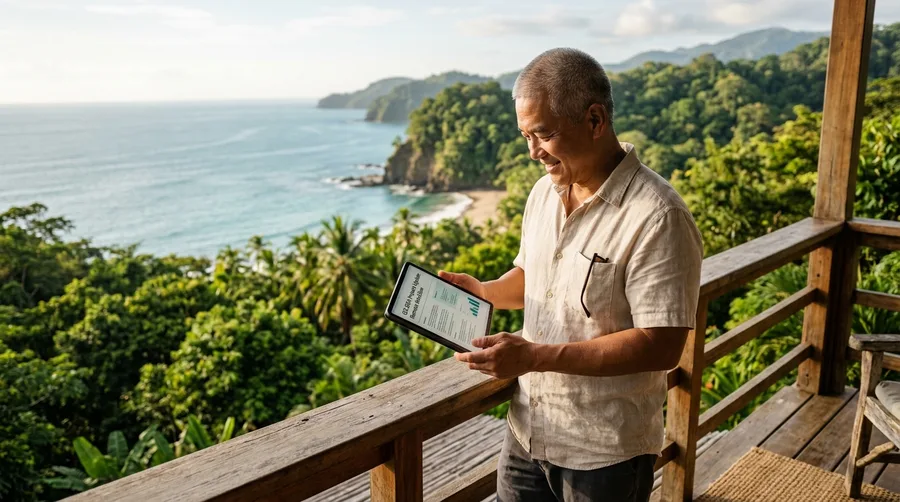
Costa Rica offers a digital nomad visa with a $3,000 monthly threshold, centering on eco-stability and the Pura Vida lifestyle.
Colombia features Medellín with an accessible income threshold around $900 per month, perfect for budget-conscious freelancers entering South America.
Estonia highlights Tallinn as a pioneer of digital nomad infrastructure alongside its globally recognized e-Residency program.
Georgia offers visa-free 365-day access in Tbilisi with ultra-low operating overhead for independent operators.
Greece combines island living with robust Athens 5G coverage under a Mediterranean nomad visa requiring around €3,500 monthly.
Monthly Living Cost Benchmarks
Based on single-person expat cost averages for 2026.
The Regulatory Reality Check: Tax Traps and Residency Rules Everyone Misses

Most digital nomads make the dangerous assumption that holding a nomad visa automatically shields them from local income tax.
The standard 183-day physical presence rule will trigger local tax residency in your destination country if you stay past the threshold.
Home country obligations remain active as well; US citizens are taxed on worldwide income regardless of where their laptop is open.
Always verify bilateral tax treaties and permanent establishment risks with your remote employer before booking a one-way flight.
Relocation Risk Factors
Where remote workers encounter compliance friction
Decision Matrix: Which Country Matches Your Current Income and Goals?

Choosing your destination requires matching your exact monthly income bracket to the right legal framework.
If your remote earnings fall below $1,500 per month, target emerging hubs like Colombia or Georgia where your money stretches further.
Mid-range earners between $1,500 and $3,500 monthly unlock premier EU options like Spain and vibrant destinations across Latin America.
High earners clearing $3,500+ monthly can leverage zero-tax jurisdictions in the UAE or premium European visa programs.
Global Nomad Benchmarks
Key metrics defining international remote work in 2026
✈️ Your 90-Day Relocation Roadmap
Month 3 (Audit)
Audit remote employer compliance or stabilize independent client contracts.
Month 2 (Gather)
Secure official background checks, bank statements, and apostilled documents.
Month 1 (Secure)
Book temporary initial accommodation and purchase compliant international health insurance.
Launch Week
Submit visa application files or board your flight with verified digital copies ready.
Nomad Strategy: What to Do vs. What to Avoid
Smart Execution
- Verify tax treaty rules with a certified cross-border accountant.
- Secure housing leases that satisfy official visa application terms.
- Maintain local health coverage that meets host country mandates.
Costly Pitfalls
- Assuming tourist visa hopping is a sustainable long-term plan.
- Working abroad without notifying your employer payroll department.
- Ignoring local physical presence limits that trigger tax audits.
The Relocation Lifecycle
Frequently Asked Questions
Can I apply for a digital nomad visa if I am a traditional employee rather than a freelancer?
Yes, many countries welcome traditional W-2 or salaried employees, provided your company is registered outside the destination country and you have formal employer authorization to work remotely across borders.
Do digital nomad visas grant a path to permanent residency or citizenship?
Some programs, such as Portugal’s D8 visa, allow time spent on temporary nomad residence permits to count toward the multi-year residency requirement needed for permanent status or EU citizenship.
How do I handle health insurance when living abroad long-term?
Most digital nomad visa programs mandate that you carry private international health insurance or local medical coverage that meets specific minimum liability limits for the entire duration of your stay.
Am I required to pay income tax in both my home country and the host country?
Double taxation depends on your tax residency status, bilateral tax treaties between nations, and how long you remain physically present in the host country during a single calendar year.
What is the average processing time for these visas?
Consular processing times typically range from 30 to 90 days depending on the destination country, embassy workloads, and whether you submit your application online or in person.
Make Your Move This Year
Choosing where to live and work in 2026 is no longer about winging a tourist visa, but matching your exact income bracket to a stable legal framework that optimizes your net wealth and quality of life.
Take your first step today by auditing your remote income documentation and selecting the single country that aligns with your financial goals.