
A hunter hauls a heavy deer carcass across the dirt, dropping a thick cut of meat at a neighbor’s hearth without asking for a single item in return.
The standard textbook history of economics begins with early humans trying to find someone willing to swap a pair of shoes for a sack of wheat. Yet anthropologists have never found a single society that actually relied on this kind of daily, immediate barter.
Before coins or cash, human survival depended on complex psychological ledgers of mutual debt, reputation, and community trust.
The unspoken IOUs exchanged between neighbors formed the true foundation of commerce, creating a tight web of mutual obligation that worked flawlessly until society grew too large and needed physical tokens to scale.
The Economic Origin Story
The Myth of the Pure Barter Economy
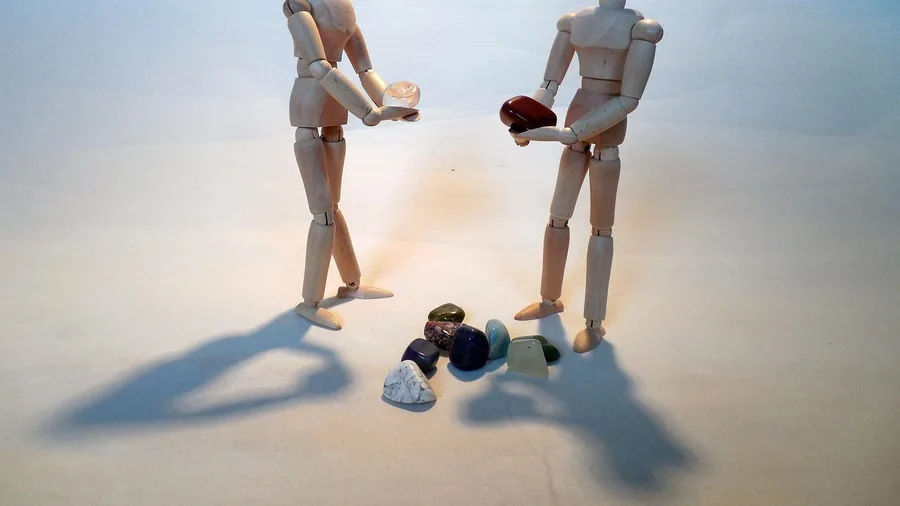
The textbook history of early commerce claims our ancestors stood around trading a sack of grain for a pair of boots. That scenario is entirely fictional. When economists laid the groundwork for trade theory centuries ago, they assumed ancient markets were held back by a frustrating logistical puzzle. They believed a blacksmith wanting bread had to wander around looking for a baker who happened to need an anvil that exact morning.
Coins were supposedly invented just to break that deadlock.
It is a tidy explanation that falls apart under field observation. Researchers who spend their careers digging through ancient settlements and studying isolated groups return with the exact same blank slate. Not a single historical or living society actually operated on this kind of daily, item-for-item swapping.
The shoe-for-wheat transaction is a modern projection backwards. When people lived in groups of a hundred, nobody stood at a fire refusing to hand over a tool until they received a basket of berries in return. Daily life kept moving forward without anyone demanding immediate compensation.
The Barter Myth vs Reality
❌ The Myth
Direct Swaps
✅ The Reality
Delayed Reciprocity
🧠 The Tool
Human Memory
The Bottom Line
Pure barter only ever happened between strangers or sworn enemies.
The Social Ledger of Mutual Obligation

When immediate swapping is off the table, survival demands a system where people simply hand over what their neighbors lack. A hunter returning with an antelope did not auction off cuts to the highest bidder. They distributed the food to the camp, knowing their own family would go hungry next week if the group failed.
That generosity was never actually free.
Taking a share of the catch meant accepting the heavy, unspoken weight of a social debt. Human beings possess a deep, biological drive to balance the scales of reciprocity over time. When someone fed your family during a lean winter week, you felt the pressure of that favor until you repaired the imbalance months later.
This was the original accounting software. Small groups kept meticulous mental track of exactly who contributed and who consumed over decades.
The arrangement relied on absolute familiarity. You handed over your excess food because you knew exactly who you were giving it to, and you were certain they would remember the gesture when the roles reversed.
Giving away your food was the most secure way to store it for the future.
— What evolutionary anthropologists point out
Reputation Was the Original Currency

An individual paid back their unspoken debts because failing to do so carried a severe social cost that no one could afford. A person’s access to the shared tribal resources depended entirely on their standing and reliability. Their reputation functioned as a precise mental credit score.
In a small group where all members knew each other intimately, taking without giving was dangerous. Freeloading was not a minor annoyance. It was a public breach of the very trust that kept the group alive during lean seasons, and the community tracked those breaches meticulously.
Community gossip served as a prehistoric credit checking system. Casual conversations around the fire publicly updated an individual’s tally of debts and contributions, making sure everyone knew exactly who pulled their weight and who was slipping into a deficit. You could not hide a pattern of selfishness.
Refusing to reciprocate over a long period of time did not lead to a polite conversation about fairness. It resulted in devastating social exile. A person whose mental credit score dropped too low simply found themselves cut off from the shared meat, the shared fire, and the group’s protection, which was a direct threat to their physical survival.
How Did They Trade With Strangers?

When someone from another camp walked into the clearing, the internal ledger that kept the local community running suddenly meant nothing. The intense shared trust of a small group vanished, replaced instantly by the natural suspicion of unknown outsiders. You cannot owe a favor to a person you will never see again.
This is the only place true barter actually happened.
An exchange with a rival camp was often a highly tense, heavily ritualized event designed primarily to keep the peace and prevent violence. Because neither side could rely on the other to return a favor next season, they had to settle the score right there in the dirt.
Neither party wanted to leave empty-handed.
A hunter handed over a heavy block of raw flint and watched the stranger hand back a finished obsidian blade. The goods changed hands simultaneously.
The trade occurred directly on the spot because the absolute lack of communal ties made a lingering debt impossible to enforce without a shared social structure. Immediate settlement remained the only safe method of handling business with someone outside the group.
⏳ The Evolution of Exchange
The Gift
Items are given freely within a family unit based entirely on need.
The Ledger
Surplus is shared with neighbors, creating a mental debt for future repayment.
The Spot Trade
Strangers swap items directly because they lack the trust to carry a debt.
The Token
Physical objects are used to record owed favors as populations grow too large for memory.
The Shift to Standardized Value
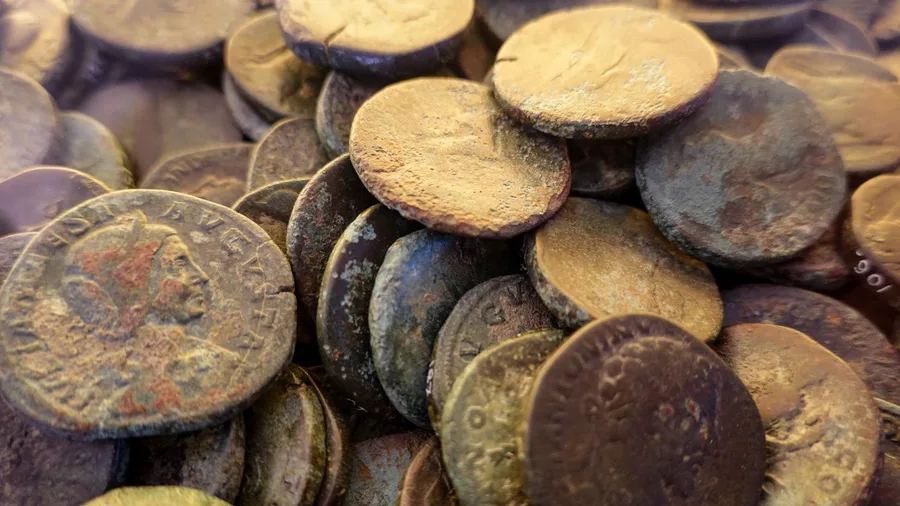
The human brain eventually hit a hard biological limit on how many mental ledgers it could maintain. Anthropologists point to Dunbar’s number, a cognitive ceiling that restricts a person from closely tracking the reliability, favors, and debts of more than about a hundred and fifty individuals.
Memory simply runs out of space.
As early societies expanded beyond a few dozen families, people started interacting with neighbors they did not know well enough to trust blindly. A growing population exceeded the capacity of village gossip, demanding a new way to standardize informal debt across a large crowd.
Communities solved this by moving the debt out of their heads and putting it into physical objects.
They adopted cowrie shells, measured sacks of barley, and stamped clay tokens to represent the favors that used to just live in communal memory. Holding a shell meant someone in the wider settlement owed the bearer a return on their labor.
The earliest money did not emerge because people suddenly needed a convenient way to buy things. It was invented as a physical IOU.
These physical tokens simply scaled tribal trust across a massive crowd.
- Mental Ledgers — Works perfectly for tribes of under 150 people.
- Direct Barter — Functions only for rare encounters with complete strangers.
- Physical Tokens — Becomes an absolute necessity when populations exceed human memory limits.
Frequently Asked Questions
Did cavemen use shiny rocks as money?
No. Early humans relied entirely on a complex social ledger of mutual debt. Physical tokens only became necessary much later when agricultural settlements grew too large for people to remember who owed what.
Why do economics textbooks still teach the barter myth?
Adam Smith’s idea of a barter economy is mathematically clean and easy to teach. It provides a simple logical progression for how modern markets work, even though historical evidence shows early humans functioned differently.
How did they decide what a favor was worth?
Values were not rigidly fixed. A leg of meat given during a famine was worth significantly more social credit than the same cut given during a season of plenty. The community judged the weight of the debt collectively.
What happened if someone could not pay back a debt due to injury?
The social ledger accommodated genuine inability to contribute. A disabled or injured member was supported by the group, because the primary goal of the system was community survival rather than exact mathematical parity.
The Physical Ledger of Human Trust
Money did not emerge to replace a clumsy barter system of swapping goods. It was invented as a physical tool to scale humanity’s innate capacity for tracking trust and mutual obligation far beyond the local camp.
The instinct to owe a neighbor a favor instead of demanding an immediate trade remains the oldest economic system in human history.
The next time you pay for a coffee, remember the hunter dropping meat at the hearth. You are simply handing over a physical token of trust, deciding exactly who owes you a favor next.