The assumption is that sleeping apart is the first crack, and that a marriage survives by staying in one bed until the end. The second half of that is often wrong, and the first half is practically wrong. At 2 a.m. a snore running at 50 to 60 dB is a small engine idling by your ear, and the spare room down the hall looks like either a betrayal or a fix.
Then the alarm goes at 5:30 for one of you and 7:30 for the other, and the question stops being romantic and becomes practical. What drives the urge to sleep apart is nearly always physical – noise, schedules, temperature, the third bathroom trip – and almost never a marriage quietly ending. The room is a tool. Whether it becomes a retreat or a door closing depends on rules you set before anyone sleeps down the hall, and on closeness you plan rather than assume; a time-limited trial of two or three nights a week keeps it honest.
By the end you will be able to price a second bedroom against a split king, start a month-long trial, and say the sentences that keep intimacy from depending on proximity.
| Factor | Separate bedrooms | Split king in same room |
|---|---|---|
| Cost | $860–$1,580 | $2,100–$4,200 |
| Space needed | 10×12 ft spare room | About 6.5×7 ft, same as standard king |
| Snoring (50–60 dB) | Blocked by closed door + white noise | Isolated movement, not noise |
| Different schedules | One can rise at 5:30 a.m. without waking the other | Still disturbed by alarm and movement |
| Intimacy | Requires planned sleepovers | Allows spontaneous touch |
| Best for | Loud snoring or clashing schedules | Restlessness and a wish to stay close |
It is a sleep fix, not a marriage verdict
Sleeping in another room is a rest decision, and it says nothing about whether the marriage is in trouble. What matters is which kind of separation you are actually choosing.
Sleep divorce and emotional divorce get confused because they share a hallway. The first is logistics: who sleeps where, on what schedule, behind which door. The second is distance: the two of you talking less, the small contempt that settles into how you answer each other, lives running parallel under one address. One is a mattress question. The other is not solved by any mattress.
A couple can be genuinely warm and sleep down the hall from each other. Bed location is not the instrument that measures closeness.
The warning is worth saying plainly, because the spare room will not do this work for you. Separate bedrooms are not a substitute for talking through resentment or a fight that never got finished. An unspoken grievance moves with the pillow. You carry it down the hall, set it on the nightstand, and it is still there in the morning.
So judge the move by two things, not by whether the beds match. Did sleep improve? Did connection hold? If the answer to the first is yes and the second is no, you have found a sleep fix and an unfinished conversation, and only one of them has been handled.
Snoring and schedules are the usual triggers

The problems the rooms are meant to solve are almost always physical: a snore in the 50 to 60 dB range that sounds like a small engine idling next to your ear, or one partner up at 5:30 a.m. while the other sleeps until 7:30. Sometimes it is temperature, one person running hot and one running cold under the same duvet. Sometimes it is the third bathroom trip before dawn.
None of that is an affection problem. It is a sleep problem wearing a marriage costume.
The engineering, though, is uneven. A closed door plus a white noise machine running at 50 dB can drop a 50 to 60 dB snore to about 30 dB at the pillow, which is the difference between lying awake and sleeping. Earplugs or a white noise machine on their own may solve exactly one trigger out of the four. Separate rooms solve several at once.
One caveat that is not optional: loud, persistent snoring belongs in front of a doctor. Nothing here diagnoses sleep apnea, and the fix for a breathing problem is medical, not architectural.
Do the tally. List what actually wakes you, then match the intervention to the list. If the cause is physical, a room change is engineering, not a verdict on love.
Sort your sleep disruptors
- Loud snoring (50–60 dB) — A closed door plus white noise can cut it to about 30 dB at the pillow.
- Mismatched wake times (5:30 vs 7:30) — Early riser can dress and start coffee without waking the other.
- One runs hot, one runs cold — Separate rooms allow individual temperature control.
- Frequent bathroom trips — Separate rooms help, but check with a doctor if trips are new or painful.
- Restlessness (tossing, turning) — A split king isolates movement; separate rooms may be overkill.
- Unspoken resentment — A separate room will not fix it, and may make avoidance easier.
Better sleep can make the marriage warmer
Restored sleep changes the daytime weather of a marriage, and it does so mostly by removing the irritability that gets misread as lost love. Sleep loss shows up as a short fuse: a snapped answer over the dishes, impatience at a question that deserved a full reply, the sigh you did not mean to let out. People often read that in their partner as evidence of something deeper. Usually it is evidence of 2 a.m.
Picture the change. The 5:30 a.m. riser gets up, dresses, and starts coffee without a floorboard creak or a bedside light snapping on. The 7:30 a.m. riser wakes when the alarm says 7:30. Both of you enter the day less frayed, and a less frayed morning has more room in it for the person across the table.
Be honest about what this buys. It buys patience, not resolution. It does not solve a conflict, and it is not a way of avoiding the conversation the relationship actually needs. If you notice yourself relieved that you no longer have to talk at night, that is worth examining rather than celebrating.
The benefit, then, is restored rest and the calmer hours that follow from it. Expect less daytime friction. Do not expect the bed to have fixed anything you never said aloud.
💡 PRO TIP
Track sleep for a week before deciding
Use a simple notebook or phone app to log bedtime, wake time, and how many times you were woken. After seven days, you will have clear evidence of whether the problem is noise, schedule, or something else. That data makes the conversation easier and the solution more targeted.
A second bedroom runs $860–$1,580 to set up
Price it honestly and the simple version is cheaper than the clever one. Furnishing a 10×12 ft spare room takes a queen bed at $700 to $1,200, blackout curtains at $40 to $120, a white noise machine at $20 to $60, and bedding at $100 to $200.
Total: $860 to $1,580, one time.
The same-room upgrade costs more. An adjustable base runs $1,500 to $3,000, and two twin XL mattresses add $600 to $1,200, which lands the split king between $2,100 and $4,200 before anything goes on the frame. It sits on a footprint of about 6.5 by 7 ft, the same floor space a standard king already takes up.
Then there is the monthly line nobody puts in the plan. Heating and cooling a second bedroom adds roughly $20 to $40 a month in a typical US home, so the spare room is cheaper up front and carries a small bill for as long as you use it.
Guests are the cost that catches couples out. The moment the spare becomes a bedroom, visitors need somewhere to land: a sofa bed at $600 to $1,500 or an air mattress at $100 to $300, and a holiday visit that used to be simple now involves moving the whole arrangement.
Run the rest-versus-closeness test on the numbers. The spare room wins on price and quiet; the split king wins on staying put, at roughly double. Count the guest displacement and the monthly energy before you decide which one you are actually buying.
What the setup does not tell you
🔇 Door shut plus white noise at 50 dB
snore drops to about 30 dB at the pillow
⏰ 5:30 a.m. riser, 7:30 a.m. sleeper
early riser dresses and starts coffee alone
🗓️ Test before you commit
2–3 nights a week apart for a month, then reassess
🚪 Skip separate rooms if
the guest room is needed more than a few weeks a year
🧳 Guests after the spare becomes a bedroom
sofa bed $600–$1,500 or air mattress $100–$300
The rule that keeps it from drifting
Split to what the week needs, not to who is annoyed tonight, and say the arrangement out loud so neither of you is guessing.
Rules keep the separate room from feeling like exile

Rules are what keep a second bedroom a retreat instead of a door closing, so settle them before anyone sleeps down the hall. Start with a shape rather than a permanent arrangement: 2-3 nights a week apart for a month, then sit down and reassess. Adjust the split to what each week actually holds, a bad stretch of deadlines or a houseful of guests, and change it again when the week does.
The bedtime ritual carries most of the weight. Ten minutes in the master bedroom before separating, lights low, talking about the day, so the last thing before sleep is each other and not a hallway. Sleepover nights, weekends usually, keep closeness something you plan rather than something that happens to survive the schedule.
One rule does the hardest work, and it is the one most couples skip because it feels obvious: the second bedroom is never where you go after an argument. Sleeping apart to punish a partner turns the room into a scoreboard, and after that the quiet nights stop feeling like rest.
Followed, those rules make the spare room a tool with a thermostat on it. Skipped, the same room quietly becomes a verdict, and nobody has to say a word for both of you to hear it.
What the room costs, and what makes it work
Budget it right
- Spare room: queen bed $700-$1,200, blackout curtains $40-$120, white noise $20-$60, bedding $100-$200; total $860-$1,580.
- Split king in the same room: adjustable base $1,500-$3,000 plus two twin XL mattresses $600-$1,200; $2,100-$4,200 total, 6.5×7 ft footprint.
- Budget $20-$40/month extra in heating and cooling for the second bedroom.
- Keep a sofa bed ($600-$1,500) or air mattress ($100-$300) if guests still need the spare room.
Skip the drift
- Assume the guest room stays free: a second bedroom means guests sleep on a sofa bed or air mattress.
- Buy a split king expecting silence: a 50-60 dB snore still travels; a closed door plus white noise at 50 dB brings it to about 30 dB at the pillow.
- Set a permanent split; reassess after the month and adjust to the week.
- Let the early riser's 5:30 a.m. start wake the 7:30 a.m. sleeper; separate rooms are the point.
Frame it as a sleep problem, not rejection

Raise it in daylight, on a calm afternoon, weeks away from any bad night, because a proposal made at 2 a.m. arrives as an accusation. The words matter less than the timing and the order. Say the love first, then the limit, then the ask: “I love you, and I’m not sleeping. Can we try two nights a week apart for a month?”
Then stop talking and let your partner go first.
Their worries will be the ones nobody says out loud, usually that this is the beginning of the end or that intimacy disappears with the shared bed. Take those seriously. They are not stalling; they are naming what the change puts at risk, and a partner who hears that named will trust the plan more than one who is told not to worry about it.
Make clear that the decision belongs to both of you and that the door swings back. A month, two nights a week, either of you can call it off or change the terms. Naming the love and the limits in the same breath is what keeps the suggestion from costing you the closeness it was supposed to protect.
Intimacy needs a plan, not just proximity
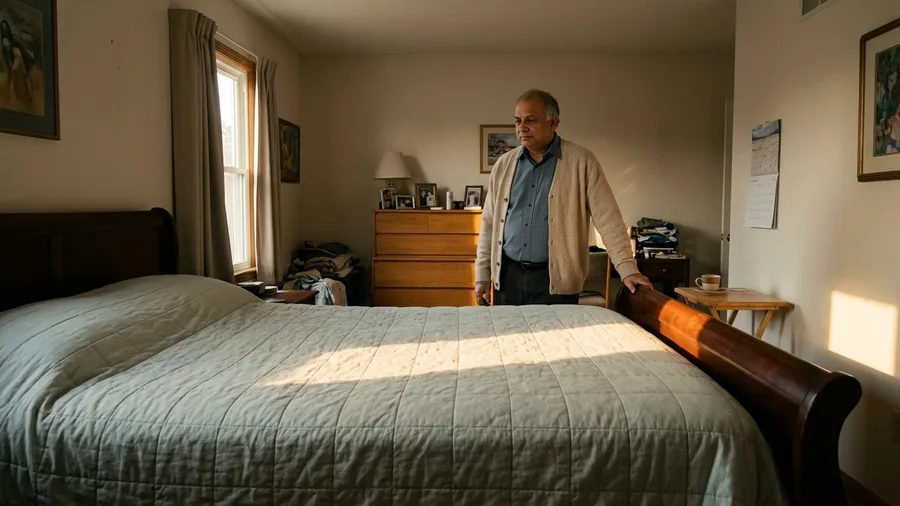
A bed never did the work of a marriage. Two people can share a mattress for years and barely touch, and two people can sleep down the hall from each other and still reach for one another on a Tuesday morning. The risk of separate rooms is not that closeness becomes impossible – it is that closeness stops being scheduled and starts being assumed.
So keep the master bedroom as shared ground. It stays the room for sex, for a slow Sunday morning, for the ten minutes of lying against each other before the day starts. The second bedroom is for sleeping. If the master quietly becomes a room nobody enters except to change the sheets, you have not gained rest – you have lost the one place that was never about rest in the first place.
Then name the plan out loud before the trial starts. A standing date night on the calendar. A weekend sleepover in the shared bed, the same way you would plan anything you want to happen. A morning ritual – coffee in the same room before either of you checks a phone. Pick one, put it on the fridge, and treat it as real.
Because here is what happens without it: two weeks of good sleep, then three, then a year, and the two of you have become excellent roommates. Intimacy is planned action, not architecture – the room does not arrange it, and no amount of keeping the master bedroom available makes it happen on its own.
It fails when the separate room becomes avoidance
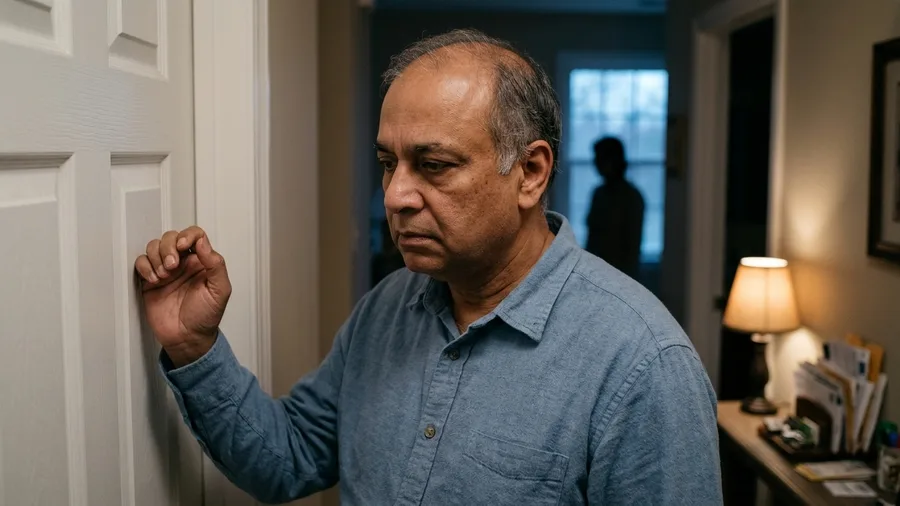
The plan is the thing that keeps the second bedroom a rest tool instead of an exit. Strip it away and the same room becomes a place one partner retreats to, and eventually a place the other partner stops expecting them to leave.
The clearest beginning is no conversation at all. Someone comes home, the pillow and charger are already upstairs, and no one explains the arrangement out loud. His hands are full with the coffee mug when his wife finally asks why he has not come back to the bedroom, and he has no clean answer ready, because the move never had one.
There are hard cases. If the two of you were already drifting before any snoring entered the picture, a second bedroom speeds up what was in motion. If one partner experiences the move as a door closing on the marriage, no schedule or ritual makes it feel like one.
Couples who make a version of this work share a habit: they set rules before they moved, they revisit the arrangement, and they keep talking about it. A weekend conversation about whether anyone sleeps better is part of it. So is saying out loud, weeks later, that something still feels off.
Treat any of the four signs as a signal to stop and talk. When the room after an argument becomes a place to sleep without resolving anything, rest has been bought with distance, and that price is high.
Separate rooms are cheaper; split king keeps you together
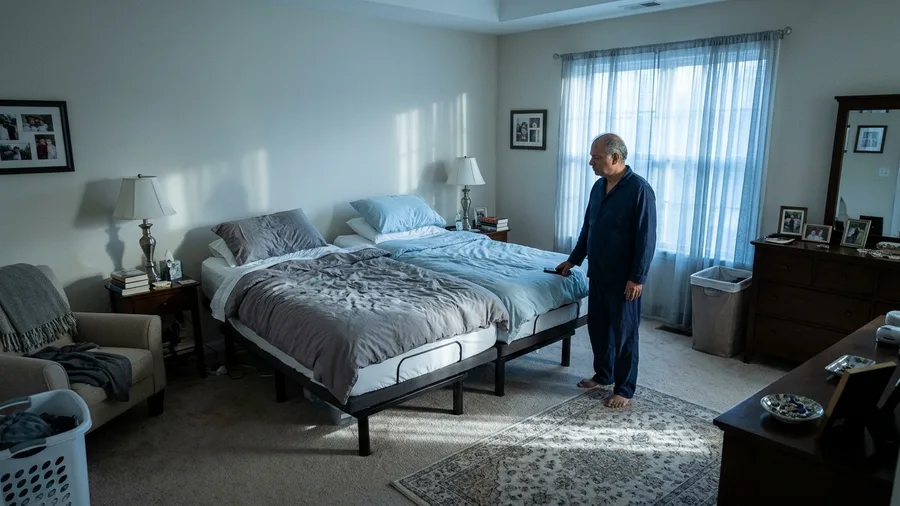
Only if the problem is movement, not noise. A split king solves restless legs and a partner who thrashes; it does nothing about a 50-60 dB snore, because the two mattresses share a room and the sound crosses it.
Prices tell part of the story. Setting up a second bedroom costs roughly $860-$1,580 for the queen bed, curtains, white noise machine, and bedding. The split king runs $2,100-$4,200 for the adjustable base and two twin XL mattresses. A 10×12 ft spare room does not take much; the split king footprint is about 6.5×7 ft, the same as a standard king, so it slides into the bedroom you already have.
Each buys a different kind of nights. Separate rooms stop the noise and absorb the 5:30 a.m. riser and the 7:30 a.m. sleeper. The split king stops a jostling leg but not a sound.
Intimacy pays the difference. Separate rooms require planned sleepovers to stay warm; the split king keeps spontaneous touch within reach of a hand.
Choose separate rooms when noise or clashing schedules dominate the problem. Choose the split king when restlessness is doing the damage and the two of you want to stay in the same room. The decision still hinges on which problem is loudest.
🛏️ Your 30-day trial plan
Pick your nights
Choose 2–3 weeknights apart, weekends together.
Set the rules
Agree on a bedtime check-in and no separate room after arguments.
Track sleep
Log how many times you wake and how rested you feel.
Check in at day 30
Ask: Did we sleep better? Did we feel closer or farther? What should we change?
Adjust
Either partner can call it off or tweak the schedule.
Try it for a month, then decide together

Start with a month, not a decision. Two or three weeknights apart, weekends back in the same bed, is enough time to find out whether the change helps and short enough that neither of you has to feel trapped by it.
Pick the nights deliberately. Monday, Tuesday and Wednesday apart lets the 5:30 a.m. riser dress and start coffee without waking anyone at 7:30, and leaves Friday through Sunday together so the arrangement reads as scheduling, not retreat. Write the nights down somewhere you both see them; a plan that lives only in one head is where the banishment feeling starts.
At the end of four weeks, sit down with three questions. Did we sleep better? Did we feel closer or farther? What should we change? The answers are the evidence, and the trial exists to gather it before anything permanent gets built around a spare room.
Keep two anchors in place through the whole month. The master bedroom stays available for sex and cuddling, and the ten-minute check-in before you separate stays on the calendar even on the nights you share a bed. Those two things are what stop a sleep fix from quietly becoming distance.
Either partner can call it off at any point, or adjust the split to what the week actually needs rather than what the plan said. A trial nobody is allowed to end is not a trial; it is a decision wearing a costume, and it will be felt as one.
⚠️ COMMON MISTAKE
Don't make it permanent on day one
The biggest mistake is moving out of the shared bed without a trial or a plan. Treat the first month as an experiment with a review date. That keeps it reversible and reduces the sting of rejection.
Frequently Asked Questions
Does sleeping in separate bedrooms mean my marriage is failing?
Not necessarily. Sleep divorce and emotional divorce are different. Sleep divorce is about rest logistics; emotional divorce is about distance and contempt. Many couples sleep apart and remain close. The test is whether sleep improves and connection is maintained, not whether the beds match.
How do I bring up the idea without hurting my partner’s feelings?
Choose a calm daytime moment, not the middle of the night. Start with affection and state the problem plainly: ‘I love you, and I’m not sleeping. Can we try two nights a week apart for a month?’ Then listen to their worries and make the decision together.
What if my partner feels rejected by the idea?
Acknowledge their feelings without arguing. Say you hear them and that the last thing you want is to push them away. Reassure them that the trial is reversible and that you will plan time together. If they are not ready, try earplugs or a white noise machine first.
Will we stop having sex if we sleep in separate rooms?
Not if you plan for it. Intimacy is planned action, not architecture. Keep the master bedroom as a shared space, schedule date nights or weekend sleepovers, and talk about what you both want. Without a plan, separate rooms can become separate lives, so make the plan explicit.
Is a split king a better option than separate bedrooms?
It depends on the problem. A split king isolates movement but not noise, and it keeps you in the same room. Separate rooms block noise and schedule differences but require planned intimacy. Costs: separate rooms $860–$1,580; split king $2,100–$4,200. Choose based on the dominant issue.
How long should we try it before deciding?
Give it a month. Try two or three nights a week apart, then reassess. At the end of the month, ask: Did we sleep better? Did we feel closer or farther? What should we change? Either partner can call it off or adjust. The trial gives you evidence before any permanent change.
The verdict by situation, and your first month
The verdict splits cleanly. If the problem is loud snoring or schedules that do not meet, separate rooms are the right tool. If the problem is restlessness and you both want to stay in the same room, a split king is the better buy – and it only works when movement is the issue, not noise.
Go back to the two facts you started with: the snore at 2 a.m. and the 5:30 and 7:30 alarm clocks. The choice was never betrayal against fix. It is which sleep design, and which rules, let you both rest and still reach for each other on purpose.
So start with a month, two or three nights a week, and a check-in on the calendar before the first night apart. Keep the master bedroom for the two of you, adjust the split to what the week demands, and say the warm thing out loud rather than trusting the room to say it. A marriage is held together by rituals, conversation, and closeness someone planned – not by two people falling asleep at the same hour.
Ready to test the sleep fix?
Pick 2–3 nights this week, set a 10-minute bedtime check-in, and mark day 30 on the calendar. Then decide together.