Two people reach their seventies in similar health. One treats connection, movement, and sleep as optional – things that happen when the day allows. The other treats them as fixed, the way a bill is fixed. Twenty years later, one of them is still gardening.
The people who make it to ninety in good shape are not, on the whole, unusually lucky in their genes. What they share is a daily routine that looks almost boring from the outside: a phone call made at the same time each morning, a walk to the shop instead of a drive, a reason to be up by seven.
These are not personality traits. They are not accidents of temperament. They are practiced disciplines – and most of them can be started this week without a gym membership, a new diet, or anything that costs money.
Five habits show up consistently in the lives of nonagenarians across different cultures and wildly different personalities. Each one has a clear mechanism, a minimum threshold, and a first step that fits into an ordinary day. One of them also makes the other four considerably easier to keep – which is worth knowing before deciding where to begin.
Quick Tips Before You Start
Pick One First
Trying all five at once is how none of them stick. Start with the habit that feels easiest and add the next after two weeks.
Consistency Beats Intensity
A 20-minute daily walk every day outperforms a two-hour gym session twice a week for longevity outcomes. Small and regular wins.
Screens Undercut Two of These
Late-screen use erodes sleep quality and passive scrolling does not substitute for real social contact. Know which habits it threatens.
Write the New Habit Next to an Old One
Attach the new behavior to something already fixed in your day — after morning coffee, before lunch — so it does not need fresh motivation.
Voice Contact Counts More Than Text
A five-minute phone call produces more of the social stress-reduction effect than an hour of message exchanges. Quality of signal matters.
1. Social Ties Treated as Non-Negotiable Maintenance

One real conversation a day is the minimum that appears consistently in the lives of people who reach 90 in good health – not a dinner party, not a full social calendar, just one exchange where another person responds in real time.
The reason this matters is biological, not sentimental. Chronic loneliness keeps cortisol elevated across months and years, and that sustained low-grade stress state accelerates cardiovascular wear, suppresses immune function, and speeds cognitive decline. The shorter lifespan associated with social isolation is not a statistical curiosity – it has a mechanism.
What satisfies the requirement is narrower than most people assume. A ten-minute call with a sibling, a shared meal with a neighbor, a standing morning coffee with one friend – voice-to-voice or face-to-face, where the other person is genuinely attending. Reacting to a post or scrolling someone’s feed does not produce the same effect, because passive consumption asks nothing of either party.
For anyone who has lost a partner, or who finds company draining rather than restorative, the relevant measure is quality rather than volume. One conversation with someone who matters counts. An evening of small talk does not add up to the same thing. The discipline is treating that one contact as fixed – the way the 93-year-old who calls her daughter every morning at eight treats it – rather than as something to fit in when the day cooperates.
What Daily Social Contact Actually Does
2. Movement Built Into the Day’s Existing Structure

Ask a 93-year-old how they stay active and they will almost never say the word exercise. They will tell you about the Tuesday market, the stairs to the flat, the tomato plants that need watering before the afternoon heat arrives.
That distinction matters because formal exercise depends on motivation generated from scratch every morning. Purpose-driven movement does not – the destination already exists, and the body follows. Thirty minutes of walking to pick up groceries and post a letter is physiologically sufficient; researchers who track long-lived populations find that threshold met daily, not a punishing one exceeded occasionally, is what correlates with sustained health.
The psychological dividend is the part a calorie counter misses entirely. Moving through the world to accomplish something small – bread in the bag, a plant watered, an errand done – preserves the daily feeling of being a person who does things. That sense of agency predicts continued engagement with life more reliably than any fitness metric. For anyone already running or training hard, none of this suggests scaling back. It is aimed squarely at the person who has decided that because they cannot face the gym, they are doing nothing – the stroll to the shop, repeated daily, is not a consolation prize.
💡 Tip: If you currently do nothing, start with one 15-minute walk attached to an errand you already run — the post office, a grocery top-up, a coffee. The errand is the reason; the walking is the habit.
⚠️ COMMON MISTAKE
Formal Exercise Is Not the Point
Treating movement as something that only counts if it happens in a gym is the habit that stops before it starts. The research on long-lived populations does not show marathon runners — it shows people who walked somewhere real every single day.
3. A Clear Sense of Purpose Structures Every Morning

“I just need to find my purpose” – the phrase sounds like the opening line of a self-help book, which is exactly why it gets dismissed as one.
What long-lived people describe is not a grand calling. It is something smaller and more structural: a specific role that requires them to be present and functional on a specific morning. The sibling who expects a call at eight. The reading group that falls apart without one person to send the reminder email each week. These are not inspiring abstractions – they are commitments with a consequence attached if the person fails to show up.
The concept of ikigai, often translated loosely as reason for being, gets cited in this context so frequently it has started to feel decorative. Strip the philosophy away and the practical core is plain: a regular activity the person genuinely feels matters, with no requirement for a career, a salary, or an audience larger than three.
The psychological mechanism is precise. A clear daily purpose pulls attention forward – toward tomorrow’s task, next week’s meeting – rather than letting it circle inward over yesterday’s regrets. That forward orientation keeps the person planning, anticipating, maintaining the other daily habits because those habits are now serving something that matters. Without it, the behaviors gradually loosen.
The sharpest version of this challenge arrives at retirement or bereavement. Both events can strip purpose in a week that took decades to build. The pattern in people who continue to thrive is not that they waited to feel purposeful again – they constructed a new role deliberately, sometimes within months, treating the rebuilding itself as the work. Waiting for purpose to return on its own is the misread. It is a habit that has to be made, not a feeling that eventually shows up.
Purpose as a Daily Habit — At a Glance
⏰ Daily Time Required
As little as 20 min
👥 Audience Needed
1 person is enough
🎯 Key Feature
Someone depends on it
🔄 Rebuild After Loss
Start within weeks
📅 Structure Required
Fixed day and time
The minimum viable version
One recurring commitment, fixed to a day and time, that at least one other person relies on you to keep.
4. Eating to About 80 Percent Full, Then Stopping

The habit is real, and it predates any modern diet trend. In Okinawa, where nonagenarians appear in greater concentrations than almost anywhere else studied, the phrase hara hachi bu is spoken before sitting down to eat – a prompt to stop at roughly 80 percent of capacity, before the body signals it is full.
That gap matters because the stomach and brain do not communicate instantly. Satiety signals lag somewhere between 15 and 20 minutes behind what has actually been swallowed, which means the person who eats until they feel full has already gone past the threshold. The practical move mid-meal is not calorie counting or weighing portions – it is slowing down around the halfway point, resting utensils on the plate, and waiting two or three minutes before deciding whether to continue.
This is a psychological skill more than a dietary rule. The thing being practiced daily is interrupting an automatic behavior – the fork-to-mouth rhythm that runs on its own once started – and inserting one moment of deliberate attention. Two concrete entry points that require no apps or tracking: eating from a smaller plate, so the visual finish line arrives sooner, and setting utensils down every two or three bites. Both create the pause; the pause is the whole technique.
The hardest version of this habit is lunch eaten at a desk with a deadline running. Attention is split, the pace is fast, and the pause never gets inserted. For anyone in that situation, the more useful first step is changing the physical location of one meal a day before attempting to change the pace – same food, different chair, no open tabs.
💡 Tip: Start with one meal a day, not all three. Lunch is the easiest target because it has a natural time limit. Practice the two-minute pause before deciding on a second helping.
The 80% Full Habit — What to Build First
5. Sleep Protected as a Non-Negotiable Daily Decision
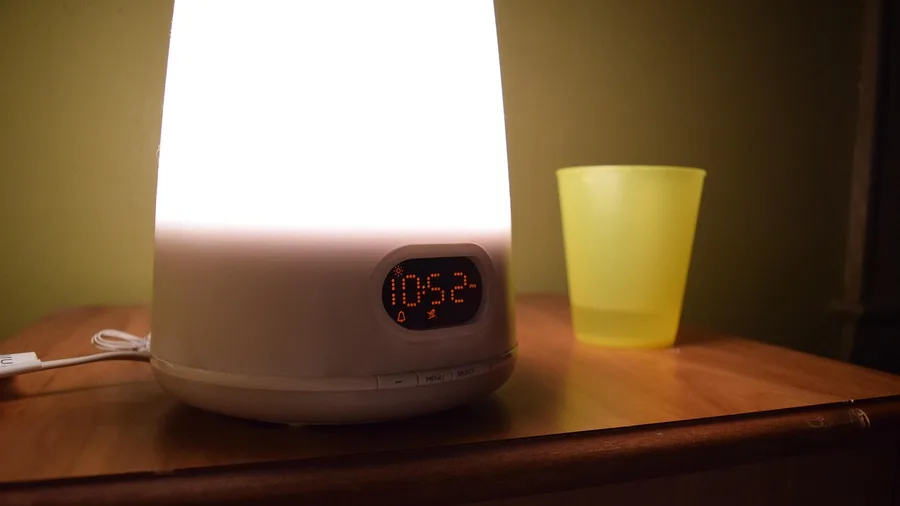
It is 11:15 on a Saturday night and the next episode is already loading. The plan to be in bed by ten has quietly dissolved. This is not a small exception – for the people who age best, this moment is precisely what they have decided to defend against.
Healthy nonagenarians consistently report seven to eight hours of sleep, and what stands out is not the number but how deliberately they protect it. Researchers who study aging keep finding that poor sleep in later life correlates with faster cognitive decline – not a natural reduction in need, but a warning sign being misread as normal. The habit these people share is a fixed sleep and wake time, held across all seven days, because it is the consistency of the timing that keeps the body’s internal rhythm anchored. Weekend drift, a late guest, a compelling series – all of these are treated as threats to the pattern rather than harmless one-offs. Two behaviors appear repeatedly: phones and screens go dark in the final 30 to 60 minutes, and the wake time stays fixed even after a late night, because sleeping in delays recovery rather than speeding it.
Sleep is also the habit that quietly determines how well the others work. One poor night measurably weakens impulse control the following day – the pause mid-plate becomes harder to insert, the motivation to move fades, and a phone call that would normally feel easy starts to feel like an effort. Defending the sleep window first is not the cautious choice. It is the structural one.
Frequently Asked Questions
Do I need all five habits, or does one make a real difference on its own?
Any one of these habits produces a measurable benefit on its own. The research on long-lived populations shows all five present, but the order matters: sleep underpins the other four. Start there, and the others become easier to add because the behavioral fuel — mood, impulse control, energy — is in better shape.
I am an introvert. Does the social contact habit still apply to me?
Yes, but the relevant measure shifts from volume to quality. One genuinely attentive conversation a day with someone who matters produces the cortisol-dampening effect. It does not need to be long or socially demanding — a ten-minute phone call with a sibling counts. The key is that the other person is responding in real time, not that the interaction is draining or effortful.
Is hara hachi bu realistic for people who eat socially or at restaurants?
It is harder in social settings, but the core skill is still available: slow the pace, put utensils down between bites, and decide consciously rather than automatically. The two-minute pause before accepting a second course works in almost any context. The starting point recommended here is one meal a day — typically lunch — specifically because lunch is often solitary and time-bounded, making it the easiest environment to practice in before the habit is fully formed.
What if I have genuinely lost my sense of purpose after retirement or bereavement?
The research pattern in long-lived people is deliberate reconstruction, not passive recovery. That means identifying one role — however small — that another person depends on you to fill, and starting it before you feel ready. The feeling of purpose tends to follow the structured behavior rather than precede it. If the loss is recent and the weight of it is significant, speaking with a counselor is a reasonable and practical first step.
Does formal gym exercise count for the movement habit, or does it have to be incidental?
Formal exercise absolutely counts — this article is not arguing against it. The point is that incidental, purpose-driven movement is sufficient for the people who currently do nothing formal, and it is more durable than gym attendance for most people past middle age because it does not require generated motivation. If you are already training regularly, keep it; the insight here is for the reader who has told themselves that exercise only counts when it is structured.
How long before these habits produce a noticeable difference?
Sleep improvements are usually felt within a week of holding a consistent wake time. Social contact effects on mood are measurable within days for most people. The eating habit takes longer — most people report two to three weeks before the mid-meal pause starts to feel natural rather than forced. Purpose and movement tend to compound quietly over months, with the most visible change being a reduction in low-level restlessness and an increase in forward-looking decisions.
The Habit That Makes the Other Four Possible
Start with sleep. Not because the other four matter less, but because a consistent, defended seven-to-eight hours directly improves the mood, impulse control, physical energy, and social willingness that every other habit on this list depends on. Build on a foundation that keeps shifting and the rest keeps sliding.
A week of protected sleep changes the morning enough that a walk feels like less effort, a phone call feels like less of an imposition, and stopping at eighty percent full feels like a choice rather than a fight. The five habits here are a system, not a list – each one feeds back into the others, which is exactly why the boring-looking daily routine of a nonagenarian is harder to dismiss than it first appears.
Two people reached their seventies in similar health. One kept the habits that made the others possible; one did not. The one still gardening at ninety-two is not proof that luck compounds – it is proof that routine does. Tonight is a reasonable place to start.