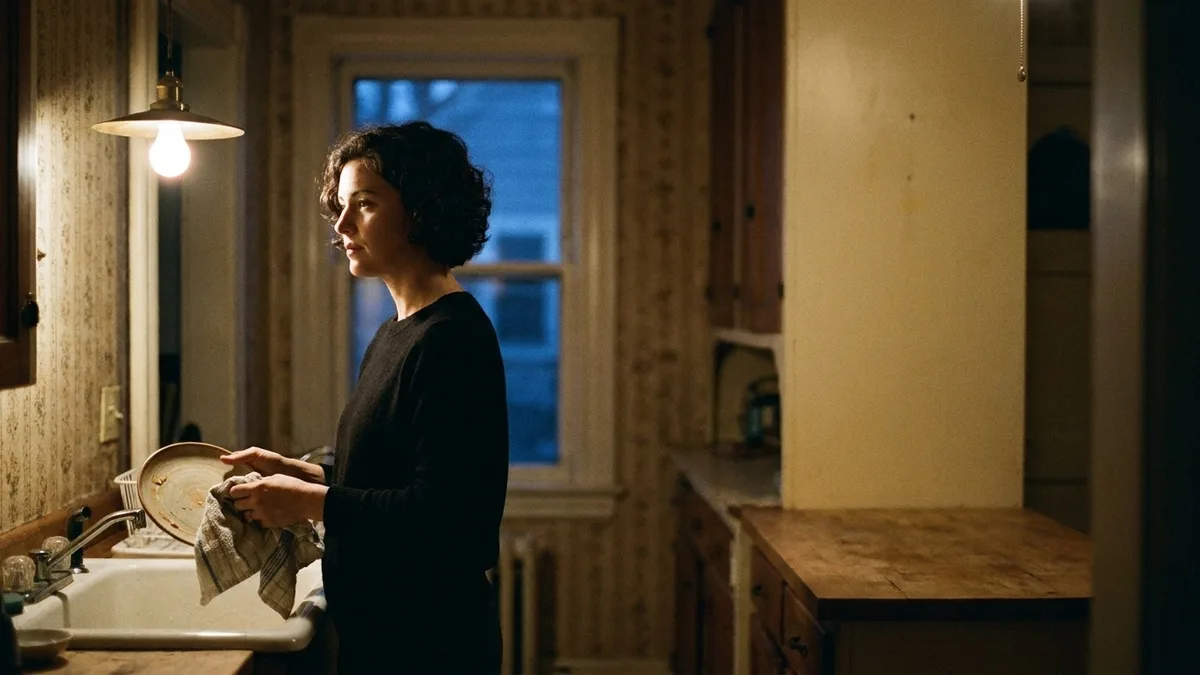
Thirty-one years, one shared calendar, two grown children, and a mortgage nearly paid off. That is the shape of the marriage this is written for: a couple of 57 and 59, both still working, with no crisis to point at and no real complaint to make, which is exactly why the risk is assumption. Nobody decides to stop tending a long marriage. It goes quiet on the ordinary days, one missed evening at a time.
Long relationships flatten less from catastrophe than from ordinary contact that stops being practiced. Ten minutes after dinner. Six seconds at the door on the way out. One text in the afternoon that asks nothing and reports something small.
The twelve habits here are built to be repeated rather than remembered, each with a fixed moment it fits and a cost measured in minutes. Pick one daily habit and one weekly habit this week. When a sharp word lands, the two-minute repair is the first thing to reach for.
Love after thirty years is not kept by memory or by anniversaries. It is maintained, on ordinary Tuesdays, by small things you decide to do again.
Quick Tips Before You Start
Start with one daily habit
Pick the ten-minute talk or the door goodbye — something that fits an ordinary Tuesday without rearranging anything.
Put it in the calendar
An unbooked habit is a wish. A recurring slot you both see is a plan.
Use a basket, not willpower
A visible basket by the kitchen door works better than a drawer someone has to remember.
Keep the minimum small
A two-minute version is always better than a skipped night. The cue matters more than the duration.
Agree the rule together
Any habit that feels like a test of who loves whom will fail. Decide the terms before you start.
1. The Ten-Minute Download After Dinner

More than you think, if you keep the scope small on purpose. Ten minutes after the plates are cleared, the same slot every night, phones still in the basket and the conversation kept on small events rather than the week’s logistics or which child needs what by Friday. A work win, a song heard on the drive home, a sandwich that turned out better than expected. That is most of the material a long marriage is actually made of.
The rule that keeps it from dying is one follow-up question from the listener before the subject changes. Ask what the song was, whether the sandwich place does it every day, who said the thing about the work win. It costs nothing and it tells the speaker their ordinary afternoon was worth reporting.
The exception is a genuinely wrecked evening, and this is where couples get it wrong. Too tired does not mean skip the night; it means the two-minute version, one thing each, nothing unpacked, then sleep. The shortest version still marks the slot as kept, and a kept cue is the whole point.
The couple 31 years in, 57 and 59, both still working, runs it exactly this way and has never paid a penny for it. Ten minutes, or five, or two on the worst nights. The minimum is small enough that exhaustion cannot use it as an excuse.
💡 Tip: Keep a running list of three small things on your phone — a work win, a song, a good sandwich — so you are never sitting down with nothing to say.
The Two-Minute Repair — At a Glance
🔍 Step one
Name the exact thing
🙏 Step two
Apologise for that thing
❓ Step three
Ask what would help
⏱️ Time
Two minutes
📅 When
Same day, before it joins the pile
The rule
Either of you can call it, and calling it is not conceding the argument.
2. A Real Goodbye at the Door
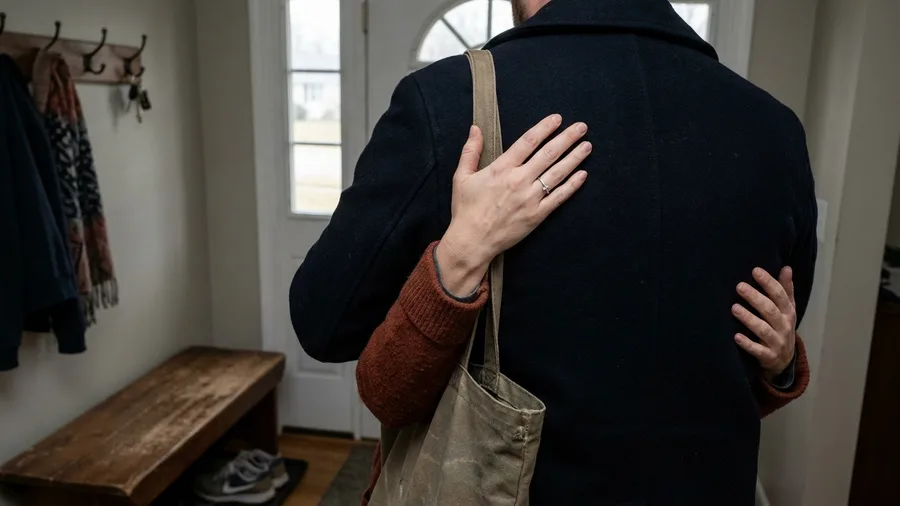
The advice is usually to stop making a production of it. A wave from the car, a quick kiss on the cheek, and you are both out the door, and nobody has to feel managed. That advice gets the cost right and the point wrong. The ten minutes of talk at the end of the day are built out of what happened between the door and the door, so the leaving and the coming back are the first place that material gets noticed or lost. A goodbye you can do while loading the dishwasher is a goodbye that tells your partner the crossing does not count.
So here is the whole habit: six seconds, eye contact, both arms. Not the sideways peck aimed somewhere past an ear, not a hand raised from the driver’s seat. It applies in both directions, at every threshold of the day, the leaving in the morning and the coming home at night, and it looks the same at each one.
The morning version matters most on the days you are already irritated, which is worth knowing because that is the version people skip. It calls for no conversation, no resolution of whatever is sitting between you, and no agreement about it. It takes less time than finding the keys you are about to hunt for, and it leaves a mark on a morning that would otherwise be remembered only for the argument.
What it is not: a verdict on the relationship, a test someone can fail, or a reason to be hurt if a morning goes wrong. For a couple 31 years in, both working, the door becomes a cue the day triggers without either of them deciding to. On a rushed weekday with no patience left, six seconds at the threshold asks nothing but presence, and presence is the one thing a tired morning can still give.
3. The Phone Basket by the Kitchen Door
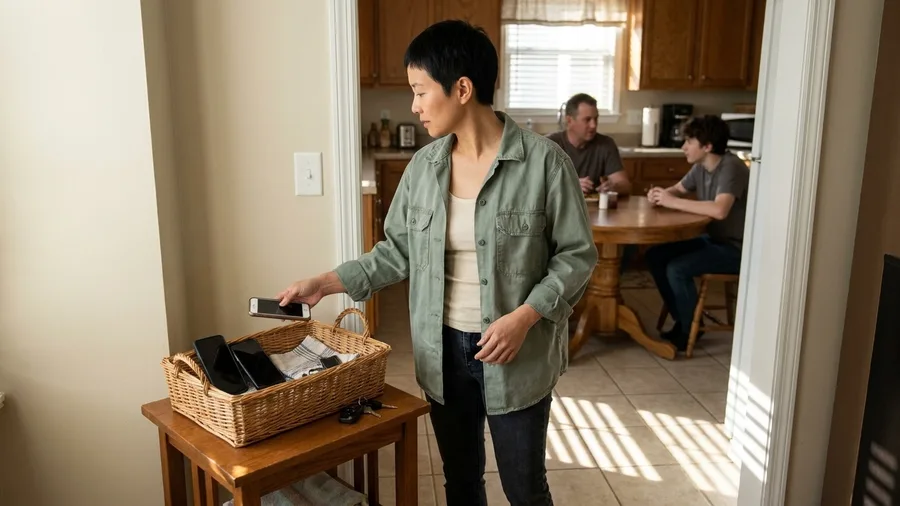
The version that fails is the one I would have tried first: a rule announced, a drawer designated, and a small moral test running underneath it. Put it in a drawer and it gets remembered on the nights someone remembers to care. Put a basket by the kitchen door and the rule carries itself, because the thing you are holding in your hand when you walk in is already over the threshold.
The basket covers both phones, including the one that is only just checking work. Start with mealtimes, and add one more hour a week only if the meal-length conversation holds. The cost is one meal, and the interruption that flattens a dinner does not get the chance.
Agree the rule together before the first phone goes in, or the basket becomes a way to keep score. Once the doorway is marked, the phone is the next thing that follows you into the evening, so move it out of reach.
The Small Numbers That Hold a Long Marriage
What the daily and weekly habits actually cost
4. The Midday Text About Good News

“You will not believe what the printer did today.” That is the kind of line worth sending at 12:40 on a Wednesday, and it is the kind almost nobody sends. Protecting the evening together leaves the whole working day unbridged, and one short message across the middle of it costs less than a minute.
The rule is simple enough to hold to: one message, sent while the thing is still warm. A meeting that went better than expected. The sandwich from the place near the office that turned out to be genuinely good. A song on the car radio that pulled you back fifteen years for four bars. You write it in two lines and you send it, and you expect no reply.
Expecting no reply is what makes it survive a busy afternoon. A message that asks a question is a task; a message that reports a small good thing is a gift the other person can open whenever they surface. Sent one way it is a gesture. Sent in both directions it becomes something better: each of you starts noticing the day for material, scanning for the win, the odd remark, the small funny thing, because you know who would enjoy it.
What it is not is logistics. “Can you pick up milk” and “the plumber is coming Thursday” are chores wearing a message’s clothing, and they belong in whatever channel already carries the running of the house. Keep the afternoon text for contact. A couple thirty-one years in, both working, with the mortgage nearly clear, sends the midday note about the good news and keeps the errands somewhere else entirely.
Three lines you could use this week, close to verbatim: “That thing I was dreading took nine minutes. I am insufferable about it.” “Heard a song in the car and thought of you, which is embarrassing, but there it is.” “The soup place put extra bread in. Today is going well.” None of them ask anything. All of them leave a trace.
That trace is the point. A no-reply message sits in a phone on a desk through three meetings and a difficult call, and it says someone was thinking of you while the day was ordinary. It fits the tired weekday because it asks nothing back. It works because it is small.
💡 PRO TIP
Send it while it is still fresh
A text sent two hours after the good news is a report. A text sent in the moment is a share. The difference is whether your partner feels included in the day or informed about it.
5. One Weekly Walk With No Agenda

A fixed hour, the same day each week, in the shared calendar, with no agenda attached.
A daily message keeps contact, but it cannot hold a conversation, and some things need to surface sideways rather than across a table. Walking does that: side by side, moving, no eye contact required, subjects rise on their own. The rule is no money, no children, no house projects. If a real problem comes up, note it, book a time for it, and finish the walk.
is there an hour in it that belongs to the two of you and nothing else? If yes, the habit is running. If no, that is the answer, and the fix is one booking, not a conversation about why. An hour outdoors works on a tired week because it is already there and needs no preparation.
6. A Standing Date That Never Moves

The cost comes first: a standing date fails when it is ambitious. The restaurant that needs a booking three weeks out, the show with tickets that cannot move, the plan big enough that a hard month cancels it, and after two cancellations nobody rebooks, because the slot has quietly become a test the month keeps failing.
Work back from that. First Friday of the month, two hours, in the shared calendar a year ahead, treated like a dentist’s appointment rather than a treat. Cheap and repeatable beats ambitious and cancelled: a walk and a coffee counts, and so does a phone-free dinner at home.
Logistics need an owner. One of you books it each time, or you alternate months, so no one is left waiting to be asked. Two hours a month, carved out before the month fills, is a different thing from whatever is left over at the end of it.
The slot survives a full month because it was fixed before the month got busy. If the weekly walk clears the talk, the monthly date keeps the two of you on the calendar at all, and a couple that stays on the calendar does not have to remember to exist.
💡 Tip: Book all twelve dates in January. If something has to move, move it to another day that week — never cancel it outright.
📆 How to Build the Weekly Rhythm
Pick the day
Choose one fixed hour for the walk and put it in the shared calendar.
Clear the agenda
Agree that money, children and house projects are off the table for that hour.
Walk side by side
Let subjects surface on their own rather than scheduling a summit.
Note and book
If a real problem appears, write it down, book a separate time, finish the walk.
Add the monthly date
Book the first Friday two hours a year ahead, recurring.
7. The Two-Minute Repair After a Sharp Word

The plates are still on the counter and something sharp has just been said about the way you load the dishwasher. You are both still standing there, both a little right, both a little stung, and the evening is now a thing to be got through rather than had.
Name the exact thing, not the whole case. ‘I said your sister’s visit was your problem to sort, and that was dismissive.’ Apologise for that, only that. Then the third part, the one most people skip: ‘What would help next time?’ Two minutes, kitchen-standing, same day, before it gets filed.
Either person can call it, and calling it is not losing the argument. It handles the residue, not the verdict. Two minutes is short enough that you can start it while still irritated, which is the only state that ever needs it.
⚠️ COMMON MISTAKE
Repair later is repair never
The most common mistake is waiting until you have calmed down enough to do it properly. By then the residue has hardened into a position. Two minutes while still irritated does more than two hours the next day.
8. Separate Money and One Shared Pot
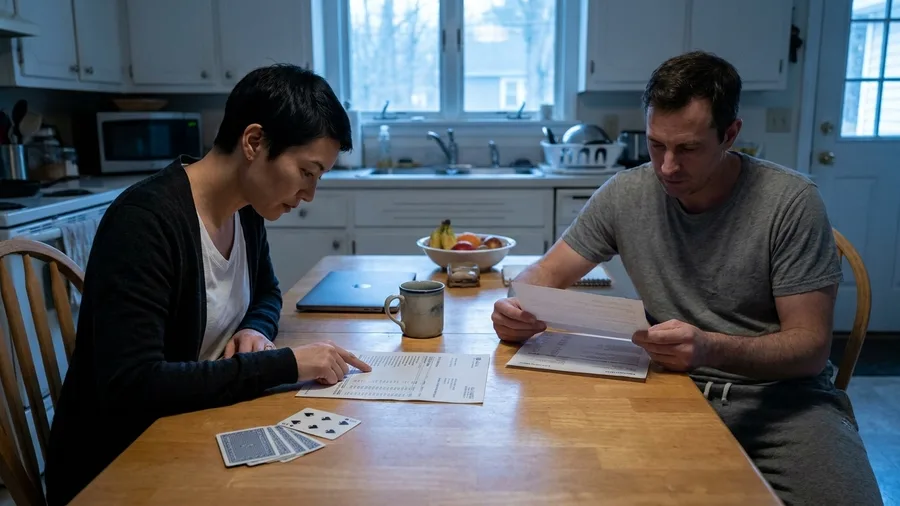
One joint account, funded monthly by both, pays the mortgage, the utilities and the holiday; one personal account each that nobody else opens, comments on or asks about. Repairing the sharp word keeps a single evening from leaving a mark. A recurring argument about who spent what is a different animal, and it needs a structure set up outside the moment, not a better apology inside it.
Researchers who study couples and money keep landing in the same place: it is not how much a household has, but whether the two people agree on the rules, that predicts how much the subject wears at them. The amount is almost beside the point.
So agree the rules once, and review them once a year. Two incomes makes the split simple: both top up the shared pot, both keep what is left. A single income works the same way with a personal allowance set in advance for each of you, so neither has to ask.
The test is a Tuesday. You buy something from your own account and nothing happens. No permission, no audit at the kitchen table, no quiet reckoning over the receipts. The argument that used to find you both most reliably simply loses its fuel.
9. The Chore Split Reopened Twice a Year

Two people can carry a house between them for years and still be carrying it unevenly, because the shape of the load lives in memory and memory is generous to whoever is doing the remembering. So the fix is not another conversation about who does more. Put a list on the fridge and write down the whole thing: the boiler service, the birthday cards that go out on time, the dentist for the ones still at home. Once it is there, the invisible work has a shape you can point at without raising your voice.
You want two review dates on the calendar, not a running argument about who did what. Twenty minutes on the first weekend of January, twenty on the first weekend of July, and the question is not who has it harder but whether the split is still fair given what has changed since the last review. A swap is fine, and it does not need a grievance attached. What the habit spends is the comfort of thinking the split is obvious, and what it buys is the argument you no longer have. So keep the conversation on the calendar and out of the argument, because this is not a subject you should raise at ten past ten on a Tuesday.
What it catches is the quiet kind of resentment, the one that grows where one of you has been holding the whole invisible half and the other has never had a reason to notice. An ordinary morning at the fridge settles it, because the list is already there, and neither of you has to raise the subject at all.
Money and Chores — What Works, What Doesn't
Do this
- One shared account for house, bills and holidays, topped up by both
- One personal account each that the other never audits
- A written chore list on the fridge that includes invisible work
- Review dates in January and July — twenty minutes, swaps allowed
Not this
- Asking permission for every personal purchase
- Keeping the invisible work in one person's head
- Renegotiating the split in the middle of an argument
- Letting the shared pot become a scoreboard
10. Questions About Who They Are Now

A fair household runs itself, but fairness is not the same as knowing someone, and that is the harder question sitting under the groceries and the calendar. The obvious move is to talk about the past, to trade the old stories again. That is the wrong instinct, and it is worth saying plainly: memory is the thing long couples already have in surplus.
The habit that actually works is smaller and a little awkward. Once a week, one question that cannot be answered with a fact. Not how was work, not did you pay the thing. Something like, what are you looking forward to this year, or what have you changed your mind about lately. One question, on a weeknight, no reservation and no conclusion at the end of it.
The listening is the part that gets fumbled. The answer arrives and the instinct is to fix it, or to borrow it, turning it straight back into your own story. A person mentions wanting to travel more and within a minute it is about the trip you want. Keep the question theirs for two minutes and the current version of the partner starts to show, not the version you have been carrying since the mortgage application.
The assumption to drop is the one built out of all that history: that after this many years there is nothing left to learn. The opposite is usually true, because people keep shifting under the surface of a busy shared life. A couple who has spent decades alongside each other and still asks about the present, not the archive, keeps finding the person who is there now.
It asks for almost nothing in return. No booking, no money, one evening and some willingness to listen without redirecting. The ordinary-Tuesday test is the whole point.
11. A United Front With the In-Laws
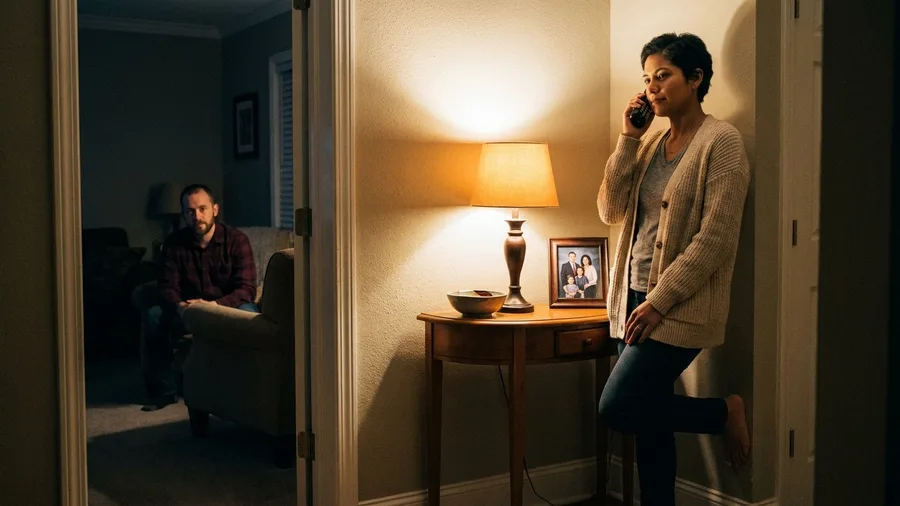
Answer it in the kitchen first, before either handset comes off the wall. Whose family, whose call is the easy half. The half that saves arguments is settling the answer between the two of you while the kettle’s still boiling, then letting the person whose blood it is carry it.
The move is a single agreed sentence, said identically by either of you, so it cannot be played against the other. Something like: we’re not doing the holiday at yours this year, we’ll tell you in March. Short enough to repeat without rehearsal, fixed enough that a follow-up call gets the same words back. Two versions of the story is how a parent learns there’s a seam to press.
Visits and holidays get settled between you before an invitation goes out, not after. The failure to watch for is quieter than a fight: one partner goes silent on the call, lets the other be the one who says no, and the bad guy role settles in for good. The 31-year couple with two grown children keeps family friction on the outside of the marriage this way. On an ordinary Tuesday, the routine call to a parent is where the sentence earns its keep.
12. One New Amateur Thing Every Year

It is the first Monday of the pottery class, and neither of you can center the clay. The bowl in front of you is listing to one side, your hands are wet to the wrist, and neither of you is good at this. You catch each other’s mess and laugh, and nobody asks whether this is being done well.
That is the whole point. Once a year, in January, pick one thing you are both plainly bad at: a beginners’ climb, a choir, a language app kept half-finished on purpose. No lessons past the first month, no performance, nobody to impress for the rest of the year, which is the part that keeps it playful instead of another item on the list. A couple that guards its boundary has room to look outward together, and this is where they spend it.
Book it and pay for it in January, because quitting feels heavier when it is already on the card. What it is not: a fitness campaign, a project with a deadline, or a test of one partner’s patience. Add one weekend away for the year and the pair of things stops the marriage from being only a history it tells about itself.
The ordinary-Tuesday logic runs backward here. The yearly thing is planned like a routine, not saved as a grand romantic gesture, which is exactly why it survives a calendar that is otherwise full of obligations. It just gets a slot.
Frequently Asked Questions
What is the first habit to start with if we only have energy for one?
The ten-minute download after dinner. It costs nothing, needs no booking, and works on a night when you are too tired to do anything else. The two-minute version always counts.
What if one partner is more resistant than the other?
Pick a habit that asks nothing of them — the door goodbye or the midday text. Nobody has to agree to anything. Once they notice it, they usually join in, and if they do not, you have still changed the tone of your own day.
How do we handle a habit that keeps slipping?
Shrink the minimum rather than skipping it. A two-minute talk is better than a missed night. If even that slips, the cue is in the wrong place — move it to a moment that already exists, like clearing plates or taking off shoes.
Do we need a therapist to do this?
No. These are small behavioural habits, not treatment. But if the conversation keeps hitting the same wall — contempt, stonewalling, a subject you cannot approach — a couples therapist is the right tool, and going earlier is easier than going later.
What if we have already grown apart and these feel forced?
Forced is fine at the start. The point of a habit is that it works before it feels natural. Start with the two-minute repair and the door goodbye — both are short enough that they do not require you to feel warm and connected first.
The First Week Is the Whole Test
The verdict is plain: this week, choose one daily habit and one weekly habit, not the full dozen. Your daily options are the ten-minute download after dinner, the goodbye at the door, the phone basket, or the midday text. Your weekly starter is the walk with no agenda.
When something goes wrong, the two-minute repair pays off faster than any other habit on this list. Naming it same-day, while the plates are still on the counter, does more than an apology saved for later, when it costs less and lands softer.
The money split and the annual new thing are structural layers, not starting points. A shared pot and a pottery class only hold once the small daily habits are already running underneath them.
So return to that couple of 57 and 59, mortgage nearly paid, calendar shared, nothing visibly broken. The only thing that ever threatened them was assumption. Love at thirty years is maintained on ordinary Tuesdays, one chosen cue at a time, starting with the one you pick tonight.