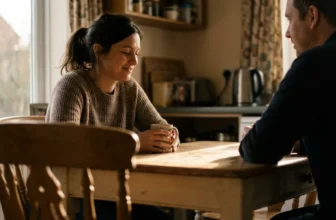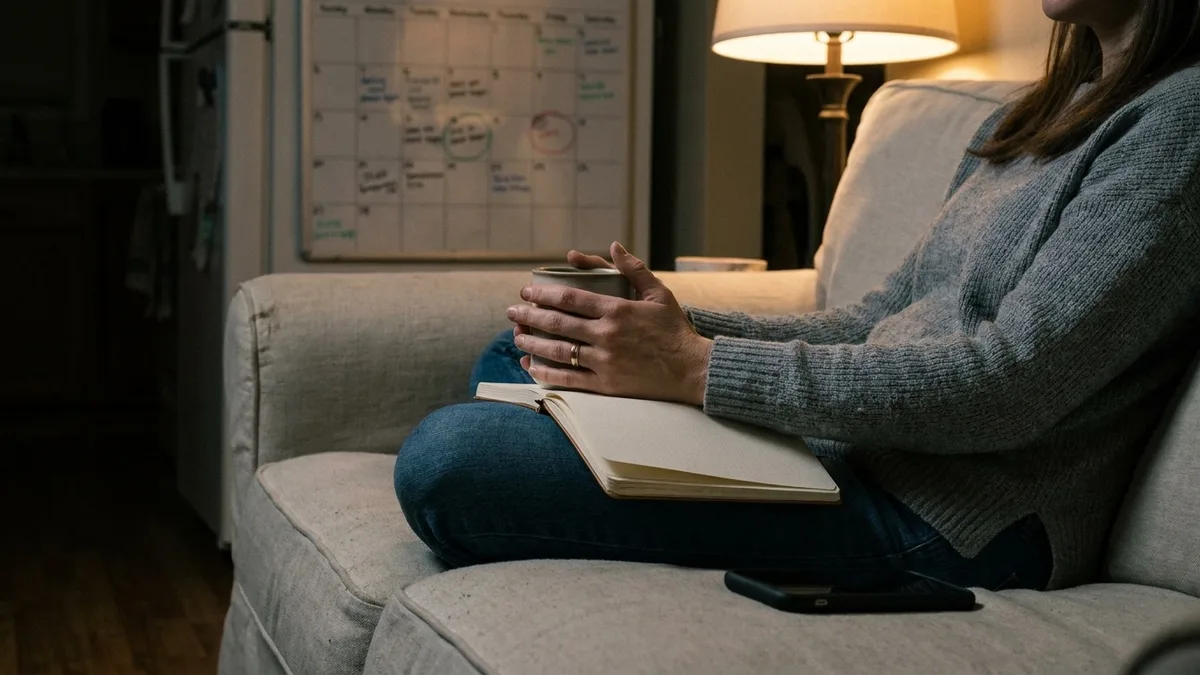
It takes years to build the quiet. Most husbands assume a marriage gets lonely in weeks, after some fight or some cold stretch, when in fact the drift is measured in months of ordinary evenings that each looked fine.
Nine o’clock, the kitchen tidy-up. She starts telling you about the coworker who microwaved fish and set off the whole floor, and you keep scrolling, half listening, and somewhere in the middle the story stops. ‘Anyway, it’s nothing.’ On the fridge the shared calendar shows Friday holding two separate plans, neither of them shared.
Nothing is wrong, you tell yourself. No fighting, no drama. We’re fine.
The quiet is not peace. It is the sound of expectations being retired, and it runs on weeks and months, never one bad evening.
The nine signs that follow are not a verdict, not a suspicion of an affair, not a diagnosis. They are a running measure of how far she has stopped expecting you to show up, and every one of them is readable in the ordinary rooms you already stand in.
By the end, one of them will make you wince. That is the one to say out loud tonight, as something you noticed about yourself. And if it turns out the pattern has run for months, that is the point to book a licensed couples therapist rather than let another quiet week pass.
Quick Tips Before You Start
Skip this if it's one bad week
A single off evening isn't evidence. This list only reads true when the same habit repeats across weeks without you prompting it.
Notice the bids you stopped making
The lunchtime text you no longer send, the hand on her shoulder as you pass. Count what you've quietly dropped, not what she has.
The exact opener to use tonight
"I've been on my phone at nine and I don't want to be." Say that first. Not a question about her, a fact about you.
One shared plan beats a grand one
Put a single Friday on the calendar that includes you both. The fix isn't a trip; it's the ordinary slot that was empty.
When to stop guessing and book help
If she's also pulled back from friends and family for months, that's the moment for a licensed couples therapist or her doctor, not another talk.
The talking has thinned out
The first three signs live in the daily talk—the small exchanges that make up most of a marriage’s texture. They’re easy to miss because they’re not fights. They’re absences.
When the talking thins, it’s not because there’s nothing to say. It’s because the expectation that the talk will land has faded. Each sign here measures that fading.
1. She stopped telling you the small stuff

The debrief used to run ten minutes, from the counter to the table, while the dishes went in the rack: the coworker who microwaved fish in the break room, a podcast plot she could not get straight, a story with no point except that she wanted him to have it.
That story is not leaving the house, exactly – it is being spent somewhere else. It turns up in her sister’s messages, in a group chat with three people from work, and he hears it at Sunday lunch already worn smooth from being laughed at once, and has to ask what the fish thing was about. He is not being told less. He is being told later, and by someone else.
The usual advice is to ask more questions, and that is the wrong lever, because the telling did not run out – it moved to wherever it gets picked up on the first try. Nothing is being hidden: a secret keeps its content to itself, and this story is fully available, just not to him first.
💡 Tip: Next time she tells you something small, put your phone face down and ask one follow-up question. That's the whole move.
⚠️ COMMON MISTAKE
Don't ask 'how was your day?'
That question invites a one-word answer. Ask about a specific person or event—a question only you could ask.
2. Her answers have shrunk to ‘fine’ and ‘nothing’

The standard advice is to ask better questions, and the field keeps landing somewhere more basic than that. Researchers who study how couples talk describe small answers as the sealing move in a conversation – a reply that ends an exchange cheaply rather than opening one.
Fine, nothing, it’s okay, long day. Dropped in fast, usually over a sink or a laptop, and what is left to talk about is trash night, the 5:30 pickup, whether the gift for his mother was ordered. A task can be answered without being opened.
Which is why asking about a day is too wide to land. How Priya’s interview went, whether the sister’s offer came through – a named thing that only he would think to ask. A tired answer after a double shift means nothing; a year of fine with no second question behind it is a door that stopped being pushed.
3. She has stopped asking you questions back

The cost of this one is that it feels like peace, and by the time you notice the quiet, months of it have already gone by without a single argument to mark them.
One-word answers are still answers. They’re still a reply in your direction, however short. What goes next is the current running the other way. She used to ask how the pitch went, whether your brother ever called back, what the plan was for the trip you kept talking about, even the names of people she’d never met. Now she hears the answer out and lets it end there. No and then what happened. No second question. That follow-up was a bid of her own, and she stopped making it because hers kept landing on the floor.
This is not sulking and it is not punishment, and that’s why it’s so easy to miss. It’s a quiet reallocation of effort toward conversations that give something back, which is why it shows up as calm rather than distance. The caring hasn’t gone anywhere. It’s still in the dentist form she filled out for you and the shopping list on the fridge. What went quiet is the curiosity, not the concern.
Here’s the check you can run tonight, and it takes about four seconds. When did you last ask her a second question about something she brought up? The first question is manners. The second one is interest.
Curiosity vs. Indifference
How often you ask a second question about her day
She has built a life around the gap
The next three signs move from words to architecture—the way her weeks are structured and who fills them. These are not about a single conversation. They’re about where she spends her time and attention.
By this point, the pattern is no longer just about what she doesn’t say to you. It’s about what she’s built in the space where the marriage used to be.
4. Her evenings have quietly filled up without you
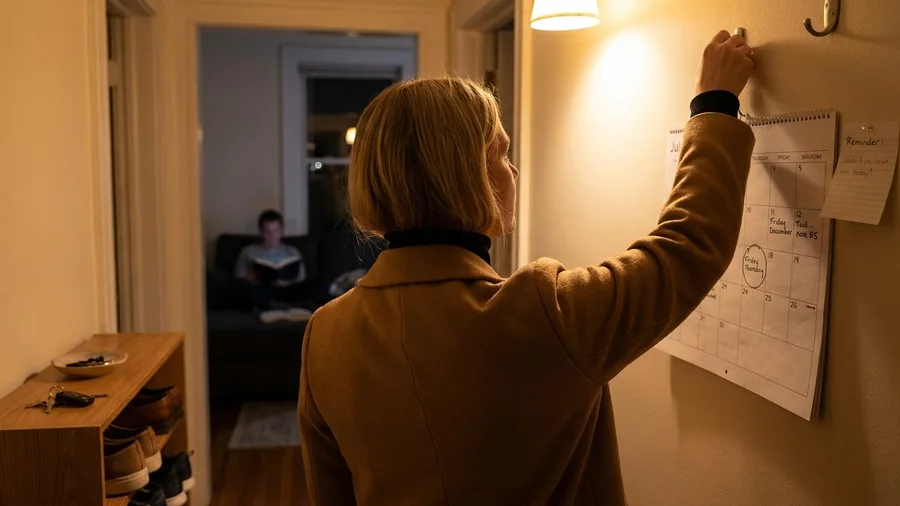
Sometimes. Wednesday book club, a Saturday run, Thursday class – held in ink, week after week, for a year. One busy season with a deadline is a job. A standing Wednesday kept for twelve months is architecture, and architecture is what you are looking at.
The difference between a life and a replacement is whether you were let in. A book club she mentions over dinner is a life; one you hear about while she is reaching for her coat is something else. The tell is the plan that surfaces only as it happens – “I’m out tonight, remember?” – and the shared calendar in the hall on which Friday now holds two plans, neither one naming the other person.
It is not an affair. What is on that calendar is named, ordinary and checkable, which is exactly why it slips past you as her being busy. Count what appears in ink that you did not hear about in advance, and notice how long it has been there.
💡 Tip: Check the shared calendar: if Friday has two separate plans on it, neither including the other, that's the quiet sign.
5. She is closer to her friends than to you

You find out at dinner that she got the mole checked. It was fine, she says, and goes back to her plate. She told her sister three weeks ago, and the sister asked the follow-up questions, and the whole thing was already settled before it came near you. The work worry, the offer she was deciding on, the health scare she sat with alone in a waiting room – you hear these after they are over, in summary, when there is nothing left to react to.
What you get instead is the calendar. The 5:30 pickup time, the weekend plan, the fact that the boiler man is coming Thursday, which is useful information and none of it her.
An empty evening is time you did not spend together. A confidence handed to someone else is intimacy spent. The marriage’s conversational budget has been moved to another account, and that is why this one stings more than a quiet Tuesday, because the talking did not stop, it just stopped coming toward you.
Some people process out loud with friends by temperament and always have, before you met them and after. That alone is not a verdict. The sign is when both the big things and the small things go out of the house – when she takes the health scare and the shape of a Tuesday to her friends and brings you the boiler man.
For most husbands reading this, this is the entry where the stomach drops. Which makes it the strongest candidate for the one thing said out loud tonight, as a statement about yourself and not an inventory of her. The script is small: “I realised I hear about the important things three weeks late, and I think that’s because I stopped asking in time.” Then let her answer, and do not argue with it.
Healthy Independence vs. Replacement
Healthy Independence
- She tells you about her plans
- She invites you to join sometimes
- She shares highlights afterward
- You know her friends' names
Replacement
- Plans appear on the calendar without discussion
- You learn about events as she's leaving
- She shares nothing afterward
- You've never met the people she spends time with
6. Her phone gets her attention at night

I got this one wrong in the most ordinary way. For months I counted the nights her phone was lit at 11pm as the whole problem, and I never once counted the nights mine was. In bed, both screens on, no words, the ten minutes that used to close the day now going quietly to two feeds. I had made it her habit because hers was the screen I could see.
The honest test is the lift of her head. Say something and watch: she looks up, or she answers without lifting her eyes. The first is a bid still on the table, worth the small cost of stopping. The second is a bid she has stopped paying for. Same screen either way.
It is almost never another man. On most nights that glow is a group chat, a feed, a game, a sister three time zones away. The content does not matter; the direction of her attention is the fact you are reading.
An 11pm scroll after a brutal day is just a brutal day. A month of 11pm silence, lights off, nobody speaking first – that is the habit. And the tally of your own phone-up nights is the one number here you can count without asking her anything.
💡 PRO TIP
Count your own phone nights
For one week, tally how many nights you're the one with the phone up. That's the number you can change without asking her anything.
She has stopped expecting anything different
The last three signs are the quietest and the most serious. They’re not about what she does—they’re about what she’s stopped doing. The resignation that settles in when asking has repeatedly led nowhere.
These are the signs that, left unaddressed, turn a lonely season into a lonely marriage.
7. She stopped asking for help and just does it

“She never asks me for anything.” He says it in the driveway, almost proudly, and it is not a compliment. It is an invoice he has not read.
Because the asking stopped when the asking stopped working. Watch the sequence. She needs the school forms by Friday, so she asks on Monday, he says he will get to it, the Friday arrives with the forms still blank on the counter, and she fills them in at 11pm without a word. The dentist appointment gets booked on her lunch hour. The gift for his mother is ordered, wrapped and out the door before he knew a birthday was close. Each one is small. None of them is announced. That is the point – the noticing is the thing she has given up on, not the task.
What this buys her is quieter than it looks. Asking had begun to cost more than doing: the ask itself, the wait, the reminder two days later, the disappointment when the reminder is forgotten. Add that up and doing it herself, at 11pm, tired, is the cheaper purchase. So she pays it. And what goes on the tab is not the errand, it is the resentment – the ordinary, low-grade kind that does not announce itself either, that just makes the room a little less warm.
From the outside it reads as competence, and that is exactly why it goes unchallenged. ‘She is so organised.’ A busy month makes everyone carry extra – that is a season, and seasons pass. The sign is measured in who has been doing the remembering for a year, and whether she still bothers to hand any of it back. While she hands it over, however late, the door is open. When the handing stops, the door has stopped being pushed.
The move here is not to ask her what needs doing – that is the same ask she stopped trusting. Take one thing end to end. Book the dentist appointment, confirm it, put it on the shared calendar in ink, and mention it once, flatly, without the trophy ceremony.
The trap is ‘let me know if you need anything’, which is not a task taken, it is a task politely offered back to her, who already knows how to carry it. Pick the thing she does at 11pm and do it at 7pm, before she has thought to.
💡 Tip: Pick one recurring task—the trash, the bills, the school emails—and own it completely for a month. Don't announce it. Just do it.
When she stops asking for help, it's not because she doesn't need it. It's because she's stopped expecting you to show up.
— What therapists describe as resignation
8. She no longer brings up what is bothering her
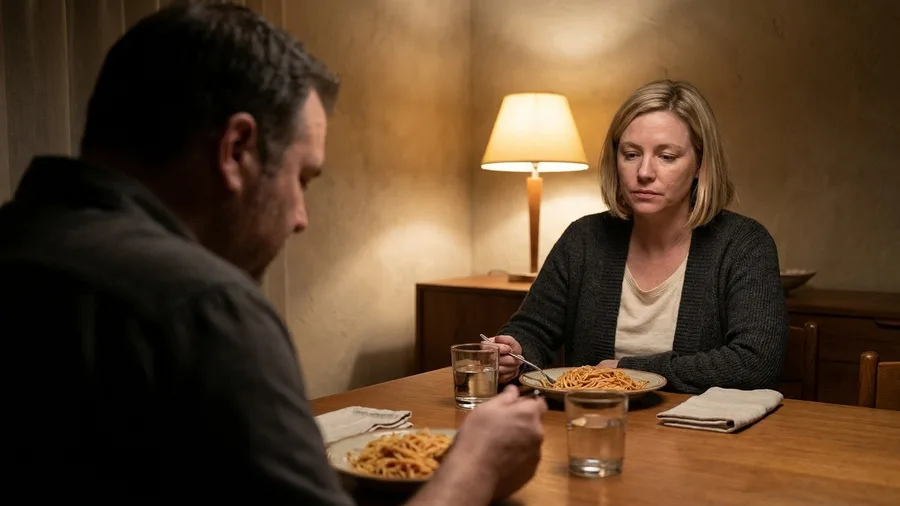
Count the months since she last raised something that annoyed her. Not the small stuff – the real thing: your hours, the weekends, your mother, who does the remembering. When did the argument about any of it last happen?
If the answer is recent, you have a marriage that still tests itself. If the answer is two or three years, you have a marriage where the raising stopped paying – and that is the difference worth your attention tonight. A busy month produces a short-tempered evening. A year of silent Saturdays produces no evening at all, which is the thing to notice and the thing to name to yourself. That count is your self-test.
The Cost of Not Asking
⏳ Time to resentment
3-6 months
🗣️ Missed bids per week
5-10
💔 Emotional distance
Grows quietly
🛠️ Fix difficulty
Harder after a year
The shift
Taking one task off her plate completely can reopen the door to asking.
9. She has stopped expecting you to notice
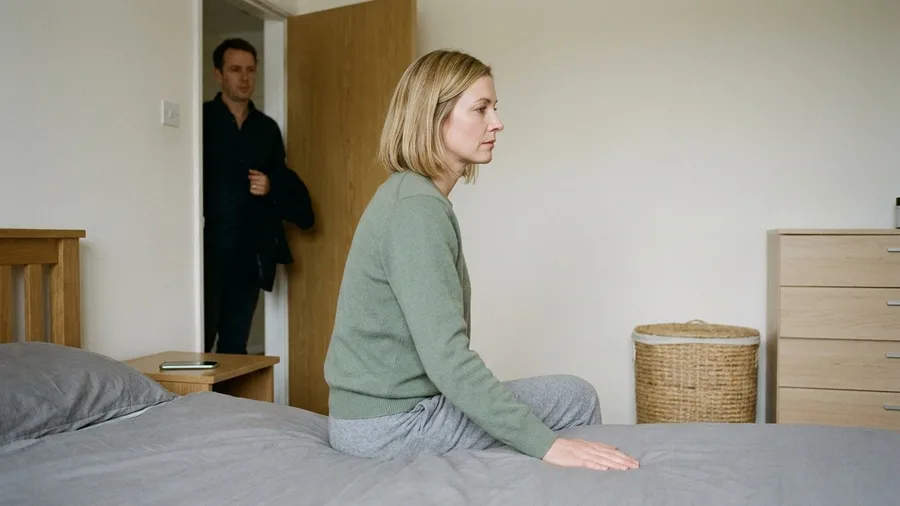
The last things to go are small and physical. The comment on the haircut does not arrive, and she stops waiting for it. The goodnight kiss gets skipped one night and then stops being missed. A new shirt goes unmentioned. She goes to bed at her usual hour instead of staying up to hear the door.
A man reads that as peace. The house is calm, the arguments are over, she seems content, and he tries not to disturb it. What he is actually seeing is the whole set going quiet at once rather than one habit at a time, and it has held for weeks with no fight and no crisis to explain it. That is the difference between a hard month and somebody who has stopped expecting to be seen.
There is still a way back, which is why this is the entry that matters. She reacts when he shows up: she lifts her head when the phone goes face-down, and something crosses her face when he asks and means it. The expectation is asleep, not gone. Tell her what you noticed, as a fact about yourself, and if it has run for months, or she has drifted from friends and family too, book a licensed couples therapist and let a professional carry the rest.
🕯️ How to Respond Tonight
Identify the sign that hit hardest
Pick one from the list above that made you wince.
Say it as an observation about yourself
Not 'you never tell me anything' but 'I've noticed I haven't been asking about your day.'
If she says 'it's fine' and turns away
Keep asking for a few weeks—not once. Consistency is the message.
If you recognize the resignation cluster
Say plainly that months of this is the point where a licensed couples therapist earns the fee.
Frequently Asked Questions
How do I know if she’s lonely or just busy?
Look at the pattern over months, not days. A busy week has an end date. A stopped expectation repeats for weeks with no crisis to explain it.
What if she says everything is fine when I ask?
She may be protecting herself from disappointment. Don’t accept the first ‘fine.’ Ask a specific question about something she mentioned earlier, or share an observation about your own behavior.
Is this a sign she’s having an affair?
No. These signs point to loneliness, not betrayal. The calendar is full of named, ordinary things—book club, a run, a class. That’s why it’s easy to miss.
When should we see a therapist?
If the pattern has run for months or if she has also withdrawn from friends and family, a licensed couples therapist is the right next step. Noticing is not the same as being accused.
What’s the first thing I should do?
Pick the one sign that made you wince. Tonight, say it out loud as an observation about yourself—not an accusation of her. Then keep asking for a few weeks.
Which sign made you wince?
Go back through the nine and find the one that made you wince. Then say it out loud tonight as a fact about yourself, not a charge against her. ‘I’ve noticed I haven’t asked you a second question about your day in months, and that’s on me.’ Not ‘you’ve stopped telling me things.’ The second sentence closes a door. The first one opens a small window.
If she answers ‘it’s fine’ and turns back to the sink, do not take that as the verdict. Ask again tomorrow, and the day after, and keep asking for a few weeks rather than once, because a single question is one more bid she has already learned to expect nothing from. If what you recognised was the steady doing-it-without-you, the dropped complaints, the expectation gone quiet, say plainly that months of that is the point where a licensed couples therapist earns the fee. Noticing is not the same as being accused, and telling her what you noticed is not a confession you need to defend.
So picture the same counter, the same tidy-up, weeks from now. The phone is face-down. She gets to the end of the story, and you ask what happened next. The ninth sign is never one event; it is the day she stops expecting you to notice. You noticed first, and tonight, in one sentence, you can be the one still asking.
Start with one observation tonight
Pick one sign from this list and say it out loud as something you've noticed about yourself. That's the first move.